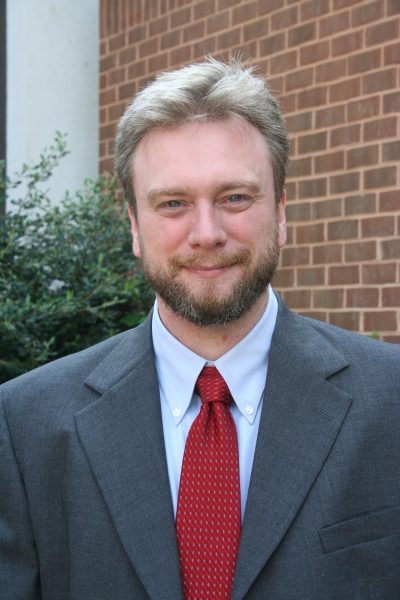
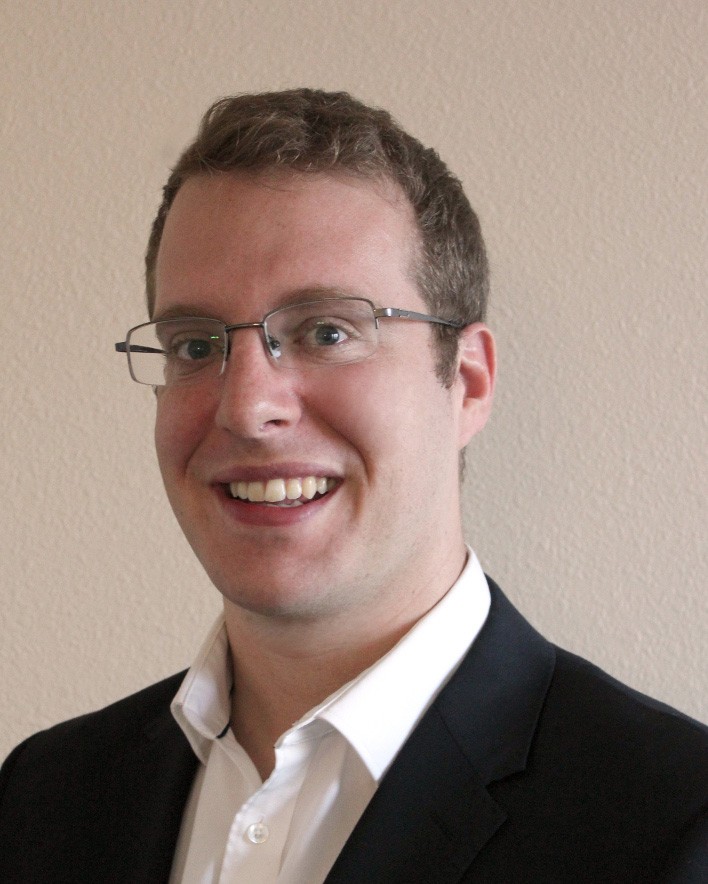
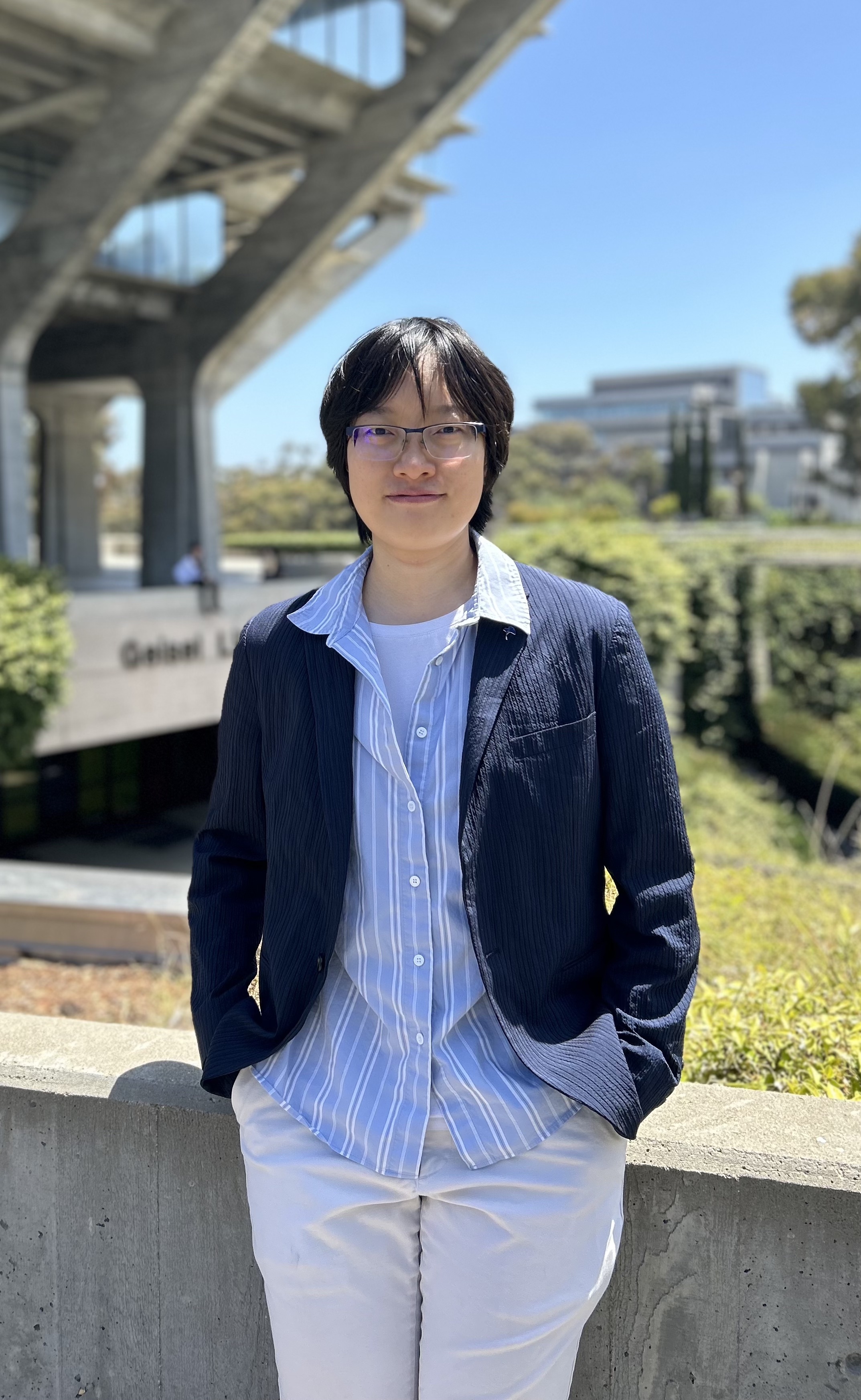
Joshua Fairfield is the William Donald Bain Family Professor of Law and Director of Artificial Intelligence Legal Innovation Strategy at Washington and Lee University's School of Law. His expertise spans digital property, data privacy, cryptocurrencies, and virtual worlds regulation. He holds a BA from Swarthmore College and a JD from the University of Chicago. Professor Fairfield's research focuses on the intersection of law and technology, particularly in digital ownership, privacy rights, and emerging technologies like IoT and blockchain. He has authored influential books, including Owned: Property, Privacy and the New Digital Serfdom (2017) and Runaway Technology: Can Law Keep Up? (2021). His work critiques corporate control over digital devices and advocates for consumer rights in the digital age. Education: BA, Swarthmore College; JD, University of Chicago Key Achievements: Fulbright Grant (2012–2013), American Law Institute Member (2013) Consulting: Advises U.S. agencies like the White House Office of Technology and Homeland Security Privacy Office His recent articles address topics such as environmental AI ethics, NFT regulation, and smart contract governance. Fairfield emphasizes the need for updated legal frameworks to protect digital rights and ensure democratic control over technology. He directs the AI Legal Innovation Strategy initiative, focusing on integrating AI into legal systems while addressing ethical and regulatory challenges.
Andrew Thompson is the John S. and Sherry Chen Professor of Environmental Science and Engineering at the California Institute of Technology. He serves as Director of the Ronald and Maxine Linde Center for Global Environmental Science and Executive Officer for Environmental Science at Caltech. With a Ph.D. from Scripps Institute of Oceanography (2006), his career at Caltech spans from Assistant Professor (2011-17) to his current Professor role since 2017. Education: B.S. in Physics from Dartmouth College (2000), C.A.S. (2001) and M.Phil. (2002) at University of Cambridge Leadership: Director of Linde Center (2023-), Academic Officer (2019-22) His research focuses on ocean circulation dynamics and physical processes governing climate systems . Key areas include: Ocean Turbulence and Submesoscale Dynamics Antarctic Circumpolar Current and Drake Passage Dynamics Climate Change Impacts on Ice Shelf Melt Rates Current projects involve ChinStrAP (Changes in Stratification at the Antarctic Peninsula), using autonomous ocean gliders to study eddy formation and air-sea exchange. His group employs idealized numerical models , remote sensing , and climate simulations to explore topics like: Warm water pathways onto Antarctic continental shelves Role of mesoscale/submesoscale eddies in ocean mixing Global overturning circulation responses to climate change Scientific achievements include the Packard Fellowship for Science and Engineering . He mentors graduate students Xiaozhou Ruan , Giuliana Viglione , and Andrew Delman , fostering interdisciplinary collaboration with institutions like Scripps Institution of Oceanography and CSIR . His group emphasizes inclusive training for early-career scientists in climate-relevant STEM careers .
Maximilian Hilger is a doctoral researcher at the Chair of Perception for Intelligent Systems, part of the Munich Institute of Robotics and Machine Intelligence at Technische Universität München (TUM). He joined the chair in 2024 and specializes in radar perception for autonomous systems. M.Sc. in Automation Engineering (RWTH Aachen, 2023) Doctoral studies previously at AASS, Örebro University, Sweden His research focuses on radar-based localization, mapping, and introspection in challenging environments, with publications addressing 4D imaging radar SLAM, loop closure techniques, and sensor fusion methodologies. Recent work includes evaluating radar odometry algorithms and developing robust mapping systems using intensity-augmented normal distributions transform. Key research themes: Radar perception for autonomous systems SLAM robustness and introspection Occlusion-resistant localization Sensor fusion in dynamic environments He collaborates with team members including Prof. Achim Lilienthal, Valeria Salazar, and Thomas Wiedemann at TUM's Siemens Technology Center campus in Garching, Germany.
Brad Hayes is an Associate Professor of Computer Science at the University of Colorado Boulder within the College of Engineering and Applied Science, where he directs the Collaborative AI and Robotics (CAIRO) Laboratory. He also serves as Chief Technology Officer at Circadence, leading efforts in developing AI-enabled products for cybersecurity training and assessment. Undergraduate degree from Boston College PhD in Computer Science from Yale University Postdoctoral Associate at MIT Professor Hayes' research focuses on developing techniques that enable autonomous agents and robots to learn from and collaborate with humans safely, reliably, and productively. His work occurs at the intersection of pervasive and personalized artificial intelligence, human-robot teaming, and decision support. He has made significant contributions to collaborative robotics, dependable explainable AI, and imitation learning, with applications spanning manufacturing, healthcare, disaster response, autonomous vehicles, and space exploration. His recent publications reveal a strong emphasis on human-robot interaction, with particular focus on improving predictability in collaborative tasks, developing explainable AI systems that build trust, leveraging augmented and virtual reality for enhanced collaboration, and creating more efficient learning algorithms from human demonstrations. His work increasingly integrates large language models and advanced neural network architectures while maintaining a strong human-centered design approach. Sustainability Recognition (2025) for computational efficiency in motion planning Best Student Paper Runner-up at AAMAS 2022 Nominated for Best Technical Paper at HRI 2024 Best Technical Paper Runner-up at HRI 2019 Hayes has successfully mentored numerous graduate students through the CAIRO Lab, including multiple PhD graduates in 2024 alone. His lab receives funding from various organizations supporting research in human-robot interaction and collaborative AI. He frequently collaborates with industry partners and has established connections with major technology companies through his research and speaking engagements. The CAIRO Lab, under Hayes' direction, is a vibrant research environment focused on turning theoretical concepts into practical applications through hands-on work with real robots and human participants. The lab's research spans multiple domains including manufacturing, disaster response, autonomous vehicles, and space exploration, with a consistent emphasis on safe and effective human-machine teaming.
Prof. Raimon Jané Campos is a leading figure in biomedical signal processing at the Universitat Politècnica de Catalunya (UPC) and Universitat de Barcelona (UB). As co-director of UPC's Biomedical Signal and System Group (CREB) and coordinator of the Biomedical Engineering PhD Programme, he bridges engineering and clinical applications. His work focuses on respiratory and sleep disorder diagnostics, with significant contributions to COPD and sleep apnea monitoring through wearable devices and machine learning. PhD in Biomedical Engineering (UPC, 1989) Visiting researcher at Université de Nice-Sophia Antipolis Vice-president of Spanish Society of Biomedical Engineering Research spans respiratory mechanics , sleep-disordered breathing , acoustic biomarkers , bioimpedance , and machine learning in biomedical contexts . His 2025 work on microcalorimetric pathogen classification and 2024 spiking neural networks for apnea detection demonstrate cutting-edge integration of computational methods with physiological monitoring. Articles from 2017-2024 reveal consistent focus on non-invasive diagnostics , cardiorespiratory synchronization , and smartphone-based health solutions . Awarded the Barcelona City Technology Research Award (2005) and serving on the International Advisory Board for Physiological Measurement since 2010, his career combines academic leadership with real-world clinical translation through IBEC's technology transfer initiatives.
Xiaofan Yu is an Assistant Professor in the Department of Electrical Engineering at the University of California, Merced. He holds a Ph.D. (2025), M.S. (2020), and B.S. (2018) from the University of California, San Diego and Peking University, respectively. His research focuses on embedded systems , edge AI , and neuromorphic computing , with applications in IoT, federated learning, and hyperdimensional computing. ML&Systems Rising Star (2024) CPS Rising Star (2023) EECS Rising Star (2022) His work addresses on-device AI for real-world IoT deployments, reliability-driven sensor networks , and next-generation edge intelligence . Recent publications highlight advancements in federated learning (TIOT 2025), multimodal sensor interaction (IMWUT 2025), and noise-resilient sensor systems (Sensors 2024). Key subfields include hyperdimensional computing , asynchronous distributed training , and resource-efficient edge models . Dr. Yu actively mentors students across institutions and programs, including the Early Research Scholarship Program (UCSD) and ENLACE Summer Research Program. He has advised projects on smart elderly monitoring , LLM-based sensor reasoning , and hyperdimensional algorithm optimization . Collaborations span UCSD, TUM, and Stanford, with industry partnerships in IoT design automation (RelIoT simulator) and biomedical applications (bladder fullness restoration system).
Omer T Inan is the Regents Entrepreneur Endowed Chair and Assistant Professor at the School of Electrical and Computer Engineering (ECE) at Georgia Institute of Technology. His work bridges biomedical engineering and wearable technology, focusing on non-invasive physiological monitoring for chronic disease management. He holds a Ph.D. in Electrical Engineering from Stanford University (2009) and previously worked at Countryman Associates (2007-2013) as Chief Engineer, developing professional audio systems. Education: B.S., M.S., Ph.D. in Electrical Engineering, Stanford University (2004-2009) His research interests include medical devices for home-based cardiovascular monitoring, musculoskeletal sound analysis, and neuromodulation of stress responses. He has pioneered technologies for heart failure patients, PTSD treatment, and osteoarthritis diagnostics. Recent publications highlight innovations in AI-driven cardiac parameter estimation, motion artifact removal in seismocardiograms, and multimodal stress tracking via wearables. His work spans biomedical signal processing, clinical translation, and portable diagnostic systems. Scientific Awards 2024 IEEE Fellow 2023 IEEE Distinguished Lecturer 2023 American College of Cardiology Fellow 2022 American Institute for Medical and Biological Engineering Fellow 2021 Academy Award for Technical Achievement (The Oscars) 2018 ONR Young Investigator Award 2018 NSF CAREER Award At Georgia Tech, Inan leads the Inan Research Lab, which develops technologies for physiological monitoring and modulation. Projects include musculoskeletal sound analysis for joint health, non-invasive cardiovascular sensing, and neuromodulation to treat PTSD via vagal nerve stimulation.
Lifeng Zhou is an Assistant Professor in the Department of Electrical and Computer Engineering at Drexel University, where he leads the Zhou Lab focused on advancing robustness and reliability in multi-robot systems through integration of foundation models. His research addresses real-world challenges in environmental monitoring, disaster response, and urban mobility. Education PhD, Electrical and Computer Engineering, Virginia Tech, 2020 MS, Control Science and Engineering, Shanghai Jiao Tong University, 2016 BS, Automation, Huazhong University of Science and Technology, 2013 Research Focus Dr. Zhou's work integrates robotics, algorithms, game theory and machine learning to develop secure and scalable autonomous systems. Primary research thrusts include: Resilient multi-robot coordination in adversarial environments Large language model integration for robotic decision-making Game-theoretic resource allocation strategies Risk-aware planning for autonomous vehicles Publication Trends Recent work (2024-2025) demonstrates strong focus on large language model applications in multi-robot systems, with 12/15 articles exploring LLM integration for flocking, scene segmentation, and decision-making. Additional emphasis includes adversarial robustness in target tracking (5 articles) and autonomous driving applications (4 articles). Awards and Recognition Best Paper Award, WACV 2025 LLVM-AD Workshop Professional Service Associate Editor, ICRA Conference Editorial Board Laboratory Focus The Zhou Lab develops foundational algorithms for secure and scalable multi-robot systems, with current projects spanning environmental monitoring drones, disaster response coordination, and autonomous vehicle perception systems.
Ming Lin is a Distinguished University Professor at the University of Maryland, College Park, holding joint appointments in Computer Science (Department of Computer Science), the Institute for Advanced Computer Studies (UMIACS), Electrical and Computer Engineering (ECE), and the Maryland Robotics Center. She holds the Dr. Barry Mersky and Capital One E-Nnovate Endowed Professorships. Her research focuses on physically-based modeling, virtual environments, haptics, robotics, and AI applications in healthcare and urban computing. Education: Ph.D., M.S., and B.S. in Electrical Engineering & Computer Sciences from UC Berkeley. She previously spent 20 years at UNC Chapel Hill before joining UMD in 2018. Research interests include collision detection algorithms (e.g., Lin-Canny algorithm), real-time physics simulation, virtual/augmented reality systems, and medical imaging applications. Her work has led to over 2 million downloads of her group's software tools and licenses with 60+ companies. Notable contributions include the Oculus Rift-related VR technologies and Amazon's virtual try-on system. Awards: IEEE Fellow (2012), ACM Fellow (2011), NAI Fellow (2022), and Washington Academy of Sciences Distinguished Career Award (2020). Active in professional service, she serves on the CRA Board and chairs the Committee on Widening Participation in Computing Research. Advising: Supervises 12+ PhD/Master's students. Her lab (GAMMA Group) focuses on AI-driven robotics, autonomous systems, and physically-based simulations. Key projects include traffic simulation frameworks, medical VR applications, and 3D garment modeling.
Mehrdad Nojoumian is an Associate Professor at Florida Atlantic University's College of Engineering and Computer Science, specializing in Security, Privacy, Trust, and Human-Autonomy Interaction. His research bridges computer science with FinTech and autonomous systems, focusing on cryptographic protocols, blockchain, and IoT security. PhD, University of Waterloo (Computer Science, 2012) MSc, University of Ottawa (Computer Science, 2007) BSc, Islamic Azad University (Computer Engineering, 2002) His research explores privacy-preserving mechanisms in autonomous systems, trust modeling in blockchain, and cross-disciplinary applications of cryptography. Recent work includes patents on adaptive driving modes and ongoing studies on IoT vulnerabilities and autonomous coordination. Notable awards include the Excellence and Innovation in Undergraduate Teaching Award (2023), NAI Induction (2022), and multiple Best Paper Awards . His publications span journals like Information and Computation and conferences such as GameSec and IEEE Blockchain . He mentors graduate students in cybersecurity bootcamps, high school outreach programs, and collaborative research projects funded by NSF , ARO-AFOSR , and AFRL . His lab emphasizes diversity and inclusion, particularly supporting underrepresented groups in STEM.
Dr. Joyoung Lee is an Associate Professor in the Department of Civil and Environmental Engineering at New Jersey Institute of Technology (NJIT). He previously served as Laboratory Manager at the Federal Highway Administration's Saxton Transportation Operations Laboratory. His research focuses on Connected Vehicle (CV) systems, including applications in traffic management, signal control optimization, and autonomous vehicle infrastructure integration. Dr. Lee holds a Ph.D. (2010) and M.S. (2007) in Transportation Engineering from the University of Virginia, and a B.S. (2000) in Transportation Engineering from Hanyang University. His work emphasizes CV-based solutions for real-time traffic systems, cooperative vehicle-infrastructure systems (CVIS), and autonomous vehicle integration. Notable achievements include the 2019 IEEE CAVS Best Paper Award and multiple best paper recognitions from PTV User Group Meetings. His research also addresses traffic safety through innovations like the Virtual Guide Dog system for visually impaired pedestrians and advanced traffic monitoring frameworks using LiDAR and computer vision. Education: Ph.D., Transportation Engineering, University of Virginia (2010) M.S., Transportation Engineering, University of Virginia (2007) B.S., Transportation Engineering, Hanyang University (2000) Dr. Lee's research interests span smart city infrastructure, edge computing for traffic systems, and sustainable transportation solutions. He has pioneered algorithms for cooperative intersection management, automated platooning systems, and federated learning-based traffic optimization. His work bridges theoretical models with real-world implementation through partnerships with FHWA and industry stakeholders. Key contributions include development of the Cumulative Travel-Time Responsive (CTR) traffic signal control system, smart arrival notification systems for paratransit services, and advanced microsimulation calibration techniques. His lab focuses on translating CV data into actionable strategies for safer, more efficient transportation networks. Awards: IEEE CAVS Best Paper Award (2019) ASCE Grand Challenge Innovation Contest Honorable Mention (2017) PTV VISSIM Best Paper Awards (2012, 2008) Excellence in Research Award (University of Virginia, 2011) Ongoing projects include semi-decentralized graph neural networks for traffic forecasting and low-cost LiDAR-based traffic monitoring systems. His work addresses critical challenges in autonomous vehicle integration, incident management, and infrastructure resilience through interdisciplinary collaborations.
Yu Xiao is an Associate Professor at the Department of Information and Communications Engineering, Aalto University, specializing in edge computing, extended reality (XR), wearable computing, and crowdsensing. Their research contributes to the UN Sustainable Development Goals, particularly in education and technology innovation. Active in mobile cloud computing and decentralized systems Principal Investigator in EU-funded projects (EMIL, TUTL) Expert in 5G networks, autonomous systems, and human activity recognition Yu Xiao's work spans interdisciplinary domains, including healthcare (cardiovascular resuscitation devices) and urban mobility (autonomous vehicle interactions). They have received multiple awards, including Best Paper Awards and Nokia Foundation Scholarships. Focus on low-latency communication and multiagent reinforcement learning Developed frameworks like FediLive for decentralized social networks Contributed to 128+ publications and software tools Recent collaborations include institutions like Pontificia Universidad Católica de Chile and participation in IEEE committees. Their research integrates blockchain for secure IoT communication and advanced AR applications.
Stavros G. Vougioukas is a Professor and Vice Chair in the Department of Biological and Agricultural Engineering at the University of California, Davis. His research focuses on agricultural robotics, mechanization, and automation for specialty crops, with particular emphasis on robotic harvesting systems and precision agriculture technologies. He leads initiatives in developing actuator systems, perception, and control mechanisms to optimize crop management. Key areas of expertise include robotic fruit harvesting, autonomous vehicle navigation in orchards, and site-specific pest management strategies. His work integrates mechanical engineering principles with advanced automation to address labor shortages and improve agricultural efficiency. Recent projects emphasize data-driven solutions for yield estimation, worker activity analysis, and economic viability of robotic systems. Academic contributions span over 50 peer-reviewed publications (2023-2025), with a focus on robotic orchard platforms, crop transport systems, and sensor-based automation. Notable innovations include vacuum suction end-effectors for fruit harvesting and GNSS-free navigation systems for autonomous vehicles. He also explores sustainable agricultural machinery through techno-economic analyses of electric/hybrid tractors. Current research bridges robotics and agricultural economics, addressing labor cost optimization and precision irrigation. His lab collaborates with industry partners to translate prototypes into field-ready solutions, emphasizing practical applications for specialty crop production systems.
Dr. Todd D. Murphey is a Professor of Mechanical Engineering at Northwestern University's Robert R. McCormick School of Engineering and Applied Science. He serves as Director of Transformative Research and Director of the Master of Science in Robotics Program at Northwestern, leading initiatives in computational dynamics, control systems, and robotics. His work bridges engineering, neuroscience, and biomedical applications, with a focus on developing systems that interact effectively with humans and their environments. Dr. Murphey received his Ph.D. in Control and Dynamical Systems from the California Institute of Technology in 2002, with a thesis titled "Control of Multiple Model Systems." Prior to that, he earned a B.S. in Mathematics, summa cum laude, from the University of Arizona in 1997. Dr. Murphey's research centers on computational methods in dynamics and control, with applications spanning neuroscience, health science, robotics, and automation. His work in the Interactive & Emergent Autonomy Lab focuses on computational models of embedded control, biomechanical simulation, dynamic exploration, and hybrid control. The group develops mathematical approaches that lead to orders of magnitude improvement in computational efficiency for real-time implementation. Key application areas include assistive exoskeleton control, stabilization of energy networks, bio-inspired active sensing, entertainment robots, robotic exploration, and software-enabled stroke rehabilitation. Analysis of Dr. Murphey's recent publications reveals a strong emphasis on human-swarm interaction, algorithmic matter, and control of cyber-physical systems in uncertain environments. His work increasingly integrates information theory with physical systems, exploring how both autonomous and biological systems interact with environments to learn and improve behaviors. Recent trends show growing applications in rehabilitation technology, with particular focus on human-machine interaction in biomedical devices and embodied intelligence. Dr. Murphey has received numerous honors and awards for his contributions to robotics and engineering: Named Director of Transformative Research at Northwestern University (2025) Appointed IEEE Robotics and Automation Society Vice President of Publication Activities (2022) Co-recipient of Best Paper Award for IEEE Transactions on Robotics (2020) Appointed to Air Force Scientific Advisory Board (2019) Recipient of ABB Best Student Paper Award for CPL-SLAM research (2019) Cole-Higgins Award from Northwestern Engineering (2015) Dr. Murphey has supervised numerous graduate students including Taosha Fan, Giorgos Mamakoukas, and Ian Abraham, with research spanning robotic exploration using electrosense and mechanical contact, human-in-the-loop control, and shared control for rehabilitation devices. His lab has secured significant funding from the National Science Foundation, DARPA, and industry partners including Siemens and Ekso Bionics, supporting research in algorithmic matter, emergent behavior, and human-swarm collaboration. The Interactive & Emergent Autonomy Lab, led by Dr. Murphey, investigates how both autonomous systems and biological systems interact with their environments to learn and improve behaviors. Current projects include active learning and data-driven control, active perception in human-swarm collaboration, algorithmic matter and emergent computation, control for nonlinear and hybrid systems, cyber physical systems in uncertain environments, harmonious navigation in human crowds, information maximizing clinical diagnostics, reactive learning in underwater exploration, robot-assisted rehabilitation, and software-enabled biomedical devices. The lab collaborates with researchers across Northwestern and institutions including Georgia Tech, MIT, and industry partners.
Seth Frey is an Associate Professor in the Department of Communication at the University of California, Davis, with affiliate status at Indiana University's Ostrom Workshop and as Research Director at Metagov. His research focuses on computational social science approaches to understanding self-governance in complex social systems, particularly through the lens of online communities as model institutions. Education: Ph.D. in Cognitive Science and Informatics (complex systems), Indiana University, 2013 B.A. in Cognitive Science, UC Berkeley, 2004 Research Interests: Frey specializes in computational approaches to institutional analysis and the cognitive science of strategic behavior . His work examines how communities design governance systems to overcome collective action problems, with emphasis on: Emergent institutional structures in digital commons Policy-as-data through NLP and institutional grammar frameworks Cognitive mechanisms underlying cooperative behavior Design principles for participatory change in online platforms His methodology integrates large-scale data analysis, web-based experiments, and computational modeling across diverse contexts including Minecraft, Reddit, and professional sports ecosystems. Publication Trends: Recent publications (2023-2025) demonstrate a cohesive trajectory toward computational institutional analysis, with increasing focus on NLP-driven policy analysis (e.g., NLP4Gov), decentralized governance architectures (DAOs, multi-level platform governance), and the cognitive foundations of collective action. His work consistently bridges theoretical institutional analysis with practical applications in digital community design, showing particular growth in translating Ostrom's design principles into computational frameworks. Awards: Honorable Mention Award for Best Paper at ACM CSCW 2019 Advising and Grants: Frey mentors students interested in data science applications at the intersection of communication, cognition, and complex systems, emphasizing resourcefulness and intellectual curiosity. His research has secured substantial funding from: National Science Foundation (NSF) NASA Ford Foundation Google Open Source Foundation He actively encourages aspiring graduate students with strong self-directed research skills to explore computational approaches to social phenomena. Labs and Teams: He leads the Computational Communication Lab at UC Davis and co-directs the Institutional Grammar Research Initiative. Through Metagov, he develops the 'Governance API' framework for modular community governance. His past affiliations include Disney Research (Walt Disney Imagineering) where he applied complexity science to theme park systems, and the New England Complex Systems Institute (NECSI). Current collaborations span Ethereum governance, Minecraft server ecosystems, and Colorado's cannabis monitoring infrastructure.