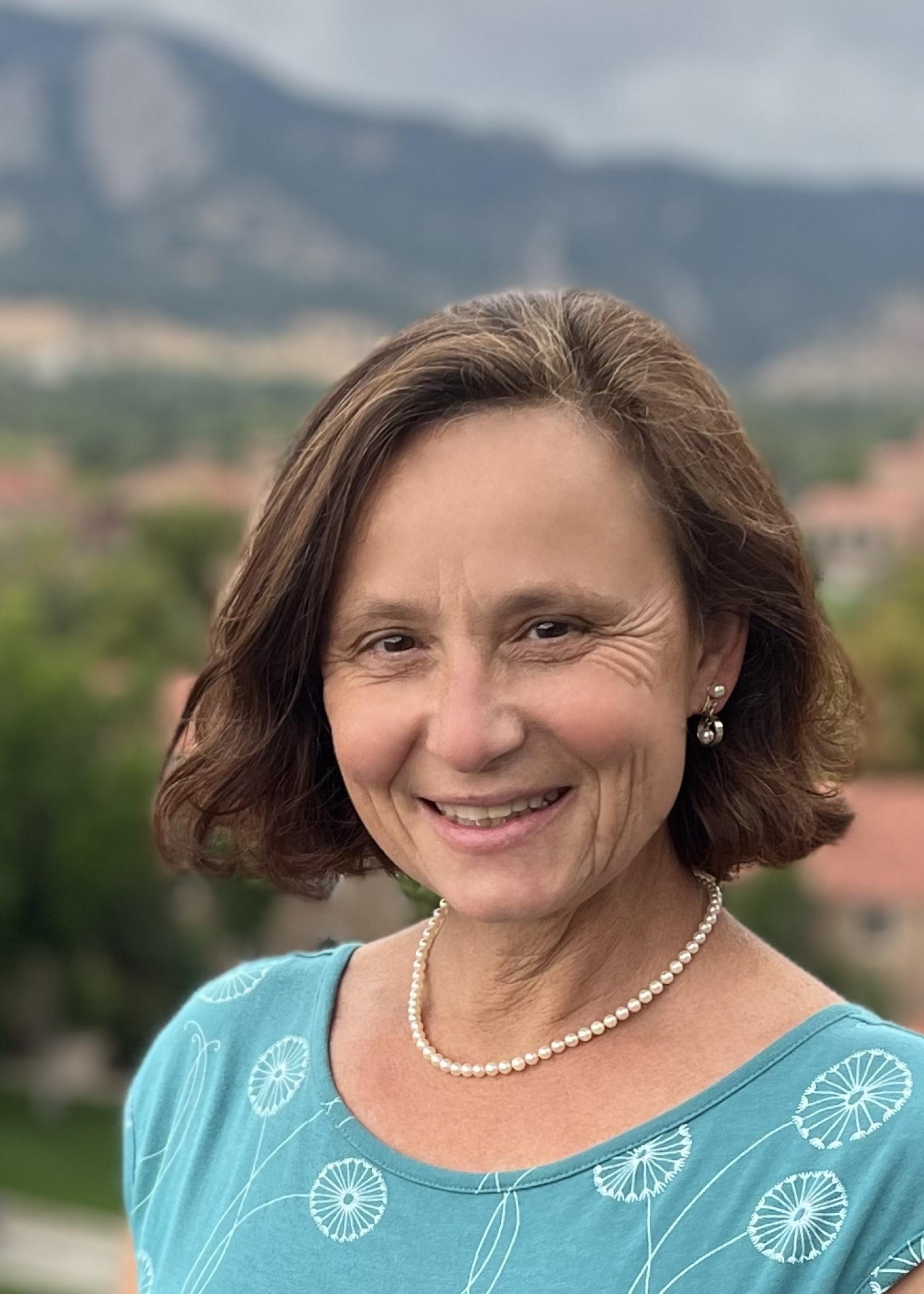
Matteo Sonza Reorda is a Full Professor at the Polytechnic University of Turin, affiliated with the Department of Automatic Control and Computer Science (DAUIN). He holds roles such as Partnership Agreement Coordinator with SMAT and has served as Vice-Rector for Research (2021–2024). His research focuses on fault tolerance, hardware reliability, and AI acceleration, with contributions to GPU/CNN reliability, self-test libraries, and defect-oriented testing. Education: M.S. in Electronics Engineering, Politecnico di Torino (1986) Ph.D. in Computer Engineering, Politecnico di Torino (1990) Research Interests: His work spans automatic test equipment, circuit reliability, GPU fault tolerance, neural network hardening, and embedded systems safety . He leads the Electronic CAD & Reliability Group and collaborates with institutions like the ISI Foundation and the National Research Council (CNR). Publications & Impact: With over 180 publications, his recent work emphasizes AI accelerator reliability, fault injection techniques, and safety-critical systems. Key trends include GPU resilience for CNNs, self-test library optimization, and radiation fault modeling in neural networks. Awards & Recognition: IEEE Fellow (2016–) Multiple best-paper awards at IEEE conferences (DDECS, DATE, etc.) Grants & Collaborations: Coordinator of EU projects (RESCUE, TUTORIAL) Partnerships with EDF, Marelli Europe, and SMAT Lead on National HPC/Quantum Computing Spoke 1 (2022–2025) Labs/Teams: Leads the CAD Group and collaborates with the French-Italian LIA LAFISI lab on hardware-software integration.
Professor Winston Hsu is a distinguished faculty member in the Department of Computer Science and Information Engineering at National Taiwan University, where he has served as a full professor since 2015. He is the co-director of the Communications and Multimedia Laboratory (CMLab) and founder of the MiRA (Multimedia indexing, Retrieval, and Analysis) research group. Additionally, he serves as the Founding Director for NVIDIA AI Lab at NTU, the first such lab in Asia. Professor Hsu received his Ph.D. in Electrical Engineering from Columbia University in 2007 under the supervision of Professor Shih-Fu Chang. Prior to his academic career, he was a founding engineer and research manager at CyberLink Corp., now a public image/video software company. National Taiwan University (2007-Present): Professor (2015-Present), Assistant/Associate Professor (2007-2015) MobileDrive (2021-2024): CTO and Vice President (Joint Venture between Foxconn and Stellantis) IBM TJ Watson Research Center (2016-2017): Visiting Scientist Microsoft Research Redmond (2014): Visiting Researcher Columbia University (2007): Ph.D. in Electrical Engineering Professor Hsu's research focuses on machine learning, computer vision, large-scale image and video search and recognition, and embedded AI. His work spans from fundamental research in visual recognition to practical applications in automotive systems, medical imaging, and e-commerce. He has pioneered work in disguised face recognition, low-resolution face hallucination, 3D model search, and virtual try-on systems. His current research emphasizes Embodied AI, integrating perception, action, and learning technologies for applications in automotive and robotics domains. His research group has produced numerous influential publications, particularly in top computer vision and multimedia conferences like CVPR, where they won first place in the Disguised Face Recognition competition in 2018. Their work spans diverse application areas including security, medical diagnostics, automotive systems, and e-commerce solutions, demonstrating strong translation from academic research to real-world impact. IBM Research Pat Goldberg Memorial Best Paper Award (2018) First Place, IARPA Disguised Faces in the Wild Competition (CVPR 2018) Best Brave New Idea Paper Award, ACM Multimedia 2017 NVIDIA AI LAB Award (First in Asia, 2016) First Place, MSR-Bing Image Retrieval Challenge (2013) World's Top 2% Scientists (2023) Professor Hsu actively mentors students and researchers, with his group consistently recruiting PhD students, postdocs, and research assistants. He has successfully bridged academia and industry through multiple collaborations, including his role as CTO at MobileDrive (a joint venture between Foxconn and Stellantis) from 2021-2024. His research has been supported by significant industry partnerships with Microsoft, IBM, and NVIDIA, as well as government grants from Taiwan's Ministry of Science and Technology. His laboratory, the Communications and Multimedia Laboratory (CMLab), maintains strong industry connections and focuses on cutting-edge research in visual AI. The lab has produced numerous award-winning projects and maintains active collaborations with global technology companies, particularly in the automotive and consumer electronics sectors.
Yimin D. Zhang is an Associate Professor in the Department of Electrical and Computer Engineering at Temple University's College of Engineering, where he leads the Advanced Signal Processing (ASP) Lab. His research spans statistical signal processing, array processing, radar, wireless communications, and convex optimization. Research Interests: Dr. Zhang's work focuses on cutting-edge signal processing techniques including compressive sensing, sparse arrays, time-frequency analysis, and robust beamforming. These are applied to radar systems, satellite navigation, assisted living, and wireless networks. His research addresses core challenges in target localization, direction-of-arrival estimation, and spectrum-efficient joint radar-communication systems. The recent publications highlight a strong trend in exploiting sparsity, virtual arrays, and deep learning to enhance resolution and robustness in radar and communication systems. Themes include multi-frequency processing, low-rank matrix recovery, and optimized OFDM waveforms for dual-function systems. Scientific Awards: 2016 IET Radar, Sonar and Navigation Premium Award 2017 IEEE Aerospace and Electronic Systems Society Harry Rowe Mimno Award 2018 IEEE Signal Processing Society Young Author Best Paper Award (coauthor) Advising and Grants: Dr. Zhang has served as Principal or Co-Principal Investigator on over $6 million in research funding from the NSF, AFRL, ONR, and DARPA. While student advisees are not listed, his leadership of the ASP Lab suggests active mentorship of graduate researchers. He contributes extensively to the academic community as an associate editor for IEEE Transactions on Signal Processing and editor for Signal Processing journal, and serves on key IEEE technical committees. Labs and Teams: He directs the Advanced Signal Processing (ASP) Lab at Temple University, which focuses on developing novel algorithms for real-world applications in radar, communications, and navigation. Previously, he led the Wireless Communications and Positioning Lab and the RFID Lab at Villanova University.
Professor Ernest Foo is a distinguished academic at Griffith University's School of Information and Communication Technology, specializing in cybersecurity with a focus on industrial control systems and cryptographic protocols. With over 15 years of experience in computer networking, he has established himself as a leading expert in SCADA security and smart grid cybersecurity. His research has significant practical applications in critical infrastructure protection, and he has developed hands-on security training programs that have trained professionals from major Australian utilities and government agencies. Professor Foo's educational background includes: Bachelor of Engineering with Honours in Electronic and Computer Engineering from University of Queensland Doctor of Philosophy from Queensland University of Technology Professor Foo's research interests center around secure cryptographic protocols with specific applications in industrial control system security and cyber physical systems. His work spans SCADA security, smart grid protection, wireless sensor network security, and post-quantum cryptography. He has made significant contributions to understanding vulnerabilities in industrial protocols like Modbus and DNP3, and has pioneered the application of process mining and data mining techniques for attack detection in critical infrastructure systems. His research bridges theoretical security concepts with practical implementations in real-world industrial environments. Professor Foo's recent publications demonstrate a clear trajectory toward increasingly sophisticated security frameworks for critical infrastructure. His work shows a progression from foundational SCADA security research to advanced applications of artificial intelligence, machine learning, and formal methods in cybersecurity. A notable trend is the integration of zero trust principles with industrial control systems, alongside growing emphasis on post-quantum cryptographic solutions. His publications span high-impact journals and conferences in cybersecurity, with increasing focus on anomaly detection in cyber-physical systems and the application of graph-based machine learning techniques to network security challenges. Professor Foo's notable scientific achievements include: Best paper award at the 2nd International Cyber Resilience Conference for "Gap analysis of Intrusion Detection in Smart Grids" Professor Foo has secured significant research funding including an ARC Linkage grant with Powerlink Queensland focused on cyber security for electricity sub-stations. He currently leads multiple research projects including Westpac Micro-Credentials in Financial Crime Investigation, Digital Banking Micro-credentials with ANZ, and research on quantum-safe cryptography. As a dedicated educator, he serves as Program Director for multiple cybersecurity programs including the Master of Cyber Security, and has supervised numerous doctoral and masters students. His Cyber Security: Industrial Control System course, conducted annually from 2013-2018, featured innovative hands-on training with real-world participants from major Australian utilities. Professor Foo has been instrumental in establishing the SCADA security research laboratory with multiple vendor system miniatures running industrial PLCs. His work bridges theoretical security concepts with practical implementations, making significant contributions to the security of industrial control systems and critical infrastructure worldwide.
Aline Eid is an Assistant Professor in the Department of Electrical and Computer Engineering at the University of Michigan Ann Arbor, directing the Beam Dynamics research group. Her work bridges electromagnetics, wireless systems, and autonomous technologies, with a focus on mmWave/sub-THz sensing, backscatter communications, and wireless power transfer. PhD in Electrical and Computer Engineering (Georgia Tech, 2021) MS in Electrical and Computer Engineering (American University of Beirut, 2017) Postdoctoral Associate at MIT Media Lab (Signal Kinetics group) Research Interests: She pioneers systems that use electromagnetic waves to address societal challenges in Sustainable energy networks Smart cities/infrastructures Autonomous vehicles/robots Her group develops mmID tags for radar vision, batteryless sensors, and 5G-based wireless power grids. Scientific Impact: Recognized with awards including IEEE RFID Best Paper (2023) Proceedings of the IEEE Best Paper (2023) IEEE MTT-S Graduate Fellowship (2020) She leads commercialization efforts for warehouse robotics via MTRAC grant and startup Atheraxon. Advising: Mentors 8 students across PhD (Skanda Harisha, Sepideh Ghasemi, Yunfei Liu), Master's (Longyu Guo), and undergraduates (Mohamed Safawi, Katherine Shih, Andy Wang, Adrian Velazquez) in projects spanning robotics, IoT, and electromagnetic engineering. Labs: Beam Dynamics group at U-M Radiation Laboratory, collaborating with Atheraxon and MTRAC for technology translation.
Professor Kim Eun-hee is a faculty member in the Department of Defense Systems Engineering at Sejong University, specializing in advanced radar technologies and signal processing. Her work bridges theoretical research and practical applications in defense systems. Ph.D. in Mechanical Engineering (2004), KAIST M.Sc. in Engineering (1996), KAIST B.Sc. in Precision Engineering (1994), KAIST Her research focuses on radar system design, including airborne active phased array radar, automotive radar, broadband noise radar, and over-the-horizon radar. She explores waveform optimization, MIMO architectures, and signal processing algorithms to enhance radar performance in complex environments. Publications highlight her expertise in MIMO radar configurations, Doppler-insensitive waveforms, and machine learning integration for signal analysis. She leads industry-academic collaborations with organizations like Hanwha Systems and LIG Nex1. She contributes to technical committees, including the Sensor and Signal Processing Division of the Korean Society of Military Science and Technology. Her laboratory (Defense Radar Technology Laboratory) focuses on radar design, signal processing, and sensor integration.
Luca Peretti is an Associate Professor in Electric Machines and Drives at KTH Royal Institute of Technology, affiliated with the School of Electrical Engineering and Computer Science and the Department of Electrical Engineering, Division of Electric Power and Energy Systems. He works as a researcher in the EMD (Electric Machines and Drives) group and serves as Partner Director for KTH's strategic partnership with ABB. Education: M.Sc. in Electronic Engineering (2005) from University of Udine, Ph.D. from University of Padova (2008) Professional Experience: Postdoc at University of Padova (2009-2010), Principal Scientist at ABB Corporate Research (2010-2018), Associate Professor at KTH (2018-present) His research focuses on: Automatic parameter estimation in electric machines Multiphase drive systems Sensorless control algorithms Loss segregation in drive systems Condition monitoring of industrial and transportation applications Recent publications demonstrate expertise in variable phase-pole machines, harmonic plane decomposition, predictive control algorithms, and advanced modeling of permanent magnet motors. Key application areas include transportation electrification, wind energy systems, and industrial drive technologies. Scientific roles include: Associate Editor, IET Electric Power Applications Journal (2019-present) Theme Co-Leader, Swedish Electromobility Center (2020-present) Member, IEEE (2021-present) and IET (2006-present) He leads the strategic partnership with ABB and contributes to doctoral program committees at University of Padova.
Virginia Polytechnic Institute and State UniversityUnited States
Dr. Mathieu Joerger is an Associate Professor in the Aerospace & Ocean Engineering Department at Virginia Tech, leading the Assured Vehicle Autonomy (AVA) Lab. He holds a Ph.D. (2009), M.S. (2002), and Diplôme d’Ingénieur (2002) from Illinois Institute of Technology and INSA Strasbourg. His research focuses on navigation safety, multi-constellation GNSS, and autonomous system integrity. He serves as Technical Editor for IEEE Transactions on Aerospace and Electronic Systems and co-leads the CARNATIONS initiative for resilient PNT systems. Notable awards include the ION Early Achievement Award (2015) and Bradford W. Parkinson Award (2009). Research interests include GNSS augmentation, LiDAR/IMU integration, and safety quantification for autonomous vehicles. His lab collaborates with industry/government on projects like CAAMS and develops methods to detect GNSS interference using UAS. Key publications address integrity monitoring in SLAM, particle filtering, and Kalman filter applications. Education: Ph.D. Mechanical & Aerospace Engineering, Illinois Tech (2009); M.S. Mechanical Engineering, Illinois Tech (2002); Diplôme d’Ingénieur, INSA Strasbourg (2002). Awards: ION Early Achievement Award, Outstanding NAVIGATION Reviewer, Bradford W. Parkinson Award. Professional Roles: Senior Editor for IEEE Transactions, ARAIM Standards Contributor, CARNATIONS Co-Director. Advises multiple PhD/Master’s students and oversees lab activities involving 20+ researchers. Projects include R-PNT systems, UAS-based RFI localization, and automotive GNSS safety. Active in international conferences like ION GNSS+ and AIAA forums.
Prof. Dr.-Ing. Erwin Biebl is a Professor in the Chair of High Frequency Engineering at the Technical University of Munich (TUM). His research focuses on high-frequency technology, automotive radar systems, and microwave communication. He has held academic positions since 1999 and has extensive industry experience at Rohde & Schwarz. His work includes developing sensors and communication systems for automotive safety and environment detection. Education: Studied electrical engineering at TUM, earned his doctorate (1991) and habilitation (1994) in high-frequency engineering. Professional Memberships: Senior Member of IEEE, Member of URSI Commission B, and liaison officer for the Hanns Seidel Foundation. Research Interests: Automotive radar systems, antenna design, millimeter-wave measurements, and sensor technology. His contributions include advancements in synthetic aperture radar and inductive compensation techniques for automotive radomes. Awards: Recognized for his teaching (2002 Lecturer Award) and research, including the Dr. Georg Spinner High Frequency Prize (1992). Supervised teams in competitions such as the 2009 International Collegiate Student Safety Technology Design Competition. Labs/Teams: Leads the Chair of High Frequency Engineering at TUM, focusing on interdisciplinary research in high-frequency systems and automotive applications.
Prof Lee Kwan Min is a Professor and the inaugural Korea Foundation Professor in Contemporary Korean Society and New Media at Nanyang Technological University’s Wee Kim Wee School of Communication and Information (WKWSCI), where he directs the UX Lab. He holds a Ph.D. from Stanford University and has held leadership roles, including founding director of Interaction Science Research Center at Sungkyunkwan University and Vice President at Samsung Electronics, overseeing UX strategy and innovation. His research focuses on user experience (UX), human-machine interaction (HCI/HRI/HAI), digital culture, and Korean society’s technological evolution. He has secured over $12M in research grants and holds patents in display interfaces and gesture control. Notable awards include ICA Fellowship and USC Mellon Teaching Award. Education: Ph.D. (Stanford University), M.A./B.A. (implied from career timeline). Previous affiliations include Sungkyunkwan University (SKKU) and the University of Southern California (USC), where he was tenured at 40. His work bridges academia and industry, advising startups in fintech, smart mobility, and UX design. Research Interests: UX design and evaluation Social/psychological impacts of ICT Human-robot/vehicle interaction Smart cities and disruptive technologies Korean digital society studies Recent work trends emphasize conversational interfaces in vehicles, metaverse analysis, and Fintech agents. His articles explore topics like autonomous vehicle trust, cross-cultural gaming psychology, and VR advertising. Awards include ICA Fellow status and multiple top-paper recognitions. Grants and Patents: Over $12M funding from NSF, Samsung, and Korean/US governments. Patents span smart displays, gesture control, and multimedia systems. Advises global firms on UX strategies and innovation. Labs/Teams: Director of UX Lab at NTU, leading interdisciplinary research. Collaborates with MIT Cognet and editorial boards of top journals like Journal of Communication and Human Communication Research .
Wolfgang Kunz is a Full Professor (C4, W3) and Chair of Electronic Design Automation at the Technische Universität Kaiserslautern since 2001. His academic career spans multiple prestigious institutions, including Goethe-University Frankfurt/Main and the University of Massachusetts, Amherst. He has held leadership roles such as Dean (2005-2007) and Vice-Dean (2007-2009) at TU Kaiserslautern. Habilitation (Dr. rer. nat. habil.), Computer Science, University of Potsdam (1996) Doctoral degree (Dr.-Ing.), Electrical Engineering, University of Hannover (1992) Dipl.-Ing. degree, Karlsruhe Institute of Technology (1989) His research focuses on hardware verification, security, and optimization, particularly in embedded systems and processors. His work on formal verification methods has been commercialized by companies like Synopsys, Mentor Graphics, and Siemens EDA. His 2016-2021 publications address critical security issues such as Spectre/Meltdown and introduce innovative verification frameworks adopted by industry leaders like Infineon and OneSpin Solutions. Scientific awards include the IEEE Fellow (2006), German IT Society Award (2005), and TU Kaiserslautern Distinguished Teaching Award (2016). He has served on editorial boards of major journals and coordinated the Erasmus Mundus European Master Program in Embedded Computing Systems since 2010. Key students: Jörg Bormann, Raik Brinkmann, Tobias Ludwig Collaborations: Siemens EDA, Infineon, AbsInt, Intel SCAP Spin-offs: LUBIS EDA, OneSpin Solutions
Habib Ullah is an Associate Professor in Data Science at the Norwegian University of Life Sciences (NMBU), Norway, where he conducts research at the intersection of computer vision and machine learning. He is affiliated with the Institute of Data Science under the Faculty of Science and Technology. He has previously held academic positions at COMSATS University Islamabad, Pakistan, and the University of Ha'il, Saudi Arabia, and served as a postdoctoral researcher at The Arctic University of Norway. Educational Background: PhD in Information and Communication Technology (Computer Vision), University of Trento, Italy (2011–2015) MSc in Electronics and Computer Engineering, Hanyang University, South Korea (2007–2009) BSc in Computer Systems Engineering, NWFP University of Engineering and Technology, Pakistan (2002–2006) Habib Ullah's research is primarily focused on computer vision and machine learning, with applications in aquaculture, agriculture, and human behavior analysis. He investigates underwater fish feeding sounds using audio classification, develops zero-shot learning models for recognizing unseen classes, and applies deep learning to detect stress in salmon via skin dot patterns. He also explores AI-driven controlled environment agriculture, leveraging sensors and automation for optimal crop growth. His work emphasizes practical AI solutions for real-world challenges in environmental and biological domains. The recent publications highlight a strong trend in leveraging deep learning for zero-shot and semi-supervised learning, particularly in computer vision tasks such as sea ice classification, crowd anomaly detection, and agricultural monitoring. His research spans remote sensing, biomedical signal processing, and human activity recognition, demonstrating interdisciplinary versatility. The keywords reflect a focus on robust feature representation, knowledge transfer, and model generalization. Scientific Awards and Funding: Industrial PhD grant 'Advancing Controlled Environment Agriculture AI' from The Research Council of Norway (Project number 354125, 2 million NOK, 2024) Team member (Coordinator-Participant) in the Battery Cell Assembly Twin (BatCAT) project funded by Horizon Europe (7 mEuro, 2023–2027) Development of an AI-Based Image Analysis System for Monitoring Plant Status (Funding: 1.8 mNOK, starting 2025) Habib Ullah actively supervises PhD projects and contributes to academic service through editorial and organizational roles. He has served as an Associate Editor for IEEE Access, Guest Editor for MDPI Remote Sensing, and Editor of the Springer book Machine Learning Techniques and Sensor Applications for Human Emotion, Activity Recognition, and Support (ML-SHEARS) . He has also been a Track Chair and Program Committee Member for several international conferences, reflecting his leadership in the academic community. His research is supported by significant grants and collaborative projects, indicating strong institutional and international engagement. He is involved in multiple research teams and projects, including the BatCAT project on battery manufacturing and AI applications in controlled environment agriculture with RIFT LABS AS. His lab work integrates deep learning, sensor fusion, and data analytics for environmental and biological monitoring systems.
Zoya Popovic is a Distinguished Professor and holds the Lockheed Martin Endowed Chair in RF Engineering at the University of Colorado Boulder's Department of Electrical, Computer, and Energy Engineering. She earned a Dipl.Ing. from the University of Belgrade (1985) and a PhD from Caltech (1990). She has advised over 50 PhD students and was a visiting professor at Technical University of Munich (2001). Her research focuses on high-efficiency microwave/millimeter-wave circuits, smart antenna arrays, wireless powering systems, and biomedical microwave applications. Notable contributions include quasi-optical imaging techniques and low-noise amplifier designs. Key awards: IEEE Microwave Prizes (1993/2006), Humboldt Research Award (2000), Terman Medal (2001) Lab Group Website: [Link] Recent work emphasizes in-band full-duplex systems, GaN MMICs, and quantum-based waveform modulation. Her group maintains advanced facilities for millimeter-wave and terahertz research.
State University of New York at BuffaloUnited States
Nallan C. Suresh is the Associate Dean for Faculty, Research and Centers and a SUNY Distinguished Professor in the Operations Management and Strategy department at the School of Management, University at Buffalo . His work bridges academic research with industry practice, focusing on manufacturing systems, supply chain agility, and sustainable operations. PhD , University of Cincinnati MBA , McMaster University, Canada BTech , Indian Institute of Technology Suresh's research spans cellular manufacturing , flexible automation , forecasting models , and reverse supply chains . He has pioneered frameworks for evaluating manufacturing systems and optimizing supply chain agility through empirical and simulation-based studies. Recent publications emphasize sustainability and disruptive technologies in supply chains, including reverse logistics for plastics recycling and agile responses to catastrophic events using data analytics. His work integrates DEA models , neural networks , and policy analysis . Summer Research Fellowship, University at Buffalo Joseph T.J. Stewart Faculty Scholar Alfred V. Bodine/SME Award for Machine Tool Economics Cleveland Foundation Grant for High Technology Firms Suresh has secured grants totaling over $145,000, advised numerous students, and contributed to global research through empirical studies in the Netherlands and executive training in China/Latvia. His consulting spans automotive, electronics, and manufacturing sectors.
Professor Grahame Holmes is an Honorary Professor in the School of Engineering at RMIT University, Australia. His expertise spans electrical energy conversion, smart energy systems, renewable energy integration, power electronics, and grid infrastructure. He focuses on advancing technologies for sustainable energy storage, grid stability, and high-efficiency power conversion. Research Interests : Electrical and Electronic Engineering, Communications Technologies, Power Electronics, Renewable Energy Systems, and Grid Integration Solutions. His work emphasizes practical applications such as hydrogen energy storage systems, grid-interactive inverters, and modular multilevel converters. Recent Contributions : Prof. Holmes has published extensively on topics like advanced PWM techniques, resonant current controllers, and DC transformer designs. His research bridges theoretical advancements with real-world implementations, addressing challenges in smart grid stability and high-frequency power conversion. Advising & Grants : Supervised projects include 'Hydrogen Energy Storage System for Nanogrid' (2015) and 'Synchronised Control of Grid-Interactive Inverters' (2015). While specific grant details are not listed, his work aligns with major themes in sustainable energy research. Labs & Collaborations : Engages in collaborative research through RMIT's facilities, focusing on hardware-software co-simulation frameworks and FPGA-based real-time systems.