Dr. Hung Cao is an Assistant Professor of Computer Science at the University of New Brunswick, where he directs the Analytics Everywhere Lab. His work focuses on interdisciplinary research in Cyber-Physical Systems (CPS), IoT, Edge/Fog/Cloud Computing, and Explainable AI, addressing societal challenges through data-driven solutions. Prior roles include PostDoc Fellow and Data Scientist at the People in Motion Lab, UNB, and Lecturer/Researcher at Vietnam National University. He holds a Ph.D. in Geomatics Engineering (specializing in Data Science) from UNB (2020), an M.Sc. in Computer Science from University College Dublin (2015), and a B.Eng. from Vietnam National University (2011). Research interests span Smart Cities, Embedded AI, TinyML, Federated Learning, and Real-time Systems. He has led projects with Cisco, NB Power, and other industry partners to develop scalable analytics frameworks for IoT applications. Dr. Cao actively contributes to technical communities (IEEE Smart City, Edge Computing, etc.), serving as a reviewer for journals and conferences, and a Topic Editor for Electronics Journal . His innovations include the Analytics Everywhere framework for spatio-temporal data analysis, MACeIP platform for smart cities, and energy-efficient IoT systems for environmental monitoring. Current work emphasizes human-centered AI for healthcare diagnostics and industrial inspection systems.
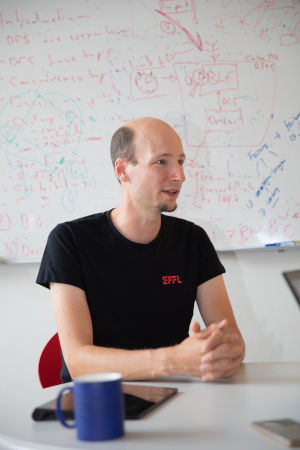
Mathias Payer is an associate professor at EPFL's School of Computer and Communication Sciences (IC), leading the HexHive research group since 2018. He focuses on strengthening software and system security through fuzzing, vulnerability mitigation, and compiler-based approaches. His work includes open-source prototypes and contributions to embedded systems, IoT security, and trusted execution environments. Education: PhD in Computer Science (Dr. sc. ETH) from ETH Zurich (2012), postdoctoral researcher at UC Berkeley (2012–2014), and assistant professor at Purdue University (2014–2018). Tenured at EPFL since 2021. Research Interests: Fuzzing frameworks, memory safety, vulnerability analysis, compiler optimizations for security, and firmware security. Projects include Enclosure , HexType , and DP3T (decentralized contact tracing). Awards: Multiple best/distinguished paper awards at top venues (e.g., Usenix Security, NDSS, RAID). Co-founded the EPFL polygl0ts and Purdue b01lers CTF teams to foster cybersecurity innovation. Labs/Teams: HexHive group, CTF initiatives, and collaborations with industry (e.g., Intel SGX, Android security).
Berk Sunar is a Professor of Electrical & Computer Engineering and the founder of the Vernam Applied Cryptography and Cybersecurity Laboratory at Worcester Polytechnic Institute (WPI). He joined WPI in 2000 after holding postdoctoral and research roles at Oregon State University (OSU) and Trust Inc. His work focuses on applied cryptography, microarchitectural security, AI security, post-quantum cryptography, and homomorphic encryption. Sunar received his BSc from Middle East Technical University (1995) and PhD from Oregon State University (1998). Research interests include vulnerabilities in hardware (e.g., Rowhammer, TPM-FAIL), side-channel attacks, and cryptographic implementations. Notable contributions include discovering flaws in Intel CPUs and TPM chips affecting billions of devices, as well as developing defenses like cuHE (GPU-accelerated homomorphic encryption). Publications highlight breakthroughs in transient execution attacks (e.g., LVI, RIDL), post-quantum signature schemes (Dilithium), and cloud security (Firecracker VMM vulnerabilities). Awards include NSF CAREER (2002) and IBM Pat Goldberg Best Paper (2007). Advised over 30 graduate students, many of whom hold senior roles in academia and industry. Current research addresses AI security, quantum-resistant algorithms, and automated attack detection via machine learning. The Vernam Lab remains a hub for cybersecurity innovation.
Adeel AHMAD is an active Associate Professor (Maître de Conférences) conducting cutting-edge research at the intersection of artificial intelligence, industrial applications, and business process management. His academic work demonstrates strong interdisciplinary connections between computer science, industrial engineering, and business informatics. Dr. AHMAD's research interests span Explainable Artificial Intelligence (XAI), Industrial Machine Learning, Business Process Management, Ontology-Based Reasoning, and Logistics Optimization. His work focuses on developing practical AI solutions for industrial contexts, particularly in Industry 4.0 environments where human-AI collaboration is essential. He has made significant contributions to meta-learning approaches for automated algorithm selection and configuration, with particular emphasis on making these systems transparent and interpretable for domain experts. His publication record shows a clear trajectory toward integrating explainability into industrial AI systems, with recent work focusing on conversational recommendation systems for cyber-physical environments. The research demonstrates consistent evolution from foundational work in business process analysis toward sophisticated AI applications in industrial settings. Active research leadership in Explainable AI for industrial applications Significant contributions to meta-learning frameworks for automated machine learning Interdisciplinary approach bridging computer science, industrial engineering, and business processes Strong publication record in top-tier conferences and journals Dr. AHMAD demonstrates strong collaborative research patterns, frequently working with colleagues including Mourad Bouneffa, Moncef Garouani, and other researchers in the French academic community. His work shows particular relevance to manufacturing, logistics, and cyber-physical systems where AI must work alongside human domain experts.
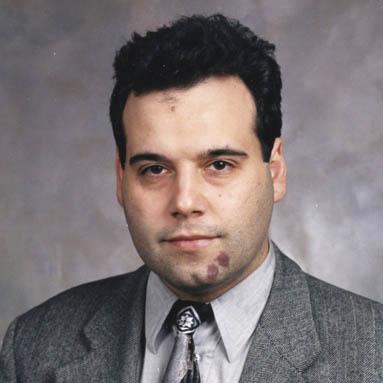
Michael J. Fischer is a Professor of Computer Science at Yale University, renowned for foundational contributions to distributed systems theory, cryptography, and parallel algorithms. His work includes the seminal impossibility result for distributed consensus with faulty processes and the development of the parallel prefix algorithm fundamental to modern parallel computing. His educational background: B.S. in Mathematics, University of Michigan (1963) M.A. in Applied Mathematics, Harvard University (1965) Ph.D. in Applied Mathematics, Harvard University (1968) Fischer's research spans theoretical and applied computer science with emphasis on distributed systems (consensus protocols, fault tolerance), cryptography (information-theoretic security, card-based protocols), and electronic voting systems . His work bridges abstract theory with practical security applications, particularly in trust modeling for e-commerce. Current investigations focus on algorithmic approaches to establishing trust relationships in distributed environments. His publication trajectory reveals evolving expertise from early parallel algorithms (1970-80s) to distributed consensus breakthroughs (mid-1980s), then cryptographic protocols and secure e-voting systems (1985-2000s), with recent work synthesizing these domains through trust frameworks. Key thematic threads include fault tolerance in unreliable networks and verifiable security mechanisms. Scientific recognition: ACM Fellow Fischer has held significant leadership roles including Editor-in-Chief of the Journal of the ACM , chair of the Max-Planck-Institute for Computer Science International Scientific Advisory Board, and founding member of the Computing Research Association's subcommittee on Women in Computer Science. His advisory work extends to the National Science Foundation and Wuhan University's State Key Laboratory on Software Engineering. Outside academia, he actively participates in the Yale Figure Skating Club, having served multiple terms as president. He maintains international collaborations as Guest Professor at Wuhan University and through editorial roles including Acta Informatica , while continuing to teach core computer science courses from data structures to cryptography at Yale.
Tim Murphy is a Professor in the Department of Psychiatry at the University of British Columbia's Faculty of Medicine. He holds a B.Sc. from Saint Mary's College (1984), Ph.D. from Johns Hopkins University (1989), and completed postdoctoral training at Johns Hopkins (1994). He is a Full Member of the Djavad Mowafaghian Centre for Brain Health and leads UBC's Dynamic Brain Circuits in Health and Disease research cluster. His research focuses on understanding brain circuit reorganization after stroke using advanced neuroimaging techniques. Key areas include: In vivo imaging of synaptic interactions and sensorimotor processing Optogenetic brain mapping and neuroplasticity mechanisms Development of automated imaging/stimulation tools for neurological disorders Mouse models of stroke, depression, and autism Synthetic data approaches for behavioral analysis Dr. Murphy's recent publications demonstrate strong focus on developing novel neurotechnologies, including mesoscale imaging systems, 3D calibration tools, and synthetic biomarkers. His work integrates neuroscience with biomedical engineering and computational approaches. He leads an active laboratory developing open-source neuroscience hardware and software. The lab participates in the Canadian Neurophotonics Platform and has created innovative tools like the Diesel2P mesoscope and automated home-cage imaging systems.
Aiko Pras is a Professor at the University of Twente in Enschede, Netherlands. His research spans network and service management, cybersecurity, and distributed systems, with a focus on DNS security, DDoS mitigation, IPv6, and software-defined networking. Research Interests: Network and Service Management Cybersecurity and DDoS Mitigation DNS Security and IPv6 Software-Defined Networking (SDN) Internet Measurement and Performance Critical Infrastructure Protection (ICS/SCADA) Article Trends: Pras's recent work emphasizes collaborative DDoS defense, DNS security, and IPv6 vulnerabilities. His studies often involve large-scale measurements and propose practical solutions for internet resilience and security. Collaborations: He frequently collaborates with Anna Sperotto, Roland van Rijswijk-Deij, and other experts in network security and measurement.
Daniel Hardt serves as Associate Professor in the Department of Management, Society and Communication at Copenhagen Business School. His interdisciplinary research bridges computational linguistics, artificial intelligence, and social analysis, with particular focus on natural language processing applications and theoretical linguistic phenomena. His primary research domains include Computational Linguistics (specializing in ellipsis resolution and sluicing phenomena), Natural Language Processing (developing methods for psychographic classification and sentiment analysis), and Artificial Intelligence (examining large language model capabilities and limitations). Recent work analyzes travel behavior during crises, gender effects in evaluations, and GDPR policy comprehension through NLP techniques. His publications span top venues including Linguistic Inquiry , Tourism Management , and ACL proceedings. Hardt actively engages with practical business applications through 27 media contributions discussing AI implementation, ChatGPT transparency, and data-driven leadership strategies. His academic service includes organizing events like the 2019 "Fake News" conference at CBS and presenting at international venues including JSAI 2024. With 28 supervised academic works documented, he maintains substantial mentoring activity while contributing to public discourse on digital transformation challenges.
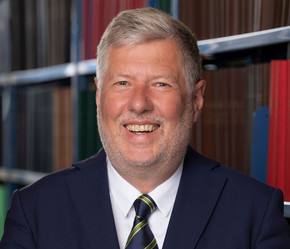
Prof. Dr. Robert Risse is an esteemed academic and practitioner in tax law, currently serving at the Institute for Austrian and International Tax Law at Vienna University of Economics and Business since 2020. Previously, he held the position of Corporate Vice President Tax & Trade at Henkel AG & Co KGaA from 2000 to 2020, where he was globally responsible for taxation and customs. He also holds the title of Honorary Professor for Tax Compliance and Applied Tax Planning at the Institute for Business Taxation, University of Leipzig. His extensive career bridges academic excellence with practical corporate tax leadership. Education 2017: Chairman of the Board of Directors for the Transfer Pricing Center of the Institute for International and Austrian Tax Law, Vienna University of Economics and Business 2014: Doctoral Thesis "Tax Compliance und Tax Risk Management: Eine rechtsvergleichende Analyse und Umsetzung in einem internationalen Konzern" at University of Freiburg 1986-1989: Second State Examination in Law, University of Bonn 1983-1986: First State Examination in Law, University of Bonn 1979-1982: Diplom Finanzwirt FH in Financial Sciences, University of Applied Sciences for Finances North Rhine-Westphalia Research Interests Prof. Risse's research focuses on the intersection of tax compliance, digitalization, and international tax systems. His work explores how digital technologies can transform tax compliance processes, particularly in multinational corporations. He has pioneered research on Tax Compliance Systems, Transfer Pricing in the digital age, and the integration of tax risk management with corporate governance frameworks. His expertise spans international tax law, corporate taxation, and the practical implementation of tax strategies in global business environments. His recent work emphasizes the practical implementation of digital tax systems, with particular attention to blockchain applications, AI in tax compliance, and the integration of tax processes with broader business systems. He has developed frameworks for assessing tax risk in multinational corporations and has contributed significantly to the understanding of transfer pricing in the context of digital business models. Publication Trends Prof. Risse's recent publications reveal a strong focus on digital transformation in tax systems, with increasing attention to practical implementation challenges. His work consistently bridges theoretical tax principles with real-world corporate applications, particularly in multinational contexts. The emergence of topics like AI in tax administration, blockchain applications, and digital compliance systems reflects his forward-looking approach. His research shows a clear trajectory from traditional tax compliance toward integrated digital tax ecosystems that address both regulatory requirements and business efficiency needs. Professional Engagement President of Gesprächskreis Rhein-Ruhr, Internationales Steuerecht e.V./International Fiscal Association (IFA) West Member of DIHK Finanz- und Steuerausschuss, Berlin Member of Düsseldorfer Vereinigung für Steuerrecht e.V Member of Fachinstitut der Steuerberater e.V., Düsseldorf Member of Institut Finanzen und Steuern, Berlin Teaching and Advisory Roles Prof. Risse has extensive teaching experience across multiple institutions including University of Leipzig, Vienna University of Economics and Business, University of Freiburg, University of Cologne, and WHU – Otto Beisheim School of Management. He has supervised doctoral students through the "Doktorandenseminar zur Betriebswirtschaftlichen Steuerlehre" at University of Leipzig. His teaching focuses on international taxation, corporate tax law, and the practical application of tax planning in multinational corporations.
Samuel McDermott is an Associate Teaching Professor at the Department of Chemical Engineering and Biotechnology , University of Cambridge. He serves as the Sensor CDT Programme Manager , focusing on interdisciplinary research in healthcare, biotechnology, and open-source hardware. His research spans machine learning applications in medical imaging , laboratory automation , and web-of-things (WoT) integration for scientific equipment. Recent work emphasizes federated learning in healthcare, blood cell morphology classification, and low-cost diagnostic tools. Key article trends include: deep diffusion models for malaria detection , open-source microscopy platforms like OpenFlexure, and AI-driven clinical data generalization . His projects often combine 3D-printed hardware and IoT-enabled laboratory systems .
Simone Silvestri is a Professor and Director of Graduate Studies in the Department of Computer Science at the University of Kentucky, within the Stanley and Karen Pigman College of Engineering. He has held this position since 2025, having previously served as Associate Professor from 2021-2025 and Assistant Professor from 2017-2021. Prior to his appointment at UK, he was an Assistant Professor at Missouri University of Science and Technology (2014-2017) and held postdoctoral positions at Pennsylvania State University (2012-2014) and Sapienza University of Rome (2010-2012). Dr. Silvestri earned his Ph.D. in Computer Science from Sapienza University of Rome, Italy in 2010, following a Laurea cum Laude in Computer Science from the same institution in 2006. His research focuses on Cyber-Physical-Human Systems, Internet of Things, Smart Grid Security, Terrestrial and Aerial Mobile Networks, and Network Management. His work bridges computer science with practical applications in agriculture, energy management, and disaster response scenarios. His research program has been supported by over $5 million in federal funding, including an NSF CAREER award in 2020. He has published more than 100 papers in top-tier journals and conferences including IEEE Transactions on Mobile Computing, IEEE Transactions on Smart Grids, and ACM Transactions on Sensor Networks. His recent work shows a strong trend toward applying cyber-physical systems to agricultural technology, energy management, and precision livestock farming, with increasing integration of machine learning techniques. NSF CAREER Award (2020) Best Demo Runner-Up Paper - IEEE PerCom (2025) Excellent Editor Award - IEEE Transactions on Network Science and Engineering (2024) Best Editor Award - Elsevier Pervasive and Mobile Computing (2024) Best paper award - IEEE International Conference on Network Protocols (2009) Dr. Silvestri has advised numerous graduate students to completion, including Ph.D. candidates Xu Tao and Ashtuoth Timilsina, and Master's students Josh Guess and Seifalla Moustafa. His research group has secured significant funding from NSF, NIFA, NATO, and other agencies for projects totaling over $6 million. He also created the CSMentor resource, providing guidance for computer science graduate students on academic writing, PhD success, and career development. Dr. Silvestri actively collaborates with researchers across multiple disciplines, particularly in agricultural technology and precision farming applications.
Bogdan Iancu is a University Lecturer in the Department of Information Technology at the Faculty of Science and Engineering, Åbo Akademi University. He holds a PhD and Docent qualification in Computer Science, with extensive expertise in artificial intelligence and computer vision applications, particularly in the maritime domain. His academic career spans numerous research projects and publications that bridge theoretical AI concepts with practical industry applications. Dr. Iancu's research focuses on AI applications in maritime technology, with special emphasis on object detection systems, security challenges in AI models, and sustainable technological solutions. He has developed benchmark datasets like ABOships and ABOships-PLUS that have become valuable resources for researchers in maritime computer vision. His work addresses critical challenges including adversarial attacks on object detection systems, as evidenced by his 2025 publication on TOG Adversarial Attacks in YOLO Models. The analysis of his recent publications reveals a clear progression from foundational dataset creation to advanced security analysis and neurosymbolic approaches that combine neural networks with symbolic reasoning. His research shows increasing sophistication in addressing real-world challenges in maritime AI systems, with particular attention to robustness, security, and practical implementation. Dr. Iancu actively participates in numerous research projects including EDISS (Engineering of Data-intensive Intelligent Software Systems), SMARTER (Sea4Value Smart Terminals), and DECATRIP (Decarbonizing Transport Corridors). These projects involve collaboration with industry partners across Finland and Europe, focusing on applying AI to solve real-world challenges in maritime transport, digitalization, and sustainability. He has contributed to the academic community through teaching courses in Artificial Intelligence, Data Science, and Graph Algorithms, and through active participation in the Finnish Artificial Intelligence Society. His work aligns with UN Sustainable Development Goals, particularly those related to industry innovation, infrastructure, and climate action through projects like DECATRIP that focus on decarbonizing transport corridors.
Dr. Lin Jiang serves as Assistant Professor in the Department of Mechanical Engineering at San José State University's Charles W. Davidson College of Engineering, where her research bridges biomechanics and robotics to develop medical assistive technologies and human-robot interaction systems. Her educational background includes a Ph.D. and M.Sc. in Mechanical Engineering from the University of Texas at Dallas (2021, 2019), complemented by an M.Sc. in Control Engineering and B.Sc. in Aerospace Engineering from Nanjing University of Aeronautics & Astronautics (2014, 2011) with a minor in Industrial Business Management. Dr. Jiang's research focuses on translating aerospace control systems expertise into medical applications, particularly in rehabilitation robotics and breastfeeding technology. Her work emphasizes human-centered design for devices like the patented SmartLact8 breast pump, with recent publications demonstrating significant contributions to teleoperated rehabilitation systems and lactation biomechanics. Her 15 most recent publications (2020-2025) reveal consistent specialization in medical robotics, with dominant themes in rehabilitation devices (knee braces, upper extremity therapy), breastfeeding technology innovation, and human-robot interaction frameworks for healthcare and driving safety applications. Scientific recognition includes: New Investigator Award from CSUPERB Small Group Project Award from SJSU College of Engineering Exemplary Teaching award from UT Dallas Diversity Award from Summer Biomechanics Conference Best Paper award at ASME IMECE 2018 Research funding includes NSF support for hospital-based human-robot interaction studies. Dr. Jiang actively contributes to IEEE HKN, BMES, ASME, and ISHRML while mentoring students through her Biomechanics and Robotics Lab at SJSU. The Biomechanics and Robotics Lab serves as the primary research hub for developing medical assistive technologies, with current projects focusing on rehabilitation robotics, breastfeeding simulation systems, and human-robot interaction protocols for clinical environments.
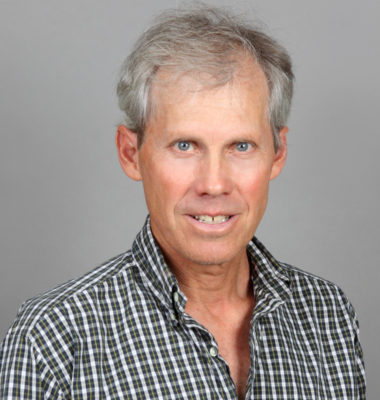
Luca Lutterotti is an Associate Professor at the University of Trento , Department of Industrial Engineering, specializing in material characterization techniques. His expertise spans X-ray diffraction (XRD) , X-ray fluorescence (XRF) , and electron diffraction , with a focus on nanomaterials , functional materials , and crystallographic texture . He developed the widely used MAUD software for Rietveld refinement and texture analysis, with over 30 daily downloads since 2000. Education : Laurea in Materials Engineering (1988, University of Trento, Italy), HDR in Fundamental Sciences (2010, Université de Caen-Basse Normandie) His research interests include micromechanics , residual stress analysis , quantitative phase analysis , and archeometry . He has led international projects like EIT Raw Materials Paired-X (2018-2021) and coordinated the SOLSA H2020 project (2016-2020), which introduced automated core analysis systems for mining. His work has secured €1.5 million in European funding. Recent publications emphasize combined XRD-XRF methodologies , neutron diffraction , and automated material analysis , particularly in mining and recycling. Key tools include MILK (Python interface for MAUD) and advanced detectors for portable systems. Scientific Awards : HDR (2010), Chaire of Excellence (2012-2014) He has held visiting positions at UC Berkeley , Université du Maine , and JAEA (Japan Atomic Energy Agency) , contributing to global collaborations in material science and mining technologies.
John Regehr is a Professor at the School of Computing, University of Utah, specializing in compilers, software testing, and formal verification. His research develops tools to improve software correctness and efficiency, including Csmith (random C program generator) and C-Reduce (test-case reducer). His group focuses on compiler validation, fuzzing techniques, and superoptimization, primarily targeting the LLVM infrastructure. Research interests span compilers, testing methodologies, formal verification, embedded systems, and program analysis. Recent work emphasizes practical tools backed by formal methods to detect and prevent software errors. Publications demonstrate strong trends in compiler verification and testing, with consistent focus on LLVM optimization correctness, translation validation, and automated bug detection through fuzzing and synthesis techniques. Scientific awards include: PLDI 2015 Distinguished Paper Award ICST 2014 Best Paper Award ACM SIGSOFT Distinguished Paper Award Leads a research group developing tools like Souper (superoptimizer) and Alive2 (translation validator). Maintains active academic service through program committees (PLDI, CGO, OOPSLA) and contributes to open-source compiler infrastructure.