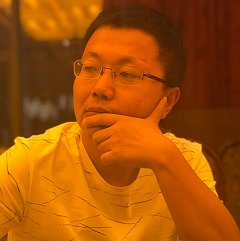
Prof. Michael Weyrich is a faculty member at the Institute of Industrial Automation and Software Engineering (IAS) within the University of Stuttgart , leading the Cluster of Excellence IntCDC . His academic rank is Professor, and he focuses on Industrial Automation , Digital Twins , and Large Language Models (LLMs) for manufacturing and automotive systems. His research explores integrating LLMs into industrial automation for adaptive control, cloud offloading of vehicle functions, and semantic interoperability via Asset Administration Shells . He investigates modular production architectures , connected vehicle systems , and synthetic data generation for autonomous machinery. Recent publications highlight LLM-driven production planning , dynamic sensor calibration , and machine learning for fault detection in electric vehicle powertrains. His work emphasizes real-time data modeling and flexible microservice orchestration .
Samuel Leder is a doctoral researcher at the Institute of Computational Design and Construction (ICD) under the Cluster of Excellence IntCDC at the University of Stuttgart. His work focuses on the integration of robotics and architectural design, particularly in developing distributed robotic systems for timber construction. He has been actively involved in research projects such as RP 19-1 – Robotic Kinematic System for Parallel Construction and RP 19-2 – Co-Design for Distributed Cooperative Multi-Robot Systems . Additionally, he serves on the Equal Opportunity Commission at ICD. Bachelor of Design in Architecture (summa cum laude), Washington University in St. Louis Bachelor of Applied Science in Systems Science and Engineering (magna cum laude), Washington University in St. Louis MSc in Architecture via the Integrative Technologies and Architectural Design Research (ITECH) program, University of Stuttgart Samuel’s research explores the synergies between agent-based modeling , robotic systems , and architectural design . His work aims to create minimal robotic machines capable of constructing complex spatial assemblies, particularly with timber structures . He investigates the co-design of robots and the structures they build, emphasizing modular systems and kinematic behaviors . Recent publications highlight advancements in digital twins , adaptive assembly , and human-robot collaboration for timber construction. The 15 most recent articles reveal trends in collective robotic construction , agent-based modeling , and material-robot interaction . These works emphasize timber fabrication , modular systems , and interactive simulation for large-scale construction tasks. Key sub-fields include adaptive assembly , cyber-physical systems , kinematic control , and human-guided robotics . Scientific Awards: German Academic Exchange Service (DAAD) Award for Outstanding Achievement Deutschlandstipendium Samuel’s research is conducted within the ICD at University of Stuttgart , where he collaborates on the Wood Building Systems for Distributed Robotics associated project. His work bridges architecture , robotics , and computational design , aiming to redefine on-site construction methodologies through innovative robotic systems.
Sara Magliacane is an Assistant Professor at the University of Amsterdam , affiliated with the Amsterdam Machine Learning Lab (AMLab) and the Informatics Institute . She also holds a Research Scientist position at the MIT-IBM Watson AI Lab and has been an ELLIS Scholar since 2022. Education PhD in Artificial Intelligence (2017), VU Amsterdam MSc in Computer Engineering (2011), Politecnico di Milano BSc in Computer Engineering (2008), Università degli Studi di Trieste Research Focus : At the intersection of Causality and Machine Learning , her work addresses Causal Representation Learning from high-dimensional data (images, sequences) Causal Discovery in latent confounder scenarios Causality-inspired Reinforcement Learning for robustness and adaptability Neurosymbolic AI for theoretical guarantees Publication Trends : Her recent work explores Factored adaptation in non-stationary environments (NeurIPS 2022) Temporal causal identifiability (ICML 2022) Binary interaction-based causal discovery (UAI 2023) Safe exploration in visual RL (HSCC 2021) Structure learning lower bounds (NeurIPS 2020) Scientific Recognition : ELLIS Scholar (2022–present) Spotlight presentations at ICML 2022 and ICLR 2022 Advising & Collaborations : Currently supervising 6 PhD students at the University of Amsterdam and AUMC, with 12 alumni advisees. Collaborates with researchers at MIT-IBM Watson AI Lab, Simons Institute, and TUM.
Professor Cathy Ye is an Associate Professor of Engineering Science at the University of Oxford and Director of the Oxford Centre for Tissue Engineering and Bioprocessing (OCTEB) . She is also a Fellow of Linacre College , with research focusing on Tissue Engineering , Biomaterials , and Bioreactor Design for regenerative applications. Her research spans in vitro cancer modeling , bone-cartilage interface development , and smart bioreactor systems for cell therapy. Current projects include SimCells for Cultured Meat under the Tissue Engineering group, supported by grants like the BBSRC award and EPSRC First Grant (EP/H021442/1). She teaches C10 Biosystem Modelling , C23/BME2 Tissue Engineering , and B17/BME1 Biomechanics while leading lab modules for the MSc in Biomedical Engineering. Her publications cover extracellular vesicle purification , antimicrobial biomaterials , and 3D tumor models , reflecting her interdisciplinary approach to biomedical engineering challenges.
Dr. Rhiannon Firth is a Lecturer in Sociology of Education in the Department of Education, Practice and Society at the Institute of Education, University College London (UCL). She also serves as the Programme Leader for the MA in Sociology of Education. Her academic career spans interdisciplinary research at the intersection of Sociology, Education, and Politics, with a focus on utopian ideals and pedagogical practices of social and ecological movements. Dr. Firth's educational background includes: First Class BA (Hons) in Combined Studies (Politics, English Literature and Economic and Social History) from the University of Leicester ESRC-funded MA in Political Science (Distinction) from the University of Nottingham PhD in Political Sociology from the University of Nottingham Her research focuses on how grassroots social movements create knowledge and mobilize social change around global "wicked" problems including inequality, climate change, technological developments, and pandemics. She has conducted funded research with self-managed sustainable communities in the UK and USA, grassroots disaster relief movements including Occupy Sandy New York and COVID-19 Mutual Aid London, and organizations using automation technology in experimental ways. Dr. Firth's recent publications reflect her ongoing exploration of utopian and dystopian themes across multiple domains. Her work spans analyses of pandemic responses, ecological breakdown, industrial technology, and community organizing. A strong thread throughout her scholarship examines how prefigurative politics and mutual aid practices offer alternatives to mainstream approaches to social organization, particularly in times of crisis. Her research increasingly focuses on the intersection of technology, labor, and utopian thinking, particularly examining how automation and cybernetics might be reimagined through radical social movements. Among her significant recognitions: Senior Fellow of the Higher Education Academy (SFHEA), earned in 2017 ESRC funding for her MA studies Dr. Firth has secured research funding from multiple sources including ESRC, ISRF, EPSRC, HEFCE, local councils, and UCL Grand Challenges. She supervises MA dissertations annually and currently mentors one PhD student. Her professional activities include media engagement (such as appearing on BBC Radio 4's The Moral Maze), conference presentations, and serving as ECR Representative for the Utopian Studies Society of Europe. She is actively involved with research groups and networks focused on utopian studies, social movements, and critical pedagogy, contributing to the vibrant intellectual community around alternative futures and radical educational practices.
Helder Carvalho is an Associate Professor at the University of Minho's School of Engineering, Campus de Azurém, where he also serves as Director of the Department of Textile Engineering and Director of the Master's program in Textile and Accessories Product Design and Innovation. His academic career spans over three decades, with a focus on textile engineering and its intersection with electronics and automation systems. His educational background includes: PhD in Textile Engineering (2004) from University of Minho, School of Engineering MSc in Textile Engineering (1998) from University of Minho, School of Engineering BSc in Electrotechnical and Computer Engineering (1992) from University of Porto, Faculty of Engineering Professor Carvalho's research primarily focuses on smart textiles, textile sensors, and instrumentation systems for industrial sewing machines. His work bridges the gap between traditional textile manufacturing and modern electronics, creating innovative solutions for interactive textiles and wearable technology. He has particular expertise in developing flexible sensors that can be integrated into fabrics for applications ranging from sports performance monitoring to healthcare. His recent publications demonstrate a strong trend toward sports applications of smart textiles, with numerous papers on fencing apparel, karate body protectors, and general athletic performance monitoring. The research spans material science, sensor development, and user experience design, showing a comprehensive approach to creating functional and attractive smart textile products. Professor Carvalho has received recognition through research funding from major institutions: BE@T Bioeconomy Textile and Clothing (current) Greenauto - Green Innovation for the Automotive Industry (current) Factor ST+ (2021-2023) FAMEST (2017-2020) TSSIPRO (2016-2019) He has directed multiple academic programs including the Master's in Textile and Accessories Product Design and Innovation, and coordinated educational initiatives like the CET 'Fashion Commerce' program. His work at the Textile Science and Technology Centre demonstrates a commitment to translating research into practical applications across sports, healthcare, and industrial manufacturing sectors.
Mathias Benedek is an Associate Professor at the Institute of Psychology, Faculty of Natural Sciences, University of Graz, Austria. He directs the Creative Cognition Lab and is actively involved in several research networks, including the "Complexity of Life" profile area, the "Brain and Behavior" research network, and the "FUTURE EDUCATION" research network at the University of Graz. His research focuses on the cognitive and neural mechanisms underlying creative thinking, with particular emphasis on the role of memory processes, metacognition, and eye movement patterns during creative ideation. Dr. Benedek's work bridges psychological theory with empirical research methods including eye tracking, neuroimaging, and computational modeling of creative processes. His research has important implications for understanding how creative potential develops and how it can be assessed and nurtured in educational and professional contexts. Dr. Benedek's publication record demonstrates a consistent focus on creative cognition across multiple dimensions. His recent work has expanded into emerging areas such as human-AI collaboration for creative tasks, automated assessment of creativity using large language models, and the relationship between physical activity and creative performance. His research shows a strong trajectory toward more ecologically valid methods for studying creativity in real-world contexts, moving beyond traditional laboratory paradigms. Seraphine Puchleitner Anerkennungspreis (PhD Supervision Award), University of Graz, 2021 William-Stern-Preis, German Psychological Society, 2019 Research Prize, University of Graz, 2017 Research Prize (Publication Category), Initiative Gehirnforschung, 2016 Berlyne Award, Division 10, American Psychological Association, 2015 Dr. Benedek has demonstrated strong commitment to mentoring the next generation of researchers, as evidenced by his 2021 PhD Supervision Award. His research has been supported by multiple grants from national and international funding bodies, though specific grant details are not provided in the available information. His professional service includes leadership roles in the Initiative Gehirnforschung Steiermark since 2010 and active membership in several psychological societies across Europe and North America. Dr. Benedek leads the Creative Cognition Lab at the University of Graz, which employs a multidisciplinary approach to studying creative processes. The lab integrates methods from cognitive psychology, neuroscience, and computational modeling to investigate the mechanisms underlying creative thought. Current research projects examine the relationship between eye movements and internal cognitive processes, the development of automated assessment tools for creativity, and the application of creativity research to educational contexts.
Christian Smith is an Associate Professor and Lecturer at the Department of Robotics, Perception and Learning at Kungliga Tekniska Högskolan (KTH Royal Institute of Technology). His research focuses on robotics and applications in human-centered environments like home environments, small workshops, and healthcare facilities, including the development of new robotic systems for research. Teaching Roles: Course Coordinator/Teacher/Examiner for courses such as Introduction to Robotics (DD2410), Research Project in Robotics (DD2411), and Java Programming for Python Programmers (DD1380) Research Themes: Human-Robot Interaction, Behavior Trees, Exoskeletons, Intent Recognition, and Multimodal Perception Awards: No specific scientific awards mentioned in the provided text His KTH profile highlights work on adaptive robotics systems and formalized control strategies. The research portfolio spans from theoretical studies on behavior tree programming to applied work in assistive technologies and teleoperation systems.
Professor Clinton Fookes is a faculty member at the Queensland University of Technology (QUT) within the School of Electrical Engineering & Robotics . His research focuses on leveraging computer vision and artificial intelligence to develop automated systems that understand, anticipate, and interact with human behaviors, with applications in medical diagnostics, autonomous vehicles, defense, and industrial efficiency . Research areas include AI adaptability, multimodal biosignal analysis, and human-machine interaction Collaborates with CSIRO Data61, Defence Science and Technology Group, Orica, Airbus, and Sentient Vision Systems Develops systems for human action detection, infrastructure monitoring, and stress response prediction His work addresses critical challenges in AI deployment, such as environmental adaptability and reducing diagnostic errors in medical and autonomous systems. Recent publications highlight trends in self-supervised learning, zero-shot knowledge transfer, multimodal integration , and 3D reconstruction for healthcare , while exploring ethical AI use in sectors like mining and defense . Professor Fookes emphasizes interdisciplinary collaboration, bridging engineering, medicine, and social sciences to advance AI systems capable of real-world impact. His research agenda includes improving AI memory capabilities and explainability for safer, more reliable automation.
Kevin Schneider is a Laboratory Fellow at Pacific Northwest National Laboratory (PNNL), a Research Professor at Washington State University (WSU), and an Affiliate Associate Professor at the University of Washington. As manager of PNNL's Office of Electricity Subsector, he leads business development, client relations, and strategic investments in R&D for the grid sector, overseeing portfolios in component design, system modeling, hierarchical controls, secure communications, and energy storage. Dr. Schneider is internationally recognized for his expertise in power system analysis, planning, and operations. His research focuses on improving grid reliability and system flexibility by harnessing advanced grid concepts at the edge of power systems, including microgrids, energy storage, electric vehicles, distributed energy resources, and smart home appliances. At WSU, he is a researcher for the WSU and PNNL Advanced Grid Institute (AGI), implementing layered control architectures to enhance operational flexibility of critical power systems. His work spans multiple disciplines within electrical engineering and power systems, with strong emphasis on practical applications for grid modernization, particularly in grid resilience, microgrid operations, and integration of distributed energy resources. Dr. Schneider is a Fellow of the Institute of Electrical and Electronics Engineers (IEEE), where he has served in multiple technical leadership roles. His scientific contributions have been recognized with significant awards: Presidential Early Career Award for Scientists and Engineers (PCASE), 2019 Fellow of the Institute of Electrical and Electronics Engineers (IEEE) Dr. Schneider earned his B.S. in Physics and M.S. and Ph.D. in Electrical Engineering from the University of Washington. He is a licensed Professional Engineer in Washington State. His research has resulted in numerous patents related to power grid technologies, including several focused on voltage and frequency stability of distribution systems. His work has substantial implications for grid modernization efforts and the development of more resilient power systems in the face of climate change and other challenges.
Giovanna Turvani is an Associate Professor at the Department of Electronics and Telecommunications (DET) at Politecnico di Torino, with affiliations in both the College of Electronic, Telecommunications and Physics Engineering and the College of Computer, Film, and Mechatronics Engineering. Scientific Branch: IINF-01/A - Electronics ERC Sectors: PE7_4, PE7_11, PE6_1, PE6_14, PE7_3 SDG Goals: Quality Education, Gender Equality, Affordable Energy, Industry Innovation Her research focuses on advanced electronics and quantum technologies, including: Logic-in-memory computing Quantum computing architectures Microwave imaging for medical and agricultural applications CAD tools for emerging nanotechnologies Embedded systems for bee health monitoring IoT solutions for bio-waste valorization Publications show strong expertise in quantum computing, nanocomputing, and microwave imaging, with recent trends emphasizing quantum optimization frameworks, in-memory architectures, and IoT-based agricultural technologies. She supervises PhD students in areas like quantum machine learning algorithms, predictive on-board systems, and quantum hardware design. Collaborations span multiple disciplines, including medical device development and agricultural electronics. Patents include innovations in microwave imaging, racetrack memory logic functions, and in-memory computing devices.
Xin Peng is a Professor and Deputy Dean at the School of Computer Science, Fudan University, China. He leads the CodeWisdom research team focusing on intelligent software engineering techniques for development, maintenance, and operation of software systems. His educational background includes a PhD in Computer Science (2001-2006) and Bachelor's degree in Computer Science (1997-2001), both from Fudan University. He progressed through the academic ranks from Assistant Professor (2006-2010) to Associate Professor (2010-2015) and finally to Professor (2015-present). Professor Peng's research interests span Software Analytics, Intelligent Software Development, Microservice systems, and AIOps. His work leverages AI technologies including deep learning and knowledge graphs to develop intelligent software engineering techniques. A significant portion of his recent work focuses on applying Large Language Models to various software engineering tasks, including vulnerability detection, API usage analysis, and test automation. His publication record shows a clear trend toward increasingly sophisticated applications of AI in software engineering, with recent work heavily featuring LLMs for tasks ranging from vulnerability patch porting to resource leak detection. The research spans multiple domains including microservice systems, automotive software, and Web of Things security. Best Paper Award of ICSM 2011 ACM SIGSOFT Distinguished Paper Award of ASE 2018 and 2021 IEEE TCSE Distinguished Paper Award of ICSME 2018, 2019, and 2020 IEEE Transactions on Software Engineering Best Paper award for 2018 Professor Peng serves in numerous leadership roles including Deputy Director of CCF Technical Committee on Software Engineering, Co-Editor-in-Chief of Journal of Software: Evolution and Process, and Associate Editor for ACM Transactions on Software Engineering and Methodology. He has been actively involved in program committees for major software engineering conferences including ICSE, ASE, ESEC/FSE, and ICSME. He leads the CodeWisdom research team at Fudan University, which has developed several benchmark systems including TrainTicket for microservice research. The team's work bridges academic research with industrial applications, particularly in microservice systems analysis and intelligent software development tools.
Peng Li is a Professor in the Department of Electrical and Computer Engineering at the University of California, Santa Barbara. His research focuses on integrated circuits, brain-inspired computing, electronic design automation, and hardware machine learning systems. He holds Fellow status in the Institute of Electrical and Electronics Engineers (IEEE). His work emphasizes neuromorphic engineering, spiking neural networks, and the intersection of machine learning with analog circuit design. Education includes a PhD in Electrical and Computer Engineering from Carnegie Mellon University, an MS in Systems Engineering from Xi'an Jiaotang University, and a BS in Information Science and Engineering from the same institution. His research has been recognized with prestigious awards including the ICCAD Ten-Year Retrospective Most Influential Paper Award and multiple Design Automation Conference Best Paper Awards. Key research trends in his articles include advancements in spiking neural networks (SNNs), hardware accelerators for neuromorphic computing, Bayesian optimization for analog circuit design, and robustness in machine learning systems. He explores topics like adversarial robustness, energy-efficient architectures, and data-efficient prediction techniques. His work bridges theoretical machine learning models with practical hardware implementations, particularly in 3D integration and systolic array acceleration. Notable contributions include pioneering hybrid approaches combining formal verification with machine learning for analog circuits (HFMV framework), and innovations in neuromorphic processors such as the 3D Liquid State Machine architecture. His research also addresses challenges in semiconductor manufacturing, including wafer map pattern recognition and failure detection through semi-supervised learning and contrastive methods. Awards highlight his impactful contributions to both design automation and neural computing. His grants and collaborations likely span industry partnerships in semiconductor technology and neuromorphic computing. He leads a lab focused on next-generation hardware-software co-design for intelligent systems, emphasizing energy efficiency and scalability.
Dr. Frederic Bosche is a Reader in Construction Informatics at the University of Edinburgh's School of Engineering, leading the CyberBuild Lab. His research focuses on advancing digital construction technologies, including BIM, sensing systems, and digital twinning to enhance infrastructure management and workforce safety. Education: PhD in Civil Engineering (University of Waterloo), M.Sc. from University of Texas at Austin, and M.Eng. from Ecole Centrale de Lille. Research interests include automated construction processes, data-driven infrastructure lifecycle management, and integrating emerging technologies like AI and IoT into construction workflows. His CyberBuild Lab has pioneered projects in defect detection, roof monitoring, and smart construction inspection. Notable contributions include over 100 publications, 12 research projects (e.g., 'Digital Facility' and 'Monitoring Roofs of Traditional Buildings'), and awards such as the Charles M. Eastman Top PhD Paper Award. He actively engages in public outreach through science festivals and collaborates internationally with institutions like ETH Zurich and Heriot-Watt University.
Professor Jyh-Hone Wang holds a faculty position in the Department of Mechanical, Industrial and Systems Engineering at the University of Rhode Island (URI). His research focuses on transportation human factors, driving safety, and intelligent transportation systems, with particular emphasis on variable message sign (VMS) design, driver behavior analysis, and automation technology acceptance in elderly drivers. He has conducted studies on dynamic message sign efficacy, traffic flow management, and roadway safety improvement strategies. Education: Ph.D. and M.S. in Industrial Engineering from the University of Iowa (1989 and 1986), and B.S. in Industrial Engineering from Tunghai University, Taiwan (1980). Recent grants include a 2020 National Institute for Undersea Vehicle Technology grant (Co-PI) on stress monitoring via wearable devices, and a 2017 Rhode Island Department of Transportation grant (PI) assessing sidewalk quality compliance. His work bridges engineering principles with human factors to enhance traffic safety and transportation efficiency. Key research contributions include optimizing VMS message design for clarity, analyzing driver responses to automation levels, and addressing tailgating issues through behavioral interventions. He has advised multiple graduate students and collaborated on interdisciplinary projects involving traffic data analysis and manufacturing process optimization.