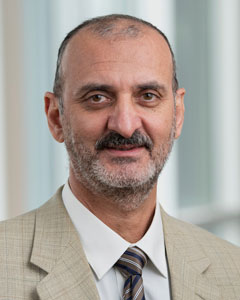
Zaki Leghtas is a research professor at École des Mines ParisTech PSL and a lecturer and researcher at ENS and Mines. He is an active member of the Quantic project team, a joint research initiative between CNRS, ENS PSL, Inria, Mines ParisTech PSL, and Sorbonne University focused on quantum computing. Leghtas specializes in quantum error correction, with his primary research goal being the development of superconducting circuits capable of automatically correcting quantum errors. His innovative approach involves encoding information in harmonic oscillators rather than traditional qubits, which represents a significant departure from conventional quantum computing approaches. This work addresses one of the fundamental obstacles preventing the practical implementation of quantum computers. His research has wide-ranging applications across multiple domains including quantum metrology (enabling measurement devices of unprecedented precision), quantum communication (providing highly secure information exchange), and quantum simulation (allowing artificial construction and analysis of molecular structures and chemical reactions). Additionally, Leghtas is pursuing fundamental research on detecting Cooper pairs - electron pairs that carry current in superconductors - with unparalleled precision. ERC Starting Grant recipient (2019), awarded €1.5 million over five years Leghtas' ERC-funded research project is divided into two main components: the first focuses on practical quantum error correction systems, while the second explores more fundamental physics questions related to particle detection. The funding supports hiring research personnel (one postdoctoral researcher and two students), equipment acquisition (including specialized cryogenic systems requiring operation at 1 Kelvin/-272°C), and operational expenses. His work represents a significant contribution to advancing the field of quantum computing beyond current limitations.
Dr. Zakariya Al-Hamouz is a Professor and Chair of Electrical Engineering at Indiana Tech's Talwar College of Engineering and Computer Sciences. He holds a Ph.D. in Electrical Engineering from King Fahd University of Petroleum & Minerals (KFUPM). His research focuses on power systems protection, control systems, and fault diagnosis in electrical machinery. He has authored over 100 refereed journal and conference papers, secured seven U.S. patents, and received prestigious awards like the IEEE/IAS James Melcher Prize Paper Award (2001) and Indiana Tech's 2023 Faculty of the Year award. Education: Ph.D., Electrical Engineering, KFUPM (Dissertation: Analysis of the Ionized Field Around HVDC Transmission Lines) M.Sc., Electrical Engineering, Jordan University of Science & Technology (Thesis: Transmission Expansion Planning Using Quadratic Programming) B.Sc., Electrical Engineering, Yarmouk University Research Interests: Dr. Al-Hamouz specializes in rotating machinery fault diagnosis, power systems automation, and renewable energy integration. His work bridges theoretical modeling with practical industrial solutions, including contamination monitoring systems for high-voltage insulators and corona power loss mitigation in transmission lines. Grants & Projects: AbuShamleh & Al-Hamouz (2022-2023): Basic Communication System ($3,000) Al-Hamouz & Rumsey (2020-2021): Reinforcement of Electrical Engineering Labs ($7,806) KFUPM Projects: Corona Power Loss Analysis, Ash Waste Management, Water Tree Analysis Awards & Recognition: Recipient of KFUPM Excellence in Research Award (2000) First Prize at IEEE-GCC Conference (2003) Indiana Tech's NICE Faculty of the Year (2023) Academic Leadership: Dr. Al-Hamouz advises the Indiana Tech Robotic Football Team and leads initiatives in mechatronics education. His courses include Linear Controls, Electrical Machines, and Senior Design Projects.
Dr Sanjay Sharma is an Associate Professor in Intelligent Autonomous Control Systems at the University of Plymouth . He leads the Autonomous Marine Systems Research Group , focusing on AI-driven navigation and control of marine vehicles. His work spans autonomous robotics, SLAM technology, swarm robotics , and marine energy systems . Key projects include UAE Ocean (enhancing ocean forecasting in the UAE) and sustainable fisheries management in the Indian Ocean. Education : B.Tech (Electrical Engineering) from IIT Kharagpur, M.Tech (Control Systems), and PhD (Systems & Control Engineering) from the University of Sheffield. He joined Plymouth in 2007 after roles with Indian Railways and academic collaborations. Research Interests : Application of AI in marine environments, autonomous vehicle control, underwater robotics, and sensor optimization. He emphasizes safe human-machine interaction and long-duration autonomous operations . Professional Roles : Member of the Institution of Mechanical Engineers , UK Automatic Control Council , and International Federation of Automatic Control . He coordinates training programs in oceanography and collaborates on offshore wind farm maintenance systems. Future Work : Expanding autonomous marine tech for sustainable energy, fisheries, and coastal management. He advocates for public trust in autonomous systems through transparency and rigorous testing .
Pouya Bolourchi is an Associate Professor in the Faculty of Engineering at Final University. He holds a Doctoral Degree in Electrical and Electronic Engineering from Eastern Mediterranean University (2018), a Master's Degree from the same institution (2012), and a Bachelor's Degree from Girne American University (2009). His research focuses on machine learning applications in biomedical engineering, optimization algorithms, medical imaging, and signal processing. Key research interests include Alzheimer's disease diagnosis through statistical methods, SAR (Synthetic Aperture Radar) image recognition using moment-based techniques, and industrial optimization problems leveraging swarm intelligence (e.g., particle swarm optimization). His work bridges computational methods with real-world applications in healthcare and engineering systems. Recent publications emphasize advancements in feature selection strategies, ensemble learning, and genetic algorithm implementations for medical diagnostics and industrial system reliability. Notable contributions include improving gene expression analysis via entropy-fisher score and developing novel approaches for Parkinson’s disease detection using biogeography-based optimization. His academic contributions span over 20 peer-reviewed articles, with a focus on interdisciplinary applications of machine learning in healthcare, remote sensing, and industrial engineering. Collaborations highlight the practical deployment of optimization algorithms in electrostatic precipitator systems and baghouse design.
Mladen Veinović is a Professor at Singidunum University, affiliated with the Faculty of Informatics and Computing. He holds a Doctorate in Systems Theory from the School of Electrical Engineering, University of Belgrade (1996), along with postgraduate and bachelor's degrees in Automatic Control and Electronics from the same institution. His research focuses on cybersecurity, network security, signal processing, and machine learning. Key contributions include work on malware C2 infrastructure, IoT security, steganography, and robust speech processing algorithms. He has authored/co-authored over 40 books and numerous peer-reviewed articles in journals like IEEE Access, Sensors, and Computers & Security. Veinović is actively involved in education technology, developing secure communication tools and problem-based learning approaches. His work spans cloud forensics, blockchain applications, and pandemic-era teaching strategies. He has been a key contributor to projects like the WIDE web development framework and cybersecurity tools for sensor networks. Professional affiliations include Singidunum University's research institute and participation in international conferences like Sinteza and TELSIKS. His expertise bridges theoretical research and practical applications in digital systems, IoT, and information security.
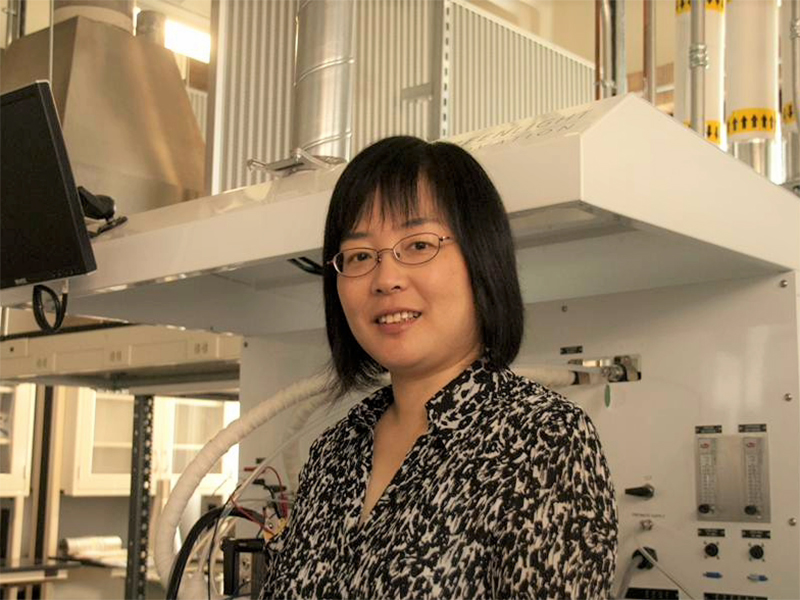
Dr. Dongmei "Maggie" Chen is the J. Mike Walker Professor of Mechanical Engineering at The University of Texas at Austin since 2009. Her research focuses on automatic control, dynamic systems, and their applications in energy systems (wind turbines, fuel cells, geothermal wells), drilling technology, and robotics. She holds a Ph.D. from the University of Michigan (2006) and a B.S. from Tsinghua University (precision instruments). Her work spans advanced manufacturing (e.g., roll-to-roll graphene transfer), geothermal energy production, and control strategies for drilling vibrations. Notable contributions include managed pressure drilling systems, real-time anomaly detection, and predictive control for autonomous systems. She leads the Advanced Power and Sustainable Control Lab (APSCL) and has pioneered energy-efficient trajectory planning for robots. Awards include the NSF CAREER Award (2011) and IEEE PES Prize Papers (2016). Her lab develops hardware/software platforms for autonomous ground vehicles and collaborates on real-time drilling control systems.
Piotr Maj is Professor at the Department of Metrology and Electronics within the Faculty of Electrical Engineering, Automatics, Computer Science and Biomedical Engineering at AGH University of Science and Technology in Kraków. His research focuses on semiconductor radiation detectors and readout electronics for nuclear physics, medical imaging, and space applications. His primary research areas include Radiation Detection using CZT and TlBr semiconductors, ASIC Design for photon counting systems, and Position-Sensitive Detector development. Key specialties encompass virtual Frisch-grid technology, event-driven readout architectures, and integration of machine learning for real-time signal processing in high-energy physics environments. His work frequently involves synchrotron radiation facilities and space instrumentation projects. Analysis of his 2023-2025 publications reveals dominant trends in radiation-hard ASIC development for space missions (e.g., HEXID, EDWARD architectures), 3D position-sensitive detector characterization (CdZnTe/TlBr arrays), and machine learning integration for in-pixel intelligence. His detector systems target applications in gamma-ray astronomy, nuclear security, and biomedical imaging, with emphasis on high-speed, low-noise performance under extreme conditions.
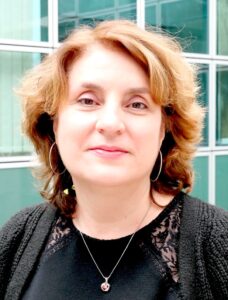
Madalina Deaconu is an Inria Research Director and Assistant Scientific Delegate (DSA) at the Inria Center of the University of Lorraine since January 2022. She leads the PASTA joint project team (Processus Aléatoires Spatio-Temporels et leurs Applications) hosted at the Institut Elie Cartan de Lorraine (IECL). Her academic affiliation is with the Faculty of Science and Technology at the University of Lorraine, where she conducts research in probability theory and stochastic modeling. She serves on multiple committees including the Inria Evaluation Commission, the Geophysics Program Committee of the RT CNRS "Earth & Energies", and has held leadership positions including Director of the Charles Hermite Federation (2018-2022). Dr. Deaconu completed her Habilitation à diriger des recherches (HDR) at Université Henri Poincaré – Nancy 1 in 2008 and earned her PhD in Stochastic Processes and Partial Differential Equations from the same institution in 1997. Habilitation à diriger des recherches (HDR), Université Henri Poincaré – Nancy 1, France, 2008 PhD in Stochastic Processes and Partial Differential Equations, Université Henri Poincaré – Nancy 1, France, 1997 Madalina Deaconu's research focuses on stochastic modeling with applications across multiple domains. Her primary areas include data-enriched stochastic modeling, probabilistic approaches to coagulation/fragmentation models, numerical methods for diffusion reach times, and stochastic methods for linear and nonlinear partial differential equations. Her work bridges theoretical probability with practical applications in environmental science, geophysics, and actuarial science. She develops innovative probabilistic simulation methods and analyzes random spatio-temporal processes, with particular emphasis on fragmentation equations, Bessel processes, and Hawkes processes. Her research has significant applications in modeling avalanches, natural disasters, insurance risk assessment, and hydrochemical data analysis. She has established international collaborations with researchers from University of Turin, University of Uruguay, and institutions in Bucharest, as well as national collaborations with University of Burgundy and INRAE Grenoble. Analysis of Dr. Deaconu's recent publications reveals a consistent focus on fragmentation processes and stochastic modeling approaches. Her work spans theoretical developments in probability theory, numerical methods for stochastic processes, and practical applications in environmental science and actuarial mathematics. A notable trend is her increasing focus on Bayesian inference methods and point process applications, particularly for environmental and insurance contexts. Her most recent work demonstrates strong interdisciplinary connections, applying stochastic methods to hydrochemical data analysis, insurance recommendation systems, and natural disaster modeling. The consistent thread throughout her publications is the development and application of sophisticated probabilistic techniques to solve complex real-world problems. Dr. Deaconu has received recognition for her contributions to research: Paper and Poster award at EWEA 2015 (European Wind Energy Association) Plenary speaker at the 14th International Conference on Monte Carlo Methods and Applications (MCM23) While specific student names aren't listed in the provided text, Dr. Deaconu is involved in doctoral training through the IECL and supervises research in stochastic modeling. She coordinates multiple research collaborations including industrial partnerships with Le Foyer Luxembourg and SnT Université du Luxembourg (2018-2022). Her teaching activities include Stochastic Modeling at Master 2 level, Stochastic Differential Equations at École des Mines de Nancy, and Monte Carlo Simulation for Financial Market Engineering. Dr. Deaconu leads the PASTA research team (Processus Aléatoires Spatio-Temporels et leurs Applications), a joint Inria project hosted at IECL. She previously directed the Charles Hermite Federation (2018-2022), which brought together three major research laboratories: CRAN (Automatic Control), IECL (Mathematics), and LORIA (Computer Science). Her work is centered at the Institut Elie Cartan de Lorraine, a mathematics research institute affiliated with the University of Lorraine, where she contributes to both theoretical developments and practical applications of stochastic methods across multiple scientific domains.
Lucien Baldas is a Professor in the Mechanical Engineering Department at the National Institute of Applied Sciences of Toulouse (INSA Toulouse), where he serves as Associate Dean since 2020 and previously held roles including Director for International Relations (2007-2013). He is a member of the Modeling of Mechanical Systems and Microsystems (MS2M) research group, focusing on microfluidics and gas dynamics. His research spans microfluidics , gas microflows , fluidic micro-actuators for active flow control , particle-laden flows in microchannels , and mini pneumatic systems . Key projects include coordination of the ANR/DFG Project PuCK (2023-2026), Work-Package leadership for European Projects PERSEUS and MACAO, and coordination of the MIGRATE Training Network. His work demonstrates strong integration of theoretical modeling with experimental validation across fluid dynamics applications. Analysis of his 125+ publications reveals consistent focus on microscale flow phenomena , thermal effects in gas flows , and fluidic actuator development . Recent work (2021-2025) emphasizes additive manufacturing for microsystems , high-frequency fluidic oscillators , and multi-physics integration in microfluidic devices, with significant contributions to rarefied gas dynamics and particle transport phenomena. Key Administrative Roles: Associate Dean of Mechanical Engineering Department (2020-present) Elected Board of Studies member (2022-present) Co-chair of ISTEGIM 2019 Symposium Work-Package leader for multiple EU projects Co-Leader of Microfluidics Working Group (since 1999) His teaching portfolio includes Solid Mechanics, Automatic Control, Fluid Mechanics, and Computational Fluid Dynamics at INSA Toulouse. He has supervised numerous PhD students through EU projects and coordinates international research collaborations across Europe and North America.
Camilla Sætre is an Associate Professor in Ocean Technology/Measurement Technology at the Department of Physics and Technology, University of Bergen. Her research focuses on measurement science, particularly on the reliability and quality of measurements in ocean-related areas. She is actively involved in major research initiatives including SFI Smart Ocean and HyMe: Reliable metering for the hydrogen Supply Chain. Dr. Sætre's work spans ocean observation systems, multiphase flow measurement, underwater optical communications, and sensor technology. Her research addresses critical challenges in obtaining reliable measurements in harsh marine environments, with particular emphasis on data quality assurance and real-time monitoring capabilities. She has made significant contributions to directional wave measurements from navigational buoys, demonstrating their accuracy compared to dedicated wave measurement systems. Her publication record shows a transition from early work in atmospheric physics (doctoral thesis on nitric oxide in the thermosphere) to her current focus on ocean technology. Recent publications reveal innovative approaches to correcting scattering errors in underwater optical measurements, developing smart ocean observation systems, and addressing biofouling effects on sensor data. SFI Smart Ocean project (Research Council of Norway, reference 309612, 2020-2028) HyMe project (Research Council of Norway, reference 336565) Dr. Sætre collaborates extensively with industry partners including Aanderaa Instruments AS and NORCE Norwegian Research Centre AS. Her work bridges theoretical measurement science with practical ocean observation applications, contributing to more reliable and cost-effective monitoring systems for marine environments.