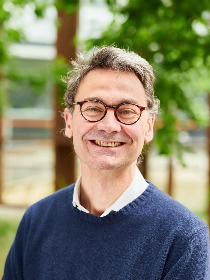
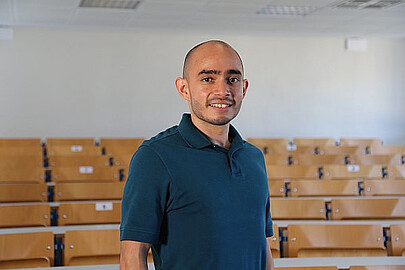
Dr. Ninghao Liu is an Assistant Professor of Computer Science in the School of Computing at the University of Georgia, part of the Franklin College of Arts & Sciences - Division of Physical & Mathematical Sciences. He holds a Ph.D. in Computer Science from Texas A&M University (2021) and an M.S. in Electrical and Computer Engineering from Georgia Institute of Technology (2015). His research focuses on Explainable AI (XAI), Graph Mining, Model Fairness, Recommender Systems, and Outlier Detection, with notable contributions to foundational AI techniques and their applications in education, healthcare, and environmental sciences. Dr. Liu has secured significant funding, including a three-year NSF grant (2022–2025) for 'Graph-Oriented Usable Interpretation' and a five-year $10 million grant from the U.S. Department of Education (2024–2029) for the GenAI Empowered National Initiative for STEM+C Education. He has also been honored with the Outstanding Paper Award at ICML 2022, Best Paper Award Shortlist at WWW 2019, and other distinctions. His work emphasizes interpretable machine learning, graph neural networks, and addressing algorithmic bias. He collaborates across disciplines, contributing to radiology AI, climate-smart forestry, and pandemic prediction through knowledge-enhanced deep learning. His lab is based at the Boyd Research and Education Center, where he advances research in trustworthy AI systems and data-centric solutions.
Dr. Ioannis Kaparias is an Associate Professor in Transport Engineering at the University of Southampton, affiliated with the Transportation Research Group (TRG). He holds a Master of Engineering from Imperial College London and a PhD from the same institution. His academic career includes roles at City, University of London, and postdoctoral research at Imperial College. He is a Fellow of Advance HE, a member of the Chartered Institute of Highways and Transportation (CIHT), and serves as Deputy Editor-in-Chief of the IET Intelligent Transport Systems journal. Education: MEng in Civil Engineering, Imperial College London (2004) PhD in Transport Engineering, Imperial College London (2008) Postdoctoral Researcher, Imperial College London (2008–2012) Research Interests: Efficient, safe, and sustainable land transport systems Highway and traffic management, including real-time routing and network reliability Active travel modes (cycling/pedestrian infrastructure) Public transport operations and optimization New transport technologies (CAVs, MaaS, EVs) Land use-transport interaction models Teaching: Highway & Traffic Engineering modules at Southampton Doctoral Programme Director (Training) in the School of Engineering Past roles include teaching at Imperial College London, City University London, and the University of East London External Roles: Member of US Transportation Research Board committees (Pedestrians/ACH10 and Human Factors/ACH40) Independent expert for the European Commission Speaker at international conferences (e.g., 'To share or not to share space? A very British tale', 2023)
Andrea Garulli is a Professor in Control Systems at the Department of Information Engineering and Mathematics (DIISM), University of Siena. He served as Dean of the Faculty of Engineering (2011-2012) and Director of DIISM (2015-2021). His research focuses on control systems, including system identification, state estimation, robust control, multi-agent systems, and aerospace applications. He co-authored the book *Homogeneous Polynomial Forms for Robustness Analysis of Uncertain Systems* and developed the LFR_RAI toolbox for robustness analysis of uncertain models. Garulli has led projects like ACANTO (social robot navigation) and DALi (autonomous navigation for elderly care). His teaching includes courses on system dynamics, state estimation, and filtering. He is an Associate Editor for *Automatica* and has contributed to initiatives like the Automatic Control Telelab for remote experiments with mobile robots.
Dr. Frances Yung is a Postdoctoral Researcher at Saarland University's Department of Language Science and Technology within the Department of Computer Science. She has been affiliated with Prof. Vera Demberg's research group since April 2017 and is currently working on the DFG-funded SFB-1102 project "Information Density and Linguistic Encoding," specifically on project B2 "Cognitive modelling of information density for discourse relations." She is pursuing her habilitation, indicating career progression toward a higher academic position in the German university system. Dr. Yung's research focuses on discourse relations at the intersection of NLP, corpus linguistics, and experimental psycholinguistics. Her work explores how information density affects discourse relation marking through cognitive modeling approaches. She has developed expertise in discourse parsing, resource construction, annotation aggregation, and experimental pragmatics, with particular attention to multilingual aspects of discourse phenomena. Her research combines computational modeling with experimental methods to understand how speakers produce and comprehend discourse relations. Analysis of Dr. Yung's recent publications reveals a strong focus on discourse relation resources, particularly multilingual corpora like DiscoGeM 2.0 covering English, German, French, and Czech. Her work increasingly incorporates crowdsourcing methodologies and examines how large language models can be leveraged for discourse annotation tasks. She has made significant contributions to understanding the challenges of implicit discourse relation annotation and the biases introduced by different task designs in crowdsourcing environments. Active reviewer for major computational linguistics conferences (ACL, EMNLP, NAACL, EACL, COLING, IJCNLP) and workshops since 2016 Served as area chair for Sigdial 2024 Regular service on program committees for discourse-related workshops Dr. Yung has supervised multiple Master's theses on topics related to discourse relations, implicit relation identification, and domain adaptation. Her teaching portfolio includes courses on crowdsourcing linguistic annotations, discourse relations from cognitive and NLP perspectives, and recent advances in discourse processing. She has also served as a teaching assistant for data science and AI courses, demonstrating her commitment to interdisciplinary education at the intersection of computer science and linguistics.
Professor Jan Černocký serves as Head of Department at the Department of Computer Graphics and Multimedia (DCGM) within the Faculty of Information Technology at Brno University of Technology (FIT VUT). With a professional email cernocky@fit.vut.cz and office L221.2, he maintains an active research profile with numerous publications spanning over 20 years in the field of speech processing and recognition. His work is well-documented through multiple research identifiers including ORCID iD 0000-0002-8800-0210, Scopus Author ID 6604040821, and Researcher ID M-7494-2019. Professor Černocký's research interests focus primarily on advanced speech processing technologies, with particular emphasis on speech recognition, speaker verification, language identification, and multimodal systems. His work demonstrates a strong trajectory from traditional speech processing techniques toward modern deep learning approaches, especially in self-supervised learning for speech applications. Recent publications show his leadership in developing benchmarks like TS-SUPERB for target speech processing and innovative methods for speaker verification using transformer models. His research group at BUT has made significant contributions to multi-channel speech processing, target speech extraction, and speaker diarization systems. The analysis of Professor Černocký's recent publications (2023-2025) reveals several key trends in his research direction. There's a clear shift toward self-supervised learning approaches for speech processing, with numerous papers exploring how pre-trained models can be adapted for speaker verification, target speech extraction, and multi-channel processing. His work increasingly incorporates transformer architectures and attention mechanisms, reflecting the broader trends in speech processing research. The 2024 publications particularly highlight work on multimodal analysis (BESST dataset for stress detection) and practical applications of speech technology for social inclusion. Throughout his career, Professor Černocký has maintained strong collaborative relationships with researchers across Europe and internationally, evidenced by his extensive publication record with co-authors from multiple institutions. His leadership role as Head of Department at DCGM places him at the center of speech processing research at Brno University of Technology, where his team continues to produce cutting-edge research in speech technology.
Xiuzhen Jenny Zhang is a Professor of Data Science at RMIT University , affiliated with the School of Computing Technologies. Her research bridges artificial intelligence, machine learning, and social media analysis, with a focus on text mining and trustworthy data science. Her recent publications highlight expertise in point-of-interest recommendation , misinformation detection , multi-task learning , and transformer-based NLP . Key trends include applications of large language models for social good, fairness in recommendation systems , and adversarial learning for robustness. Best Paper Award at TrustCom’12 Best Short Paper Award at ADCS’2009 She leads the Text And LanguagE (TALE) research group and has supervised over 20 PhD students. Research grants include Australian Research Council and Victoria state government funding.
Dr Marieke Meelen is an Associate Professor in Historical Linguistics at the University of Cambridge, affiliated with the Faculty of Modern and Medieval Languages and Linguistics. She serves as a Fellow, Tutor, and Director of Studies at Trinity Hall. Research Interests: Historical Linguistics, Comparative Syntax, Information Structure, Grammaticalisation & Pragmaticalisation, NLP for low-resource languages, Celtic & Tibeto-Burman languages Projects: PI for ELDP-funded endangered language documentation in Nepal; collaborator on ERC-funded 'PaganTibet' and AHRC-funded 'Emergence of Egophoricity' Key Contributions: Development of ASR and HTR models for Tibeto-Burman languages; historical treebank of Welsh; computational approaches to Celtic and Tibeto-Burman syntax Publications & Grants focus on syntactic reconstruction, corpus creation, and NLP for endangered languages. She mentors PhD students working on Celtic or Tibeto-Burman languages and consults for computational linguistics projects.
Bopaya Bidanda serves as the Ernest E. Roth Professor and Chairman of the Department of Industrial Engineering at the University of Pittsburgh, where he has led since joining the faculty in 1987 after completing his PhD at Penn State. His institutional impact includes founding the Manufacturing Assistance Center, Automated Data Collection Laboratory, and Swanson Center for New Product Innovation. His research expertise spans manufacturing systems with concentrated focus on Group Technology, Reverse Engineering, Cellular Manufacturing, Lean Manufacturing, and Human Issues in Manufacturing. This work bridges advanced computational methods with industrial applications to solve real-world production challenges. Publication trends from 2000-2002 reveal strong emphasis on human capital integration in cellular systems, reverse engineering applications in biomedical contexts, and virtual laboratory development for manufacturing education. Key thematic threads connect workforce skills assessment with lean transformation and advanced computing techniques for production optimization. Scientific recognition includes: Fellow of the Institute of Industrial Engineers His grant portfolio demonstrates exceptional funding diversity, securing support from NSF, Department of Commerce, W.M. Keck Foundation, and industry partners like FedEx Ground for initiatives in manufacturing modernization and workforce development. He actively mentors doctoral candidates through flexible international programs and industry-university collaborations. Leadership extends to operational hubs including the Manufacturing Assistance Center which provides direct technical support to regional manufacturers, and the Swanson Center driving product innovation through interdisciplinary industry partnerships.
Inès Miloud serves as an ATER (temporary teaching and research assistant) in Automatic Control and Systems at the University Institute of Technology (IUT) of the University of Poitiers, France. She is actively affiliated with the LIAS laboratory, which maintains dual sites at ENSIP in Poitiers and ISAE-ENSMA in Chasseneuil, focusing on sensor applications and control engineering within industrial contexts. Her research spans Automatic Control, Systems Engineering, and Electrical Engineering with specialized expertise in induction motor dynamics, real-time estimation algorithms, and sensor-based control systems. She employs advanced methodologies including Extended Kalman Filters, parameter identification techniques, and Marquardt optimization algorithms to address challenges in motor control performance and system reliability. Recent publications demonstrate her focus on practical industrial implementations, particularly in automated tuning of estimation algorithms and comparative analysis of parameter identification methods for squirrel cage induction motors. Her work bridges theoretical control systems with real-world motor drive applications, emphasizing sensor fusion and computational efficiency. As a core member of the Automatic Control Team within LIAS, Dr. Miloud collaborates on interdisciplinary projects involving sensor networks and real-time control systems, contributing to the laboratory's mission of advancing engineering solutions through applied research.
Konrad Kowalczyk is an Associate Professor at AGH University of Science and Technology in Krakow, Poland, where he heads the Signal Processing Group within the Faculty of Computer Science, Electronics and Telecommunications. With extensive international experience from institutions including Queen's University Belfast, Stanford University, and Fraunhofer Institute, he has established himself as a leading researcher in audio and speech signal processing. His academic journey includes B.Eng. and M.Sc. degrees from AGH University (2005), a Ph.D. from Queen's University Belfast (2009), and a Habilitation in ICT from AGH University (2020). B.Eng. and M.Sc. in Electronics and Telecommunications, AGH University of Krakow (2005) Ph.D. in Electronics, Queen's University Belfast, UK (2009) Habilitation (D.Sc.) in Information and Communication Technology, AGH University of Krakow (2020) Kowalczyk's research spans multiple cutting-edge areas in audio processing, with particular focus on speech and audio signal processing enhanced by machine learning techniques. His work integrates deep neural networks with traditional signal processing methods to address challenges in array signal processing , speech enhancement , and speaker recognition . The research group he leads explores innovative applications in distributed signal processing for IoT , acoustic event detection , and spatial audio rendering , bridging theoretical advances with practical implementations. His recent publications demonstrate a clear trend toward integrating deep learning with traditional signal processing techniques, particularly in speaker diarization, source separation, and robust speech recognition. The research increasingly focuses on real-world applications requiring reverberation-robust processing , distributed microphone array systems , and end-to-end neural architectures that can operate in challenging acoustic environments. There's a noticeable shift toward more complex, integrated systems that combine multiple signal processing tasks. Stanislaw Staszic Medal for best graduate of AGH (2005) IEEE Best Student Paper Contest finalist (2007) AES Student Technical Paper Award winner (2008) Best Student Paper Award at IWAENC conference (2014) Best Paper Awards at IEEE SPA conferences (2016, 2019) Polish Ministry of Science Scholarship for Distinguished Young Scientists (2016-2019) Prime Minister Award for outstanding scientific achievements (2020) As Principal Investigator, Kowalczyk leads multiple significant research projects including "Acoustic Intelligence" (2024-2028) funded by National Science Center, and "Deep extraction for robust speech recognition" (2023-2028). He has successfully secured funding from prestigious programs including First TEAM from the Foundation for Polish Science, and EU FP7 projects. His research group actively supervises Ph.D., M.Sc., and B.Eng. students, with strong connections to international institutions including Aalto University and IEEE Signal Processing Society. The research output includes numerous journal publications, conference papers, patents, and software implementations that have advanced the field of audio signal processing. Kowalczyk leads the Signal Processing Group at AGH University, which focuses on developing innovative solutions for speech and audio processing challenges. The group maintains strong collaborations with international institutions including Aalto University (Finland), and participates in European research initiatives. Their work spans theoretical development through practical implementation, with applications ranging from medical voice assistants to distributed acoustic sensor networks.
Nicholas Evans is a Professor in the Digital Security department at EURECOM, where he teaches mathematical methods for engineers and speech and audio processing. He has been affiliated with EURECOM since October 2007 and leads research in speaker recognition, anti-spoofing, and biometric security. Previously, he was a Professor at the University of Wales Swansea (2002–2006) and taught at the University of Avignon (2006–2007). Research Interests: His work centers on biometric security, particularly in detecting spoofing and deepfake attacks in automatic speaker verification systems. Key areas include presentation attack detection, privacy-preserving voice technologies, and robust speech processing under real-world conditions. He actively contributes to advancing anti-spoofing countermeasures through large-scale datasets and challenge evaluations. The recent publications reflect a strong trend in developing and evaluating spoofing detection mechanisms, with a focus on real-world applicability, adversarial robustness, and multimodal analysis. His work spans from foundational feature engineering (e.g., Constant Q cepstral coefficients) to large-scale datasets like SpoofCeleb and ASVspoof, influencing both academic research and practical security systems. NeurIPS 2023 Scholar Award for 'StressID: a multimodal dataset for stress identification' Best Paper Award at IBERSPEECH 2022 Best System Award at IberSpeech 2018 Multiple Best Paper Awards (2016, 2017) Student Paper Award at WIFS 2013 Elected to IEEE Speech and Language Technical Committee (2013) Nicholas Evans has supervised numerous students and early-career researchers, many of whom are co-authors on his publications. He leads significant research initiatives such as the ASVspoof and SpoofCeleb challenges, which are supported by collaborative grants and institutional funding. His lab focuses on developing secure, privacy-preserving speech technologies with applications in biometrics and cybersecurity. He is a key member of international research teams and contributes to major challenges in voice privacy and spoofing detection, including the Voice Privacy Challenge and BIOSIG. His work involves close collaboration with institutions across Europe and Asia, and he maintains active profiles on Google Scholar, ResearchGate, and IEEE Xplore.
Stuart Shieber is the James O. Welch, Jr. and Virginia B. Welch Professor of Computer Science in the School of Engineering and Applied Sciences at Harvard University. He is a prominent researcher in computational linguistics and natural language processing, with significant contributions across multiple related fields including theoretical linguistics, computer-human interaction, automated graphic design, and the philosophy of artificial intelligence. Professor Shieber's research interests focus primarily on computational linguistics, examining natural language from the perspective of computer science. His work spans scientific and engineering goals, utilizing foundational formal and mathematical tools. He has made significant contributions to grammar formalisms, psycholinguistics, semantics, and synchronous grammars with applications in machine translation and sentence compression. Beyond computational linguistics, his research extends to automatic layout of charts and maps, novel interaction techniques for document reading and diagram layout, online auction mechanisms, library book access prediction, biological evolution tree reconstruction, and the philosophical basis for Turing's test for machine intelligence. His recent publications demonstrate a continued focus on neural language models, syntactic agreement mechanisms, readability assessment, conversational understanding, and bias detection in language models. His research has evolved from traditional grammar formalisms to incorporate modern neural network approaches while maintaining a strong theoretical foundation. The trend shows increasing attention to ethical considerations in NLP, particularly around bias detection and mitigation, alongside continued theoretical work on language structure. Presidential Young Investigator award (1991) Presidential Faculty Fellow (1993) John L. Loeb Associate Professorship in Natural Sciences (1993) Harvard College Professorship (2001) Fellow of the American Association for Artificial Intelligence (2004) Fellow of the Association for Computing Machinery (2014) Fellow of the Association for Computational Linguistics (2017) Professor Shieber has advised numerous PhD students who have gone on to successful careers at institutions including UCSD, Cornell University, Microsoft Research, Google, and various academic institutions. His work on open access and scholarly communication policy, particularly his development of Harvard's open-access policies, led to his appointment as the first director of the university's Office for Scholarly Communication. He is also the founding director of the Center for Research on Computation and Society and a faculty co-director of the Berkman Center for Internet and Society. His laboratory work has focused on advancing computational linguistics through both theoretical and applied research, with numerous patents and co-founding of Cartesian Products, Inc., a high-technology research and development company. His future work appears to be focusing on the intersection of neural network approaches with traditional linguistic theory, particularly in understanding and mitigating bias in language models, while continuing his long-standing interest in the theoretical foundations of language processing.
Claudio De Persis is a Professor in the Faculty of Science and Engineering at the University of Groningen, Netherlands. He holds a Laurea degree (cum laude) in Electrical Engineering from the University of Rome La Sapienza (1996) and a PhD in Control Systems (2000) from the same institution. His research focuses on automatic control, particularly data-driven control, nonlinear systems, cyber-physical systems, and energy systems. He has held academic positions at the University of Rome La Sapienza (2002–2011), the University of Twente (2009–2011), and currently leads the Groningen Center for Systems and Control within the Engineering and Technology Institute. His expertise includes fault detection in nonlinear systems, resilient control under Denial-of-Service attacks, and distributed control of energy networks. He has authored over 250 publications, including seminal works on quantized control and cyber-physical systems. He serves on editorial boards of journals like Automatica and IEEE Transactions on Automatic Control . De Persis has received two IEEE Outstanding Paper Awards for contributions to control theory. His research integrates control theory with data science, addressing challenges in smart grids and distributed systems. He holds patents for energy system control and collaborates on interdisciplinary projects, such as data center optimization and resilient networked systems. His current research emphasizes data-driven methods for controller synthesis, leveraging convex optimization and system identification to ensure stability and performance. He also explores privacy-preserving distributed control algorithms for power networks and aggregative games.
Dr. Victor Gabriel Lopez Mejia is a postdoctoral researcher at the Institute of Automatic Control Engineering, Faculty of Electrical Engineering and Computer Science, Leibniz University Hannover. His work focuses on data-driven control systems, reinforcement learning, and multi-agent system synchronization. PhD in Electrical Engineering (2019), University of Texas at Arlington M.Sc. in Electrical Engineering (2013), CINVESTAV, Mexico B.Sc. in Telecommunications and Electronics (2010), Universidad Autonoma de Campeche Research interests include: Neural network applications in control systems Reinforcement learning for cooperative control Game-theoretic analysis of multi-agent systems Data-based modeling of nonlinear dynamics Publications highlight advancements in data-driven predictive control, Gaussian process-based estimation, and nonlinear system analysis, with recent work in IEEE Transactions on Automatic Control and conferences like CDC and ECC. He has held academic roles including Adjunct Professor at the University of Texas at Arlington and Research Assistant at UTARI (2016-2019).
Prof. Dr. Haris Gačanin is a faculty member at RWTH Aachen University, affiliated with the Institute for Distributed Signal Processing under the College of Electrical Engineering. His research focuses on integrating machine learning with wireless communication systems, particularly in industrial IoT, edge computing, and network optimization. Current academic rank: Professor Contact: harisg@dsp.rwth-aachen.de Research Interests: Wireless systems, machine learning, signal processing, and network optimization. Key contributions include: Adaptive resource allocation in IIoT and vehicular networks AI-driven channel estimation and feedback mechanisms Security-oriented emitter identification via metric learning Federated/transfer learning for edge environments Hardware-efficient deep learning models for mmWave and THz communications Methodological Focus: Combines reinforcement learning, attention mechanisms, and robust neural architectures with practical implementations on FPGA and vehicular systems.