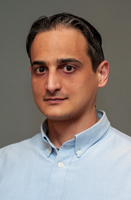
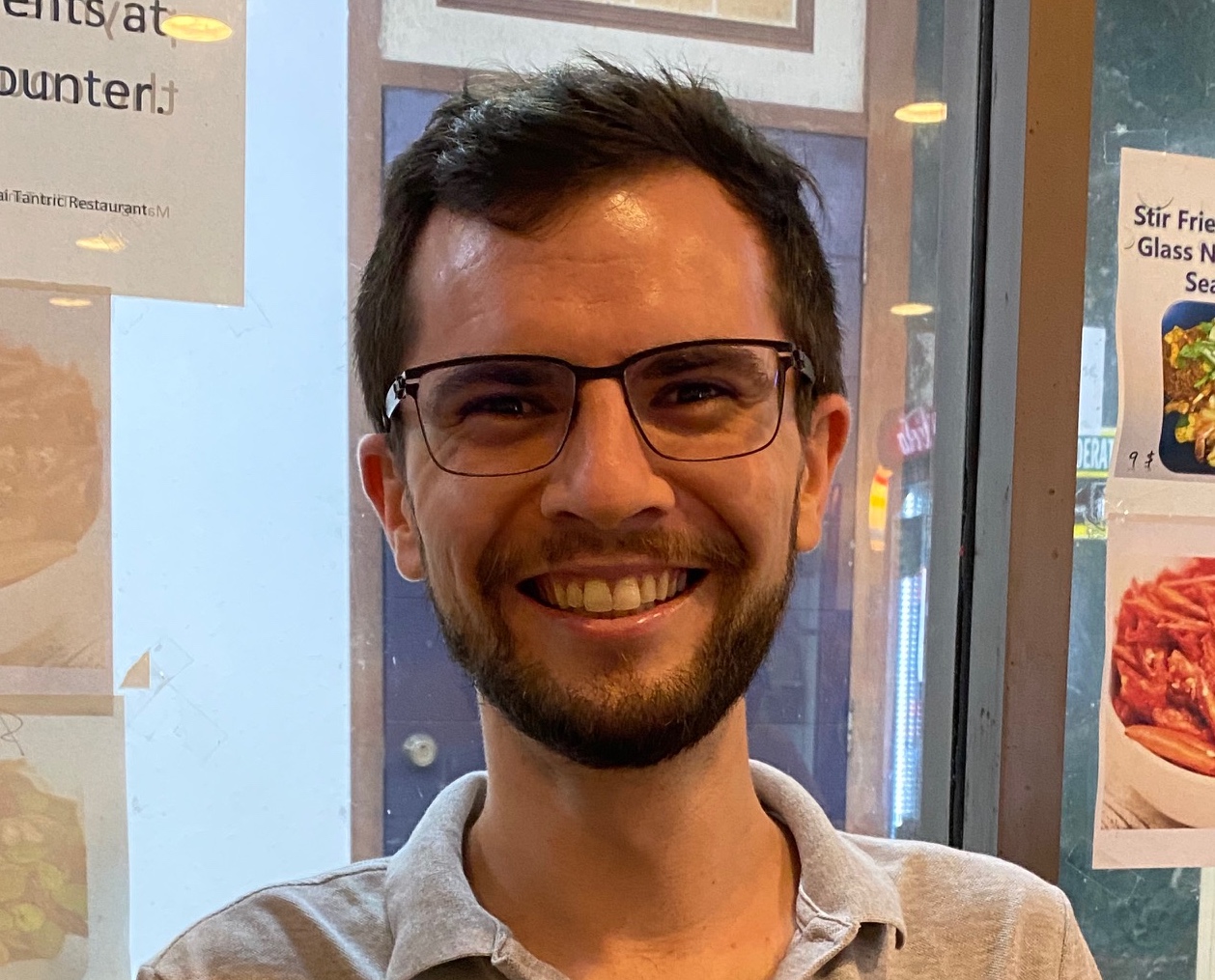
Sribalaji Coimbatore Anand is a Researcher at the Department of Intelligent Systems, KTH Royal Institute of Technology, Sweden. Hosted by Professors Karl Henrik Johansson and Henrik Sandberg, his work focuses on secure control systems, scalable control, and applications of convex optimization. He holds an M.Sc. in System and Control from Delft University of Technology (2019) and a Ph.D. in Automatic Control from Uppsala University (2024). His research emphasizes cyber-physical system security, including stealthy attacks, resilient control algorithms, and privacy-preserving mechanisms. Notable grants include the VR International Postdoc grant (2024) for analyzing secure large-scale networked control systems and the STINT grant (2024) exploring total positivity frameworks in secure network control. Education: M.Sc., System and Control, Delft University of Technology (2019) Ph.D., Automatic Control, Uppsala University (2024) He has received awards such as the IEEE Travel Scholarship (2022) and Dean’s List scholarships (2013–2016). His work spans theoretical frameworks for detector placement, optimal security allocation, and game-theoretic approaches to sensor design in cyber-physical systems. Current projects involve collaborations with Prof. George Pappas (University of Pennsylvania) and Christian Grussler (Technion, Israel), focusing on scalable security metrics and resilient control architectures.
Dr. Karin M. Bausenhart is a researcher in the Cognition and Perception research group within the Department of Psychology at the Faculty of Science, University of Tübingen. She has been working as a Postdoctoral Research Assistant since 2011 and currently serves as Project Coordinator for the DFG Research Unit "Modal and Amodal Cognition" (FOR 2718) since 2020. Dr. Bausenhart received her PhD in Psychology from the University of Tübingen in 2009, following her Masters degree (Diplom) in Psychology from the same institution in 1999. Her research focuses on several key areas in cognitive psychology and time perception. She investigates how distance affects mental representations, examining whether we think differently about events in the present versus those in the future or distant locations. She also studies mechanisms of stimulus discrimination, particularly how the order of stimuli presentation affects our ability to compare them, with a focus on the concept of a dynamically updated internal reference. Another major area of her work explores how temporal information from different sensory modalities is processed and combined to form a coherent perception of time, despite the absence of a dedicated sensory system for time processing. Additionally, she researches temporal preparation - how warning signals can improve reaction times - and dual-task processing limitations. Dr. Bausenhart's publication record reveals a consistent focus on time perception, multisensory integration, and cognitive mechanisms. Her work often employs experimental psychology methods to investigate fundamental questions about how humans process temporal information across different contexts and sensory modalities. A significant portion of her research examines order effects in stimulus discrimination, suggesting these effects may stem from an internal reference that dynamically updates during experimental tasks. Her recent work has expanded into examining how mental representation varies with psychological distance, connecting temporal cognition with broader cognitive frameworks. Third price at the dissertation contest of the German Psychological Society (DGPS), section Cognitive Psychology (2011) Dissertation Award of the Faculty of Science, University of Tübingen (2010) Dr. Bausenhart has secured multiple research grants from the German Research Foundation (DFG), demonstrating the significance of her work in the field. Her projects have investigated mechanisms of stimulus discrimination, temporal ventriloquism effects, and interferences in stimulus classification. These grants have supported her research from 2010 through 2020, indicating sustained recognition of her scientific contributions. As part of the Cognition and Perception research group, Dr. Bausenhart collaborates with colleagues studying modal and amodal cognition. Her current role as Project Coordinator for the DFG Research Unit "Modal and Amodal Cognition" places her at the center of a significant interdisciplinary effort examining how cognitive processes function both within specific sensory modalities and across modalities.
Anne Nortcliffe is currently Dean of the Faculty of Arts, Computing and Engineering at Wrexham University, a role she has held since June 2024. Previously, she was Head of the School of Engineering, Technology and Design at Canterbury Christ Church University (2018–2024) and Director of Engineering Curriculum (2017–2018). Prior to that, she served as Programme Lead in Engineering and Maths at Sheffield Hallam University from 2000 to 2017. She holds a PhD in Automatic Control and Systems Engineering from the University of Sheffield, awarded in 2003. PhD in Automatic Control and Systems Engineering, University of Sheffield (2003) Anne Nortcliffe's research focuses on the integration of technology in engineering and higher education. Her primary interests include smart learning technologies, audio feedback systems, student engagement through personal devices, curriculum innovation, and enhancing employability in engineering education. She has extensively explored how smartphones and audio tools can transform feedback mechanisms and support student-centered learning. Her recent publications highlight a strong trend toward leveraging mobile and audio technologies to improve educational outcomes. Articles such as 'Smartphone feedback' and 'Audio feedback design' reflect her pioneering work in digital assessment, while studies on self-assessment and smart-device learning demonstrate her commitment to student autonomy and engagement. The body of work consistently bridges engineering education with pedagogical innovation. Anne Nortcliffe has not been publicly associated with specific scientific awards in the provided text. She has supervised and collaborated on various educational research initiatives, particularly in the development of audio feedback and smart learning frameworks. While no formal list of advisees is available, her collaborative publications suggest mentorship and team-based academic leadership. There is no mention of research grants, but her sustained publication record across conferences and journals indicates active research engagement. Anne Nortcliffe has contributed to shaping engineering curricula and pedagogical practices across multiple institutions, particularly through her leadership roles. Her work in blending audio and mobile technologies into learning environments represents a significant contribution to modern educational practice in engineering and technology fields.
Tobias Wrigstad is a faculty member at Uppsala University, Sweden, with research interests spanning type systems, reference capabilities, programming language design, scripting languages, and concurrent/parallel programming. His work focuses on memory management, concurrency safety, and language extensions for performance optimization. Education: Not explicitly mentioned in provided data Research Interests: Designing type systems to enforce concurrency safety and memory correctness Reference capabilities for manual and automatic memory management Actor model programming and garbage collection co-design Cache locality optimization without program restructuring Formal verification of language designs using Dafny Recent Publications (2025-2015): Explore concurrency safety through region ownership Develop parallel array programming models in Kappa Investigate energy-efficient garbage collection Design capability-based dynamic languages for data race freedom Create formal models for heap invariants and incorrectness Optimize memory allocation via load barriers Conference Involvement: 2025: IWACO Committee Member, OOPSLA Associate Chair 2024: Program Co-Chair for IWACO, Author in VIMPL, MPLR, ISMM 2023: SPLASH Steering Committee, ECOOP PC Member 2022-2015: Active in PLDI, ECOOP, ICFP, and related workshops
Marek Piasecki is a researcher at the Department of Computer Engineering, Faculty of Information and Communication Technology, Wrocław University of Science and Technology. His work focuses on software development for autonomous systems, user modeling, personalization, and mobile computing. His research in autonomous systems includes classical and reactive navigation, localization, and path planning for mobile robots, particularly in the RoboCup competition. He has extensively explored automatic recommendation systems and software development for mobile devices, blending both Android and iOS platforms. The articles he has published demonstrate strong engagement with robotics, autonomous systems, and mobile computing. Key areas include evolutionary algorithms, differential mapping, IoT applications, and educational robotics (LEGO Mindstorms). These works span theoretical development, software implementation, and pedagogical approaches. In teaching, he specializes in C++, C, and Java programming languages, object-oriented programming, and software engineering principles. He also leads seminars on constructing mobile robots and supervises diploma projects involving mobile robotics and software development.
Daniel De Matos Silvestre is a researcher at COPELABS, Lusofona University, and the Institute for Systems and Robotics (ISR) at Instituto Superior Técnico, Lisbon. He holds a PhD in Electrical and Computer Engineering from IST (2017) with highest honors, an M.Sc. in Advanced Computing from Imperial College London (2009), and a B.Sc. in Computer Networks from IST (2008). His research focuses on fault detection and isolation, distributed systems, network control systems, and randomized algorithms. PhD in Electrical and Computer Engineering (IST, 2017) M.Sc. in Advanced Computing (Imperial College London, 2009) B.Sc. in Computer Networks (IST, 2008) His work spans critical areas such as state estimation , collision avoidance , and resilient control systems against adversarial attacks. Recent publications highlight advancements in constrained convex generators , flocking-based navigation , and gradient descent algorithm analysis . Collaborations include research stays at University of California, Santa Barbara, and joint works with Joao Hespanha. Key contributions include novel methods for set-membership estimation , autonomous vehicle coordination , and distributed control algorithms with applications in robotics and cybersecurity. He has published extensively in top journals like IEEE Transactions on Automatic Control , European Journal of Control , and Systems and Control Letters .
Victor Sreeram serves as Professor and Head of the Department of Electrical, Electronic and Computer Engineering at the School of Engineering, The University of Western Australia. He holds a BE from Bangalore, ME from Madras, and PhD from Victoria (BC), and maintains an active research profile with SMIEEE designation. Education: BE from Bangalore ME from Madras PhD from Victoria (BC) His research spans Automatic Control, Signal Processing, and Renewable Energy systems with specialized expertise in Model Reduction for Power Engineering applications. Current work focuses on Photovoltaics integration, Frequency Interval analysis, and Discrete-Time Systems control, contributing significantly to Smart Grid advancement and UN Sustainable Development Goals. Recent publications demonstrate a clear trajectory toward machine learning-enhanced solar irradiance forecasting using hybrid correction frameworks, multi-modal clustering, and Transformer architectures. Concurrently, his foundational work in model reduction for power converters like Zeta Converters remains highly active, bridging theoretical control methods with renewable energy applications. Supervision and Grants: Professor Sreeram has supervised 15 research students across diverse projects. His funded research includes 7 major grants such as Power System Emulation Hardware Platform (2012), Miniature Smart Grid Model (2010), Next Generation Photovoltaic Systems (2010), Regenerative Braking Laboratory (2008-2009), and ARC-funded Model Reduction Techniques (2003-2005), reflecting sustained impact in power systems engineering. He leads a multidisciplinary research team developing advanced control solutions for renewable energy integration, with active projects spanning smart grid emulation platforms, photovoltaic optimization, and regenerative energy recovery systems.
Nian Zhang is a Professor in the Department of Electrical and Computer Engineering at the University of the District of Columbia (UDC), part of the School of Engineering and Applied Sciences. His research focuses on computational intelligence, machine learning, and their applications in big data science, biomedical engineering, and autonomous systems. Dr. Zhang holds a Ph.D. in Computer Engineering from Missouri University of Science & Technology, an M.S. in Automatic Control from Huazhong University of Science & Technology, and a B.S. in Electrical Engineering from Wuhan University of Technology. He has led numerous grants funded by the National Science Foundation (NSF), National Institutes of Health (NIH), and Department of Defense (DoD), focusing on machine learning, cybersecurity, and biomedical engineering. Notable projects include developing algorithms for standoff detection of threat chemicals and advancing diversity in STEM through experiential learning. Dr. Zhang has received multiple awards, including UDC's Scholar Award (2025) and Excellence in Research Award (2016). He serves as an Associate Editor for IEEE Transactions on Neural Networks and Learning Systems (TNNLS) and other journals, and has organized international conferences such as the International Conference on Intelligent Control and Information Processing (ICICIP 2025). His research emphasizes imbalanced data classification, neurodynamic optimization, and applications in hyperspectral imaging, environmental monitoring, and medical diagnostics. He has developed frameworks for addressing challenges in data scarcity and class imbalance across disciplines.
Kalogeris Ioannis is an Assistant Professor at the School of Mechanical Engineering, National Technical University of Athens (NTUA). His research focuses on Computational Mechanics, including Nonlinear Finite Element Methods, Stochastic FEM, Multiscale FEM, and applications of Machine Learning. He teaches undergraduate courses on Analysis of Mechanical Structures I & II and coordinates Erasmus programs for international students. Contact: ikalogeris@mail.ntua.gr | Tel: (+30) 210 772-1725. Education: PhD in Engineering (NTUA, 2020), MSc in Theoretical Mathematics (NKUA, 2023), MSc in Structural Analysis & Design (NTUA, 2014), Dipl. Civil Engineer (NTUA, 2011) Research Interests: Computational Mechanics Nonlinear Finite Element Methods Stochastic/Multiscale FEM Machine Learning in Structural Analysis Bayesian Inference for Mechanics Professional Memberships: Technical Chamber of Greece, Greek Association of Computational Mechanics (GRACM), European Community on Computational Methods in Applied Sciences (ECCOMAS).
Gustaf Hendeby is an Associate Professor and Docent in Automatic Control at Linköping University's Department of Electrical Engineering (ISY). His career spans academia and defense research, including a part-time role at the university and prior positions at the German Research Institute for Artificial Intelligence (DFKI) and the Swedish Defence Research Agency (FOI). Dr. Hendeby’s research focuses on statistical and model-based sensor fusion , particularly in target tracking, SLAM, positioning, and nonlinear estimation. He has contributed to Kalman filter approximations (EKF, UKF) and particle filter methodologies, aiming to enhance sensor data utilization and algorithm accessibility for non-experts. His recent publications address magnetometer-IMU calibration, magnetic-field SLAM, DVB-T signal localization, and adaptive basis function selection for efficient predictions. Collaborations include researchers like Isaac Skog and Chuan Huang, with applications in autonomous systems and sensor networks. Teaching : Lectures on Sensor Fusion (TSRT14) and supervises Master’s theses. Projects : Technical coordinator for EU’s COGNITO project; software integration for Trivisio GmbH’s Colibri IMUs.
Andrés José Piñón Pazos is a researcher at the Department of Industrial Engineering within the Ferrol Polytechnic School of Engineering at University of A Coruña (UDC). His work focuses on intelligent and advanced control, optimization and modeling of systems, and virtual and intelligent instrumentation. He teaches both required and optional courses in Industrial and Automatic Electronic Engineering, Industrial Informatics and Robotics, and Mechanical Engineering programs. Research interests include: Intelligent control systems development Industrial process optimization Virtual instrumentation design Smart monitoring systems Automation solutions Energy efficiency improvements Scientific contributions: Registered software (2014) Multiple patents (2013, 2008, 2005) Over 15 research articles International conference publications Key grants and contracts include projects with: Spanish Foundation for Science and Technology (FECYT) Instituto Tecnológico de Castilla y León (ITCL) Galician Department of Education Ministry of Science and Innovation Navantia shipyard International collaborations
Prof. Dr. Joke SPILDOOREN serves as a Senior Lecturer at Hasselt University's Faculty of Rehabilitation Sciences, Department of Rehabilitation Sciences and Physiotherapy. She maintains an active research profile while holding leadership positions including Chair of the Bachelor and Master Examination Committees for Rehabilitation Sciences and Physiotherapy. Her research interests focus on geriatric rehabilitation, with particular expertise in balance control, vertigo treatment in elderly populations, dementia rehabilitation through exercise and music interventions, and the impact of frailty syndrome in cardiovascular disease patients. Her work bridges clinical practice with scientific inquiry to improve rehabilitation outcomes for aging populations. Analysis of her publication record reveals a strong focus on neurological rehabilitation, particularly Parkinson's disease gait disorders and cognitive-motor interactions. Her research increasingly incorporates interdisciplinary approaches combining exercise physiology, neuroscience, and geriatric medicine to address complex rehabilitation challenges in aging populations. Scientific Awards: Young research award 2021 from Stichting Alzheimer onderzoek (Alzheimer Research Foundation) Prof. SPILDOOREN actively mentors six doctoral candidates across various aspects of rehabilitation science, with current projects examining vertigo treatment in elderly, music-based exercise interventions for dementia patients, and balance control mechanisms. Her research portfolio includes 15 active projects totaling over €1.2 million in funding, with significant grants from Alzheimer Research Foundation and external partnerships. She leads the Rehabilitation Sciences Research Group and contributes to the interdisciplinary 'Interdisciplinary Learning Workplace' project, focusing on community service learning within evolving rehabilitation contexts.
Jason Hockman is a Reader in Music and Sound Design at the School of Digital Arts (SODA) at Manchester Metropolitan University . He is a leading researcher in Music Information Retrieval (MIR) , computational audio analysis, and music production technologies. He is also a professional music producer and performer under the aliases Jason oS and DAAT , and co-founder of Detuned Transmissions , an artist collective and independent record label. Research Interests: Computational analysis and generation of audio for music production Ethnographies of breakbeat-oriented UK dance music Neural audio synthesis and adversarial networks Automatic drum transcription and onset detection Gesture-based music interaction systems Interactive audio for games and multimedia Publications Trends: His recent work focuses on generative audio models , including GAN-based drum synthesis, neural impact sound synthesis, and latent space exploration for audio. He has also contributed extensively to automatic transcription systems for percussion and string instruments, and interactive performance tools that integrate gesture control and real-time audio manipulation. Scientific Contributions: Co-author of the widely cited Review of Automatic Drum Transcription (2018) Developer of interactive systems like MyoSpat for gesture-based control Pioneer in combining ethnographic research with computational music analysis Teaching & Supervision: Jason integrates his research and music production experience into undergraduate and postgraduate teaching. He supervises students in music technology, sound design, and MIR, and emphasizes a holistic approach that bridges creative practice and academic inquiry. Creative Practice: Through Detuned Transmissions , he releases and distributes electronic music internationally, maintaining an active presence in both academic and artistic communities.
Chris Poskitt is an Associate Professor of Computer Science (Education) at the School of Computing and Information Systems (SCIS) at Singapore Management University (SMU). He also serves as Director of the BSc (IS) Smart-City Management & Technology Major and Director of Undergraduate Administration at SCIS. Dr. Poskitt is an active member of the System Analysis and Verification (SAV) research group within SCIS. Dr. Poskitt completed his PhD in 2014 at the University of York (UK) under the supervision of Detlef Plump. Prior to joining SMU, he was a postdoctoral researcher for three years at ETH Zürich, where he worked with Bertrand Meyer. His academic journey reflects a strong foundation in formal methods and software engineering principles. Dr. Poskitt's research broadly addresses the problem of engineering correct and secure software and systems. His work spans several key areas including software engineering, formal methods, cybersecurity, and computer science education. He has developed innovative techniques for testing and defending cyber-physical systems using fuzzing and machine learning, tools for analyzing execution models of concurrency APIs, and logics for reasoning about the correctness of graph-rewriting programs. His research projects include AI agent safety, autonomous vehicle testing, critical infrastructure security, defending cyber-physical systems, analyzing actor-like concurrency models, verifying graph programs, and software engineering education. Dr. Poskitt's recent publications (2024-2026) demonstrate a strong focus on safety and security of autonomous systems, particularly autonomous vehicles and LLM agents. His work combines formal methods with practical applications, addressing challenges in runtime enforcement, causality analysis, and automatic repair of system behaviors. There's a clear progression from foundational work on graph transformation and formal verification toward applied research on cyber-physical systems and AI safety, with an increasing emphasis on real-world impact. Dr. Poskitt serves as research advisor to students including Huang Shaofei, WANG Haoyu, and ZHAO Lu. His research has been supported by various grants that have enabled publications across top software engineering and security venues including ICSE, FSE, ASE, and IEEE Transactions. He has served on numerous prestigious program committees including ICSE, FSE, ASE, and ICGT, indicating recognition by his peers in the software engineering community. Dr. Poskitt is part of the System Analysis and Verification (SAV) group at SMU's School of Computing and Information Systems. This research group focuses on formal methods and verification techniques for software systems, with particular emphasis on safety and security properties. His work often involves collaboration with researchers at institutions including ETH Zürich and other international partners.
Benn Henderson is a Researcher affiliated with the Faculty of Computing, Engineering and the Built Environment within the Department of Computer Science and Informatics Research. His work focuses on leveraging machine learning and motion capture technologies to analyze gait patterns for Autism Spectrum Disorder (ASD) detection and robotic teleoperation systems. Research Themes: Human Pose Estimation, Gait Analysis, Machine Learning Algorithms, Collaborative Robotics, Neuromorphic Computing Key Collaborations: S. Coleman, D. Kerr, J. Quinn, K. Madden, L. Lindsay Recent publications highlight trends in applying 3D pose estimation models to ASD diagnostics and cobot control systems, with subfields spanning robotic teleoperation, temporal variability analysis, and neuromorphic event suppression. His thesis on "Machine learning classification of autism spectrum disorder using gait and video analysis" underscores his focus on biomedical signal processing.