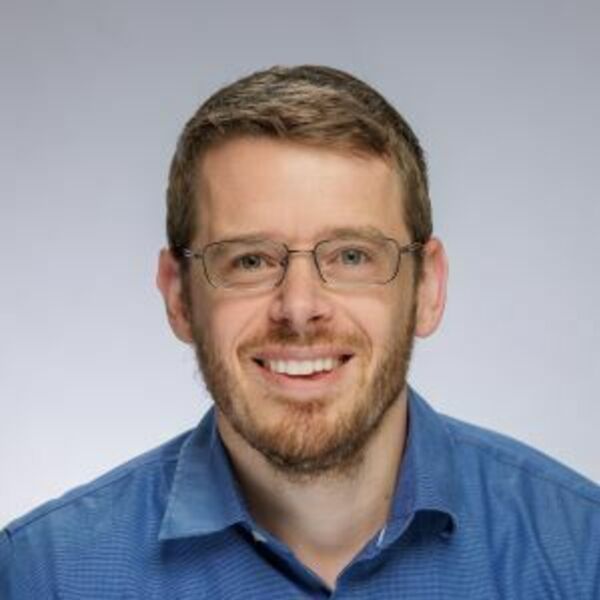
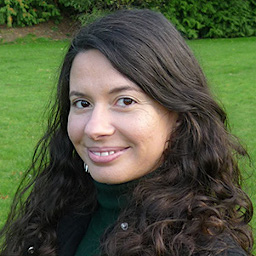
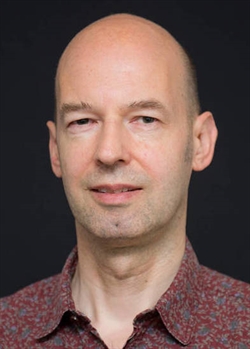
Mikko Heiskala is a Researcher at Aalto University in the Department of Industrial Engineering and Management within the School of Science . His research focuses on platform ecosystems, network externalities, mass customization, and digital servitization. He holds a Master's degree in Engineering and Technology from the Helsinki University of Technology . His work contributes to UN Sustainable Development Goals, particularly in education and sustainable development. He has been recognized for his teaching excellence with multiple awards, including the 2nd Best Course in the Department of Computer Science (2024) and other accolades between 2017–2021. His research explores strategic dynamics in managed ecosystems, boundary resources, and the interplay between purpose and profit in corporate decision-making, exemplified by the BalticSeaH2 hydrogen valley case . Heiskala actively engages in academic activities, serving as a reviewer for journals like California Management Review and conferences such as the Academy of Management Annual Meeting . His work bridges theoretical frameworks (e.g., Boundary Resources View) with practical applications in platform governance and innovation ecosystems.
Dr. Wanlun Ma is a Postdoctoral Research Fellow at the School of Science, Computing and Emerging Technologies , Swinburne University of Technology . He earned a Bachelor's and Master's in Information and Communication Engineering from the University of Electronic Science and Technology of China (UESTC) in 2017 and 2020, respectively, followed by a Ph.D. in Computer Science from Swinburne University of Technology in 2024. His research focuses on Trustworthy and Responsible AI , particularly in adversarial machine learning, network security, and privacy preservation. Education B.E., M.E. in Information and Communication Engineering, UESTC (2017, 2020) Ph.D. in Computer Science, Swinburne University of Technology (2024) Research Interests Trustworthy AI systems Adversarial machine learning Network security and privacy AI ethics and accountability Grants Australian Research Council (ARC) grant (2025-2029) for AI Models for Digital Manufacturing Supervision Available to supervise Ph.D. candidates
Robert Collinson is the Wilson Family LEO Assistant Professor in the Department of Economics at the University of Notre Dame and a core faculty member at the Wilson Sheehan Lab for Economic Opportunities (LEO). His research focuses on housing policy, urban policy, and the design of anti-poverty programs. He holds a Ph.D. from New York University (2019), an M.P.P. from the University of Chicago (2009), and a B.A. from the College of Wooster (2007). Collinson is also a Faculty Research Fellow at the National Bureau of Economic Research (NBER), a Research Affiliate at IZA, and part of the Human Capital and Economic Opportunity (HCEO) Network. His work examines topics such as eviction's impact on children, long-term effects of desegregation programs, and the efficacy of rental assistance during crises. He advocates for evidence-based policy to improve housing stability and reduce poverty. Collaborations with organizations like LEO, NBER, and IZA highlight his commitment to interdisciplinary research with real-world applications.
Daniele Toller is an Assistant Professor in the Department of Computer Science at Aalborg University, Denmark. His affiliation is with The Technical Faculty of IT and Design, where he contributes to research and teaching in computer science and related interdisciplinary areas. His research focuses on algebraic topology, control systems, mathematical biology, and abstract algebra. He explores topics such as cellular automata dynamics, topological entropy, and the interplay between algebraic structures and topological properties. Notably, his work bridges pure mathematics with applications in systems biology and engineering, particularly in optimizing complex networks and chemical reaction systems. Recent research trends include studies on optimal control strategies for complex networks, reduction techniques for chemical reaction networks, and the algebraic entropy of linear cellular automata. His contributions to group theory, including work on Zariski and Markov topologies, reflect a deep engagement with foundational mathematical structures. Dr. Toller's publications span journals and conferences in mathematics and computer science, addressing both theoretical advancements and practical applications. His work has been recognized through collaborations with institutions worldwide and contributions to prestigious venues such as the IEEE Transactions on Automatic Control and the Journal of Group Theory.
Dr. Olivia Afonso is a Senior Lecturer in Psychology at the School of Psychology, Social Work and Public Health at Oxford Brookes University. She holds a BSc in Psychology and a PhD in Cognitive Neuroscience and Education. As Year 1 Lead for the BSc Psychology program, she teaches modules including 'Introduction to Psychological Research' and 'Topics in Developmental Psychology,' while supervising MSc and PhD students. Her research focuses on written language production, particularly spelling processes and handwriting cognition in both typical and atypical populations, including dyslexia, aging, and bilingualism. She leads the Writing Lab and collaborates with the SRUK/CERU research network. Her research investigates cognitive processes underlying spelling and handwriting, comparing handwriting vs. typewriting, and analyzing online measures like pen pressure and writing duration. Notable projects include evaluating AI reading assistants in Northern Ireland (funded by the Department of Education) and studying handwriting development in children with dyslexia. She has published extensively in journals like Brain and Cognition , Journal of Learning Disabilities , and Cognitive Science . Professional Memberships: Fellow of HEA, European Literacy Network, EARLI Writing SIG, National Handwriting Association Executive Committee, BPS Cognitive Section Executive Keynote Talks: 'Influences of spelling on handwriting speed' (National Handwriting Association, 2021), 'How we learn to write' (Royal Society of Medicine, 2021) Dr. Afonso's work bridges cognitive science and education, addressing practical applications for literacy support and neurorehabilitation. Her studies often employ cognitive-kinematic analysis to link high-level language processing with motor execution during writing.
Yağız Aksoy is an Assistant Professor in the School of Computing Science at Simon Fraser University (SFU), leading the Computational Photography Lab. His research focuses on inverse rendering and computational photography, aiming to enable 3D physical control over light and geometry in image editing and movie post-production. His work is funded by NSERC, CFI, BC government, Adobe Research, and Meta Reality Labs. Education: PhD in Computer Science, ETH Zurich (2019), supervised by Marc Pollefeys. Postdoctoral research at MIT CSAIL with Wojciech Matusik and Disney Research Zurich. MSc in Computer Engineering, Middle East Technical University (2013). Research Interests: His lab develops physically-based methods for relighting, intrinsic image decomposition, HDR reconstruction, and monocular depth estimation. Recent breakthroughs include Physically Controllable Relighting (SIGGRAPH 2025) and Colorful Diffuse Intrinsic Decomposition (SIGGRAPH Asia 2024, Best Paper Honorable Mention). Grants & Awards: Best Paper Award Honorable Mention at SIGGRAPH Asia 2024. NSERC Discovery Grant, CFI John R. Evans Leaders Fund, and BC Early Career Research Award. Industry partnerships with Adobe and Meta. Students & Lab: Supervises PhD/MSc students including Chris Careaga, Sebastian Dille, and Mahdi Miangoleh. The lab's Computational Photography Studio operates in a production environment, emphasizing real-world applicability. Active projects include RGB+NIR editing, dynamic scene rendering, and physically-aware compositing tools.
Narender Ramnani is a Professor of Neuroscience and Vice Dean for Equity, Diversity, and Inclusion at the School of Life Sciences and the Environment, Royal Holloway, University of London. He also directs the new Centre for Decision Science in the Department of Psychology. His research focuses on brain systems organization, neuroplasticity mechanisms, and their roles in cognitive and motor control across the lifespan, using fMRI, eye tracking, and analytical techniques funded by BBSRC. External roles include serving as President Elect of the British Neuroscience Association (2023–2025), member of the Parliamentary and Scientific Committee’s Council, and Governance Committee member of Advance HE’s Race Equality Charter. His work contributes to UN Sustainable Development Goals related to health and education equity. Key awards include Honorary Lifetime Membership from the British Neuroscience Association (2022). Research highlights include studies on prefrontal cortex contributions to social decision-making and cerebellar motor/non-motor topography. Supervised projects include studies on oculomotor learning, ageing brains, and driver behavior, funded by BBSRC and TRL Ltd.
Wael Mohammed is a Postdoctoral Researcher and Doctoral Researcher at Tampere University's Automation Technology and Mechanical Engineering department. His research focuses on advanced robotics, Industry 4.0, and digital twin architecture in manufacturing systems. He holds an MSc in Automation Engineering (2017) and a BSc in Mechatronics Engineering (2010) from the University of Jordan. His work emphasizes human-robot collaboration, cognitive validation of AI systems, and machine vision for food manipulation. Key contributions include methodologies for digital twin implementation in factories and ontology-driven semantic frameworks for manufacturing processes. Mohammed has contributed to projects like the FASTory digital twin initiative and REMODEL's cable manipulation research. Research interests span robotics applications in food production, energy-efficient automation, and semantic integration of industrial IoT systems. He has reviewed for IEEE Transactions on Industrial Informatics and co-created datasets on robotic grasping and assembly line optimization. Ongoing work explores large language models for HRC reliability and multimodal human-robot interfaces.
Ardi Roelofs is a Full Professor at the School of Psychology at Radboud University, Nijmegen, the Netherlands, where he has held this position since 2013. He is also a Principal Investigator at the Centre for Cognition of the Donders Institute for Brain, Cognition and Behaviour, and a Research Associate of the Max Planck Institute for Psycholinguistics in Nijmegen. His academic career spans over three decades, with previous positions including Associate Professor at Radboud University (2009-2013), Senior researcher at Nijmegen Institute for Cognition and Information, and various roles at the Max Planck Institute for Psycholinguistics. Roelofs earned his Bachelor's, Master's, and PhD degrees (all with highest distinction) in Experimental Psychology from Radboud University. Following a postdoctoral year at MIT's Department of Brain and Cognitive Sciences (1992-1993), he held positions at the Max Planck Institute for Psycholinguistics and the University of Exeter before returning to Radboud University. His research focuses on the neurocognitive mechanisms of language and its relationship with other cognitive abilities, particularly attention. Roelofs leads the Attention and Language Performance laboratory , which examines basic language performance including word production, comprehension, repetition, and reading. His work spans healthy bilingual adults, typically developing children, children with language impairment, and adults with aphasia due to stroke or neurodegenerative disease. A central aspect of his research involves computational modeling, particularly through the WEAVER++ model and its neurocognitive extension WEAVER++/ARC, which synthesizes behavioral psycholinguistic, functional neuroimaging, tractographic, and aphasiological evidence. Analysis of Roelofs' 15 most recent publications reveals a strong focus on the intersection of language production, cognitive control, and attentional mechanisms. His work spans theoretical modeling, electrophysiological studies, clinical applications for aphasia, and developmental aspects of language processing. A consistent theme is the examination of how attentional processes influence language production across different populations and contexts, with significant contributions to understanding bilingual language control, semantic interference effects, and executive functions in speech production. 2003 VICI grant: Flagship grant from Netherlands Organisation for Scientific Research (NWO), awarded to top 10% of researchers 1993 Erasmus Prize for dissertation "Lemma Retrieval in Speaking: A theory, computer simulations, and empirical data" 1992 NWO TALENT grant for postdoctoral fellowship at MIT Multiple cum laude distinctions for all academic degrees (BSc, MSc, PhD) Roelofs has coordinated numerous research projects, including the NWO VICI project "Goal-referenced control of verbal and nonverbal actions" (2004-2009) and multiple PhD projects under the NWO "Language in Interaction" consortium. He served as Director of the Master of Cognitive Neuroscience Program at Radboud University from 2013-2018. His laboratory, the Attention and Language Performance laboratory, collaborates with several institutions including the Max Planck Institute for Psycholinguistics, Royal Dutch Kentalis, the Radboudumc Alzheimer Centre and Parkinson Centre, and the Sint Maartenskliniek. Notable outputs from his lab include the screening test SYDBAT-NL and therapy app SimpTell for aphasia. Since 2019, Roelofs has been gradually reducing his teaching and research activities due to incurable cancer, though he continues to contribute to the field.
Derong Liu is a Chair Professor at Southern University of Science and Technology (SUSTech), Shenzhen, China, since July 2022. He previously served as Professor at Guangdong University of Technology (2017-2022), Full Professor at the University of Illinois at Chicago (UIC) since 2006, and held academic roles at Stevens Institute of Technology and the Institute of Automation, Chinese Academy of Sciences. Education: Ph.D. in Electrical Engineering (1994) from University of Notre Dame, advised by Anthony N. Michel M.S. in Automatic Control Theory and Applications (1987) from Institute of Automation, Chinese Academy of Sciences B.S. in Mechanical Engineering (1982) from Nanjing University of Science and Technology (formerly East China Institute of Technology) Research Interests: His work focuses on neural networks, computational intelligence, reinforcement learning, intelligent control systems, adaptive dynamic programming, and modeling complex industrial processes. These areas integrate artificial intelligence with engineering applications, particularly in cybernetics and automation. Scientific Awards: 2021 Member, Academia Europaea 2019 Hsue-Shen Tsien Paper Award 2018 Dennis Gabor Award and multiple IEEE paper awards 2014 Outstanding Achievement Award (APNNA) Multiple IEEE Fellowships and early career awards Labs and Teams: He served as Associate Director of the State Key Laboratory of Management and Control for Complex Systems at the Institute of Automation (2010-2016), contributing to advances in intelligent control systems.
Junbo Zhao is the Castleman Term Professor in Engineering Innovation at the University of Connecticut's Department of Electrical and Computer Engineering. He directs the DOE-funded CyberCARED Center and serves as a Research Scientist at the National Renewable Energy Laboratory. His research focuses on cyber-physical power systems, resilience, and machine learning applications in smart grids. He leads multiple IEEE PES initiatives including the Working Group on Distribution System DERs and the Task Force on Cyber-Physical Interdependency. Education: PhD from Virginia Tech's Bradley Department of Electrical and Computer Engineering (2018), advised by Prof. Lamine Mili. Prior roles include Assistant Professor at Mississippi State University and Virginia Tech, and a summer internship at Pacific Northwest National Laboratory. Research Highlights: Develops advanced methodologies for power system modeling, cybersecurity, and renewable integration. Specializes in data-driven control, uncertainty quantification, and resilient energy systems. His work bridges physics-based models with machine learning techniques for smart grid optimization. Professional Contributions: Serves as Associate Editor for leading journals like IEEE Transactions on Power Systems and IET Renewable Power Generation. Holds over 200 publications and 20+ grants from NSF, DOE, and industry partners. Recognized with the 2024 NSF CAREER Award, 2023 AAUP Research Excellence Award, and numerous Best Paper Awards. Leads $5M+ projects on grid modernization Founder of IEEE Cyber-Physical Interdependency Task Force Prominent in distribution system visibility & control Labs & Teams: Directs CyberCARED - a DOE-funded initiative developing cybersecurity solutions for advanced energy delivery systems. Collaborates with industry partners like Eversource, Dominion Energy, and Avangrid on grid resilience projects.
Fabrício de Oliveira Ourique is a Lecturer in Digital Signal Processing at Queen Mary University of London's School of Physical and Chemical Sciences. He holds a Ph.D. from the University of New Mexico, USA. His academic roles include former Associate Professor positions at Brazil's Federal University of Santa Catarina, where he supervised Master's and Ph.D. students. Research focuses on Digital Signal Processing (DSP), machine learning, and IoT applications. Key areas include image watermarking, time series forecasting, energy monitoring systems, and wearable cardiac signal acquisition devices. He has developed embedded systems for smart meters and semi-automatic music transcription techniques. Publications emphasize healthcare analytics (e.g., excess death estimation in Brazil) and optimization in cancer treatment pathways using perishable inventory models. His work on Markov chains introduced multi-cluster time aggregation methods published in Automatica. No scientific awards explicitly listed. Advised students during prior academic roles but no names provided. Active in interdisciplinary projects combining signal processing with healthcare and IoT.
Jane O'Brien is an academic at Queensland University of Technology (QUT), affiliated with the Faculty of Health. Her research focuses on wound care, exercise interventions, and physical activity promotion, particularly in managing conditions like venous leg ulcers and cardiac rehabilitation. She holds a PhD in Nursing (2015) and a Master's in Health Sciences (2010), both from QUT. Her work integrates behavioral science, healthcare policy, and technology to improve patient outcomes. Education: PhD in Nursing, Queensland University of Technology, 2015 Masters in Health Sciences, Queensland University of Technology, 2010 Research Interests: Exercise interventions for chronic wound management Health literacy and clinician-patient communication Cardiac rehabilitation and healthcare policy Technology-driven behavior change (e.g., wearable activity trackers) Her research emphasizes translating evidence into clinical practice, with a focus on improving physical activity adherence and wound healing outcomes. Recent studies highlight barriers to cardiac rehabilitation in Saudi Arabia and the role of clinician self-efficacy in promoting exercise for patients with venous leg ulcers. She collaborates internationally on topics like chronic wound priorities and integrated care models for older adults. Her articles explore interdisciplinary themes such as healthcare system challenges, technology in activity monitoring, and disease-specific distress. She has contributed to policy discussions on cardiac rehabilitation uptake and wound care best practices. While no formal awards are listed, her extensive publication record reflects sustained academic and clinical impact in her field. Jane has advised on projects involving compression therapy, exercise programs for surgical patients, and skin integrity. Her work often involves randomized controlled trials and systematic reviews to evaluate intervention efficacy. Though no specific labs or teams are named, her collaborative approach is evident across multiple co-authored studies.
Natasja de Groot is a Full Professor in the Department of Cardiology at Erasmus MC, a leading academic medical center. Her research is centered on cardiac electrophysiology, particularly atrial fibrillation and arrhythmia mechanisms, with extensive contributions to both clinical and experimental cardiology. Research Interests: Her work spans Atrial Fibrillation , Cardiac Electrophysiology , Epicardial Mapping , and Electrogram Analysis . She investigates the electrical and mechanical behavior of the heart, focusing on rhythm disorders and novel therapeutic interventions. The recent publications reveal a strong trend in translational cardiology , combining device innovation (e.g., multielectrode designs), pharmacological prevention (e.g., teprenone for postoperative AF), and biomechanical studies in heart failure. Her involvement in international consensus documents highlights her leadership in standardizing arrhythmia definitions and treatment approaches. No scientific awards were mentioned in the provided text. Advising and Grants: With 16 supervised works listed, Dr. de Groot actively mentors early-career researchers and students in cardiology and electrophysiology. Although specific grants are not detailed, her high publication output in top journals suggests sustained funding and collaborative research activity. Labs and Teams: She is part of a robust research network at Erasmus MC focused on cardiac rhythm disorders, collaborating with experts in bioengineering, pharmacology, and clinical cardiology. Her work involves multidisciplinary teams conducting both experimental and clinical studies.
Cyrille Migniot is a Research Fellow currently conducting post-doctoral research in the IMAGINE team at Inria Rhône-Alpes (Laboratoire Jean Kuntzmann, France). He holds a PhD in Image Processing from the University of Grenoble (2012) and engineering degrees from ENSE3 de Grenoble (Grenoble-INP, 2008). His research focuses on person segmentation in images, person tracking in depth videos, and genetic analysis of theater/opera rehearsals via the Spectacle en ligne(s) project. Previously, he taught computer science, systems, database management, C programming, mathematics, and automatics at Grenoble-INP (Phelma and Ense3), UJF, and UPMF from 2008 to 2012. He completed a post-doctoral stint at the IBISC Laboratory in Evry, France (2012). His technical expertise spans signal/image processing, software systems, and multimedia applications. Current research bridges computational methods with artistic performance analysis through novel corpus creation.