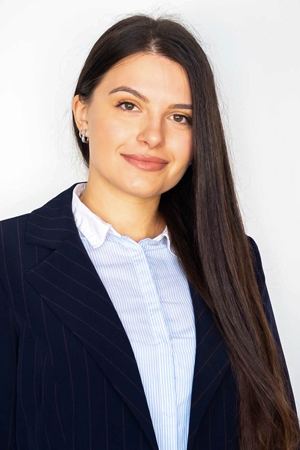
Anđela Blagojević is a Junior Researcher at the Department for Applied Mechanics and Automatic Control, Faculty of Engineering, University of Kragujevac. Her research focuses on Electrical Engineering and related interdisciplinary fields such as automation and control systems. Professional affiliation: She holds a position within the Faculty’s academic staff, contributing to research and possibly teaching activities in her department. Contact details include office А-I-28A and phone +381 34 335 990. Research interests emphasize applied mechanics and automatic control, likely involving theoretical and practical studies in electrical systems design, robotics, or industrial automation technologies.
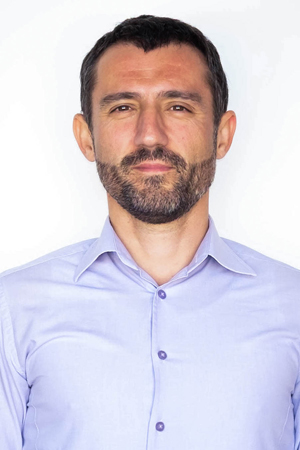
Dragan Rakić is an Associate Professor at the Department of Applied Mechanics and Automatic Control, Faculty of Engineering, University of Kragujevac, Serbia. His research focuses on structural safety assessment, material modeling, and computational mechanics. He specializes in dam safety analysis, finite element method applications, and tribomechanical systems. His work integrates machine learning and artificial intelligence for predictive modeling in engineering systems. Key research areas include structural integrity assessment, geotechnical modeling of embankment dams, and failure analysis of civil infrastructure. He contributes to national guidelines for dam safety in Serbia and develops user interfaces for constitutive model parameter identification. His projects address resilience of water resource systems under hazardous events, combining system dynamics and neural networks. Academically, he is affiliated with the Department for Applied Mechanics and Automatic Control, collaborating on interdisciplinary projects involving mechanical, civil, and environmental engineering. His publications span dam stability analysis, material behavior modeling, and failure assessment methodologies.
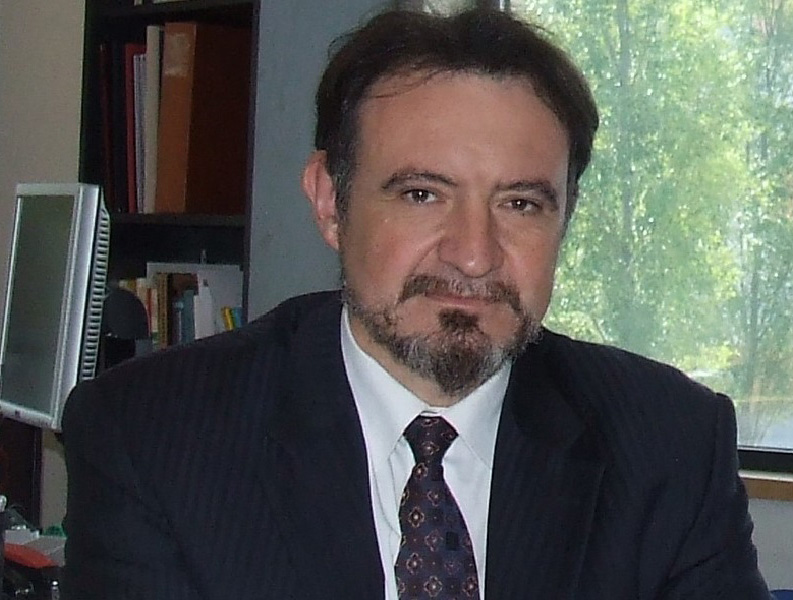
Станиша Перић serves as an Associate Professor in the Department of Automation at the Faculty of Electronic Engineering, University of Niš. His academic appointments and research activities are centered on advanced control systems and signal processing within Serbia's prominent technical institution. His educational foundation includes: BSc in Automation (2009, Faculty of Electronic Engineering, University of Niš) PhD in System Control (2016, Faculty of Electronic Engineering, University of Niš) Perić's research spans Control Systems , Signal Processing , and Automotive Control , with emphasis on sliding mode control, neural network integration, and orthogonal function applications. His work bridges theoretical control engineering with practical automotive implementations, particularly in anti-lock braking systems. Recent publications demonstrate a clear trajectory toward adaptive neural control architectures and real-time system optimization. With 21 impact-factor journal publications, his research output shows consistent focus on digital control algorithms and filter design. Current involvement in 6 active projects (2 national, 4 international) underscores his collaborative research profile. Dr. Perić actively supervises graduate students in control engineering while securing research funding through national and international grants. His laboratory work within the Department of Automation focuses on experimental validation of control algorithms using automotive test benches and real-time simulation environments.
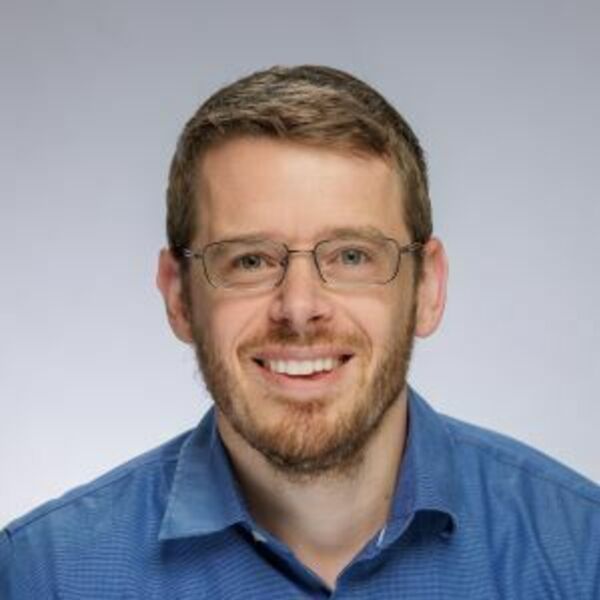
Kenan Dikilitas is a Professor in the Department of University Pedagogy at the University of Stavanger. His research focuses on language education, bilingualism, translanguaging pedagogy, teacher professional development, and English as a Foreign Language (EFL). He has published extensively on topics such as teacher identity, multilingualism in education, and technology integration in teaching. His work often explores collaborative practices, reflective teaching, and policy implications for language education. Key research interests include translanguaging in EFL contexts, teacher autonomy development, and the use of digital tools like ChatGPT in higher education. His studies frequently examine bilingual education policies, student attitudes toward language proficiency thresholds, and the impact of action research on teacher practice. He has collaborated internationally on projects related to English Medium Instruction (EMI), preschool bilingual contexts, and cross-disciplinary language strategies. Recent publications analyze ChatGPT-driven reflective practices, translanguaging in teacher training, and the developmental trajectories of educators in collaborative research settings. His work bridges theoretical frameworks like complexity theory with practical classroom applications, emphasizing pedagogical innovation and policy-informed teaching strategies.
Dr. Alexey L. Sadovski is a Professor of Mathematics at Texas A&M University-Corpus Christi (TAMUCC) and holds the endowed Ruth Campbell Professorship in Coastal and Marine Sciences. He also serves as Director of the Office for Information Assurance, Statistics, and Quality Control. His affiliations include the Harte Research Institute, and he is part of the Ph.D. faculty in Coastal and Marine System Science. Sadovski has extensive experience in academia, having taught for over 32 years at institutions such as the Moscow Institute of Transport Engineers and the Texas A&M System. Education: M.S. in Applied Mathematics, Moscow Institute of Transport Engineers, College of Automatic and Computing Technology, Moscow, USSR (1974) Ph.D. in Physical and Mathematical Sciences, Academy of Science of the USSR (1979) His research interests span Ecology , Computer and Computation Research , Experimental and Theoretical Geophysics , Sustainable Development , Mathematics Modeling , Decision, Risk, and Management Science , and methodologies including Statistics and Measurement . He applies advanced mathematical frameworks to natural systems and environmental decision-making, leveraging tools like Optimal Control, Stochastic Processes, and Operation Research. With over 70 publications across international journals and conferences, his work emphasizes interdisciplinary approaches to coastal and marine sciences. He has organized multiple international conferences, chaired special sessions, and contributed to academic committees. His teaching spans undergraduate to post-graduate levels, covering core topics such as Calculus, Real Analysis, ODE/PDE, Probability Theory, and Advanced Mathematical Modeling. Advising & Grants: Advises Ph.D. students in Coastal and Marine System Science Chairs academic committees and special sessions No explicit grants mentioned, but extensive conference organization highlights external collaboration Labs/Teams: Affiliated with the Harte Research Institute, focusing on coastal and marine systems research. His work integrates with interdisciplinary teams addressing environmental modeling and sustainable development challenges.
Duarte J. Guerreiro Tomé Antunes is an Associate Professor in the Mechanical Engineering Department at Eindhoven University of Technology (TU/e), affiliated with the Control Systems Technology Group and the EAISI Foundational initiative. He holds a PhD in Automatic Control from Instituto Superior Técnico (IST), Lisbon, and has postdoctoral experience at TU/e's Hybrid and Networked Systems group. Education: Licenciatura in Electrical and Computer Engineering (IST, 2005) PhD in Automatic Control (IST, 2011) Research Focus: Specializes in optimal control, stochastic control, and networked control systems. His work addresses challenges in large-scale system optimization (e.g., drone swarms, smart grids) and event-triggered control strategies for cloud-connected systems. Recent interests include robotics, particularly quadcopter dynamics. Key Contributions: Pioneered methods for reducing the 'curse of dimensionality' in high-dimensional control systems. Developed event-triggered algorithms for energy-efficient cloud-based control and stability analysis frameworks for networked systems with data losses. Awards: IEEE Control Systems Letters Outstanding Paper Award (2019) Teaching & Supervision: Teaches optimal control, dynamic programming, and robotics courses. Supervised 47 academic works to date. Active in TU/e's Cyber-Physical Systems and Systems Engineering research area.
Giannakoudakis Aristotle is a full Professor at the Department of Electrical Engineering, TEI of Crete. His expertise spans Automatic Control Systems, CAD for control systems design, and mathematical theories including Matrix and Invariant Theory. He has contributed to research on petrochemical processes and wind energy systems. Education: Graduated in Mechanical and Electrical Engineering (1976, NTUA, Athens), Control Systems Engineering (1978, INP Grenoble), and holds a PhD (1982, INP Grenoble) in Automatic Control. Research interests emphasize algebraic/geometric analysis, system synthesis, and computational algorithms for control problems. He has engaged in applied projects for industrial and renewable energy sectors. No scientific awards or grants are explicitly mentioned in the provided text. No advising students or lab affiliations are listed.
Dr. Mohamed Abdalmoaty is a Researcher at ETH Zürich's Institut für Automatik, specializing in the Department of Automatic Control. His work focuses on Data-Driven Modelling and Control , with expertise in system identification, stochastic systems, and optimal control. He holds an affiliation within the Professorship for Complex Systems Control. His research interests emphasize data-driven approaches for predictive control, frequency-domain identification, and nonlinear dynamical systems. He has contributed to advancements in Kalman filter formulations, stochastic Wiener models, and cybersecurity in control systems, particularly in medical applications like the artificial pancreas. Abdalmoaty’s recent publications (2022–2024) highlight innovations in time-varying normalizing flows, privacy-preserving network control, and robust parameter estimation under uncertainty. His work bridges theoretical control systems with practical applications in machine learning and biomedical engineering. He has developed software tools for system identification and simulation, including implementations for frequency-domain analysis and nonparametric closed-loop identification. His research aligns with emerging trends in hybrid machine learning-control frameworks and resilient cyber-physical systems.
MME Yufei GONG is an academic affiliated with the Université Technologique de Troyes (UTT), where she holds a position in the Department of Automatic Control and Systems Engineering. Her research focuses on advanced control systems engineering, with particular emphasis on degradation modeling, prognostics, and stochastic processes in feedback control systems. She is actively involved in supervising PhD students and contributes to the university's research directory. Her work integrates machine learning techniques with traditional control theory to address challenges in system reliability and fault tolerance. Key research areas include stochastic degradation indices, remaining useful life (RUL) estimation, multi-agent systems, and fractional-order control. Dr. Gong has published extensively in top-tier journals since 2019, with notable contributions to predictive maintenance and resilient control system design. Her academic profile reflects a strong background in both theoretical and applied aspects of automatic control systems engineering.
Prof. Daniel Quevedo is a Professor in Cyberphysical Systems at the School of Electrical Engineering and Robotics, Queensland University of Technology (QUT). He previously led the Chair in Automatic Control at Paderborn University, Germany. He holds a PhD from the University of Newcastle (Australia) and degrees from Universidad Técnica Federico Santa María (Chile). His research focuses on networked cyberphysical systems, cybersecurity, and model predictive control, with over 240 publications and three patents. He has attracted over $2M in research funding and is a Fellow of the IEEE. His work emphasizes cross-disciplinary collaboration in fields like power electronics, telecommunications, and behavioral economics. Educations: PhD in Automatic Control (2005), University of Newcastle, Australia M.Sc. and B.Eng. (2000), Universidad Técnica Federico Santa María, Chile Research Interests: Prof. Quevedo’s work bridges theoretical systems control with practical applications. Key areas include networked cyberphysical systems, cybersecurity (e.g., deception attacks, privacy preservation), and energy-efficient control strategies. His contributions span event-triggered control, encrypted cooperative systems, and power converter optimization. He collaborates globally with institutions like ABB, TU Berlin, and Indian Institute of Technology Bombay. Grants & Awards: Notable grants include DFG-funded projects on network-informed control and ARC grants on predictive control. His 2018 IEEE Axelby Award highlights his impact on systems control theory. He has also held visiting professorships and editorial roles for journals like IEEE Transactions on Automatic Control. Teaching & Supervision: At Paderborn University, he modernized control systems curricula, integrating blended learning and industry-relevant projects. He has supervised over 10 PhD/MSc theses and mentored postdoctoral researchers in areas like cyber-physical security and distributed control. Labs & Teams: He is affiliated with QUT’s Centre for Robotics, focusing on interdisciplinary robotics and cyberphysical systems research.
Farid Golnaraghi is a Professor and Graduate Student Supervisor in the School of Mechatronic Systems Engineering at Simon Fraser University. He holds a Ph.D. from Cornell University (1988) and B.Sc./M.Sc. degrees from Worcester Polytechnic Institute (1982). His research focuses on intelligent sensor systems applied to biomedical and automotive systems, smart materials, vibration control, and nonlinear dynamics. He teaches courses in dynamics, control systems, and mechatronics design, including ENSC 282 (Kinematics), ENSC 384 (Mechatronics Design II), and ENSC 800 (Nonlinear Vibrations). Education: Ph.D., Cornell University (1988); B.Sc./M.Sc., Worcester Polytechnic Institute (1982) His research interests integrate advanced sensing technologies with mechanical systems, emphasizing practical applications in automotive and biomedical engineering. Recent work includes studies on solenoid valve active engine mounts, electromagnetic shock absorbers for vehicle suspension, and multi-camera vision navigation systems. He has authored influential textbooks such as Automatic Control Systems (9th ed., Wiley, 2009) and contributed to Springer's analysis of friction-induced vibrations in lead screw drives (2010).
Dr. Regino Criado is Full Professor of Applied Mathematics at Rey Juan Carlos University (URJC), where he has held academic positions since June 2000. He currently serves as Academic Director of the Data, Complex Networks and Cybersecurity Sciences Institute (since March 2017) and was elected to the Academia Europaea in May 2023. His career spans European research projects (ESPRIT II/III) and interdisciplinary collaborations at the intersection of mathematics, computer science, and cybersecurity. His research focuses on Complex Networks , including hyper-networks, multiplex networks, and mesoscale structures, with applications to cybersecurity, intentional risk management, and synchronization phenomena. Key innovations include: A game theory-based intentional risk model integrating accessibility, anonymity, and value metrics Hybrid network mining algorithms for credit card fraud detection PageRank extensions to multiplex networks Framework for discrete resilience analysis in technological systems His work on the 2014 Physics Reports monograph The structure and dynamics of multilayer networks (3,500+ citations) established foundational concepts in multilayer network theory. Current research explores linguistic pattern analysis through multilayer hypergraphs for automatic text summarization. Member of Academia Europaea (2023) Chaos Journal Best Paper Award (2011) Academic Entrepeneurs Prize (2002) EUROPA-1992 Prize (1992) As director of the DCNC Institute (2017-present) and BBVA-URJC Chair (2017-2018), he has led major academic-industry collaborations. His 180+ publications (6,500+ citations) demonstrate sustained impact across network science, applied mathematics, and cybersecurity.
Mikko Heiskala is a Researcher at Aalto University in the Department of Industrial Engineering and Management within the School of Science . His research focuses on platform ecosystems, network externalities, mass customization, and digital servitization. He holds a Master's degree in Engineering and Technology from the Helsinki University of Technology . His work contributes to UN Sustainable Development Goals, particularly in education and sustainable development. He has been recognized for his teaching excellence with multiple awards, including the 2nd Best Course in the Department of Computer Science (2024) and other accolades between 2017–2021. His research explores strategic dynamics in managed ecosystems, boundary resources, and the interplay between purpose and profit in corporate decision-making, exemplified by the BalticSeaH2 hydrogen valley case . Heiskala actively engages in academic activities, serving as a reviewer for journals like California Management Review and conferences such as the Academy of Management Annual Meeting . His work bridges theoretical frameworks (e.g., Boundary Resources View) with practical applications in platform governance and innovation ecosystems.
Dr. Wanlun Ma is a Postdoctoral Research Fellow at the School of Science, Computing and Emerging Technologies , Swinburne University of Technology . He earned a Bachelor's and Master's in Information and Communication Engineering from the University of Electronic Science and Technology of China (UESTC) in 2017 and 2020, respectively, followed by a Ph.D. in Computer Science from Swinburne University of Technology in 2024. His research focuses on Trustworthy and Responsible AI , particularly in adversarial machine learning, network security, and privacy preservation. Education B.E., M.E. in Information and Communication Engineering, UESTC (2017, 2020) Ph.D. in Computer Science, Swinburne University of Technology (2024) Research Interests Trustworthy AI systems Adversarial machine learning Network security and privacy AI ethics and accountability Grants Australian Research Council (ARC) grant (2025-2029) for AI Models for Digital Manufacturing Supervision Available to supervise Ph.D. candidates
Robert Collinson is the Wilson Family LEO Assistant Professor in the Department of Economics at the University of Notre Dame and a core faculty member at the Wilson Sheehan Lab for Economic Opportunities (LEO). His research focuses on housing policy, urban policy, and the design of anti-poverty programs. He holds a Ph.D. from New York University (2019), an M.P.P. from the University of Chicago (2009), and a B.A. from the College of Wooster (2007). Collinson is also a Faculty Research Fellow at the National Bureau of Economic Research (NBER), a Research Affiliate at IZA, and part of the Human Capital and Economic Opportunity (HCEO) Network. His work examines topics such as eviction's impact on children, long-term effects of desegregation programs, and the efficacy of rental assistance during crises. He advocates for evidence-based policy to improve housing stability and reduce poverty. Collaborations with organizations like LEO, NBER, and IZA highlight his commitment to interdisciplinary research with real-world applications.