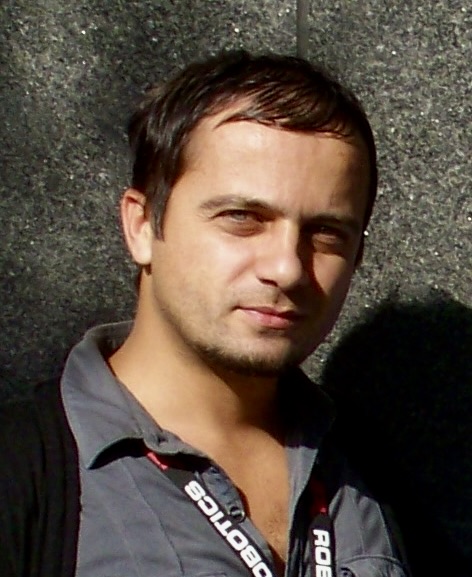
Maria MAKAROV is an Associate Professor at CentraleSupélec, affiliated with the Control Department at L2S (Laboratoire des signaux et systèmes), part of Université Paris-Saclay. Her research focuses on robust control methods for interactive robotic systems, human motor control modeling, and bio-inspired control strategies. She holds a PhD in Automatic Control from SUPELEC and a Master's in Electrical Engineering from KTH Royal Institute of Technology. Research Interests: Robust control of uncertain robotic systems Human-robot interaction and safety Dynamic stability and impedance estimation in human motion Bio-inspired control for humanoid robotics Key Projects: Ongoing work includes the ANR HERMIN project and contributions to the SYCOMORE research team. Her recent publications explore human arm impedance dynamics, octorotor state estimation, and collaborative robotics evaluation.
Prof. Roy Smith is a Professor at ETH Zurich specializing in control systems, with a focus on model predictive control (MPC), system identification, and robust control. His research spans energy systems, aerospace applications, and data-driven methods. He collaborates with leading institutions like the Swiss Federal Institute of Technology (ETH Zurich) and has co-authored numerous high-impact papers in top journals like IEEE Transactions on Automatic Control and Automatica. Key research interests include: distributed control of interconnected systems, kernel-based system identification, and real-time optimization for energy networks. His work bridges theoretical advancements with practical applications in buildings, renewable energy, and aerospace. Recent publications highlight contributions to MPC design under uncertainty, closed-loop identification techniques, and stochastic control systems. He has pioneered methods for energy hub networks and developed tools for data-driven predictive control in smart buildings. Academic collaborations include projects with Prof. John Lygeros (ETH Zurich) and Prof. Florian Dörfler (ETH Zurich), focusing on multi-agent coordination and energy systems. His research also extends to aerospace applications such as autonomous kite power systems and spacecraft pose estimation.
Alex Lew is an Assistant Professor of Computer Science at Yale University, affiliated with the Yale School of Engineering & Applied Science. He is a core member of the GenLM consortium, a multi-university initiative focused on controlling and understanding large language models through probabilistic programming and Bayesian inference. His research emphasizes automating and scaling principled probabilistic reasoning, combining techniques from programming languages, machine learning, Bayesian statistics, and cognitive science. Alex holds a Ph.D. and S.M. from the Massachusetts Institute of Technology (MIT) and a B.S. from Yale University. His work bridges theoretical foundations and practical applications, particularly in probabilistic programming languages and their integration with modern machine learning systems. Key contributions include advances in programmable variational inference, denotational semantics for probabilistic programs, and scalable Bayesian data cleaning. His research has been recognized with prestigious awards, including the ACM SIGPLAN Distinguished Paper Award (POPL 2023), ACM SIGLOG Distinguished Paper Award (LICS 2023), and the Probability and Programming Research Award from Meta (2023). His publications span top venues like ICLR, PLDI, and POPL, focusing on topics such as sequential Monte Carlo, stochastic inference algorithms, and formal semantics. Alex collaborates with industry and academia through the GenLM consortium and contributes to open-source probabilistic programming systems like Gen. His lab focuses on advancing the theoretical and practical tools for probabilistic reasoning in complex systems.
Yaobin Chen is a Professor of Electrical and Computer Engineering and Director of the Transportation & Autonomous Systems Institute at Purdue University's Elmore Family School of Electrical and Computer Engineering, based in Indianapolis. His research focuses on intelligent transportation systems, automated vehicles, EV/HEV technologies, intelligent controls, and robotics. He holds a B.S. from Nanjing Institute of Technology (1982), and M.S. and Ph.D. degrees from Rensselaer Polytechnic Institute (1986, 1988). Research Interests: Dr. Chen specializes in advancing autonomous systems, vehicle automation, and control systems. His work integrates robotics and intelligent control methodologies to address challenges in transportation infrastructure and energy-efficient vehicle technologies. He leads the Transportation & Autonomous Systems Institute, driving interdisciplinary innovation in autonomous vehicle systems and smart mobility solutions. Advising & Grants: While specific student names or grant details are not listed, his directorship indicates leadership in collaborative research initiatives. No awards or publications are explicitly mentioned in the provided text. Labs/Teams: Directs the Transportation & Autonomous Systems Institute, focusing on autonomous systems R&D.
Sarah Koskie is an Associate Professor of Electrical and Computer Engineering at Purdue University, Indianapolis, with a courtesy appointment at the Elmore Family School of Electrical and Computer Engineering. She is based at the Indianapolis campus, located at 723 W Michigan Street, IN 46202. Her research focuses on advanced control systems, game theory applications, system identification, fault detection, and sensor fusion, with practical applications in telecommunications, automotive/aerospace engineering, materials processing, and biological systems. She holds a PhD in Control Theory from Rutgers University (2003), an MS in Mathematics from Rutgers (1999), and SM/SB degrees in Mechanical Engineering from MIT (1986/1983). Education: PhD, Control Theory, Rutgers University, 2003 MS, Mathematics, Rutgers University, 1999 SM, Mechanical Engineering, MIT, 1986 SB, Mechanical Engineering, MIT, 1983 Her work bridges theoretical control systems with real-world applications in transportation safety, driving simulation, and interdisciplinary engineering challenges. She maintains an active research agenda without listed awards or grants in the current profile.
Thomas Badgwell is a Professor of Practice in the Department of Chemical Engineering at The University of Texas at Austin, affiliated with the Cockrell School of Engineering. He holds a Ph.D., M.S., and B.S. in Chemical Engineering from UT Austin (1992) and Rice University (1982). His research focuses on modeling, optimization, and control of chemical processes, with notable contributions to model predictive control (MPC) and integration with machine learning. He teaches courses including CHE 348 (Numerical Methods), CHE 354 (Transport Processes), and CHE 360 (Process Dynamics and Control). Awards & Honors: 2024: Babatunde A. Ogunnaike Control Practice Award (AACC) 2024: Distinguished Industrial Lecturer (IEEE Control Systems Society) 2022: Control Global Process Automation Hall of Fame 2013: Computing Practice Award (CAST Division) 2011: Fellow of AIChE His research bridges theoretical advancements and industrial applications, emphasizing MPC's role in process automation. Recent work explores machine learning integration, reinforcement learning for control systems, and digital manufacturing platforms. He has advised on advanced control systems for industries like oil refining and catalytic processes.
Nak-seung Patrick Hyun is an Assistant Professor in the School of Electrical and Computer Engineering at Purdue University, located in West Lafayette. His office is MSEE 274, and his contact information includes the email nhyun@purdue.edu and a personal webpage at http://www.nphyun.com/. Hyun holds degrees from Korea University (B.S., Electrical Engineering, 2009) and the Georgia Institute of Technology (M.S. in Mathematics and M.S./Ph.D. in Electrical and Computer Engineering, completed in 2013 and 2018, respectively). His research focuses on a cyclic learning approach integrating biology, mathematical system theory, and robotics, with a primary emphasis on Control Theoretic Bio-Inspired Robotics. Key areas include flapping-wing vehicles, safety-critical nonlinear control, adaptive control, and impulsive systems. His work also addresses contraction theory, geometric control, optimal motion planning, and swarm robotics. Hyun's publications span topics such as insect-inspired aerial microrobotics, network control of robotic systems, and ultrafast actuators. Recent work emphasizes applications in soft robotics, microfluidic control systems, and biomimetic design. Despite his prolific output, no scientific awards are explicitly mentioned in the provided text. His research also intersects with automatic controls, communications, and signal processing, reflecting a broad interdisciplinary approach to robotics and control systems engineering. Hyun’s contributions include hardware-in-the-loop testing methodologies for flying microrobots and optimization of ultrafast systems inspired by biological mechanisms.
Athanasios Antoulas is a Professor of Electrical and Computer Engineering at Rice University, where he has served since 1982. He is also a Max Planck Fellow (since 2016) and has held visiting positions at institutions such as the Australian National University and Kyoto University. His research focuses on dynamical systems, model reduction, and data-driven methods, particularly through the Loewner framework. Education: Ph.D. in Mathematics (1980), and Diplomas in Mathematics and Electrical Engineering (both 1975) from ETH Zurich. He was the sole Ph.D. student of renowned control theorist R.E. Kalman in Switzerland. Research interests include large-scale system approximation, nonlinear dynamics, and applications in energy systems and control. His work emphasizes data-driven techniques for modeling and reducing complex systems, with contributions to the Loewner framework for parametric and nonlinear systems. Notable awards include IEEE Fellow (1991), AIAA Best Paper Prize (1992), and JSPS Fellowship (1995). He has served as Editor-in-Chief of Systems and Control Letters and on editorial boards of major journals like IEEE Transactions on Automatic Control. His publications span model reduction, nonlinear system identification, and applications in electrochemical systems. He has advised numerous researchers but no explicit student names are listed in the provided data. Labs/Teams: Collaborations include the Max Planck Institute through his fellowship, and leadership in the Loewner framework development for systems engineering.
Andrew Rivers is a Lecturer in the Department of Psychology within the Faculty of Arts at the University of British Columbia. He has been actively teaching undergraduate courses including PSYC 102 (Introduction to Developmental, Social, Personality, and Clinical Psychology), PSYC 216 (Questioning Psychological Science in the Media), and PSYC 217 (Research Methods) from Winter 2018 through Summer 2025. His teaching experience extends beyond UBC to include work with undergraduates in Montana and California, First Nations peoples in Washington state, and incarcerated adults in the California State prison system. Rivers' research focuses on the role of executive functioning in the regulation of racial stereotypes, challenging traditional dual-process accounts of automatic or implicit stereotyping. He investigates whether the influence of racial stereotypes are 1) unconditionally automatic, 2) conditionally automatic (dependent on self-regulatory abilities), or 3) situationally automatic (dependent on operating conditions). His methodological approach emphasizes formal mathematical modeling to disentangle component processing mechanisms from resultant behavioral outcomes, frequently using Multinomial Processing Trees (MPTs) and Drift Diffusion Models (DDMs). His publication record shows a consistent research trajectory in social and cognitive psychology, with a focus on implicit bias, stereotype activation, and the cognitive processes underlying social judgment. His most recent work (2020-2021) critically examines social priming concepts while his earlier work (2015-2019) establishes foundational research on stereotype regulation and mathematical modeling approaches in social cognition. Rivers has not received any explicitly mentioned scientific awards in the available documentation. As stated in his profile, he does not mentor graduate students, focusing instead on undergraduate teaching and his research program. His teaching philosophy emphasizes developing effective instructional methods that facilitate student learning across diverse educational contexts.
Bing Li is the Verne M. Willaman Professor of Statistics at The Pennsylvania State University, within the Eberly College of Science and the Department of Statistics. His work focuses on advancing statistical methodologies with applications in diverse fields. He has held academic positions since joining Penn State and maintains active research and teaching roles. Education: Ph.D. in Statistics (1992), The University of Chicago M.Sc. in Statistics (1989), University of British Columbia, Vancouver M.Sc. in System Sciences (1986), Beijing Institute of Technology B.Sc. in Automatic Control (1982), Beijing Institute of Technology Research Interests: Bing Li specializes in dimension reduction techniques for high-dimensional data, with a focus on nonlinear methods and their applications in machine learning. He explores graphical models to represent statistical networks and has contributed to estimating equations , semiparametric estimation , and asymptotic theories . His work integrates longitudinal data analysis and addresses challenges in functional data regression and causal inference through innovative frameworks like envelope models and functional additive regression operators. Research Trends: His recent publications emphasize nonlinear and functional extensions of sufficient dimension reduction, causal graph learning, Bayesian statistical methods, and kernel-based testing. Notable themes include leveraging optimal transport for graphical models, developing ensemble neural networks for dimension reduction, and advancing statistical inference for complex data structures like tensor-valued observations. Awards/Honors: No specific honors or awards are explicitly listed beyond his endowed professorship. Advising & Grants: No advising records or grant information are provided in the text. His professional activities likely include mentoring through his departmental role, though explicit details are unavailable. Labs/Teams: Not explicitly mentioned; however, his research is conducted through the Department of Statistics at Penn State, possibly collaborating with interdisciplinary teams given his focus on biological and functional data applications.
Wenjia Wang is Professor of Artificial Intelligence at the University of East Anglia's School of Computing Sciences, where he leads an AI research laboratory and serves as Director of MSc Computer Science since 2003. He also holds positions as Deputy Director of Postgraduate Research and Admissions Officer for Overseas Applications. Education: • BEng in Electrical and Automatic Control Engineering, Northeastern University (1982) • MEng in Electrical and Automatic Control Engineering, Northeastern University (1985) • PhD in Advanced Computing, University of Manchester Institute of Science and Technology (1996) Research Interests: Professor Wang specializes in artificial intelligence with focus areas including machine learning ensemble methodologies, deep neural networks, natural language processing, and large language models. His work develops hybrid approaches for classification, clustering, and feature selection ensembles, applied across healthcare, finance, security, and computational biology domains using multimodal data analysis. Publications Focus: His scholarly output demonstrates consistent focus on ensemble machine learning methods, particularly clustering algorithms and their applications in transportation systems, data analysis, and pattern recognition. Recent work emphasizes robustness and comparative performance of ensemble techniques. Awards: • KTP Project graded OUTSTANDING (2023) • UEA Innovation & Impact Awards (2021, 2022) • Best Student's Paper (2018) • Best Poster Award (2010) Research Leadership: Leads multiple funded projects including EPSRC grants on medical AI detection systems and industrial applications. Directs PhD candidates and supervises postgraduate research while maintaining collaborations with healthcare institutions and industry partners. Laboratory: Heads AI research laboratory developing ensemble approaches for machine learning applications across interdisciplinary domains including healthcare diagnostics and transportation systems.
Dr. Ahmad Bani Younes serves as an Associate Professor in the Department of Aerospace Engineering within San Diego State University's College of Engineering, where he directs the Spacecraft Platform for Astronautics & Celestial Emulation (SPACE) Lab and advises the Rocket Club. His academic leadership extends to developing space-related programs and CubeSat projects at SDSU. His educational background includes a PhD in Aerospace Engineering from Texas A&M University (2013), an MSc in Aerospace Engineering from the University of Dayton (2009), and a BSc in Mechanical Engineering from Jordan University of Science & Technology (2003). Dr. Bani Younes' research focuses on Spacecraft Guidance, Navigation and Control (GNC) , Orbital Mechanics , and Space Robotics . His work encompasses high-fidelity gravity modeling for Earth anomalies, efficient satellite trajectory propagation, optimal control for spacecraft attitude tracking, and algorithmic differentiation for generating high-order derivatives. He also pioneers robotic sensing and control research in proximity operations, human-robot interaction, stereo vision, swarm robotics, and autonomous aerial vehicles through the SPACE Lab. Analysis of his 15 most recent publications (2010-2021) reveals a strong evolution from foundational orbital mechanics (Lambert's problem solutions, state transition tensors) toward cutting-edge applications in space robotics and autonomous systems. Recent works increasingly integrate machine learning (e.g., deep learning for aerial refueling) with traditional control theory, while maintaining rigorous computational approaches like Chebyshev-Picard iteration and dual-quaternion algebra. His distinguished awards include: Modeling and Simulation of Laser Communication Terminal of Satellites, Space Micro Inc., 2021 NASA JPL R&TD Innovative Spontaneous Concept Proposal, 2019 John V. Breakwell award (co-authored with JDP student), 2019 Khalifa University Competitive Internal Research Award (CIRA), 2019 Texas A&M Engineering Experiment Station (TEES) Award, 2018 Khalifa University Employee Award for Outstanding Service, 2016 ADEC Award for Research Excellence AARE, ADEC DRONES: Build and Fly chief expert award, WorldSkills, 2017 DRONES: Build and Fly chief expert award, EmiratesSkills, 2015 Recognition Certificate for best advising Matlab Club, Khalifa University, 2014 Best Paper Award, 37th AAS GNC conference, 2014 SIAM Award, Automatic Differentiation, 2012 Graduate Teaching Academy (GTA) Award, Texas A&M University, 2012 Graduate Teaching Academy (GTA) Senior Fellowship, Texas A&M University, 2012 Graduate Teaching Academy (GTA) Fellowship, Texas A&M University, 2011 Award of Academic Excellence, Jordan University of Science and Technology, 2003 As an academic advisor, he mentors the Rocket Club and develops the CubeSat project. His research is funded by competitive grants including NASA JPL R&TD proposals and Space Micro Inc. contracts, supporting hardware development for laser communication terminals and spacecraft GNC systems. These grants enable experimental validation in the SPACE Lab's 6DOF environment. The SPACE Lab serves as a critical operational testbed for space systems, conducting hardware-in-the-loop experiments in robotic sensing, proximity operations, and autonomous aerial vehicle control. Current initiatives include swarm robotics for satellite constellations and stereo vision systems for in-orbit servicing, positioning SDSU at the forefront of space technology research.
Prof. Adnan Tahirovic is a Professor in the Department of Automatic Control at the University of Sarajevo's Faculty of Electrical Engineering. He leads the Lab for Cooperative Artificial Intelligence and Advanced Control Systems. His academic background includes a PhD from Politecnico di Milano and research stints at Imperial College London, NASA-JPL, and Caltech. Education: M.Sc. (Control Theory, 2006) and Ph.D. (Information Technology, 2011). His research focuses on nonlinear control, multi-agent systems, mobile robotics, computational neuroscience, and AI. Key projects include MORUS (NATO-funded maritime security), AeroSTREAM (EU-funded autonomous aerial systems), and MARBLE (blue economy robotics). Research Interests: Nonlinear systems, optimal control, multi-agent reinforcement learning, motion planning in robotics, and AI applications in medicine. His work addresses the curse-of-dimensionality in optimal control, yielding breakthroughs in nonlinear systems and multi-agent coordination. Publications: Over 30 journal/conference papers, including IEEE Transactions and high-impact robotics conferences. Books include works on MPC-based mobile vehicle navigation and motion planning algorithms. Awards: Silver Plaque award, Microsoft Azure Research Award, DAAD Fellowship, and Golden Plaque for academic excellence. He has supervised over 40 master’s/PhD students, many advancing to prestigious institutions. Labs/Teams: Directs the Cooperative AI & Control Lab, collaborating with institutions like Imperial College London and University of Zagreb. Current projects span maritime robotics, blue economy applications, and computational neuroscience modeling.
Kristina DeRoy Milvae is an Assistant Professor in the Department of Communicative Disorders and Sciences at the University at Buffalo. Her research examines auditory perception challenges in clinical populations, with focus areas including speech-in-noise perception, listening effort quantification, and binaural processing in cochlear implant users. Research investigates how signal degradation and interaural asymmetries impact listening effort using physiological measures like pupillometry. Current projects develop clinical assessment tools for listening effort and optimize intervention approaches for older adults with hearing loss. Recent publications analyze the impact of cochlear implant signal processing on binaural benefits and the effects of age-related changes on auditory-cognitive interactions. This work integrates psychoacoustic methods with clinical translation objectives.
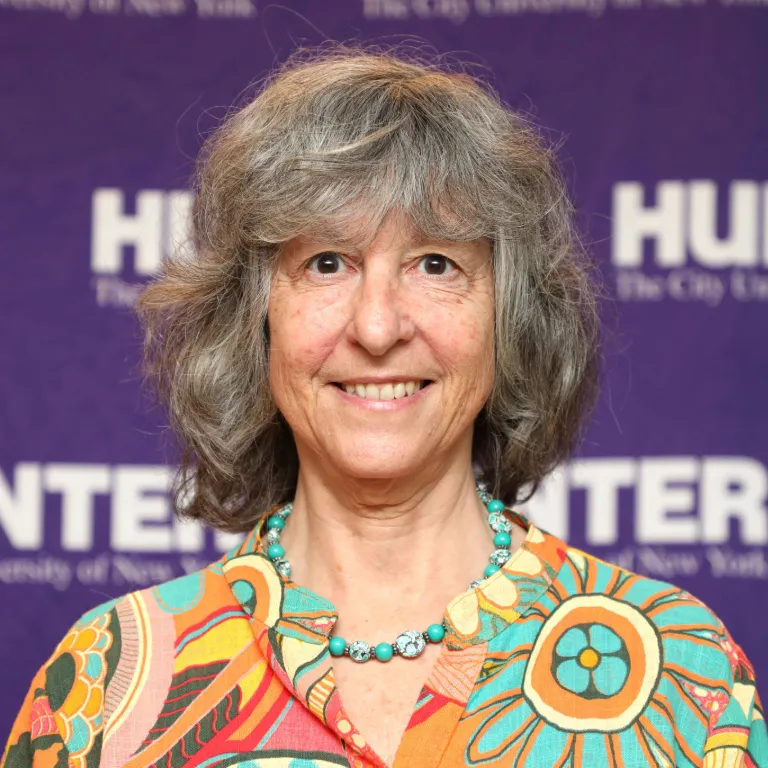
Felisa Vazquez-Abad is a Professor in the Department of Computer Science at Hunter College, part of the City University of New York (CUNY), and holds an adjunct appointment in the Department of Mathematics and Statistics. She specializes in stochastic systems and optimization. Dr. Vazquez-Abad earned her PhD in Applied Mathematics from Brown University. Her research focuses on adaptive control of stochastic discrete event processes, simulation methodologies, automatic learning for optimization, queueing networks, weak convergence theory, and Markov decision processes. Her work bridges theoretical foundations and practical applications in stochastic modeling and operations research. No specific articles or awards are listed in the provided text, though her expertise reflects engagement with advanced mathematical and computational challenges.