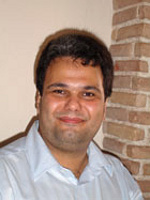
Ioannis Marinakis is a Professor at the School of Production and Management Engineering, Technical University of Crete, specializing in Stochastic Optimization and Applications. He holds a B.A., M.A., and Ph.D. from the same department (1999–2005). His research focuses on metaheuristics, evolutionary algorithms, supply chain optimization, and large-scale systems. Education: B.A. (1999), M.A. (2001), Ph.D. (2005) in Production and Management Engineering, Technical University of Crete. Research Interests: Explores stochastic and combinatorial optimization, nature-inspired algorithms, supply chain design, game theory, and vehicle routing. He has contributed to projects involving operations research and automatic control. Labs/Teams: Leads the Decision Science Laboratory,专注于开发决策支持系统.
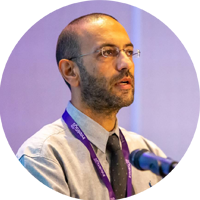
Professor Michael Papoutsidakis is affiliated with the Department of Industrial Design and Production Engineering at the University of West Attica. His academic career spans research in industrial automation, mechatronics, and intelligent control systems, with a focus on applications in hydraulic/pneumatic systems, robotics, and Industry 4.0 technologies. PhD from Bristol Robotics Laboratory (2004) MSc in Automatic Control Systems from University of the West of England (2004) Graduated from TEI Piraeus Automation Engineering (2000) His research interests include: Modeling of fluid power systems AI-driven control algorithms Smart logistics and ERP systems Embedded systems for motion devices Autonomous robotic platforms Wireless sensor networks in industrial applications Recent publications highlight his work at the intersection of 3D printing, robotics, and Industry 4.0, including advancements in digital twins, biomimetic manufacturing, and drone technology. His research emphasizes practical implementations for industrial and educational contexts. 2005 Patent for robotic training base 2025 Digital Twin Systems research 2024 UAV fuzzy control systems Contact: mipapou@uniwa.gr
Constantia Zarkoyannis is a Research Fellow at the School of Electrical and Computer Engineering, National Technical University of Athens (NTUA), affiliated with the Department of Information Transmission Systems and Materials Technology and the Biomedical Simulations and Imaging Technology Laboratory (BIOSIM). She has been a core member of BIOSIM since 2005 and was appointed as a Research Associate in October 2017. Her educational credentials include: Diploma in Electrical and Computer Engineering (2003) from Aristotle University of Thessaloniki Postgraduate Diploma in Electronic and Computer Engineering (2005) from Technical University of Crete Ph.D. (2011) from National Technical University of Athens (NTUA) Dr. Zarkoyannis' research integrates engineering and healthcare through Intelligent Clinical Decision Support Systems and Diabetes Management frameworks. Her work spans Physiological Systems Modeling, Pattern Recognition, and Machine Learning applications for Artificial Pancreas development, alongside innovative approaches in Gamification Mechanisms for Dietary Behavior Monitoring. This interdisciplinary focus bridges Automatic Control Systems with Multilevel Modeling to create predictive healthcare solutions. She has served as guest editor for the Springer Journal special issue 'Emerging Technologies for the Management of Diabetes Mellitus' (2015) and on the Editorial Board of SpringerPlus (2016). As an active reviewer for IEEE Transactions on Biomedical Engineering and other leading journals, she contributes to scholarly discourse while maintaining memberships in IEEE and the Technical Chamber of Greece (T.E.E). Her laboratory work centers on BIOSIM at NTUA, where she develops intelligent health systems through sustained research in physiological modeling and decision support technologies since 2005.
Dimitrios Dimogianopoulos is a Professor at the Department of Industrial Design and Production Engineering, School of Engineering, University of West Attica (UNIWA), Greece. He maintains his office in room ZA103, 1st Floor, Building Z (Wing A). His educational background includes: Diploma in Mechanical Engineering from the University of Patras, Greece (1995) Diplôme d'Etudes Approfondies in Systems Control from Université de Technologie de Compiègne, France (1996) PhD in Adaptive Control of Linear Time-Varying Systems from Université de Technologie de Compiègne (1999) Professor Dimogianopoulos has extensive research experience in control systems with applications across multiple domains. His previous positions include contractual researcher at CNRS in France (2002-2003), adjunct Assistant Professor at the Technological Education Institute of Lamia (2006-2010), and research associate at the Stochastic Mechanical Systems and Automation Laboratory (since 2003). His research spans identification and control of stochastic systems with emphasis on mechanical and aerospace applications, development of contact-less magnetoelastic sensors for composite materials diagnostics, and innovative methodologies for assessing mechanical attributes of fish flesh quality. He has participated in numerous EU-funded research projects addressing health/quality diagnosis across diverse application areas. His notable scientific achievement includes: National patent on fish flesh evaluation methodology (2017) Professor Dimogianopoulos teaches undergraduate courses including Automatic Control Systems I & II and Non-destructive Testing, as well as postgraduate courses in Automation and New Technologies in Shipping and Transport, demonstrating his commitment to both foundational and advanced engineering education.
Shachar Itzhaky is an Associate Professor in the Department of Computer Science at Technion - Israel Institute of Technology, Haifa. His research spans multiple areas of programming languages, formal methods, and software engineering, with a focus on making program development and verification more accessible and efficient. He has served on program committees for numerous prestigious conferences including PLDI, POPL, SPLASH, and ICFP. Dr. Itzhaky's research interests center around program synthesis, automated reasoning, and formal verification. His work in program synthesis explores techniques for automatically generating programs from high-level specifications, with applications in end-user programming and software development. In automated reasoning, he has made significant contributions to e-graph based reasoning, invariant inference, and property-directed verification. His research in formal methods focuses on practical applications for program verification, particularly for data structures and security properties. An analysis of his recent publications reveals a strong focus on leveraging advanced formal techniques for practical program understanding and generation. His work consistently bridges theoretical foundations with practical applications, particularly in program synthesis, verification, and end-user programming tools. The trend shows increasing integration of machine learning techniques with traditional formal methods, as well as expanding applications to security and privacy domains. ACM SIGPLAN John C. Reynolds Doctoral Dissertation Award Dr. Itzhaky has been actively involved in the programming languages research community, serving on numerous program committees and contributing to the advancement of formal methods and program synthesis. His work has practical implications for software development tools, security analysis, and end-user programming environments. While specific grant information isn't detailed in the provided text, his extensive publication record in top-tier venues suggests successful funding for his research endeavors. His work on projects like Object Spreadsheets and Lifty demonstrates a commitment to creating practical tools that address real-world programming challenges. Dr. Itzhaky's research is conducted within the vibrant programming languages and formal methods group at Technion's Computer Science department. His work intersects with multiple research threads including program synthesis, verification, and security, suggesting collaboration across these areas within the department. His tools like EPR-based Verification, PDR∀, and VeriCon represent significant technical contributions that likely form the basis of ongoing research projects with students and collaborators.
Konstantinos Kallas serves as Assistant Professor of Computer Science at the University of California, Los Angeles (UCLA), commencing his appointment in January 2025. Previously affiliated with the University of Pennsylvania as evidenced by his 2020 PLDI contribution, his research bridges theoretical formal methods with practical systems engineering across multiple high-impact conferences including PLDI, POPL, and SPLASH. His research program centers on enhancing computational efficiency and correctness in systems software, with three flagship projects defining his trajectory: PaSh for automatic shell script parallelization, Durable Functions for stateful serverless computing semantics, and DiffStream for differential testing of stream processing. These efforts consistently target the intersection of programming language theory and real-world systems constraints, particularly in parallelism, concurrency, and cloud-native environments where correctness guarantees are challenging to implement. Analysis of his publication history since 2020 reveals a methodological pattern: developing formal semantic models to enable practical optimizations in distributed systems. His work increasingly focuses on serverless architectures and data-intensive pipelines, with recent contributions emphasizing automated verification techniques. The evolution from shell script optimization (2020-2021) to serverless state management (2021-2022) demonstrates strategic expansion into cloud computing's hardest problems. Dr. Kallas actively contributes to the academic community through program committee service for PLDI (2022, 2025), POPL (2021, 2022, 2023), and SPLASH (2020-2023), including leadership roles as Publicity Co-Chair for PLDI 2025 and 2026. His June 2024 announcement confirms recruitment for Fall 2025 students at UCLA, targeting researchers interested in systems, compilers, and programming languages who can advance his work on correctness-preserving parallelization and serverless computing.
Kunle Olukotun is a Professor of Electrical Engineering and Computer Science at Stanford University's School of Engineering, where he has been faculty since 1991. He directs the Stanford Pervasive Parallelism Lab (PPL) and co-leads the Transactional Coherence and Consistency (TCC) project. His research focuses on computer architecture, parallel programming environments, and scalable parallel systems. Key areas include chip multiprocessors (CMPs), transactional memory systems, domain-specific languages (DSLs) for heterogeneous computing, and hardware-software co-design for machine learning workloads. His work bridges theoretical foundations with practical systems implementation. Notable contributions include the Stanford Hydra research project (one of the first chip multiprocessors with thread-level speculation), founding Afara Websystems (acquired by Sun Microsystems), and developing the Niagara processor architecture. His DSL frameworks like Green-Marl and Spatial enable efficient graph analysis and hardware acceleration. His publications reveal strong trends in parallel systems evolution: from foundational CMP research (2000s) to transactional memory (2004-2010), then DSLs for heterogeneous computing (2010-2015), and currently foundation model systems (2023-2025). Subfield analysis shows consistent focus on hardware-software co-design, sparse computation, and compiler techniques across decades. ACM Fellow (2006) for contributions to multiprocessors on a chip and multi-threaded processor design Best Paper Award at IEEE International Symposium on Workload Characteristics (IISWC '10) for EigenBench Olukotun actively mentors researchers through the Stanford Pervasive Parallelism Lab (PPL), which seeks to proliferate parallelism across application domains. His projects have secured significant industry partnerships, including the acquisition of his startup Afara Websystems by Sun Microsystems. Current research focuses on compiler frameworks for foundation model systems and hardware acceleration for sparse machine learning workloads, supported by collaborations with major tech companies. He leads the Stanford Pervasive Parallelism Lab (PPL), which develops compiler and runtime systems for heterogeneous architectures. The lab's work spans DSLs, hardware acceleration, and parallel programming models, with strong industry ties to companies like NVIDIA and Google. Current initiatives include the Mosaic compiler framework and Stardust architecture for sparse tensor computation.