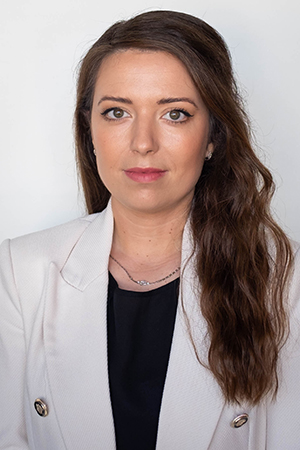
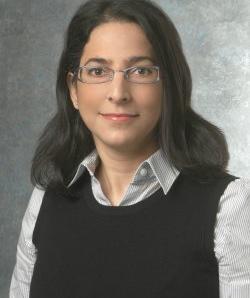
Smiljana Tomasevic is a Research Associate at the Department of Applied Mechanics and Automatic Control, Faculty of Engineering Sciences, University of Kragujevac, Serbia. She completed her undergraduate, master's, and doctoral studies at the same institution and has been actively contributing to research in technical and technological sciences. Her research focuses on areas within information technologies and automatic control systems , with applications in mechanical and engineering systems. Given her academic background and departmental affiliation, her work likely involves modeling, simulation, and control of dynamic systems. She is affiliated with the SciDAR repository, where her academic publications are archived. No specific scientific awards, grants, or student advisement roles are mentioned in the available information.
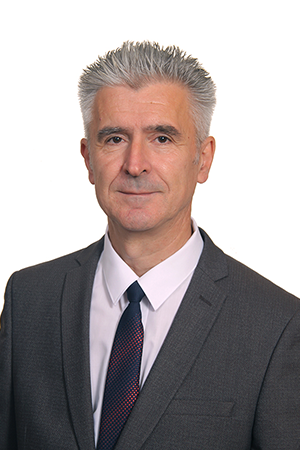
Slobodan Savic is a Full Professor at the Department of Applied Mechanics and Automatic Control, Faculty of Engineering Sciences, University of Kragujevac, Serbia. He is actively involved in teaching and research within the domain of applied mechanics and automatic control systems. His research interests span applied mechanics, automatic control, mechanical engineering, control systems, mechanical modeling, automation, dynamics and vibration, and system modeling and simulation. These areas reflect both theoretical and practical aspects of mechanical and control engineering, with applications likely in industrial and mechanical systems. The trends in his scholarly work, although specific publications are not listed, focus on engineering dynamics, system control, and mechanical design principles, indicating a strong foundation in both classical and modern mechanical engineering topics. His work contributes to academic and industrial advancements in system automation and mechanical performance optimization. No scientific awards were mentioned in the provided text. There is no explicit information regarding student advising or research grants. However, as a Full Professor, it is expected that he has supervised or is supervising graduate students and may be involved in national or international research projects. Further details would require access to his CV or publication records. He is affiliated with the Faculty of Engineering Sciences, where he contributes to academic and research activities within the Department of Applied Mechanics and Automatic Control. The department supports various laboratories and research centers focused on mechanical systems, control engineering, and industrial automation, in which he likely participates.
David Harle serves as a Senior Teaching Fellow within the Electronic and Electrical Engineering department at the University of Strathclyde's Faculty of Engineering. His academic career spans several decades with expertise in telecommunications and image processing technologies. His educational background includes a Doctor of Philosophy in Novel Techniques for Voice & Data Integration (1989) and a Bachelor of Science in Engineering (1984), both from the University of Strathclyde. Dr. Harle's research primarily focuses on telecommunications network performance evaluation , specializing in B-ISDN, ATM and SDH technologies, network interconnection, gateway performance, and traffic characterization. More recently, his work has expanded into hyperspectral imaging applications for agricultural quality inspection, particularly in rice seed classification and cattle tracking systems. His publications demonstrate a strong interdisciplinary approach combining telecommunications expertise with computer vision applications. His recent publications show a clear trend toward applying advanced image processing techniques to agricultural problems, with multiple papers on rice seed inspection using hyperspectral imaging between 2015-2020. These works demonstrate sophisticated approaches to classification and quality control using both spatial and spectral features. Dr. Harle has participated in numerous research projects as a Co-investigator, including the Automatic Rice Seed Inspection Using Hyper-Spectral Imaging (Newton Fund), Applicability of Localised Heating for metal forging, KTP-Cisco, Secure High availability Avionics Wireless Networks, and Light as a Service initiatives. He also participated in the Faculty Robotics and Automation Users Group Discussion in October 2017. His laboratory and team collaborations appear to be centered around the Centre for Signal & Image Processing at Strathclyde, working closely with colleagues including Christos Tachtatzis, Paul Murray, Ivan Andonovic, and Stephen Marshall on various imaging and telecommunications projects.
Pep Mulet Mestre is a full Professor in the Department of Mathematics at the Faculty of Mathematics, Universitat de València. He is a member of the ANIMS research group, focusing on Numerical Analysis, Images, Multiresolution, and Simulation. University: Universitat de València School: Faculty of Mathematics Department: Department of Mathematics Research Group: ANIMS His primary research interests include numerical analysis, partial differential equations, fluid mechanics, image processing, and high-order finite difference methods. He has made significant contributions to WENO schemes, total variation-based image restoration, and models for sedimentation and traffic flow. The 15 most recent publications highlight a consistent focus on high-order accurate numerical methods, particularly WENO and IMEX schemes, applied to conservation laws, image processing, and biological models. His work bridges theoretical numerical analysis with practical applications in fluid dynamics and epidemiology. He has collaborated extensively with researchers such as Raimund Bürger, Rosa Donat, Antonio Baeza, and David Zorío, resulting in over 60 indexed publications since 1996. Dr. Mulet earned his PhD from the Universitat de València in 1992 with a thesis on local cohomology and duality in non-commutative Gorenstein rings, supervised by Dr. A. Verschoren. He advises graduate students and leads research projects in numerical methods for PDEs and scientific computing, though specific advisees are not listed in the provided text. There is no mention of specific grants or scientific awards in the available information.
Edward Alexandru Todirica is an Associate Professor at the Department of Applied Mathematics and Computer Science, Technical University of Denmark. His research focuses on multimedia applications, embedded systems, and software engineering, with a particular emphasis on distributed multimedia and real-time systems. He has contributed to the development of virtual seminar room technologies and educational curriculum design for IT programs. His work spans digital signal processing, internet of multimedia things, and system components. Key collaborations include industry partners like Siemens and Danfoss. Publications highlight trends in educational innovation, multimedia systems, and real-time software engineering. No scientific awards are explicitly mentioned in the available data.
Joan Colomer Llinas is an Associate Professor in the Department of Electrical Engineering, Electronics and Automatic Systems at the University of Girona (UdG), where he has been a faculty member since 1999. He is affiliated with the Institute of Informatics and Applications (IIA) and leads the eXiT Research Group in Control Engineering and Intelligent Systems. His work bridges theoretical and applied research in intelligent control systems. Research Interests: Dr. Colomer's research focuses on the development and application of artificial intelligence and statistical techniques for industrial and environmental systems. His expertise includes fault detection, process monitoring, and decision support systems. He has contributed significantly to the integration of AI methods in real-world engineering applications, particularly in automation and system diagnostics. His research publications span over 100 articles in international journals and conferences, primarily centered on AI-driven monitoring and diagnostic systems. The body of his work reflects a strong trend in applying machine learning and statistical modeling to enhance reliability and decision-making in complex industrial and environmental processes. Principal Investigator in multiple national research projects on AI and statistical modeling. Participant in European projects focused on industrial decision support systems. Leader of the eXiT Research Group since 2004. Labs and Research Groups: He leads the Grup de Recerca en Enginyeria de Control i Sistemes Intel·ligents (eXiT) , a research team dedicated to advancing intelligent control and monitoring systems through innovative computational methods.
Maria Beatriz Lopez Ibañez is a full Professor at the University of Girona, affiliated with the Department of Electrical Engineering, Electronics and Automatic Systems within the School of Engineering. She is a member of the Institute of Informatics and Applications and leads the Artificial Intelligence in Medicine and Health research laboratory under the eXiT Research Group in Control Engineering and Intelligent Systems. Her research focuses on Artificial Intelligence, particularly Case-Based Reasoning , Machine Learning , Data Mining , and Optimization techniques. These are applied to diverse domains including Healthcare , Business Processes , Energy , Sustainability , and Smart Mobility . She has over 30 years of research experience and has contributed significantly to AI applications in medical decision support systems. The recent publications reflect a strong trend in applying AI and knowledge-based systems to medical informatics, especially in integrating hereditary and genealogical data for clinical decision-making. Her work bridges computer science with real-world healthcare challenges. Scientific Awards: Best Paper Award, International Medical Informatics Association (2014) Second Prize, Vall d'Hebron Research Institute Innovation in Health Competition – NoaH project (2015) ITEA 2017 Award for SME success in the MOSHCA project Accredited Advisor in 'Technology, Health and Life Sciences' by Generalitat de Catalunya (2018) Advising and Grants: She has supervised master's and undergraduate theses and actively proposes research topics. She has participated in 9 international projects, 25 national calls, over 16 research support projects, and 20 industry-funded projects, demonstrating strong funding acquisition and collaboration with private enterprises. Labs and Teams: She coordinates the AI in Medicine and Health Laboratory within the eXiT Research Group at the University of Girona, fostering interdisciplinary research in intelligent systems for healthcare applications.
Henry Hoffmann is Professor and Liew Family Chair of the Department of Computer Science at the University of Chicago. He serves as Chair of the department and leads research in self-aware and adaptive computing systems. His work bridges traditional computer systems areas with control theory and machine learning to create systems that automatically adapt to meet high-level goals. Hoffmann received his Ph.D. from MIT in 2013 under advisors Anant Agarwal and Srinivas Devadas, with his dissertation titled "SEEC: a framework for self-aware management of goals and constraints in computing systems." He earned an S.M. from MIT in 2003 and a B.S. with highest honors and distinction from UNC-Chapel Hill in 1999. Hoffmann's research focuses on developing self-aware computing systems that understand high-level goals and automatically adapt their behavior to meet those goals optimally. His recent work has shifted toward applying these techniques to control machine learning and AI systems, building learning systems that dynamically adapt their internal structure and resource usage to meet accuracy, energy, performance, and security goals at inference time. His interdisciplinary approach combines operating systems, computer architecture, control theory, and machine learning. Analysis of Hoffmann's recent publications reveals a clear trajectory toward increasingly sophisticated applications of self-aware computing principles. His work has evolved from foundational resource management to cutting-edge applications in AI/ML systems, quantum computing, and security. The publications demonstrate a consistent theme of using control theory and machine learning to create adaptive systems that optimize multiple competing objectives like performance, energy efficiency, and reliability. Recent papers show expanding applications into large language models, quantum algorithms, and privacy-preserving techniques. Presidential Early Career Award for Scientists and Engineers (PECASE) 2019 DOE Early Career Award 2015 Samsung Security Hall of Fame recognition IEEE Micro Top Picks Honorable Mention awards FSE Test of Time Honorable Mention ASPLOS Hall of Fame recognition Hoffmann has mentored numerous PhD and Master's students who have gone on to successful careers in academia and industry. His research has secured over $19 million in funding for the University of Chicago. He co-founded Config Dynamics in 2019 to commercialize aspects of his self-aware computing research. His work has practical applications across data centers, edge computing, AI systems, and quantum computing. Hoffmann leads the SEEC (Self-aware, Energy-Efficient Computing) research group at the University of Chicago. The group focuses on developing frameworks and techniques for building self-aware computing systems that can dynamically adapt to changing conditions and requirements. The group maintains strong collaborations with industry partners and other academic institutions, particularly in the areas of quantum computing, AI systems, and energy-efficient computing.
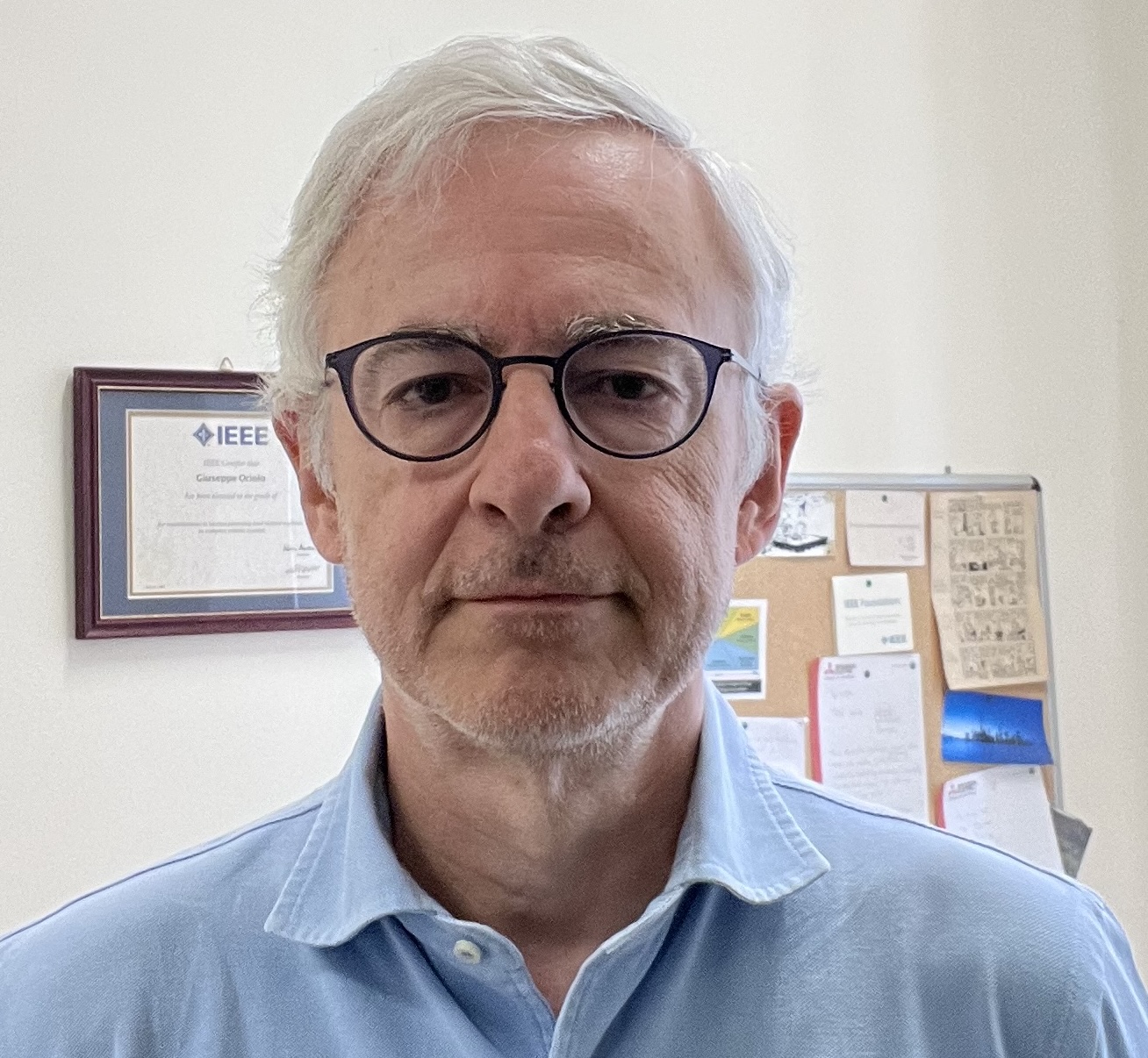
Joseph Oriolo is a Full Professor of Automatic Control and Robotics at the Department of Computer, Control and Management Engineering (DIAG) at Sapienza University of Rome, where he also serves as the director of the DIAG Robotics Lab. He received his Ph.D. in Control Engineering from Sapienza University of Rome in 1992 and joined the DIAG in 1994. As an IEEE Fellow, he has made significant contributions to the field of robotics and control systems. His research spans multiple areas within robotics and control engineering, with particular focus on humanoid robots , mobile robots , UAVs , visual motion control , multi-robot systems , and sensor-based navigation . His work bridges theoretical control systems with practical robotics applications, emphasizing motion planning, learning control, and kinematically redundant robots. His research has resulted in over 230 publications in international journals and conferences, as well as two books. An analysis of his recent publications (2022-2025) reveals a strong emphasis on advanced control techniques for humanoid and mobile robots, particularly Model Predictive Control (MPC) applications for gait generation, navigation, and manipulation. His work increasingly integrates vision-based approaches for safe human-robot interaction and navigation in complex environments, with a growing focus on real-world applications including crowd navigation and cooperative robotics. Best Paper Award at the 17th International Workshop on Human-Friendly Robotics (HFR 2024) IEEE Robotics and Automation Magazine Best Paper Award for 2020 IEEE Fellow Professor Oriolo has served in significant editorial roles including Associate Editor (2001-2005) and Senior Editor (2009-2014) of the IEEE Transactions on Robotics. He has been actively involved in major robotics conferences, serving as Organization Chair for the 2007 IEEE International Conference on Robotics and Automation in Rome and on the Program Committees of numerous international conferences including ICRA, IROS, and RSS. He currently teaches courses on Control Systems and Autonomous and Mobile Robotics at Sapienza University of Rome. As director of the DIAG Robotics Lab, he leads research efforts in humanoid robotics, mobile manipulation, and autonomous navigation. The lab focuses on developing control frameworks that enable robots to operate effectively in complex, dynamic environments, with applications ranging from industrial automation to human-robot collaboration.
Lyne DA SYLVA is Full Professor and Head of the School of Library and Information Sciences (École de bibliothéconomie et des sciences de l’information) within the Faculty of Arts and Sciences at Université de Montréal. She also leads several large-scale interdisciplinary research projects funded by SSHRC and FRQSC, sits on the governing bodies of the Observatory of Sense-Text Linguistics (OLST) and the Interuniversity Research Centre on Digital Humanities (CRIHN), and supervises graduate students in information science. Education B.Sc. in Applied Mathematics, Université d’Ottawa (1987) Certificate in Linguistics, Université de Genève (1991) M.A. in Linguistics, Université de Montréal (1990) Ph.D. in Linguistics, Université de Montréal (1999) Research Focus Da Sylva’s work lies at the intersection of computational linguistics and information science . She employs symbolic, rule-based models to develop tools for automatic indexing, summarisation, and semantic enrichment of digital documents. A second stream examines digital libraries as complex sociotechnical systems, investigating how language technologies can improve discovery and use of multilingual scholarly content. Thirdly, she explores documentary semiotics , analysing the sign systems that underlie information architectures in libraries, archives and museums. Recent projects centre on: automatic back-of-the-book indexing for digital monographs; research-data management ecosystems in Canadian universities; semiotic aspects of entities and identity in semantic-web datasets; algorithmic law and the migration of legal norms into technical devices. Funding & Partnerships Since 2005 she has been principal investigator or co-investigator on more than CAD 5 million in grants from SSHRC, FRQSC and NSERC. She currently co-leads the strategic partnership “Autonomisation des acteurs judiciaires par la cyberjustice” (2018-2026) and heads the FRQSC team grant “Le lexique entre humains et machines” (2025-2030). Scientific Awards & Distinctions While no named awards are explicitly listed, her continuous success in highly competitive tri-council funding programmes and her invitations to keynote or guest-edit leading journals (Document numérique, Documentation et bibliothèques) attest to national and international recognition. Supervision & Teaching At the master’s and doctoral levels she teaches courses on research-data management, indexing methodology, thesaurus construction, digital libraries and NLP tools for information professionals. She has supervised or co-supervised four recent theses covering legal recognition of smart contracts, archival vocabulary for thematic access, linked-data initiatives at Bibliothèque et Archives nationales du Québec, and terminological variation in thesauri. Laboratories & Teams Her research is anchored in the OLST (Observatoire de linguistique Sens-Texte) and the CRIHN (Centre de recherche interuniversitaire sur les humanités numériques), both of which provide computational infrastructure and interdisciplinary collaboration networks for projects in language technology, digital humanities and data curation.
Tevfik Bultan is a Professor in the Department of Computer Science at the University of California, Santa Barbara, where he leads the Verification Laboratory (VLab). He has been actively teaching undergraduate and graduate courses including CS 160 (Translation of Programming Languages), CS 267 (Automated Verification), and CS 272 (Software Engineering), along with specialized seminars on topics like Neural Network Verification and Quantitative Verification. Ph.D. in Computer Science, University of Maryland, College Park (1998) M.S. in Computer Engineering and Information Science, Bilkent University (1992) B.S. in Electrical and Electronics Engineering, Middle East Technical University Professor Bultan's research focuses on software verification, static analysis, model checking, and security, with particular emphasis on quantitative information flow, side channel analysis, and string analysis. His work bridges theoretical foundations with practical applications in web software, service-oriented computing, and concurrency. He has pioneered techniques for detecting bugs in identity and access management policies and quantifying information leakages in crypto libraries, which earned him Amazon Research Awards in 2017 and 2023. His recent publications and student dissertations reveal a strong trend toward quantitative approaches to security analysis, with increasing focus on automated techniques for detecting and mitigating side channels in various contexts including network communications, cryptographic libraries, and access control systems. His work combines formal methods with practical security applications, often developing novel constraint solving and model counting techniques. Amazon Research Award (2017): Automatically Detecting Bugs in Identity and Access Management Policies Amazon Research Award (2023): Detecting and Quantifying Information Leakages in Crypto Libraries Professor Bultan has advised numerous PhD students who have gone on to academic positions at institutions like Stevens Institute of Technology, Harvey Mudd College, and King Saud University, as well as industry positions at companies including Amazon, Google, Microsoft, and Intel. His laboratory, the Verification Laboratory, has received funding from various sources to support research in software verification and security analysis. The lab focuses on developing practical verification techniques that can be applied to real-world software systems.
Ugo Buy is an Associate Professor in the Department of Computer Science at the University of Illinois at Chicago, affiliated with the College of Engineering. His research focuses on software engineering, particularly in modeling and analysis of concurrent and real-time systems, and the automatic generation of control supervisors for discrete manufacturing systems. He has also explored applications in supervisory control, dynamic reconfiguration, and automatic correction of multi-threaded Java programs. Education: Ph.D., University of Massachusetts, 1990 Research Interests: Dr. Buy's work spans software engineering for concurrent systems, real-time systems verification using finite automata and Petri nets, and supervisory control techniques for discrete manufacturing plants. Additional interests include multicore hardware development, mobile app development, and sensor networks. He co-directed a NIST-sponsored project on automated supervisory controllers for discrete manufacturing systems. Teaching: Dr. Buy has taught courses such as object-oriented programming (CS 342, CS 474), software engineering (CS 342, CS 440, CS 442, CS 540), and mobile app development (CS 478). Earlier in his career, he taught introductory computer science (CS 100, CS 101), data structures (CS 201), and theoretical courses (CS 301, CS 401). Professional Activities: Organization Committee Member, Petri Nets '93 (14th International Conference on Application and Theory of Petri Nets, Chicago, Illinois) Program Committee Member, ICCI'93 (Fifth International Conference on Computing and Information, Sudbury, Ontario) Program Committee Member, IWSSD-7 (IEEE Seventh International Workshop on Software Specification and Design, Redondo Beach, California) Program Committee Member, IWSSD-8 (IEEE Eighth International Workshop on Software Specification and Design, Paderborn, Germany)
Evren Gurkan Cavusoglu is an Associate Professor in the Department of Electrical, Computer, and Systems Engineering at Case School of Engineering , where he also serves as the Associate Dean of Academics . His academic career bridges engineering and biology through interdisciplinary research. Education MBA, Case Western Reserve University (2016) PhD in Electrical and Electronics Engineering, Middle East Technical University (2003) MSc in Automatic Control and Systems Engineering, University of Sheffield (1997) BSc in Electrical and Electronics Engineering, Middle East Technical University (1996) His research focuses on systems and control theory , systems biology , and computational biology , with applications in biological system modeling and signal processing . He develops in silico models to enhance cancer therapies and study cellular dynamics. Recent publications highlight his work in radiosensitization , DNA repair mechanisms , and fuzzy control systems . His teaching includes signal processing , control systems , and systems biology . Scientific Awards CSE Undergraduate Teaching Award (2017) He is a member of the Institute of Electrical and Electronics Engineers (IEEE) and has contributed to journals like IET Systems Biology , Frontiers in Oncology , and Cancer Research . His work emphasizes translational applications of engineering principles in biomedicine.
Gabriella Eula is a Tenured Associate Professor at the Department of Mechanical and Aerospace Engineering (DIMEAS) of Politecnico di Torino. She contributes to research in applied mechanics, robotics, and automation systems for agriculture and biomedical applications. Education: Graduated in Mechanical Engineering (1992), PhD in Applied Mechanics (1996) at Politecnico di Torino. Her research focuses on robotic rehabilitation devices, fMRI robotic systems, assistance and industrial exoskeletons, agricultural robotics (harvesting, grafting, pesticide spraying), and fluid automation. She leads projects on multifunction actuation groups and tractor implement connections. Recent work includes drone-mounted pesticide sprayers (2024) and industrial exoskeleton design (2024). Her research aligns with SDG Goals 3 (Health), 4 (Education), 9 (Innovation), and 15 (Life on Land). Scientific Awards: Gold Best Application Paper Award (RAAD Conference 2017); Effective Member, AIMETA (2023-), IFToMM (2019-), GMA (1998-). She collaborates with institutions like ABLE Human Motion, Festo S.p.A., and DISAFA (University of Turin) and participates in PRIN research projects.
Prof. Dr.-Ing. Gernot Schullerus is a W2-Professor for Electrical Drives at the Faculty of Engineering, Reutlingen University, where he has been employed since September 2010. He currently serves as the Collegial Head of the Electronics & Drives Research and Teaching Center since March 2023 and will assume the scientific leadership of the Reutlingen Research Institute starting September 2024. His office is located in Building 2, Room 018, and his office hours are Tuesdays from 8:00 to 9:00 AM. Professor Schullerus completed his doctorate at the University of Karlsruhe (TH) in 2004. His academic and professional journey includes: 2004: PhD (Dr.-Ing.) at University of Karlsruhe (TH) January 2004 - August 2010: Development Engineer, Electronics Development, SEW-EURODRIVE, Bruchsal September 2010 - present: W2-Professor for Electrical Drives, Faculty of Engineering, Reutlingen University March 2023 - present: Collegial Head of the Electronics & Drives Research and Teaching Center September 2024 - present: Collegial Scientific Head of the Reutlingen Research Institute Professor Schullerus specializes in electrical drive technology and power electronics. His research focuses on new motor concepts, particularly harmonically excited synchronous machines, power electronic components for drive applications, and inverters using gallium nitride power switches. He investigates sensorless operation of switched reluctance machines and energy-efficient control of rotating field machines. His work extends to condition monitoring and predictive maintenance in drive systems, with recent emphasis on green hydrogen production and flexible hydrogen logistics. The Reutlingen Research Institute under his leadership explores decentralized energy systems and energy efficiency. His recent publications demonstrate a strong focus on power electronics innovations, particularly with gallium nitride technology, and applications in energy systems. Key trends include advanced modulation techniques for power converters, optimization of PCB layouts for high-power applications, and the integration of renewable energy with hydrogen production systems. His work bridges theoretical control concepts with practical industrial applications, particularly in drive systems and energy conversion. Professor Schullerus leads the Electronics & Drives research group at Reutlingen University, which is actively involved in multiple research projects. Current projects include CleMoSy (Clean Motor Supply), Trusted Handling (Predictive Maintenance for roller chains), H2FLEX (Flexible Interoperable Hydrogen Logistics), and the Model Region Green Hydrogen: Lighthouse H2-Grid (Networking decentralized hydrogen production and consumption). Previously, he has led projects on modular scalable power electronics based on gallium nitride components, dynamically energy-efficient operation of induction machines, and model-based hierarchical condition monitoring. His laboratory facilities include the Electrical Drives Laboratory and the Laboratory for Control and Drive Technology, where his team focuses on optimal control/regulation and diagnosis of drive and grid converters. The research environment supports both fundamental investigations and applied industrial projects, with strong connections to industry partners in the drive technology sector.