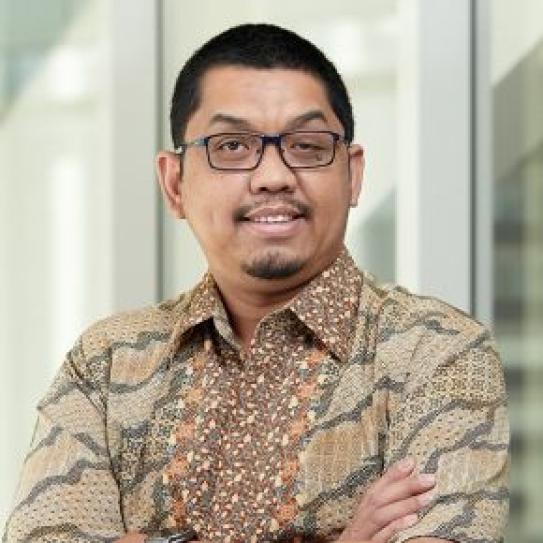
Dr. Rafid Al-Khannak is an Associate Professor in Computing at Buckinghamshire New University. He holds a PhD in Engineering and IT from the University of Bolton, completed in collaboration with Siemens AG. His research focuses on engineering and IT operational development, particularly in cloud computing, distributed systems, cybersecurity, and infrastructure automation. Al-Khannak maintains industry collaborations with Amazon and Siemens on cloud implementation and security projects. Key research areas include: Secure cloud migration frameworks using AWS hybrid models Infrastructure automation through CI/CD pipelines Penetration testing methodologies for cloud applications AI-enhanced education system transformation Healthcare application development for specialized needs
W. Eric Wong is a Professor of Computer Science at The University of Texas at Dallas (UTD), affiliated with the Erik Jonsson School of Engineering and Computer Science. He holds a Ph.D. in Computer Science from Purdue University (1993), following earlier degrees from Purdue and Eastern Michigan University. His research focuses on reducing software production costs while enhancing reliability, safety, and quality through program-based and architecture/design-based testing methodologies. Key areas include automated test generation, fault localization, debugging, and software safety analysis. Professional Background: Tenured Professor at UTD since 2002 Prior roles include Senior Scientist at Telcordia Technologies (1995–2002) and Consultant at Texas Instruments (2004–2005) Active in industry partnerships, such as projects with Motorola, Avaya Labs, and Raytheon Research Interests: Software Testing & Debugging Dependable Software Development Security Requirements Engineering Fault Localization Techniques Model-Based Testing Software Reliability Modeling Awards & Recognition: 2007 IEEE COMPSAC Best Paper Award 1997 NASA Quality Assurance Special Achievement Award Recipient of a $404,772 NSF grant for software safety and reliability research (2021) Professional Activities: Editorial roles for journals like Journal of Systems and Software and International Journal of Software Engineering Program Chair for ISSRE 2012, COMPSAC 2010, and multiple ACM SAC conferences Member of IEEE Reliability Society Administrative Committee (2008–2013) IBM System z Curriculum Advisory Panel member Labs & Teams: Leads the Software Engineering Group at UTD, collaborating on projects like eXVanatge (dependable software solutions) and Fault-Prone Module Identification in telecommunications systems. Engages in cross-disciplinary efforts with industry and international institutions.
Kevin W. Hamlen is the Louis A. Beecherl, Jr. Distinguished Professor in the Department of Computer Science at the University of Texas at Dallas. He serves as Executive Director of UT Dallas' Cyber Security Research and Education Institute. His research focuses on language-based security , binary software hardening , cyberdeception , and formal program verification . He has received multiple grants from agencies like AFOSR, NSF, DARPA, and industry partners including Lockheed Martin and Intel. PhD and MS from Cornell University BS from Carnegie Mellon University His research explores automated approaches to software security through techniques like binary disassembly , control-flow integrity , and honey-patching . He has pioneered methods for malware defense and cloud/web/mobile security . Recent work examines adaptive cyberdeception and GPU-based security frameworks . His publications span binary code manipulation , malware mitigation , and blockchain security . Key awards include the NSF IUCRC Technology Breakthrough Award and two CSAW Best Paper 2nd Prizes . He advises numerous PhD students, many of whom now work at Google, IBM, and Microsoft. His book Autonomous Cyber Deception (Springer, 2019) with Ehab Al-Shaer and Cliff Wang provides comprehensive coverage of adaptive cyberdeception strategies.
Jun Yan is an Associate Professor and Concordia University Research Chair in Artificial Intelligence in Cyber Security and Resilience at the Concordia Institute for Information Systems Engineering (Concordia University). His research focuses on cybersecurity, smart grid systems, and AI-driven solutions for energy and communication networks. He supervises graduate students in programs such as Information Systems Security (MASc), Computer Science (MCompSc), and Information and Systems Engineering (PhD). Research Highlights : Cybersecurity of distributed energy systems, AI penetration testing frameworks, and resilient transactive energy markets. Awards : Holds a prestigious university research chair in AI-driven cybersecurity. His work integrates machine learning with domain-specific challenges in smart grids, IoT security, and multi-agent systems. Notable contributions include frameworks for detecting adversarial attacks on power systems, optimizing renewable energy integration, and developing AI tools for penetration testing. His articles reflect a strong emphasis on interdisciplinary solutions blending cybersecurity, energy systems, and advanced computing. Yan’s research also addresses policy and infrastructure challenges in sustainable energy systems, including waste management policy analysis and optimal configuration of hybrid renewable systems. He has pioneered open-source co-simulation platforms like PEMT-CoSim and Quantum-Sim for secure energy trading and quantum communication in grids. He actively engages in grant-funded projects and advises on both academic and applied aspects of cybersecurity and intelligent systems.
Dr. Muhammad Azmat is a Lecturer and researcher at Aston University's School of Engineering and Applied Science, specializing in Engineering Systems & Supply Chain Management. He holds a PhD from Vienna University of Economics and Business, an MBA from Iqra University, and completed leadership programs at Oxford. His research focuses on disruptive technologies like autonomous vehicles, IoT, and their applications in supply chains and mobility. He has collaborated with organizations such as the Federal Procurement Agency of Austria and the Kühne Foundation, addressing challenges in logistics, urban mobility, and humanitarian aid. Education: PhD in Transport, Logistics & Supply Chain Management (Vienna University of Economics and Business, 2019) MSc in Supply Chain Management (Vienna University of Economics and Business, 2015) MBA in Supply Chain Management (Iqra University, 2013) Research Interests: Dr. Azmat explores innovation in mobility (autonomous/connected vehicles, shared platforms), logistics 4.0, and humanitarian supply chains. He examines how technologies like IoT and big data can enhance efficiency while addressing ethical and operational challenges. Recent work includes drone applications for disaster relief and blockchain for supply chain transparency. Publications Trends: His work spans urban logistics optimization, technological adoption barriers in SMEs, and cross-border humanitarian coordination. A common theme is leveraging emerging tech to solve real-world logistical and infrastructural problems. Awards: Best paper in Health and Environment (2019) PhD Distinction Award (2019) PhD Supervision & Collaboration: Actively supervises PhD candidates in mobility innovation and supply chain resilience. Leads industry-academia projects with highway authorities and tech firms, focusing on pilot testing autonomous vehicle infrastructure and IoT-based logistics solutions. Labs/Teams: Collaborates with Aston's Logistics Research Group and external networks like the Kühne Foundation to advance sustainable logistics systems and smart mobility frameworks.
Tønnes Nygaard is an Associate Professor at the Department of Technology Systems, University of Oslo, affiliated with the Faculty of Mathematics and Natural Sciences. His research focuses on evolutionary robotics, morphological adaptation, and embodied artificial intelligence. He leads projects like COCOMO (Co-evolution of Control and Morphologies) and works extensively with the DyRET (Dynamic Robot for Embodied Testing) platform. Key research interests include robot control systems, adaptive morphology design, and real-world implementation of evolutionary algorithms. His work bridges theoretical computer science with practical robotics applications, emphasizing hardware-software co-evolution and embodied cognition principles. Publications span topics like morphological adaptation in quadruped robots, semi-supervised learning for terrain classification, and overcoming convergence issues in multi-objective evolutionary algorithms. Nygaard collaborates internationally and contributes to both academic journals and conferences in robotics and AI. No scientific awards are explicitly listed, though his impactful contributions to real-world evolutionary robotics suggest potential recognition pending explicit mentions. Advising and grant activities are central to his role, though specific student names or grant amounts are not detailed in the provided texts. Labs/Teams: Core contributor to the DyRET project and affiliated with the Section for Autonomous Systems and Sensor Technologies at UiO.
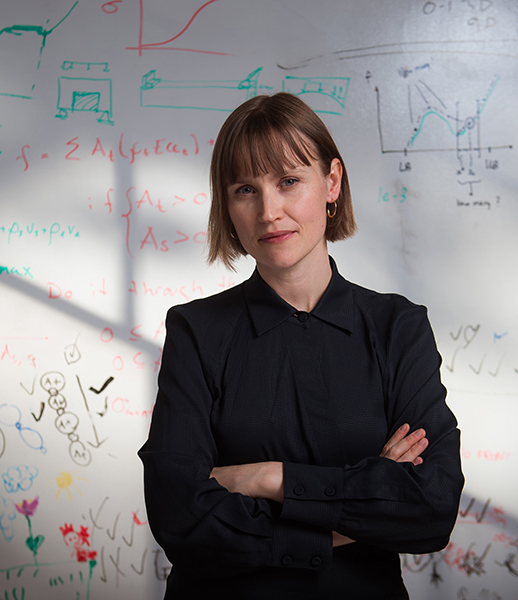
Josephine V. Carstensen is the Gilbert W. Winslow Career Development Associate Professor in the Department of Civil and Environmental Engineering at MIT. She holds a B.Sc. and M.Sc. from the Technical University of Denmark, and an M.S.E. and Ph.D. from Johns Hopkins University. Her research focuses on leveraging digitalization and AI to revolutionize structural design, particularly in topology optimization and sustainable materials engineering. She teaches Senior Civil and Environmental Engineering Design (1.013) and Topology Optimization of Structures (1.583). Her lab, the Carstensen Group, develops algorithms for human-AI collaboration in design, emphasizing manufacturability and sustainability. Notable achievements include NSF CAREER Award (2021), CEE Maseeh Teaching Award (2021), and Denmark-America Fellowship (2012). Recent work includes minimizing carbon footprints in truss designs and automating hyperparameter tuning in topology optimization. Her research spans structural mechanics, material architecture, and carbon reduction strategies. Current projects explore AI-driven design frameworks, reclaimed material utilization, and timber-steel hybrid systems. The lab’s experimental work includes 3D-printed concrete beams and waterjet-cut steel reinforcement testing. Key Research Themes: Sustainable infrastructure, topology optimization, embodied carbon reduction, AI-human collaboration Affiliations: MIT Sustainable Materials & Infrastructure Faculty, MIT Department of Civil and Environmental Engineering Lab Focus: Interdisciplinary engineering solutions for next-generation structural systems
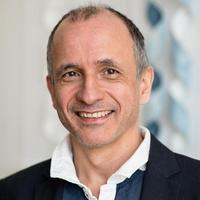
Dr. Gabor Karsai is a Distinguished Professor of Computer Science and Professor of Electrical and Computer Engineering at Vanderbilt University's School of Engineering. He also serves as Senior Research Scientist at the Institute for Software-Integrated Systems (ISIS), where he contributes to the Executive Council. With over 30 years in software engineering, his research focuses on embedded systems, model-driven development, resilient software platforms, and AI-driven autonomous systems assurance. He holds a PhD from Vanderbilt and degrees from the Technical University of Budapest. Education: Ph.D. in Electrical and Computer Engineering, Vanderbilt University Dr.Tech. in Computer Engineering, Technical University of Budapest M.S. and B.S. in Electrical Engineering, Technical University of Budapest Affiliations: Co-Associate Chair for Computer Engineering External Member of the Hungarian Academy of Sciences His research interests span model-integrated computing , autonomous systems assurance , and radiation-hardened systems . Recent work emphasizes AI integration into engineered systems and radiation effects mitigation for space applications. He has led major projects on distributed control for smart grids and resilient CPS architectures. Over 200 peer-reviewed publications and four patents reflect his contributions to software engineering and systems integration. Awards & Recognition: External Membership in Hungarian Academy of Sciences Leadership roles in ISIS and Vanderbilt's academic governance Advisees & Grants: While no student list is provided, his projects involve collaborative teams across academia and industry. Major sponsors include NSF, NASA, and DARPA. Current work includes the ALC (Assurance-based Learning-enabled CPS) and MIDAS (Model-based Intent-Driven Adaptive Software) initiatives. Labs & Platforms: Co-developer of the RIAPS distributed CPS platform and the SEAM assurance modeling framework. His labs focus on cyber-physical system design, radiation effects analysis, and autonomous system reliability.
Dilian Gurov is a Professor in Computer Science at KTH Royal Institute of Technology, associated with the Digital Futures Faculty and the Division of Theoretical Computer Science. He also coordinates the Doctoral Programme in Computer Science at the CSC school. Before joining KTH in 2002, he earned a Ph.D. from the University of Victoria, Canada (1998), and worked at the Swedish Institute of Computer Science (1997-2002). His research focuses on software specification and verification, including contracts, program models, logics, and tools, as well as multi-agent strategic planning involving knowledge-based strategies in imperfect information settings. Key contributions include the CAV Distinguished Paper Award 2023 for 'Automatic Program Instrumentation for Automatic Verification' and an EASST award for 'Checking Absence of Illicit Applet Interactions: A Case Study' (2004). He leads projects funded by VR (SEFROS, ContraST) and Vinnova (AVerT2) and collaborates with industries like Scania on formal verification of C programs. His service roles span over 30 conference committees and organization roles, including PC memberships for iFM, TAP, and ISoLA. Teaching responsibilities include courses such as 'Formal Methods,' 'Program Semantics and Analysis,' and 'Knowledge in Games with Imperfect Information.' His work emphasizes practical applications of formal methods, bridging academic research with industry needs through collaborations and tool development (e.g., CVPP, ProMoVer, TriCo).
Azhar Zam is an Associate Professor of Bioengineering at NYU Abu Dhabi (NYUAD) and associated faculty at NYU Tandon School of Engineering's Biomedical and Electrical Engineering departments. He holds a B.Sc. from University of Indonesia, M.Sc. from University of Luebeck (Germany), and Ph.D. from Friedrich-Alexander-University Erlangen-Nuremberg (Germany). His research focuses on developing smart optical devices for medical imaging/diagnostics, including laser surgery, OCT, photoacoustics, and AI-driven imaging systems. He leads the Laboratory for Advanced Bio-Photonics and Imaging (LAB-π) at NYUAD and has authored 85+ publications/patents. Education: Bachelor of Science, University of Indonesia M.Sc. Biomedical Engineering, University of Luebeck Ph.D. Engineering, Friedrich-Alexander-University Erlangen-Nuremberg Research Interests: Innovations in biomedical optics, optical-based smart sensors, AI-enhanced diagnostics, and miniaturized medical imaging systems. His work integrates advanced optical technologies with surgical robotics and clinical applications. Professional Contributions: Associate Editor for Frontiers in Photonics Biophotonics section; Reviews Editor for Frontiers in Ophthalmology Retina section. Previously held positions at University of Basel (Assistant Professor), University of Waterloo, and other institutions globally. Labs & Teams: Directs NYUAD's LAB-π lab focusing on bio-photonics innovations. Collaborates across NYU's global network and international partners.
Luis Espinosa-Anke is a Senior Lecturer at Cardiff University's School of Computer Science and Informatics. His academic journey includes working as a Natural Language Processing (NLP) scientist at Savana Médica, a Madrid-based healthcare AI company, prior to joining Cardiff. He completed his PhD at Pompeu Fabra University in Barcelona while working at Savana. Dr. Espinosa-Anke's research focuses on Artificial Intelligence and NLP, with particular emphasis on meaning representation, computational semantics, multilingual NLP, and computational lexicography. His work spans theoretical and applied aspects of language technology, with applications in healthcare, social media analysis, and multilingual systems. His recent publications reveal a strong trend toward analyzing language model behavior, bias detection in AI systems, and creating resources for semantic analysis. The publications show increasing focus on practical applications of NLP in healthcare, social media, and cross-lingual settings, with notable contributions to datasets like WIKITIDE and 3D-EX that support definition extraction and semantic understanding. laCaixa Fellow Fulbright scholarship recipient Erasmus Mundus program participant Dr. Espinosa-Anke has secured research funding including a Kaggle Open Research grant ($2,000 USD) as PI for the 'Don't Patronize Me!' project, a Snap Inc. grant ($10,000 USD) as CO-I for modeling meaning shift in social media, and a £90,000 Welsh Government grant for English-Welsh bilingual embeddings research. He currently supervises five PhD students working on meaning representations, contextual word embeddings, NLP for healthcare applications, and metaphor identification.
Marcus Botacin is an Assistant Professor in the Department of Computer Science & Engineering at Texas A&M University (TAMU), USA. Previously, he held positions as Visiting Assistant Professor (2022-2024) and Lecturer at the Federal University of Paraná (Brazil). His research focuses on malware analysis, hardware-assisted security, and antivirus technology. He earned his Ph.D. in Computer Science from UFPR (2021), M.Sc. from UNICAMP (2017), and B.Sc. in Computer Engineering from UNICAMP (2015). Education: Ph.D., Computer Science, Federal University of Paraná, Brazil (2021) M.Sc., Computer Science, University of Campinas, Brazil (2017) B.Sc., Computer Engineering, University of Campinas, Brazil (2015) Research Interests: Botacin's work addresses challenges in malware detection (static/dynamic methods, sandboxing), hardware-enhanced security mechanisms (e.g., branch monitoring), and antivirus internals. He emphasizes practical solutions and ethical considerations in cybersecurity, advocating for culturally aware threat models (e.g., Brazilian financial malware studies). Publications & Trends: His recent work explores adversarial ML attacks on malware detectors, HPC-based detection frameworks, and automated malware generation risks. He frequently publishes in top venues like ACM CCS, USENIX Security, and IEEE TDSC. Awards: Top-3 Best Ph.D. Thesis in Computer Security (Brazilian Computer Society, 2022) Best PhD Thesis Award from UFPR (2022) MLSec Evasion Challenge 1st place (2021/2020) Advising & Grants: Supervises 15+ students at TAMU and leads NSF-funded projects (e.g., $523K grant for HPC malware detection frameworks). Serves on 21+ conference program committees and reviews for over 50 journals. Lab & Projects: Develops Corvus (public malware analysis sandbox) and explores hardware-accelerated AV solutions like Terminator and HEAVEN.
Professor Peter Chin is a Professor of Engineering at Dartmouth College and Director of the Learning, Intelligence + Signal Processing (LISP) Lab. He holds affiliations with the Thayer School of Engineering and serves as Associate Editor of IEEE Transactions on Computational Social Systems. His research bridges signal processing, machine learning, game theory, and differential geometry, with applications in cybersecurity, healthcare, and network analysis. Education: Bachelor of Science in Electrical Engineering, Computer Science, and Mathematics from Duke University (1993) Doctor of Philosophy in Mathematics from MIT (1998) Research Interests: Chin’s work focuses on fundamental questions at the intersection of machine learning, game theory, and signal processing. His lab explores topics like adversarial defense mechanisms, topological machine learning, and computational neuroscience. Recent projects include cybersecurity resilience modeling, medical imaging enhancements via GANs, and multi-agent reinforcement learning frameworks. Publications Trends: His most recent articles address cutting-edge challenges in cybersecurity (e.g., autonomous defense systems), medical AI (e.g., Alzheimer’s classification), and adversarial robustness. A notable 2025 focus is on quantitative resilience modeling for cyber defense, reflecting growing demand for AI-driven security solutions. Awards: Faculty Scholar Award, Duke University George Sherred III Award, Duke University Julia Dale Memorial Award, Duke University Grants & Leadership: Recipient of DARPA cybersecurity research grants Co-chair for SPIE/DSS Cyber Sensing Conference (2013–2020) Developed novel compressive sensing microscope for biological imaging LISP Lab: This interdisciplinary lab pioneers projects like nFlip (multiplayer security game models) and topological machine learning frameworks, emphasizing practical applications of theoretical advancements.
Arpan Gujarati is a Sessional Lecturer in the Department of Computer Science at the University of British Columbia (UBC), affiliated with the Systopia Lab. He teaches graduate and undergraduate courses such as CPSC 538G (Distributed Systems), CPSC 416 (Operating Systems), and CPEN 432 (Real-Time System Design). He holds a PhD from the Max Planck Institute for Software Systems and TU Kaiserslautern, where he was supervised by Björn B. Brandenburg. PhD: Max Planck Institute for Software Systems & TU Kaiserslautern (2020) Undergraduate: Birla Institute of Technology and Science (BITS Pilani) Postdoctoral Researcher: MPI-SWS Research Associate: UBC Software Development Engineer: Citrix R&D, India His research focuses on real-time and distributed systems, with applications in cyber-physical systems, fault tolerance, and machine learning reliability. He investigates scheduling algorithms, reliability analysis, and the integration of learning-enabled components into safety-critical systems. His work combines theoretical analysis with practical system implementations, often involving real-world testbeds and open-source tools. His recent publications span top-tier venues including RTSS, OSDI, ECRTS, DSN, and Middleware, with a strong emphasis on performance predictability, resilience of ML systems, and real-time communication. His work frequently addresses challenges in timing guarantees, fault tolerance, and system reliability in both cloud and embedded environments. SIGBED Paul Caspi Memorial Dissertation Award Best Paper Award at RTSS 2022 Distinguished Artifact Award at OSDI 2020 Best Student Paper Award at Middleware 2017 Outstanding Paper Award at RTCSA 2025 He advises several PhD students and undergraduate researchers at UBC, including Heng Zhao, Aida Aminian, Zainab Saeed Wattoo, and Philip Schowitz. He has led multiple research projects involving robotic arms, NVIDIA Holoscan, FreeRTOS, and distributed key-value stores. His lab work emphasizes reproducibility, open datasets, and practical system building. He has served on program committees for RTSS, RTAS, ECRTS, and Middleware, and contributes to journals such as Real-Time Systems and JSys.
Prof. Jens Altenburg holds the position of Professor of Microprocessor Technology and Embedded Systems at Bingen University of Applied Sciences. His work focuses on robotics, embedded systems, and control engineering. He is affiliated with Department 2, where he contributes to study programs in Computer Science, Electrical Engineering, and related fields. His research interests span robotics, UAVs, and microprocessor-driven automation. Notable publications include works on flight control systems (AONE test bench), image processing for robots, and solar-powered robotics (SOPHOCLES). He has authored technical books on microcontroller programming and mobile robotics, emphasizing practical experimentation and AI integration. While no specific awards are mentioned in the text, his contributions to educational materials and experimental systems highlight his impact in engineering education and applied research.






/tonnesfn/t.jpg)