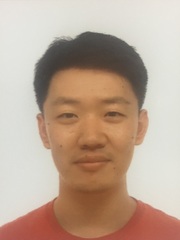
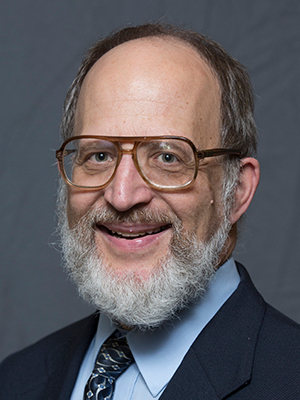
Fuyuan Zhang is a Postdoctoral Researcher at the Max Planck Institute for Software Systems, specializing in advanced software testing methodologies and formal verification techniques. His research focuses on improving the reliability and security of AI systems, quantum computing frameworks, and concurrent systems through innovative testing criteria, adversarial attacks, and compositional reasoning. Key areas of expertise include: Large Language Model (LLM) testing and validation Quantum program analysis and security Adversarial machine learning and neural network robustness Formal verification of concurrent and cyber-physical systems Automated bug detection in complex software systems His work bridges theoretical foundations with practical applications, addressing critical challenges in AI safety, quantum software reliability, and system-wide security certification.
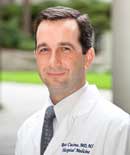
Russ Cucina, MD, MS, is a Professor of Medicine in the Division of Hospital Medicine at the University of California, San Francisco (UCSF). He holds dual roles as Vice President and Chief Health Information Officer for UCSF Health System, overseeing analytics, software infrastructure, and genetic/genomic services. His academic and professional focus integrates clinical informatics, healthcare technology, and genomic medicine to advance patient care and institutional missions. Dr. Cucina's education includes an MD from UC Davis, an MS in Biomedical Informatics from Stanford, and a BA in Molecular and Cell Biology from UC Berkeley. He is board-certified in Internal Medicine. His research interests span electronic health record (EHR) interventions, clinical decision support systems, pharmacogenomics implementation, and healthcare operations optimization. Notable achievements include the 2010 Distinguished Paper Award from the American Medical Informatics Association and the AMDIS Award for clinical informatics excellence. His work emphasizes translating data-driven solutions into actionable clinical practices, such as reducing telemetry overuse and improving discharge processes. Dr. Cucina leads UCSF's genetics/genomics laboratories and strategic partnerships in health IT. He is a vocal advocate for leveraging technology to enhance healthcare quality and accessibility, with a focus on personalized medicine and system-wide informatics advancements.
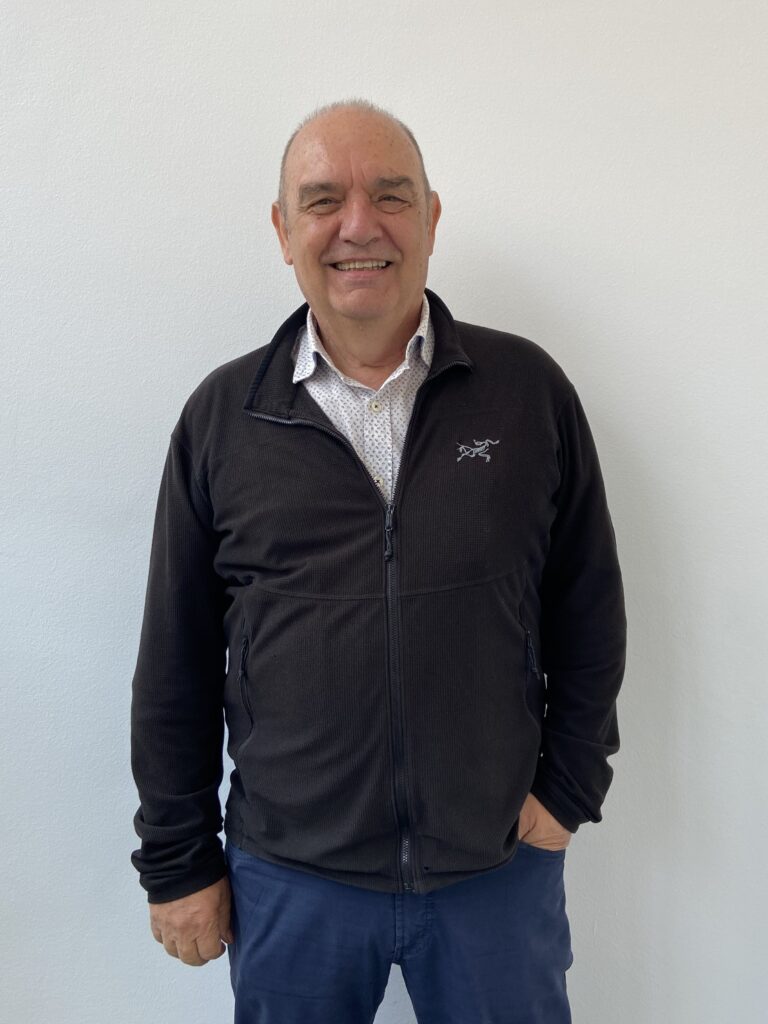
Björn Jensen is a Professor and Co-Head of the AI Robotics Research Lab at Lucerne University of Applied Sciences and Arts (HSLU), specifically within the Lucerne School of Computer Science and Information Technology. He also teaches medical robotics at the University of Bern's Biomedical Engineering Program. His professional background includes roles at the Autonomous Systems Lab at EPFL, Switzerland, and founding the startup Singleton 3D focusing on 3D laser measurement technology. Educational background: MSc in Electrical Engineering (Automation & Image Processing) from TU Darmstadt (1998), followed by a Master's in Industrial Management from the same institution. PhD in human-robot interaction from EPFL (2005), with research stints at Tokyo University (2005) and involvement in projects like Robox@Expo.02 and Smarter-Elrob. Research interests span robotics, human-robot interaction, autonomous systems, medical robotics, and sensor-based navigation. Notable projects include the 'Smart Ennoblement Factory', 'NaviMow' autonomous lawnmower, and 'Bagger Assistenzsysteme'. His work emphasizes real-world applications of robotics in dynamic environments and human-centric systems. Lab leadership includes co-directing the AI Robotics Research Lab, focusing on advancing robotics technologies for practical scenarios. No scientific awards explicitly listed, but contributions to industry-academia collaborations are highlighted through startup ventures and applied research projects.
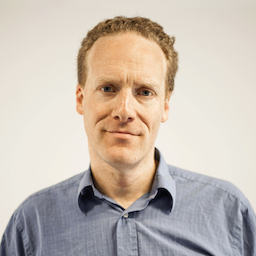
Youcheng Sun is a researcher at The University of Manchester, affiliated with the Systems and Software Security group, Centre for Digital Trust and Society, Centre for Robotics and AI, and Autonomy and Verification Network. Previously, he held a Lecturer position at Queen's University Belfast and conducted postdoctoral research at the University of Oxford. He earned his PhD from Scuola Superiore Sant'Anna. His research focuses on AI Safety , Security , and Automated Reasoning , with contributions to trustworthy AI, formal verification, embedded systems, and robotics. His work has been funded by Google and the Ethereum Foundation. He has led projects such as SECT-AIR and AUTOSAC, and contributed to the EU H2020 SAFURE project on safety/security assurance in mixed-critical systems. His publications span top-tier venues like IEEE S&P, ICSE, NeurIPS, and IROS. Awards: Fellow of the Higher Education Academy (FHEA) Advising: Supervising PhD students in AI/Security domains (e.g., funded projects on LLMs in social recommendations) Labs/Teams: Member of interdisciplinary networks advancing robotics, AI ethics, and digital trust.
Christoph Kirsch is a Professor and Chair of the Department of Computer Science at the University of Salzburg. He also serves as Chair of the Programming Research Laboratory at the Faculty of Information Technology, CTU Prague. His research focuses on systems, concurrency, memory management, and formal methods, with notable contributions including the Selfie educational software project and work on symbolic execution. He is a prolific author with over 50 publications in top venues like LCTES and EMSOFT. Education: Ph.D. in Computer Science (details not specified). His teaching includes courses on elementary computer science concepts and curricula development. He advises students such as Anna Bolotina and has graduated over a dozen PhD students. Research highlights include the Selfie system (self-referential C compiler and emulator), work on concurrency primitives like Scal and Timestamped Stack, and contributions to real-time systems (Logical Execution Time, Variable-Bandwidth Servers). His recent focus includes teaching digital thinking and evaluating eval in R programs. He has organized conferences like MPLR’24 and served on program committees for EuroSys and RTNS. His book Elementary Computer Science emphasizes foundational concepts for broad audiences.
Andreas Manfred Pointner is an Assistant Professor at FH Hagenberg , specializing in interdisciplinary research at the intersection of computer science, healthcare informatics, and software engineering. He leads research in graph databases, process mining, and attribute grammars with applications in healthcare IT and automated data systems. His affiliations include the Web Intelligence and Innovation Laboratory , AIST Center of Excellence , and Medical Engineering/TIMed Center . He has contributed to projects such as RiskAI (risk management in enterprises), PASS (plan analysis automation), and REPO (radiology e-health platforms). Research Interests: Graph database optimization, interoperability in healthcare systems (HL7 standards), fuzzing techniques for software testing, and process mining for audit event analysis. His work bridges theoretical formal methods with practical applications in clinical workflows and automated data cleansing. Notable Contribution: Developed a graph transformation framework for complex data structures Recipient of the Best Paper Award 2022 for contributions to intelligent systems Collaborative Projects: Focus on AI-driven solutions for enterprise risk management and healthcare interoperability He actively participates in international conferences and has supervised projects involving 3D model analysis, contour extraction, and global disease monitoring systems.
Jürgen Cito is an Associate Professor in the Department of Software Engineering at the Faculty of Informatics, TU Wien, where he leads research in probabilistic programming, security, and configuration management. His work is supported by major grants from the Austrian Science Fund (FWF), European Commission, and Meta Platforms, Inc., with active projects spanning 2022-2027. His research focuses on the intersection of software engineering and machine learning, particularly in static analysis of probabilistic programs, AI-driven penetration testing, and infrastructure security. Key contributions include identifying secret exposure in configuration files, grammar inference for ad hoc parsers, and performance prediction from source code, often combining empirical studies with tool development. Analysis of his 15 most recent publications (2020-2024) reveals three dominant trends: (1) Security vulnerabilities in configuration management systems, especially secret leakage in dotfiles; (2) Application of large language models to offensive security testing; and (3) Machine learning techniques for performance prediction and AutoML optimization in software contexts. Cito has supervised 22 Master's students on cutting-edge topics including AI security, infrastructure as code, and program analysis. His current research portfolio includes: Types4Strings (FWF, 2024-2027): Type systems for string processing Cloud Open Source Research Mobility Network (EU, 2023-2026): Open-source cloud infrastructure Software Assistants for Probabilistic Programming (Meta, 2022-2026): AI tools for probabilistic code He is embedded in TU Wien's Institute of Software Technology and Interactive Systems (E194), collaborating on cross-institutional projects focused on software security and developer tooling, with particular emphasis on empirical validation of security practices and configuration management systems.
Josep Casanovas is a Full Professor at the Statistics and Operations Research Department of the Technical University of Catalonia (UPC), affiliated with the Barcelona School of Informatics. He previously served as head of inLab FIB (2012-2020) and as dean (1998-2004) and vice-rector (2006-2011) of UPC, leading strategic initiatives in university governance and ICT policies. His research focuses on Modelling and Simulation , Internet and Information Systems , and Urban Mobility . He has led projects for the European Union, including C-ROADS Spain, REMEDiAL, and ECHORD++, addressing intelligent transport, software automation, and robotic innovation. Recent publications highlight his work on agent-based simulation for urban health, deep learning applications in traffic and energy savings, and wildfire management tools . He co-directs LogiSim and coordinates the Severo Ochoa Research Excellence Program at the Barcelona Supercomputing Center (BSC-CNS).
Dr. Ian Bayley is a Senior Lecturer in Computer Science at the School of Engineering, Computing and Mathematics, Oxford Brookes University. He serves as Subject Coordinator for MSc courses in Computing Science, Advanced Computer Science, and Computer Science for Cyber Security. His research focuses on cybersecurity, secure programming, software engineering, and design patterns, with collaborations on topics like LLM evaluation, exploratory testing for machine learning, and agent-oriented programming for microservices. He is affiliated with the Cloud Computing and Cybersecurity Group (CCC) and the Artificial Intelligence, Data Analysis and Systems (AIDAS) Institute. Teaching responsibilities include modules such as Secure Programming (undergraduate/postgraduate) and Professional Programming Practice for first-year undergraduates. He actively supervises cybersecurity projects and students, including Debalina Ghosh (LLM evaluation) and Kieren Stanton (authentication in vehicular networks). Research interests span cybersecurity patterns, software design composability, formal methods for web services, and agent-oriented approaches to microservices. Recent work explores LLM evaluation via scenario-based meta-information and testing challenges in machine learning applications. He co-leads research on design pattern composition and algebraic specifications. Publications span journals like Journal of Systems and Software and IEEE Transactions on Software Engineering , addressing topics from cybersecurity patterns to formal verification of web services. His teaching and research emphasize practical software engineering principles and cutting-edge cybersecurity practices.
Henri Hansen is a University Lecturer at Tampere University's Computing Sciences Department within the Faculty of Information Technology and Communication Sciences. His research focuses on concurrency theory, partial order reduction, stubborn sets, Petri nets, and formal methods. He holds a Doctor of Science (Technology) and Master of Science in Technology from Tampere University. Key research interests include optimizing state space exploration through techniques like stubborn sets, analyzing financial networks (e.g., stock market dynamics), and applying formal methods to industrial systems. His work bridges theoretical foundations with practical applications in software verification and blockchain systems. Recent publications emphasize network analysis in financial markets and Bitcoin systems, alongside advancements in partial order reduction algorithms. Hansen has received three notable awards for his contributions to stubborn set theory and coverability algorithms.
Matteo Biagiola is a Researcher in the Faculty of Informatics at Università della Svizzera italiana (USI), Lugano, Switzerland, and a PostDoctoral researcher at the University of St. Gallen (HSG). He specializes in software testing, particularly test generation for Web applications, deep reinforcement learning systems, and autonomous driving software. His work focuses on enhancing AI robustness through testing and improving software testing via AI techniques. Biagiola holds a Ph.D. from Università degli Studi di Genova (Italy) in collaboration with Fondazione Bruno Kessler, Trento. He has conducted postdoctoral research at USI on the Precrime ERC Advanced Grant project under Paolo Tonella. His research tools include μPRL (mutation testing for RL agents), STILE (web test parallelization), and GenBo (boundary state generation for autonomous systems). Education: Ph.D.: Università degli Studi di Genova / Fondazione Bruno Kessler (2016–2020) M.Sc.: Università Politecnica delle Marche (2014–2016) Affiliations: PostDoc & Scientific Collaborator: University of St. Gallen / USI (2025–present) PostDoc: USI (2020–2025) Visiting Ph.D. Student: University of British Columbia (2018) His research interests span AI-driven testing tools, autonomous system validation, and simulation-based testing. He has received the Distinguished Paper Award at ICST 2025 and serves on program committees for major conferences like FSE, ICSE, and ICST. He co-organizes workshops like DeepTest (co-located with ICSE) and the Cyber-Physical Systems tool competition (SBFT).
Joseph Krajcik is the Lappan-Phillips Professor of Science Education at Michigan State University (MSU), where he also directs the CREATE for STEM Institute. He holds a Ph.D. from the University of Iowa. His research focuses on improving science education through project-based learning (PBL), curriculum design, and the integration of artificial intelligence (AI) into STEM instruction. Krajcik has authored over 100 manuscripts, books, and curriculum materials, emphasizing coherence between standards, teaching practices, and student learning outcomes. He has received significant recognition, including election to the National Academy of Education (2020), the McGraw Prize in Pre-K-12 Education (2020), and the ISDDE Prize for Excellence in Education Design (2021). His work bridges theory and practice, collaborating with teachers to develop and test innovative learning environments. Recent efforts explore AI’s role in assessment, equity, and instructional decision-making, while maintaining a strong focus on PBL’s efficacy in K-12 settings. Krajcik’s international collaborations include guest professorships at Beijing Normal University (China), Ewha Woman’s University (South Korea), and the Weizmann Institute of Science (Israel). His research spans science engagement, systems thinking, computational modeling, and culturally relevant pedagogy, particularly in underserved urban classrooms.
Professor Heinrich Schmidt is an Adjunct Professor in the School of Science at RMIT University, Australia. His research focuses on Software Engineering, Distributed Systems, and Cyber-Physical Systems. He specializes in areas such as formal verification, safety-critical systems, and cloud computing. His work emphasizes practical applications in industrial automation, IoT, and HPC environments. Key research interests include spatio-temporal analysis, fault tolerance, and adaptive systems design. He has supervised projects on IoT data contextualization, software fault characterization, and spatial modeling in PRISM. Over 98 publications highlight his contributions to formal methods, distributed systems, and industrial software solutions. Professor Schmidt collaborates on projects like Chiminey (cloud/HPC integration) and VxLab (industrial visualization). His teaching covers parallel systems, trusted components, and model-based monitoring. No specific awards are listed, but his extensive publication record underscores his academic impact.
Josefine B. Graebener is a Postdoctoral Scholar Research Associate in the Department of Computing & Mathematical Sciences at the California Institute of Technology (Caltech). Her research focuses on formal methods for test and evaluation of autonomous systems, including cyber-physical systems and reactive systems. She holds an office at the Annenberg IST Center (Mail Code 305-16) and can be reached at jgraeben@caltech.edu . Her work emphasizes assume-guarantee contracts for compositional system analysis, automated test synthesis, and failure-tolerant design for applications like autonomous vehicles and spacecraft computers. Key contributions include the development of the Pacti framework for scalable system analysis and the study of thermal stabilization in space telescopes using phase change materials. Josefine’s publications span topics such as reach-avoid specifications for autonomous systems, trade-off analysis in spacecraft computer design, and directive-response architectures for automated systems. While no formal awards are listed, her research demonstrates significant contributions to system reliability and formal verification methodologies.
Dr. Kelvin Erickson is the Curators’ Distinguished Teaching Professor of Electrical and Computer Engineering and Undergraduate Coordinator at Missouri University of Science and Technology. He joined the faculty in 1986 and served as Department Chair from 2002 to 2014. His expertise spans control systems, factory automation, and programmable logic controllers (PLCs), with over 40 years of experience in industrial automation and process control. Education: PhD in Electrical Engineering, Iowa State University MS and BS in Electrical Engineering, Missouri University of Science and Technology (formerly University of Missouri-Rolla) Research Interests: Dr. Erickson focuses on manufacturing automation, PLC design and applications, advanced process control, and industrial control systems. He has authored multiple textbooks, including Programmable Logic Controllers: An Emphasis on Design and Application and Allen-Bradley PLCs: An Emphasis on Design and Application . Awards and Honors: International Society of Automation Fellow (2019) Curators’ Distinguished Teaching Professorship (2019) IEEE Region 5 Outstanding Engineering Educator Award (2015) Multiple UMR Outstanding Teacher Awards (1987–2015) Grants and Collaborations: He has led grants such as the Controls Laboratory Equipment project (co-PI with Jagannathan Sarangapani). His industry collaborations include work with Fisher Controls, Magnum Technologies, and Rockwell Automation. Labs and Affiliations: Dr. Erickson is affiliated with the Kent D. Peaslee Steel Manufacturing Research Center and serves as an ABET Evaluator and ETAC Commissioner.