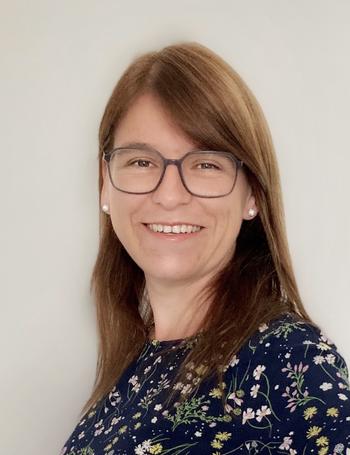
Eva Blomqvist serves as an Assistant Professor in the Department of Computer and Information Science (IDA) at Linköping University, Sweden. She is actively affiliated with the MDA laboratory within the Human-Centered Systems (HCS) division, focusing on critical-domain decision support systems. Her research centers on Semantic Web technologies and ontology engineering, with specialized expertise in ontology design patterns for security and crisis management applications. She pioneered the eXtreme Design methodology for agile ontology development and contributed foundational work on ontology testing frameworks, bridging theoretical knowledge representation with real-world operational systems. Analysis of her 2009-2016 publications reveals a progressive research trajectory from foundational pattern formalization to practical engineering methodologies. Her work consistently emphasizes reusable design patterns, validation techniques, and human-centered implementation within semantic technologies, establishing her as a key contributor to ontology engineering standards. No scientific awards were documented in the source material. While student advising and grant details remain unspecified in available records, her collaborative projects indicate active research leadership in ontology development. As a core member of IDA's MDA lab (HCS division), she contributes to human-centered decision analytics research, particularly developing ontology-driven support systems for high-stakes security and crisis scenarios through projects like Networked Ontologies.
Romney M. Humphries, Ph.D., D(ABMM), M(ASCP), is a Professor of Pathology, Microbiology, and Immunology at Vanderbilt University Medical Center, serving as Medical Director of the Microbiology Laboratory. Their research focuses on advancing diagnostic technologies for antibiotic-resistant infections and studying real-time evolution of antimicrobial resistance mechanisms. Academic Rank: Professor Department: Pathology, Microbiology, and Immunology Key research areas include antimicrobial resistance , diagnostic innovation , and clinical microbiology . The Humphries laboratory specializes in evaluating rapid identification methods for multidrug-resistant pathogens and novel antimicrobial development. Recent publications highlight advancements in MALDI-TOF MS, CRISPR diagnostics, and regulatory frameworks for laboratory-developed tests. Scientific contributions appear in journals such as New England Journal of Medicine , Clinical Infectious Diseases , and Journal of Clinical Microbiology . Current work emphasizes integrating genotypic/phenotypic testing for improved patient outcomes and informing federal policies on diagnostic standardization.
Ify Mordi, PhD, serves as a Clinical Senior Lecturer and Honorary Consultant in Teaching and Research within the Division of Cardiovascular Research at the University of Dundee's School of Medicine. With an impressive research portfolio spanning over a decade, Dr. Mordi has published 139 research outputs and secured significant funding from organizations including the British Heart Foundation and Juvenile Diabetes Research Foundation. Her work contributes to UN Sustainable Development Goals related to good health and well-being through innovative cardiovascular research. Dr. Mordi's research focuses on the intersection of cardiovascular disease and diabetes, with particular expertise in heart failure (especially heart failure with preserved ejection fraction), aortic stenosis, and coronary artery disease. Her work increasingly incorporates artificial intelligence applications in cardiovascular medicine, including groundbreaking research using retinal imaging to predict cardiovascular outcomes. She leads multiple major research initiatives including the SOPHIST trial investigating Sotagliflozin in patients with heart failure symptoms and type 1 diabetes, and the UK HFpEF Registry in collaboration with the University of Manchester. Analysis of Dr. Mordi's recent publications reveals a strong trend toward integrating advanced analytics and AI with traditional cardiovascular research. Her work spans genetic epidemiology, clinical trials, population health studies, and innovative diagnostic approaches. The research demonstrates growing emphasis on precision medicine approaches for cardiovascular disease, particularly in diabetic populations, and the development of non-invasive diagnostic tools that could transform clinical practice. Dr. Mordi actively contributes to academic mentoring through PhD examinations and serves as an invited speaker at international conferences. Her research has received significant media attention, with coverage in 13 news outlets and mentions across social media platforms, highlighting the translational impact of her work. She has been involved in multiple high-impact collaborative projects including the iDiabetes Platform for enhanced phenotyping of diabetes patients and the REACH-HFpEF study examining home-based rehabilitation for heart failure patients. Through her leadership in the British Heart Foundation-funded Clinical Fellowship focused on improving prediction and prevention of heart failure in type 1 diabetes, Dr. Mordi is establishing herself as a key investigator in the field of cardio-diabetology. Her research program bridges basic science, clinical application, and health services research to address critical gaps in cardiovascular care for diabetic patients.
Allen Hsiao MD, FAAP, FAMIA is Professor of Pediatrics, Biomedical Informatics and Data Science, and Emergency Medicine at Yale School of Medicine. He serves as Chief Health Information Officer (CHIO) for Yale School of Medicine and Yale New Haven Health System, and as Vice Chair of Clinical Systems in Biomedical Informatics & Data Science. BA in Biomedical Ethics and MD from Brown University Pediatrics residency at Yale-New Haven Children's Hospital Fellowships in Pediatric Emergency Medicine and Medical Informatics at Yale His research focuses on leveraging health information technology to improve care delivery, with emphasis on electronic health records, clinical decision support, natural language processing, and AI applications. He actively explores how informatics can optimize systems, improve transitions of care, and advance health equity through diverse clinical trial participation. His work spans pediatric emergency medicine, gastroenterology, child abuse detection, and opioid safety. Dr. Hsiao's recent publications demonstrate leadership in AI-augmented clinical decision support, EHR-based machine learning models, and pandemic response infrastructure. His team has developed innovative tools for child abuse identification, gastrointestinal bleeding risk prediction, and collaborative research data platforms. 56 Hospital and Health System CMIOs and CNIOs to Know (Becker's Healthcare, 2023) Healthcare Diversity Leader Award (National Diversity Council, 2023) 48 CMIOs and CNIOs to Know (Becker's Hospital Review, 2022) Norman J. Siegel Faculty Award (Yale School of Medicine, 2022) As principal investigator and co-investigator on NIH and AHRQ-funded grants, he examines health information technology's impact on healthcare quality. He co-directs Yale's CTSA Informatics Core, working with Yale Center for Clinical Investigations to equip researchers with EHR (Epic) and clinical trials management (OnCore) tools. His leadership extends to national committees including American Academy of Pediatrics, HIMSS, and Children's Hospitals Association.
Dr. Shabnam Sadeghi Esfahlani is an Associate Professor in Robotics at the School of Engineering and the Built Environment, Anglia Ruskin University , where she serves as Deputy Leader of the BORI research group and leads the Automation & Robotics MSc program. Her interdisciplinary expertise spans mechatronics, artificial intelligence, virtual reality, and serious games , with a focus on applications for rehabilitation, medical training, and autonomous systems . As a Chartered Engineer and Senior Fellow of the Higher Education Academy , she has secured significant funding from Innovate UK, Horizon 2020, and GCRF , with grants exceeding £3 million. Education PhD in Mechanical Engineering, Anglia Ruskin University BSc (First Class) in Statistics & Mathematical Science, Shahid Beheshty University Her research integrates AI with robotics for societal impact, exemplified by the open-source SROBO ground robot and projects like Rehabgame and the Assistive Feeding Robot . She has published over 45 peer-reviewed articles and contributes to academic communities as a journal guest editor and conference organizer . Key collaborations include IET, IMechE, and the Nuffield Foundation as a mentor for young students. Scientific Awards & Recognitions: Chartered Engineer (CEng), Engineering Council UK Senior Fellow (SFHEA), Higher Education Academy Student-Voted 'Made a Difference Award' (2018) Post-Graduate Certificate in Higher Education
Stephen E. Ralph is Professor and Glen Robinson Chair in Electro-Optics within Georgia Tech's School of Electrical and Computer Engineering, serving as Director of the Georgia Electronic Design Center (GEDC) and founder of the Terabit Optical Networking Consortium. His leadership spans cross-disciplinary research in electronics, photonics, and signal processing for revolutionary system performance. Educational background includes a BEE with highest honors from Georgia Tech (1980) and PhD in Electrical Engineering from Cornell University (1988), followed by postdoctoral work at AT&T Bell Laboratories and IBM Watson Research Center. His research integrates integrated photonics , machine learning , and aerospace applications to develop ultra-high-capacity optical communication systems. Current focus areas include photonic topology optimization, radiation-hardened space systems, and converged optical/mm-wave technologies, emphasizing the synergistic development of electronic-photonic components for next-generation interconnects. Analysis of 2024-2025 publications reveals dominant themes in foundry-compatible photonic design (topology optimization, inverse design), aerospace photonics (radiation testing, analog/digital signal transport), and machine learning applications for nonlinear equalization. The work bridges fundamental device engineering (grating couplers, waveguide bends) with system-level implementations for 5G/6G networks and space communications. Key recognition includes: Fellow of the Optical Society (OSA) Professor Ralph has mentored over 20 PhD students and secured significant research funding including the IUCRC Phase I EPICA project (2021) for aerospace photonic integration. His industry partnerships through the Terabit Optical Networking Consortium drive translational research in high-speed communications. He leads the Georgia Electronic Design Center's multidisciplinary team developing photonic-electronic co-design methodologies, with recent emphasis on topology-optimized devices for commercial foundries and radiation-tolerant systems for space applications.
Professor Geraint Jewell is affiliated with the University of Sheffield , serving as Director of the Rolls-Royce University Technology Centre in Advanced Electrical Machines (since 2006) and Director of the EPSRC Future Electrical Machines Manufacturing Hub (since 2019). He is a graduate of the university (BEng 1988, PhD 1992) and has held academic roles since 1994. EPSRC Advanced Research Fellowship (2000-2005) Royal Society Industry Fellowship at Rolls-Royce (2006-2008) Former Faculty Director of Research and Innovation (2008-2011) Former Head of Department (2013-2019) His research focuses on power-dense electrical machines for aerospace applications , including permanent magnet machines , switched reluctance machines , and linear actuators . He has supervised ~20 PhD students and led collaborations with Rolls-Royce on high-temperature devices (up to 800°C) and aero-engine starter-generators. Recent publications analyze stator insulation thermal degradation , eddy current control in additively manufactured materials , and magnetic loss prediction in silicon steel. His work spans electromagnetic modeling , core loss calculation , and advanced manufacturing techniques for electrical machines. EPSRC Advanced Research Fellowship (2000-2005) Royal Society Industry Fellowship (2006-2008) He has advised PhD students across topics like consequent-pole PM machines , doubly salient SynRMs , and core loss characterization . His Electrical Machines and Drives Research Group explores modular motor design and magnetic material optimization for aerospace and electric vehicles.
Jouni Punkki is a Professor of Practice at Aalto University's Department of Civil Engineering. His work bridges academia and industry, focusing on concrete material technology and its practical applications in construction. His research interests span concrete durability, sustainability in construction, digitalization in concrete production, and quality control systems. These areas reflect his commitment to advancing both theoretical understanding and industry practices through innovative technologies. Punkki's publications highlight interdisciplinary approaches to concrete engineering, including non-destructive testing, porosity analysis, and automation in material characterization. His work often intersects with structural integrity and environmental resilience.
Timothy Menzies is a full Professor in the Department of Computer Science at North Carolina State University's College of Engineering. He serves as the director of the Irrational Research lab (mad scientists r'us) and holds editorial positions as editor-in-chief of the Automated Software Engineering journal and associate editor for IEEE Transactions on Software Engineering. With over 300 publications and more than 24,000 citations, Menzies is a globally recognized leader in software engineering research. Menzies' research focuses on developing computer systems that make optimal decisions with minimal data, specializing in artificial intelligence, intelligent agents, data sciences, analytics, and software engineering. His pioneering work in data-driven, explainable, and minimal AI for software systems has redefined defect prediction, effort estimation, and multi-objective optimization. He is particularly known for his contributions to empirical software engineering, emphasizing transparency and reproducibility. As the co-creator of the PROMISE repository, he helped establish modern empirical software engineering by demonstrating that small, interpretable AI models can outperform larger, more complex ones. Menzies' recent publications reveal several key trends in his research: a growing emphasis on ethical considerations in AI deployment, particularly in sensitive domains like legal systems; continued innovation in software analytics with a focus on hyperparameter optimization tailored specifically for software engineering tasks; exploration of causal relationships in software analytics; and development of techniques that work effectively with limited data, including landscape analysis, surrogate learning, and active learning approaches. Mining Software Repositories Foundational Contribution Award (2017) Carol Miller Graduate Lecturer Award (2016) IBM Faculty Award (2016, 2017) ACM Fellow (2025) ASE Fellow (2024) IEEE Fellow Professor Menzies has advised 24 Ph.D. students throughout his career, with recent completions including Andre Motta (April 2025) and Xueqi Yang (October 2024). His research has secured over $19 million in funding from prestigious agencies including NSF, DARPA, and NASA, as well as industry partners like Meta, Microsoft, and IBM. Current grants focus on improving machine learning model efficiency, adapting empirical software engineering methods to computational science, vulnerability detection, and software analytics at scale using transfer learning across 10,000+ GitHub projects. Menzies has developed innovative approaches to help developers navigate the challenges of AI implementation while maintaining ethical standards and practical effectiveness. As director of the Irrational Research lab, Menzies leads a team focused on creating AI tools that are not only intelligent but also fair, transparent, and trustworthy. The lab's work emphasizes practical applications of AI in software engineering while addressing the human factors involved in developer-AI collaboration. Current projects include developing methods for better fuzzing with L3harris, improving vulnerability detection through smart pruning techniques, and creating AI platforms for workforce empowerment through credential gap diagnostics.
Xin Li is a Professor in the Department of Electrical and Computer Engineering at Duke University and serves as the Associate Vice Chancellor at Duke Kunshan University. He holds a Ph.D. from Carnegie Mellon University (2005) and has held leadership roles in research consortia like the FCRP Focus Research Center and the Center for Silicon System Implementation (CSSI). His research bridges integrated circuits , machine learning , and cyber-physical systems , with applications in autonomous driving, battery lifetime prediction, and smart buildings. Education : Ph.D., Carnegie Mellon University (2005); M.S., Fudan University (2001); B.S., Fudan University (1998) His work emphasizes robust design methodologies for analog/RF circuits, data-driven predictive modeling , and Bayesian inference for high-dimensional variation spaces. Recent publications focus on generative adversarial networks for circuit design, multi-view imputation for incomplete data, and knowledge-driven autonomous systems . He has received numerous accolades, including the NSF CAREER Award (2012) , IEEE Donald O. Pederson Best Paper Awards (2013, 2016) , and IEEE Fellow (2017) . He has served as Editor for journals like IEEE Transactions on Biomedical Engineering and as Chair for conferences including ISVLSI and CAD/Graphics.
Anne Seidlitz is a Professor of Pharmaceutical Technology at the Free University of Berlin since October 2024, previously holding the same position at Heinrich Heine University Düsseldorf (2021-2024). Affiliated with the Institute of Pharmacy , she leads the Seidlitz Pharmaceutical Technology Group , focusing on solid dosage forms and biorelevant drug release studies using 3D printing and hydrogel compartments . Doctorate in Pharmaceutical Technology (Greifswald, 2009) Habilitation in Natural Sciences (Greifswald, 2015) Qualified Person under German Medicines Act (AMG) Visiting Professorships: Hamburg, Jena Research Interests: Formulation development for implants , intravitreal injections , and subcutaneous delivery systems , with emphasis on biorelevant dissolution testing under physiological flow/movement conditions. Her group pioneers 3D-printed drug delivery devices and custom hydrogel models for vitreal , ear canal , and vascular implants . Publication Trends: Recent articles focus on thermal stability of steroids during extrusion, individualized implant design , and hydrogel compartments for non-oral dissolution testing . Key collaborations include EUFEPS Network and APV (Association for Pharmaceutical Process Engineering). Scientific Involvement: Member of EUFEPS Network on Bioavailability Scientific Council, German Federal Chamber of Pharmacists Active in APV (Arbeitsgemeinschaft für Pharmazeutische Verfahrenstechnik) Student Supervision: Mentored 24+ theses including 3D-printed tablets , implant coatings , and vitreal drug distribution . Collaborates with institutions in Düsseldorf , Jena , and Hamburg .
Branka Marusic is an Associate Senior Lecturer in Intellectual Property (IP) Law at the Department of Law, Stockholm University. A qualified Croatian lawyer, her work bridges academic research and practical legal consultancy in EU law harmonization and codification. She has contributed to over 40 EU Commission projects and authored a monograph and 30+ scientific publications. Education: LL.D. and L.L.M. from Stockholm University; mag.iur. from Zagreb University. Her research focuses on EU copyright law harmonization , particularly in digital contexts. Key areas include the legal implications of online communication, ISP liability for copyright infringement, and the impact of digitalization on creative industries. She has analyzed CJEU rulings (e.g., Blue Air , DSM Directive Article 17 ) and explored concepts like terroir in wine law. Her 15 most recent publications span topics from text-data mining exceptions (2025) to satellite broadcasting jurisdiction (2024), reflecting her engagement with evolving digital and EU legal frameworks. Articles emphasize autonomous legal concepts , ISP liabilities , and gold-plating in national implementations of EU directives. Scientific Awards: SCCL-Oxford Fellow (2023/2024) Branka teaches IP and EU law at Swedish and Croatian universities, contributes as a national reporter for Sweden in GRUR International , and serves on the ERT – Europarättslig tidskrift editorial board. She also engages with public discourse via editorials in Jutranji list , addressing EU and copyright law issues.
Orit Shaer is a Professor and co-Chair of Computer Science at Wellesley College , where she founded and directs the Human-Computer Interaction (HCI) Lab . Her work bridges tangible interaction, human-AI collaboration, and mixed-reality interfaces, focusing on transforming work and learning environments through embodied technologies. Education : B.A. from Academic College of Tel-Aviv, M.S. and Ph.D. in Computer Science from Tufts University Research interests center on novel human-computer interaction paradigms : Human-AI collaboration frameworks Tangible and embodied interface design Mixed-reality applications for productivity Genomics collaboration tools STEAM education technologies Recent publications highlight human-AI co-creation (CHI 2024), temporal dynamics in automated work (CHIWork 2024), and pandemic-era remote interaction studies (IEEE Pervasive Computing 2021). Awarded: NSF CAREER Award Agilent Technologies Research Award Google App Engine Education Award Pinanski Prize for Excellent Teaching Best Paper Honorable Mention (ACM CHI 2014) Honorable Mention (CHIWork 2022) She co-founded the international CHIWork Symposium and chairs the ACM TEI conference. Her NSF IRES grant (2022) supports US-German collaboration on human-automation interaction.
Sami Äyrämö is an Associate Professor at the Faculty of Information Technology , University of Jyväskylä. His research bridges machine learning and health science , focusing on innovative applications in biomechanics , medical imaging , and exercise physiology . Specializes in automated scoring systems for medical diagnostics Pioneer in domain-specific transfer learning for healthcare data Develops synthetic data for wellbeing sector innovation His work spans colorectal cancer tissue analysis , ACL injury risk modeling , and dementia detection from speech , with recent studies applying cluster analysis and deep learning to sports biomechanics challenges. Current projects include the WellbeingDataLab initiative for synthetic exercise data, and collaborations with the Computational Data Science Research Group on spectral imaging and health analytics.
Jürgen Sauer is a Full Professor at the University of Fribourg , affiliated with the Department of Psychology under the Faculty of Letters and Human Sciences . With over 120 publications, his research focuses on Human-Machine Interaction , Usability Testing , User Experience (UX) , and Automation Design , particularly in high-stakes environments like X-ray baggage screening and spaceflight simulations . Email: juergen.sauer@unifr.ch Phone: +41 26 300 7622 Address: RM 01 bu. C-1.117, Rue PA de Faucigny 2, 1700 Fribourg Orcid: 0000-0003-2105-1694 His research projects, funded by the Swiss National Science Foundation (FNS), include: Improving work design for airport security officers (2019-2024): Developed pictorial scales for measuring psychological constructs in security environments. Social stress and support in hybrid teams (2018-2023): Investigated machine-induced social stressors and mitigation through social support. Automation in visual inspection tasks (2014-2018): Examined adaptable automation for baggage screening and system reliability effects. Usability testing effectiveness (2012-2016): Analyzed cultural background impacts and non-usability product features influencing test outcomes. Key contributions include the Luggage Inspection Simulation (LIS) environment for modeling work environments and the development of pictorial usability scales for multilingual applicability. His work bridges ergonomics , human factors , and applied psychology , with notable collaborations with researchers like Adrian Schwaninger and Andreas Sonderegger . His recent publications (2025-2014) analyze: Human-machine performance under false alarms and miscues Social stressor dynamics in hybrid teams Usability scale animation effects Phubbing behavior in professional contexts Accessible website design for non-disabled users