Bradley SchmerlView profile
Researcher
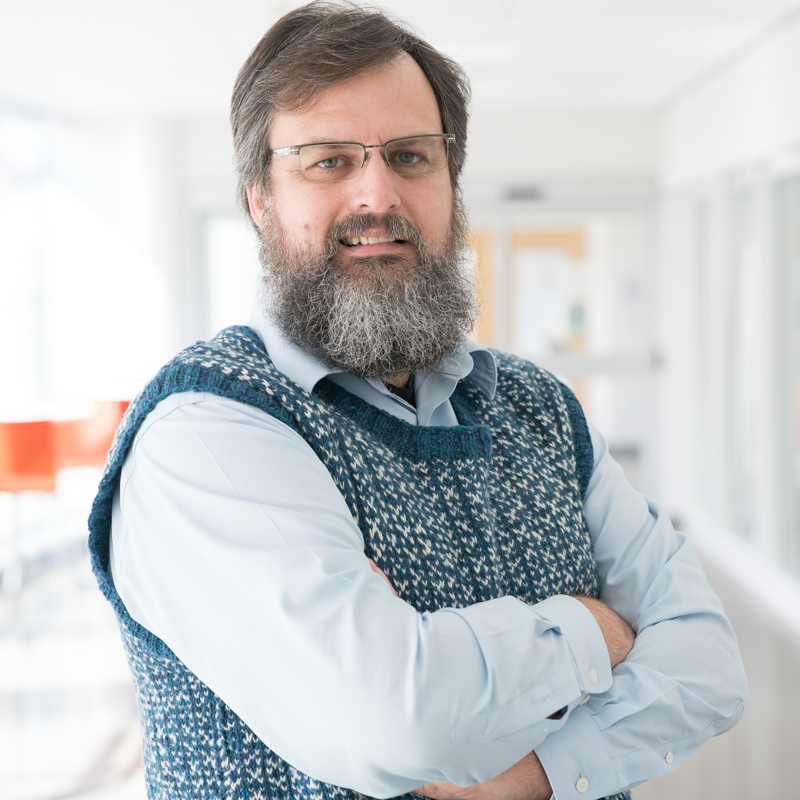
Bradley Schmerl serves as a Principal Systems Scientist in the Software and Societal Systems Department (S3D) within Carnegie Mellon University's School of Computer Science. His research advances software engineering practices for modern challenges in distributed heterogeneous systems, self-adaptation, and cyber-physical integration. He leads the ABLE research group and actively mentors students in the Masters in Software Engineering program while teaching core courses like Software Architecture and Software Engineering Practicum. Dr. Schmerl's work addresses critical challenges in composing continuously evolving software systems, including components from untrusted third parties and on-the-fly recomposition for environmental changes. His research develops reusable, analyzable tools for software composition with emphasis on model-based adaptation, uncertainty management, and cross-language integration. Key projects include Rainbow for runtime architecture reflection, Acme for formal architectural foundations, and Cyber-physical Systems research linking software models with physical dynamics. Analysis of his 2023-2025 publications reveals intensifying focus on robotics software architecture (particularly ROS-based systems), explainable AI for architectural tradeoff analysis, and configuration management in adaptive systems. Trends show growing integration of machine learning for auto-tuning, empirical studies of misconfigurations, and dimensionality reduction techniques for visualizing design spaces—consistently bridging theoretical rigor with practical tool development for real-world applications. Scientific Awards: No specific awards were documented in the source materials. Dr. Schmerl serves as Practice Area Lead and mentor in CMU's Masters in Software Engineering program, guiding client projects including Rainbow UI for self-adaptive framework interfaces, CoBot UI for telepresence robots, and Educational Telepresence Tasking Language development. His research receives support through ABLE group projects funded by grants targeting software architecture foundations, adaptation mechanisms, and cyber-physical system validation. As a core member of the ABLE research group, he directs investigations into architecture-based self-adaptation with active projects spanning Rainbow (runtime architecture models for dynamic adaptation), Acme (formal architectural styles and tools), and Cyber-physical Systems (software-physical model integration). The group also maintains legacy work in End-User Architecting, Architecture Evolution, and service-oriented platforms for intelligence analysis through SORASCS.