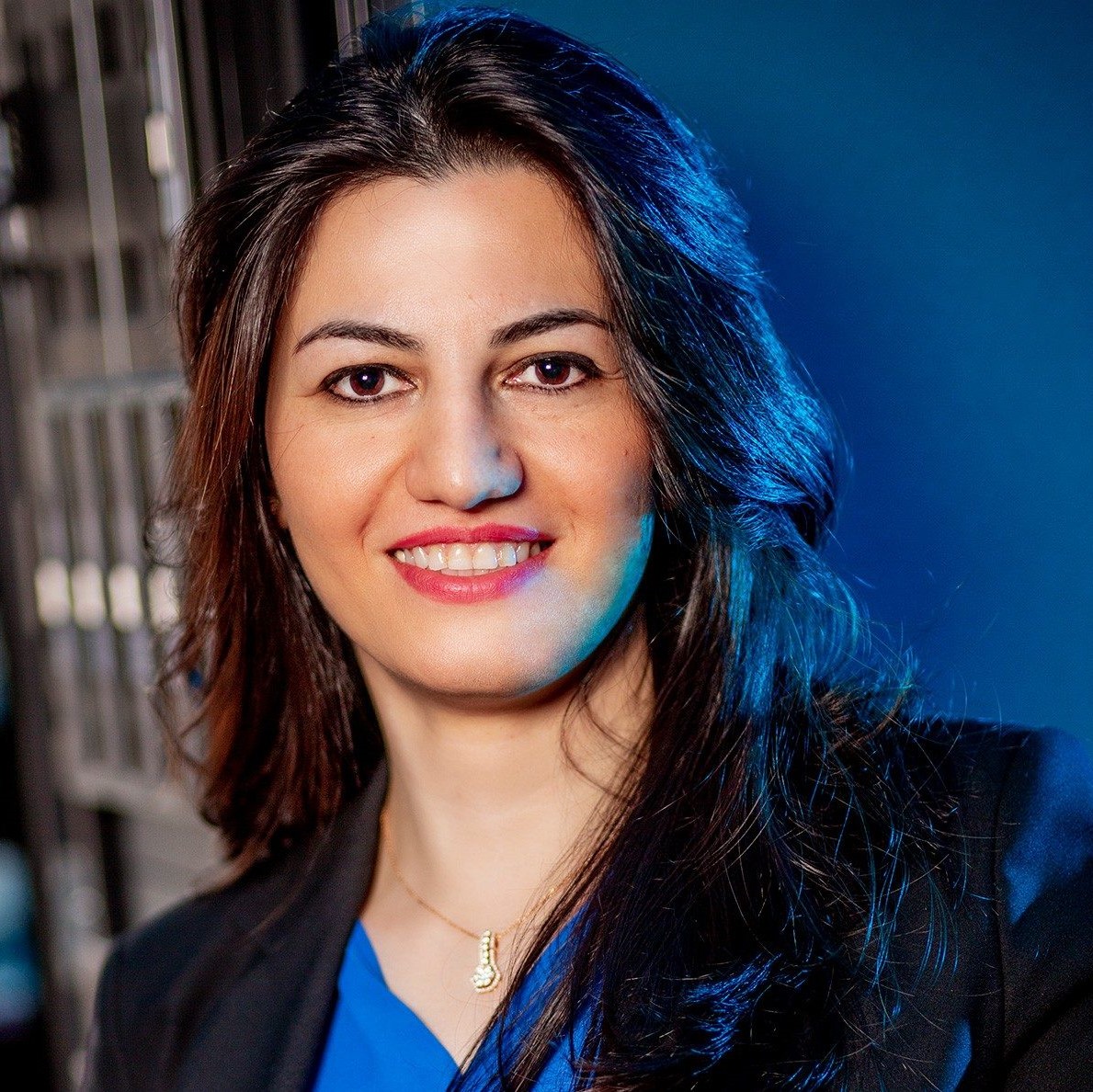
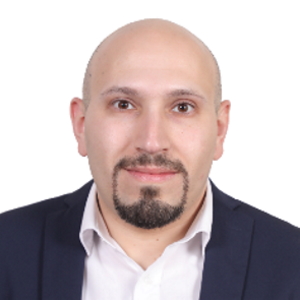
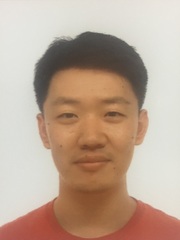
Paria Shirani is an Assistant Professor and Tier 2 Canada Research Chair in Cybersecurity at the School of Electrical Engineering and Computer Science (EECS), University of Ottawa. She holds a PhD in Information Systems Engineering from Concordia University (FRQNT Doctoral Scholarship recipient) and completed an NSERC Postdoctoral Fellowship at Carnegie Mellon University (CMU). Her research focuses on cybersecurity, including IoT security, vulnerability detection, malware analysis, threat intelligence, and AI/ML applications. She leads funded projects across undergraduate, master’s, PhD, and postdoctoral levels, emphasizing equity, diversity, and inclusion (EDI). Research Highlights: Develops AI-driven solutions for IoT security and vulnerability detection. Pioneers binary code fingerprinting and firmware analysis techniques. Advances threat intelligence through machine learning and anomaly detection. Key awards include the NSERC Postdoctoral Fellowship, FRQNT Doctoral Scholarship, and the Tier 2 Canada Research Chair. Collaborations involve institutions like Concordia University, Carnegie Mellon University, and IBM’s Cyber Range. She actively serves on editorial boards (e.g., ACM Computing Surveys) and organizes conferences (e.g., SecureComm, PST).
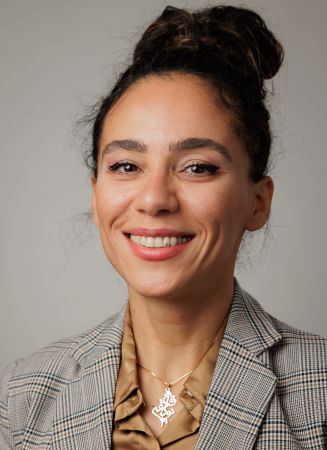
Dr Ahmed Fetit is a Senior Lecturer and Senior Teaching Fellow at Imperial College London's Department of Computing (Faculty of Engineering), specializing in AI for Healthcare through the UKRI Centre for Doctoral Training. His research focuses on applying machine/deep learning to medical imaging, particularly in collaboration with NHS Trusts. He holds a PhD from the University of Warwick (2015) and degrees from the University of Birmingham (MSc, BEng). He is a Fellow of the Higher Education Academy (FHEA). Education: PhD: University of Warwick (2015), applications of machine learning to tumor diagnosis/prognosis via MRI MSc: University of Birmingham BEng (Hons): University of Birmingham Research Interests: Ahmed's work bridges AI and healthcare, emphasizing medical imaging applications such as MRI segmentation, adversarial robustness, fetal brain connectivity analysis, and retinal biomarker discovery. His projects often involve NHS collaborations to translate AI innovations into clinical practice. Recent Article Trends: Recent publications highlight advancements in CNN robustness (e.g., k-space artifact simulation), fetal/neonatal brain segmentation, and XAI explanations in healthcare imaging. His work also explores cross-modal MRI inference and cardiovascular risk stratification using retinal features. Awards: Fellow of the Higher Education Academy (FHEA) Advising & Grants: While specific grant details are not listed, his NHS collaborations imply involvement in funded healthcare AI projects. No advisees are explicitly mentioned. Labs/Teams: Active in the UKRI CDT in AI for Healthcare and the Department of Computing's Neuroimaging research groups.
Faegheh Moazeni is an Assistant Professor in the Department of Civil & Environmental Engineering at Lehigh University. Her research focuses on mathematical optimization, cybersecurity of critical infrastructure systems, and smart city technologies. She leads projects in water-energy nexus systems, resilient microgrids, and data-driven predictive control. Her work integrates machine learning, nonlinear model predictive control (MPC), and cyber-physical security frameworks to enhance infrastructure resilience. Recent efforts include hardware-in-the-loop validation of control systems and stochastic modeling for offshore renewable energy. Key research areas include securing smart water systems against cyberattacks, optimizing energy dispatch in islanded microgrids, and developing adaptive algorithms for real-time operational challenges. Her interdisciplinary approach addresses challenges at the intersection of environmental engineering, control theory, and cybersecurity. Notable contributions include frameworks for detecting cyberattacks in water networks, economic dispatch models for water-energy systems, and stability-guaranteed control architectures for naval and civilian infrastructure.
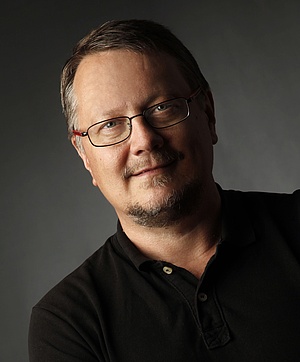
Franz Wotawa is a Professor of Software Engineering at Graz University of Technology. He holds a M.Sc. (1994) and PhD (1996) from Vienna University of Technology. He has served as head of the Institute for Software Technology from 2003–2009 and since 2020. His research focuses on model-based reasoning, software testing, autonomous systems, and diagnosis, with over 390 peer-reviewed publications. He founded Softnet Austria (2006) to bridge research and industry. He leads the Christian Doppler Laboratory for Quality Assurance Methodologies for Autonomous Cyber-Physical Systems since 2017 and has supervised 90+ master and 36+ PhD students. His awards include the 2016 Lifetime Achievement Award from the International Diagnosis Community. He is a member of Academia Europaea, IEEE, and AAAI. **Education**: M.Sc. in Computer Science, Vienna University of Technology, 1994 PhD, Vienna University of Technology, 1996 **Research Interests**: Model-based reasoning, qualitative reasoning, theorem proving, mobile robotics, verification/validation, software testing/debugging, AI, and autonomous systems. **Notable Projects**: A-IQ Ready (2022–2026): Quantum sensing for autonomous systems. ALFA (2024–2027): AI for smart diagnosis in building automation. Bilateral AI (2024–2029): Combining symbolic and sub-symbolic AI. VARCOS (2025–2028): Vehicle-road cooperative systems for autonomous driving. **Awards & Memberships**: Lifetime Achievement Award (2016, International Diagnosis Community) Senior Member, AAAI Member of Academia Europaea, IEEE, ACM, and Austrian Computer Society **Labs/Teams**: Christian Doppler Laboratory for Quality Assurance Methodologies (since 2017). Active in Cluster of Excellence “Bilateral AI” at TU Graz.
Weihang Wang is a Volunteer Assistant Professor in the Department of Computer Science and Engineering at the University of Southern California (USC), part of the School of Engineering and Applied Sciences. His research focuses on WebAssembly security, program analysis, and static/dynamic analysis frameworks. He holds a PhD and has published extensively on topics like WebAssembly obfuscation, decompilation techniques, and flaky test mitigation. Research interests include cybersecurity, software engineering, and the application of AI in program analysis. His work addresses challenges in cross-compilation for WebAssembly, decompilation accuracy, and automated detection of security vulnerabilities in web applications. Notable projects include WaSCR (side channel repairer), WBSan (bug detection), and Wefix (flaky test automation). He has received NSF travel grants for IEEE Security Development (SecDev) conferences in 2022 and 2023. His articles span 2010–2025, showing sustained contributions to web security, compiler optimization, and program transformation. His work intersects with practical applications like ad-blocking systems (Adhere) and bird flu outbreak prediction using migration data (2010–2013). Grants and awards include NSF funding for travel and research, reflecting his active role in academic conferences. He is affiliated with USC's computer science department and maintains an active Google Scholar profile with over 30 publications listed.
Madeleine EL ZAHER is a Researcher-Lecturer at CESI, affiliated with the Engineering and Numerical Tools research team. Her work focuses on Artificial Intelligence, Collaborative Robotics, Human-Machine Interaction, and Multi-Agent Systems. She holds a PhD in Computer Sciences from the University of Technology of Belfort-Montbéliard (2013) and a Master’s degree in Computer Sciences and Telecommunications from Paul Sabatier University (2010). Teaching responsibilities include Computer Sciences and Electronics at the Engineering program level, emphasizing project-based learning and training through research. She co-supervises PhD students in industrial robotics and cyber-physical systems, including Abdessalem ACHOUR (defending in 2024) and Badra Souhila GUENDOUZI (defending in 2025). Her research spans semantic mapping in mobile robotics, federated learning for industrial systems, and platooning algorithms for autonomous vehicles. Notable publications include work on semantic mapping with 3D models (2024), federated learning frameworks using genetic algorithms (2023), and verification of platooning systems (2012–2015). No scientific awards are explicitly listed, but her contributions reflect impactful work in autonomous systems and robotics. Grants and lab affiliations are not detailed in the provided text, though her team’s research aligns with CESI’s focus on engineering and numerical tools.
Richard Paige is a Joseph Ip Distinguished Engineering Professor at McMaster University's Department of Computing and Software, Faculty of Engineering. He also holds a part-time position as Professor of Enterprise Systems at the University of York, UK. His primary research focuses on software engineering, particularly model-driven engineering, safety-critical systems, and low-code development. He leads the McMaster Centre for Software Certification (McSCert) and has extensive industry collaborations, including with Rolls-Royce, Leonardo, and NASA. Paige holds a PhD in Computer Science from the University of Toronto (1997), an MSc from the same institution (1994), and a BSc from McMaster University (1992). He has supervised over 22 PhD and 72 Master’s students, many of whom pursue careers in academia and industry. His funding exceeds $24M CAD from NSERC, Ontario Research Fund, and industry grants. His research emphasizes model management, assurance cases, and safety-critical systems. Key contributions include the Epsilon framework and advancements in model-driven tools. Paige chairs the STAF conferences and serves on editorial boards for journals like Software and Systems Modeling . He actively promotes open-source tooling and has won multiple best paper awards, including ACM Distinguished Paper at MoDELS (2010, 2017) and the Ten-Year Most Influential Paper Award (2016). Paige’s teaching focuses on problem-based learning and flipped classrooms, with awards for pedagogical innovation. He also leads interdisciplinary projects, such as SECT-AIR (reducing aerospace software costs) and CROSSMINER (developer-centric knowledge mining). His work bridges academia and industry, addressing challenges in automotive, healthcare, and aerospace sectors. Current projects include safety assurance for autonomous vehicles and model-driven sustainability evaluation.
Dennis Moeke is a Lecturer in Logistics and Alliances at HAN University of Applied Sciences, leading the Logistics and Alliances Lectorate. He holds a broad professional network spanning logistics, government, and academia, with a focus on healthcare logistics and sustainable urban development. His research addresses societal challenges such as affordable healthcare systems, smart logistics solutions, and livable cities through interdisciplinary collaboration. His expertise includes patient logistics, data-driven capacity planning, and optimization of healthcare processes. Key projects include the Healthy City Lab , exploring sustainable last-mile logistics in cities via two Living Labs (Campus Heijendaal and Buur & Zo), and the Living Labs Sustainable Supply Chain Management in Healthcare . He has secured significant funding, including a NWO grant (Project 439.18.457), to advance interdisciplinary research. Notable contributions include developing the Buur & Zo concept (home care concierge services) and optimizing hospital patient flows using process mining. He collaborates with organizations like Logistics Valley, Health Valley, CWZ Carinova, and Siza. His work emphasizes practical applications, translating academic insights into real-world tools for healthcare and logistics sectors. Publications span topics like home care scheduling optimization, sustainable urban logistics, and pandemic response logistics. He actively promotes the role of logistics in societal well-being through teaching and industry partnerships.
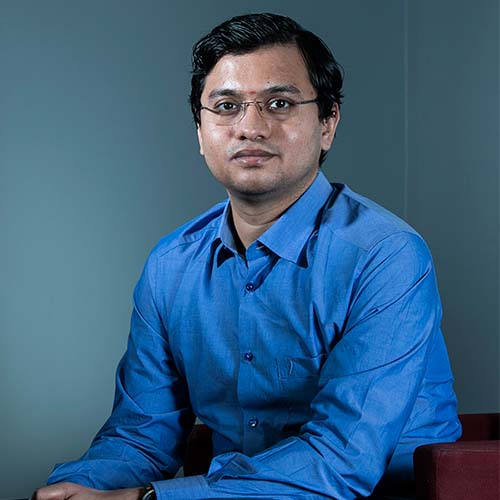
Sai Manoj Pudukotai Dinakarrao is an Assistant Professor in the Department of Electrical and Computer Engineering at George Mason University's College of Engineering and Computing. He leads the HArt (Hardware and AI Research) Group, focusing on cutting-edge research at the intersection of hardware security and artificial intelligence. His educational journey includes a BTech in Electronics and Communication Engineering from Jawaharlal Nehru Technological University (2010), an MTech in Information Technology from International Institute of Information Technology Bangalore (2012), and a PhD in Electrical Engineering from Nanyang Technological University, Singapore (2015). Following his doctoral studies, he completed post-doctoral research at TU Wien, Vienna (2015-2017) and George Mason University (2017-2018). Dr. Dinakarrao's research spans hardware security, adversarial machine learning, IoT networks, and deep learning in resource-constrained environments. His work integrates hardware design with AI techniques to address security challenges in computing systems, with particular focus on side-channel attack detection, malware detection in IoT networks, on-chip security, and hardware accelerator design for machine learning applications. His research has resulted in numerous publications in top-tier conferences and journals including IEEE Transactions, ACM conferences, and Design Automation Conference. Analysis of his recent publications reveals a strong trend toward hardware security solutions using machine learning techniques. His work increasingly focuses on Processing-in-Memory architectures, energy-efficient security solutions for IoT devices, and innovative approaches to hardware Trojan detection. Many publications demonstrate interdisciplinary collaboration across electrical engineering, computer science, and cybersecurity domains. Young Research Fellow Award at Design Automation Conference (DAC) 2013 Best paper award at International Conference on Data Mining (ICDM) 2019 Best paper award at International Conference on Consumer Electronics (ICCE) 2020 Best paper nomination at International Conference on Computer-Aided Design (ICCAD) 2019 Best paper nomination at Design Automation and Test in Europe (DATE) 2018 Dr. Dinakarrao has successfully mentored numerous PhD and MS students, with alumni securing positions at AMD-Xilinx, US Government agencies, and academic institutions. His research has been supported by significant grants from NSF, DARPA, and Virginia Commonwealth Cyber Initiative. Current projects include securing supply chains with UVA, developing novel architectures for machine learning acceleration, and creating energy-preserving cryptography protocols. The HArt Group maintains active collaborations with industry partners including AMD-Xilinx and government agencies. The lab focuses on practical implementations of theoretical security concepts, with particular emphasis on creating deployable security solutions for real-world hardware systems. Current research directions include intermittent computing with energy harvesting, hardware fuzzing techniques, and robust machine learning models resistant to adversarial attacks.
Dr. Amro Al-Said Ahmad is a Lecturer in Computer Science at the School of Computer Science and Mathematics, Keele University, UK. He holds a Ph.D. in Cloud Computing from Keele University and has served as a teaching fellow and lecturer in Jordan prior to his current role. His research focuses on cloud computing scalability, software testing, and agile methodologies. He has published extensively in top-tier journals and conferences, including Information and Software Technology and Journal of Cloud Computing , and contributed to organizing events like BCS HCI and IEEE SSD. Education: BSc (Software Engineering, Philadelphia University, 2009), MSc (Computer Science, Amman Arab University, 2014), PhD (Cloud Computing, Keele University, 2019). Research interests include cloud scalability, chaos engineering, software testing, and healthcare informatics. His funded projects include AWS credits for scalability analysis and an Erasmus+ grant for international collaboration. He teaches courses like Cloud Computing and Software Engineering Project Management at Keele. Grants: AWS Cloud Credit ($5K), Keele New Starter Award (£2K), Erasmus+ MED2IaH (€58,325 share). Lab/Teams: Active in cloud resilience frameworks and chaos engineering research groups.
Dr Soroush Faramehr is an Associate Professor (Research) at Coventry University's Institute for Future Transport and Cities. He holds a PhD in Electrical Engineering from Swansea University (2015), specializing in wide bandgap semiconductor technologies. His research focuses on developing high-efficiency compound semiconductor devices for decarbonization in automotive, aerospace, renewable energy, and industrial sectors. He has over 10 years of R&D experience, with a strong publication record in peer-reviewed journals, successful grant acquisitions, and supervision of postgraduate researchers. Education: PhD in Electrical Engineering (Swansea University, 2015). Postdoctoral research at Swansea University before joining Coventry in 2019. Research Interests: Power semiconductor devices (GaN, SiC), magnetic sensors, thermal management, and E-mobility applications. His work aligns with UN Sustainable Development Goals related to climate action and sustainable infrastructure. Key Projects: Includes leadership in initiatives such as 'Gallium Nitride Smart Power Integrated Circuit Technology' (2021–2025) and 'GaN Hall Sensors' (2020). He has secured funding for projects like 'High-Voltage fast-charging efficient Electric vehicle Powertrains' (2025–2029). Advising: Supervises students researching topics like GaN HEMT switching behavior, thermal management in e-scooters, and second-life EV battery utilization. His advisees include Xuyang Lu, Arun Mambazhasseri Divakaran, and current students Louiza Mavrovounioti and Vartika Pandey. Publications: Over 30 articles in journals such as IEEE Access and IEEE Transactions on Power Electronics. Research spans CFD modeling, magnetic sensor development, and GaN device optimization.
Ingo Weber is a Professor affiliated with Technische Universität München (TU Munich) and Fraunhofer Gesellschaft. His research focuses on blockchain technology, business process management (BPM), and artificial intelligence (AI), with a particular emphasis on integrating these fields. He has held former positions at TU Berlin, CSIRO Data61, and other institutions. Current affiliations: TU Munich and Fraunhofer Gesellschaft Former affiliations: TU Berlin, CSIRO Sydney, University of New South Wales, SAP Research, and University of Massachusetts Amherst Research interests include blockchain applications in business processes, process mining, AI-driven systems, and sustainability-oriented process analysis. His work explores topics such as blockchain scalability, data confidentiality, and cost-efficient process execution on next-generation blockchains like Algorand. He has pioneered frameworks like SOPA for sustainability analysis and FhGenie for confidentiality-preserving AI. Key contributions include over 200 publications in journals like IEEE Access, Future Generation Computer Systems, and ACM Transactions on Management Information Systems. Recent work emphasizes AI-augmented BPM systems and the application of large language models (LLMs) in scientific contexts. Notable projects include blockchain-based process execution engines (e.g., Caterpillar), platform architectures for multi-tenant blockchain systems, and frameworks for evaluating payment channel networks. He has collaborated extensively with industry partners and academic institutions globally.
Dr. Seongmin Lee is a researcher at the Max Planck Institute for Security and Privacy, specializing in software security and program analysis. Their work bridges theoretical and practical aspects of software testing, with a particular focus on automated testing techniques, dependency modeling, and genetic improvement. Research interests include: Software Security Software Testing and Fuzzing Program Analysis and Slicing Machine Learning Applications in Software Engineering Genetic Algorithms for Code Optimization Statistical and Causal Analysis of Code Behavior Recent publications (2016–2025) demonstrate a trajectory from foundational work on GPU parameter optimization to cutting-edge research on LLM-driven regression testing. Key trends include: Statistical modeling of software behavior Machine learning for bug classification and optimization Approximate analysis techniques for scalability Advancements in greybox fuzzing and coverage prediction Application of causal inference to mutation testing
Fuyuan Zhang is a Postdoctoral Researcher at the Max Planck Institute for Software Systems, specializing in advanced software testing methodologies and formal verification techniques. His research focuses on improving the reliability and security of AI systems, quantum computing frameworks, and concurrent systems through innovative testing criteria, adversarial attacks, and compositional reasoning. Key areas of expertise include: Large Language Model (LLM) testing and validation Quantum program analysis and security Adversarial machine learning and neural network robustness Formal verification of concurrent and cyber-physical systems Automated bug detection in complex software systems His work bridges theoretical foundations with practical applications, addressing critical challenges in AI safety, quantum software reliability, and system-wide security certification.
Youcheng Sun is a researcher at The University of Manchester, affiliated with the Systems and Software Security group, Centre for Digital Trust and Society, Centre for Robotics and AI, and Autonomy and Verification Network. Previously, he held a Lecturer position at Queen's University Belfast and conducted postdoctoral research at the University of Oxford. He earned his PhD from Scuola Superiore Sant'Anna. His research focuses on AI Safety , Security , and Automated Reasoning , with contributions to trustworthy AI, formal verification, embedded systems, and robotics. His work has been funded by Google and the Ethereum Foundation. He has led projects such as SECT-AIR and AUTOSAC, and contributed to the EU H2020 SAFURE project on safety/security assurance in mixed-critical systems. His publications span top-tier venues like IEEE S&P, ICSE, NeurIPS, and IROS. Awards: Fellow of the Higher Education Academy (FHEA) Advising: Supervising PhD students in AI/Security domains (e.g., funded projects on LLMs in social recommendations) Labs/Teams: Member of interdisciplinary networks advancing robotics, AI ethics, and digital trust.