Dr. Aleksander Smywiński-Pohl is an Assistant Professor at the Institute of Computer Science , Faculty of Computer Science, AGH University of Science and Technology in Kraków, Poland. He holds a PhD in Computer Science from AGH (2015) for his thesis "Automatic Information Extraction from Polish Texts" and a parallel degree in Philosophy from Jagiellonian University. His academic career includes teaching at Jagiellonian University (2007-2016) and AGH (since 2008), where he currently instructs courses in Artificial Intelligence and Natural Language Processing. His research focuses on Natural Language Processing with specialization in Polish language technologies, formal ontologies , legal text analysis, and cognitive science. Key areas include: Machine learning for low-resource languages Legal document processing (amendments, argument retrieval) Neural models for translation and classification Semantic web technologies He has supervised over 30 student theses in NLP/ML applications and contributes to national NLP evaluations (PolEval).
Ryszard Tadeusiewicz is a Professor at the Department of Biocybernetics and Biomedical Engineering , Faculty of Electrical Engineering, Automatics, Computer Science and Biomedical Engineering , AGH University of Science and Technology in Kraków, Poland. His research spans biomedical engineering, artificial intelligence, and automation, with a focus on medical imaging, neural networks, and healthcare sustainability. Primary research areas: AI-driven diagnostics, biocybernetics, and automated systems Contributions to conferences like ICAISC and journals in medical informatics Leadership in interdisciplinary projects at the intersection of engineering and medicine His recent publications highlight the integration of deep learning with biomedical applications, including tumor segmentation, pneumonia detection, mental health classification, and forest-planting robotics. While no explicit awards are listed, his extensive publication record underscores his role as a thought leader in AI and biomedical innovation.
Luísa Coheur is an Associate Professor at the Department of Computer Science , Instituto Superior Técnico (University of Lisbon), and a researcher at INESC-ID 's Human Language Technologies group. She served on the Management Committee of IST-Taguspark (2020-2023), overseeing pedagogical organization and library services. Education: Ph.D. in Natural Language Processing (IST/Université Blaise-Pascal) Postgraduate in Higher Education Pedagogy (University of Lisbon, 2023) Degree in Applied Mathematics and Computer Science (IST) Research Interests: Specializes in NLP with focus areas in: Dialogue systems and conversational AI Machine translation (including Portuguese Sign Language) Question answering architectures Educational technology and accessibility Cyberbullying detection in social media Her work integrates linguistic theory with machine learning for real-world applications. Publication Trends: Over 120 publications emphasizing machine translation evaluation (e.g., fine-grained error detection), NLP for social good (cyberbullying datasets), sign language processing, and educational tools. Recent works leverage active learning and transformer models for low-resource scenarios. Awards: IST Outstanding Teaching Award (2023) Recognized as 'Excellent Professor' >20 times via IST QUC Advising & Projects: Supervised 10+ PhD and 80+ Master's students. Secured participation in 17 national/international projects (e.g., EU-funded initiatives in NLP). Leads pedagogical innovation like educational escape games for STEM courses. Labs/Teams: Core member of INESC-ID's Human Language Technologies group , developing resources for Portuguese NLP. Collaborates with clinicians on assistive tech (e.g., VITHEA-Kids for autism language skills).
Pushpak Bhattacharyya is a distinguished Professor in the Department of Computer Science and Engineering at the Indian Institute of Technology (IIT) Bombay. He holds the prestigious title of Abdul Kalam National Fellow and is a Fellow of the National Academy of Engineering (FNAE). His academic leadership extends to roles such as Professor Incharge of the IIT Bombay-Monash Australia Academy and Chairman of the MEITY Committee for Indian Language Standards. Professor Bhattacharyya's research spans multiple domains within computational linguistics and artificial intelligence. His work focuses on Natural Language Processing, Computational Linguistics, Machine Learning, Sarcasm Detection, Sentiment Analysis, Multilingual Processing, and Cognitive NLP. He has made significant contributions to Indian language technology, leading NITI Aayog's initiative on creating an Indian Language NLP stack and Virtual Agents. His recent publications reveal a strong focus on multilingual NLP for Indian languages, bias detection in language models, sarcasm and humblebragging detection, mental health applications of NLP, and code generation. His work bridges theoretical advances with practical applications in education, healthcare, and government services. The research demonstrates increasing integration of cognitive aspects with traditional NLP approaches and a growing emphasis on ethical AI considerations like bias detection and cultural competence. FNAE (Fellow of National Academy of Engineering) Abdul Kalam National Fellow Listed among top 10 Machine Learning Researchers in India Listed among most prolific NLP-ML researchers 2012-17 Professor Bhattacharyya has mentored numerous PhD and Masters students who have gone on to make significant contributions in academia and industry. His research has been supported by various grants from government agencies and industry partners, enabling large-scale projects in Indian language technology and NLP. He has led the development of comprehensive NLP resources for Indian languages and has been instrumental in establishing research collaborations between IIT Bombay and international institutions. He leads a vibrant research group at IIT Bombay focused on Natural Language Processing, with active projects in sarcasm detection, multilingual processing, cognitive NLP, and applications of NLP in healthcare and education. His team has developed several notable systems including those for Indian language translation, sarcasm detection, and mental health analysis through text.
Professor Yue Chen is a distinguished academic at the School of Electronic Engineering and Computer Science , Queen Mary University of London , holding the title of Professor of Telecommunications Engineering and serving as Director of Education . With expertise in wireless networking and smart energy systems, his research bridges theoretical innovation with practical applications in telecommunications infrastructure. BEng, MEng, PhD Member of Institution of Engineering and Technology (MIET) Senior Member of IEEE (SMIEEE) His research interests focus on Intelligent Radio Resource Management for wireless networks, cognitive and cooperative networking, heterogeneous networks (HetNet), smart energy systems, and Internet of Things (IoT) integration. His work emphasizes machine learning-driven optimization for next-generation communication systems and energy-efficient networks. Recent publications highlight trends in reinforcement learning for UAV-NOMA networks , energy-efficient IoT systems , and data-driven educational methodologies . These demonstrate cross-disciplinary innovation, merging telecommunications research with pedagogical experimentation and smart grid optimization.
Carla Limongelli is an Associate Professor at Roma Tre University's Department of Civil, Computer and Aeronautical Engineering within the School of Engineering. Her academic work bridges computer science with educational applications, focusing on intelligent systems for learning environments. Her research interests center on artificial intelligence applications in education, with particular expertise in concept mapping systems, learning management platforms, and technology-enhanced museum experiences. Dr. Limongelli has developed innovative approaches to adaptive learning, social robotics in educational contexts, and multimodal learning analytics that track both physiological responses and behavioral patterns. Her recent publication trends reveal a strong focus on leveraging large language models for educational purposes, with increasing attention to multimodal applications combining visual, textual, and physiological data streams. This work spans from automated question generation to social robot interactions in museum settings. Dr. Limongelli has contributed significantly to the development of systems that support teachers in course building, concept map creation, and personalized learning path configuration, with applications extending from traditional educational settings to cultural heritage environments.
Bence P. Ölveczky serves as Professor of Organismic and Evolutionary Biology at Harvard University's Faculty of Arts and Sciences, based in the Northwest Building (52 Oxford Street, Cambridge, MA). He leads the Ölveczky Lab, which investigates neural circuit mechanisms underlying complex behavior acquisition and generation. His research specializes in motor sequence learning using rodent models, employing high-throughput automated training systems, long-term neural recordings, 3D behavioral tracking, and circuit dissection tools like optogenetics. In collaboration with DeepMind, the lab developed a biomechanically realistic virtual rodent controlled by artificial neural networks to simulate natural behaviors. Key interests include neural circuit plasticity, behavioral neuroscience, and neuroethological approaches to motor control. Recent publications reveal consistent focus on motor cortex and basal ganglia functions in skill learning, with methodological emphasis on neural manipulation techniques and computational modeling. The lab integrates experimental neuroscience with advanced analytics to decode neural-behavioral relationships. Professor Ölveczky advises an active research team within the Ölveczky Lab, supported by institutional infrastructure and external collaborations. His work addresses fundamental questions about neural circuit operation with implications for neurological disorders. The lab maintains specialized facilities including automated behavioral training rigs, neural recording setups, and computational modeling environments for comprehensive analysis of motor behavior and neural dynamics.
Nicolas HIOT is a Post-doctoral fellow at the University of Orleans affiliated with the LIFO laboratory (Laboratoire d'Informatique Fondamentale d'Orléans) and the Pamda project. His research bridges database systems, natural language processing, and medical informatics with a focus on text-to-database integration and consistency maintenance. His research interests center on: Database Systems for medical applications with emphasis on consistency and evolution Natural Language Processing for clinical text analysis and relation extraction Knowledge Graph construction from unstructured textual data Medical Informatics applications for healthcare data management Analysis of his 15 most recent publications (2020-2024) reveals a cohesive research trajectory at the intersection of databases and NLP. Key thematic clusters include automated medical database construction from clinical texts, consistency management in evolving RDF/property graph systems, and clinical entity/relation extraction for knowledge graphs. His work consistently addresses real-world challenges in healthcare data integration through tools like DataFix and ArchiTXT, demonstrating strong translational potential. Nicolas HIOT actively contributes to the LIFO research laboratory at the University of Orleans, collaborating extensively with Jacques CHABIN, Mirian HALFELD-FERRARI, and Dominique LAURENT. His technical output includes multiple software systems for database evolution management and clinical text processing, reflecting both theoretical contributions and practical implementations in semantic data management.
Zöhre SERTTAŞ is a Lecturer in the Department of Computer Information Systems at Near East University, Northern Cyprus, with contact details zohre.serttas@neu.edu.tr and +90 (392) 223 64 64. Her research focuses on transformative educational technologies, particularly: AI-driven immersive e-learning environments Metaverse-based educational paradigms Gamification and digital game development Mobile applications for special education and elderly/disabled users Cloud forensics and digital evidence preservation Recent publications (2023-2025) demonstrate her leadership in developing simulation-based cultural education tools, ethical AI frameworks for education, and practical implementations like the NEU-LIFE ASSIST mHealth application. Her work bridges technical innovation with pedagogical effectiveness across banking, healthcare, and STEM education domains.
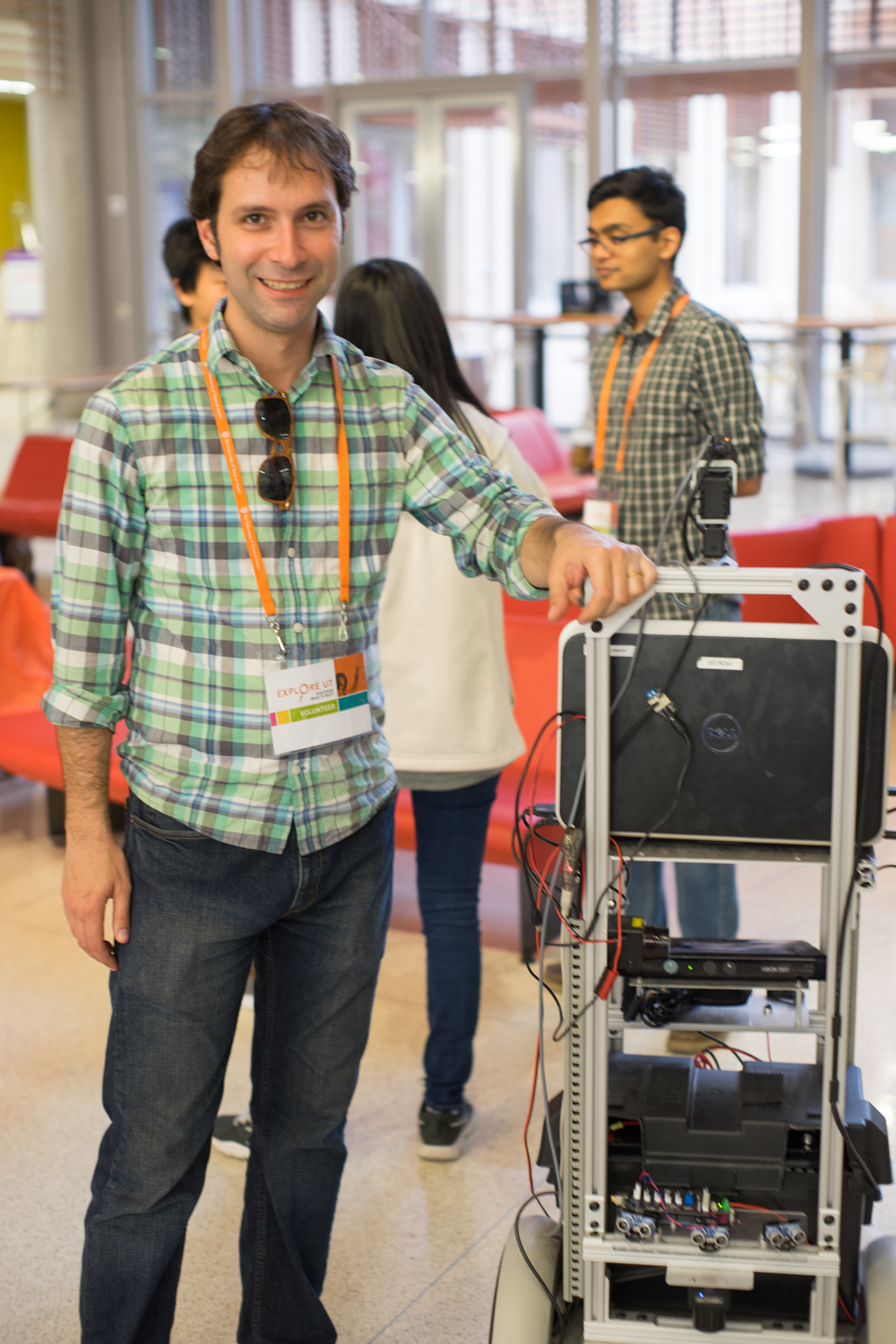
Jivko Sinapov is an Associate Professor with dual appointments in the Department of Computer Science and Department of Mechanical Engineering at Tufts University's School of Engineering. He also serves as a CEEO Fellow at the Center for Engineering Education Outreach. His research focuses on enabling physical robots to operate and learn in human-inhabited environments through developmental approaches. Education: PhD in Computer Science and Human-Computer Interaction, Iowa State University (2013) BSc in Computer Science and Mathematics, University of Rochester (2005) Professor Sinapov's research centers on Artificial Intelligence, Developmental Robotics, Computational Perception, and Human-Robot Interaction . His work addresses fundamental questions about implementing intelligence in physical robots, with emphasis on enabling extended operation in human environments. His laboratory develops methods for behavioral object exploration, multi-modal perception, and knowledge transfer between robots, with applications ranging from educational robotics to space exploration. Current research directions include neurosymbolic approaches for handling novelty in open worlds, multimodal object property learning, and augmented reality interfaces for improved human-robot collaboration. Scientific Awards and Recognition: Winner of the Verizon 100K 5G EdTech Challenge (Spring 2019) for AR-based robotics education NSF CAREER Award: "Learning and Sharing Transferable Grounded Object Knowledge for Collaborative Robots" (2023) CEEO Fellow at the Center for Engineering Education Outreach Professor Sinapov actively mentors graduate students in the Multimodal Learning, Interaction, and Perception (MLIP) Lab, currently advising five PhD students across Computer Science and Mechanical Engineering departments. His research has been supported by significant grants including his NSF CAREER award. He has co-organized prominent symposia including the AAAI Spring Symposium on "Interactive Multi-Sensory Perception for Embodied Agents" (2017) and the AAAI Fall Symposium on "AI for Human-Robot Interaction" (2019). He directs the Multimodal Learning, Interaction, and Perception (MLIP) Lab , which develops cognitive robotics systems capable of learning through environmental interaction. The lab's research spans robot learning, computational perception, and human-robot interaction, with applications in education, space technology, and collaborative robotics systems operating in complex human environments.
Iñaki Odriozola Larrañaga is a Postdoctoral Researcher at the University of Copenhagen's Globe Institute, specifically within the Section for Hologenomics. His research focuses on advanced genomic techniques to study host-microbe interactions across diverse species. His research interests span hologenomics, metagenomic analysis, environmental DNA applications, and microbiome dynamics. Dr. Odriozola Larrañaga specializes in developing and implementing genomic methodologies to understand how environmental factors influence microbial communities in various organisms, from mammals to fish. His work bridges computational biology with field ecology to address fundamental questions about host-microbe coevolution. Analysis of his recent publications reveals a strong emphasis on methodological development in hologenomic research, with particular attention to DNA extraction protocols, data generation standards, and functional inference techniques. His research shows consistent collaboration with the Alberdi and Gilbert research groups, focusing on comparative studies across vertebrate species and environmental contexts. Dr. Odriozola Larrañaga maintains active research collaborations across multiple institutions, as evidenced by his co-authorship patterns and international publication record. His work has generated significant academic interest, with multiple publications receiving substantial attention on academic social networks and research platforms.
Dr. Andrew Peng is a Lecturer (Research) at the Australian Artificial Intelligence Institute (AAII) within the Faculty of Engineering and Information Technology at University of Technology Sydney (UTS), Australia. With dual PhDs from UTS (2015) and Beijing Institute of Technology (2013), he has published 45 peer-reviewed papers across top venues like IEEE ICDM, COLING, and Frontiers in Molecular Biosciences. Education: Dual PhD (2013-2015) from Beijing Institute of Technology and University of Technology Sydney His research focuses on Data Science , Artificial Intelligence , and Healthcare Analytics , addressing challenges in medical data analysis, unstructured clinical text processing, and federated learning frameworks. Recent publications explore: Deep graph clustering for community detection Privacy-preserving medicine shortage detection via social media Time-aware medication recommendation using dynamic treatment regimes Knowledge tracing enhancements for online education Contrastive learning approaches for ICD coding Hypergraph-based sequential diagnosis prediction Dr. Peng has secured over AUD $1M in external research grants and serves as Subject Coordinator for undergraduate/postgraduate courses. He contributes to professional leadership through roles as Web Chair at AJCAI 2021 and ADMA 2021, PC member for major conferences, and reviewer for journals like NeurIPS and AAAI. His work spans collaborations with universities, industry, and government agencies.
Prof. Dr. Andreas Harth holds the Chair of Business Information Systems, especially Technical Information Systems, at Friedrich-Alexander University Erlangen-Nuremberg (FAU), where he has been a faculty member since 2018. He also serves as a department head at the Fraunhofer IIS-SCS in Nuremberg. His academic work spans both theoretical research and practical applications in decentralized information systems, with strong connections to industry through numerous collaborative projects. Harth completed an apprenticeship as a banker before studying computer science. He earned his doctorate from the Digital Enterprise Research Institute at the National University of Ireland, Galway, and completed his habilitation at the Karlsruhe Institute of Technology. His academic journey included teaching and research stays at the universities of Heidelberg, Innsbruck, Stanford, and Southern California, providing him with a global perspective on information systems research. His research focuses on developing methods and technologies for decentralized information systems found in the World Wide Web and blockchain environments, with applications in companies. He investigates data integration using Semantic Web and Linked Data technologies, process modeling languages, and their applications in the Internet of Things, Web of Things, and Industry 4.0 contexts. His work bridges theoretical computer science with practical business applications, particularly in data sovereignty and decentralized architectures. Analysis of his recent publications reveals a strong trend toward Solid protocol applications, knowledge graph technologies, and the integration of large language models with semantic web technologies. His research increasingly focuses on practical implementations in enterprise settings, healthcare data management, and manufacturing systems, demonstrating the real-world applicability of his theoretical work. As a member of FAU's research focus on Digitalization and Innovation, Harth collaborates with strategic partners including the Fraunhofer Institute for Information Systems (IIS) and major German industrial companies. His work contributes significantly to FAU's position as one of Germany's most research-intensive universities, particularly in the fields of business informatics and decentralized systems.
Daisuke Kawahara is a Professor at Waseda University's Faculty of Science and Engineering and a Visiting Professor at the National Institute of Informatics. He holds a PhD in Informatics from Kyoto University (2005) and has previously served as Associate Professor at Kyoto University and Senior Researcher at NICT. His research spans natural language processing, computational linguistics, and AI infrastructure. Education: Ph.D. in Informatics, Kyoto University (2005) Graduate Studies in Intelligent Informatics, Kyoto University (1999–2002) M.Eng. in Electronic & Communication Engineering, Kyoto University (1997–1999) B.Eng. in Electrical Engineering, Kyoto University (1993–1997) Research Focus: Kawahara specializes in NLP, including syntactic parsing, semantic role labeling, language resource development (e.g., JGLUE benchmark), and multilingual corpus construction. His work integrates machine learning with linguistic theory to improve text understanding systems, error correction tools, and dialogue agents. Publication Trends: His recent articles emphasize Japanese and Chinese NLP, neural network-based parsing, and practical applications like educational tools and pandemic information systems. Common themes include benchmarking, corpus annotation, and cross-lingual adaptation. Awards: 情報処理学会 自然言語処理研究会 優秀研究賞 (2025) 言語処理学会最優秀論文賞 (2024, 2023) 科学技術分野の文部科学大臣表彰 (2017) Multiple Best Paper Awards from NLP conferences (2000–2025) Projects & Advising: He leads JSPS-funded projects like Building General Language Understanding Infrastructure (2021–2025) and Acquisition of Knowledge Frames (2018–2021). No student advisees are listed. Labs & Teams: Collaborates with RIKEN Center for Advanced Intelligence Project and maintains ties to Kyoto University's NLP lab. Focuses on large-scale language modeling and collaborative AI-human intelligence frameworks.
Dr Floriana Grasso is an academic staff member at the University of York, Department of Computer Science, focusing on interdisciplinary research bridging Artificial Intelligence with education and social sciences. Coordinated modules like Computer Science Capstone Project and Natural Language Processing . Active in editorial roles for journals such as Argument and Computation and Frontiers in Digital Public Health . Her research spans Ontology Engineering , Generative AI , and Social Emotion Analysis , with recent emphasis on spatio-temporal modeling for infant language acquisition and gender dynamics in academia. Explores applications of Graph Neural Networks and Competency Question Engineering . Investigates societal impacts of motherhood on female STEM faculty across cultures. Professional activities include: Founder and Chair of the Computational Models of Natural Argument workshop series. Director of Online Learning (2022–present) and Global Opportunities Academic Lead (2017–2024). Judge for the Global Undergraduate Awards and grant reviewer for the Royal Society.