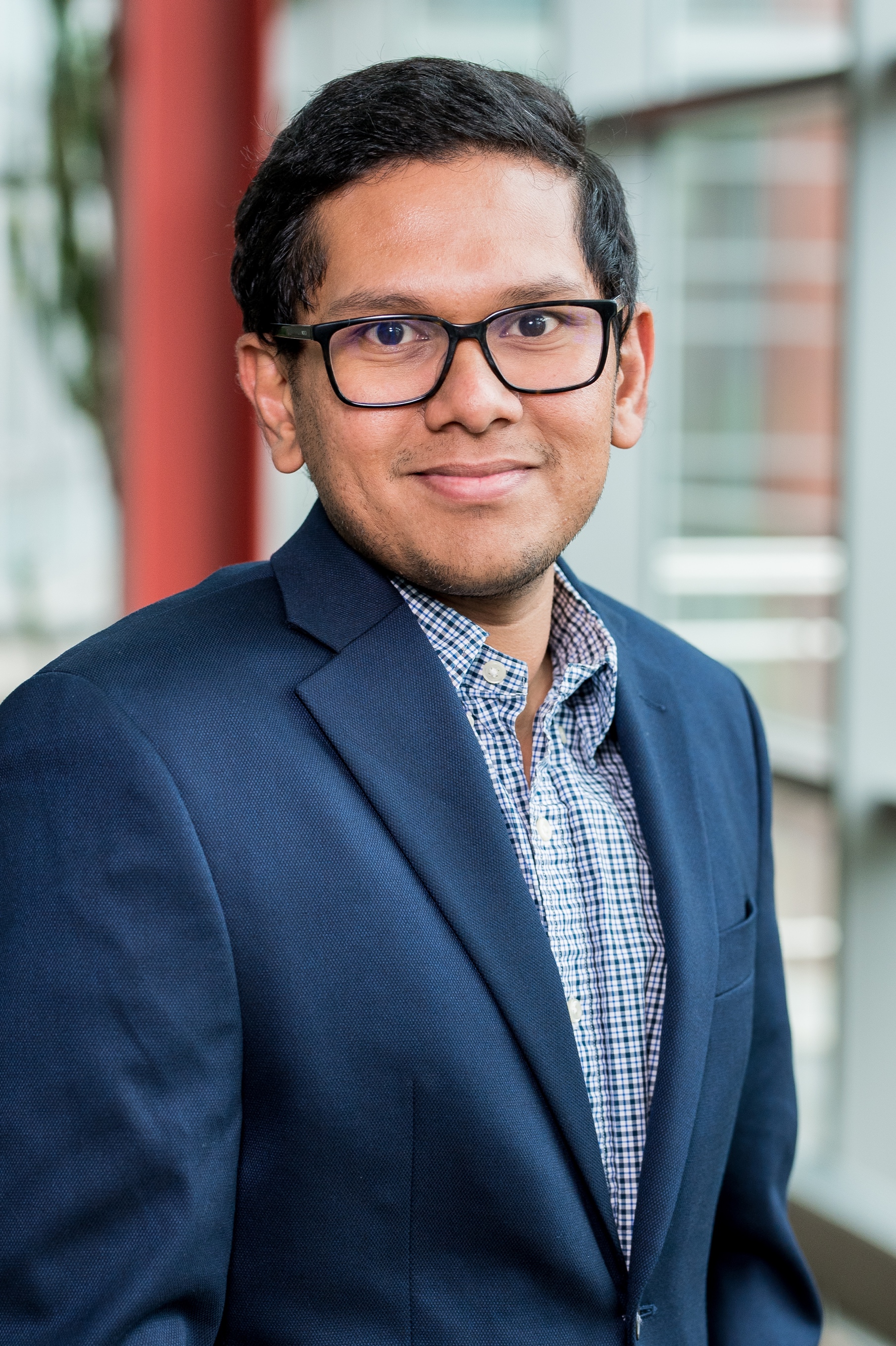
Marcel Böhme is a faculty member at the Max Planck Institute for Security and Privacy (MPI-SP) , leading the Software Security research group. His work focuses on foundational advancements in fuzzing , statistical program analysis, and scalable vulnerability discovery. Education: PhD from National University of Singapore (NUS) Research interests span: Statistical and causal frameworks for software testing Efficiency/Scalability of automated testing Fundamental limits of vulnerability detection Practical fuzzing technology (e.g., Entropic in LibFuzzer) Recent publications highlight trends in: Machine learning for security analysis Privacy-preserving statistical methods Future-proof security frameworks Protocol fuzzing with large language models Scientific accolades include: ERC Consolidator Grant (2024) NUS Outstanding Young Alumni Award (2022) ARC DECRA (2019) Multiple ACM Distinguished Paper Awards He serves as: Spokesperson for Research Group Leaders at Max Planck Society Guest Editor-in-Chief for ACM TOSEM PC Chair for ASE'25 and ISSTA'26
Dr. Carl Ho (Ngai Man) is a Full Professor and Canada Research Chair in Efficient Utilization of Electric Power at the University of Manitoba's Price Faculty of Engineering, Department of Electrical and Computer Engineering. Appointed Associate Head (Electrical Engineering) in July 2021, he leads the Renewable-energy Interface and Grid Automation (RIGA) Lab established with CFI funding in 2014. His educational background includes: PhD in Electronic Engineering (2007), City University of Hong Kong MEng in Electronic Engineering (2002), City University of Hong Kong BEng in Electronic Engineering (2002), City University of Hong Kong Dr. Ho's research focuses on power electronics applications for sustainable energy systems, with particular expertise in power conversion technologies for electric vehicles, renewable integration, and smart grid infrastructure. His work bridges industrial application and academic innovation, evidenced by over 40 IEEE journal publications, 80 conference papers, and 20+ patents. Current research emphasizes wide-bandgap semiconductor applications, power hardware-in-loop validation, and DC microgrid architectures for remote communities. Analysis of his recent publications reveals a strong trend toward practical implementation of power electronics solutions, with increasing focus on GaN/SiC devices, grid-forming converters, and modular architectures for microgrids. His work consistently addresses real-world challenges in efficiency, reliability, and cost-effectiveness across renewable integration, electric transportation, and power quality domains. Notable awards include: Second Place Winner for 2018 IEEE Transactions on Power Electronics Prize Paper Multiple IEEE JESTPE Star Associate Editor Awards (2022-2023) IEEE TPEL AE Excellence Award (2023) Best Student Team Regional Award in IEEE Empower a Billion Lives 2019 As an active mentor, Dr. Ho supervises numerous graduate students across multiple cohorts and leads significant research initiatives including NSERC Discovery Grants, MITACS collaborations with Power Integrations Inc., Research Manitoba Innovation Proof-of-Concept Grants, and Natural Resources Canada projects on zero-emission heavy vehicles. His RIGA Lab serves as a hub for industry-academic collaboration with Manitoba Hydro and transportation sector partners. The RIGA Lab, completed in 2016 and renovated in 2019, houses specialized equipment for power electronics prototyping, real-time simulation, and hardware-in-loop testing. Current projects include advanced wireless EV charging, GaN-based controller development, and DC microgrid solutions for remote communities, with recent recognition including a visit from Prime Minister Justin Trudeau in April 2023.
Alastair F. Donaldson is a Professor and Director of Research in the Department of Computing at Imperial College London, where he leads the FastPL research group. His academic career spans over a decade at Imperial, progressing from Lecturer (2011-2014) to Senior Lecturer (2014-2017), Reader (2017-2020), and Professor (2020-present). He has also held significant industry positions, including Founder and Director of GraphicsFuzz Ltd. (acquired by Google in 2018), Senior Software Engineer at Google (2018-2021), and Visiting Researcher at both Google and Microsoft Research Redmond. Donaldson earned his PhD from the University of Glasgow under Alice Miller, following a BSc (hons, First Class) in Computing Science and Mathematics. His postdoctoral work included an EPSRC Postdoctoral Research Fellowship at the University of Oxford and a Research Fellowship at Wolfson College Oxford. His research focuses on formal analysis, software testing and programming languages techniques for improving software reliability, with special emphasis on high-performance systems. Donaldson's work bridges theoretical foundations with practical applications, particularly in compiler testing, GPU programming verification, and metamorphic testing. His research has significantly influenced both academia and industry, as evidenced by the acquisition of his startup GraphicsFuzz by Google. Analysis of his recent publications reveals a strong focus on fuzz testing techniques applied across diverse domains including compilers, GPUs, cryptographic protocols, and large language models. His work consistently combines formal methods with practical testing approaches, addressing challenges in compiler correctness, memory models, and API verification across multiple platforms. 2017 BCS Roger Needham Award EPSRC Early Career Fellowship Best Paper Award, EuroSys 2024 Best Paper Award, MET 2021 Best Paper Award, IWOCL 2019 Best Paper Award, IISWC 2019 Best Paper Award, ICST 2016 ACM SIGSOFT Distinguished Paper Award, ISSTA 2023 ACM SIGSOFT Distinguished Paper Award, FSE 2017 ACM SIGPLAN Most Influential OOPSLA Paper Award, 2022 (for GPUVerify) As Director of Research in the Department of Computing, Donaldson oversees research strategy and development. His FastPL research group investigates novel techniques for programming, testing and reasoning about high performance systems. He has served on numerous program committees and held leadership roles including PLDI Steering Committee Chair (2022-2025) and PACM-PL Advisory Board member. His industry engagement includes testifying as an Expert Witness in the IBM UK Ltd v LzLabs GmbH & Ors case. The FastPL research group, which Donaldson leads, focuses on formal analysis, software testing and programming languages. The group has made significant contributions to compiler testing, GPU verification, and metamorphic testing techniques, with practical impact demonstrated by the acquisition of GraphicsFuzz. Current research directions include fuzzing for zero-knowledge proof circuits, randomized testing of decompilers, and systematic testing of large language models for code generation.
Giles Reger is a Senior Lecturer in the Formal Methods Group of the School of Computer Science at the University of Manchester. He completed his BA in Computer Science at the University of Cambridge in 2009, followed by an MSc in Advanced Computer Science at the University of Manchester in 2010 (awarded Highest Achiever of the Year), and earned his PhD from the University of Manchester in 2014 with a thesis titled "Automata based monitoring and mining of execution traces". His research spans several key areas within computer science: Automated Theorem Proving (first-order) Saturation-based techniques Reasoning with theories and quantifiers Finite Model finding Collaborative and Concurrent proof attempts Runtime Monitoring/Verification Temporal specification languages Specification Mining/Inference Dr. Reger leads multiple EPSRC-funded research projects including SCorCH (Secure Code for Capability Hardware), CAPS (Collaborative Architectures for Proof Search), and QuTie (reasoning with Quantifiers and Theories). His work on the Vampire theorem prover and MarQ monitoring tool demonstrates his bridge between theoretical computer science and practical applications. Recent publications show strong focus on runtime verification, theorem proving, and program analysis with applications to security and performance monitoring. Notable awards: Highest Achiever of the Year Award for MSc studies Dr. Reger collaborates extensively with institutions including the University of Oxford, Arm, Amazon Web Services, and CERN (CMS Experiment). As Manchester lead on the SCorCH project, he develops formal analysis tools for security-aware hardware chips. His work on the VyPR framework enables developers to analyze Python program performance through temporal specification languages and monitoring algorithms.
Roman Matuszewski is a retired Associate Professor at the University of Bialystok, affiliated with the Faculty of Philology's Department of Applied Linguistics. His research focuses on automated reasoning, formalized mathematics, and the Mizar Project, which he has been involved with since its inception in 1973. He holds a PhD in Computer Science from Shinshu University (2000) and has held academic positions at multiple institutions, including part-time roles at Bogdan Janski University. Education: PhD in Computer Science (2000), Master of Science in Mechanics (1975), Engineer (1973), all from Polish institutions. His work emphasizes formal proof systems, mathematical knowledge management, and education integration of automated reasoning tools. Research interests include automated deduction, formal proof verification, and the application of these methods to mathematics education. His contributions to the Mizar Mathematical Library and its 50-year history (celebrated in 2023) are foundational for interactive theorem proving. Key awards include the Silver Cross of Merit (2004) and multiple Rector’s prizes. He has organized major conferences like MKM2004 and served on program committees for events such as IJCAR and Tableaux. Grants include leadership roles in EU-funded projects like TYPES and CALCULEMUS. His work bridges computer science and mathematics through formalized systems, impacting both research and education.
Martijn Mes is a full professor of Transportation and Logistics Management and chair of the Industrial Engineering & Business Information Systems section at the University of Twente, Netherlands. He leads research and education initiatives that integrate AI, simulation and optimisation into logistics and supply-chain innovation. Education: Ph.D. in Operations Research, University of Twente – 2008 M.Sc. in Applied Mathematics, University of Twente – 2002 Post-doctoral researcher, Princeton University, Dept. of Operations Research & Financial Engineering Research focus: Mes develops quantitative models and AI techniques for strategic, tactical and operational logistics challenges. His work spans three application pillars: Emergency & humanitarian logistics – rapid relief distribution with trucks and UAVs Urban logistics – city distribution, self-organising systems and last-mile innovations Sustainable logistics – synchromodal transport, green ports and electric/autonomous fleets Methodologically he combines approximate dynamic programming, reinforcement learning, multi-agent simulation, discrete-event simulation and stochastic optimisation to create decision-support tools for industry and government. Publications trend: Recent articles (2025-2022) exhibit a strong emphasis on integrating reinforcement learning and stochastic optimisation into dynamic vehicle routing, drone-assisted delivery and post-disaster inventory allocation, signalling a shift towards data-driven, real-time logistic systems. Grants & projects: Mes has coordinated and participated in numerous national and European projects on sustainable logistics, urban distribution, port optimisation and healthcare logistics, frequently collaborating with industry partners and public bodies. Teaching & supervision: He coordinates and lectures in the BSc and MSc programmes Industrial Engineering & Management, offering courses on simulation, queueing theory, dynamic programming, Markov chains, transportation management and technology management. He has authored a widely used Plant Simulation tutorial and supervises PhD candidates working on AI-driven logistics, autonomous vehicles and digital twins.
Mohamad Awada is an Assistant Professor in the Department of Civil and Urban Engineering at New York University (NYU Tandon School of Engineering) . His research focuses on integrating sensing systems , immersive technologies , and artificial intelligence to enhance human livability in built environments. Education Ph.D. in Civil Engineering, University of Southern California (USC), 2024 M.Sc. in Computer Science, University of Southern California (USC), 2021 M.Sc. in Civil Engineering (Construction Engineering and Management), American University of Beirut, 2018 B.S. in Civil and Environmental Engineering, American University of Beirut, 2016 His work spans machine learning , data science , and human-building interaction , with applications in sustainable infrastructure and smart cities . Recent research trends emphasize occupant health , stress detection , and AI-driven environmental optimization in office and residential settings. Scientific Awards : University of Southern California PhD Achievement Award – 2024 Sonny Astani CEE Outstanding Department Service Award - 2023 Sonny Astani CEE Outstanding Research Assistant Award - 2022 Awada leads the Smart Innovations in Built Environment Research (SiBER) Lab , where he explores automation, control systems, and AI applications to create healthier, energy-efficient infrastructure. He actively seeks Ph.D. candidates with coding and ML/data science experience for Fall 2025.
Kevin W. Hamlen is the Louis A. Beecherl, Jr. Distinguished Professor in the Department of Computer Science at the University of Texas at Dallas. He serves as Executive Director of UT Dallas' Cyber Security Research and Education Institute. His research focuses on language-based security , binary software hardening , cyberdeception , and formal program verification . He has received multiple grants from agencies like AFOSR, NSF, DARPA, and industry partners including Lockheed Martin and Intel. PhD and MS from Cornell University BS from Carnegie Mellon University His research explores automated approaches to software security through techniques like binary disassembly , control-flow integrity , and honey-patching . He has pioneered methods for malware defense and cloud/web/mobile security . Recent work examines adaptive cyberdeception and GPU-based security frameworks . His publications span binary code manipulation , malware mitigation , and blockchain security . Key awards include the NSF IUCRC Technology Breakthrough Award and two CSAW Best Paper 2nd Prizes . He advises numerous PhD students, many of whom now work at Google, IBM, and Microsoft. His book Autonomous Cyber Deception (Springer, 2019) with Ehab Al-Shaer and Cliff Wang provides comprehensive coverage of adaptive cyberdeception strategies.
Glyn V. Morrill is a full Professor in the Department of Computer Science at the Universitat Politècnica de Catalunya. His academic career includes habilitation as a catedrático (full professor) by ANECA and receipt of the ICREA Acadèmia 2012 award. He specializes in the intersection of computational linguistics, formal logic, and digital humanities, focusing on type logical grammar and the displacement calculus. Education: BA (Cambridge), MSc and PhD (University of Edinburgh). Research emphasizes computational environments for analyzing language syntax and semantics using logical frameworks. Notable contributions include the CatLog3 parser/theorem-prover and foundational work on Lambek calculus extensions. He has supervised PhD students such as Inés Corbalán, Carles Cardó, and Oriol Valentín. Recent research trends involve parsing algorithms for discontinuous grammatical structures, formal semantics integration, and computational coverage of logical grammars. His work bridges theoretical linguistics with practical computational tools, advancing automated analysis of language phenomena. Awards: ICREA Acadèmia 2012 (highlighted in Scientific Awards section). Active in academic leadership, including organizing Formal Grammar conferences and co-editing volumes in computational linguistics.
Dilian Gurov is a Professor in Computer Science at KTH Royal Institute of Technology, associated with the Digital Futures Faculty and the Division of Theoretical Computer Science. He also coordinates the Doctoral Programme in Computer Science at the CSC school. Before joining KTH in 2002, he earned a Ph.D. from the University of Victoria, Canada (1998), and worked at the Swedish Institute of Computer Science (1997-2002). His research focuses on software specification and verification, including contracts, program models, logics, and tools, as well as multi-agent strategic planning involving knowledge-based strategies in imperfect information settings. Key contributions include the CAV Distinguished Paper Award 2023 for 'Automatic Program Instrumentation for Automatic Verification' and an EASST award for 'Checking Absence of Illicit Applet Interactions: A Case Study' (2004). He leads projects funded by VR (SEFROS, ContraST) and Vinnova (AVerT2) and collaborates with industries like Scania on formal verification of C programs. His service roles span over 30 conference committees and organization roles, including PC memberships for iFM, TAP, and ISoLA. Teaching responsibilities include courses such as 'Formal Methods,' 'Program Semantics and Analysis,' and 'Knowledge in Games with Imperfect Information.' His work emphasizes practical applications of formal methods, bridging academic research with industry needs through collaborations and tool development (e.g., CVPP, ProMoVer, TriCo).
Jens Palsberg is a Professor and former Department Chair of Computer Science at the University of California, Los Angeles (UCLA), where he currently serves as Director of the UCLA-Amazon Science Hub for Humanity and Artificial Intelligence and co-director of UCLA's quantum research center. He chairs ACM SIGPLAN and is a member of the ACM Council. His research spans programming languages, software engineering, quantum computing, compilers, embedded systems, and information security. Palsberg has authored over 80 technical papers, co-authored the book Object-Oriented Type Systems , and revised Appel's textbook on Modern Compiler Implementation in Java . His recent work shows a significant shift toward quantum computing, including compiler techniques and program analysis for quantum systems. Analysis of his recent publications reveals a clear transition from traditional programming language research to quantum computing, with nearly half of his 2022-2024 publications focusing on quantum topics while maintaining strong work in software engineering and programming languages. His quantum research particularly emphasizes compiler optimization, abstract interpretation, and circuit analysis. ACM SIGPLAN Distinguished Service Award (2012) UCLA teaching award for quantum computing courses (2023) National Science Foundation CAREER and ITR awards Purdue University Faculty Scholar award IBM Faculty Award Okawa Foundation research award Palsberg has served in numerous leadership roles including general chair of POPL, conference chair of LICS, and vice chair of ACM SIGBED. His research has been supported by DARPA, Intel, British Telecom, and the National Science Foundation. He was instrumental in establishing UCLA's Masters degree in quantum science and has mentored numerous students through his legendary proof sessions. He leads a research group of over 30 professors in UCLA's quantum research center and maintains active collaborations across academia and industry, particularly with Amazon through the UCLA-Amazon Science Hub.
Charith Mendis is an Assistant Professor in the Siebel School of Computing and Data Science at the University of Illinois at Urbana-Champaign, with joint appointments in the Department of Computer Science, Electrical and Computer Engineering, and the Coordinated Science Lab. His research focuses on the intersection of compilers, program optimization, and machine learning systems. Dr. Mendis received his educational background from prestigious institutions: Ph.D. in Computer Science from Massachusetts Institute of Technology (2020) S.M. in Computer Science from Massachusetts Institute of Technology (2015) B.Sc. in Electronics and Telecommunication Engineering from University of Moratuwa (2013) His primary research interests center around compiler technology and machine learning systems. Mendis leads the ADAPT lab at UIUC, where his team works on creating high-performance ML optimization techniques and automated compiler construction using machine learning and formal methods. His work bridges the gap between traditional compiler design and modern machine learning approaches, with applications in tensor compilers, graph neural networks, and sparse computation. He has developed novel frameworks for optimizing deep learning workloads, verification of compiler transformations, and performance modeling for emerging hardware architectures. Mendis has established himself as a leading researcher in compiler optimization for machine learning systems, with a particular focus on tensor compilers, graph neural networks, and performance modeling. His recent publications demonstrate increasing sophistication in combining formal methods with machine learning techniques to solve challenging problems in compiler optimization and verification, with multiple papers accepted at top-tier conferences including OOPSLA, PLDI, POPL, and SIGMOD. His notable scientific achievements include: Google ML and Systems Junior Faculty Award (2025) DARPA Young Faculty Award (2024) NSF CAREER Award (2024) Distinguished Paper Award at POPL (2025) William A. Martin Thesis Award for Outstanding SM thesis, MIT (2015) Multiple teaching excellence awards at UIUC (2021-2023) Dr. Mendis actively mentors students through the ADAPT lab, offering research opportunities for undergraduates, master's students, and PhD candidates interested in compiler technology and machine learning systems. His research is supported by significant funding from the ACE center (part of JUMP 2.0), National Science Foundation (NSF), DARPA, IIDAI, and industry partners including Google, Intel, Amazon, and Qualcomm. He teaches advanced courses in compiler construction and machine learning for compilers. He leads the ADAPT lab at UIUC, which focuses on developing advanced compiler technologies for modern machine learning workloads. The lab maintains active collaborations with industry partners and has established itself as a leading research group in compiler optimization for AI systems. Current projects include tensor compilers, graph neural network optimization, and automated verification of deep learning systems.
Li Wei is a distinguished academic affiliated with Tsinghua University, with a focus on interdisciplinary research spanning artificial intelligence, machine learning, and computer vision. His work often intersects with medical informatics, remote sensing, and signal processing, demonstrating a commitment to advancing technological solutions in healthcare, environmental monitoring, and engineering systems. Research interests include deep learning applications in clinical diagnostics, satellite data analysis for climate modeling, and optimization of energy storage systems. He has contributed to innovative solutions in areas such as UAV-enabled edge computing, privacy-preserving blockchain protocols, and thermal-based surveillance systems. His collaborative projects often involve multidisciplinary teams across institutions. Publications reflect a strong emphasis on practical applications, such as mobile health tools for tumor recognition, transformer-based super-resolution techniques for oceanography, and AI-driven risk classification models for respiratory diseases. While no specific awards or grants are listed, his prolific output across top-tier journals indicates sustained research impact. Professional activities include contributions to conferences like RecSys, MICCAI, and AAAI, and editorial roles are implied through his extensive publication record. Collaborations with industry partners (e.g., in energy systems and medical imaging) suggest engagement with real-world problem-solving.
Daniel Frumin is an Assistant Professor in the Department of Fundamental Computing Science at the University of Groningen, affiliated with the Bernoulli Institute. His research focuses on Logic, Type Theory, and Program Verification, with a particular emphasis on formal methods for concurrency, type systems, and homotopy type theory. He has contributed to foundational work in denotational semantics, modular programming language design, and mechanized verification of concurrent systems. His expertise includes the application of logical frameworks to concurrency models, such as ReLoC (Relational Logic for Concurrent Programming) and the integration of type theories with operational semantics. Recent work explores guarded interaction trees, interval domains in homotopy type theory, and compositional security properties for fine-grained systems. Frumin has published extensively in top-tier venues like ESOP, CONCUR, and ACM POPL, with peer-reviewed contributions on topics ranging from bunched implications in session-based concurrency to formal verification of data structures like concurrent queues. His research often bridges theoretical computer science and practical formal verification, leveraging tools like Coq for mechanized proofs. Collaborations include projects with institutions such as Aarhus University (Denmark) and the University of Bologna, focusing on univalent foundations, categorical semantics, and security verification. His work is supported by grants from the Dutch Research Council (NWO) and industry partnerships like Meta's Folly Library verification efforts. Labs/Teams: Active contributor to the Bernoulli Institute's Formal Methods Group and the Univalent Foundations initiative. His research group specializes in applying type-theoretic and categorical methods to concurrency and verification challenges.
Zeyu Ding is an Assistant Professor in the School of Computing at Binghamton University, with a courtesy appointment in the Department of Mathematics and Statistics. He holds two PhDs: one in Computer Science from Penn State University and another in Mathematics from Binghamton University, along with a BS in Mathematics from Zhejiang University. Research Interests His work focuses on the intersection of privacy, security, machine learning, and algorithmic fairness. He investigates how to protect sensitive personal information through differential privacy mechanisms, formal verification, numerical optimization, and privacy-preserving statistical inference. Article Trends Ding's publications highlight advancements in differential privacy, including the Report Noisy Max with Gap Mechanism and the Permute-and-Flip approach. His research also addresses security challenges like reconstruction attacks and automated verification tools (e.g., Checkdp and DPGen), alongside mathematical explorations of automorphism group schemes and Barsotti-Tate groups. Scientific Awards CCS Outstanding Paper Award, 2018 Caper Bowden PET Award Runner-up, 2019 CCS Best Paper Award Runner-up, 2020 CCS Best Paper Award Runner-up, 2021 Research Award from Penn State University, 2019 Teaching Award from Penn State University, 2021 His research is supported by the NSF grant 2317233, underscoring his contributions to privacy-preserving computational methods.