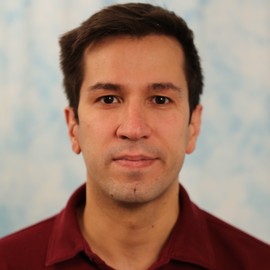
Zhe Hou is a Senior Lecturer at the School of Information and Communication Technology , Griffith University, Australia. His academic journey includes a PhD in automated reasoning for separation logic from the Australian National University (2015) and prior research roles at Nanyang Technological University, Singapore (2015-2017). He joined Griffith University in 2017 and became permanent faculty in late 2019. Research Interests : Formal methods for software verification Automated reasoning with logical frameworks Blockchain technology and security Quantum computing verification Integration of LLMs with rigorous reasoning Sports analytics via model checking Recent Publications demonstrate expertise in neural-symbolic reasoning, blockchain security, quantum SAT solvers, and runtime verification frameworks. His work combines formal logic with machine learning for applications in cybersecurity and AI trustworthiness. Scientific Awards : ACM SIGSOFT Distinguished Paper Award (2025) Supervision Roles : Principal/Associate Supervisor for 6+ doctoral projects in blockchain security, AI verification, and network security. Professional Activities : Editor for Springer-Nature and Formal Aspects of Computing special issues, conference chair for ICFEM, ICECCS, and ISACE symposia.
Hans Tompits is an Associate Professor in the Department of Knowledge-Based Systems at Technische Universität Wien (Vienna University of Technology). His research focuses on computational logic, declarative logic programming, and formal methods, with a particular emphasis on Answer-Set Programming (ASP). He coordinates the Master's program in Logic and Computation and leads projects in areas such as formal methods for optimization, fault-tolerant autonomous systems, and algorithmic composition. His work bridges theoretical advancements with practical applications, including tools like SeaLion (an ASP IDE with debugging support) and dlvhex (an ASP-based semantic web reasoner). He has contributed to foundational topics like program equivalence, debugging techniques, and integration of ASP with external systems. His recent projects address challenges in autonomous vehicle architectures, music composition algorithms, and safety-critical system design. Tompits has published extensively on topics ranging from nonmonotonic reasoning and modal logics to the development of declarative programming tools. His interdisciplinary approach spans computer science, mathematics, and AI, with applications in both academic and industrial contexts.
Roopsha Samanta serves as an Assistant Professor in the Department of Computer Science at Purdue University, where she leads the Purdue Formal Methods (PurForM) research group and participates in the Purdue Programming Languages (PurPL) initiative. Her academic foundation includes a PhD from the University of Texas, Austin (2013) and postdoctoral research at the Institute of Science and Technology Austria prior to joining Purdue in 2016. Education: PhD in Computer Science, University of Texas, Austin (2013) Postdoctoral Researcher, Institute of Science and Technology Austria Professor Samanta's research centers on bridging formal methods with programming languages to enhance software reliability, with core expertise in program verification, program synthesis, and concurrency. Her work uniquely targets both professional developers and non-programmers, developing techniques to ensure programs align with user intent through automated reasoning and synthesis. Recent efforts focus on distributed systems verification where traditional methods face scalability challenges. Analysis of her 2020-2024 publications reveals a dominant trajectory in distributed agreement systems, particularly advancing parameterized verification for unbounded process networks. Key innovations include bounded verification techniques for doubly-unbounded systems, explainable synthesis through specification localization, and secure multi-party computation frameworks like HACCLE. Her work consistently integrates theoretical formal methods with practical system implementation. Scientific Awards: NSF CAREER Award (2019) for “Robustness of Inductive Reasoning Engines” Amazon Research Award (2021) supporting secure computation research Her research is primarily funded through competitive grants including the NSF CAREER award and Amazon Research Award, enabling exploration of verification robustness and secure multi-party computation. While specific advising details aren't publicly documented, her leadership of the PurForM group indicates active mentorship of graduate researchers in formal methods. Current projects suggest expanding applications to privacy-preserving technologies and explainable AI-assisted programming. The PurForM research group, under her direction, develops foundational tools for program verification and synthesis with emphasis on distributed and concurrent systems. Collaborations within PurPL and industry partners like Amazon drive translational research from theoretical models to practical verification frameworks applicable to real-world distributed infrastructure.
Todd Millstein is a Professor in the Computer Science Department at the University of California, Los Angeles (UCLA). He served as the Computer Science Department Chair from 2022-2025 and is also an Amazon Scholar. His research focuses on making software systems more reliable through programming languages techniques, with significant contributions to network verification and probabilistic programming. Millstein received his Ph.D. from the University of Washington Department of Computer Science, where he was a member of the Cecil group led by Craig Chambers. Prior to that, he completed his undergraduate studies at Brown University under the guidance of Paris Kanellakis and Pascal Van Hentenryck. Millstein's research spans several areas of programming languages and systems with a focus on reliability. He has made significant contributions to network verification, developing the Batfish network configuration analyzer which is now managed by Amazon Web Services and forms the basis of Oracle Cloud's Network Path Analyzer. His work has been recognized with the ACM SIGCOMM Networking Systems Award in 2025. He also works on interactive program verification through lemma synthesis and scalable reasoning methods for probabilistic programming languages. His research bridges programming languages theory with practical systems challenges, as highlighted in his SPLASH/OOPSLA 2024 keynote "Everything is a Program (even if it's not)". Millstein's recent publications demonstrate a consistent focus on verification and reliability across multiple domains. His work shows a progression from foundational programming language techniques to practical applications in networking and probabilistic systems. Key themes include data-driven approaches to program analysis, synthesis of verification artifacts, and applying programming languages techniques to non-traditional domains like network configuration. Millstein's scientific achievements have been recognized with numerous prestigious awards including an NSF CAREER Award, an ACM SIGPLAN Most Influential PLDI Paper Award, an ACM SIGCOMM Networking Systems Award, IEEE Micro Top Picks selection, best-paper awards from PLDI, OOPSLA, and SIGCOMM, a Microsoft Research Outstanding Collaborator Award, an Okawa Foundation Research Grant, an IBM Faculty Award, and a Facebook Research Award. He has also received both the Northrop Grumman Excellence in Teaching Award (for junior faculty) and the Eon Instrumentation Inc. Excellence in Teaching Award (for senior faculty) from UCLA Engineering. Millstein advises several Ph.D. students including Ana Brendel, Poorva Garg (co-advised with Guy Van den Broeck), Rajdeep Mondal (co-advised with George Varghese), and Rathin Singha (co-advised with George Varghese). His research has been supported by various grants including an NSF CAREER Award, Okawa Foundation Research Grant, IBM Faculty Award, and Facebook Research Award. He has also been a Co-Founder and Chief Scientist of Intentionet, which was later acquired by Amazon Web Services. Millstein is actively involved in the Batfish project, an open-source network configuration analyzer that has had significant practical impact. Batfish is now managed by AWS, powers Oracle Cloud's Network Path Analyzer, and is used by dozens of companies. His research group continues to work on network reliability, developing techniques for scalable BGP policy verification and behavioral testing of protocol implementations.
Tej Chajed is an Assistant Professor in the Department of Computer Science at the University of Wisconsin-Madison, where he conducts research in formal verification of systems software. His work focuses on building and proving the correctness of critical systems, particularly file systems and concurrent software. Dr. Chajed earned his PhD from MIT in the PDOS group, followed by a one-year postdoc at VMware Research before joining UW-Madison. His academic journey reflects a strong commitment to bridging theoretical formal methods with practical systems implementation. Chajed's research centers on formal verification techniques for systems software, with particular emphasis on concurrent and crash-safe systems . His work aims to eliminate bugs in critical software through mathematical proofs of correctness. Key contributions include DaisyNFS (a verified concurrent file system), the Perennial framework for reasoning about crash safety, and Goose for connecting proofs to Go code. His research spans the intersection of programming languages, operating systems, and formal methods, developing practical tools that bring verification to real-world systems. His recent publications demonstrate a consistent trajectory toward more practical and scalable verification techniques for increasingly complex systems. The research shows progression from foundational verification frameworks to applied work on specific systems like file systems, journaling, and distributed protocols. A notable trend is the focus on making verification more accessible and practical for systems developers, bridging the gap between theoretical formal methods and real-world software engineering. Dr. Chajed serves on numerous program committees including OSDI 2025 PC, PLDI 2024 PC, SySDW 2023 PC, ECOOP 2023 ERC, CPP 2023 PC, POPL 2023 PC, PLDI 2022 PC, POPL 2022 AEC, EuroDW 2021 PC, POPL 2021 AEC, PLDI 2020 AEC, POPL 2020 AEC, and SOSP 2019 AEC, reflecting his standing in the systems and programming languages research community. In teaching, Chajed has developed and instructed courses on systems verification, operating systems, and protocol verification. He previously helped create MIT's 6.826 (Principles of Computer Systems) during his PhD. His passion for technical communication was cultivated during his time as a Communication Fellow in the EECS Communication Lab at MIT, where he continues to offer guidance to students on writing and presentation skills. His research group at UW-Madison focuses on advancing the state of the art in systems verification, with current projects centered around practical verification frameworks for concurrent and crash-safe systems.
Md. Zoheb Hassan serves as an Assistant Professor in the Department of Electrical Engineering and Computer Engineering at Laval University, where he leads cutting-edge research in wireless communications and spectrum management. His academic role includes graduate recruitment and active participation in the university's research ecosystem, particularly through the Establishment of the Next Generation of Professors program funded by FRQNT. Dr. Hassan's research centers on spectrum sharing and management, wireless communication systems, and communications network control systems. He pioneers the integration of digital twin technology and machine learning to solve critical challenges in next-generation networks, including interference management in 5G/6G aerial corridors, Internet of Vehicles, and satellite-terrestrial integration. His work emphasizes practical implementations such as proof-of-concept demonstrations for tactical networks and proactive resource allocation in dynamic environments. Analysis of his 2024-2025 publications reveals a dominant trend toward AI-driven wireless resource optimization, with 12 of 15 recent papers featuring digital twins for interference management, spectrum sharing, and energy efficiency. Key thematic clusters include vehicular communications (4 papers), underwater IoT networks (2 papers), and hardware-impairment resilient designs (3 papers), demonstrating his focus on bridging theoretical advances with real-world deployment challenges across diverse network topologies. Dr. Hassan has secured significant competitive funding for his research initiatives: Digital Twin-Enhanced Interference Management for Next-Generation Radio Access Networks in the FR3 Band (FRQNT, 2025-2027) Center for Radio Frequency and Communications Systems, Technologies and Applications (FRQNT, 2024-2030) Context-Aware Spectrum Sharing and Management for Next Generation Wireless Networks (NSERC, 2024-2029) Development of innovative technologies for modeling predictive systems in urban mobility (MITACS, 2022-2026) Springboard to Discovery supplement for Context-Aware Spectrum Sharing (NSERC, 2024-2025) He actively mentors doctoral candidates, currently supervising Mahima Karim (PhD in Electrical Engineering, expected 2025) and Mohammadamin Parhizgar (PhD in Electrical Engineering, expected 2024). His supervisory approach combines theoretical rigor with practical problem-solving, focusing on spectrum management algorithms and digital twin implementations for next-generation networks. While specific laboratory affiliations aren't detailed in the source material, his projects indicate strong alignment with Laval University's wireless research infrastructure and the Center for Radio Frequency and Communications Systems.
Zachary Tatlock is an Associate Professor at the Paul G. Allen School of Computer Science & Engineering at the University of Washington, where he leads the Programming Languages & Software Engineering Group (PLSE) and the SAMPL Group. His research spans programming languages, formal verification, compilers, and computational fabrication. He is also an Amazon Scholar with AWS's Automated Reasoning Group and previously advised OctoML. Tatlock's work bridges theoretical foundations with practical systems, focusing on making it easier to write tricky code while ensuring correctness through rigorous proofs and measurements. PhD in Computer Science & Engineering, University of California, San Diego (2014) Thesis: Reducing the Costs of Proof Assistant Based Formal Verification Advisor: Sorin Lerner BS in Computer Science (Honors) and Mathematics, Purdue University (2007) Professor Tatlock's research focuses on the intersection of programming languages, formal methods, and systems. His work in compilers and formal verification aims to make it easier to write tricky code while ensuring correctness through rigorous proofs. He explores computational fabrication techniques that bridge digital design with physical manufacturing. His recent work on equality saturation (via the egg framework) has transformed program optimization and synthesis. Tatlock also investigates floating-point numerics, distributed systems verification, and hardware/software co-design, always seeking to balance theoretical rigor with practical implementation. Tatlock's recent publications demonstrate a strong focus on equality saturation techniques (egg framework), computational fabrication, and verified systems. His work increasingly integrates machine learning with program analysis and synthesis. There's a clear trajectory toward more practical applications of formal methods in real-world systems, particularly in numerical computing and fabrication. His research group has made significant contributions to e-graph technology, floating-point accuracy, and the verification of distributed systems. Distinguished Paper Award for Rewrite Rule Inference Using Equality Saturation (OOPSLA 2021) Spotlight Paper Award for Dynamic Tensor Rematerialization (ICLR 2021) Distinguished Paper Award for egg: Fast and Extensible Equality Saturation (POPL 2021) Faculty Appreciation for Career Education & Training (FACET) Award (2020) NSF CAREER Award: Verifying Distributed System Implementations (2017) Distinguished Paper Award for Automatically Improving Accuracy for Floating Point Expressions (PLDI 2015) Distinguished Teaching Award Nomination (2015) Professor Tatlock has advised numerous doctoral, master's, and undergraduate students who have gone on to prominent positions in academia and industry, including faculty positions at the University of Utah and Brown University, and leadership roles at companies like OctoML and Certora. His research is supported by significant funding from NSF, DARPA, DOE, and industry partners, totaling millions of dollars. Current grants include projects on computer-aided reasoning, formal verification, computational fabrication, and machine learning systems. He has served on numerous program committees and organized workshops including FPTalks, EGRAPHS, and PNW PLSE. As co-leader of the Programming Languages & Software Engineering (PLSE) research group and affiliate of the SAMPL Group at the University of Washington, Tatlock has developed influential tools including egg (an equality saturation toolkit), Carpentry Compiler, and Odyssey. His group actively collaborates with industry partners including Amazon Web Services, where he serves as an Amazon Scholar. The group has made significant contributions to equality saturation, floating-point accuracy, program synthesis, and computational fabrication, with applications ranging from compiler optimization to 3D printing.
Wei Ding is a Professor in the Department of Computer Science at the University of Massachusetts Boston (UMass Boston). She earned her Ph.D. in Computer Science from the University of Houston in 2008. From 2019 to 2023, she served as a Program Director at the National Science Foundation's Division of Information and Intelligent Systems (IIS), overseeing programs in Information Integration, Smart Health, Deep Learning Foundations, and Scalable Systems. Her research integrates knowledge discovery, data mining, and machine learning with applications spanning health sciences, astronomy, geosciences, and environmental sciences. She employs advanced techniques like spatio-temporal modeling, deep neural networks, and semantic analysis to address complex real-world problems such as disease subtyping, physical activity prediction, and environmental forecasting. Her work emphasizes interdisciplinary collaboration and societal impact. Analysis of her recent publications reveals a focus on AI-driven healthcare solutions (e.g., neuroimaging biomarkers, disorder diagnosis), fundamental ML advancements (e.g., generalization, GAN stability), and cross-domain applications (e.g., climate forecasting, animal behavior analysis). Recurring themes include low-data learning, interpretability, and scalable algorithms. Awards & Honors: IEEE Fellow (2023) NSF Director's Award (2022) WISAY Distinguished Woman in Science Award, Yale University (2019) AI for Earth Award (2018) Best Paper Awards (ICTAI 2011, ICCI 2010) Advising & Grants: She mentors PhD and Master’s students in the Knowledge Discovery Lab (KDLab), with alumni at institutions like Facebook, Google, and McKinsey. Her research is funded by NSF, NIH, NASA, and DOE, including: NIH R01: Predicting youth physical activity (2016) NSF EAGER: Machine learning for cancer subtyping (2017) NIH R01: Accelerometer/gyroscope data for activity estimation (2022) Leadership: She directs the KDLab and co-founded the Women in Sciences Club (WINS). She serves as Associate Editor for ACM TKDD, TIST, and KAIS journals.
Professor Tobias Nipkow is a leading researcher in formal methods and interactive theorem proving at the Technical University of Munich (TUM), affiliated with the School of Computation, Information and Technology and the Department of Computer Science. He is a core developer of the Isabelle proof assistant and leads the Theorem Proving Group. His work has profoundly influenced program verification, semantics, and formalized mathematics. University: Technical University of Munich School: School of Computation, Information and Technology Department: Department of Computer Science Research Group: Theorem Proving Group Key Projects: Isabelle, Archive of Formal Proofs, Concrete Semantics His research focuses on formal verification, higher-order logic, semantics of programming languages, and verified algorithms. He has pioneered the formalization of textbook algorithms, data structures like B+-trees and quadtrees, and logical systems. His work bridges theoretical foundations with practical tools for software correctness. The most recent publications show a strong trend in verifying classical algorithms (e.g., Gale-Shapley, Earley parser), data structures (B+-trees, deques), and decision procedures, primarily using Isabelle/HOL. His contributions span foundational logic, program analysis, and educational approaches to formal methods. Best Paper Award at CADE 28 (2021) Tobias Nipkow has made extensive contributions to advising and collaborative research, co-authoring with numerous researchers and students. He has secured support for large-scale formalization efforts and contributed to major projects like the Flyspeck proof of the Kepler conjecture. His work is supported by ongoing development of the Isabelle framework and the Archive of Formal Proofs. He leads the Theorem Proving Group at TUM, which is central to the development and application of Isabelle. The group fosters international collaboration, contributes to the Archive of Formal Proofs, and advances research in automated reasoning, semantics, and verified systems.
Elaine Shi is a Professor at Carnegie Mellon University's Computer Science Department and Electrical and Computer Engineering Department, with an Adjunct Professor appointment at the University of Maryland. Her research spans cryptography, security, blockchain technology, algorithms, and privacy-enhancing techniques. Co-founder of Oblivious Labs, Inc. Co-developer of cryptographic protocols adopted by Signal, Meta, and Google Co-founder of CyLab's crypto seminar series Her work has been recognized with prestigious awards including the Packard Fellowship, Sloan Research Fellowship, ACM Fellow, and IACR Fellow. She has advised numerous PhD students and postdocs, many of whom now hold academic or industry positions. 2023 ACM CCS Test of Time Award 2020 CyLab Distinguished Alumni Award 2016 ONR YIP Award Recent publications focus on advancing cryptographic protocols, privacy-preserving algorithms, and blockchain security, with key contributions in garbled RAM, oblivious computation, and differentially private mechanisms.
Eduard Kamburjan is a Researcher at the University of Oslo , affiliated with the Reliable Systems (PSY) and Data and Knowledge Systems (DKM) research groups. His work bridges formal methods , digital twin engineering , and knowledge graph applications . Research interests include: Formal verification of hybrid systems using deductive methods Digital twin architecture with compositional correctness guarantees Semantic lifting and ontology-driven modeling for complex systems Concurrency analysis and non-determinism in program verification Interactive visualization as serious games for formal methods His 2024-2023 publications demonstrate expertise in digital twin reconfiguration , semantic interoperability , and knowledge-based runtime enforcement . Key contributions include Crowbar for active object verification and ABS simulator toolchain for model-driven engineering. Collaborations span institutions like Springer , ACM , and IEEE , with work featured in Lecture Notes in Computer Science (LNCS) , Software and Systems Modeling (SoSyM) , and Science of Computer Programming . His research integrates RDF data management , behavioral contracts , and modular analysis for distributed systems.
Jieh Hsiang is a Distinguished Professor at National Taiwan University , with affiliations in the Department of Computer Science and Information Engineering, the Digital Archives and Automatic Inference Laboratory, and the Digital Humanities Research Center. He holds concurrent roles at the Institute of Information Science, Academia Sinica, and the Higher Education Research & Development Office, National Taiwan University. Education PhD in Computer Science, University of Illinois at Urbana-Champaign (1979–1982) BS in Mathematics, National Taiwan University (1972–1976) Research Interests Hsiang's work spans automated reasoning , digital libraries , digital humanities , and information retrieval . His research focuses on integrating computational methods with cultural heritage preservation , particularly through tools like DocuSky and databases such as the Taiwan Historical Digital Library . He explores AI applications in patent analysis , historical text mining , and semantic relationships in legal documents . Recent Trends in Publications His recent articles highlight advancements in BERT and GPT-2 fine-tuning for patent classification , LARGE language models for legal automation , and GIS-based analysis of historical archives . Themes include digital preservation , AI-driven legal text analysis , and cross-disciplinary computational tools for humanities scholars. Scientific Awards 2019 Ministry of Science and Technology Distinguished Research Fellow 2009 National Taiwan University Outstanding In-House Service Award 2008 Chinese Library Association Special Contribution Award 2006 IEEE Test-of-Time Award 1997 & 1999 National Science Council Outstanding Research Award 1997 Ministry of Education Outstanding Industrial-Academic Collaboration Award 1998–2001 Founder and First Chair of IFIP WG1.6 Labs and Collaborations Hsiang leads the Digital Archive and Automatic Inference Laboratory , developing platforms like DocuSky for digital humanities, Taiwan Historical Digital Library , and QGIS Cloud Maps for spatial analysis. His team collaborates internationally on projects involving historical document digitization , patent automation , and cross-domain knowledge integration .
Jaco van de Pol is a Full Professor of Computer Science at Aarhus University, holding dual roles in the Digital Society Institute and Formal Methods and Tools. He earned his PhD from Utrecht University in 1996, specializing in Termination of Higher-order Rewrite Systems, and a Master's in Computer Science (Term Rewriting) in 1992. His research focuses on model checking, formal methods, algorithms, and automated verification, contributing to UN Sustainable Development Goals related to innovation and education. Education: PhD, Termination of Higher-order Rewrite Systems, Utrecht University (1996) Master's in Computer Science (Term Rewriting), Utrecht University (1992) Research Interests: His work spans model checking, formal verification, parallel algorithms, and their applications in software engineering and bioengineering. He emphasizes practical formal methods, such as SCC algorithms and timed automata analysis, to solve complex computational challenges. Awards: Best Paper Award SPIN 2017 (2017) Best Student Paper Award (2018) Advising & Grants: Supervised 12 students and contributed to collaborative projects in formal methods and computational biology. His research has been applied to areas like cartilage phenotype modeling and parallel algorithm design. Labs/Teams: Engages with interdisciplinary teams, including computational biology and distributed systems groups, to advance formal methods in practical contexts.
Ruben Martins is an Assistant Professor at Carnegie Mellon University's School of Computer Science and serves as the program director of the Master of Science in Computer Science (MSCS) . His research focuses on the intersection of constraint programming, program synthesis, analysis, and verification, with recent work aiming to make formal methods tools more accessible through automated reasoning. Ruben earned his Ph.D. with honors from the Technical University of Lisbon, Portugal (2013) , followed by postdoctoral research at the University of Oxford (2014-2015) and UT Austin (2015-2017) . Research Interests : Ruben's work bridges constraint programming and program synthesis , with applications in software verification , optimization , and automated reasoning . He has developed award-winning tools like Open-WBO , a modular MaxSAT solver that has won gold medals in international competitions. His publications span top-tier venues such as POPL , PLDI , FSE , SAT , and CP , often addressing real-world challenges from program analysis to network security. Scientific Awards include: Distinguished Paper Award at PLDI 2018 Distinguished Paper Award at FSE 2021 Distinguished Paper Award at SAT 2022 Gold medals for Open-WBO in MaxSAT competitions Teaching & Advising : Ruben mentors Ph.D., Master’s, and undergraduate students in research projects related to program synthesis, formal methods, and constraint solving. He teaches courses such as Bug Catching: Automated Program Verification and Advanced Topics in Logic: Automated Reasoning and Satisfiability , emphasizing hands-on experience with tools like Why3. His advising spans topics from AI-driven program repair to network protocol verification , fostering collaboration across disciplines.
Dr. Tin Lok Wong is a Lecturer in the Department of Mathematics at the National University of Singapore (NUS), where he has held this position since July 2021. Prior to this, he served as an Instructor (July 2019–June 2021) and Research Fellow (2010–2011 and 2018–2019) in the same department. His research focuses on mathematical logic, particularly the model theory of arithmetic, with contributions to reverse mathematics, computability theory, and foundational questions in set theory and proof complexity. He obtained his PhD from the University of Birmingham in 2010 under the supervision of Dr. Richard Kaye. Before joining NUS, he held postdoctoral positions at the Institute of Mathematics of the Polish Academy of Sciences, the University of Vienna, and Ghent University. Wong teaches a variety of courses, including discrete mathematics, linear algebra, and differential equations, aiming to enhance both the efficiency and enjoyment of student learning. His educational background includes a Doctor of Philosophy (No Classification) from the University of Birmingham, United Kingdom, awarded in July 2010. Wong’s research interests span foundational areas of mathematics, including model theory of arithmetic, reverse mathematics, computability theory, and the interplay between set theory and recursion theory. His publications address topics such as isomorphism theorems in weak König’s lemma models, proof complexity in Ramsey’s theorem, and the metamathematics of α-recursion theory. His work often bridges theoretical logic with computational aspects, exploring questions about consistency, interpretability, and the limits of formal systems. Teaching activities include courses like CS1231 Discrete Structures, MA1512 Differential Equations for Engineering, and MA5219 Logic and Foundation of Mathematics I, reflecting his expertise in both pure and applied mathematical disciplines.