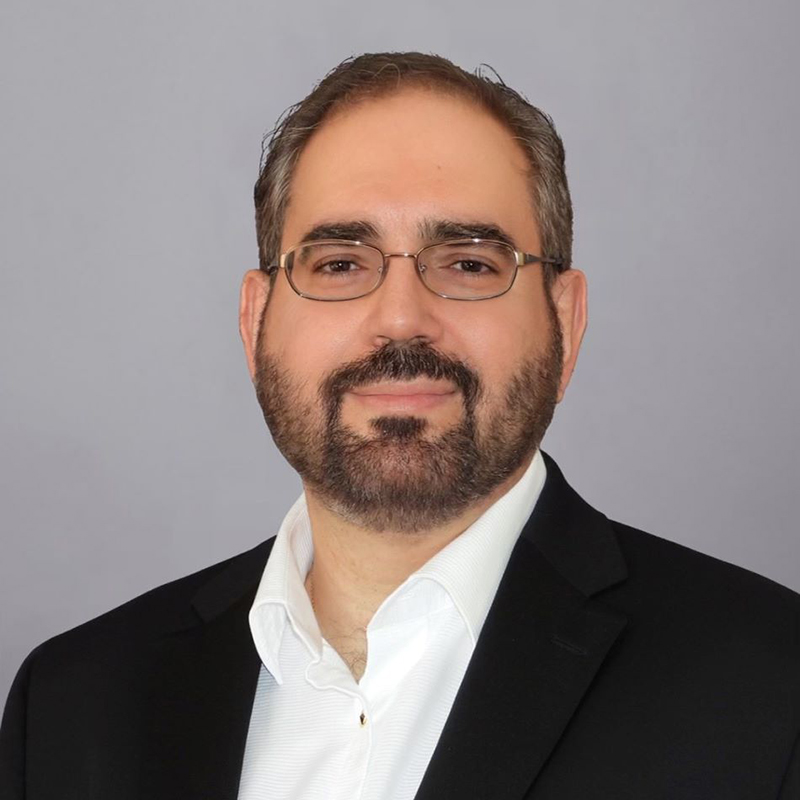
Anders Møller is a Professor at the Department of Computer Science , Aarhus University , Denmark. His career spans roles as an author , committee member , and session chair in conferences like SPLASH, OOPSLA, ECOOP, ISSTA, ICSE, and PLDI. Affiliation: Aarhus University Co-founder: Coana Research Focus : Specializing in static and dynamic program analysis for JavaScript, TypeScript, Java, and Node.js applications, his work addresses: Pointer analysis precision in Java Race condition detection in Node.js Library evolution and semantic patching Soundness improvements in static analyzers Type safety in modern languages Concolic execution for web testing Publication Trends : Recent work (2021–2024) emphasizes security-critical static analysis (taint specifications, Node.js security), soundness optimization (approximate interpretation), and program verification (channel-based communication). Earlier work (2013–2018) includes foundational contributions to JavaScript refactoring , Dart type safety , and AJAX race detection . Scientific Recognition : ISSTA 2019 Distinguished Paper Award Leadership Roles : Active in steering committees for SPLASH, ECOOP, and SIGPLAN, with chairs in OOPSLA, ECOOP, and PLDI program committees.
Dr Anthony J H Simons is a Senior Lecturer in the Department of Computer Science at the University of Sheffield, where he serves as Deputy Director of UG Admissions. He is a member of the Testing research group and has been affiliated with the university since completing his PhD there. His academic journey spans several decades, moving from speech recognition systems to object-oriented programming languages and currently focusing on model-based testing and cloud computing applications. Dr Simons holds an MA in Modern Languages from the University of Cambridge and a PhD in Computer Science from the University of Sheffield. His educational background in both humanities and technical fields has informed his interdisciplinary approach to software engineering research. His primary research interests center around turning formal verification results into practical software engineering benefits. Currently, he investigates Model-Based Testing and Model-Driven Engineering with applications to Cloud Computing. Earlier in his career, he made significant contributions to object-oriented software engineering, including type theory and software development methods. He is the inventor of the JWalk automatic software testing tool for Java and the JAST library for processing XML in Java, and co-author of the OPEN Toolbox of Techniques. His work bridges theoretical computer science with practical software development needs. Analysis of his recent publications reveals a clear trajectory from foundational work in object-oriented type theory to applied research in cloud computing and model-based testing. His scholarship demonstrates consistent focus on formal methods applied to practical software engineering challenges, with increasing emphasis on cloud infrastructure testing and verification in recent years. Dr Simons has secured significant research funding as Principal Investigator, including the Broker@Cloud project (EC-FP7, £323,688, 2012-2015), Future Engineering System (InnovateUK, £199,874, 2016-2019), and Ferromone Trails Concept (Department for Transport, £24,635, 2017). He has supervised numerous undergraduate and masters' projects throughout his career and continues to mentor students despite being semi-retired. He leads the Testing research group at Sheffield and has developed several research projects including CatWalk (a software testing tool for Java), ReMoDeL (a conceptual modeling language), and tools for verifying specifications and generating tests for software services in the cloud. His research has practical applications in cloud service brokerage and quality assurance.
Marios Savvides is the Bossa Nova Robotics Professor of Artificial Intelligence and a Full Tenured Professor in the Electrical and Computer Engineering Department at Carnegie Mellon University (CMU). He is also the Founder and Director of the CyLab Biometrics Center. His research focuses on AI algorithms for biometrics, facial recognition, iris scanning, and object detection under challenging conditions. He holds a BEng from the University of Manchester, an MS in Robotics from CMU, and a PhD in Electrical and Computer Engineering from CMU. Education: BEng, Microelectronics Systems Engineering, University of Manchester Institute of Science and Technology (1997) MS, Robotics, Carnegie Mellon University (2000) PhD, Electrical and Computer Engineering, Carnegie Mellon University (2004) Research Interests: Core AI and machine learning for robust biometric systems Long-range iris capture and matching Low-shot object detection and scene understanding Applications in retail automation, airport security, and medical imaging Key Achievements: Recipient of seven Best Paper Awards and the 2022 PIPLA Inventor of the Year Recipient of the 2015 Edison Gold Award, 2018 Immigrant Entrepreneur Award, and 2020 AI Excellence Award Developed AI algorithms deployed in over 3 million ADT security cameras and Bossa Nova robots Spun off startups including HawXeye and Oosto, serving as CTO/Chief AI Scientist Grants and Partnerships: Collaborations with Bossa Nova Robotics, Egen, UltronAI, and CMKL University Research on facial recognition for stock market prediction and medical imaging privacy risks Labs and Teams: Director of the CyLab Biometrics Center Member of IEEE Biometric Council and contributor to the IEEE Certified Biometrics Professional program
Michael Hofbaur is a full Professor at the University of Klagenfurt, where he works in the Institute for Intelligent Systems Technologies within the Faculty of Technical Sciences. His office is located at Lakesidepark Haus B04, Ebene 2, Raum B04.2.206, and he can be contacted at michael.hofbaur@aau.at. Professor Hofbaur has established himself as a leading researcher in robotics with particular expertise in human-robot collaboration, safety systems, and formal verification methods for robotic applications. His research interests focus on the intersection of robotics, safety engineering, and human factors. Professor Hofbaur has made significant contributions to the field of robot safety, particularly in developing methods for safe human-robot collaboration without physical barriers. His work spans multiple dimensions of robotics including kinematic analysis, motion planning, sensor integration, and formal verification techniques to ensure system reliability. He has published extensively on topics such as obstacle avoidance strategies, proximity perception systems, and methods to enhance flexibility in collaborative workspaces while maintaining safety standards. Analysis of his recent publications reveals a clear trend toward integrating formal verification methods with practical robotics applications, particularly focusing on safety-critical aspects of human-robot interaction. His research increasingly incorporates advanced sensing technologies like radar and capacitive proximity sensors to create more intelligent and responsive robotic systems. The work demonstrates a progression from theoretical kinematic analyses toward practical implementations in industrial and collaborative settings, with a consistent emphasis on safety assurance throughout. Professor Hofbaur's research portfolio includes numerous projects related to robotic safety, formal verification, and human-robot collaboration, though specific awards directly attributed to him are not listed in the available materials. His work appears to have significant practical applications in industrial automation and collaborative robotics settings. While specific information about his students and advising activities isn't provided in the available materials, his extensive publication record spanning over two decades suggests he has likely supervised numerous graduate students and postdoctoral researchers. His research activities indicate involvement in both theoretical and applied projects, potentially including collaborations with industry partners given the practical nature of many of his publications. Based on his departmental affiliation and research focus, Professor Hofbaur is likely associated with robotics laboratories at the University of Klagenfurt that specialize in human-robot interaction, safety systems, and formal verification of robotic workflows. These facilities likely include experimental setups for testing collaborative robots, sensor integration systems, and simulation environments for verifying robotic behaviors before physical implementation.
Thorsten Holz is a Professor and Head of the Chair for System Security at Ruhr-University Bochum's Faculty of Computer Science. His research team focuses on critical areas of cybersecurity including binary analysis, automated vulnerability discovery (fuzzing), embedded systems security, and privacy compliance (GDPR). Research Focus: His work spans: Binary analysis & reverse engineering techniques Software security with emphasis on fuzzing and automated vulnerability assessment Security of embedded/IoT systems Privacy mechanisms and GDPR implementation Network and internet security protocols Publication Trends: Recent works (2024-2025) demonstrate strong emphasis on: Advanced fuzzing methodologies for software/hardware systems Security of satellite and aerospace systems Detection of AI-generated media (deepfakes) and LLM vulnerabilities Trusted execution environments (TEEs) and memory corruption defenses Social media/platform security abuses He leads a research group developing cutting-edge tools for vulnerability discovery and security validation, with significant real-world impact in both academic and industry domains.
Coen De Roover is a Professor at the Software Languages Lab (SOFT) of Vrije Universiteit Brussel (VUB) since October 2015, where he leads the Code Analysis and ManiPulation (CAMP) subgroup. His research focuses on program analysis design and its applications to software quality, including soft verification of contracts, incremental abstract interpretation, vulnerability detection in infrastructure code, and mining change patterns in commits. Key Research Areas: static analysis, dynamic analysis, mining software repositories, software engineering tools, security, and empirical studies. Conference Roles: Organizing Committee Chair for ECOOP Academy (2026), Steering Committee Member for GPCE, Program Committee Member for ICFP, SANER, and VMCAI, and Session Chair for multiple research tracks. Notable Contributions: Publications on WebAssembly analysis, Ansible security, concolic testing, and abstract interpretation frameworks. He also serves as Programme Director for the Bachelor in Computer Science at VUB since 2019-2020.
Dr. Eugenio Miguel Isern Riutort serves as a Senior Lecturer in the Department of Electronic Technology within the School of Industrial Engineering and Construction at the University of the Balearic Islands (UIB). His academic profile shows active engagement across multiple degree programs including Automation and Industrial Electronic Engineering, Telematics Engineering, and the Master's Degree in Industrial Engineering, where he teaches core courses in Analogue Electronics, Electronic Instrumentation, and related subjects. Beginning his research career in January 1991 with a pre-doctoral scholarship from the Ministry of Education and Science at the Polytechnic University of Catalonia, Dr. Isern Riutort has established three primary research domains. His foundational work focuses on test and verification methodologies for integrated circuits, where he has developed techniques for fault detection through current consumption analysis (both static IDDQ and dynamic IDDT). This research has evolved to address challenges posed by technological parameter variations in modern microelectronics, leading to innovations in predictive testing, oscillation-based testing, and auto-tuning techniques. A second research stream involves designing radiation sensors using standard MOS integrated circuits, with recent work focusing on floating gate MOS transistors that produce outputs proportional to total ionizing dose. Most recently, he has been developing non-conventional computing methodologies accelerated in hardware to enable artificial intelligence applications for massive and highly complex problems. His publication record demonstrates consistent scholarly output across these domains, with particular emphasis on practical applications of theoretical concepts in microelectronics testing and sensor design. The articles reflect a progression from fundamental circuit testing techniques to specialized applications in radiation detection and, most recently, hardware acceleration for AI systems. His work bridges theoretical foundations with experimental validation, as evidenced by his focus on both fault modeling and sensor design with experimental measurements. Dr. Isern Riutort actively supervises Final Degree Projects and Master's Theses in Automation and Industrial Electronic Engineering while teaching across multiple programs. His teaching portfolio spans from foundational Analogue Electronics courses to advanced Electronic Instrumentation Systems, demonstrating comprehensive expertise across the electronics curriculum. He maintains a personal academic website (personal.uib.eu/eugeni.isern) and has established research profiles across major academic networks including ORCID, ResearcherID, Scopus, and Dialnet. As a member of the Electronic Engineering (GEE) Consolidated R+D+I Group at UIB, he participates in a collaborative research framework that supports his work in electronics and related technologies. His office is located in room F107 on the first floor of the Mateu Orfila i Rotger building (Physics building) at the university.
C.R. Ramakrishnan is a Professor in the Department of Computer Science at Stony Brook University, specializing in logic programming, programming languages, and formal verification. His research spans theoretical computer science with significant contributions to model checking, concurrent systems analysis, and more recently quantum computing applications. His educational background includes a Ph.D. in Computer Science from Stony Brook University (1995) and dual master's degrees in Computer Science (M.Sc.(Tech)) and Physics (M.Sc.(Hons)) from Birla Institute of Technology and Science, Pilani, India (1987). Ramakrishnan's research interests have evolved from traditional logic programming toward cutting-edge quantum computing applications while maintaining his foundational work in verification systems. His current work focuses on quantum circuit distribution, entanglement management, and statistical-logical knowledge systems. His research methodology often involves encoding system semantics as logical inference rules and formulating analysis problems as inference tasks. His recent publication trend shows a strategic shift toward quantum computing with numerous high-impact papers on quantum network communication, entanglement distribution, and quantum circuit optimization. These works represent an evolution from his earlier focus on logic programming and model checking toward applying similar formal methods to quantum systems. National Science Foundation Faculty Early Career Award (1999-2003) National Science Foundation Postdoctoral Research Associateship (1995-1997) Catacosinos Fellowship for Excellence in Computer Science (1993-1994) His research has been consistently funded by grants from the National Science Foundation (NSF) and the Office of Naval Research (ONR), supporting his work across multiple domains from traditional programming languages to quantum computing. While specific students aren't listed in the provided materials, his teaching includes numerous graduate and undergraduate courses in computer science.
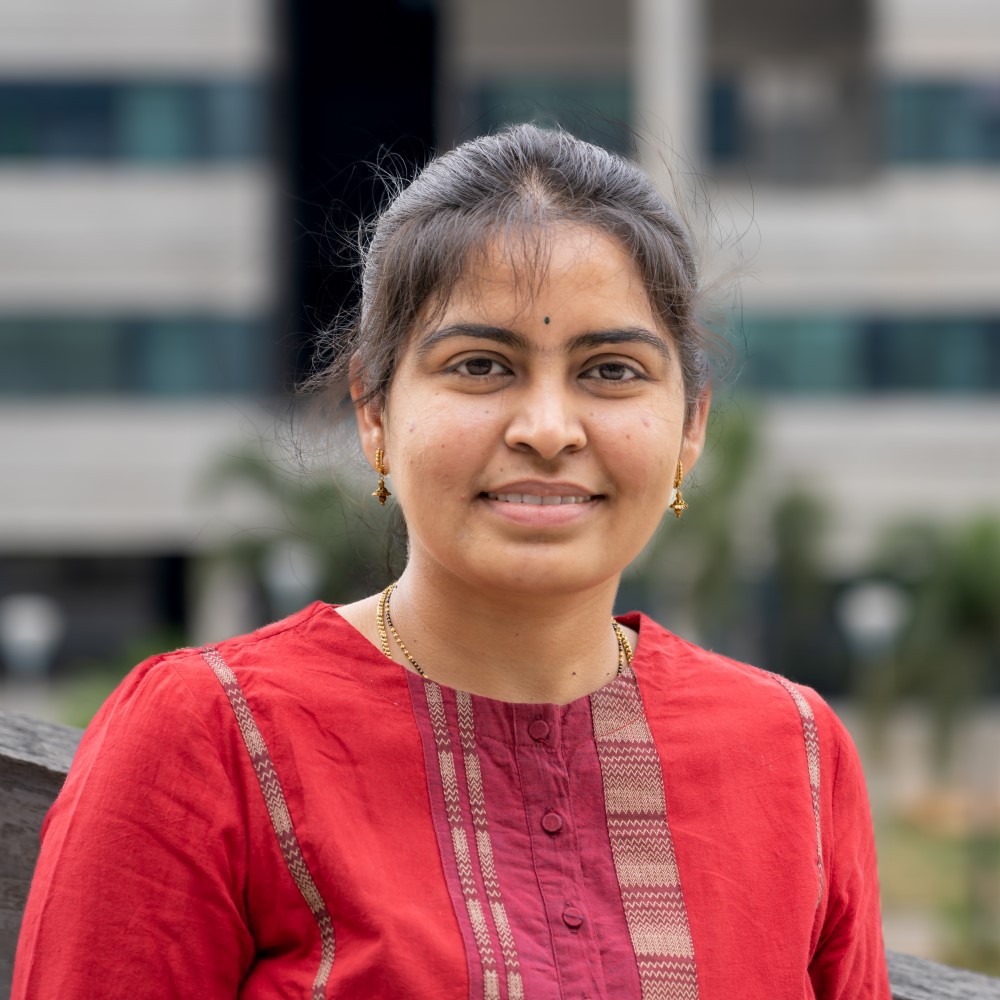
Jyothi Vedurada is an Assistant Professor in the Department of Computer Science and Engineering at the Indian Institute of Technology Hyderabad (IIT Hyderabad). Her research focuses on compilers, program analysis, high-performance computing (HPC), and software engineering. Prior to joining IIT Hyderabad, she was a postdoctoral researcher at Microsoft Research Lab in Bangalore and worked as a Software Engineer at Hewlett Packard in Chennai. Her research spans four major areas: Compiler Optimizations : Developing global compiler optimizations for CPU-GPU heterogeneous systems to enhance performance across varied hardware environments. ML for PL : Leveraging AI to overcome scalability and semantic challenges in program analysis, with applications in bug detection, API misuse recommendation, and algorithm description generation for Jupyter notebooks. Parallelization : Designing efficient GPU algorithms for tasks like Approximate Nearest Neighbour search and subgraph isomorphism optimization, alongside developing the Tensor Transposition Library for GPUs (TTLG). Concurrency Testing : Creating systematic testing frameworks for concurrent systems, including language-agnostic libraries and mock storage systems to validate weak isolation levels in databases. Scientific Awards & Recognition : Distinguished Artifact Award at ECOOP 2025 Google Research exploreCSR Award (2021) Tata Consultancy Services PhD Fellowship ACM SIGAI, SIGPLAN, and IEEE Travel Grants Advising & Collaborations : Supervising 11 PhD and MTech students, including Soumik Kumar Basu and Karthik V, with projects spanning compiler optimizations, HPC, and AI-driven software analysis. Collaborating with institutions like Microsoft Research and IIT Madras.
Earl T. Barr is a Professor of Software Engineering at University College London (UCL), where he heads the System Software Engineering Group and is a member of the Centre for Research on Evolution, Search and Testing (CREST). His academic journey began with a Ph.D. in Computer Science from the University of California, Davis in 2009, after which he joined UCL as faculty. His research spans multiple domains within software engineering, with particular focus on program analysis, type systems, automated program repair, and the emerging field of dual channel analysis that examines the interplay between natural language and formal programming language in source code. Barr's work on the 'naturalness of software' has been influential in understanding how code differs from natural language while exhibiting statistical regularities. Barr's publication record shows a strong trend toward integrating machine learning with traditional software engineering techniques, particularly in type inference (Typilus), program repair, and code understanding. His recent work increasingly focuses on dual channel analysis, exploring how the natural language elements in code (identifiers, comments) interact with the formal programming language to create a richer communication channel for developers. MSR 2019 Most Influential Paper Award Multiple ACM SIGSOFT Distinguished Paper Awards Best Paper Award at IEEE Conference on E-Commerce Technology (2005) Barr actively supervises numerous Ph.D. students and postdocs, with current projects focusing on dual channel program analysis, AI for code, and software security applications. He has established long-term collaborations with researchers at institutions including Royal Holloway and the University of Luxembourg. His teaching portfolio at UCL includes core courses in Malware, Compilers, and Validation and Verification, reflecting his broad expertise across the software engineering spectrum. Barr leads the System Software Engineering Group at UCL, which focuses on practical applications of software engineering research with strong connections to industry problems. The group's work bridges theoretical foundations with real-world software development challenges, particularly in the areas of program analysis and automated software maintenance.
Michalis Kokologiannakis is an Assistant Professor in the Department of Computer Science at ETH Zurich, Switzerland. Previously, he was affiliated with the Max Planck Institute for Software Systems (MPI-SWS) in Germany where he completed his PhD. His research focuses on programming languages, compilers, and software verification, with particular emphasis on: Automated verification and testing of concurrent programs Weak memory models employed by modern microprocessors Stateless model checking techniques Formal methods for program analysis His work has led to the development of several verification tools including GenMC (a stateless model checker for C/C++ programs under weak memory models) and Kater (a tool that automates weak memory model metatheory and consistency checking). Dr. Kokologiannakis has published extensively at top-tier programming languages and verification conferences including PLDI, POPL, OOPSLA, and CAV. His research has pioneered advances in stateless model checking, partial order reduction, and verification under weak memory consistency models. He completed his MEng at the National Technical University of Athens (NTUA) before earning his PhD from MPI-SWS.
Professor Toby Murray is a leading academic in the School of Computing and Information Systems at the University of Melbourne, Australia. He serves as Director of the Defence Science Institute and Co-Lead of the Computer Science Research Group. With a D.Phil. in Computer Science from Oxford University (awarded in 2011), Murray has established himself as a prominent researcher in security and program verification. His research focuses on building highly secure computing systems cost-effectively, with expertise spanning security assessment, vulnerability detection, secure system design, and formal verification. Murray's work bridges theoretical foundations with practical applications, particularly in information flow security for concurrent systems and neural network robustness. Murray's publication record shows a strong trajectory in security and formal methods, with recent work on verified neural network robustness (CAV 2025), EDEFuzz for detecting excessive data exposure (ICSE 2024 Distinguished Paper), and security separation logic for concurrent C programs. His research consistently addresses critical challenges in secure system development, with increasing focus on machine learning security in recent years. Scientific Awards: Distinguished Paper Award at ICSE 2024 for EDEFuzz Murray actively supervises numerous PhD students and has advised many successful researchers who have gone on to faculty positions at institutions including Swansea University and LMU Munich. His service to the community includes being an Associate Editor for IEEE Security & Privacy and ACM Transactions on Privacy and Security, as well as Program Chair for CSF 2025. Murray leads several significant research initiatives including Verisimilar (Verified, Secure Machine Learning), EDEFuzz (Detecting excessive data exposure), and COVERN (Proving information flow security of concurrent programs), demonstrating his commitment to translating theoretical security research into practical tools and methodologies.
Silvia Lizeth Tapia Tarifa is an Associate Professor in the Department of Informatics at the University of Oslo, specializing in formal methods for parallel and distributed systems. She serves as one of the principal investigators for the NFR SJM (Smart Journey Mining) project, which runs until 2026, and actively participates in Digital Twins research with a focus on GDPR-compliant data management. Her academic affiliations include the Reliable Systems research group and the Analytical Systems and Reasoning (ASR) group at the Department of Informatics. Professor Tapia Tarifa's research spans formal methods, concurrency theory, and distributed systems with particular emphasis on self-adaptive systems, semantics of concurrent languages, compositional reasoning about distributed system behavior, and formal modeling of resource usage. Her work bridges theoretical computer science with practical applications in digital twins, GDPR compliance, and resource management in distributed environments. She has made significant contributions to the ABS language framework and active object models for parallel and distributed computing. Her publication record shows a consistent focus on formal verification techniques applied to emerging challenges in distributed computing. Recent work demonstrates increasing attention to digital twins technology, user journey modeling, and privacy-preserving systems. The research trajectory reveals evolution from foundational work on concurrent language semantics toward applied research in self-adaptive systems and GDPR-compliant architectures, while maintaining strong theoretical underpinnings in formal methods. Young Research Talent grant from Research Council of Norway (2017), the only computer science grant in that call Fellow at United Nations University, International Institute for Software Technology (2007) Active participation in formal methods community as general chair, PC chair, and committee member Professor Tapia Tarifa has supervised PhD and master's students while teaching graduate-level courses. She has led significant research initiatives including the Analysis and Complex System Research Program at SIRIUS Center (ended 2023) and the EU MSCA-ITN REMARO project on Reliable AI for Marine Robotics (ended 2024). Her current research portfolio includes multiple active grants focused on digital twins, user journey analysis, and privacy-preserving distributed systems. She collaborates extensively with researchers across Europe through various EU-funded projects including FP7 ENVISAGE, FP7 FET UpScale, and FP7 FET HATS. Her research activities are centered around the ABS language framework and its applications to distributed systems verification. She maintains active collaborations through the SIRIUS Center and participates in the international formal methods community through conference organization and program committees.
Dr Flavio Pileggi is a Senior Lecturer in Computer Science at the University of Technology Sydney (UTS), Australia, since July 2023. Previously, he served as Lecturer in Computer Science (2021–2023) and Information Systems (2017–2021) at the same institution. Education: Ph.D. in Computer Networks (Cum Laude), Universitat Politècnica de València, Spain (2011) M.Sc. in Computer Engineering, Università della Calabria, Italy (2005) As a specialist in Knowledge Engineering and Ontology-based Systems, his research focuses on human-centric socially sustainable solutions, particularly socio-technical systems, sustainable development, and climate change. His work bridges technical innovation with socio-economic and environmental value creation. Recent publications explore uncertainty in clustering algorithms, AI ethics, digital twins with ontologies, and socio-technical impacts of AI in education. His 15 most recent articles (2021–2025) span topics like self-reported data risks, smart technology adoption in rural regions, and pandemic resilience metrics. Scientific Awards: Best Paper Award at ICWMC 2006 Teaching Awards from AEMG Education (2022, 2024) He actively supervises PhD/Masters students and participates in 10+ funded collaborative research projects, including grants from UTS MCR Research Capabilities Development Initiative (2025) and CSIRO Next Generation Graduates Program (2024–2027). Currently, he serves on the editorial board of Sustainability (MDPI).
Luisa Mich is an Associate Professor in the Department of Industrial Engineering at the University of Trento, Italy, holding this position since 2002 after progressing from Research Fellow (1983-1987) to Researcher (1988-2001). She teaches Enterprise Information Systems, Tourism Information Systems, and Web Strategies across multiple departments including Economics, Humanities, and Mathematics, while pioneering ICT integration at the university since 1989. Education: PhD in Physics, University of Trento (1983), thesis: "Theory and experimentation on interaction in human systems" Scientific High School Diploma, Marcelline Institute, Bolzano (1976) Her research centers on Requirements Engineering innovations including the award-winning 7Loci meta-model for web presence strategy and enhanced creativity techniques surpassing traditional brainstorming. Current work integrates Natural Language Processing with legal document analysis and web reputation monitoring, demonstrating strong interdisciplinary connections between computer science, tourism management, and semantic technologies. Recent publications (2022-2025) reveal a decisive shift toward AI-driven business process development and tourism applications, with semantic technologies bridging legal compliance and requirements engineering. Key trends include agentic AI systems, optimized creativity techniques for requirements elicitation, and ontology-based personalization frameworks – all addressing practical challenges in destination management and customer experience. Scientific Recognition: While lacking major prizes, her expertise is validated through editorial board roles (Journal of Information Technology & Tourism, Journal of e-Learning) and leadership in professional societies including ACM, IEEE, and IFITT. Advising and Grants: Mich has supervised approximately 100 theses across scientific and humanities disciplines, including doctoral programs in Information Technology and Materials Science. Her grant leadership includes the European WEE-NET project (2005-2008) establishing Web Engineering networks and Papyrus (2008-2010) for cultural digital libraries, alongside consultancy for tourism boards like Suedtirol and Visit Trentino. Research Infrastructure: She co-founded Trento's Department of Information and Communication Technology and directed the Computer Science and Organisations program. Her ECDL certification initiative (1998-2010) became Italy's first university-adopted ICT certification, while her "ICT and tourism" research group drives destination management innovations through the Trentino Tourism System.