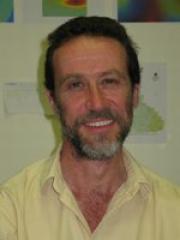
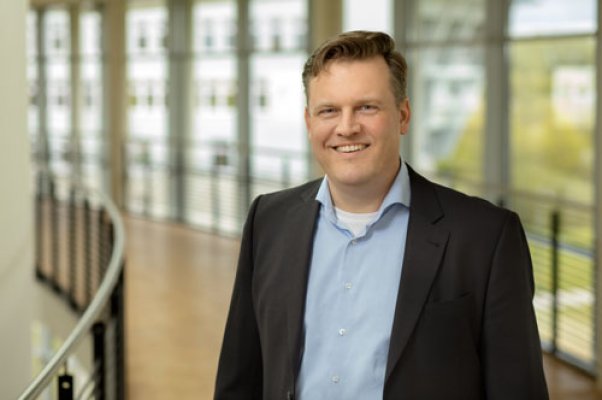
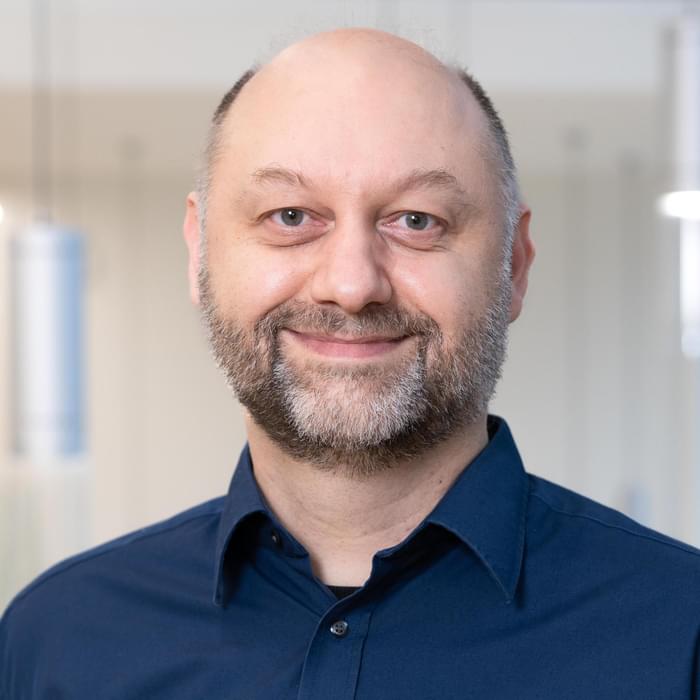
Dr. Neil Flood is an Honorary Senior Fellow at the University of Queensland's School of the Environment. His research focuses on remote sensing techniques, satellite imagery analysis, and environmental monitoring. He specializes in applying multispectral data from sensors like Sentinel-2, Landsat, and SPOT to study vegetation dynamics, climate impacts, and land cover changes in Australia. His work often involves developing algorithms for automated classification and integrating machine learning (e.g., U-net CNN) into ecological studies. Dr. Flood collaborates on projects such as the Joint Remote Sensing Research Program and has contributed to studies on BRDF effects, surface reflectance continuity, and rangeland management. His publications highlight advancements in satellite data processing, including comparisons between sensor systems and applications in environmental modeling. He has also authored reports on vegetation cover synthesis and fire ecology in grazing lands. Despite no listed students or awards, his contributions to open-source tools (e.g., GEOBIA systems) underscore his commitment to advancing remote sensing methodologies.
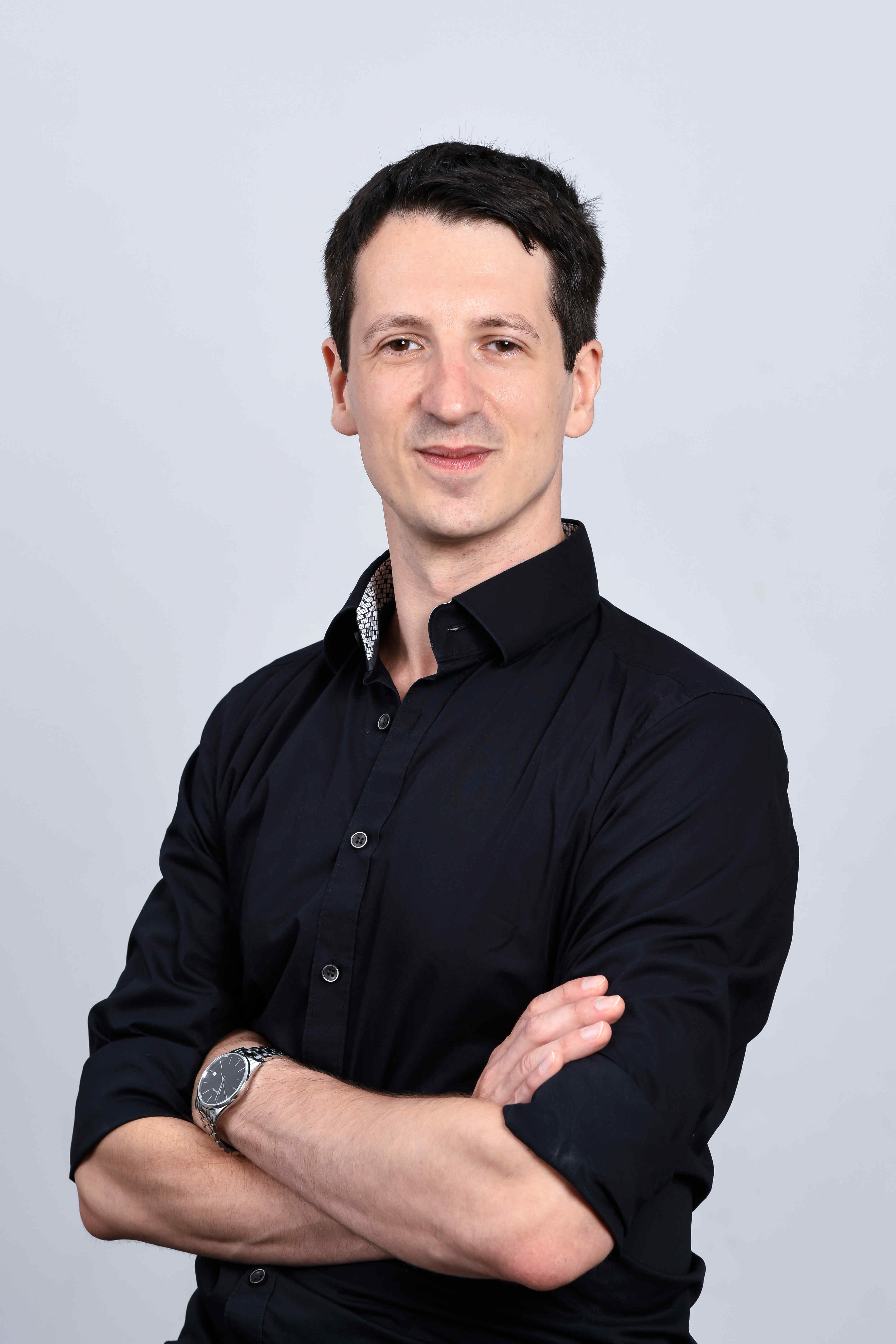
Heinz Riener is a Researcher at the Integrated Systems Laboratory (LSI) within the School of Computer and Communication Sciences (IC) at EPFL, Lausanne, Switzerland. He holds a Ph.D. (Dr.-Ing.) in Computer Science from the University of Bremen, Germany. Previously, he worked at the German Aerospace Center (DLR) and the University of Bremen's Reliable Embedded Systems group. His research focuses on logic synthesis , formal methods , and computer-aided verification of hardware and software systems. Key areas include quantum computing (e.g., AQFP circuits), nanotechnology (e.g., RFET-based circuits), and emerging technologies like adiabatic quantum-flux parametron systems. Developed open-source tools like mockturtle and easy for logic synthesis and ESOP forms. Principal Investigator on projects like the Open Logic Synthesis Libraries initiative. Active in program committees for conferences like DAC, DATE, and FDL. Collaborates with institutions such as TU Graz, TU Hamburg, and UC Berkeley. His work emphasizes reproducibility and open-source collaboration in logic synthesis, contributing to benchmarks and libraries widely used in academia and industry.
Antonio Di Stasio is a Lecturer (Assistant Professor) at the Department of Computer Science, City, University of London, and a member of the Research Centre for Machine Learning. He holds an Associate Membership at the University of Oxford's Department of Computer Science and is part of Kellogg College's Common Room. His academic journey includes a Ph.D. in Mathematical and Computer Science from the University of Napoli 'Federico II' (Italy), supervised by Prof. Aniello Murano, and a visiting research period at Rice University under Prof. Moshe Vardi. His research focuses on Game Theory, Parity Games, Formal Verification, System Specification, Synthesis, and Automated Planning. He has contributed to advancements in temporal logic synthesis and finite-trace analysis, with notable work on LTLf specifications and environment-driven synthesis. Di Stasio has held roles such as Chair for Highlights of Reasoning at ECAI 2024 and service on program committees for AAMAS, AAAI, IJCAI, and others. He has taught courses on self-programming agents and game-theoretic approaches to planning at the University of Oxford and Sapienza University of Rome. His publications span venues like FM, IJCAI, ECAI, and KR, addressing topics ranging from parity game solving algorithms to compositional safety synthesis. His work emphasizes practical improvements in algorithmic efficiency and theoretical foundations of reactive systems.
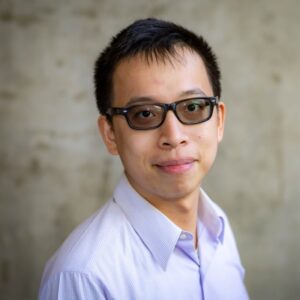
Dr. Wei-Ting Hong is a Postdoctoral Research Associate and Research Lead for Theme 1: Project Models and Digital Transformation at the John Grill Institute for Project Leadership (University of Sydney). With a background in public transport operations from their role as an operations controller at Taipei Rapid Transit Co. Ltd., they bridge industry experience with academic research. Current focus on digital transformation in project delivery Specializing in NLP, LLMs, and railway safety analytics Active in industry-academia collaboration through competitive grants Their research combines artificial intelligence applications with infrastructure management, evidenced by 3 published top-tier journal articles and 4 under review, particularly addressing risk uncertainty in construction projects through knowledge-data dual driven approaches. Recent scientific awards: Institute of Transport and Logistics Studies Research Prize Taiwan – University of Sydney full-ride scholarship Dr. Hong supervises postgraduate students in the Engineering Vacation Research Internship Program and supports undergraduate engagement through the Railway Technical Society of Australasia. Current projects include: Big Data-driven Stakeholder Engagement in Mega Infrastructure Projects (APM Research Fund, £10,000) Delivery Confidence Assurance guidance project (DTA, A$26,400) Cruxes Innovation’s Base Program (A$3,000)
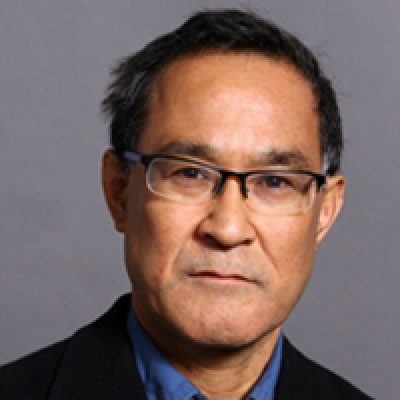
Ricky Kiyotaka Taira is a Professor in the Department of Radiological Sciences within the David Geffen School of Medicine at the University of California Los Angeles (UCLA). With a distinguished career spanning over two decades, Dr. Taira has established himself as a leading researcher in medical informatics, specializing in natural language processing applications for healthcare data. Dr. Taira's research interests focus on medical informatics, natural language processing in clinical contexts, medical imaging informatics, radiology informatics, clinical decision support systems, electronic health records, and machine learning applications in healthcare. His work bridges the gap between computer science and clinical medicine, developing innovative solutions for processing and visualizing complex medical data. Analysis of Dr. Taira's publication history reveals a consistent trajectory focused on advancing medical informatics through natural language processing and data visualization techniques. His research spans diverse clinical domains including radiology, oncology, ophthalmology, and neurology, with particular emphasis on developing systems that improve clinical decision-making and patient care through better information organization and presentation. His work demonstrates evolving sophistication in handling medical language, from early foundational work on semantic structures to recent applications of large language models in clinical contexts. Dr. Taira has secured significant research funding, including NIH R01 grants as both Principal Investigator and Co-Principal Investigator. Notably, he served as Principal Investigator for the 'Data Structuring and Visualization System for Neuro-oncology' (R01LM009961, 2009-2013) and as Co-Principal Investigator for 'Predicting Diabetic Retinopathy from Risk Factor Data and Digital Retinal Images' (R01LM012309, 2016-2021). These grants reflect his expertise in developing informatics solutions for specific clinical challenges in neuro-oncology and diabetic eye disease. Throughout his career, Dr. Taira has maintained a productive research program, collaborating extensively with colleagues at UCLA including William Hsu, Alex Bui, Corey Arnold, and Suzie El-Saden. His work has contributed significantly to the fields of medical imaging informatics and clinical natural language processing, with numerous publications in top-tier informatics journals and conferences.
Paul Attie is a Professor of Computer and Cybersciences Sciences at Augusta University's School of Computer and Cyber Sciences, Department of Computer Science. He holds a PhD in Computer Science from the University of Texas at Austin (1995). His research focuses on software engineering, formal methods, distributed computing, algorithms, and theory of computation. Education: PhD in Computer Science from University of Texas at Austin (1995). Research Interests : - Software Engineering: Focuses on program repair, formal verification, and correctness. - Formal Methods: Develops frameworks for specification construction and automated reasoning using SMT solvers. - Distributed Computing: Explores deadlock-free systems, choreographies, and scalable implementations. - Algorithms: Investigates succinct representation of concurrent programs and SAT-based repair techniques. Teaching : Recently taught courses like CSCI 8940 (Dissertation Research), CSCI 4100 (Algorithms), and CSCI 8320 (Verification of Software). Service & Leadership : - Committee Member: Tenure and Promotion Committee (2021–Present) - Chair: Pamplin Dean Search Committee (2020–Present) - Reviewer: ACM Symposium on Principles of Distributed Computing (2022–Present) His work bridges theoretical foundations with practical applications in distributed systems and formal verification.
Ismail Akturk serves as an Adjunct Assistant Professor in the Electrical Engineering and Computer Science (EECS) department with a courtesy appointment. His research bridges hardware architecture, neuromorphic computing, and security, focusing on energy-efficient systems and novel computational paradigms. His research interests center on neuromorphic engineering with significant contributions to Intel's Loihi architecture, implementing bio-realistic neural models and exploring scaling limits. He investigates hardware security through microarchitectural vulnerability assessments and develops frameworks for secure edge computing. His work in heterogeneous systems includes optimizing parallel programming models across GPUs and CPUs while pioneering techniques like weight update skipping and value recomputation to accelerate deep learning. Recent publications demonstrate a strong trajectory toward secure, energy-efficient neuromorphic systems with practical applications in edge environments. Dr. Akturk's publication record reveals a strategic evolution from distributed storage systems (2009-2012) toward cutting-edge neuromorphic and security research. His 2023-2025 work shows increasing focus on secure miniservers, RTL code generation via LLMs, and bio-realistic neural implementations – indicating convergence of AI, hardware security, and neuromorphic computing. The consistent emphasis on energy efficiency across publications suggests this remains a core research thread. His scientific contributions include novel frameworks like ACR (Amnesic Checkpointing and Recovery) and Holistic Hardware Security Assessment, though formal awards aren't documented in available sources. His methodology consistently combines theoretical modeling with hardware implementation, particularly evident in Loihi processor optimizations. As an adjunct faculty member, Dr. Akturk contributes to EECS education while maintaining active research output. His current trajectory suggests growing involvement in secure edge computing systems and neuromorphic AI acceleration, with potential implications for low-power IoT security and real-time neural processing applications.
Prof. Sumit Kumar Jha is a Professor in the Department of Computer Science at Florida International University (FIU), specializing in artificial intelligence, formal methods, and computer architecture. His research focuses on AI-driven system design, in-memory computing, and robust machine learning systems. He leads over $17 million in active research projects from agencies like DARPA, AFRL, NSF, and DOE. Research interests include: Adversarial machine learning and model robustness Neuro-symbolic systems and program synthesis Analog/digital in-memory computing architectures Formal verification and safety-critical systems Explainable AI and model interpretability Recent work emphasizes secure LLM code generation, quantum computing applications, and fault-tolerant in-memory systems. His publications span top venues like ICML, ICLR, and DAC. Awarded FIU's Top Scholar Award (2024-25) and multiple best paper nominations. Active in NSF-funded initiatives including SPX (extreme-scale computing) and FMitF (formal methods in in-memory systems).
Prof. Dr.-Ing. Markus Weinhardt is a Professor at the Faculty of Engineering and Computer Science at Osnabrück University of Applied Sciences. His research focuses on reconfigurable computing, compiler development, and image processing. He earned his Ph.D. from Karlsruhe Institute of Technology (2000) and held postdoctoral positions at Imperial College London (2000) and PACT XPP Technologies AG (2009). He leads the DFG-funded HiPReP project and organizes workshops like FSP 2016. Education: Ph.D. in Computer Science (Karlsruhe Institute of Technology), postdoctoral research at Imperial College London, and industry experience at PACT XPP Technologies AG. Research Interests: Reconfigurable architectures, FPGA-based acceleration, compiler optimization, and high-performance computing. Projects include HiPReP (high-performance reconfigurable processor) and HPVis (software optimization via FPGA coprocessors). Teaching: Courses on Hardware/Software Codesign, Programming, and Master’s projects in compiler design and hardware optimization. Key Contributions: Over 30 publications, including works on CHiPReP compilers, dynamic scheduling in reconfigurable arrays, and FPGA-accelerated algorithms.
Dr. Michael Robbeloth serves as an Associate Professor in the Department of Mathematics and Computer Science at Mount Vernon Nazarene University (MVNU), part of the School of Natural and Social Sciences. Previously, he was an Assistant Professor at MVNU (2017–2024) and held roles in industry including Embedded Software Engineering at PDi Communication Systems and Senior Consultant at Data Science Automation (DSA). He holds a Ph.D. in Computer Science from Wright State University, an MBA from the University of Dayton, and advanced degrees from Bowling Green State University and Wilmington College. His research focuses on object recognition, particularly in incomplete data scenarios, leveraging geometric-based algorithms and machine learning. Recent projects include collaborations with students on improving incomplete object characterization algorithms and GPU-accelerated machine learning. He has secured grants totaling over $19,000 for undergraduate research initiatives, including server upgrades and GPU accelerators. Robbeloth actively contributes to academic and community organizations: he chairs Pathways of Central Ohio, advises Knox Technical Center’s IT program, and reviews for ACM conferences. His work bridges theoretical computer science with practical applications in aerospace and data-driven industries.
Prof. Marcus Brandenburg is a Professor of Business Administration at the Department of Economics, Flensburg University of Applied Sciences. His research focuses on Sustainable Supply Chain Management, Supply Chain Performance Management, and Production Economics. He holds a habilitation in economics and serves on the Editorial Review Board of the International Journal of Operations & Production Management (IJOPM) since 2017. Key research interests include sustainability in logistics, automotive supply chains, and maritime operations. He leads the university's Sustainability Network and contributes to Data Science and AI initiatives in production planning. His work bridges theoretical frameworks and practical applications, emphasizing interdisciplinary collaboration and real-world impact. Teaching responsibilities include courses in Business Administration and Supply Chain Management. He advises students and collaborates with industry partners on projects like GrønBusiness, focusing on sustainable practices in emerging markets such as Ethiopia's textile sector. Recent publications address supply chain resilience during the pandemic, automation challenges in container terminals, and sustainability certifications in apparel industries. Awards: Editorial Board Membership (IJOPM, 2017) Responsibilities: Committee for Research & Knowledge Transfer, Director of the Sustainability Network Key Projects: System Dynamics modeling for supply chain sustainability, AI/ML in production planning
Yuri Meshman is a former Post-doctoral Researcher at IMDEA. He holds a PhD from the Technion Israel Institute of Technology, where he was supervised by Prof. Eran Yahav. His research focuses on program verification, program analysis, program synthesis, machine learning, computability learning, and programming languages. His teaching interests include program analysis, programming languages, software engineering, and formal specification. Education: PhD in Computer Science, Technion Israel Institute of Technology (Advisor: Prof. Eran Yahav) Contact (Historical): Taub Building, Technion Israel Institute of Technology, Haifa 32000, Floor 7, Room 738 Phone: (+972-77-887)-4806 Research Interests: Meshman’s work emphasizes formal methods in software engineering, particularly in enhancing program reliability through automated verification and synthesis techniques. His exploration of machine learning intersects with computability theory, aiming to develop adaptive systems capable of self-optimization. His contributions bridge theoretical computer science with practical software development challenges.
Amy Hoover is an Assistant Professor in the Informatics department at New Jersey Institute of Technology (NJIT). Her research focuses on artificial intelligence, procedural content generation, and the intersection of AI with creative domains such as music composition and video game design. She explores topics like evolutionary algorithms, open-ended learning systems, and ethical considerations in AI applications. Her work spans contributions to procedural content generation (PCG) in games, including automated deckbuilding for Hearthstone and generative level design. She also investigates peer learning dynamics in AI systems and the application of large language models (LLMs) for creative tasks. Hoover’s research often bridges computational methods with human-centric design, such as curriculum development in AI education and fostering creativity through interactive tools. Her publications reflect collaborations in AI-driven game design, music composition, and educational technology. Media coverage highlights her work on ethical risks in mixed-reality gaming and AI’s role in mental health support through gaming communities. Notable contributions include frameworks like Watts for open-ended learning, ensemble learning methodologies inspired by human collaboration, and studies on transfer dynamics in evolutionary curricula. Her work emphasizes practical applications of AI in both technical and creative fields.
Prof. Bernd Finkbeiner is a faculty member at CISPA Helmholtz Center for Information Security and holds a Professorship in Computer Science at Saarland University. He earned his Ph.D. in 2003 from Stanford University. Leading the Reactive Systems Group since 2003, now part of CISPA, his research focuses on ensuring safety and security in computer systems through formal methods like specification, program synthesis, and verification. Key projects include output-sensitive reactive synthesis (OSARES), hyperproperty logics (HYPER), and real-time monitoring (RTLOLA). Education : Ph.D. in Computer Science, Stanford University, 2003 His research interests span hyperproperties, formal verification, runtime monitoring of cyber-physical systems, and distributed synthesis. He has pioneered tools like StreamLAB and AutoHyper for hyperproperty analysis. His work on temporal causality and information-flow guided synthesis addresses challenges in distributed and secure systems. Key Achievements : Recipient of ERC Advanced Grant 2022–2027 for Project HYPER Best Paper Awards at ICALP 2009, FSEN 2007, and VMCAI 2012 Leader of the Reactive Systems Group at CISPA Grants & Funding : ERC Advanced Grant supporting research on hyperproperties His lab develops cutting-edge tools for formal methods, including BoSy for bounded synthesis and RTLola for runtime verification. Current research explores compositional synthesis, explainable reactive systems, and robust monitoring for medical and autonomous systems.
Sihem TEBBANI is a **Professor** at **CentraleSupélec**, affiliated with the **Laboratoire des signaux et systèmes (L2S)**. Her research focuses on systems and control, bioprocess engineering, optimization, robotics, and environmental engineering. She has supervised/co-supervised over 16 PhD theses, including work on predictive maintenance, UAV trajectory planning, and microalgae cultivation for CO₂ biofixation. **Education**: PhD in Automatic Control, SUPAERO (2001) Habilitation (HDR) in Automatic Control, Université Paris-Sud (2016) Master’s in Automatic Control, SUPAERO (1998) Engineering Degree in Automatic Control, SUPAERO (1998) **Research Interests**: Her work spans nonlinear control, bioprocess modeling, and optimization. She specializes in applications such as microalgae cultivation for biofuel production, autonomous systems, and predictive maintenance. Her research bridges theory and industry, addressing challenges in sustainability and automation. **Awards**: Recipient of the Knight of the Order of Academic Palms (2020) for contributions to education and research. **Grants & Labs**: Active in interdisciplinary projects at L2S, collaborating with institutions like IRT SystemX, INRIA, and industry partners (e.g., Parrot, Thales Alenia Space). Her lab focuses on systems control, modeling, and estimation.