Professor James Scanlan is a Professor of Design within the Faculty of Engineering and Physical Sciences at the University of Southampton. He leads research in design, logistics, simulation, and optimization, focusing on aerospace systems and unmanned aerial vehicles (UAVs). His work is funded by BAE Systems, Airbus, Rolls-Royce, and the EPSRC. Previously, he held roles at BAe Systems and the University of the West of England, completing a PhD on aerospace design process modeling. He has launched a spin-off business commercializing design process research. Education: MSc in Aerospace Design (Salford University), PhD in Computer Modeling of Aerospace Design (University of the West of England). Research groups include the Computational Engineering and Design Group and the Centre for Defence and Security Research. External roles include membership in the US National Science Foundation and European Programme Committee for Value Driven Design. Teaching: Leads MSc courses in aerospace IGDS. Awards: 2008 Rolls-Royce R&T award for Creativity. Personal interests include squash, flying Piper Warrior aircraft, and BBC interviews on UAV civil applications.
Leah Schubert, PhD is an Associate Professor in the Department of Radiation Oncology at the University of Colorado Anschutz Medical Campus School of Medicine. She serves as Director of the Medical Physics Residency Program, leading educational initiatives in medical physics training. Her professional focus centers on improving safety, quality, and educational standards in radiation oncology physics. Dr. Schubert earned her PhD from the University of Wisconsin - Madison in 2009 and completed her undergraduate studies with a BS from the University of California–San Diego in 2003. She is board certified in Therapeutic Medical Physics by the American Board of Radiology (2012). Her research spans medical physics education, radiation safety, quality assurance, and functional imaging applications in radiation therapy. She has pioneered work in physics plan review training, safety checklist implementation, and 4DCT-ventilation imaging for functional avoidance radiation therapy. Her educational research focuses on concept inventories, virtual interviewing for residency matches, and cross-institutional residency training frameworks. Analysis of her recent publications reveals a consistent focus on improving safety culture in radiation oncology through systematic approaches including failure modes and effects analysis, simulated error training, and safety checklist development. Her work increasingly incorporates cross-institutional collaboration and educational innovation in medical physics training. ABR Volunteer Services Award, American Board of Radiology (2023) Board Member at Large, Society of Directors of Academic Medical Physics Programs (2022) AAPM Fellow, American Association of Physicists in Medicine (2022) Excellent Patient Safety Role Model, University of Colorado Hospital (2021) ABR Volunteer Services Award, American Board of Radiology (2020) IAEA Competition Towards a Strong Safety Culture in Radiation Medicine, International Atomic Energy Agency (2019) As Director of the Medical Physics Residency Program, Dr. Schubert oversees comprehensive training for future medical physicists, implementing innovative approaches to curriculum development and assessment. Her leadership extends to national committees including the AAPM Work Group on Periodic Review of Medical Physics Residency Training and various SDAMPP committees. She has secured funding for educational initiatives focused on improving residency training standards and safety culture development. Dr. Schubert collaborates extensively with multi-institutional research teams, particularly in the area of 4DCT-ventilation imaging and its clinical applications for functional avoidance radiation therapy. Her work bridges clinical practice, safety initiatives, and educational innovation in medical physics.
Professor Coral Dando is a Professor of Psychology at the University of Westminster, leading research in forensic cognition and investigative interviewing. With a background as a London Police Officer, she completed a BSc (Hons) Psychology and PhD in Applied Forensic Cognition. She is a Chartered Psychologist, National Teaching Fellow, and Registered Forensic Psychologist. Her research focuses on eyewitness memory, deception detection, and cross-cultural interviewing, with a particular emphasis on improving investigative methods in security and forensic contexts. Her academic roles include teaching forensic psychology modules (e.g., detecting deception, investigative interviewing) and supervising PhD students researching topics like virtual environments in interviews and neurodivergent credibility. She has secured significant research funding from entities like the Home Office, FBI, and CPNI, totaling over £2M across projects addressing insider threats, county lines exploitation, and aviation security. Key Research Themes: Eyewitness reliability, cognitive interviewing techniques, cross-cultural persuasion, and insider threat detection. Grants: Includes a 2024 €97,000 COST grant for implementing the Mendez Principles and a 2016 $469,000 FBI-funded study on intelligence interviewing. Professor Dando’s work bridges academia and practice, training professionals from police forces, security agencies, and NGOs. She contributes to policy development and has authored over 100 peer-reviewed publications, including seminal works on the cognitive interview and WAFA (Witness-Aimed First Account) for neurodivergent individuals. Her research emphasizes ethical, context-aware methodologies to enhance justice outcomes.
Daniel Cardoso Llach is an Associate Professor at Carnegie Mellon University's School of Architecture , where he chairs the Master of Science in Computational Design program and co-directs the CoDe Lab . His scholarship merges history, science and technology studies (STS), and computational design , focusing on the cultural and socio-technical dimensions of design automation. Education: PhD and MS in Architecture: Design and Computation from MIT , BArch from Universidad de los Andes Research Grants: Supported by the Graham Foundation for historical CAD exhibitions and by the Alexander Von Humboldt Foundation for postwar computational design research in Germany His work interrogates the politics of software, the materiality of computational systems , and the ethical implications of AI/robotics in architectural practice. Recent projects include reconstructing early CAD systems and analyzing data-driven urban technologies. Scientific awards include: Alexander Von Humboldt Fellowship (2024–2025) ACM CSCW Methods Mention for emulation-based software research (2021)
Jonathan Gratch is a Research Professor at the University of Southern California (USC) with joint appointments in Computer Science , Psychology , and Media Arts and Practice . He serves as Director for Virtual Human Research at USC's Institute for Creative Technologies and leads the USC Affective Computing Group . His work focuses on computational models of human cognitive and social processes, particularly emotions, and their applications to virtual environments. Education: Ph.D. in Computer Science from the University of Illinois at Urbana-Champaign (1995) Gratch's research spans Affective Computing , Cognitive Modeling , and Human-Computer Interaction , with a focus on creating emotionally intelligent virtual agents. His projects include the development of computational emotion models (e.g., EMA) and virtual human systems for training, healthcare, and social interaction studies. Key applications include the Mission Rehearsal Exercise and Stability and Support Operations prototypes. Recent publications (2023) highlight his exploration of LLM-based emotion modeling , social influence dynamics in human-agent interactions, and ethical implications of AI assistants . Earlier work (2014-2015) established foundational frameworks for automated negotiation and rapport-building virtual agents . His methodological contributions include parasocial consensus sampling and appraisal theory-based emotion architectures. Scientific honors include Fellowships from AAAI, AAAC, and the Cognitive Science Society, the SIGART Autonomous Agents Award , and Senior Membership in IEEE . As founding Editor-in-Chief of IEEE Transactions on Affective Computing , he has significantly shaped the field's academic discourse. Gratch's virtual humans leverage immersive audio-visual environments (8'x30' screens, 10.2-channel audio) to study socio-emotional dynamics. His team's work demonstrates that anthropomorphism in machines can enhance interaction but may produce unintended consequences, informing design principles for effective human-machine collaboration.
Full Professor at the School of Informatics, Aristotle University of Thessaloniki (AUTh), Greece. Previously served as Associate Professor (2015-2020), Assistant Professor (2008-2015), and Lecturer (2002-2008) at the same institution. Also worked as an Informatics Teacher in Greek Secondary Education from 1989-2002. His research focuses on Learning Technologies with emphasis on Conversational Agents in Education, Learning Analytics, Computer-Supported Collaborative Learning, Computational Thinking, Teaching Machine Learning at School, and Massive Open Online Courses (MOOCs). His recent work heavily investigates the application of AI, particularly conversational agents and large language models, in educational contexts. His publications show a strong trend toward AI applications in education, particularly focusing on conversational agents, learning analytics, and automated grading systems. The research spans multiple educational contexts from K-12 to higher education, with particular attention to student self-regulation, collaborative learning, and ethical considerations in AI implementation. 3 Best paper awards at international conferences Interview by Educational Technology Magazine (2013) Cubes Coding project - Winners of Open Education Challenge 2014 Cubes Coding project - Winners of NUMA Competition 2014 Has supervised 5 completed PhD theses, 4 ongoing PhD theses, over 60 Master's theses, and over 120 undergraduate theses. Led the colMOOC project (2018-2020), a €999,000 EU-funded project on integrating conversational agents and Learning Analytics in MOOCs. Also coordinated the T4E project (2020-2022) on Teachers' Fast-paced Distance Training on Tele-education and a MOOC in Greek on Introduction to Programming with Python. Previously served as Director of the Software and Interactive Technologies Laboratory (SWITCH Lab) until 2020, Member of AUTH Educational Policy Committee until 2020, and Chair of the Scientific Supervisory Board of the 2nd Experimental Junior High School in Thessaloniki until 2020.
Felix Gille is a researcher at the University of Zurich , affiliated with the Institute for Implementation Science in Health Care under the Faculty of Medicine. He leads the DSI-funded project "Data handling, security and protection: reaching conceptual equivalence for the concept of public trust in national electronic health records in Switzerland and neighboring countries," collaborating with Prof. von Wyl (IfIS/DSI, UZH) and Prof. Thouvenin (Faculty of Law, UZH). His work bridges health system and policy research, digital health, data law, and data security. Education: BSc in European Public Health, Maastricht University MMedSc in Health Economics, Policy and Management, Karolinska Institute PhD in Public Trust in Healthcare Systems, London School of Hygiene and Tropical Medicine Research Focus: Gille specializes in public trust dynamics within healthcare systems, particularly examining data governance, health policy, and ethical dimensions of digital health innovations. His projects analyze cross-national trust frameworks, biobanking ethics, AI in healthcare, and pandemic data sharing mechanisms. Scientific Contributions: His publications address critical issues such as GDPR impacts on research, trustworthiness of mHealth apps, and interdisciplinary approaches to health data policy. Articles span 2015–2025, emphasizing conceptual trust models, policy harmonization, and stakeholder engagement in health data systems. Awards & Roles: Fellow of the Swiss School of Public Health Associate Editor for Public Health Reviews
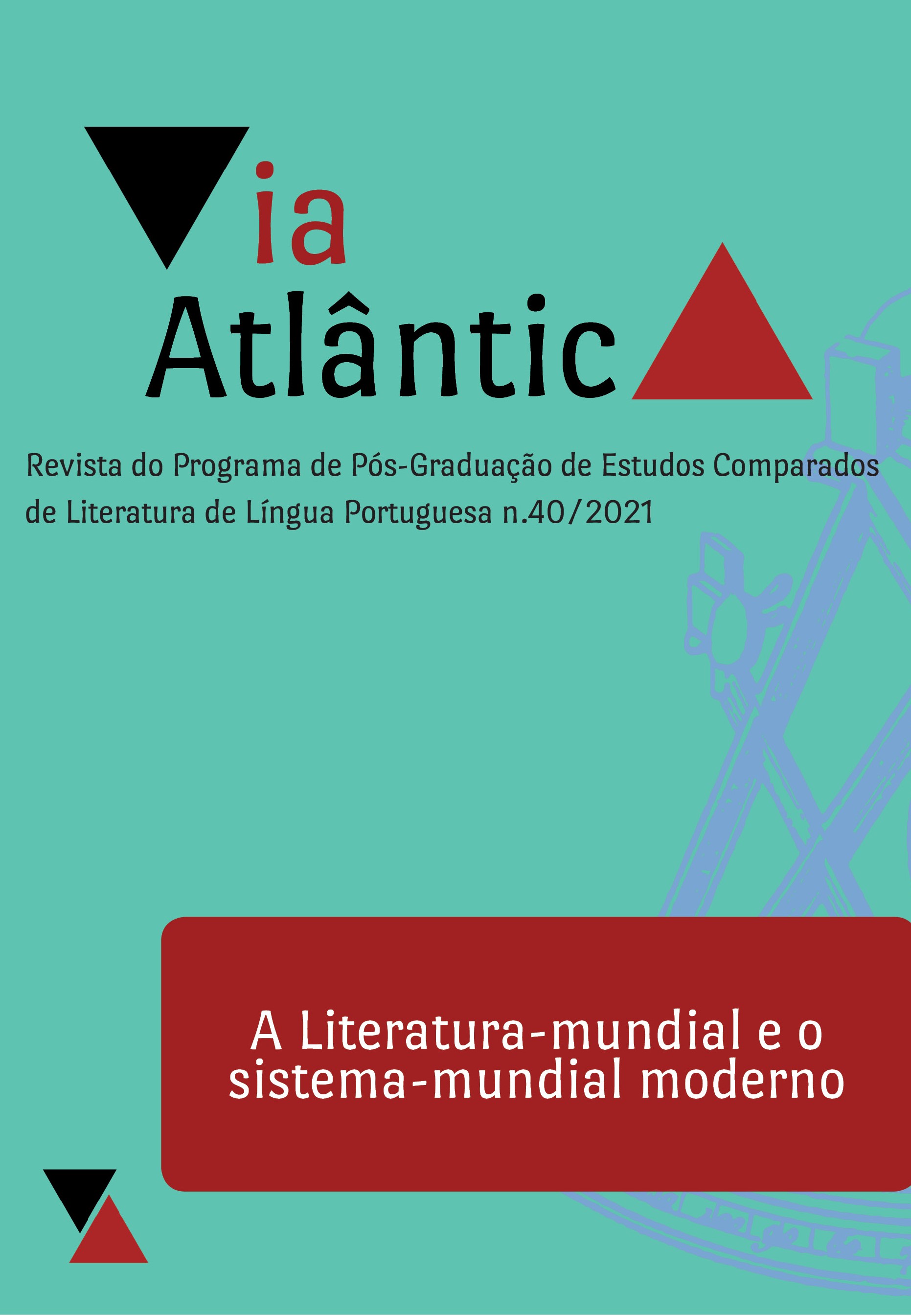
Dr. Sharae Deckard is Associate Professor in World Literature at the School of English, Drama and Film, University College Dublin (UCD). She is a leading scholar in the fields of world literature, postcolonial ecocriticism, world-systems theory, and speculative fiction. She serves as Director of the UCD Environmental Humanities research strand and is a member of the Irish Humanities Alliance's Environmental Humanities Steering Group. Her editorial roles include co-editing Palgrave's New Comparisons in World Literature series and serving on the editorial board of Liverpool Studies in Literature and the Environment. Her research interests include: Postcolonial literature and environmental criticism World-systems and world-ecology approaches to literature Neoliberalism and cultural production Genre fiction, including ecogothic, ecohorror, cli-fi, and weird fiction Social reproduction feminism and gendered labor Peripheral modernism and critical irrealism Her recent publications reveal a strong focus on the intersections of capitalism, ecology, and cultural form, particularly in the Global South. Themes such as hydro-dependency, fossil capital, food and energy systems, and the socio-ecology of gendered labor recur across her work. Her 2024 article on 'women’s work' in world-literature and the co-authored book Tracking Capital exemplify her current trajectory in integrating Marxist, feminist, and ecological frameworks for literary analysis. Her scientific recognition includes the BACLS Edited Collection Prize for World Literature, Neoliberalism, and the Culture of Discontent . She has secured multiple research grants, including on food, energy, and climate representations, and is currently co-investigator on the 'Cultural Imaginaries of Just Transition' project. She advises and mentors students, though specific names are not listed. Her teaching portfolio is extensive, covering courses such as Reading World Literature, Global Science Fiction, Climate and Environment in Global Literature, and World-Systems/World-Literature. She has coordinated these modules for several years, demonstrating sustained pedagogical leadership. She is an active member of professional networks, including the Association for Study of Literature and the Environment (UK-Ireland) and the Postcolonial Studies Association (UK). She engages in public scholarship through radio and television appearances and has organized public events, such as an interview with author Mohsin Hamid.
Dominik Stammbach is a Postdoctoral Research Associate at Princeton University's Center for Information Technology Policy (CITP) and Polaris Lab, applying Natural Language Processing to enhance access to justice, detect climate misinformation, and combat corporate greenwashing through data-centric methodologies. His educational background includes: Dr. Sc. in Computer Science, ETH Zurich (2024) Master's in Language Science and Technology, Saarland University, Germany Stammbach's research pioneers NLP applications for societal impact, focusing on automated fact checking (evidence extraction from legal documents), AI tools for public defenders, and detection of climate denial narratives. He integrates high-quality data practices with transformer-based models to address real-world challenges in legal accessibility and environmental communication, emphasizing user-centered design through nationwide interviews with public defenders. His publication trajectory reveals accelerating specialization in climate-NLP intersections and legal AI, with 2023-2024 works dominating his output. Key themes include knowledge-base optimization for fact verification, political bias mitigation in LLMs, and environmental claim detection—showcasing methodological rigor through ACL/EMNLP publications and interdisciplinary journal contributions. Stammbach actively shapes research communities as organizer of ClimateNLP workshops (ACL 2024/2025) and keynote speaker at IEEE ICDM 2025, driving collaboration between NLP researchers and climate scientists while developing practical AI tools for public sector agencies.
Professor Daniel Angus is a faculty member at Queensland University of Technology (QUT), holding the position of Professor of Digital Communication in the School of Communication and serving as Director of QUT's Digital Media Research Centre (DMRC). His research focuses on computational methods applied to communication and media studies, with a particular emphasis on AI, automation, misinformation, and digital societal impacts. He holds a PhD in computer science from Swinburne University of Technology and has extensive experience in interdisciplinary research across computer science, design, communication, linguistics, and journalism. Affiliations: ARC Centre of Excellence for Automated Decision Making & Society, ARC Centre of Excellence for the Dynamics of Language. Research Projects: Leads projects like 'Using Machine Vision to Explore Instagram’s Everyday Promotional Cultures' and 'Evaluating the Challenge of ‘Fake News’ and Other Malinformation'. Research Interests: Daniel’s work bridges technology and society, exploring AI ethics, algorithmic transparency, social media governance, and computational methodologies for analyzing communication patterns. He develops tools like Discursis and PauseCode to study discourse and conversational dynamics in healthcare, aged care, and media contexts. Grants & Awards: Principal Investigator on multiple ARC grants and collaborates with industry stakeholders to address challenges like unhealthy food advertising and platform accountability. His research has informed policy submissions to parliamentary committees on social media regulation and AI adoption. Supervision: Current PhD students focus on topics like algorithmic transparency, computational methods for meme analysis, and AI in publishing. Labs/Teams: Directs the Digital Media Research Centre, fostering interdisciplinary projects on digital culture and platform studies.
Susan Fussell is a Professor at Cornell University in both the Department of Communication and Department of Information Science. She received her Ph.D. in psychology from Columbia University and directs graduate studies in Communication. Key research areas: Computer-Mediated Communication, Intercultural Communication, Human-Computer Interaction, Multilingual Collaboration, and Collaborative Intelligence Analysis. Teaching focus: Theories of communication, research methods in social computing, and behavioral foundations of technology. Her publications from 2015-2025 reveal trends in cross-cultural communication technology , AI-mediated interaction , and collaborative problem-solving . Scientific awards include NSF grants #1025425, #1318899, #1314778 Google Faculty Gift She advises students like Nanyi Bi, Ge Gao, and Bin Xu. Notable collaborations include work with Claire Cardie, Sara Kiesler, and Dan Cosley. Projects include Tools for multilingual collaboration Energy conservation through social computing Telepresence robotics and human-robot interaction Contact: 226 Gates Hall, Ithaca, NY 14853 | sfussell@cornell.edu
Professor Neil Harrison is a Clinical Professor in Neuroimaging at Cardiff University's School of Medicine, leading the Immunopsychiatry Research Group at CUBRIC and the Haydn Ellis Building. He previously established the UK's first Clinical Immunopsychiatry Service in Sussex. His expertise spans neuroimaging, psychiatry, and immunology, focusing on how immune systems interact with brain function in mental illnesses like depression and Alzheimer’s. He holds grants from the MRC, Wellcome Trust, and Janssen Pharmaceutics. Education: PhD in Neuroscience from UCL’s Wellcome Trust Centre for Neuroimaging, psychiatry training at the Maudsley Hospital and National Hospital for Neurology, Queen Square. Research interests include neuroinflammation’s role in mental health, with a focus on translational approaches like wearable technology for early disease detection. He chairs the Psychoneuroimmunology Research Society and advises the Wellcome Trust’s Clinical Interview Committee. Grants and collaborations include work on imaging brain inflammation, chronic fatigue mechanisms, and translational immunopsychiatry. His lab investigates neuroimaging biomarkers and clinical applications of immunological insights in mental health.
Carlos Lopezosa is a Visiting Professor at the University of Barcelona (UB) under a Margarita Salas postdoctoral fellowship. Previously, he held an Associate Professor position at the Pompeu Fabra University (UPF), where he taught across the Faculty of Communication, including Journalism, Advertising, and Audiovisual Communication. He also coordinated the Online Master's in SEO/SEM at the Barcelona School of Management (UPF). His research focuses on web visibility strategies (SEO, voice search, social media curation), qualitative methodologies (systematic reviews, semi-structured interviews), and AI applications in digital journalism. He is affiliated with the UB's Faculty of Information and Audiovisual Media, contributing to research groups like Professorat GIDD. His work bridges academic research with practical media strategies, emphasizing ethical AI integration and algorithmic transparency. Key research areas include news curation, AI-driven data analysis, and digital media ethics. Lopezosa has published extensively in journals like Future Internet , DOXA Comunicación , and El Profesional de la Información , with over 50 peer-reviewed articles since 2018. His current projects explore AI's role in newsrooms, Google News algorithms, and multidimensional journal evaluation frameworks. Education: Doctor in Information Sciences Research Interests: SEO strategies, content curation, AI in media, systematic reviews Grants: Margarita Salas Postdoctoral Fellowship (UB) His work often addresses challenges in digital media visibility, ethical AI implementation, and the evolving role of algorithms in news dissemination. Lopezosa collaborates with institutions like the CRICC research center and frequently presents at international conferences on digital media trends.
David Clingingsmith is an Associate Professor in the Department of Economics at the Weatherhead School of Management, Case Western Reserve University, where he has been faculty since 2007. His research integrates economic theory with empirical analysis across diverse domains including automation, entrepreneurship, and social behavior. Education: PhD in Economics, Harvard University (2007) MA in Anthropology, University of Chicago (1998) BA, University of Toronto (1994) His research program explores the socioeconomic impacts of technological change, particularly how automation transforms manufacturing work and entrepreneurship. He employs mixed methodologies spanning causal inference econometrics, lab/field experiments, and qualitative analysis, with recent work developing AI techniques for analyzing interview corpora. Current projects examine job design in craft entrepreneurship and historical automation effects. Publication trends reveal strong focus on automation's economic consequences (2022-2024), pitch dynamics in entrepreneurship (2018-2023), and crisis policy responses (2020). His work consistently bridges economic history with contemporary issues, showing particular interest in behavioral mechanisms underlying status, consumption, and charitable behavior. Scientific Awards: Academy of Management Prize for Best Paper in Organizational Neuroscience (2021) Academy of Management Lewis-Progressive Fellowship (2016) Weatherhead School of Management Explorations Prize (2009) Dr. Clingingsmith serves as reviewer for top journals including Journal of Political Economy and Quarterly Journal of Economics, and participates in institutional governance through the Academic Integrity Board. While no specific grants are detailed in source materials, his research appears in leading outlets like Management Science and Experimental Economics. He also contributed COVID-19 policy analysis through Economic Policy Ideas for COVID-19 initiatives. He collaborates with interdisciplinary teams including healthcare economists (Helper, Shane) and development researchers (Khwaja, Kremer), and maintains an active ceramics practice at Brick Ceramic + Design studio since 2023.
Jürgen Sauer is a Full Professor at the University of Fribourg , affiliated with the Department of Psychology under the Faculty of Letters and Human Sciences . With over 120 publications, his research focuses on Human-Machine Interaction , Usability Testing , User Experience (UX) , and Automation Design , particularly in high-stakes environments like X-ray baggage screening and spaceflight simulations . Email: juergen.sauer@unifr.ch Phone: +41 26 300 7622 Address: RM 01 bu. C-1.117, Rue PA de Faucigny 2, 1700 Fribourg Orcid: 0000-0003-2105-1694 His research projects, funded by the Swiss National Science Foundation (FNS), include: Improving work design for airport security officers (2019-2024): Developed pictorial scales for measuring psychological constructs in security environments. Social stress and support in hybrid teams (2018-2023): Investigated machine-induced social stressors and mitigation through social support. Automation in visual inspection tasks (2014-2018): Examined adaptable automation for baggage screening and system reliability effects. Usability testing effectiveness (2012-2016): Analyzed cultural background impacts and non-usability product features influencing test outcomes. Key contributions include the Luggage Inspection Simulation (LIS) environment for modeling work environments and the development of pictorial usability scales for multilingual applicability. His work bridges ergonomics , human factors , and applied psychology , with notable collaborations with researchers like Adrian Schwaninger and Andreas Sonderegger . His recent publications (2025-2014) analyze: Human-machine performance under false alarms and miscues Social stressor dynamics in hybrid teams Usability scale animation effects Phubbing behavior in professional contexts Accessible website design for non-disabled users