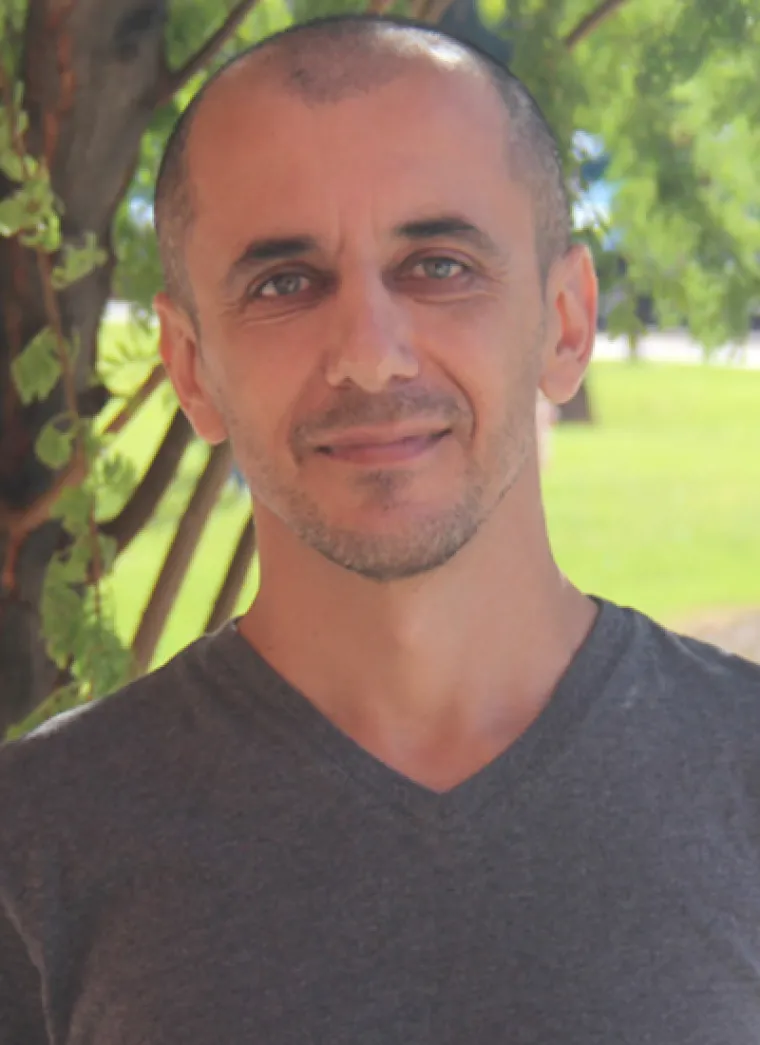
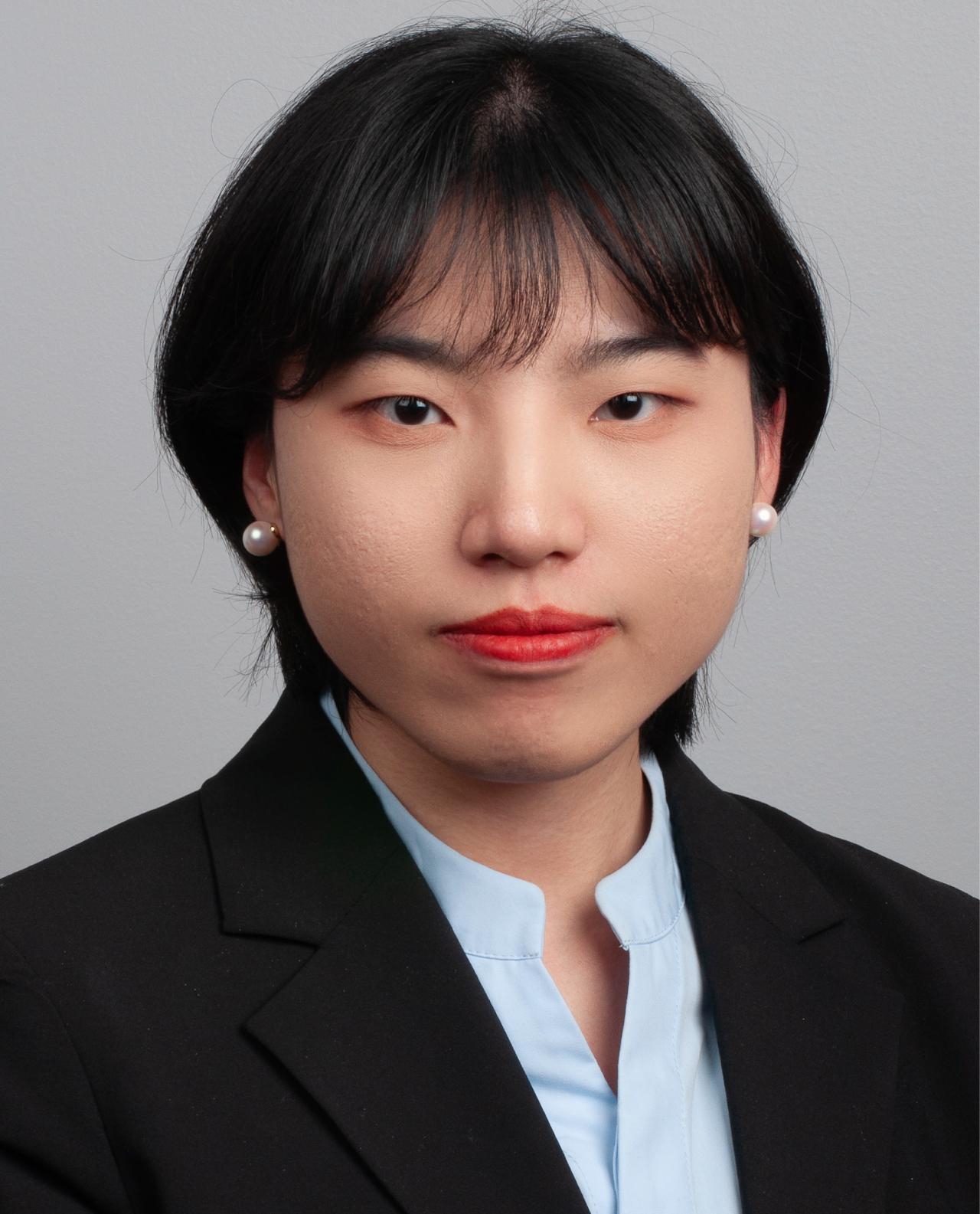
Mihai Surdeanu is an Associate Professor in the Department of Computer Science at the University of Arizona. His academic work focuses on advancing natural language processing and machine learning techniques, with a particular emphasis on large language models, information extraction, and model efficiency. He can be reached at msurdeanu@arizona.edu. Research Interests: Natural Language Processing Machine Learning Deep Learning Information Extraction Artificial Intelligence Scientific Trends: His recent work explores critical challenges in large language models, including data contamination detection, adversarial perturbation defense, quantization methods, and reasoning robustness. Publications highlight techniques like prompt chaining, layerwise optimization, and speculative generation to improve model performance and interpretability.
Dimitris Vrakas is an Assistant Professor at the Department of Informatics, School of Informatics, Aristotle University of Thessaloniki (AUTh). He holds a PhD in Intelligent Planning Systems and has conducted post-doctoral research focusing on Planning for the Semantic Web. His professional experience includes roles as a Lecturer (per Greek law 407/80), Informatics Instructor in multiple educational institutions, and IT consultant for medium-sized enterprises through the Go-online Project. Education: Bachelor of Science (1995–1999): Informatics, Aristotle University of Thessaloniki PhD (2000–2004): Intelligent Planning Systems, Dept. of Informatics, AUTh Postdoctoral Research (2005–2007): Planning for the Semantic Web, AUTh Research Interests: Automated Planning, Heuristic Functions, Intelligent Autonomous Systems, Machine Learning Applications (Energy Management, NILM), Semantic Web Services, and Smart Environment Technologies. His work bridges theoretical AI advancements with practical implementations in energy systems and emergency response. Publications: Over 45 papers (including 15 journal articles) and 5 book chapters, with a focus on energy disaggregation, evacuation algorithms, and semantic web composition. His work demonstrates expertise in applying advanced techniques like GANs for data generation and reinforcement learning for adaptive planning. Awards: 2025 ACM SIGMOD Test-of-Time Award for contributions to time-series clustering Advising & Grants: Active in guiding PhD candidates (as per recent calls) and coordinating projects like the IRIS RISK PARADIGM for industrial safety. His work involves developing smart university platforms for energy monitoring and collaborating on EU-funded initiatives. Labs & Teams: Member of the Intelligent Systems Lab at AUTh, contributing to projects like the BOnSAI ontology for smart buildings and the IRISPortal for risk management. He also coordinates the Hellenic Artificial Intelligence Society and chairs conferences like SETN 2016.
Scott Buffett is an Adjunct Professor at the Faculty of Computer Science, University of New Brunswick, and an Associate Research Officer at the National Research Council Canada (NRC), working in the Learning and Collaborative Technologies Group under the Information and Communications Technology Portfolio. He holds a PhD in Computer Science from the University of New Brunswick (UNB). His primary research focus is on artificial intelligence, particularly multi-agent systems, preference elicitation, workflow/process mining, and social commerce. He has developed systems like OmniBid, which demonstrates mechanism design for automated negotiations that balance individual utility and societal welfare. His work extends to privacy in e-commerce, data mining, and machine learning. Education: PhD (UNB), MSc in Automated Theorem Proving. Current teaching includes MBA courses in Production and Operations Management and Social Network Analysis. Past courses include Decision-Theoretic Agents and FORTRAN Programming. He supervises graduate students in preference modeling, negotiation systems, and workflow analytics. His research has been published extensively in conferences like CAI, ICEC, and journals like Electronic Commerce Research and Applications. He is active in collaborative technologies and data-driven process optimization. Research Interests: Multi-Agent Systems: Negotiation mechanisms, utility theory, and societal welfare optimization. Preference Elicitation: Techniques for extracting user preferences with minimal intrusion, including Bayesian methods and clustering. Workflow Mining: Dynamic process modeling for real-time guidance in industries like manufacturing and energy. Social Commerce: Analyzing social network effects on commercial interactions using network analysis techniques. Privacy and Data Analytics: Frameworks for privacy compliance in collaborative environments and energy management systems. Publications: Over 30 peer-reviewed articles, including work on automated negotiation, process mining theory, and preference network adaptation. Recent focus on dynamic process composition and socially aware commerce systems.
Moe Thandar is a prominent academic researcher in the field of Process Mining and Business Process Management. Their work spans over 160 publications from 2012 to 2025, focusing on advancing methodologies for process analysis, data quality, and automation in healthcare, business, and cybersecurity domains. They have collaborated with leading institutions globally, contributing to standards like the IEEE XES format for process event data. Key areas of expertise: Event log analysis, data-driven process improvement, robotic process automation (RPA), and privacy-preserving techniques. Notable contributions include frameworks like xPM for integrating exogenous data and SwiftMend for repairing process logs. Active in conferences such as BPM, CAiSE, and ICPM, often serving as editor or co-author in proceedings. Research emphasizes practical applications in healthcare (e.g., patient flow optimization), aviation safety, and cost-effective process management. Their work bridges theoretical advancements with real-world implementations, addressing challenges like data quality, scalability, and ethical considerations.
Dr. Mohammed Elhenawy is a Senior Lecturer and Senior Research Fellow at the Centre for Accident Research & Road Safety – Queensland (CARRS-Q), Queensland University of Technology (QUT), Brisbane, Australia. He holds a PhD in Computer Engineering from Virginia Tech. His research focuses on applying machine learning, AI, and statistical learning to transportation safety and intelligent transportation systems (ITS). He has authored over 120 papers and led projects like Australia’s largest Cooperative Intelligent Transport Systems (C-ITS) pilot, the LAARMA system for animal-vehicle collision prevention, and the 'Hold the Red' traffic signal evaluation. His work has been recognized with awards such as the Best Paper Award in Intelligent Vehicle Technologies. Affiliations: CARRS-Q, Faculty of Health (School of Psychology & Counselling) Education: PhD in Computer Engineering (Virginia Tech) Research Interests: Transportation safety, AI-driven traffic solutions, cooperative vehicle-infrastructure systems, and data-driven safety models. His work spans connected vehicles (V2V/V2I), near-miss detection, and multimodal large language models (MLLMs) for real-time traffic control. He also explores applications in pedestrian safety, e-scooter rider protection, and tunnel glare mitigation. Articles Trends: Recent work emphasizes LLMs for traffic safety analysis, multimodal data fusion, and autonomous vehicle perception. Key themes include real-time intersection control, zero-shot learning for crash analysis, and optimizing urban mobility systems. Awards: Best Paper Award in Intelligent Vehicle Technologies Advising & Grants: Leads interdisciplinary projects funded by Australian transport agencies and collaborates globally on ITS initiatives. His work bridges academia and industry, focusing on deployable safety solutions. Labs/Teams: CARRS-Q, collaborating with QUT’s School of Psychology & Counselling and external transport agencies.
Sune Lehmann Jørgensen is a Professor of Complexity and Network Science at the Technical University of Denmark and an Adjunct Professor in the Department of Sociology at the University of Copenhagen, affiliated with the Copenhagen Center for Social Data Science (SODAS). His interdisciplinary work bridges physics, computer science, and sociology, focusing on understanding human behavior through large-scale digital data. His research interests include: Complexity and Network Science Computational Social Science Statistical Physics of Human Systems Temporal and Mobile Network Analysis Machine Learning Applications in Social Data Digital Footprints and Behavioral Modeling The analysis of his recent publications reveals a consistent focus on extracting social patterns from digital traces—such as smartphone usage, vaccination decisions, and life-event sequences—using advanced computational and network-based methods. His work often involves nation-scale datasets and aims to uncover universal principles of human dynamics. Notable scientific contributions include studies on behavioral changes after terror attacks, methodological reflections on social media research, and predictive models of life trajectories using sequence data. His work has been widely disseminated and discussed across academic and public platforms. He has received significant attention in the media and scholarly networks, with his research picked up by over 268 news outlets and referenced in Wikipedia and social media platforms. Although no formal students are listed in the provided text, his professorial roles imply active mentorship and supervision in research projects. Sune Lehmann leads or contributes to collaborative research initiatives centered on social data science, particularly through SODAS and DTU. His ongoing work emphasizes ethical, methodological, and technical innovation in analyzing human-generated data at scale.
Houda Harkat is an Assistant Professor at Universidade Lusófona, affiliated with the Associação para a Investigação e Desenvolvimento em Cognição e Computação Centrado nas Pessoas. She also holds research positions as a Researcher at Université Sidi Mohamed Ben Abdellah, Faculté des Sciences et Techniques de Fès, and as an Invited Auxiliary Researcher at UNINOVA Instituto de Desenvolvimento de Novas Tecnologias. Her academic foundation includes a PhD in Engineering Sciences, a Master’s in Telecom and Network Engineering, and a Licence in Mathematics, Informatics, and Physics, all from Moroccan institutions. PhD in Engineering Sciences, Physical Sciences, Mathematics and Computer Science – Université Sidi Mohamed Ben Abdellah (2018) Master in Telecom and Network Engineering – Université Sidi Mohamed Ben Abdellah (2013) Licence in Mathematics, Informatics, and Physics – Université Sidi Mohamed Ben Abdellah (2010) Her research spans two key domains: telecommunications and antenna systems , focusing on UWB antennas, beam steering, WiMAX/WLAN, and microstrip arrays; and artificial intelligence for environmental and human sensing , including wildfire detection using aerial imagery and deep learning (e.g., Deeplabv3+, MobileNetv2), and Wi-Fi-based gesture/sign language recognition via Channel State Information (CSI). Her work integrates simulation tools like HFSS and CST with optimization techniques such as genetic algorithms. The recent publications highlight a clear shift toward AI-driven solutions in cyber-physical systems, particularly in fire detection and segmentation using deep learning models, alongside continued contributions in wireless communication and antenna design. Her interdisciplinary work bridges signal processing, machine learning, and environmental monitoring, with growing emphasis on unmanned aerial systems and IoT-based decision support. Her scientific contributions include 11 journal articles, 4 book chapters, and numerous conference papers. She has participated in multiple research projects as a PhD and post-doctoral fellow, contributing to advancements in GPR signal processing, wireless sensing, and intelligent systems. Project participation: PhD Student Fellow in 1 project Post-doc Fellow in 1 project Organized 3 academic events Houda Harkat is actively involved in interdisciplinary research labs and teams focusing on intelligent systems, including UNINOVA’s Institute for New Technologies Development and wildfire monitoring initiatives such as the FIREFRONT project, which leverages aerial vehicles and AI for firefront forecasting and disaster management support.
Mengjie Xu is an Assistant Professor of Accounting at Duke University's Fuqua School of Business. Her research focuses on financial accounting, corporate governance, and information economics, particularly analyzing how information creation and dissemination influence market participant strategies and outcomes. She holds a background from Frankfurt School of Finance & Management. Key research areas include high-frequency data analysis, social media-driven insights (e.g., Reddit, Twitter), EDGAR database tracing, and Glassdoor-based workplace studies. She has developed methodologies for parsing satellite imagery, short-sale data, and SEC filings. Technical expertise spans Python, Stata, SAS, and API integrations for data collection. Her work bridges accounting theory with practical data science, emphasizing replicable workflows for complex datasets. No scientific awards are explicitly mentioned in the sources provided.
Mauro Vallati is a Full Professor of Artificial Intelligence at the Department of Computer Science, School of Computing and Engineering, University of Huddersfield. He is also the Director of the Centre for Autonomous and Intelligent Systems and holds leadership roles in several AI-focused research centres, including the Centre for Planning, Autonomy and Representation of Knowledge and the Centre of Artificial Intelligence for Mental Health. Additionally, he is a member of the Sustainable Living Research Centre. Vallati is currently accepting PhD students and is an active researcher with over 200 publications. His research expertise lies in Artificial Intelligence, with a strong focus on Automated Planning and Argumentation. He applies these techniques to real-world problems, particularly in Urban Traffic and Mobility, which is the central theme of his UKRI Future Leaders Fellowship. He also explores innovative applications of AI in Medicine and Computational Creativity. His work aligns with UN Sustainable Development Goals, especially in sustainable cities and communities. The recent articles highlight a consistent trend in applying AI and planning techniques to urban mobility challenges, including traffic signal optimization, autonomous vehicle routing, and passenger demand prediction. There is also a strong theoretical foundation in argumentation, plan robustness, and macro-actions. The research spans both practical implementations and algorithmic advancements, with increasing emphasis on sustainability and real-world impact. Scientific Awards and Recognitions: UKRI Future Leaders Fellow ACM Senior Member ACM Distinguished Speaker on AI for the UK Vallati has secured significant research funding through projects such as AI4ME, AI for Autonomic Urban Traffic Control, MIREL, and SimplifAI. He supervises PhD students and early-career researchers, contributing to the development of the next generation of AI scientists. His leadership in organizing key academic events, such as the UK Planning and Scheduling Special Interest Group workshop, underscores his active role in the international AI community. He leads and contributes to multiple research centres, including the Centre for Autonomous and Intelligent Systems, where he drives innovation in AI applications for traffic, mental health, and sustainability. His interdisciplinary collaborations span engineering, computer science, and environmental research, particularly evident in projects involving textile waste recycling and legal text mining.
Federico Bergenti is an Associate Professor in Computer Science at the University of Parma, affiliated with the Department of Industrial Systems and Technologies Engineering (DISTI) and the Department of Mathematics, Physics, and Computer Science. He serves as Chair of the AI Lab since 2015 and is actively involved in teaching Artificial Intelligence, Software Engineering, and related courses across multiple degree programs. His educational background includes a Laurea degree (M.Sc.) in Electronic Engineering from the University of Parma (1998) and a Ph.D. in Information Technologies from the same institution (2002). Prior to his academic career, he worked at CSELT S.p.A. (1998-1999) and CNIT (2000-2006). Bergenti's research primarily focuses on Artificial Intelligence and Software Engineering, with special emphasis on multi-agent systems. His work spans agent communication languages, architectures for agent-based middleware, reusability in agent systems, and more recently, agent programming languages based on constraint logic programming. He is among the founders of the JADE initiative and remains active in the Agent-Oriented Software Engineering research community. Analysis of his recent publications reveals a consistent research trajectory centered on agent-oriented programming (particularly JADEScript), indoor positioning systems, neural-symbolic integration, and mathematical modeling of multi-agent dynamics using kinetic theory approaches. His work demonstrates strong interdisciplinary connections between computer science, mathematics, and engineering applications. Professionally, Bergenti has coordinated various scientific initiatives, served on the Senior Program Committee of the AAMAS international conference since 2006, hosted the IEEE WETICE conference in Parma in 2014, and served as Program Chair for WETICE 2016. He has participated in numerous European Commission-funded research projects under the 5th and 6th Framework Programmes. He leads the AI Lab at the University of Parma, where his team develops practical applications of agent-based systems, including indoor localization technologies, health assistance systems, and social network modeling. His research combines theoretical foundations with real-world implementations, particularly through the JADE multi-agent framework.
Luis Torres Urgell is a Professor at the Department of Signal Theory and Communications, Universitat Politècnica de Catalunya (UPC), affiliated with the Higher Technical School of Telecommunication Engineering of Barcelona. His research focuses on multimedia systems, image processing, and signal processing with notable contributions to video compression, audio-visual indexing, and computer vision applications. He has been actively involved in numerous competitive research projects, including initiatives on genomic data compression and multimedia security. His work spans over 410 academic activities, including over 140 conference presentations and 78 scientific documents. Notable contributions include advancements in face recognition algorithms, distributed video coding, and the development of tools for automated video summarization in sports content. Torres has also made significant strides in education through project-based learning in telecommunications and the integration of virtual ethnography in social web platforms. He has been recognized as a Senior Member of IEEE and received institutional recognition from UPC for his research contributions. His research has been supported by grants from the Spanish and Catalan governments, including projects under the RIS3CAT strategy and the National Plan for Scientific Research.
Philipp Cimiano is a Professor at the Faculty of Engineering, Bielefeld University, and leads the Semantic Databases Group. He holds additional roles as Coordinator of the Cognitive Interaction Technology Center (CITEC) and Director of the Joint Artificial Intelligence Institute (JAII). His research focuses on the intersection of language, semantics, and knowledge representation, with applications in Explainable AI , Knowledge Graphs , and AI in Medicine . Education: University of Stuttgart, University of South Australia, Karlsruhe Institute of Technology (KIT) Key Research Areas: Knowledge Representation, Ontologies, Explainable AI, Clinical Decision Support His recent work emphasizes dialogue-based XAI , federated learning , and semantic data integration . He has secured funding from the German Research Foundation (DFG) and the European Union for projects like TRR 318 "Constructing Explainability" and Pret-a-LLOD. Scientific Awards Carl Adam Petrie Prize, KIT Faculty of Business and Economics Editorial Roles Co-editor, Journal of Applied Ontology Area Editor, Semantic Web Journal Editorial Board, Journal of Web Semantics Notable Projects TRR 318 (Subprojects B01, C05, INF) 3B: Bots Building Bridges for online deliberation LLM4KMU: Open Source LLMs for SMEs
Amos H. C. Ng is a Professor at the School of Engineering Science, University of Skövde, specializing in simulation-based optimization and Industry 4.0 technologies. His research bridges production engineering with human-robot collaboration, ergonomics evaluation, and cloud-based cyber-physical systems for manufacturing efficiency. Key Affiliations: University of Skövde (School of Engineering Science), Uppsala University (Industrial Engineering and Management) Research Themes: Multi-objective optimization, Digital Twin frameworks, Human-centric production systems, Reconfigurable manufacturing, Throughput bottleneck analysis Projects: ACCURATE 4.0 (Knowledge Foundation), VF-KDO (Virtual Factories with Knowledge-Driven Optimization), EWASS (Wire Harness Assembly Optimization) His recent publications demonstrate expertise in applying evolutionary algorithms, machine learning models, and digital human modeling tools to solve complex manufacturing problems ranging from crankshaft machining to wood supply chain robustness. Current work integrates motion capture technology with DHM tools for objective ergonomic assessments in assembly stations. Amos collaborates extensively with industrial partners like Volvo Penta and academic institutions, utilizing simulation-based approaches to enhance decision-making in production systems. His methodological focus includes non-dominated sorting genetic algorithms, surrogate modeling, and parallel computing architectures for optimization tasks.
Juan Carlos Vidal Aguiar serves as an Associate Professor in the Department of Electronics and Computer Science at the University of Santiago de Compostela, Spain. With extensive experience in academic research and teaching, he has established himself as a prominent figure in process mining and business intelligence applications. His work bridges theoretical computer science with practical implementations across healthcare and educational domains. Dr. Vidal Aguiar earned his Bachelor Engineering degree in Computer Science from the University of La Coruña in 2000, followed by several years working as a senior IT consultant. He completed his PhD at the University of Santiago de Compostela in 2010, where he has remained as faculty since. His academic journey reflects a trajectory from foundational computer science toward specialized applications in process analytics. His research interests focus on knowledge discovery, semantic annotation, semantic modeling of workflows and services, and the application of artificial intelligence for business intelligence . Recent work demonstrates significant evolution toward healthcare applications, particularly in cardiac rehabilitation and glucose monitoring, while maintaining strong foundations in process mining techniques. His publications reveal a clear progression from theoretical workflow modeling to practical AI-driven business process solutions with real-world impact. Analysis of his publication trends shows increasing specialization in predictive process monitoring with deep learning approaches, particularly evident in his 2023-2025 work. His research spans both theoretical contributions in kernel methods and biclustering algorithms, and practical implementations like the VERONA Python library for benchmarking. The interdisciplinary nature of his work is particularly notable in healthcare applications where process mining techniques are adapted for medical contexts. Dr. Vidal Aguiar leads multiple significant research initiatives including Predictive monitoring and causality for cardiac rehabilitation, Responsible AI for Process Mining 2.0, GAMification techniques for entrepreneurial teacher development, and Soft computing for gamification analytics in cardiac rehabilitation . These projects demonstrate his ability to secure research funding across diverse domains while maintaining a cohesive research vision centered on process analytics. His research ecosystem includes collaborations with numerous colleagues including Manuel Lama, Pedro Gamallo-Fernandez, and Marcos Matabuena across various projects. The SoftLearn platform represents one of his notable contributions to educational technology, applying soft computing techniques to process mining in e-learning contexts. His work consistently bridges academic research with practical implementations that address real organizational challenges.
Per Erik Vullum is a Professor at the Norwegian University of Science and Technology (NTNU) with extensive research contributions in materials science, electron microscopy, and related fields. His work spans multiple disciplines including battery technology, semiconductor research, and crystallography. Dr. Vullum's research focuses on atomic-scale imaging , nanomaterials characterization , and advanced electron microscopy techniques . He has made significant contributions to the development of Atomap, a software tool for automated analysis of atomic resolution STEM images. His work bridges fundamental materials science with practical applications in energy storage, semiconductor technology, and advanced manufacturing. His publication record shows consistent high-impact research output with recent work (2022-2024) focusing on: Atomic-scale 3D imaging of dopant atoms in oxide semiconductors Advanced characterization of MXene materials Intermetallic phase growth in dissimilar metal joining Ferroelectric materials with tetragonal tungsten bronze structures Dr. Vullum has received recognition through numerous peer-reviewed publications in high-impact journals, demonstrating his standing in the materials science community. His collaborative work spans multiple departments and institutions, reflecting the interdisciplinary nature of modern materials research. His research has important implications for clean energy technologies, advanced electronics, and materials characterization methodologies. The development of Atomap has particularly enhanced the field's ability to extract meaningful data from complex atomic resolution images.