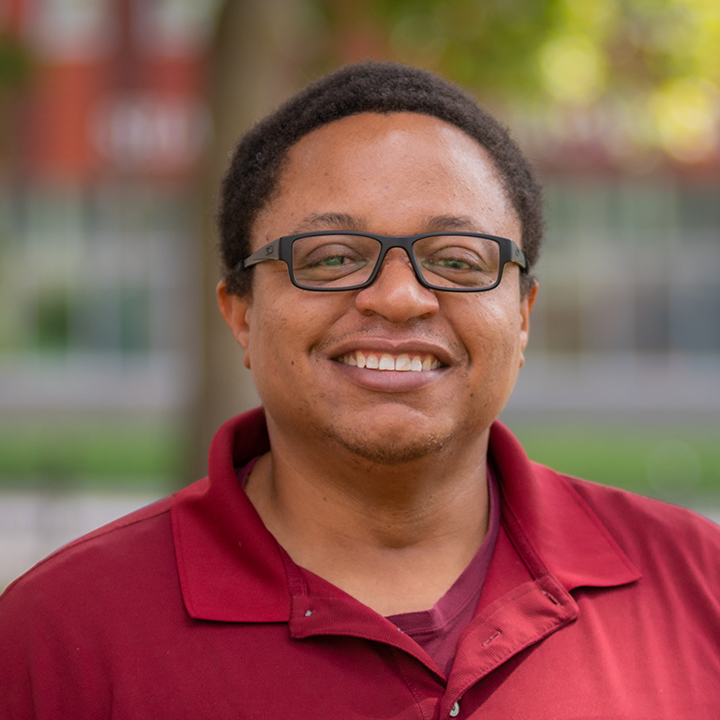
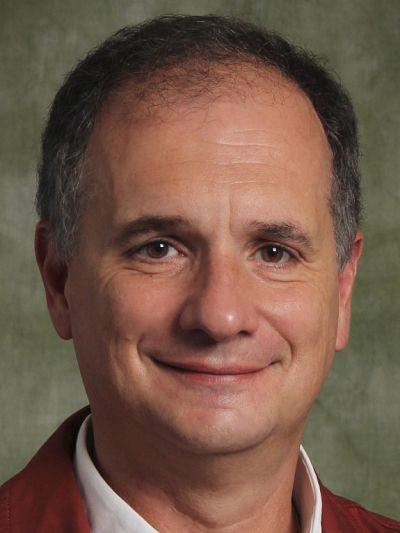
Gary Holness is an Associate Professor of Computer Science at Clark University, where he directs the Laboratory for Intelligent Perceptual Systems (LIPS). He holds a PhD in Computer Science from the University of Massachusetts Amherst (2008) focusing on machine learning ensembles, robotics, and distributed systems. Research spans: Machine learning ensembles and error diversity Robotic perception and autonomous systems Nonparametric density estimation Human-robot interaction for autism therapy Distributed frameworks for medical alerting Interactive AI with manifold learning His publications show progression from theoretical machine learning to applied systems, with recent work on spectroscopic analysis and kernel methods. Maintains active student research programs in robotics, GPU acceleration, and terrain classification.
Luis M. Rocha is the George J. Klir Professor of Systems Science at Binghamton University's Thomas J. Watson College of Engineering and Applied Science, leading the Complex Adaptive Systems and Computational Intelligence (CASCI) lab. He directs the Center for Social and Biomedical Complexity (joint with Indiana University) and previously led the NSF-NRT Interdisciplinary Training Program in Complex Networks and Systems. His academic career includes roles as Professor of Informatics at Indiana University and visiting positions at institutions like Aix-Marseille University and the Champalimaud Foundation. **Education**: PhD in Systems Science (Binghamton University, 1997); MEng and BEng in Engineering (Instituto Superior Técnico, Lisbon). **Research Interests**: Focus on complex networks, computational biology, and biomedical informatics. His work spans drug interaction analysis, social media health monitoring, and theoretical network science. **Awards**: Fulbright Scholar, Indiana University Teaching Excellence Awards (2006, 2015). **Key Contributions**: Developed CANA computational tools for Boolean networks, pioneered social media mining for health signals, and organized major conferences like Alife X and ECAL 2007. His lab (CASCI) bridges computational methods with biomedical and social complexity challenges. **Grants & Projects**: NSF-funded training programs, collaborations on digital twins in precision medicine, and cross-disciplinary initiatives in systems science.
Alexander C. Loui is a Professor in the Department of Computer Engineering at Rochester Institute of Technology (RIT), leading the Multimodal Analysis and Perception (MAP) Lab. He holds a Ph.D., M.A.Sc., and B.A.Sc. in Electrical Engineering from the University of Toronto, Canada. His academic roles include Senior Area Editor of IEEE Transactions on Image Processing and Senior Editor of SPIE/IS&T Journal of Electronic Imaging. Loui specializes in computer vision, image/video processing, machine learning, and multimedia systems, with over 100 peer-reviewed publications and 95+ patents. Research interests span video summarization, medical image segmentation, and AI-driven multimedia applications. He has led technical teams at Kodak Alaris, Kodak Research Labs, and Bell Communications Research. Awards include IEEE Region 1 Technological Innovation Award and Fellowships from IEEE and SPIE. His work bridges academia and industry, emphasizing practical algorithm development and patent innovations. Teaching responsibilities include Digital Signal Processing and Multidisciplinary Senior Design courses. Key contributions: MAP Lab leadership, over 95 patents (e.g., video object segmentation, salient foreground detection), and editorial roles in top journals. His research trends focus on label-efficient learning, trustworthy AI, and predictive content curation systems.
Dr. Dan Pescaru is an Associate Professor at the Department of Computer Science and Engineering, Politehnica University of Timisoara. His professional career includes roles as Lecturer (1999-2006) and Teaching & Research Assistant (1997-1999). He holds a Ph.D. in Computers (2003) and MS/BS degrees from the same institution. His research focuses on Cyber-Physical Systems, Wireless Sensor Networks, Computer Vision, and Artificial Intelligence, leading the SeNT research team. He has published over 90 papers and contributed to 12 grants/projects. Education: PhD: Politehnica University of Timisoara (2003) MSc: Politehnica University of Timisoara (1997) BSc: Politehnica University of Timisoara (1995) Research Interests: Cyber-Physical Systems: Sensor networks design, camera-based systems Computer Vision: Image/video processing, CNN applications Databases: Relational/oo/distributed systems Artificial Intelligence: Expert systems, machine learning, fuzzy logic He has served as a reviewer for journals like IEEE Transactions on Image Processing, MDPI Sensors, and conferences including SACI and PDCN. His work includes invited professorships at Dublin City University and Sophia Antipolis University. Active in professional organizations like IEEE and SNIA.
Dr. Marco Caminati is a Lecturer in Computer Science at Lancaster University, affiliated with the Security Lancaster research group, specializing in Distributed Systems and Software Security. His research focuses on formal methods, theorem proving, and their applications in areas like auction theory, quantum computing, and cybersecurity. He has contributed to verified algorithms, conflict resolution frameworks, and formalizations in Isabelle/HOL. His work bridges theoretical foundations with practical implementations, addressing challenges in software verification, healthcare informatics, and distributed systems. Key research interests include automated theorem proving, formal verification of concurrent systems, and applying formal methods to real-world problems such as medical guidelines and combinatorial optimization. He actively publishes in venues like the Journal of Automated Reasoning and has explored topics ranging from quantum information theory to SMT-based concurrency analysis. His publications often emphasize rigorous validation through tools like Isabelle and Mizar, ensuring correctness in complex systems. While no specific awards are listed, his contributions to formal methods have advanced applications in both academia and industry.
Maryam Tavakol is an Assistant Professor at Eindhoven University of Technology, affiliated with the Uncertainty in AI group within the Mathematics and Computer Science department. Her expertise bridges artificial intelligence, machine learning, and computational modeling for sequential systems. PhD in Machine Learning, TU Darmstadt B.Sc. & M.Sc. in Computer Science, University of Tehran Her research focuses on uncertainty estimation , reinforcement learning , and transformer architectures applied to domains like drug-target interaction prediction, soccer analytics, and music generation. Recent work explores activation sparsity in LLMs and robust VAE frameworks. Key trends in her publications (2012–2024) span reinforcement learning , neural network architectures , and applications in healthcare and creative domains . Notable themes include contextual bandits, variational inference, and energy-efficient computing. Contributed to UN Sustainable Development Goals (Education/Academic Qualification) She has supervised multiple research projects and served as corresponding author in peer-reviewed conferences. Collaborations include TU Dortmund, Leuphana University, and industry internships at Criteo.
Nilesh Madhu is a Professor for Audio and Speech Processing at Ghent University and imec, Belgium, where he leads research in the Internet Technology and Data Science Lab (IDLab). His academic journey began with a Dr.-Ing. degree (summa cum laude) from Ruhr-Universität Bochum, Germany in 2009, followed by a Marie-Curie postdoctoral fellowship at KU Leuven. Prior to his academic appointment, he served as Principal Scientist and team lead at NXP Semiconductors from 2011-2017, developing advanced audio algorithms for mobile devices. His research spans multiple domains within signal processing, with a particular focus on machine learning applications for audio and speech enhancement, automated audio scene analysis, and hearing prostheses. Professor Madhu's work bridges theoretical signal processing with practical implementations in communications, healthcare, and assistive technologies. Analysis of his recent publication record reveals a strong emphasis on deep learning approaches for speech enhancement, with particular attention to phase reconstruction, multichannel processing, and efficient model architectures. His research increasingly incorporates biomedical applications, particularly in cardiovascular monitoring using advanced sensing techniques like laser Doppler vibrometry. His laboratory work centers around the Internet Technology and Data Science Lab (IDLab) at Ghent University, where his team develops innovative signal processing algorithms with applications spanning mobile communications, hearing aids, and biomedical monitoring systems. The group maintains strong industry connections, evidenced by their focus on practical implementation constraints and real-world performance metrics.
Fan Hong is an Assistant Professor in the Department of Chemistry at the University of Florida. His research focuses on developing biomolecular tools using nucleic acids to decode and regulate cellular functions at the molecular and tissue scales. He holds a Ph.D. from Arizona State University's Biodesign Institute and completed postdoctoral training at Harvard University’s Wyss Institute. Education: B.S., Huazhong University of Science and Technology; Ph.D., Arizona State University; Postdoc, Harvard University Labs: Hong Lab (specializing in nucleic acid-based technologies) Research interests include DNA/RNA nanotechnology, spatial multi-omics, synthetic biology, and molecular dynamics modeling. His work bridges in vitro, in vivo, and in silico approaches to address grand challenges in biology and medicine. Recent studies emphasize programmable DNA-based sensors, antiviral RNAs, and thermal-plex imaging techniques. Advising and grants involve training in nucleic acid engineering and collaborative projects with labs like the Yin Lab and Yan Lab. His Hong Lab focuses on advancing biomolecular tools for precision medicine and diagnostics.
Dr Sandra Rodrigues is an Honorary Senior Research Fellow at the School of the Environment, University of Queensland. Her research focuses on coal petrology, carbon materials, and geochemistry, with emphasis on thermal maturation, organic geochemistry, and coal seam gas potential. She has authored over 60 peer-reviewed articles, contributing to global understanding of coal structure, hydrocarbon generation pathways, and applications in energy and environmental sectors. Her work spans coal characterization via hyperspectral imaging, coking behavior analysis, and high-temperature material transformation studies. Key projects include investigations into the Toolebuc Formation’s unconventional gas potential and thermal evolution in Mozambique’s Moatize Basin. Rodrigues collaborates internationally on coal classification systems (e.g., ICCP Working Groups) and has pioneered deep learning applications in coal reflectance measurement. Recent research highlights include studies on lithium-enriched coals in China, Jurassic fluid events in Australian basins, and carbon isotope evidence of methane clathrate release during deglaciation. Her interdisciplinary approach bridges geology, chemistry, and engineering, addressing challenges in resource characterization, environmental management, and energy sustainability.
Andrew Fano is a Clinical Professor of Computer Science at Northwestern University and serves as the McCormick Director of the Kellogg-McCormick MBAi Program. He previously spent 25 years at Accenture Labs as Global Managing Director for AI Research, leading global teams in applied AI projects across industries like healthcare, retail, and pharma. His research focuses on combining emerging AI technologies with human capabilities to solve industry-specific challenges, with notable contributions in causality detection, quantum computing, and responsible AI deployment. Fano is a top patent holder at Accenture, emphasizing practical AI applications and ethics. He also led the Accenture Labs University program, fostering academic-industry collaborations. Education: PhD in Computer Science, Northwestern University AB in Cognitive Science, Vassar College His research interests span causal reasoning in NLP, AI ethics, and cross-industry AI integration. Recent work includes analyzing diabetes-related social media for causal insights and developing quantum optimization systems. He prioritizes real-world applicability, ensuring technologies address practical business and societal needs responsibly. Awards: None explicitly listed, though recognized as a top patent holder at Accenture. Advising & Grants: Advised on multiple AI projects across industries, coordinated research sponsorships with 20+ universities through Accenture Labs. At Northwestern, leads the MBAi Program to bridge academic and corporate AI expertise. Labs/Teams: Oversees the MBAi Program’s interdisciplinary initiatives and previously managed global AI research teams at Accenture Labs, collaborating with partners in the US, Ireland, India, China, and France.
Peter Finn serves as Senior Lecturer and Events Officer in the Department of Criminology, Politics and Sociology at Kingston University's School of Law, Social and Behavioural Sciences. With over a decade of teaching experience at Kingston and Goldsmiths, University of London, he holds a PhD and MSc from Kingston University alongside a BA from Liverpool University. His research centers on the intersection of national security and human rights, particularly examining the logic underpinning policies at this nexus. Key interests include US electoral systems, the relationship between national security and official records, executive power (especially the US presidency), and the impact of generative AI on political processes. Finn actively investigates how democratic oversight functions within security frameworks and analyzes electoral dynamics through projects like '50 States or Bust!' Finn's scholarly impact spans 15+ recent publications analyzing 2024 US elections, Trump-era politics, and AI's role in democracy. His work reveals consistent focus on election integrity, historical documentation of political events, and emerging challenges from artificial intelligence in political communication. Notable patterns include real-time analysis of electoral developments and critical examination of official record-keeping during crises. As Project Lead for the 'Covid-19 and Democracy Project' and Web Lead for the American Politics Group of the Political Studies Association, Finn bridges academic research with public engagement. His media contributions to The Guardian, The Conversation, and LSE USAPP demonstrate significant knowledge transfer. Academic leadership includes managing module teaching teams, research assistants, and editorial roles for edited volumes on national security and democracy. Finn also serves as Academic Misconduct Lead and holds Fellowships from the Higher Education Academy.
Matteo Cristani is an Associate Professor at the University of Verona 's Department of Computer Science , where he teaches courses in Artificial Intelligence , Semantic Web , and Programming across multiple degree programs including Bioinformatics, Computer Science, and Artificial Intelligence. His research focuses on Knowledge Representation , NLP , and Formal Security Analysis , with applications spanning from blockchain technology to geospatial systems. Research Focus Intelligent agents and multi-agent systems Distributed artificial intelligence Formal methods in security theory Network security and cybersecurity NLP and large language models Ontology engineering Projects Active in third-mission activities, Cristani leads projects such as SHIELD (Securing Decentralized Finance and Healthcare Systems), SLOTS (Smart Legal Order in Digital Society), and NOMEN (Next-Gen Cyber Ranges). He has participated in 30+ research initiatives since 2001, including PRIN grants and industrial collaborations in semantic web applications.
Pietro Sala is an Associate Professor at the University of Verona , Department of Computer Science. His research intersects Temporal Data Mining , Biomedical Decision Support Systems , and Formal Verification of temporal logic specifications. Key Research Areas: Interval Temporal Logic and Model Checking Temporal BPMN for healthcare processes Data fusion in clinical environments Algorithm design for repetitive task automation Notable Projects: Dioxin impact analysis on cardiovascular development Open-source clinical data warehousing (DW-SAN) Real-time system verification frameworks Teaching: Lecturer for Biomedical Decision Support Systems (Master's) Instructor for Data Mining and Software Engineering courses The articles highlight his work in temporal logic verification (2025), clinical process modeling (2024-2025), and data integration for NLP pipelines (2023). His publications span theoretical computer science conferences (LICS, ICALP) and healthcare informatics journals (ICHI, CBM).
Manuel Lama Penín is a Full Professor at the University of Santiago de Compostela (USC), affiliated with the Department of Electronics and Computing within the School of Engineering. He is a member of the CITIUS research center and the GSI (Grupo de Sistemas Intelixentes) research group, with prior involvement in the TecnoEduc (Technology in Education) group. His doctoral thesis (2000) focused on knowledge modeling and architecture for therapeutic expert systems in intensive care units, advised by Dr. Senén Barro and Dra. María Jesús Taboada Iglesias. His research expertise spans Process Mining, Artificial Intelligence, and Data Science with applications in healthcare informatics, business process optimization, and educational technologies. Key contributions include frameworks for predictive monitoring (e.g., VERONA library), declarative process alignment (DeclareAligner), and conversational agents for process mining (C-4PM). He also explores explainable AI, semantic web technologies, and natural language generation for process documentation. His work intersects interdisciplinary areas like healthcare workflows, cloud-based process analysis, and machine learning for event log analysis. Notable projects include semantic annotation of educational resources, adaptive learning systems (SoftLearn platform), and service composition algorithms. His research is supported by collaborations with healthcare institutions and industry partners. Dr. Lama Penín has contributed to over 70 peer-reviewed publications since 2000, emphasizing methodological advancements in process intelligence, AI-driven analytics, and educational technology integration. His work addresses challenges in process variability detection, real-time monitoring, and bridging technical systems with human-centric processes.
Alexander Tuzhilin is a distinguished academic affiliated with New York University, specializing in data science and information systems. He has been actively contributing to the field of recommender systems, context-aware recommendations, and machine learning since the mid-1980s. His work focuses on enhancing recommendation algorithms through contextual analysis, deep learning, and multi-criteria evaluation, with applications ranging from e-commerce to healthcare and transportation. His research interests include improving recommendation accuracy by incorporating user context (e.g., location, time, and preferences), developing novel techniques for unexpected recommendations to boost user satisfaction, and advancing cross-domain recommendation systems. He has also explored the intersection of AI with real-world applications such as emergency detection via social sensors and medical diagnosis using deep learning. Recent publications highlight advancements in hierarchical contextual embeddings, adversarial learning for cross-domain recommendations, and applying deep learning to CT scan analysis for disease detection. His work often emphasizes practical impact, such as optimizing travel routes or enhancing user trust in recommendation systems through transparent design. Prof. Tuzhilin has collaborated extensively with industry and academic partners, contributing to workshops like CARS (Context-Aware Recommender Systems) and ComplexRec. He has advised numerous researchers and remains a key figure in advancing the theoretical and applied aspects of AI-driven recommendation technologies.