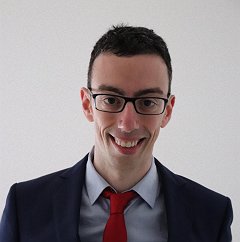
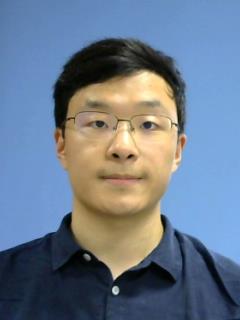
Jürgen Cito is an Associate Professor with tenure at Vienna University of Technology (TU Wien), specializing in software engineering, explainable AI, and performance engineering. He leads research at the IPA Lab (as indicated by his personal website) and maintains a visiting researcher position at Google. His academic journey began with joining TU Wien as an Assistant Professor in Spring 2020, with promotion to Associate Professor announced in April 2024. His research interests span multiple critical areas of modern software development, with particular focus on developer experience, program comprehension, and the intersection of AI with software engineering practices. His work bridges theoretical foundations with practical industrial applications, as evidenced by collaborations with major technology companies. Analysis of his recent publications reveals a strong emphasis on practical tools and methodologies that enhance software quality, performance, and security. His research trajectory shows increasing focus on explainable AI techniques applied to software engineering problems, performance prediction from source code, and automated security testing approaches that leverage large language models. best teaching award for distance learning for Web Engineering (2020) Cito actively contributes to the software engineering community through numerous conference committee roles, including program committee positions at ASE, ICSE, ESEC/FSE, and other major venues. His lab appears to focus on developer tools, program analysis, and AI-assisted software engineering, with connections to both academic and industrial research environments.
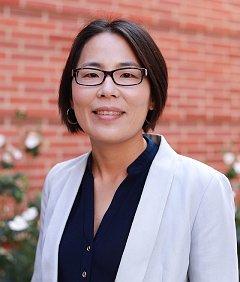
Gabriele Bavota is an Associate Professor at the Software Institute of Università della Svizzera Italiana (USI) in Lugano, Switzerland. He leads the SEART (Software Engineering Advanced Research Team) group and serves as Principal Investigator for the DEVINTA ERC starting grant focused on developer intelligence through mining software artifacts. Dr. Bavota's research spans Software Quality, Empirical Software Engineering, and Mining Software Repositories. His work has evolved from foundational studies on code smells and technical debt to cutting-edge research at the intersection of artificial intelligence and software development. He has made significant contributions to understanding API usage patterns, software quality metrics, and developer behavior through empirical studies of large software repositories. His recent publications reveal a strong focus on AI-assisted software development, with extensive research examining code generation, code summarization, and code review automation using large language models. He has also expanded his research to include quality assurance in game development (detecting game stuttering and low engagement events) and voice user interface testing. His work consistently bridges theoretical insights with practical applications for software developers. ACM SIGSOFT Distinguished Paper Award for API compatibility research (MSR 2019) ACM SIGSOFT Distinguished Paper Award for Hugging Face model documentation study (ICPC 2024) ACM SIGSOFT Distinguished Artifact Award for deep learning fault taxonomy (ICSE 2020) As an active member of the software engineering research community, Dr. Bavota serves on program committees for major conferences including ICSE, ASE, FSE, and MSR. He has held leadership roles such as Program Co-Chair for ICSME 2023 and Vision/Reflection Track Co-Chair for ICSE. His SEART research group develops practical tools like the SEART Data Hub that streamline large-scale source code mining and preprocessing for empirical software engineering research.
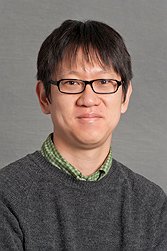
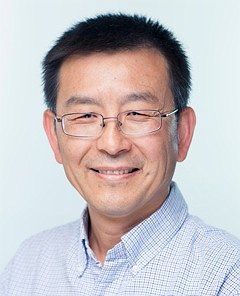
Shin Yoo is a tenured Full Professor in the School of Computing at Korea Advanced Institute of Science and Technology (KAIST), where he leads the Computational Intelligence for Software Engineering (COINSE) research group. He received his PhD from King's College London in 2009 under the supervision of Prof. Mark Harman. Currently, he serves as the General Chair for ASE 2025, which will be held in Seoul, Korea. Professor Yoo earned his PhD in Computer Science from King's College London (2009), following an MSc in Software Engineering with Distinction from the same institution (2006). His academic journey includes positions as Tenured Associate Professor (2021-2025), Associate Professor (2018-2021), and Assistant Professor (2015-2018) at KAIST, as well as Lecturer and Research Associate positions at University College London and King's College London. His research focuses on the intersection of software engineering and artificial intelligence, particularly in search-based software engineering, software testing, automated debugging, SE4AI (Software Engineering for AI), and AI4SE (AI for Software Engineering). Professor Yoo's work bridges theoretical foundations with practical applications, developing innovative techniques for fault localization, test case generation, and debugging using machine learning and genetic programming approaches. His research has significant implications for improving software reliability and development efficiency in both traditional software systems and AI-powered applications. Professor Yoo's recent publications demonstrate a clear trend toward leveraging large language models and deep learning techniques for software engineering tasks. His work spans fault localization, automated debugging, GUI testing, and program analysis, with increasing focus on the challenges and opportunities presented by AI systems. His research shows a consistent evolution from traditional search-based software engineering to AI/ML-enhanced approaches, reflecting the broader trends in the field. ACM SIGEVO HUMIES Silver Medal (2017) for human competitive application of genetic programming to fault localization research IEEE TCSE Most Influential Paper Award (ICST 2024) for work on mutation-based fault localization Professor Yoo has supervised five PhD students to completion, with his former students now holding positions as assistant professors, post-doctoral researchers, and software engineers at institutions including Kyoungpook National University, Max-Planck Institute Security & Privacy, Università della Svizzera Italiana, Roku Korea, and NUS. He currently serves as an associate editor for the Journal of Empirical Software Engineering and ACM Transactions on Software Engineering and Methodology, and has held significant leadership roles in major software engineering conferences including Program Co-chair for SSBSE (2014), ICST (2018), and ICSE NIER track (2020), General Chair for SSBSE (2022), and Testing & Analysis Area Chair for ICSE (2024). As leader of the Computational Intelligence for Software Engineering (COINSE) group at KAIST, Professor Yoo directs research that combines computational intelligence techniques with software engineering challenges. The group focuses on developing novel approaches to software testing, debugging, and analysis using search-based and AI-driven methods. Their work spans both theoretical foundations and practical implementations, with strong connections to industry challenges and applications.
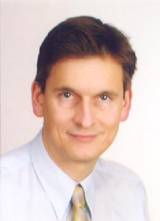
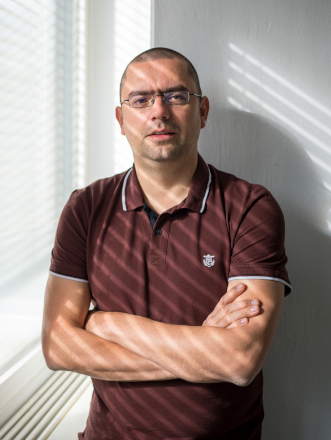
Prof. Dr. Thomas Ludwig is the Director of the German Climate Computing Center (DKRZ) and a Professor at the Universität Hamburg. He holds a doctoral degree and habilitation from the Technische Universität München, with expertise in High-Performance Computing (HPC), energy efficiency, and data storage systems. His research focuses on optimizing parallel systems, storage technologies, and computational efficiency for climate science applications. He leads projects like AIMES and PeCoH, advancing HPC storage and energy-aware computing. Education: Doctoral degree and habilitation from TU München (1988–2001). Chair in Parallel Computing at Universität Heidelberg (2001–2009). Research Interests: HPC, data reduction techniques, energy-efficient systems, parallel I/O optimization, and climate modeling infrastructure. Recent Research Trends: His work emphasizes storage system efficiency, machine learning in HPC, and convergence between HPC and Big Data. Key contributions include frameworks for portability (Vecpar), automated performance tools, and energy-aware storage solutions. Awards: Some publications received recognition, e.g., a Best Paper award in 2014 for work on energy efficiency. However, no personal awards are explicitly listed. Advising & Grants: Supervised numerous theses in HPC, I/O optimization, and energy efficiency. Leads major projects funded by national and international initiatives. Labs/Teams: Heads the DKRZ team providing supercomputing and data management for climate research, collaborating with global institutions like the University of Hamburg and European research networks.
Lars Grunske is a Professor at the Department of Computer Science, Faculty of Mathematics and Natural Sciences, Humboldt University of Berlin. His research focuses on software and systems engineering, safety-critical systems, and software evolution. Department: Computer Science University: Humboldt University of Berlin Academic Rank: Professor His work spans automated software analysis, probabilistic model checking, and formal methods for complex systems. Key collaborations include researchers from Swinburne University, University of Hull, and University of Queensland. Recent publications address research software engineering, program repair, and explainability in cyberphysical systems. Professional roles include leadership in examination boards and program committees for conferences like ICSE and ASE. Contact info: Email: grunskel@hu-berlin.de Phone: +49 30 2093-41142 Address: Unter den Linden 6, Berlin
Dr. Pascal Reuss is a Researcher at the Intelligent Information Systems (IIS) Division within the Institute of Computer Science , University of Hildesheim . His work focuses on Case-Based Reasoning (CBR) systems, Multi-Agent Systems , and Knowledge Management applications. Active in CBR framework development and game-based AI research Teaching Computer Science III (Databases) for winter 2025/26 Participating in university sustainability initiatives like Stadtradeln 2024/25 Reuss contributes to AI education through practical implementations in gaming environments and has developed visualization tools for CBR agent behavior. His research spans multi-agent collaboration , dynamic case bases , and domain-specific language implementations for knowledge maintenance. Notable contributions include: Co-developing the FEATURE-TAK framework for knowledge extraction Designing case factories for distributed CBR systems Implementing finite state machines for tactical game agents Creating CBR-based fitness planning systems His work appears in various CBR and Game Development publications from 2011-2024. The research demonstrates practical applications of CBR in aircraft maintenance diagnostics , training plan generation , and educational technology contexts.
Wing Lam is an Assistant Professor at George Mason University specializing in software engineering with a focus on software testing methodologies. His academic service includes program committee membership for major conferences including ASE, ICSE, ISSTA, and ESEC/FSE, as well as session chair roles across multiple tracks. His research interests center on flaky tests , mobile application testing , and continuous development optimization . Lam's work addresses critical challenges in test reliability, particularly order-dependent flaky tests and resource-related flakiness. His research bridges theoretical foundations with practical applications in modern software development pipelines, with recent expansion into AI-assisted testing methodologies. Lam's publication record shows a clear trajectory focusing on flaky test detection and mitigation, with approximately 60% of his recent work dedicated to various aspects of this problem. His research increasingly incorporates machine learning techniques for UI testing and test optimization, reflecting broader trends in the field. The consistent publication venue pattern across top software engineering conferences indicates strong recognition within the academic community. Lam has served in multiple leadership roles including Program Co-Chair for MOBILESoft Research Track and Committee Member for ASE's New Ideas and Emerging Results (NIER) Track. His involvement in workshops focused on flaky testing demonstrates his specialization in this niche area of software testing.
Prof. Michael Felderer is the Director of the Institute for Software Technology at the German Aerospace Center (DLR) and a full professor at the University of Cologne. His expertise spans software testing, security, architectures, empirical software engineering, and emerging technologies like AI and quantum computing. Previously, he held roles as associate professor at the University of Innsbruck, guest professor at Blekinge Institute of Technology, and CEO of QE LaB Business Services. His research focuses on developing methods to enhance software quality and trustworthiness through collaborations with academia and industry. Education details are not explicitly provided, but his career trajectory indicates advanced academic training in software engineering. Research interests include AI-driven software systems, data trustworthiness in IoT, and agile methodologies. He has co-authored over 200 publications and received 14 best paper awards, with notable recognition from the Journal of Systems and Software. Labs/Teams: Leads the DLR Institute for Software Technology, focusing on open-source software solutions for aerospace, energy, and security domains. Collaborates with global researchers and companies on advanced engineering applications like quantum computing and digital twins.
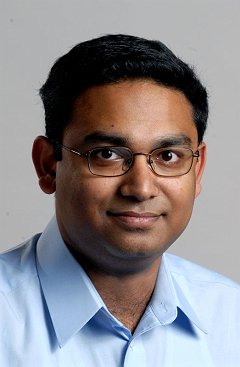
Koushik Sen is a Professor in the Department of Electrical Engineering and Computer Sciences at the University of California, Berkeley. His research focuses on developing software tools and methodologies to enhance programmer productivity and software quality, with expertise in Software Engineering, Programming Languages, and Formal Methods. Education: B.Tech from Indian Institute of Technology, Kanpur M.S. and Ph.D. in Computer Science from University of Illinois at Urbana-Champaign Research Focus: Professor Sen pioneers automated testing techniques including concolic testing and DART (Directed Automated Random Testing). His work bridges formal methods with practical software development, emphasizing bug detection, program synthesis, and AI-driven software analysis tools. Recent innovations include machine learning approaches for code recommendation and fuzzing. Publication Trends: His recent publications (2019-2023) demonstrate strong emphasis on fuzzing techniques, program synthesis, and AI/ML applications in software engineering. Notable domains include smart contract security, automated testing, and developer tooling, with frequent collaborations in top-tier conferences. Awards and Honors: NSF CAREER Award (2008) Sloan Foundation Fellowship (2011) IFIP TC2 Manfred Paul Award (2010) Okawa Foundation Research Grant (2015) Multiple ACM SIGSOFT Distinguished Paper Awards UIUC Distinguished Alumni Educator Award (2014) Leadership: Active program committee member for premier conferences (PLDI, ICSE, ISSTA) and keynote speaker. His research is supported by NSF, Okawa Foundation, and Sloan Foundation.
Zhongxin Liu is an Assistant Professor at the College of Computer Science and Technology , Zhejiang University , China. He earned his Ph.D. from the same institution in 2021. His research focuses on Intelligent Software Engineering (AI4SE) , leveraging software "big data" to improve code understanding, generation, and security through machine learning techniques. Published in top-tier venues: TSE, TOSEM, ICSE, FSE, ASE, ISSTA Active in academic service: Reviewer for TSE, TOSEM, ASEJ, etc. Visiting Professor at University of Stuttgart (2024-2025) His recent work explores Large Language Models (LLMs) for code intelligence, security hardening, and vulnerability detection. Papers emphasize cross-domain applications, zero-shot learning, and API/code dependency analysis. Scientific awards include: ACM SIGSOFT Distinguished Paper Awards (ASE 2018, 2019, 2020; ISSTA 2025) Zhejiang University Qizhen Scholar (2021) CCF TCSE Doctoral Dissertation Award (2023) Recruiting undergraduate interns, graduate students (MS/Ph.D.), and postdocs for code intelligence research. Contact: liu_zx@zju.edu.cn .
Miryung Kim is a Professor and Vice Chair of Graduate Studies in UCLA's Computer Science Department, where she directs the Software Engineering and Analysis Laboratory. She is renowned for her pioneering work in software evolution, code clone management, and establishing the emerging field of Software Engineering for Data Intensive Computing (SE4DA and SE4ML). Her research focuses on automated testing and debugging for Apache Spark, developer tools for heterogeneous computing, and conducting systematic studies of refactoring practices in industry. She led the first large-scale study of data scientists in industry and developed JDebloat, a Java bytecode debloating tool that made significant tech transfer impact to the Navy. Her recent publications demonstrate strong trends in fuzz testing for big data analytics and heterogeneous computing, with a focus on natural input generation, co-dependence awareness, and leveraging hardware probes for acceleration. Her work bridges software engineering with data-intensive and heterogeneous computing paradigms. ACM SIGSOFT Influential Educator Award (2022) ICSME Most Influential Paper Award (2023 and 2020) NSF CAREER award Google Faculty Research Award Okawa Foundation Research Award Humboldt Fellow ACM Distinguished Member As an academic advisor, she has produced eight tenure-track faculty members at institutions including Columbia, Purdue, and Virginia Tech. Her research has been supported by National Science Foundation, Air Force Research Laboratory, Google, IBM, Intel, Okawa Foundation, Samsung, and Office of Naval Research. She previously served as Program Co-Chair of ESEC/FSE 2022 and has delivered keynotes at ASE 2019 and ISSTA 2022. She maintains active industry collaborations, serving as an Amazon Scholar at Amazon Web Services and having spent time as a visiting researcher at Microsoft Research.
Claire Le Goues is a Professor of Computer Science at Carnegie Mellon University, primarily affiliated with the Software and Societal Systems Department (S3D) within the School of Computer Science (SCS). She serves as the Associate Department Head for Faculty within S3D and leads the squaresLab research group. Le Goues also co-directs the REUSE@CMU summer program and teaches software engineering and program analysis at undergraduate, master's, and PhD levels. Her research spans software engineering and programming languages, with a particular focus on how to construct, maintain, evolve, improve/debug, and assure high-quality software systems. Le Goues has made significant contributions to automated program repair, program analysis, and defect detection. Her work often bridges theoretical foundations with practical applications, addressing real-world challenges in software development and maintenance. Le Goues' recent publications demonstrate a clear trend toward integrating large language models and generative AI with traditional software engineering techniques. Her research examines how these technologies can enhance program repair (BatFix, AdverIntent-Agent), vulnerability detection (Interpretable Vulnerability Detection Reports), and testing (LWDIFF for WebAssembly). This represents an evolution from her earlier foundational work in program repair (GenProg) toward leveraging contemporary AI advancements. She has mentored numerous students through her squaresLab research group and has been instrumental in developing educational programs that prepare the next generation of software engineers. Le Goues is also known for her advocacy for double-blind review processes in academic conferences, having implemented this approach when co-chairing the Symposium for Search-Based Software Engineering in 2014.
Jingling Xue is a Scientia Professor at the School of Computer Science and Engineering at the University of New South Wales (UNSW) in Sydney, Australia. As an IEEE Fellow of the Computer Society, he leads the Programming Languages and Compilers research group, focusing on practical applications of compiler optimization and program analysis techniques. His work bridges theoretical foundations with real-world software systems, particularly in developing open-source tools for large-scale program analysis. Professor Xue received his B.Eng and M.Eng degrees from Tsinghua University in 1984 and 1987, respectively, followed by a PhD from the University of Edinburgh in 1992. His academic journey has established him as a leading figure in programming languages and compiler technology. Xue's research spans programming languages, compiler technology, and program analysis with emphasis on practical relevance. His current projects include compiler techniques for improving parallelism and locality, pointer/alias analysis for million-line-scale programs, and static/dynamic analysis for detecting bugs and security vulnerabilities in real-world applications like web browsers and Android apps. His group actively develops open-source tools to support scientific replicability and reproducibility in these areas. His recent publications demonstrate a strong focus on applying program analysis techniques to modern challenges including AI compilers, homomorphic encryption, security vulnerability detection, and graph processing systems. The work shows evolution from traditional compiler optimization to addressing emerging domains like privacy-preserving computation and deep learning systems while maintaining rigorous theoretical foundations. Scientific Awards: Best Paper Award at CGO'13 Best Paper Award at CGO'16 Distinguished Paper Award at ECOOP'16 Distinguished Paper Award at ICSE'18 Distinguished Paper Award at ISSTA'19 Distinguished Paper Award at ASE'19 Distinguished Artifact Award at ISSTA'23 Best Artifact Award at FSE'23 Distinguished Paper Award at ASE'23 Test-of-Time Award at CGO'21 Professor Xue has successfully supervised 30 PhD students to completion, many of whom now work as professors or researchers in academia and industry. He has served as Program Chair for major conferences including LCTES'13, CC'18, CGO'20, and General Chair for LCTES'20. His group currently focuses on memory safety in Rust, smart contract analysis, AI compilers, compilation for privacy-preserving computation, and adversarial attacks in deep learning. The Programming Languages and Compilers group maintains strong connections with industry partners, translating theoretical advances into practical tools for real-world software development challenges. Their work on pointer analysis, memory safety, and compiler optimizations continues to influence both academic research and industrial practice.
Sven Apel is Professor of Computer Science at Saarland University, where he holds the Chair of Software Engineering and directs the Saarbrücken Graduate School of Computer Science within the Saarland Informatics Campus. His research aims to advance software engineering into an era of intensive automation by developing methods, tools, and theories for building efficient, reliable, and maintainable software systems, with a strong emphasis on the human factor and interdisciplinary inquiry. His primary research interests include software variability and configuration, AI-based program generation and optimization, socio-technical software analysis, and the application of empirical and neurophysiological methods to study program comprehension. He actively collaborates with industry partners such as Siemens AG, Bosch Engineering, and Airbus Helicopters to apply his research in real-world contexts. His recent publications demonstrate a strong trend towards integrating artificial intelligence and neurocognitive methods into software engineering, focusing on configurable systems, performance modeling, debugging processes, and the scientific validity of empirical studies. His work spans top venues like ICSE, FSE, ASE, and IEEE TSE. ERC Advanced Grant “Brains On Code” ASE Fellow ACM Distinguished Member Hugo Junkers Award for Research and Innovation Heisenberg Professorship (DFG) Emmy-Noether Fellowship (DFG) Best Doctoral Dissertation Awards (University of Magdeburg, Ernst-Denert Foundation, 2007) Most Influential Paper Awards (SPLC'19, ICPC'22, GPCE'23) ACM SIGSOFT Distinguished Paper Awards (ICSE'15, ICSE'21) Best Paper Awards (SPLC'11, Modularity'15, Academy of Management'18) Distinguished Reviewer Awards (ASE'18, ICSE'24, FSE'24) Sven Apel has secured significant research funding, including an ERC Advanced Grant (€2.5M) and multiple DFG grants as Principal Investigator and Project Leader. He has advised numerous PhD and Master’s students and is actively involved in the academic community through program committees for major conferences like ICSE, FSE, and ASE. His work is conducted within a collaborative environment that includes close partnerships with researchers at the Max Planck Institute for Informatics and other institutions within the Saarland Informatics Campus.
Prof. Dr. Thomas Farrenkopf is a full-time Professor in the Department of Business Informatics at the Technische Hochschule Mittelhessen , serving as Dean of Studies . He leads the Business Informatics Bachelor program and specializes in digitalization, multi-agent systems, and AI-driven decision support. Expertise Areas : Industry 4.0, Smart Factory, Semantic Web, full-stack software development Contact : thomas.farrenkopf@mnd.thm.de Research Focus : His work bridges knowledge-based methods with practical applications in artificial intelligence, particularly through multi-agent systems for traffic modeling and business simulations. He developed AGADE Traffic (a knowledge-based traffic simulator) and ATHOS (a domain-specific language for multi-agent simulations), focusing on scalability and complexity reduction. Recent studies explore individual preferences' impact on traffic policies and agent-based feedback mechanisms in business contexts. Academic Contributions : With over 15 publications since 2013, his research spans agent-based modeling, semantic web applications, and smart manufacturing - notably improving throughput times in toolmaking by 90% through Industry 4.0 implementations. Teaching & Supervision : Actively supervises Bachelor's Practical Projects (BPP), providing guidance for internship-related academic work through structured evaluation processes and electronic reporting systems. Collaborations : Works with international researchers like Johannes Nguyen, Simon T. Powers, and Michael Guckert, publishing in venues such as SN Computer Science , Lecture Notes in Computer Science , and Journal of Artificial Societies and Social Simulation .