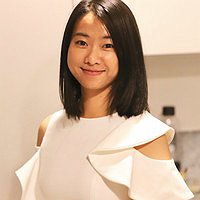
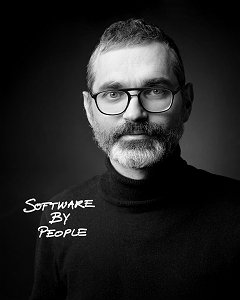
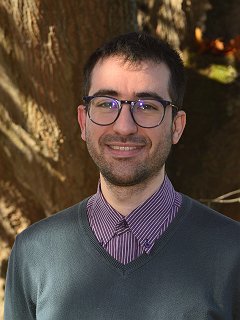
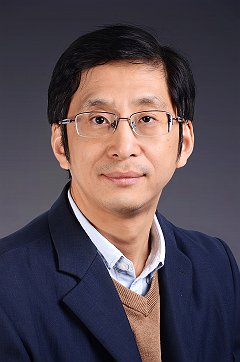
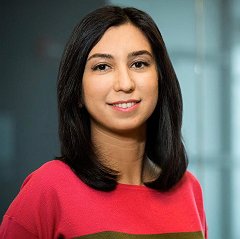
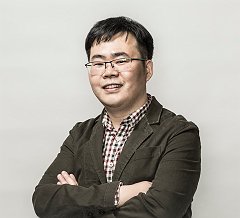
He Ye serves as an Assistant Professor at University College London (UCL), specializing in AI-driven software engineering solutions. His work bridges academic research and industry applications through EuniAI, a startup transforming research into developer tools. Research focuses on code agents for automating software tasks, with three core thrusts: Codebase context retrieval to enhance LLM capabilities Automated issue resolution systems Code agent memory construction His publications (2021-2025) demonstrate consistent innovation in fault localization and program repair. Current advising includes PhD students Zhaoyang Chu and Xiang Li (starting Fall 2025), alongside research assistants Yue Pan, Jiayi Xu, and Han Li. He co-founded EuniAI to commercialize research solutions for practical developer challenges. He actively shapes the field through workshop organization ( LMPL@SPLASH 2025 , APR@ICSE 2025 ) and program committee roles across major conferences including ASE, ICSE, and ESEC/FSE.
Alexander Serebrenik is a full professor of social software engineering at the Eindhoven University of Technology in the Netherlands, working within the Department of Mathematics and Computer Science. His academic profile spans decades of interdisciplinary research bridging computer science and social sciences. Professor Serebrenik's research focuses on facilitating software evolution through understanding social aspects of development. His work integrates computer science methods (socio-technical coordination theory, natural language processing, machine learning) with organizational psychology principles. A consistent theme across his publications is empiricism - addressing software engineering challenges through observation and experimentation while balancing social and technical perspectives. His recent work increasingly emphasizes diversity, equity, and inclusion in software engineering, culminating in his 2024 book "Equity, Diversity, and Inclusion in Software Engineering: Best Practices and Insights" (APress). His publication record reveals evolving interests from socio-technical coordination to human factors, community dynamics in open source, and now DEI-focused research. Distinguished Paper Award at ICSE 2023 Distinguished Paper Award at MSR 2023 Distinguished Reviewer Award at FSE 2020 Senior member of IEEE Member of ACM As an academic leader, Professor Serebrenik has mentored PhD students including Tukaram Muske, and actively participates in doctoral symposia. His service includes roles as Diversity and Inclusion Co-Chair at multiple conferences and extensive program committee participation across the software engineering conference landscape. His research group at TU/e maintains an active program studying the social dimensions of software engineering through empirical investigations, contributing significantly to understanding how human factors influence development processes and outcomes.
Djamel Eddine Khelladi is a CNRS Researcher at the IRISA laboratory within the DIVERSE team at University of Rennes, specializing in software engineering with emphasis on model-driven techniques and empirical validation. His work bridges theoretical frameworks and industrial-scale applications, particularly in evolving software ecosystems. His academic foundation includes a Ph.D. from Sorbonne University (formerly University Pierre et Marie Curie) at the Laboratory of Computer Science of Paris 6 (LIP6), followed by postdoctoral research at Johannes Kepler University Linz's Institute for Software Systems Engineering. This trajectory established his expertise in software evolution and model-driven approaches. Khelladi's research centers on software evolution challenges, particularly model-code co-evolution in highly-configurable systems like the Linux kernel. He develops scalable analysis tools (e.g., HyperAST, HyperDiff) and investigates empirical phenomena in build systems, configuration management, and polyglot programming environments. Recent work increasingly integrates large language models for automated co-evolution tasks while maintaining rigorous empirical validation. His publication trends reveal a consistent focus on practical tooling for software evolution, with growing exploration of AI-assisted engineering. Key themes include scalability in software history analysis, reproducibility in configurable systems, and debugging multi-language environments, often using Linux kernel ecosystems as testbeds. As an active community contributor, Khelladi serves on program committees for ASE, ICSE, and ESEC/FSE while advancing research through the DIVERSE team at IRISA. This group specializes in variability-intensive software systems, providing the collaborative environment for his empirical and tool-building research.
Hongyu Zhang is a Professor and Dean of the School of Big Data and Software Engineering at Chongqing University, China, and an Honorary Professor at The University of Newcastle, Australia. Previously, he served as a Lead Researcher at Microsoft Research Asia and an Associate Professor at Tsinghua University, China. He received his PhD from the National University of Singapore in 2003. His academic journey spans prestigious institutions, combining industry research experience with academic leadership. Dr. Zhang's research interests focus on intelligent software engineering, software analytics, data-driven software engineering, software fault management, testing and debugging, and software maintenance and reuse. His work centers on improving software quality and productivity by mining and analyzing vast amounts of software data. Over the years, he has developed innovative methods that apply data mining, machine learning (including deep learning), and information retrieval techniques to extract knowledge from software data and solve complex software engineering problems. His research spans three major areas: intelligent programming (code search, code summarization, code generation), intelligent quality prediction (defect prediction, cloud failure prediction, performance prediction), and intelligent fault detection and diagnosis (log-based fault detection, crash-based fault localization, bug report analytics). His recent publications demonstrate a clear trend toward integrating large language models and deep learning techniques with traditional software engineering practices. The research spans intelligent programming assistance, code security, UI automation, distributed systems optimization, and performance analysis. His work increasingly focuses on practical applications of AI in software engineering, with emphasis on real-world impact in industrial settings, particularly in microservices, cloud systems, and large-scale software development environments. 8 ACM Distinguished Paper Awards Best Paper Award: How Long Will it Take to Mitigate this Incident for Online Service Systems? David Lorge Parnis Fellowship Senior Member of IEEE Distinguished Member of ACM Distinguished Member of CCF Fellow of Engineers Australia (FIEAust) Recognized in The Australian's Top Researchers special edition as leading researcher in Software Systems World's Top 2% Scientists (career-long) Dr. Zhang has successfully advised numerous PhD and Master's students who have gone on to prominent positions at leading technology companies and academic institutions worldwide. His research has been supported by significant grants including Australian Research Council Discovery Projects (as Lead CI) and multiple National Science Foundation of China projects. His work has made tangible impacts in industry, most notably through the Microsoft Developer Assistant project which received over 450K downloads in 2016. He leads research groups focused on intelligent software engineering and software analytics, with strong collaborations between Chongqing University, The University of Newcastle, and Microsoft Research. His teams develop practical tools for code intelligence, log analysis, and fault diagnosis that are deployed in real-world online service systems.
Saba Alimadadi is an Assistant Professor in the School of Computing Science at Simon Fraser University, specializing in software engineering with focus on program analysis, debugging, and testing for dynamic languages including JavaScript, TypeScript, and Python. Her research develops practical tools to improve developer productivity through semi-automated comprehension and analysis techniques. Her research interests include: JavaScript program analysis for asynchronous code Debugging methodologies for web applications Testing techniques for dynamic languages Developer productivity tooling Code optimization for server-side JavaScript Dr. Alimadadi's publication record shows consistent contributions to top software engineering venues, with recent work focusing on asynchronous JavaScript analysis, code coverage criteria, and JavaScript application optimization. Her research bridges theoretical program analysis with practical tool development for real-world developer challenges. She serves on program committees for major conferences including ICSE (2021-2026), ASE (2019-2025), and ISSTA (2018-2025), and has held organizational roles such as SPLASH/ISSTA 2026 Poster/Demo/SRC Co-Chair and ASE 2022 Proceedings Chair. At Simon Fraser University, Dr. Alimadadi teaches CMPT 276: Introduction to Software Engineering and CMPT 982/479: Special Topics on Web Engineering, while actively recruiting graduate students for her research group.
Song Wang is an Associate Professor in the Department of Electrical Engineering and Computer Science at York University's Lassonde School of Engineering since May 2024. Previously, he served as an Assistant Professor at the same institution from July 2019 to May 2024. He earned his Ph.D. in Computer Engineering from the University of Waterloo in December 2018 under Prof. Lin Tan, an MS degree from the Chinese Academy of Sciences in June 2014 under Profs. Ye Yang and Wen Zhang, and BE and BHRM degrees from Sichuan University in June 2011. Dr. Wang's research focuses on the intersection of Software Engineering and Artificial Intelligence, with two main thrusts: 1) leveraging AI technologies to address software reliability challenges (AI for SE), and 2) developing software reliability techniques to improve AI infrastructure systems (SE for AI). His specific interests include software testing, program analysis, software reliability, and machine learning applications in software engineering. His research has led to tools that have detected hundreds of true bugs across various open-source projects. His recent publications reveal a strong focus on applying large language models to software engineering tasks, analyzing vulnerabilities in deep learning libraries, and developing techniques for software testing and reliability. The research spans multiple subfields including API testing, vulnerability detection, bias analysis in generated code, and automated assurance case generation. TOSEM Distinguished Reviewer Award 2023 APSEC'23 Distinguished Paper Award ACM SIGSOFT Distinguished Paper Award (ICPC 2022) ACM SIGSOFT Distinguished Paper Award (ICSE 2020) Best Paper Award at PROMISE 2019 Dr. Wang actively mentors students at all levels, currently supervising multiple PhD and MASc students. His research group has produced numerous publications in top-tier software engineering venues, including ICSE, FSE, ASE, and TOSEM. He also serves on the editorial board of ACM TOSEM and has been involved in organizing major conferences like ASE and CASCON.