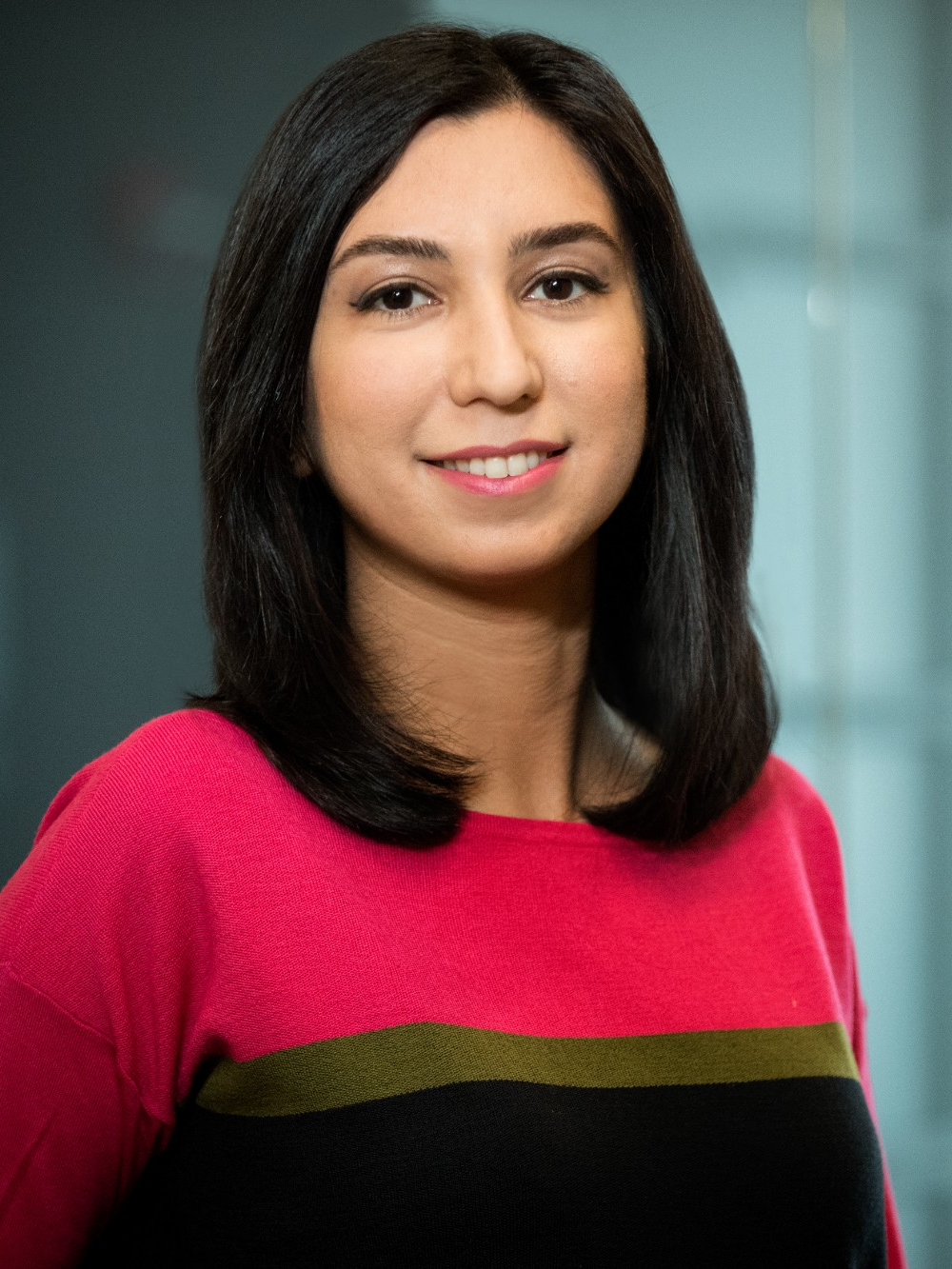
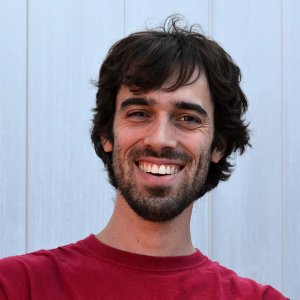
Dr. Andriy Miranskyy is an Associate Professor in the Department of Computer Science at Toronto Metropolitan University. His research focuses on applied machine learning, quantum computing, cloud computing, and software engineering, with notable contributions to anomaly detection in cloud systems and quantum software engineering. He leads the AMiR Lab, exploring risk mitigation and software development challenges in emerging technologies. Education: Ph.D. in Computer Science from The University of Western Ontario (2011). Research Interests: He investigates quantum software engineering methodologies, cloud-native systems governance, and big data applications. His work bridges theoretical advancements with industrial-scale implementations, such as IBM Db2 quantum safety case studies and cloud monitoring tools like CloudHeatMap. He emphasizes practical solutions for flakiness detection in quantum programs and sustainable software development practices. Awards: Recognitions include the Rogers Cybersecure Catalyst Fellowship (2023-2024), IBM CAS Best Project (2021), and a Guinness World Record for pioneering a 3Pb data warehouse (IBM DB2 team). Teaching: Teaches courses like CPS 840 (Quantum Computing), CPS 847 (Software Tools for Startups), and CPS 731 (Software Engineering). Labs/Teams: Directs the AMiR Lab, focusing on risk-aware software engineering in quantum and cloud domains.
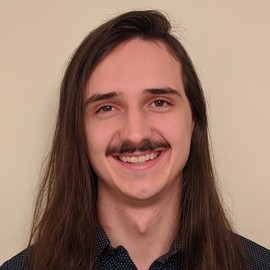
Dr. Pengyu Nie is an Assistant Professor at the University of Waterloo's Cheriton School of Computer Science. His research enhances developer productivity through machine learning techniques for software testing, code maintenance, and program analysis. Specific interests include execution-guided test completion, code-comment co-evolution, and multilingual programming systems. Current projects investigate LLM-based code editing in computational notebooks, multilingual code co-evolution, and test generation for exceptional behaviors. Research outputs include tools like pytest-inline for Python testing and Roosterize for Coq lemma suggestions. Awards include the Margarida Jacome Dissertation Award (2023) and ACM SIGSOFT Distinguished Paper Awards (2023, 2019). He leads the UW-SWaG research group and advises PhD/master's students on software engineering and ML projects.
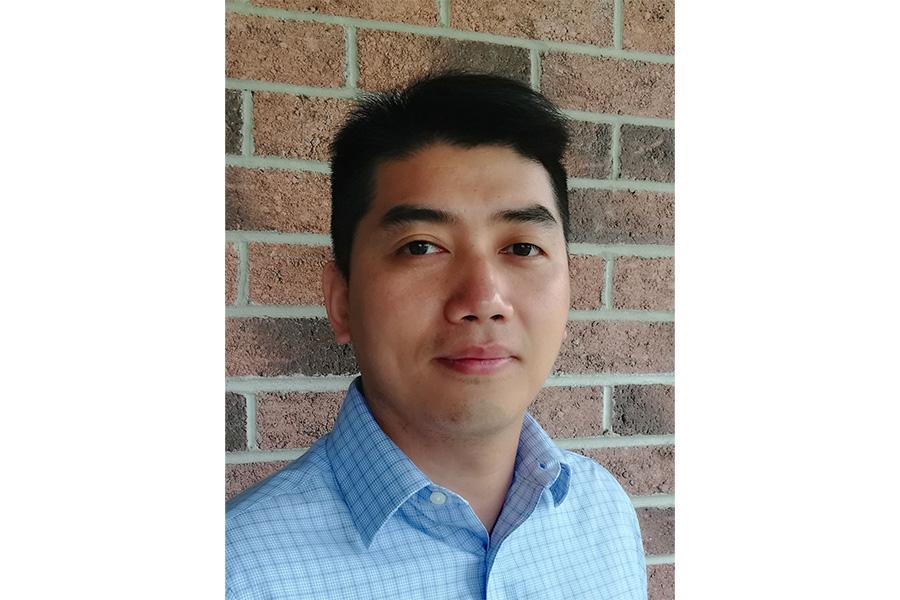
Saba Alimadadi is an Assistant Professor in the School of Computing Science at Simon Fraser University, located in Burnaby, BC, Canada. She holds a PhD from the University of British Columbia (2017). Her research focuses on software engineering, particularly program analysis, debugging, and testing of dynamic languages like JavaScript, TypeScript, and Python, aiming to enhance developer productivity through semi-automated techniques. She teaches courses such as CMPT 276 (Introduction to Software Engineering), CMPT 479 (Special Topics in Computing Systems), and CMPT 982 (Special Topics in Networks and Systems). Her research interests include human-centred software engineering, program comprehension, and web engineering. She actively contributes to the academic community, serving on program committees for ICSE, ASE, ISSTA, and organizing conferences like SPLASH/ISSTA and SCAM. Her work bridges theoretical insights with practical tools for improving software development practices. Dr. Alimadadi oversees research opportunities for SFU students, including USRA and work-study positions. She is affiliated with the university’s research groups and labs, though specific lab names are not explicitly mentioned. No scientific awards are cited in the provided materials.
Joseph Wonsil is a PhD Candidate in Computer Science at The University of British Columbia (UBC), expected 202X, and concurrently serves as an Adjunct Assistant Professor at Madonna University. His research focuses on computational reproducibility and data provenance, specifically developing methods to enhance reproducibility accessibility for research programmers through multi-source provenance integration. He explores user interactions with provenance data and has contributed to provenance-based debuggers, nano-satellite systems, and geospatial public health analyses. Education includes an M.S. in Computer Science (UBC, 2021), and a B.A. in Computer Science, Environmental Science, and Geospatial Science from Carthage College (2019). His work spans interdisciplinary areas including environmental monitoring via satellite data and applying technology to theater. Teaching experience includes undergraduate courses in Geographic Information Systems (GIS) at Carthage College and Madonna University, alongside tutoring roles in computer science and geography departments during his undergraduate studies. Key contributions include advancing reproducibility frameworks for machine learning models and creating visualization tools for provenance comprehension. His work emphasizes practical applications of provenance systems in both academic and applied contexts.
Abram Hindle is a Professor in the Department of Computing Science within the Faculty of Science at the University of Alberta. He holds a Ph.D. from the University of Waterloo (2010), an M.Sc. from the University of Victoria (2005), and a B.Sc. (Honours with distinction) from the University of Victoria (2003). His research focuses on evidence-based software development, leveraging techniques from data mining, machine learning, and empirical analysis. Hindle's research spans multiple domains including software repository mining, energy efficiency in software systems, and interdisciplinary applications like computer music and ECG analysis. His work integrates statistical analysis, NLP, and visualization to study software processes, maintenance, and metrics. His recent publications demonstrate a strong focus on healthcare applications of machine learning (particularly ECG-based diagnostics), software defect prediction, container orchestration, and energy-aware development practices. These reflect an ongoing commitment to empirical validation and real-world impact.
Prof. Lionel Briand is a distinguished academic and researcher in software engineering, holding the Tier 1 Canada Research Chair in Intelligent Software Dependability and Compliance at the University of Ottawa's School of Electrical Engineering and Computer Science (EECS Department). He is also the director of Lero, Ireland's Research Centre for Software, and affiliated with the Nanda Laboratory. His roles span technical leadership, research, and academia across institutions in seven countries. Educated with a PhD, Briand's research focuses on trustworthy AI, software verification/validation, requirements engineering, and regulatory compliance. He pioneered model-driven development and search-based techniques in software engineering. His work bridges academia and industry, collaborating with sectors like aerospace, automotive, and finance. Key research trends in his articles include AI-driven testing methodologies, regulatory compliance tools (e.g., GDPR), safety-critical systems, and metamorphic testing for autonomous systems. His recent work emphasizes large language models (LLMs) for consensus-based test generation and safety monitoring of AI agents. Awards: IEEE/ACM Fellowships, Harlan Mills Award, ACM SIGSOFT Research Award Grants: ERC Advanced Grant, Canada Research Chairs Tools: CompAI (GDPR compliance), TEASMA (DNN testing), Smarla (safety monitoring) Labs/Teams: Leads Lero and collaborates with interdisciplinary teams at the University of Luxembourg's SnT center and Fraunhofer Institute. His work emphasizes synergies between Canadian and Irish research ecosystems.
Bentley Oakes is an Assistant Professor in the Department of Computer Engineering and Software Engineering at Polytechnique Montréal. He holds a Ph.D. (2018) and M.Sc. (2015) from McGill University, and a B.Sc. (2013) from the University of Manitoba. His research focuses on Digital Twins , Model Transformations , and Knowledge Representation for cyber-physical systems. Ph.D. in Computer Science, McGill University, Canada M.Sc. in Science, McGill University, Canada B.Sc. in Computer Science, University of Manitoba, Canada His work bridges Model-Driven Engineering and Artificial Intelligence to advance the rigorous development of digital twins. Key research areas include: Digital Twin Engineering : Frameworks for systematic development, reporting, and validation. Knowledge Representation : Ontologies and contracts for modeling domain expertise. Model Transformations : Symbolic execution and debugging of ATL/DSLTrans transformations. Verification : Formal methods for cyber-physical systems and co-simulations. Oakes has published extensively in MODELS , MSR , TOSEM , and SoSyM . His recent studies on rationale extraction in open-source software and DevOps approaches for built assets highlight interdisciplinary innovations. He has been recognized for Outstanding Reviewing Contributions , receiving multiple Best Reviewer Awards at leading software engineering venues. At Polytechnique Montréal, he teaches courses such as: INF6900AE : Scientific and Technical Communication I INF7900AE : Scientific and Technical Communication II LOG6953FE / LOG6310E : Digital Twin Engineering LOG8371E : Software Quality Engineering
Shaowei Wang is an Assistant Professor in the Department of Computer Science at the University of Manitoba's Faculty of Science. His research focuses on software engineering and data mining, aiming to develop algorithms that leverage big software data (e.g., code repositories, developer social media) for efficient and effective software development. Key interests include recommendation systems, data-driven software engineering, software debugging, program comprehension, and secure software development. He leads the Mamba Lab, which explores these areas through empirical studies and tool development. His work spans topics such as large language model (LLM) applications in code analysis, vulnerability detection, graph fairness, and automated evaluation frameworks for API-oriented code generation. Recent studies address challenges like input order bias in LLMs, silent vulnerability fixes, and fair graph learning. He has contributed to over 50 peer-reviewed publications, emphasizing practical and theoretical advancements in software engineering and data science. Teaching interests include software engineering, data-driven software engineering, and data mining. His research has been recognized through collaborations with industry and academic partners, though no specific awards are listed. Advising and grant details are not explicitly mentioned in available texts.
Foutse Khomh is a Professor of Software Engineering at Polytechnique Montréal where he leads the SWAT Lab on software development, deployment, maintenance and evolution of AI intensive and cloud based software systems. He holds prestigious positions as a Canada Research Chair Tier 1 on Trustworthy Intelligent Software Systems, a Canada CIFAR AI Chair on Trustworthy Machine Learning Software Systems at Mila - Quebec Artificial Intelligence Institute, and a FRQ-IVADO Research Chair on Software Quality Assurance for Machine Learning Applications. Dr. Khomh received his Ph.D. in Computer Science from the University of Montreal under the supervision of Yann-Gaël Guéhéneuc, with the Award of Excellence. He also holds a Master's degree in Software Engineering from the National Advanced School of Engineering (Cameroon) and a Master's degree (D.E.A) in Mathematics from the University of Yaounde I (Cameroon). Professor Khomh's research focuses on ensuring the reliability, fairness, and ethical alignment of machine learning-powered systems throughout their entire lifecycle. His work specifically addresses concepts of equity, fairness, diversity, identity, and social inclusion to enhance user confidence in AI applications. He is developing techniques and tools to ensure that AI applications comply with proposed regulations, particularly in sectors such as healthcare, transportation, security, and customer service. His groundbreaking research on software maintenance and evolution, particularly on the impact of developers' design decisions on software quality, has been cited more than 3,600 times according to Google Scholar. His extensive publication record shows a strong focus on trustworthy AI systems, with recent work concentrating on deep learning testing, quality assurance for machine learning systems, privacy protection in software logs, and the challenges of developing and maintaining reliable AI-powered applications. His research bridges software engineering principles with artificial intelligence to create more dependable and trustworthy systems. 2025 IEEE CS TCSE New Directions Award Arthur B. McDonald Fellowship Canada Research Chair Tier 1 on Trustworthy Intelligent Software Systems CS-Can/Info-Can Outstanding Young Computer Science Researcher Prize for 2019 Multiple IEEE TCSE Most Influential Paper (MIP) Awards Multiple Best Paper Awards at international conferences Canada CIFAR AI Chair Professor Khomh has supervised or co-supervised seven PhD students, eleven MSc students, and ten undergraduate students. Three of his PhD students were nominated for the Best PhD Thesis Award of Polytechnique Montréal, with one winning the prize for Best Computer Science and Software Engineering PhD Thesis. His research has drawn exceptional support, with over $2.5 million in research funding from diverse sources including NSERC Discovery, NSERC Discovery Supplement Award, FRQ-IVADO Research Chairs, and Mitacs. He leads the R3AI project, which received a $124.5M grant from the Canada First Research Excellence Fund to develop robust, reasoning, and responsible AI. As the leader of the SWAT Lab, Professor Khomh directs research on software development, deployment, maintenance and evolution of AI-intensive and cloud-based software systems. He serves on the program committees and editorial boards of several top international conferences and journals in software engineering, including the Editorial Board of IEEE Software. He has held leadership positions as General co-chair of FSE 2026 and SANER 2025, and has served as program co-chair for numerous conferences including SSBSE 2024, ICPC 2019, and ICSME 2018.
Professor Kenneth B. Kent is a full-time academic at the Faculty of Computer Science , University of New Brunswick, holding the Barrett Chair in Entrepreneurship for Digital Transformation and directing the IBM Centre for Advanced Studies - Atlantic. His research focuses on Hardware/Software Co-Design , Virtual Machines , Reconfigurable Computing , and Embedded Systems , with collaborations at the Institute for Visual Computing, Hochschule Bonn-Rhein-Sieg. Ph.D. & M.Sc. - University of Victoria B.Sc. - Memorial University of Newfoundland Kent's work bridges FPGA architecture optimization, cloud computing resource management, and Java virtual machine enhancements. He supervises numerous graduate students including Alireza Azadi (PhD) and Scott Young (MCS), while mentoring alumni like Maria Patrou (PhD) and Konstantin Nasartchuk (PhD). His recent publications (2020-2014) span FPGA modeling ( VTR 8.0 ), garbage collection interference, and workflow-aware storage systems. He teaches advanced topics including Virtual Machines and FPGA CAD , while maintaining technical expertise in runtime optimization and reconfigurable architectures. Outside academia, Kent is known for his 1968 Mustang restoration and extensive cycling adventures across the Greek Islands , Newfoundland, and the Canadian Maritimes.
Karen Reid is a Professor, Teaching Stream in the Department of Computer Science at the University of Toronto, affiliated with the Faculty of Arts and Science. She has held this position since 2001 and served as Associate Chair for Undergraduate Studies from 2011-2013. Her work focuses on software engineering education and open-source tools development for teaching environments. Education: BSc (Honors) and MSc from the University of Saskatchewan, followed by doctoral studies at the University of Toronto. Research interests include: Development of classroom software tools like MarkUs (online assignment grading system) and UCOSP (Undergraduate Capstone Open Source Projects) Educational pedagogy in systems programming and distributed software engineering Open-source collaboration models for student projects Publications highlight contributions to: Educational software tools (MarkUs, DrProject) Distributed software engineering education methodologies Linux cluster performance monitoring systems Awards include the OCUFA Teaching Award (2014), President's Teaching Award (2012), and multiple Computer Science Student Union Awards for teaching excellence (2003, 2006, 2011, 2012). Led the UCOSP initiative from 2016-2018, fostering international collaboration among students through open-source projects. Supervised over 250 students in software development projects through the MarkUs initiative.
Zhenhao Li is an Assistant Professor at York University's School of Information Technology specializing in AI-powered software engineering tools. His research focuses on improving software development processes through artificial intelligence, with publications in premier venues including ICSE, ASE, TSE, and TOSEM. Education PhD in Computer Science, Concordia University (2022) BEng in Software Engineering, Harbin Institute of Technology (2017) Research Focus Dr. Li develops innovative AI techniques for software engineering challenges including code generation, program repair, vulnerability detection, and logging optimization. His work integrates machine learning with software development practices to enhance reliability and efficiency. Publication Trends Recent articles demonstrate a consistent focus on large language model applications in software engineering, particularly for code generation, logging optimization, and vulnerability management. Methodologies include empirical studies, tool development, and literature reviews. Awards ACM SIGSOFT Distinguished Paper Award (ICSE 2024) FRQNT Doctoral Research Scholarship
Summary Alan J. Hu is a Professor in the Department of Computer Science at the University of British Columbia (UBC), affiliated with the Faculty of Science. His primary research interests include formal methods, formal verification, model checking, and software/hardware co-design. He leads research in areas such as post-silicon validation, cloud resource scheduling, and concurrency verification. Hu teaches courses like CPSC 513 (Formal Verification) and CPSC 320 (Algorithm Design). Education & Roles: Ph.D. in Computer Science (Stanford University), current roles include supervision of graduate students (e.g., Malte Schwerin, Stuart Hoad) and leadership in research groups like ICICS and CAIDA. Research Contributions: Key projects include BackSpace (post-silicon debug framework), MonoSAT (SMT solver), and contributions to formal verification of embedded systems. His work on cloud resource scheduling (e.g., Gridiron, Cospot) addresses network bandwidth guarantees in datacenters. Awards & Recognition: Recipient of the IEEE Outstanding Service Award, IBM Faculty Award, and UBC CS Teaching Award. His research is supported by industry (Intel, Microsoft) and grants (NSERC, SRC). Labs & Collaborations: Active in UBC's Institute for Computing, Information and Cognitive Systems (ICICS) and the CAIDA lab for AI-driven decision-making.
Adam Fourney is a Senior Principal Researcher at Microsoft Research's Human-AI eXperiences (HAX) group in Redmond. He holds a Ph.D. and M.Math. from the University of Waterloo and a B.Sc. from the University of Ottawa. His work focuses on AI agents collaborating with humans to complete complex tasks, including projects like AutoGen and Magentic-One. He previously studied web search, intelligent assistants, and information systems at the University of Waterloo. Education: Ph.D. (Computer Science), University of Waterloo M.Math. (Computer Science), University of Waterloo B.Sc. (Computer Science), University of Ottawa His research interests span Human-AI collaboration, multi-agent systems, AI ethics, and AI-assisted programming. He explores how AI systems can support human tasks while addressing challenges like uncertainty, communication breakdowns, and alignment with human goals. His work bridges technical innovation with user-centered evaluation, emphasizing real-world usability and societal impact. His recent articles highlight advancements in interactive AI debugging, alignment of AI tools with human needs, and leveraging search data for public health insights. Notably, he received a Best paper honorable mention at CHI 2024 for work on AI-assisted programming costs. Adam has collaborated extensively with researchers across Microsoft and academia, contributing to open-source tools like AutoGen Studio and foundational studies in human-LLM interactions. His interdisciplinary approach combines technical rigor with insights from user behavior and social dynamics.
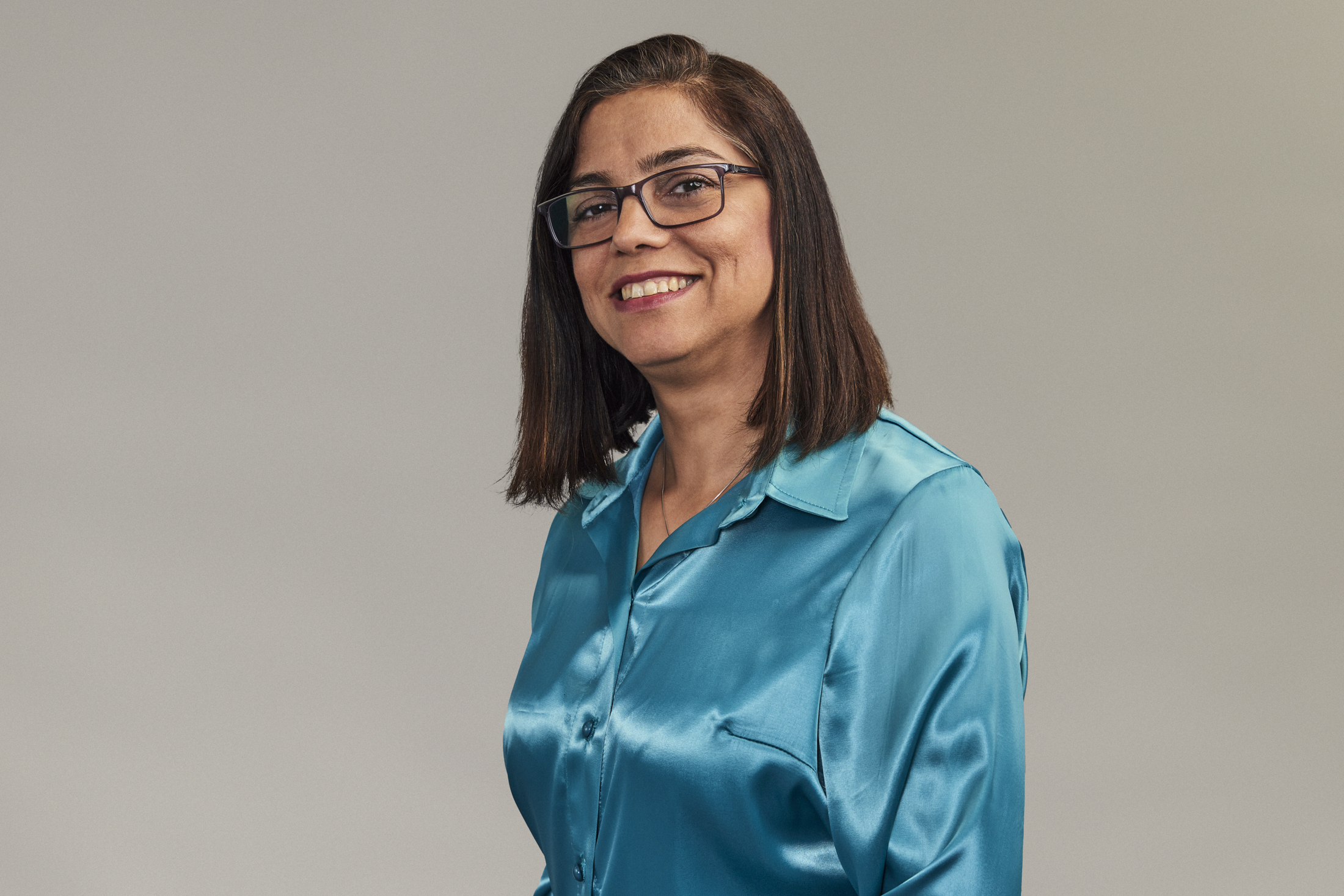
Dr. Marzieh Ahmadzadeh is an Associate Professor (Teaching Stream) at the Department of Electrical Engineering & Computer Science, York University. She holds a Ph.D. and MSc in Information Technology (Software Engineering) from the University of Nottingham, UK, and a BSc in Computer Engineering from Isfahan University. A certified Professional Engineer (P.Eng.) in Ontario, she has held academic positions at Shiraz University of Technology, University of Toronto, and University of Georgia, USA before shifting her focus to education research in 2015. Education: Ph.D., Information Technology (Software Engineering), University of Nottingham (2006) MSc, Information Technology (Software Engineering), University of Nottingham (2002) BSc, Computer Engineering, Isfahan University Her research intersects Computer Science Education and Human-Computer Interaction , with a focus on Applied Data Mining for educational analytics and security applications. She has published in prestigious venues like ACM SIGCSE, IEEE Transactions, and Future Generation Computer Systems. Recent publications demonstrate expertise in: Exam design and cognitive load optimization Ransomware detection in fog computing environments Breast cancer survivability modeling with imbalanced data Gender preferences in e-commerce UX design Academic integrity analysis in programming education