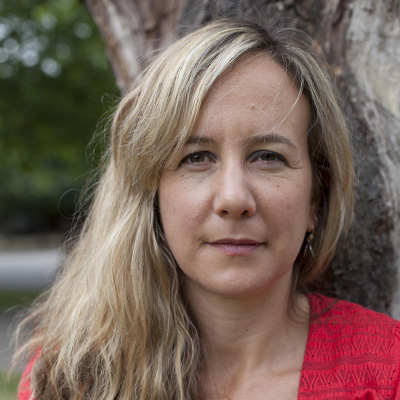
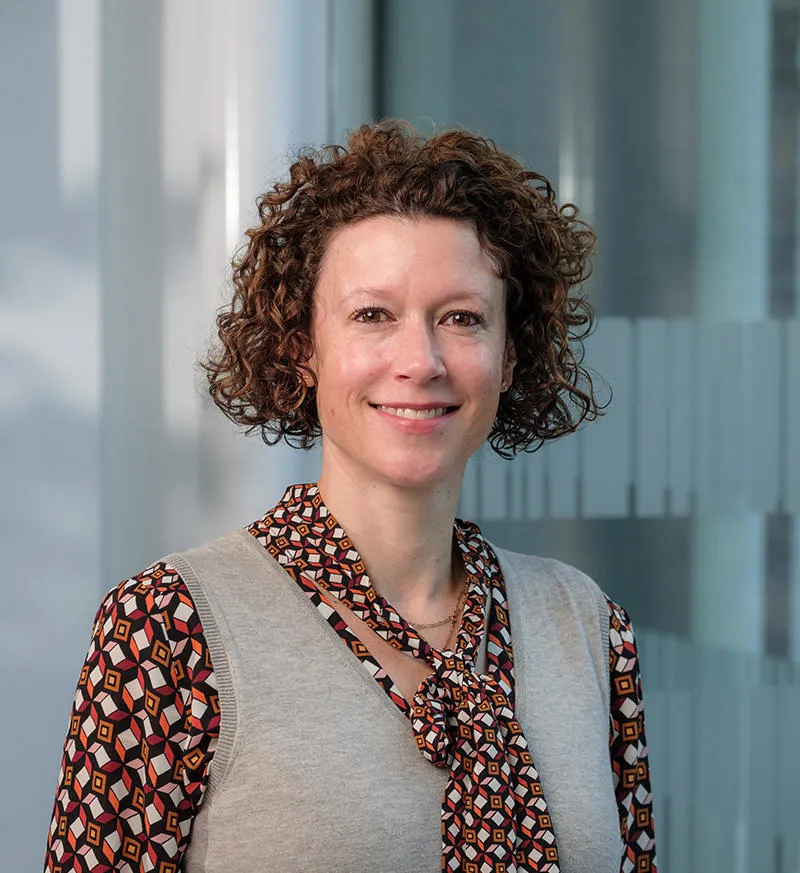
Professor Sally Hines is a Chair of Sociology and academic in the School of Sociological Studies, Politics and International Relations at the University of Sheffield. Her work bridges sociology, gender studies, law, and health studies. Hines holds a BA, MA, and PhD, and has held roles at the University of Leeds (Director of the Centre for Interdisciplinary Gender Studies) and Newcastle University. She focuses on gender diversity, transgender theory, sexual citizenship, and intersectionality. Her research explores topics like trans pregnancy, gender recognition policies, and youth understandings of gender diversity. She has co-authored ESRC-funded projects on young people’s gender experiences and trans masculinity in reproduction. Notable publications include Is Gender Fluid? (2018) and articles in SSM - Qualitative Research in Health and Journal of Youth Studies . Hines engages in public sociology, advising on the Gender Recognition Act and trans reproductive rights. Her work addresses societal debates on gender, feminism, and legal frameworks. She supervises PhD research on topics like masculinities, gender violence, and asexuality. Key grants include ESRC-funded projects on trans pregnancy and youth gender diversity. She teaches feminist theory, sexuality studies, and social movements, emphasizing interdisciplinary approaches.
Dr. Diya Gupta is a Senior Lecturer in Public History at City St George's, University of London , where she explores intersections between visual culture, life-writing, and literature during wartime. Educated at Jadavpur University, University of Cambridge, and King’s College London, she previously held the Past & Present Postdoctoral Fellow: Race, Ethnicity and Equality in History at the Royal Historical Society and Institute of Historical Research (2020–2022), followed by a Postdoctoral Visiting Research Fellowship at the School of Advanced Study (2019–2020). Her first monograph, India in the Second World War: An Emotional History (2023), examines undivided India's emotional responses to WWII through letters, memoirs, and colonial photographs, shortlisted for the Royal Historical Society's 2024 Gladstone Prize. Her current project investigates wartime violence targeting colonized civilians, focusing on the 1943 Bengal Famine as a lens for understanding modern food inequalities. Dr. Gupta's recent publications span literary and visual analyses of WWII-era food deprivation, colonial photography, and marginalized narratives in academic and public history. She contributes to BBC Radio 4 programs, BBC dramas, and WWII computer games, and co-convenes the Teaching Empire and War workshop series. Her scientific awards include a HEA Fellowship and Fellowship of the Royal Historical Society (FRHistS). She supervises AHRC-funded PhD research with the Imperial War Museums and has secured grants from HEIF and Clore Leadership.
Dr Elise Hugueny-Leger is a Senior Lecturer in the French Department at the University of St Andrews' School of Modern Languages. Her research focuses on creative writing pedagogy and life-writing forms, particularly autofiction and autobiography. She has pioneered innovative teaching modules such as 'Creative Writing in French,' which earned a University Teaching Excellence Award and Times Higher Education shortlisting. Her Leverhulme Fellowship (2022-2023) explored creative writing research methodologies in French contexts. Her academic work centers on Annie Ernaux—2022 Nobel Laureate in Literature—with a monograph Annie Ernaux, une poétique de la transgression (2009) and the bilingual annie-ernaux.org resource. Current projects examine intersections between literature and visual media in self-representation, as seen in Projections de soi (2022). She also investigates translingual writing practices to foster cross-cultural dialogue. Teaching spans French language/culture modules including 'Intellectuals in Modern France' and 'Consumerism in Modern France.' Supervised doctoral research includes studies on autofiction, gender, and mourning in contemporary French literature. Awards include the Leverhulme Fellowship and recognition for educational innovation.
Dr. Roberta Garrett serves as a Senior Lecturer in Creative Writing and PhD supervisor within the Department of Music, Writing & Performance at the School of Arts and Creative Industries, University of East London. Her research critically examines intersections of gender, race, and class in popular literature and film, with particular focus on post-9/11 cultural representations and neoliberal societal structures. Garrett's scholarly work centers on Gender Studies, Islamophobia, Domestic Abuse, Family Studies, and Neoliberalism, exploring how these themes manifest in contemporary media and literature. She investigates maternal narratives, 'mumpreneur' ideologies, and the portrayal of domestic violence through feminist and critical race lenses, often analyzing popular franchises like Game of Thrones and Nora Ephron's filmography. Her publication trajectory reveals consistent engagement with family dynamics under neoliberalism, evolving from early analyses of chick-flicks to current research on domestic abuse narratives. Key works include the 2021 monograph 'Writing the Modern Family' and the 2016 co-edited collection 'We Need to Talk About Family', demonstrating longitudinal commitment to family studies within cultural contexts. Scientific recognition includes: Fellow of the Higher Education Academy Garrett actively mentors PhD candidates including Alison Baker (researching class/gender in children's fiction and Muslim writers/cross-cultural romance) and Adrian Banting. Her grant activity includes a 2013 research internship supporting 'Cultural Representations of the Family in Literature' and organization of a symposium titled 'The Family in Crisis?: representation of the neo-liberal family'.
Professor Patrick Hayes is an Associate Professor at the University of Oxford’s Faculty of English and a Tutorial Fellow at St John’s College. His work bridges literary studies with philosophy, education, and cultural analysis. He holds dual affiliations with the Faculty of English and St John’s College, emphasizing both academic research and undergraduate/graduate mentorship. Research interests include the public value of literature, the history of the novel, life-writing, and aesthetic education. His books explore authors like J.M. Coetzee and Philip Roth, while recent projects address life-writing in the digital age and interdisciplinary dialogues between literature and philosophy. He organized a 2016 symposium at St John’s College that led to the edited volume Beyond the Ancient Quarrel . His scholarship synthesizes literary analysis with philosophical inquiry, examining topics like multicultural identity, authenticity, and the role of social media in self-expression. He actively supervises graduate students in global English literatures and interdisciplinary studies. No awards are explicitly listed, though his academic output reflects significant scholarly impact. Advising focuses on 19th-century to contemporary global literatures, with a commitment to mentoring across diverse subfields. Collaborative projects include co-editing volumes and organizing academic events. His current work reimagines the history of aesthetic education, tracing its evolution from 19th-century debates to contemporary contexts. Labs/teams: Collaborates with interdisciplinary networks in literary studies, philosophy, and digital humanities, exemplified by the 2016 symposium and co-edited publications.
Dr Amber Regis is a Senior Lecturer in Nineteenth-Century Literature at the University of Sheffield's School of English. She joined in 2012 and was promoted to Senior Lecturer in 2018. Her research focuses on Victorian life-writing, non-fiction prose, and queer figures, particularly John Addington Symonds and the Brontës. She has edited critical works like Symonds' Memoirs and is co-editing The Edinburgh Companion to the Brontës and the Arts. Her teaching spans Victorian literature, life writing, and gender studies. Research interests include transgressive narratives, queer history, and literary biography. Notable publications include Charlotte Brontë: Legacies and Afterlives (2017) and editions of Symonds' works. She regularly contributes to the TLS and supervises PhDs on topics like Gothic thresholds in Brontë studies and Victorian non-human narratives. Teaching includes courses such as 'The Brontës' and 'Victorian Bodies.' She is a Fellow of the Higher Education Academy and holds a Senate Award for Learning and Teaching.
Dr Ellen Pilsworth is an Associate Professor in German and Translation Studies at the University of Reading. She specialises in Holocaust Studies, German literature (1750–1815), and refugee studies, with a focus on British responses to Nazism. Her current monograph project examines anti-Nazi refugee autobiographies published in Britain (1933–45), supported by British Academy and Wolfson Foundation grants. She also explores German Romanticism and cultural memory. Education: PhD in German Studies (UCL), MPhil in Anglo-Saxon, Norse and Celtic (Cambridge), BA in English and German (Oxford). Research interests include Nazi Propaganda Analysis, Political Literature, and Migration Histories. She supervises doctoral research on topics like Dutch Resistance to Nazi cultural policies. Awards include a 2023 Martin Miller Fellowship at the Institute of Languages and Cultures, London. Affiliations: Management Board member, Centre for Book Cultures and Publishing (Reading); Membership Secretary, English Goethe Society.
Jerome Boyd Maunsell is a Senior Tutor and Programme Leader for the MA Creative Writing at the University of Roehampton , affiliated with the School of Arts, Humanities, and Social Sciences . He is a writer, biographer, and critic known for his work on the intersections between fiction and life-writing. Biography : Published a biography of Susan Sontag (2014) and the group biography Portraits from Life (2018). Expertise : Focuses on autobiography, diary writing, memoirs, and literary reportage. Research Trends : His publications explore themes like the aphoristic style in diaries, the role of portraiture in nonfiction, and the blending of biographical and modernist narrative techniques. Public Engagement : Contributed to media outlets and interviews, including commentary on Susan Sontag and narratives of personal and societal change.
Professor Brendan Stone holds the position of Professor of Social Engagement and the Humanities at the University of Sheffield and serves as Deputy Vice-President for Education. His work uniquely bridges academic scholarship with practical applications in mental health services, social care, and community engagement. Stone maintains active roles as a Non-Executive Director for Sheffield Health and Social Care NHS Trust and Director of Sheffield Flourish, a mental health charity, while leading national initiatives through NHS England. Stone's research centers on the interplay between narrative, identity, and trauma, with deep expertise in mental distress and recovery frameworks. His work integrates dystopian fiction, critical theory, and engaged pedagogies to develop real-world interventions. Projects like IWUN (Improving Wellbeing Through Urban Nature) and Stories of Change demonstrate his commitment to co-produced methodologies that amplify service-user voices in health and social care strategy development. His unconventional academic journey—returning to education in his mid-thirties after leaving school at 16—informs his focus on widening participation and equality. Stone's publication history reveals a consistent trajectory from theoretical explorations of madness and narrative (2004-2008) toward applied clinical research (2017-2018), particularly in epilepsy, psychogenic seizures, and therapeutic writing interventions. His work consistently crosses psychology, neurology, and literary studies, demonstrating how narrative methodologies can address health inequalities and improve patient experiences through community-engaged approaches. Key recognitions include: National Teaching Fellowship of the Higher Education Academy (2012) University of Sheffield Senate Award for Excellence in Learning and Teaching Academic and Health Science Network's Excellence in Patient Experience award (2017) Stone has supervised interdisciplinary PhD projects spanning English, Medicine, and Social Work, including Vicky Grant's research on IBS patient autonomy and Gregg Rawlings' epilepsy writing intervention trial. His grant portfolio features major initiatives like the IWUN project (funded across multiple disciplines), Big Lottery-funded 'Fulfilling Lives' program, Hefce Catalyst projects on interdisciplinary research, and HEE-funded health inequality studies. As founder and co-director of Storying Sheffield, Stone leads community narrative projects connecting university students with marginalized populations. He actively contributes to Medical Humanities Sheffield and the Institute for Mental Health, while his NHS England role shapes national policy on restrictive interventions in mental healthcare through service-user co-production models.
Neil Vickers is Professor of English Literature and the Health Humanities at King's College London, with joint appointments in the Department of English and Centre for the Humanities and Health. He co-directs the Centre for the Humanities and Health, bridging literary studies with medical education and clinical practice. Education: BA (Trinity College Dublin) MPhil (University of Oxford) DPhil (University of Oxford) Vickers' research examines intersections between literature and medicine, specializing in illness narratives, British psychoanalytic traditions, and Romantic literature. His current projects analyze how major illness transforms social identity and investigate the historical development of medical humanities. His work integrates psychoanalytic theory, disability studies, and microsociology to understand care dynamics in contemporary societies. Publications demonstrate sustained engagement with illness representation across literary genres, combining theoretical frameworks from Winnicott, Bion and contemporary medical anthropology. Recent work explores narrative constructions of embodiment in autobiographical writing. Honors: BA/Leverhulme Senior Research Fellowship (2024) He teaches undergraduate modules on Literature and Psychoanalysis and graduate courses in Health Humanities. As PhD supervisor, he mentors students working on literature and medicine, medical humanities history, and British psychoanalysis.
Dr. David Anderson is a Senior Lecturer in American Studies within the Department of Political and Cultural Studies at Swansea University's Faculty of Humanities and Social Sciences. His academic work focuses on the historical and cultural dimensions of the American South, particularly examining memory, nostalgia, and identity formation in the post-Civil War era. Anderson actively contributes to both undergraduate and postgraduate teaching while maintaining a robust research profile that has garnered international recognition. Anderson's educational background includes: MA (Hons) in American Studies and History from the University of Dundee PhD in History from the University of Dundee (AHRB-funded) Fellow of the Higher Education Academy (2015) Dr. Anderson's research primarily investigates the socio-political history and culture of the American South, with particular emphasis on the Civil War and its aftermath. His scholarship explores how nostalgia functions in postbellum plantation life-writing, examining themes of memory, identity, and cultural heritage. Anderson has made significant contributions to understanding homesickness among Civil War soldiers, Confederate defeat narratives, Christmas traditions in the 19th-century South, and the culinary memories that shaped regional identity. His work bridges historical analysis with cultural studies, offering fresh perspectives on how the past continues to influence contemporary understandings of American identity. Anderson's recent publications demonstrate a consistent focus on memory studies and the cultural legacy of the American Civil War. His scholarship reveals patterns in how nostalgia operates across different aspects of Southern life, from food culture to literary representations. The trajectory of his work shows an evolving sophistication in analyzing how personal and collective memories intersect, particularly in plantation memoirs and reminiscences from the postbellum period. His research increasingly examines childhood memories and their relationship to nostalgic constructions of the past. Dr. Anderson has received numerous prestigious awards and fellowships that support his research: Rothermere American Institute Fellowship-in-Residence (2023) The Bibliographical Society Barry Bloomfield Grant (2023) Society of Antiquaries of Scotland Grant (2022) Paul Mellon Center Research Support Grant (2020) Gladstone Library Historical and Contemporary Slavery Study Scholarship (2019) Eccles Center Visiting Fellow at the British Library (2017) Multiple grants from the Strathmartine Trust, Carnegie Trust, and British American Studies Association As a dedicated supervisor, Anderson has guided postgraduate research on diverse topics including Welsh identity in the Union Army during the Civil War and queer representation in professional wrestling. His teaching portfolio includes undergraduate modules on American Studies introduction, Transatlantic America, the American South, and the Civil War in history and memory. At the postgraduate level, he teaches on Confederate memory and memorialization, drawing upon Swansea University's Milne Collection of Civil War materials. Anderson's scholarly contributions extend to media engagement through BBC History Magazine, History Today, The Conversation, and BBC Radio Wales, demonstrating his commitment to public history and knowledge exchange.
Dr. Lisa Blower is a Lecturer in Creative Writing at Keele University's School of Humanities. Previously, she held positions at Bangor University (2009–2019) and Wolverhampton University (2019–2023), where she was Senior Lecturer and Programme Lead. She earned an MA (Novel Writing, University of Manchester, 1997) and a PhD (Creative and Critical Writing, Bangor, 2010). Her research focuses on working-class literature, regional voices, and autobiographical practices. She is a recipient of the Arnold Bennett Prize and Arts Council England grants, including the DYCP grant for her memoir project 'Class Half Full'. Blower is a Trustee for Writing West Midlands and frequently collaborates on initiatives promoting regional and working-class writing. Her teaching spans undergraduate and postgraduate creative writing programs. Education: MA in Novel Writing (University of Manchester, 1997) PhD in Creative and Critical Writing (Bangor University, 2010) Research Interests: Blower champions working-class narratives and regional identities, particularly from The Potteries. Her scholarship explores autogeographical and psychogeographical practices in women’s self-narratives, short fiction, and creative non-fiction. She contributes to the European Network for Short Fiction Research. Grants & Collaborations: Arts Council England Grants for the Arts (2016, 2022–2023) Collaborations with Dr. Nicola Wilson (Reading University) and Prof. Bas Groes (Wolverhampton University) Contributions to BBC Radio 4’s 'Where are all the Working-Class Writers?' Labs & Teams: Active in Keele’s Creative Writing team and Writing West Midlands initiatives. Regular tutor for Arvon and Ty Newydd writing courses.
Dr Lily Dunn serves as a Teaching Fellow in Creative Writing at Bath Spa University within the School of Writing, Publishing and the Humanities at Newton Park campus. She teaches Advanced Narrative Nonfiction modules on the BA (Hons) Creative Writing program and instructs on Nonfiction and memoir specifically for the MA Creative Writing course. With a background in fiction writing that informs her memoir work, Dr Dunn is uniquely positioned to teach creative nonfiction techniques for telling true life stories. Dr Dunn holds an MA in Creative Writing from Sheffield Hallam University and a PhD in Creative Writing from Birkbeck, University of London. Her academic journey has prepared her for her dual role as both educator and practitioner in the field of memoir writing. Her research and teaching expertise centers on memoir and narrative nonfiction, with particular interest in how writing personal stories can be transformative. As an "incurable memoir addict," she explores how memoir functions both as literary form and therapeutic practice. Her upcoming book Into being: the radical craft of memoir and its power to transform (October 2025, Manchester University Press) promises to be a significant contribution to the field, already receiving praise from established writers as "an essential guide to all things memoir." Dr Dunn's publications reveal a consistent focus on personal narrative, identity, and transformation. Her work spans book-length memoirs, anthologies, and essays in prestigious venues like Granta and Aeon. Common threads include exploration of family dynamics, trauma recovery, and the technical craft of transforming lived experience into compelling narrative. The upcoming Into being appears to synthesize these interests into a theoretical and practical guide for memoir writers. Through her private partnership London Lit Lab, Dr Dunn extends her teaching beyond the university setting. She actively engages with writing communities through her Substack publication "And a Dog" and monthly "Memoir WIP Surgery" sessions where writers can workshop their memoir projects. These initiatives demonstrate her commitment to mentoring emerging writers and building supportive writing communities. Dr Dunn maintains an active presence in the literary world through interviews with fellow memoirists and participation in discussions about the craft and ethics of memoir writing, as evidenced by her recent commentary on "The Salt Path Scandal" which examined questions of truthfulness in memoir as a genre.
Ann Mackenzie serves as an Honorary Professorial Research Fellow at the University of Glasgow's School of Modern Languages & Cultures. Her academic focus centers on Spanish and Portuguese literary studies, with particular emphasis on historical scholarship, cultural preservation, and academic biography within Hispanic studies. Her research explores: Historical development of Spanish and Portuguese literature Bibliographic studies of early modern theatrical works Academic tributes and memorial scholarship Textual analysis of Iberian literary traditions Cultural preservation through annotated editions Mackenzie's publications (2017-2024) predominantly appear in the Bulletin of Spanish Studies, reflecting consistent focus on: Scholarly biographies of prominent Hispanists Critical editions of historical literary indexes Academic commemorations through Festschrift contributions Collaborative bibliographic research projects She maintains active collaborations with researchers including Don Cruickshank and Ceri Byrne, frequently contributing introductory frameworks and editorial commentary for academic collections.
Josephine Metcalf is a Senior Lecturer at the University of Hull 's School of Criminology, Politics and Law , with expertise in the Criminology department. Her work bridges American Studies and Criminology , focusing on cultural representations of incarceration and gang life. Notable Roles : Co-Founder of the Cultures of Incarceration Centre Research Themes : US/UK prison culture, creative writing in carceral settings, audience reception of penal narratives Her publications and projects explore prison memoirs, gang literature, and transatlantic pedagogical initiatives. Recent collaborations include Edinburgh University Press and University of California, Santa Barbara , with funded work by British Academy and HEIF . She also engages in prison staff wellbeing studies and book club facilitation.