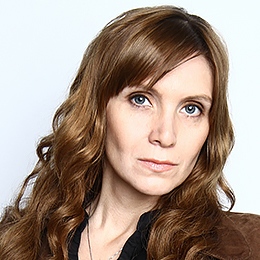
Sven Bölte is a Professor at Karolinska Institutet where he leads the research group focused on Autism, ADHD and other developmental neurological conditions as part of the Center for Neurodevelopmental Disorders (KIND). His work bridges clinical research, education, and practical implementation of evidence-based approaches for neurodevelopmental conditions. Professor Bölte's research spans multiple domains within neurodevelopmental disorders, with particular emphasis on implementing the International Classification of Functioning, Disability and Health (ICF) Core Sets for autism and ADHD using digital solutions. His group has developed and evaluated social skills training programs (KONTAKT, SKOLKONTAKT, iKONTAKT) for autistic children and adolescents, conducted twin research through the Roots of Autism and ADHD Twin Study in Sweden (RATSS), and advanced diagnostic instruments for autism, ADHD, social cognition, and adaptive behavior. His recent publications reveal a strong focus on translating research into practice, with significant work on strengths-based approaches, social inclusion, neurodiversity-affirmative assessment, and the development of practical tools for clinicians and educators. The research demonstrates increasing attention to adult experiences of autism, cross-cultural validation of interventions, and the integration of digital technology in assessment and intervention. Bölte's group also delivers extensive educational components for professionals through KI-Utbildning (Assignment Education), making it one of the largest providers of training on diagnosis and support for individuals with developmental neurological conditions within Karolinska Institutet. His work frequently addresses policy implications, as evidenced by participation in Swedish parliamentary discussions about autism and ADHD.
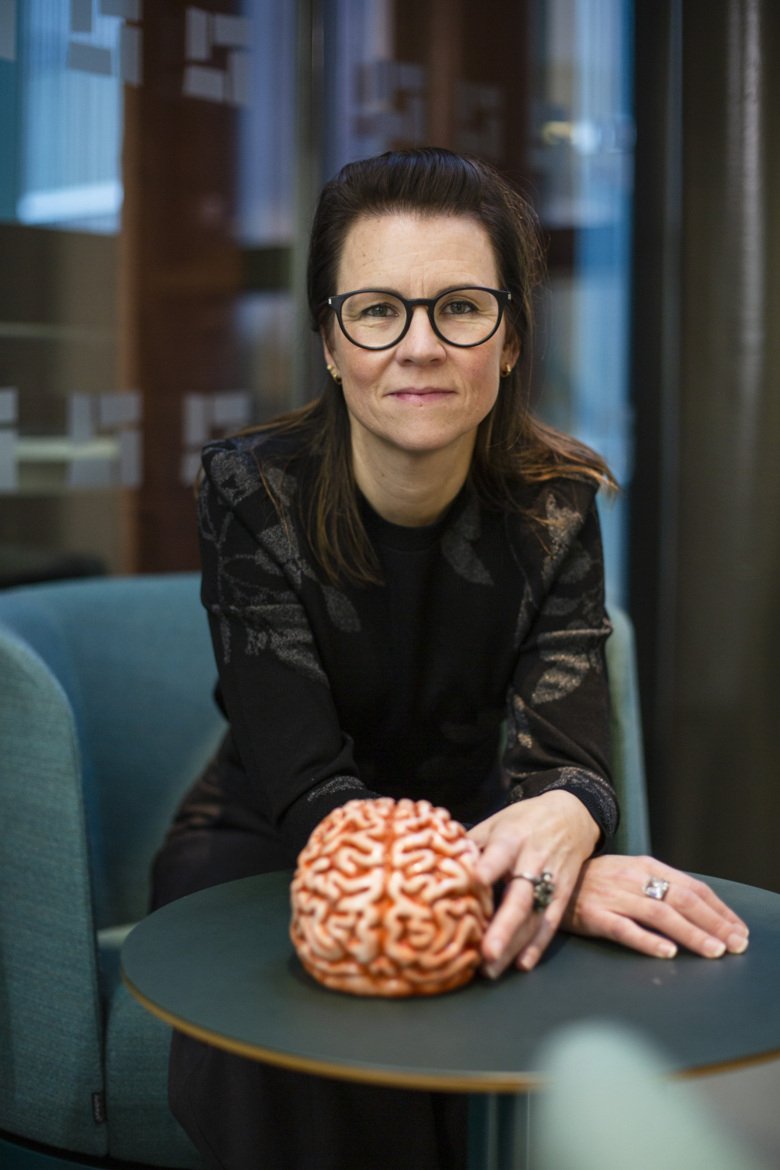
Marie Carlén is a Professor of Neuronal Networks at the Department of Neuroscience, Karolinska Institutet, where she leads the Neural Circuits of Cognition research group. Her work focuses on the prefrontal cortex (PFC), a brain region central to cognitive functions such as attention, decision-making, working memory, and goal-directed behavior. She employs cutting-edge techniques including optogenetics, large-scale electrophysiology, calcium imaging, and circuit tracing in rodent models to unravel the cellular and circuit mechanisms underlying cognition and their disruption in psychiatric disorders. Her academic journey began with a Ph.D. in medicine from Karolinska Institutet in 2005, followed by postdoctoral training at MIT’s Picower Institute under Professor Li-Huei Tsai. She returned to Karolinska Institutet in 2010 and was promoted to full Professor in 2022. She is also a Docent (2017) and has held prestigious fellowships including ERC Starting Grant and Wallenberg Scholar (2019, 2024). Marie Carlén's research spans systems and cellular neuroscience, with a strong emphasis on inhibitory interneurons (especially parvalbumin-expressing cells), neural oscillations, and PFC-striatum interactions. Her recent publications reveal a consistent focus on decoding prefrontal circuit dynamics, the role of specific neuron types in cognition, and comparative brain architecture. She collaborates extensively with her partner, Konstantinos Meletis, also a KI researcher. She has been recognized with numerous scientific honors: Member, Nobel Assembly at Karolinska Institutet (2025–) Member, The Royal Swedish Academy of Sciences (2024–) Wallenberg Scholar (2024, 2019) ERC Starting Grant (2013) Wallenberg Academy Fellow (2012) NARSAD Young Investigator Awards (2010, 2008) She actively mentors students and researchers, with open applications welcomed to her lab. Her work is supported by major grants, including from the Knut and Alice Wallenberg Foundation, enabling high-risk, high-reward research in brain function and disease. Her lab investigates the functional definition of the prefrontal cortex across species, develops novel tools for neural recording, and explores circuit imbalances in conditions like autism and schizophrenia. She is a strong advocate for ethical animal research and promotes gender equality in science.
Hampus Bejnö is an Associate Professor and postdoctoral researcher at the Department of Special Education , Stockholm University. He also serves as Program Director for the Special Educator Program (specialpedagogprogrammet). Role: Associate Professor, Postdoctoral Researcher, Program Director Focus: Learning and participation of children with autism Key projects: APERS adaptation, TRAS evaluation, PANS qualitative studies Research Themes Improving educational environments for children with ASD Enhancing neuropsychological report readability Assistive technology for neurodiverse populations Awards & Collaborations While no explicit awards are listed, Bejnö contributes to interdisciplinary networks focused on neurodiversity and neuropsychiatric disabilities. His work bridges clinical practice with educational policy and technological innovation.
Mona Holmqvist is a Professor of Educational Sciences specializing in school and the teaching profession at Lund University's Department of Educational Sciences within the Faculty of Humanities and Theology. She serves as Director of Doctoral Studies in Educational Sciences and has held professorships since 2017, returning to Lund University in 2023 after positions at HKr, GU, and MAU. Her academic journey began with teacher certification for grades 4-6, subject teaching credentials for 7-9, and secondary teaching in pedagogy/psychology, culminating in her 1995 PhD in pedagogy from Lund University focused on teaching students with autism. Her research spans learning theories, particularly variation theory development, and practice-based educational research from early childhood to higher education. Holmqvist has special expertise in subject didactics and special didactics for individuals with ADHD and autism. She has served as principal investigator for ten externally funded research projects and coordinated three research schools, including the National Research School for Pedagogical Work (2001-2010) and SET—Research School in Special Education for Teacher Educators (2018-2022). Her recent publications demonstrate a strong focus on inclusive education, special didactics, and early mathematics development, with particular attention to students with autism and ADHD. Current projects include a VR-funded study on number sense in 5-6 year-olds and an Erasmus project for higher education course development in Bhutan. Professional leadership roles include Vice Chair of the Academic Merit Review Board in Higher Education Pedagogy at Lund University, membership on the Swedish Research Council's Committee for Educational Sciences, and editorial board positions for three academic journals. Director of Doctoral Studies in Educational Sciences at Lund University Principal Investigator for 10+ externally funded research projects Supervisor for 14 doctoral students and 9 licentiates Member of Swedish Research Council's Educational Science Committee Editorial board member for 3 academic journals Her work consistently bridges theoretical frameworks with practical classroom applications, particularly in inclusive educational settings and teacher professional development. Current research emphasizes content-inclusive teaching approaches that provide equitable learning opportunities for diverse student populations.
Håkan Fischer is a Professor of Human Biological Psychology at Stockholm University, where he has served as Head of the Department of Psychobiology and Epidemiology since 2011. He also holds an associate professor position at Karolinska Institutet, is affiliated with the Aging Research Center and Stockholm University Brain Imaging Centre, and is a faculty member at Digital Futures at the Royal Institute of Technology. Since September 2025, he has additionally served as a visiting professor at Linköping University. Fischer has established himself as a leading researcher in emotional and cognitive processing, with particular expertise in socio-emotional aspects across the lifespan. Fischer earned his PhD in psychology from Uppsala University in 1998, followed by postdoctoral research at Harvard Medical School (1999-2001). He then worked at the Aging Research Center at Karolinska Institutet before joining Stockholm University in 2011. His academic journey includes a sabbatical year (2021-2022) at the University of Florida's Department of Psychology. Fischer is actively involved in university governance as a member of the Swedish Research Council's Subject Council for Humanities and Social Sciences (2023-present) and represents Stockholm University in multiple international collaborations. Håkan Fischer's research primarily focuses on investigating intra- and interindividual differences in affective, cognitive, social and perceptual processing, with special emphasis on age-related differences in adults. His laboratory employs advanced neuroimaging techniques including fMRI, PET, and fNIRS to examine brain function, while also utilizing structural imaging methods like T1-weighted imaging, DTI, and perfusion imaging to study brain structure. Fischer advocates for single-subject small-N designs to better understand emotional and cognitive mechanisms. His current research lines include socio-emotional perception and recognition, oxytocin effects on socio-emotional processing across the lifespan, and AI development for interpersonal communication analysis. Analysis of Fischer's recent publications reveals a strong focus on emotion recognition across populations, neurobiological mechanisms of socio-emotional processing, and methodological innovations. His work consistently integrates behavioral testing, neuroimaging, and genetic analysis to provide comprehensive insights. The increasing incorporation of AI approaches demonstrates his adaptation to emerging technological advances in psychological research. Fischer has published 136 peer-reviewed articles with over 12,200 citations and a Google Scholar h-index of 53. Fischer has received consistent funding since 2002 from prestigious sources including the Swedish Research Council, Wallenberg Foundation, STINT, Riksbankens Jubileumsfond, and Konung Gustav V och Drottning Victorias stiftelse. He currently leads nine funded research projects (two as principal investigator totaling 6.9 million SEK, seven as co-applicant totaling 24.8 million SEK) spanning multiple international collaborations in Sweden, Germany, and the USA. As an educator, Fischer leads the basic course in Cognitive Neuroscience and the master's course in Emotion Psychology and Affective Neuroscience. He regularly teaches at both undergraduate and advanced levels, primarily in biological psychology, cognitive neuroscience, and emotion psychology. Fischer currently supervises six doctoral students (one as main supervisor, four as assistant supervisor) and has mentored graduate students since 2002. Håkan Fischer leads a dynamic research laboratory that investigates emotional, social, perceptual, and cognitive processing. The lab examines how intraindividual variations across stimuli and time, as well as interindividual differences in age, gender, genetics, personality, and sleep deprivation affect these processes. His lab maintains active national and international collaborations with researchers at Stockholm University, Uppsala University, Karolinska Institutet, University of Florida, and University of Gothenburg, creating a robust interdisciplinary research environment focused on translating basic neuroscience into practical applications.
Carlos Guerrero Bosagna is a Senior Lecturer at Uppsala University's Department of Organismal Biology; Physiology and Environmental Toxicology. His research bridges evolutionary biology, epigenetics, and environmental science, focusing on how environmental exposures (e.g., toxins, stress) induce epigenetic modifications that influence developmental processes and transgenerational phenotypic variation. Role: Senior Lecturer, Uppsala University Department: Physiology and Environmental Toxicology Key Projects: Epigenetic stress response in chickens, metabolic/reproductive effects of environmental toxins, germline epigenetic variation in speciation His work has secured a FORMAS grant for modeling environmental toxicant impacts on chicken reproduction and metabolism. Recent publications analyze avian methylation patterns , mito-nuclear interactions , and Z-chromosome epigenetic regulation . Collaborations span poultry science, computational biology, and global environmental epigenetics research. Scientific awards include a FORMAS grant for environmental toxicology research His research emphasizes sustainability and evolutionary innovation, with lab projects tracking epigenetic changes across six generations to mimic early speciation events. Methodological contributions include protocols like GBS-MeDIP for concurrent genetic/epigenetic analysis.
Anna Ohlis is a Postdoctoral Researcher at Karolinska Institutet's Department of Global Public Health, specializing in child and adolescent psychiatry within the Epidemiology of Psychiatric Conditions, Substance use and Social Environment (EPiCSS) research group. She leads the Child Mental Health Promotion and Prevention Team Åhlén and holds dual medical specialization in Child and Adolescent Psychiatry and Social Medicine/Public Health. PhD in Clinical Neuroscience (Karolinska Institutet, 2021) Medical Degree (Uppsala University) Her research focuses on suicide prevention, self-harm epidemiology, neurodevelopmental disorders , and public health interventions for youth mental health. Using Swedish national registers and twin cohorts, she investigates genetic/environmental risk factors for self-harm progression, autism-related mental health outcomes, and social determinants of psychiatric conditions. Recent work examines physical activity's role in ADHD symptom management and social media impacts on adolescent mental health. Analysis of her 15 most recent publications reveals dominant themes in suicidology (40%) , autism/ADHD comorbidity (30%) , and public health interventions (20%) , with increasing emphasis on longitudinal cohort designs (87% of 2022-2025 papers) and Swedish register-based methodologies (73%). Current grant leadership includes: Swedish Research Council projects on social media impacts (2024-2026) and adolescent self-injury treatment accessibility (2025-2028) Nationwide SAFETY trial for suicide prevention (2024-2028) Thuring Foundation-funded mental health prevalence studies (2024-2026) She actively translates research through public health reports on autism prevalence, eating disorders, and pandemic-era mental health service utilization in Stockholm County, bridging clinical psychiatry with population-level intervention strategies.
Karin Brocki is a Professor at Uppsala University's Department of Psychology, Division of Emotional Psychology. Her research focuses on executive function development, ADHD symptomology, and emotional regulation in children and adolescents. PhD in Psychology Associate Professor title Research interests include: Developmental hierarchy of executive functions ADHD risk factors and longitudinal trajectories Attachment theory and behavioral problems Neurocognitive impacts of radiotherapy Emotion regulation mechanisms Recent publications (2024-2025) examine fear extinction retention, cerebellar development, social attention deficits in ADHD, and pandemic impacts on child psychology. She collaborates extensively with researchers like Matilda Frick, Johan Kleberg, and international teams.
Kajsa Igelström is an Associate Professor at Linköping University, affiliated with the Department of Biomedical and Clinical Sciences (BKV) in the Faculty of Medicine and Health Sciences. Her research focuses on understanding how brain function variations relate to strengths and challenges in autism and ADHD. She leads projects using virtual reality (VR) and brain imaging to study perception, attention, and cognitive function in affected individuals. Additionally, she directs the international Extraordinary Brains initiative to enhance societal acceptance of neurodevelopmental differences. Her academic background includes a Docent title and expertise in neurodevelopmental disorders. Research interests span sensory perception, cognitive neuroscience, and child development. She collaborates internationally, as seen in her recent studies on paternal intelligence impacts on ADHD, sensory symptoms in children, and microbial links to neurodevelopmental disorders. Affiliations include the Division of Cell and Neurobiology (CNB), emphasizing cellular and neural systems research. Her work bridges clinical and experimental methods, aiming to translate findings into practical support for individuals with autism or ADHD.
Päivi Adolfsson is a Researcher at Uppsala University's Department of Food Studies, Nutrition and Dietetics, specializing in nutrition and public health for individuals with intellectual and developmental disabilities. Her work addresses food decision-making, dietary interventions, and the challenges faced by parents with cognitive limitations within foster care systems. Her research spans critical areas including: Nutritional health for children with intellectual disabilities and autism Parenting experiences of mothers and fathers with cognitive limitations Meal-oriented support in community living settings Quality of life and social status for adults with disabilities Analysis of her 2023-2025 publications reveals a concentrated focus on intersectional approaches combining dietetics, disability studies, and social work. Key trends include evaluating group interventions for parents in foster care systems, examining dietitians' roles in specialized nutritional care, and documenting lived experiences of adults with intellectual disabilities in community settings. Her methodology consistently employs qualitative frameworks centering participant perspectives. Adolfsson maintains active collaborations with researchers including Gunnel Janeslätt, Helena Lindstedt, and Karin Jöreskog across multiple publications. Her work appears primarily in journals such as the International Journal of Developmental Disabilities, Journal of Intellectual Disabilities, and Child & Family Social Work, demonstrating transdisciplinary engagement with disability-focused research communities.
Henrik Ahlenius is a Senior Lecturer and Research Team Manager at Lund University's Faculty of Medicine, Department of Experimental Medical Science. He serves as Principal Investigator for multiple prestigious research initiatives including StemTherapy: National Initiative on Stem Cells for Regenerative Therapy, LUCC: Lund University Cancer Centre, and MultiPark: Multidisciplinary research focused on Parkinson's disease. His research focuses on understanding how aging and neurodegenerative diseases affect the brain, neural cells and neural stem cells. His laboratory utilizes cutting-edge stem cell, reprogramming and genome editing technologies to investigate genetic pathways involved in aging and neurodegenerative disease. Key research areas include developing cellular models of human neuronal aging and degeneration, investigating mechanisms of dysfunction in neurons and neural stem cells in the aging and diseased brain, and studying regulation of normal neurogenesis. Analysis of his recent publications reveals a strong focus on stem cell models of neurodegenerative diseases, neural differentiation, aging brain mechanisms, and cellular reprogramming approaches. His work spans multiple neurological conditions including Alexander disease, Parkinson's disease, glioblastoma, and general mechanisms of brain aging. Senior Lecturer, Research Team Manager Principal Investigator, StemTherapy Principal Investigator, LUCC Principal Investigator, MultiPark Dr. Ahlenius actively supervises PhD students and has organized major scientific events including UniStem Day 2024. His research has significant implications for understanding and treating neurodegenerative conditions and contributes to UN Sustainable Development Goals related to health and well-being.
Christina Dalman is a Professor and Senior Physician at the Department of Global Public Health , Karolinska Institutet. She leads the Epidemiology of Psychiatric Conditions, Substance use and Social Environment (EPiCSS) research group, focusing on understanding risk and protective factors for mental ill-health to enable early intervention and prevention. Her work emphasizes socioenvironmental contexts, high-risk groups, and intervention evaluation. Education: Docent (Associate Professor), Karolinska Institutet (2010) Research Interests: Epidemiology of psychiatric disorders, substance use, and neurodevelopmental conditions Socioeconomic determinants of mental health Maternal health and neurodevelopmental outcomes Healthcare equity and access Recent Grants: Complications during pregnancy and birth and offspring risk for schizophrenia and other psychoses (Swedish Research Council, 2025–2027) Estimating the prevalence of emotional distress among teenagers in Sweden (Forte, 2022–2026) Publications: Over 200 peer-reviewed articles, focusing on mental health disparities, neurodevelopmental risks, and public health interventions. Key work includes studies on prenatal exposures, refugee mental health, and healthcare equity.
Katrin Lainpelto is a University Lecturer and Associate Professor at Stockholm University’s Department of Law. Her research focuses on criminal procedural law, evidentiary challenges, and interdisciplinary collaborations in legal contexts. She has held roles including educational ambassador for the Department of Law (2019-2020) and course director for foundational and advanced legal courses. Her work examines how neuropsychiatric diagnoses and cultural factors influence judicial credibility assessments, particularly in child sexual abuse cases. She investigates structural discrimination in Swedish courts and advocates for methodological rigor in evidence evaluation. Publications include empirical studies on corroboration practices and comparative analyses of Swedish and English evidence law. Key publications address: (1) social anxiety as an error source in evidence assessment; (2) neuropsychiatric diagnoses affecting credibility evaluations; (3) procedural law theory; and (4) child witnesses’ competence in legal processes. Her research group, Children, Migration, and Integration, explores intersections of legal systems and marginalized populations. Katrin teaches Procedural Law, Preliminary Investigation, and Child Law courses. She lectures at external organizations and emphasizes educational innovation. Contact: katrin.lainpelto@juridicum.su.se, Room C 774, Department of Law, Stockholm University.
Emanuela Santini is a Principal Researcher at the Department of Neuroscience, Karolinska Institutet since 2022, with a PhD in Neuroscience from Karolinska Institutet (2009). Her research focuses on autism spectrum disorders, Parkinson's disease, and signaling pathways like mTOR and eIF4E, often using mouse models to study synaptic plasticity, dopamine neurotransmission, and translational control. Employment: Principal Researcher, Karolinska Institutet (2022–present) Education: PhD in Neuroscience, Karolinska Institutet (2009) Her work examines the molecular basis of neurological conditions, particularly how dysregulated protein synthesis and signaling cascades contribute to autism and Parkinson's disease. She investigates mechanisms underlying Levodopa-induced dyskinesia, fear memory extinction, and synaptic dysfunction in genetic models. The 15 most recent publications highlight her interest in autism spectrum disorders, striatal signaling, and translational control pathways. Key trends include mTOR hyperactivity in ASD models, dopamine-neuron maturation during critical periods, and autophagy's role in movement disorders. Grants from the Swedish Research Council (2023) and StratNeuro bridging grants (2022) support her research. Collaborations with institutions like University of Coimbra and researchers such as Eric Klann and Gilberto Fisone demonstrate her academic network. She participates in neuroscience outreach and was acknowledged in a doctoral thesis defense (2025) as part of the academic community.
Sebastian Lundström is an Associate Professor and Researcher in the Department of Psychiatry and Neurochemistry at the University of Gothenburg. His work focuses on child and adolescent psychiatry, with a strong emphasis on neurodevelopmental disorders, psychiatric genetics, and twin studies. Key areas of research include autism spectrum disorders, ADHD, eating disorders (e.g., ARFID), and the genetic and environmental underpinnings of mental health conditions. His research employs advanced methodologies such as genome-wide association studies (GWAS), longitudinal twin cohort analysis, and neuroimaging techniques like MEG. Notable contributions include studies on comorbidity patterns in neurodevelopmental disorders, the impact of environmental sensitivity in psychiatric phenotypes, and the genetic architecture of conditions like ARFID and synaesthesia. Lundström has published extensively in high-impact journals such as JAMA Pediatrics, Nature Human Behaviour, and Biological Psychiatry. His work bridges clinical and basic research, aiming to improve diagnostic tools and inform interventions for neurodevelopmental and psychiatric disorders.