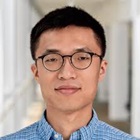
Terence Lee is Associate Professor in the Department of Political Science at the National University of Singapore's Faculty of Arts and Social Sciences, where he also serves as Assistant Dean for Undergraduate Studies. His research examines civil-military relations, military organizations, and international security, with a focus on Southeast Asia. He has published extensively on authoritarian regimes, military responses to popular protests, and regional security dynamics. His recent work analyzes elite perceptions of China's influence in Southeast Asia and Singapore's foreign policy strategies. Dr. Lee is a three-time recipient of the Faculty Teaching Excellence Award and twice won the NUS Annual Teaching Excellence Award. He serves as Associate Editor of Armed Forces and Society and is a Council Member of the Inter-University Seminar on Armed Forces and Society.
Douglas Anton Kammen is an Associate Professor of Southeast Asian Studies at the National University of Singapore (NUS), where he has built a distinguished career focused on political violence, social movements, and human rights in Southeast Asia. His expertise particularly centers on Indonesia and Timor-Leste, drawing from extensive fieldwork and archival research across the region. Education and Career Trajectory: PhD from Cornell University, where he was inspired by exceptional teachers to pursue Southeast Asian studies Department of Political Science, Canterbury University (1998-2000) Fulbright Senior Scholar at Universitas Hasanuddin in Makassar (2000-2001) Universidade Nacional Timor Lorosae in Dili (2001-2003) Current position: Associate Professor, Southeast Asian Studies, National University of Singapore Research Focus: Kammen's scholarly work delves deep into the complexities of political violence, examining how social movements emerge and function within repressive contexts. His research particularly emphasizes the Indonesian mass violence of 1965-66, military politics across Southeast Asia, and the intricate dynamics of popular political thinking in post-colonial societies. His work on Timor-Leste spans from colonial land policies to contemporary governance challenges, providing crucial insights into the nation's ongoing state-building efforts. Teaching and Academic Service: At NUS, Kammen has developed and taught comprehensive courses including the foundational module "Southeast Asia: A Changing Region," advanced courses on "Politics in Southeast Asia" and "War in Southeast Asia," and specialized honors modules on theoretical frameworks and ethnic relations. His graduate seminars focus specifically on Indonesian studies and comparative state formation, contributing significantly to the next generation of Southeast Asian scholars. Major Publications and Impact: His recent works demonstrate a consistent focus on historical continuities and contemporary challenges in Southeast Asian politics. From examining colonial land concessions in Portuguese Timor to analyzing polygamy patterns across historical periods, his research bridges historical analysis with contemporary policy implications. His 2024 publications on visual histories of Indonesian mass violence and colonial land legacies represent significant contributions to understanding long-term impacts of historical violence and colonial governance. Recognition and Awards: Fulbright Senior Scholar award (2000-2001) Orcid identifier: 0000-0001-9054-9045 Extensive citation record across multiple disciplines Collaborative Networks: Throughout his career, Kammen has maintained extensive collaborative relationships with scholars across Southeast Asia and internationally. His co-authored works include partnerships with researchers from multiple institutions, demonstrating his commitment to collaborative scholarship. His current position at NUS places him within one of Asia's premier research universities, providing platforms for continued significant contributions to Southeast Asian studies.
Dr. Elvin Ong is an Assistant Professor of Political Science at the National University of Singapore (NUS), affiliated with the Department of Political Science. He holds the Social Science and Humanities Research Fellowship (SSHRF) from the Singapore Social Science Research Council. Previously, he was a Fulbright Visiting Fellow at Yale University’s Council on Southeast Asia Studies (2023) and a Postdoctoral Fellow at the University of British Columbia’s Centre for Southeast Asian Research (2018–2020). His education includes a PhD in Political Science from Emory University, an MPhil in Politics (Comparative Government) from the University of Oxford’s St. Antony’s College, and a Double Degree in Business Management and Social Science from Singapore Management University. Education: PhD in Political Science, Emory University MPhil in Politics (Comparative Government), University of Oxford Double Degree in Business Management (BBM) and Social Science (BSocSc), Singapore Management University Dr. Ong’s research focuses on democratization in East and Southeast Asia, particularly the role of opposition parties in electoral autocracies. His work examines regime vulnerability, opposition alliances, and resistance to autocratization. His book Opposing Power: Building Opposition Alliances in Electoral Autocracies (University of Michigan Press, 2022) analyzes cases like the Philippines, South Korea, Malaysia, and Singapore. Recent articles address performative governance in Singapore, civil society dynamics, and online repression in Southeast Asia. His research has been funded by the Fulbright Program, Singapore Social Science Research Council, and NUS grants. Awards include the Dan David Prize 2019 Scholar for “Defending Democracy” and the 2018 Young Southeast Asia Fellow by SEAREG. He has also received the John A. Lent Prize for Best Conference Paper and the Ronald Provencher Award for Best Graduate Student Paper Proposal. Professional Activities: Co-convenor of the International Political Science Association’s Summer Methods School Chair of the Association for Asian Studies’ Malaysia, Singapore, and Brunei Studies Group Teaching interests include Political Inquiry, Malaysian Politics, and seminar courses on state and society. His work bridges comparative politics, authoritarianism, and Southeast Asian studies, contributing to debates on democratization and opposition strategies in constrained political environments.
Dr. Dian A H Shah is an Assistant Professor at the Faculty of Law, National University of Singapore , specializing in Constitutional Law and Comparative Law across Asia. She serves as Deputy Director of the Centre for Asian Legal Studies and Co-Convenor of the Law and Religion research cluster . Her work examines the intersection of law, religion, and politics in plural societies, with a focus on constitutional dynamics in Malaysia, Indonesia, and Sri Lanka. Education: SJD and LLM (Duke University) LLB (Hons) (University of Warwick) Research Interests : Law and religion, comparative constitutional law, human rights, and political change in divided societies. Her monograph Constitutions, Religion and Politics in Asia explores how legal systems navigate religious pluralism. Current projects include analyzing democratic fragility in Asian democracies and the role of memoranda in Malaysian governance. Labs/Teams: Active in the Centre for Asian Legal Studies and Law and Religion research cluster , fostering interdisciplinary dialogue on legal pluralism and constitutional challenges. Outside academia, she contributes to Malaysia’s foreign policy through consultative roles.
Assoc Prof Stephen Campbell is a sociocultural anthropologist at Nanyang Technological University's School of Social Sciences , specializing in labor, migration, and border dynamics across Southeast Asia. His ethnographic fieldwork in Myanmar, Thailand, and Singapore informs critical analyses of capitalist development, imperialist structures, and decolonial movements. PhD in Anthropology (University of Toronto, 2015) Current research: Politics of informal labor in Yangon's squatter settlements Past work: Migrant labor regulation along Thai-Myanmar border His publications since 2019 span journals like American Anthropologist and Dialectical Anthropology , addressing topics such as: Debt-bonded labor systems Post-coup worker self-organization Border capitalism's violent structures Myanmar's radical intellectual traditions Critiques of neocolonial labor regimes Recent articles (2024-2025) develop theoretical frameworks connecting: Dialectical Marxism with decolonial theory Border studies with capitalist value extraction 21st-century imperialism with Southeast Asian struggles His work challenges liberal academic frameworks through: Revisiting anti-colonial epistemologies Centering migrant agency under coercive regimes Reconceptualizing informal labor's role in capitalism
Elliott Edward Prasse-Freeman serves as Assistant Professor in the Department of Sociology and Anthropology at the National University of Singapore. His academic career centers on Southeast Asian politics with particular emphasis on Myanmar, drawing from extensive ethnographic research on Burmese subaltern political thought, activism, and contentious politics within semi-authoritarian settings. Prasse-Freeman earned his PhD from Yale University's Department of Anthropology, establishing the methodological and theoretical foundation for his fieldwork in Myanmar. His educational background has equipped him with sophisticated anthropological frameworks for analyzing political phenomena in complex authoritarian contexts. His research spans anthropology, political science, development studies, historical studies, gender studies, human geography, and policy administration. Prasse-Freeman's work examines how marginalized populations navigate and resist state power, with particular attention to rights frameworks in contexts where such rights are systematically denied. His book Rights Refused (Stanford University Press) analyzes Burmese subaltern political thought through extended ethnography of activism. He is currently developing a second book project exploring Rohingya political subjectivity amid dislocation and mass violence, focusing on their maneuvers within post-sovereign governmental regimes that incorporate Human Rights discourse, humanitarian care/exclusion, and biopolitical regulation. Prasse-Freeman's recent publications reveal a coherent analytical trajectory examining Myanmar's political landscape through multiple lenses including ethnic conflict, state violence, technological interventions, and resistance strategies. His 2025 article on 'Big data visuality and interstitial spaces of autonomy' challenges conventional assumptions about surveillance technologies, demonstrating how humanitarian technologies like drones and blockchain can simultaneously obscure and enhance knowledge, creating spaces for autonomy within conflict zones. His scholarship consistently bridges anthropological theory with political analysis, particularly examining how marginalized populations strategically navigate complex power structures. His teaching interests include Sociology of Language and Communication, Southeast Asia in a Globalizing World, and Modernity and Social Change, reflecting the interdisciplinary nature of his scholarly work and connecting his research expertise with pedagogical practice.
Nathanael Gratias Sumaktoyo is an Assistant Professor of Political Science at the National University of Singapore (NUS), specializing in political behavior, identity politics, and intergroup relations. He holds a Ph.D. in Political Science from the University of Notre Dame (2018), an M.S. in Computational Statistics, and an M.A. in Social Psychology. His research bridges political science, psychology, and sociology, focusing on how religious and political identities influence democratic attitudes and behavior, particularly in Southeast Asia and Muslim-majority societies. He has conducted postdoctoral research at the University of Konstanz and Notre Dame. Education: Ph.D. in Political Science, University of Notre Dame (2018) M.S. in Computational Statistics M.A. in Social Psychology Research Interests: Political behavior, identity politics, intergroup relations, surveys, causal inference, and applied quantitative methods. His work emphasizes the intersection of religion, ethnicity, and democracy, with a focus on Indonesia and Muslim communities globally. Teaching: Courses include Comparative Political Behavior , Identity Politics , and Data Analytics in Political Science , reflecting his expertise in both theoretical and methodological domains. Recent Research Trends: His publications (e.g., on mosques’ political influence, voter trade-offs in Muslim democracies, and Indonesia’s 2024 election dynamics) highlight a thematic focus on how institutional, social, and psychological factors shape political attitudes. Methodologically, he employs experimental designs and large-scale survey data. Grants and Advising: While specifics are not detailed, his extensive publication record suggests active engagement in grant-funded research. He advises students through his teaching roles at NUS, though no explicit student names are listed. Labs/Teams: No dedicated lab is mentioned, but his collaborative work (e.g., with the Politics of Inequality Project and Konstanz) indicates participation in interdisciplinary research networks.
Dr. Sebastian Dettman is an Assistant Professor of Political Science at Singapore Management University’s School of Social Sciences. He specializes in Southeast Asian politics, focusing on democratization, political parties, and electoral competition in Malaysia and Indonesia. Dettman holds a PhD and MA in Government from Cornell University (2018) and an MA in Southeast Asian Studies from the University of Michigan (2012), with a BA from Pitzer College (2005). Education: PhD & MA (Government), Cornell University, 2018 MA (Southeast Asian Studies), University of Michigan, 2012 BA, Pitzer College, 2005 His research examines political adaptation in power-sharing systems, voter behavior during democratization, and the role of patronage in political machines. Recent work highlights tensions between ethnic politics and democratic reform, opposition strategies under authoritarian regimes, and institutional innovations in the “New Malaysia.” Dettman’s publications appear in Democratization , Journal of Contemporary Asia , and Electoral Studies . He previously served as a Postdoctoral Fellow in Contemporary Asia at Stanford University’s Shorenstein Center (2018-19) and teaches courses on democracy, political participation, and policy at SMU.
Weitseng CHEN is an Associate Professor at the Faculty of Law, National University of Singapore (NUS). He specializes in comparative Asian law, particularly within the greater China region, focusing on law and development, property law, and financial institutions. His work bridges legal frameworks with socio-political dynamics in authoritarian and democratic contexts. Education: JSD and LLM from Yale Law School (Fulbright Scholar), LLM and LLB from National Taiwan University, and licensed as an attorney in New York and Taiwan. Research Interests: Weitseng explores authoritarian legality, property rights transitions, and Asian law & development. His recent studies include analyses of policing transformations in Asia, the Beijing Consensus on economic development, and the interplay between legal systems and political regimes. His notable works include Authoritarian Legality in Asia (2020) and The Beijing Consensus? (2017). Professional Background: Before joining NUS, he was a Hewlett Fellow at Stanford University’s CDDRL and practiced corporate law at Davis Polk & Wardwell. He has held visiting positions at Harvard, Melbourne Law School, and other institutions. He is also a 2021-22 fellow at the Wissenschaftskolleg zu Berlin. Teaching: He teaches courses on Legal Systems of Asia across multiple modules (A-H).
Dr. George B. Radics is a socio-legal scholar and Senior Lecturer at the National University of Singapore (NUS) , affiliated with the Department of Sociology and Anthropology under the College of Arts and Social Sciences . His career spans roles from Lecturer (2014-2019) to his current position since 2020, including a joint appointment with NUS College (2022-2025) and Convenor of the Global Studies Programme (2023-2028) . Research focuses on crime, criminal justice, human rights , and intersections of sexuality and race . Editorial roles: Sociology Compass , Philippine Sociological Review , Women's Studies International Forum , and Asian Journal of Social Science . Notable Awards: Faculty of Arts and Social Sciences Teaching Excellence Award (2019-2021). Fellow of the Higher Education Academy (U.K.) and Advance HE Fellowship (2022). Key Publications: Focus on anti-LGBTQ+ legal trends , strategic litigation , queer criminology , and influencer governance in Asia. His work examines colonial legal legacies , penal populism , and gender politics in the Global South. Teaching Activities: Courses include Emotions and Social Life , Law in the Making , Sociology of Deviance , and Law and Society . He pioneered hybrid learning and interdisciplinary teaching in NUS, emphasizing experiential and student-led approaches.
Jian Xu is an Assistant Professor of Political Science at the National University of Singapore, specializing in international political economy. His research investigates corruption, transnational regulation (e.g., FCPA impacts), and risk strategies of multinational corporations in authoritarian contexts. Key publications analyze how anti-corruption enforcement shapes investment (2025), institutional arbitrage in cross-border business (2024), and judicial outcomes for firms in China (2022). Articles emphasize empirical evidence from legal cases and economic data. No awards, students, or contact details are listed in the source text.
Christianna PARR is an Assistant Professor of Political Science at Singapore Management University (SMU) within the School of Social Sciences. She holds a PhD in Political Science from the University of Washington (expected 2025), an MA (2018), and a BA (2015), all from the same institution. Prior to joining SMU, she taught comparative politics, world politics, and political methodology at the University of Washington, where she received the departmental teaching award. Education: PhD in Political Science, University of Washington, 2025 MA in Political Science, University of Washington, 2018 BA in Political Science, University of Washington, 2015 Her research focuses on civil society and environmental politics in Southeast Asia, particularly NGO legitimacy in authoritarian and hybrid regimes. Methodologically, she employs survey/conjoint experiments, machine learning, and social media analysis. Current projects include a book manuscript titled Shaping Civil Society: Media, Donors and Public Trust in Southeast Asian NGOs , AI in the nonprofit sector, and environmental advocacy strategies in Southeast Asia. Scientific Awards: Departmental Teaching Award, University of Washington Advising & Grants: No specific advising or grants listed in the text. Labs/Teams: No dedicated lab or team explicitly mentioned, but her work involves collaborations on environmental advocacy and AI in nonprofits.
Dr. Jacob Ricks is an Associate Professor of Political Science and Associate Dean (Research) at the School of Social Sciences (SOSS), Singapore Management University (SMU). He joined SMU in 2013 and holds a PhD in Political Science from Emory University, an MA in Political Science with a concentration in Southeast Asian Studies from Northern Illinois University, and a BA in Asian Studies and Political Science (Magna Cum Laude) from Utah State University. His research focuses on the political economy of development, bureaucratic reforms, common pool resource governance, and national identity dynamics in Southeast Asia, with a specific emphasis on Thailand and Indonesia. He has co-authored Ethnicity and Politics in Southeast Asia (Cambridge University Press, 2022) and published widely in top journals such as World Politics , Political Behavior , and Pacific Affairs . Dr. Ricks teaches courses on public policy, Southeast Asian politics, and research methods at SMU. His work bridges comparative politics and development studies, examining how institutional frameworks influence socio-economic progress in the region. Recent publications analyze Thailand’s post-2023 election dynamics, electoral cleavages, and the role of language in political mobilization. His research also explores participatory governance models, agricultural policy, and the intersection of ethnicity with national identity. He has advised multiple research projects on Southeast Asian governance and regularly contributes to policy dialogues on regional development challenges.
Zeren Li is an Assistant Professor at the Lee Kuan Yew School of Public Policy, National University of Singapore. His research focuses on business-government relations, authoritarian politics (especially China), bureaucracy, and good governance, with a methodological emphasis on Big Data analysis. He holds a PhD in Political Science from Duke University, an MPhil from the Hong Kong University of Science and Technology, and a bachelor's degree from Fudan University. Education: PhD (Political Science), Duke University; MPhil (Hong Kong University of Science and Technology); BSc (Fudan University) His research explores topics like the Chinese revolving-door phenomenon, public-private partnerships, judicial centralization, and underground economic activity during China's Maoist era. He has developed two major databases: the Chinese Revolving-Door Officials Database and the Chinese Public-Private Partnership Database, supported by grants from NSF, Google Cloud, and the Chiang Ching-Kuo Foundation. His work has been published in top journals including the British Journal of Political Science, American Journal of Political Science, and The China Quarterly. He received the Kellogg/Notre Dame Award and Gordon White Prize for his research contributions. Teaching experience includes courses on comparative politics, political economy of China, and quantitative methods at NUS and Yale. His current research projects include a book manuscript on the political-business revolving door in China, analyzing its effects on corporate governance and public resource allocation.