Alan R. White is a Professor of Biological Sciences at the University of South Carolina's Department of Biological Sciences, affiliated with the McCausland College of Arts and Sciences. He previously served as Dean of the Thomas Harriot College of Arts and Sciences at East Carolina University (2005–2013) and Dean of the College of Science and Mathematics at North Dakota State University (2000–2005). Dr. White holds a BS in Biology and a PhD in Botany from the University of North Carolina at Chapel Hill. His research focuses on plant cell wall structure and synthesis, alongside contributions to the Virtual Cell project, an educational tool for cell biology. He has actively participated in funded initiatives to improve science education practices, emphasizing technology integration and interdisciplinary approaches. Key areas of research include plant cell biology, virtual learning environments, and STEM education reform. His work spans collaborations in academia, health promotion via sports (e.g., men’s health programs in football clubs), and technology-driven pedagogy. Dr. White has held faculty roles at multiple institutions, reflecting his commitment to both research and educational innovation. Labs/Teams: Core contributor to the Virtual Cell animation collection, a widely used resource for molecular and cellular biology education.
Daniel Capra is the Philip D. Reed Professor of Law at Fordham University's School of Law, where he has taught since 1981. His expertise spans Criminal Law and Procedure, Evidence, and Legal Ethics. He holds leadership roles in numerous judicial and bar committees, including the Judicial Conference Advisory Committee on the Federal Rules of Evidence, where he drafted key amendments like Rule 502. His work focuses on modernizing evidence rules, addressing circuit splits, and integrating digital evidence into legal frameworks. Education: Rockhurst University (AB, 1974); University of California, Berkeley (JD, 1977). Research Interests: Capra’s scholarship emphasizes evidence law reform, electronic evidence authentication, forensic expert testimony standards, and judicial rulemaking. He has authored foundational texts like Principles of Evidence and Evidence: The Objection Method , and his recent work tackles challenges posed by emerging technologies like deepfakes. Professional Activities: As a Special Master in high-profile litigations (e.g., In re IPO Securities Litigation ), he resolves complex discovery and privilege disputes. He advises on China’s evidence law reforms and frequently lectures federal judges on evidence and sentencing. Awards: Elected to the American Law Institute (2008); Fordham’s Teacher of the Year (2006). Grants & Advising: No grants listed, but extensive advisory roles in judicial committees and institutional leadership. His expertise influences legal education and practice through committee work and publications. Labs/Teams: Collaborates with the Sedona Conference on electronic discovery and chairs Fordham’s Judicial Clerkship Committee.
Samantha Murdy is a Senior Lecturer at the Peter Faber Business School within the Faculty of Law and Business. Her research focuses on tourism management, hospitality industry dynamics, and consumer behavior, with a particular emphasis on innovative technologies like VR and robotics in service environments. She explores topics such as long-distance trail branding, price fairness in sharing economies, and the psychological impacts of cryptocurrency on consumer behavior. Her work also addresses sustainability challenges in tourism, including stakeholder collaboration for trail conservation and post-pandemic volunteer tourism recovery. Key research themes include ancestral tourism motivations, the role of digital technology in travel decision-making, and ethical considerations in human-robot interactions within hospitality. Her recent studies highlight trends in generative AI adoption barriers among tourists and the mediating effects of price transparency in accommodation markets. Co-authored works often investigate liminality theory in volunteer tourism and the intersection of diaspora identity with cultural heritage experiences. Murdy has contributed over 60 scholarly outputs since 2010, with recent collaborations focusing on cryptocurrency as an emotional recovery tool, VR-enhanced conservation donations, and the paradoxes of halal tourism in non-Muslim destinations. Her research often bridges theoretical frameworks (e.g., actor-network theory) with practical applications in tourism policy and destination management.
Arménio Rego is a Professor at the Católica Porto Business School, Universidade Católica Portuguesa and director of LEAD.Lab. His work focuses on leadership, team performance, and virtues at individual and organizational levels. He has published extensively in top journals like Academy of Management Learning and Education and Leadership Quarterly, with over 4 ABS4* papers. Rego’s research emphasizes paradox management, compassionate leadership, and positive organizational behavior. He has authored over 50 books, including award-winning titles like Paradoxes of Power and Leadership (2021). His career combines research with executive training and consulting for numerous organizations. Research interests span leadership humility, psychological safety, and organizational compassion. His recent studies explore leader grit, moral courage, and the shadow of founders in family businesses. He has developed scales measuring leader-expressed practical wisdom and team ground rules. Awards include the EURAM Book of the year 2022 for his collaborative work on leadership paradoxes. Rego’s consulting experience involves over 300 leaders across industries, emphasizing practical wisdom and ethical leadership. He advocates for balancing organizational strategy with execution through paradox-sensitive frameworks. His work on improvisation in crises and strategic agility highlights adaptive leadership in turbulent environments. LEAD.Lab serves as a hub for applied leadership research, linking theory to real-world challenges.
Sara Champlin serves as an Associate Professor of Advertising within the Mayborn School of Journalism at the University of North Texas. Her academic work bridges advertising strategy, health communication, and social impact, with a focus on creating equitable media systems through user-centered design principles. Education: PhD from University of Texas at Austin, specializing in applied statistical modeling Dr. Champlin's research centers on diminishing barriers in health communications through the cultivation of health literacy, with particular emphasis on marginalized communities including the Deaf population. She investigates how brands can authentically address social issues to drive positive societal outcomes in health equity, stigma reduction, and underserved community support. As an internationally recognized eye-tracking expert with over a decade of experience, she employs advanced methodologies to analyze user interactions with health information and advertising content, developing community-based initiatives that tackle pressing societal challenges through media strategy innovations. Her publication record reveals consistent thematic focus across health literacy, advertising ethics, and media accessibility. Recent work critically examines femvertising and postfeminist discourse in advertising, health communication for the Deaf community during crises like the pandemic, and the intersection of branding with social responsibility. Methodologically, her research demonstrates sophisticated integration of eye-tracking technology with qualitative approaches to understand cognitive and affective responses to health information and advertising messages, revealing how design elements influence comprehension and behavior. Dr. Champlin has received national recognition for both her scholarly contributions and teaching excellence in the field of advertising and health communication. Her research initiatives secure significant funding from premier institutions including the National Institutes of Health (NIH), National Science Foundation (NSF), and National Geographic. Beyond grant-funded research, she actively collaborates with University of North Texas campus units to improve student and community health outcomes, provides health literacy recommendations to adult education centers, and serves as a reviewer for numerous academic journals and conferences, contributing substantially to scholarly discourse in her field. Dr. Champlin leads interdisciplinary research teams that develop innovative communication strategies through community-based partnerships, focusing on creating accessible media solutions for health information dissemination and social issue advocacy, with particular attention to designing interventions that address systemic barriers in health communication.
Julie Mulligan is a Lecturer in the Department of Management and Organisation at South East Technological University (SETU). She holds a Post Graduate Certificate in Third Level Teaching & Learning from Technological University Dublin (2008–2009), a Master of Business (Internationalisation) from SETU (2001–2002), and a Bachelor of Business (Marketing) from SETU (1996–1997). Her research focuses on market orientation, food tourism, travel behavior, and structural equation modeling. She has contributed to over 17 peer-reviewed publications since 2014, with recent work examining the impact of local food systems on travel decisions and destination management strategies. Her research interests include analyzing how organizational artifacts influence market-oriented practices, as well as exploring consumer attitudes toward local food and their implications for tourism experiences. Mulligan’s methodologies often involve structural equation modeling and factor analysis to assess complex relationships in business and tourism contexts. She has presented at conferences such as the Irish Academy of Management and the Tourism and Hospitality Research in Ireland Conference. Pre-SETU, Mulligan worked in advertising as an Account Executive at J Walter Thompson (1997–1999) and Account Manager at Creative Solutions (1999–2001), roles that inform her practical insights into marketing and organizational behavior.
Elaine Wallace is a Professor of Marketing at the School of Business, Maynooth University. Previously, she held roles as Associate Professor and Head of Department at the University of Galway, alongside industry experience in marketing roles at Siemens, Unilever, and other companies. She earned a PhD in Commerce (Branding) from the University of Birmingham, followed by an M.B.S. in Marketing and a Bachelor of Commerce from University College Galway. Her research focuses on branding dynamics, particularly consumer interactions with brands on social media, frontline employee behavior, and the impact of technology on self-concept. Key themes include brand sabotage, employee burnout, and the role of social networks in consumption. She advises Accenture on brand equity and serves as an Associate Editor for Journal of Product & Brand Management . Publications span journals like Journal of Business Research and European Journal of Marketing , with funding from Enterprise Ireland and the Irish Research Council. Awards include the Dean’s Award for Inclusive Teaching and recognition for Universal Design in Learning. She actively participates in global conferences and editorial boards, co-authored the textbook Creating Powerful Brands , and contributes to teaching innovation through modules on branding and universal design. Education: PhD in Commerce (Branding), University of Birmingham M.B.S. in Marketing, University College Galway Bachelor of Commerce, University College Galway Awards: Dean's Award for Inclusive Teaching (2022) Emerald Literati Outstanding Paper Award (2016) Westinghouse Marketing Fellowship (1993) Grants: Enterprise Ireland Irish Research Council Her work bridges academic and industry collaboration, with advisory roles for organizations like TASC on digital inequality and contributions to international research groups such as Zaragoza University’s GENERES. Elaine also serves as a PhD examiner across Europe and holds a Digital Badge in Universal Design for Teaching and Learning.
Dr Soodamani Ramalingam is a Senior Lecturer at the University of Hertfordshire's School of Physics, Engineering and Computer Science , leading the BSc Digital Technology and Degree Apprenticeship (Electronics) programmes. She chairs the IEEE International Carnahan Conference on Security Technology-2021 and directs the Smart Mobility Unit , focusing on sustainable transport integration and smart campus initiatives. Research Interests span Computer Vision, Machine Learning, Blockchain Security, IoT, and Biometrics (e.g., 3D Face Recognition). Recent work explores Blockchain applications in renewable energy and AgriTech supply chains. Her research also addresses risk perception using sentiment analysis in cultural heritage sites and pandemic contexts. Projects include decarbonizing aviation infrastructure, Explainable AI for authentication, and Nigeria's Blockchain policy adoption. Collaborations span cybersecurity, smart transport, and industry digitization. Teaching focuses on Intelligent Systems, Data Security, and Programming for Engineers. She actively engages with SMEs to integrate AI and Blockchain into business processes.
SunAh Laybourn is an Associate Professor in the Sociology Department at the University of Memphis. She holds a PhD from the University of Maryland (2018). Her research focuses on race and ethnicity, identity development, and Asian American experiences, with a particular emphasis on Korean transnational adoptees. Her 2024 book Out of Place: The Lives of Korean Adoptee Immigrants examines citizenship, belonging, and race-making processes among adoptees. Current projects explore Asian American in/visibility in sociological research and historical Black colleges' approaches to Japanese Americans post-internment. Her work has appeared in Social Problems , Symbolic Interaction , and Ethnic & Racial Studies . She co-authored Diversity in Black Greek-Letter Organizations: Breaking the Line (2018). Laybourn’s articles address transnational adoption, hip-hop culture, and Black social movements. She critiques systemic exclusions faced by adoptees and advocates for intersectional analyses in race studies. Research interests include transracial adoption politics, the model minority myth, and the sociology of music. Her work bridges personal narrative with structural critique, emphasizing marginalized voices in sociological inquiry.
Ruba Abu-Salma is a Lecturer in Computer Science at King’s College London, affiliated with the Cybersecurity Group and Human Centred Computing Group within the Department of Informatics. Her research focuses on interdisciplinary cybersecurity, privacy, human-computer interaction (HCI), and public policy, with an emphasis on vulnerable populations. She holds a PhD from University College London (UCL) and previously held postdoctoral roles at UC Berkeley and Inria Sophia Antipolis. Education: PhD in Computer Science, UCL (2019) Postdoctoral Researcher at ICSI (UC Berkeley) and Inria (2019–2021) Research Interests: Designing equitable privacy-enhancing technologies; smart home privacy; digital security for marginalized groups; privacy law and policy. Affiliations: King’s Cybersecurity Centre, EPSRC-NCSC Academic Centre of Excellence, Centre for Technology and the Body. Her work bridges computational and social science methods, addressing privacy and security challenges faced by vulnerable populations such as migrant domestic workers and older adults. Recent studies include smart home privacy dynamics, mHealth app vulnerabilities, and longitudinal migration security practices. Key achievements include publications at venues like ACM CHI, USENIX Security, and IEEE S&P, alongside media coverage in The New York Times and CNET. She leads projects funded by Google and the UK’s Technology Strategy Board, focusing on gaze-enhanced authentication and female health app privacy. Grants & Projects: “Usable Privacy in Female Health Apps” (Google, 2023–2025) EyeLock: Gaze-Enhanced Authentication (TSB, 2024–2025) Dr. Abu-Salma advises PhD students on topics intersecting cybersecurity, privacy, and marginalized communities. She actively participates in academic service roles, including organizing workshops on privacy and serving on program committees for top-tier conferences.
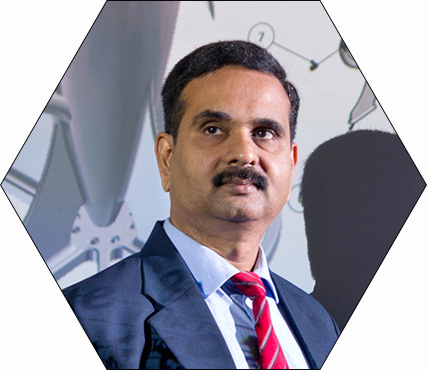
Raghuram V. Pucha is a Principal Lecturer at the Georgia Institute of Technology’s Woodruff School of Mechanical Engineering, where he teaches computer graphics, CAD/CAE, and design courses. He holds a Ph.D. from the Indian Institute of Science (1995) and completed postdoctoral research at Nanyang Technological University and Purdue University before joining Georgia Tech in 2000. His research focuses on developing computational tools for composite materials and nanocomposites, particularly for structural, electronics, and bio applications. He is a core member of the Integrated Analytical and Computational Tools (IntACT) research group, which develops tools for nanocomposite analysis and design. Dr. Pucha has been recognized with multiple teaching awards, including the 2015 Geoffrey G. Eichholz Faculty Teaching Award and the 2012 Undergraduate Educator Award. His work emphasizes integrating sustainability and project-based learning into engineering curricula. He has also contributed to innovations in peer mentorship models and diversity-driven educational strategies. His research spans computational homogenization, RVE modeling for nanocomposites, and reliability analysis of electronic packaging materials. Education: Ph.D., Indian Institute of Science, 1995 M.E., Madras Institute of Technology, 1990 B. Tech., Nagarjuna University, 1988 Awards: Scholarship of Teaching and Learning Award (2020) Geoffrey G. Eichholz Faculty Teaching Award (2015) Undergraduate Educator Award (2012) CTL Teaching Scholar (2020, 2018–2019, 2015–2016) His research and teaching contributions highlight interdisciplinary approaches to engineering education and materials innovation, with a focus on practical applications and student engagement.
Dallen Timothy is a Professor at the School of Community Resources & Development at Arizona State University, where he holds additional affiliation as a Senior Global Futures Scientist with the Global Futures Scientists and Scholars initiative. His office is located at UCENT 580B in Phoenix, AZ. Professor Timothy's research specializes in: Heritage tourism and cultural conservation Geopolitical aspects of international boundaries Religious tourism practices and pilgrimages Global tourism trends and sustainable development Community-based tourism planning His work examines how cultural identities intersect with tourism development across diverse global contexts. Analysis of his recent publications reveals strong thematic focus on: Heritage interpretation and authenticity in tourism destinations Cross-border tourism dynamics and territorial sovereignty Religious/cultural dimensions of tourism experiences Socioeconomic impacts of tourism development Emerging tourism trends in Asia and conflict regions These publications demonstrate consistent exploration of tourism as both cultural practice and geopolitical force. Professor Timothy has led significant research grants including: 'Marketing Profile and Economic Impact of Visitors to Wickenburg' (2013-2015) 'BLM UT GSENM Tourism and Rural Community Appreciative Inquiry Cooperative Plan' (2012-2013) He teaches core courses including Introduction to Travel and Tourism (TDM 205), Managing Tourism & Leisure Enterprises (CRD 401), and International Tourism (TDM 458). He maintains extensive editorial commitments, serving as: Editor of the Journal of Heritage Tourism Commissioning Editor for Tourism Essentials and Aspects of Tourism book series Editorial board member for 14 academic journals including Tourism Management and Journal of Sustainable Tourism
Kelsey Klotz is an Assistant Professor of Musicology at the University of Maryland, with an affiliation in American Studies. Her research bridges musicology, ethnomusicology, jazz studies, and popular music, focusing on how music intersects with identity, whiteness, and gender. She holds a PhD in Musicology from Washington University in St. Louis and previously served as a lecturer at the University of North Carolina at Charlotte and as Assistant Dean for Inclusive Excellence in its College of Arts+Architecture. Her postdoctoral work at Emory University’s Fox Center for Humanistic Inquiry further shaped her interdisciplinary approach. Her landmark book Dave Brubeck and the Performance of Whiteness (2023) examines mid-century whiteness through the lens of jazz pianist Dave Brubeck, analyzing how racial ideologies permeate cultural narratives. Current research explores gender’s role in jazz historiography, challenging exclusionary practices. Klotz emphasizes inclusive pedagogy, fostering critical thinking through music analysis in courses on jazz and popular music history. Her work appears in journals like Daedalus and Journal of Jazz Studies , and she engages public discourse via platforms such as the Milken Archive and NBC. Klotz’s scholarship prioritizes marginalized voices, redefining historical narratives to reflect broader cultural contexts.
Ben A. Minteer is a Professor of Environmental Ethics and Conservation in the Arizona State University School of Life Sciences. He serves as Senior Global Futures Scholar at ASU's Global Futures Scientists and Scholars program, and contributes to environmental thought through extensive publications and editorial work. Education: PhD in Environmental Studies (University of Vermont, 2000) His research focuses on environmental ethics , wilderness philosophy , and history of conservation thought , particularly examining human relationships with wild spaces in the American West. Key themes include: Wilderness preservation in the Anthropocene De-extinction ethical frameworks Zoo and wildlife park conservation roles Visual representation of wildness Pragmatist environmental philosophy His recent articles address topics like: 2025: Reconsidering anthropomorphism in zoo ethics 2024: Visual ecology in wilderness representation 2023: De-extinction limitations and zoo conservation evolution 2022: Wetland protection and disease prevention Scientific achievements include: 2018: Choice Outstanding Academic Title for The Ark and Beyond Editorial Board: Environmental Ethics journal (2010-2020) NSF grant recipient for conservation ethics research As educator, he teaches Environmental Ethics (BIO 324/PHI 310), Honors Directed Study (BIO 492), and Undergraduate Research (BIO 495). He chairs the SoLS Communications Committee and serves as manuscript reviewer for multiple academic presses.
Ondrej Mitas is a Lecturer at the Academy for Tourism Leisure and the Tourism Experiences Research group. His work focuses on the psychology of tourist and leisure experiences, emphasizing emotions, well-being, and quality of life outcomes. He has published extensively on topics such as emotional dynamics in tourism, digital transformation in hospitality, and innovative methodologies like EEG and VR for experience measurement. Active in longitudinal and mixed-methods research Collaborates on projects like HUBRIS (human-like in-vehicle systems) and Van Gogh Storysperience Provides peer-review services for journals including Annals of Tourism Research Research Interests : Ondrej Mitas investigates the temporal evolution of positive emotions during leisure activities, mechanisms of enjoyment and flow in tourism, and the application of digital tools for enhancing visitor experiences. His work bridges tourism studies with cognitive neuroscience and behavioral science. Recent Articles (2022–2025): Key themes include emotion measurement via biometric data, digitalization in hospitality resilience, VR/AR applications in cultural tourism, and cross-cultural comparisons of leisure satisfaction. Notable collaborations with Kokkinou, Shahvali, and Bastiaansen highlight interdisciplinary approaches. Scientific Awards : Literati Award (2020) Outstanding Paper Award (2024) Projects : Current research includes Flexibility in Education Calendars (2024–2025) and HUBRIS (2022–2026). Past projects span over-tourism policy responses, creative tourism in Bali, and emotional dynamics in fitness centers.