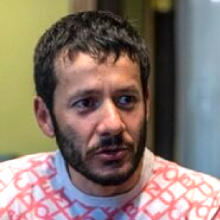
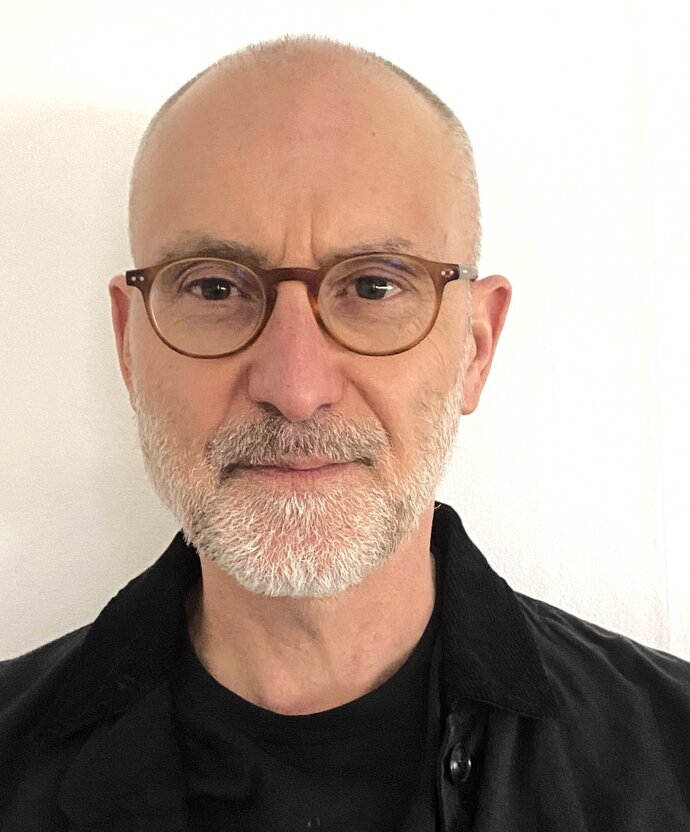
Luca Barra is Full Professor of Television and Digital Media at the Department of Arts, University of Bologna. His research focuses on media studies, particularly television history and contemporary evolution, transnational circulation of content, serialization, and comic/humorous genres. He has coordinated the Master's Degree in Information, Cultures and Media Organization since 2021 and serves as editor-in-chief of VIEW. Journal of European TV History and Culture. University of Bologna, Department of Arts Research areas: Television History, Transnational Media, Digital Transformation, Italian TV Production Barra's work examines the international mediation of ready-made TV formats, Italian streaming partnerships, and the cultural implications of digital television. His recent articles analyze dystopian narratives, sitcom reception in Italy, and the redefinition of celebrity during the pandemic. He contributes to academic discourse through editorial roles in journals like SERIES and Comunicazioni Sociali. His publications include monographs on Italian television programming, sitcoms, and co-edited volumes exploring European premium TV fiction and digital media frameworks. Barra has led research projects such as ATLas and F-ACTOR, and collaborates with international institutions including Brown University and NECS.
Óscar Andrey Herrera Sancho is a Full Professor at the University of Costa Rica and a researcher at the Atomic, Nuclear and Molecular Sciences Research Center. He holds a PhD in Physics from Leibniz University Hannover and has held roles including Head of the Physical Metrology Department at the National Metrology Institute of Costa Rica. His research spans Quantum Optics, Quantum Biology, Surface Physics, and Educational Physics, with interdisciplinary work in art conservation, biophysics, and cultural heritage science. Education: Postdoc Fellowship, Institute for Quantum Optics and Quantum Information, University of Innsbruck (2016) PhD in Physics, Leibniz University Hannover (2012) M.Sc. in Physics, University of Costa Rica (2008) B.Sc. in Physics, University of Costa Rica (2003) Research Interests: His work bridges quantum physics with cultural heritage preservation, including material analysis of historical artifacts, fungal biodeterioration studies, and pedagogical innovations linking literature and science. He also investigates surface physics phenomena relevant to astrophysical ice transitions and quantum gas systems. Scientific Awards: Alexander von Humboldt Foundation Fellow Advising & Grants: While specific grants are not listed, his extensive co-authorship network and leadership roles indicate active collaboration in interdisciplinary research. His work on cultural heritage has involved student teams in material analysis and software development for artifact preservation. Labs & Teams: Leads the Spatially Resolved Ultracold Rydberg Physics group at the 5th Institute of Physics, focusing on quantum systems and their applications in precision measurement and cultural heritage science.
Dr. Gillian Brooks is a Senior Lecturer (Associate Professor) in Strategic Marketing at King’s Business School, King’s College London, and serves as Programme Director for the Executive MBA. Her research focuses on influencer marketing, consumer culture, and social media, employing qualitative methods like ethnography and content analysis. She has been awarded a £1.1 million grant from U.K. Research and Innovation for interdisciplinary mental health research involving social media influencers. Dr. Brooks holds a PhD in Sociology from the University of Cambridge, a Master of Arts in Communication and Technology (Summa cum laude) from Georgetown University, and a Bachelor of Arts (Honours) in Communications from McMaster University. She previously taught at the University of Oxford’s Saïd Business School and the London School of Economics, earning multiple teaching awards, including the Social Sciences Teaching Excellence Award from the University of Oxford. Her research interests span influencer celebrification, digital marketing strategies, and the psychological impacts of social media. She collaborates with the Institute of Psychiatry, Psychology and Neuroscience on youth mental health initiatives and leads projects like KingsCAT, a social media research toolkit. Key publications include studies on brand engagement via influencers and virtual celebrity systems. Grants: £1.1M UKRI grant for mental health research via influencer marketing Awards: Don Lehmann Award, multiple teaching recognitions Interests: Circular fashion, digital nomadism, and personal branding Dr. Brooks advises on executive education programs in personal branding and communication, and her work bridges academia with industry through invited talks globally. She remains active in promoting inclusive education and sustainable business practices.
Norbert M. Schmitz is a Professor of Aesthetics at the Muthesius Academy of Fine Arts in Kiel, Germany. He has held academic roles at institutions including the University of Wuppertal (1992-1996), University of Siegen (2000), Ruhr University Bochum (1991-2000), and the University of Art and Design in Zurich (1999/2000). His international lecture activities span Austria, Switzerland, France, USA, and Pakistan. Institute of Art, Design and Media Studies: Aesthetics Muthesius Academy of Fine Arts (Faculty) Research and Publications: Schmitz’s work focuses on intersections of modernist art , film studies , media theory , and visual culture , with particular emphasis on topics like interactive media art , cinematic artist portraits , and synthetic realities . His edited volumes include works on embodiment , temporal media , and design anthropology . Academic Collaborations: Frequent co-editor with Lars C. Grabbe and Patrick Rupert-Kruse , contributing to the Yearbook of Moving Image Studies (YoMIS) and other key publications. His editorial work spans institutions in Darmstadt, Marburg, and Vienna. Key Themes: Explores media as aesthetic strategy , evolutionary perception , intermediality , and technological materiality across film, art, and design. Analyzes modernist paradigms in works by Eisenstein, Tarkovsky, and Bauhaus theorists.
Joane Nagel is a University Distinguished Professor in the Department of Sociology at the University of Kansas, where she has established a prolific career spanning over four decades. Her work bridges sociology, gender studies, and environmental research with a focus on structural inequalities and identity politics. Education: Ph.D. in Sociology, Stanford University, 1977 Professor Nagel's research interrogates the persistence of racial and ethnic boundaries through the lenses of gender, sexuality, and power. She examines American Indian activism, the militarization of science, and climate change, employing comparative-historical methods to analyze how political and cultural forces shape identity formation. Her foundational works include American Indian Ethnic Renewal (1996) and Race, Ethnicity & Sexuality (2003), while her current scholarship focuses on gendered dimensions of climate policy as evidenced by Gender and Climate Change: Impacts, Science, Policy (2025). Analysis of her recent publications reveals a critical shift toward climate justice, consistently exposing gendered power dynamics in environmental discourse. Her 2020-2025 work demonstrates how hegemonic masculinity permeates climate science and policy, while earlier scholarship established frameworks for understanding ethnic boundary maintenance in multicultural societies. This trajectory reflects her commitment to intersectional analysis across temporal and geopolitical contexts. No scientific awards were explicitly documented in the source materials. Professor Nagel's academic leadership is demonstrated through workshop organization including the SGER-funded Sociological Perspectives on Global Climate Change (2007), though specific grant amounts and student mentorship details remain unreported. Her collaborative publications with scholars like Trevor Scott Lies and Sam Kendrick indicate sustained interdisciplinary partnerships. While no formal lab affiliations are specified, her research methodology emphasizes collaborative knowledge production through workshops and interdisciplinary teams focused on climate justice and indigenous rights.
Dilip Sarkar serves as an Associate Professor in the Department of Computer Science at the College of Arts and Sciences, University of Miami. His academic profile demonstrates a strong research focus across multiple domains of computer science with particular emphasis on theoretical foundations and practical applications. Dr. Sarkar's research interests include: Artificial Intelligence and Cybernetics Parallel Algorithms and Programming Combinatorics Image Processing and Compression Internet of Things Security Machine Learning Applications in Healthcare Quantum Computing Approaches His publication record from 2018-2024 reveals a researcher engaged with cutting-edge computational challenges. Recent work spans quantum tensor networks for time series analysis, security frameworks for single sign-on systems, efficient computation in belief theoretic models, and machine learning applications for traumatic brain injury recovery prediction. His research demonstrates consistent integration of theoretical computer science with practical problem-solving across diverse application domains. As a member of CCS (Center for Computational Science) at the University of Miami, Dr. Sarkar participates in interdisciplinary research initiatives that bridge computational methods with scientific discovery across multiple fields. His technical expertise spans both theoretical frameworks and practical implementations, with notable contributions to image compression techniques, particularly for medical applications, and security protocols for modern web and IoT environments.
Tamara Heidi Roth is a tenure-track Assistant Professor in the Information Systems Department at the Sam M. Walton College of Business, University of Arkansas. She previously served as a Post Doctoral Researcher at the Interdisciplinary Centre for Security, Reliability and Trust (SnT) at the University of Luxembourg and has an interdisciplinary background spanning information systems and educational psychology. Dr. Roth holds two PhDs: one in Information Systems from the University of Luxembourg (2021-2024) and another in Educational Psychology from the University of Bayreuth, Germany (2020-2022). Her educational background reflects her interdisciplinary approach to research that bridges technology adoption with human and organizational factors. Dr. Roth's research focuses on the adoption and integration of emerging technologies, particularly blockchain and digital identity systems, within structured organizational environments such as government agencies and utilities. Her work explores how these technologies can drive innovation while addressing cultural and structural barriers to implementation. Through an interdisciplinary lens, she examines the intersection of technology, organizational behavior, and human-centric innovation. Her research spans multiple domains including public sector technology implementation, responsible innovation, digital identity systems, and the social implications of emerging technologies. Dr. Roth has published extensively in top-tier journals including the Journal of Information Technology, Government Information Quarterly, Journal of the Association for Information Systems, Nature Machine Intelligence, and MIT Sloan Management Review. Her recent work shows a strong focus on blockchain applications in government, digital identity systems, and the social implications of emerging technologies. She has developed a distinctive research trajectory examining how structured organizations adopt and implement blockchain and digital identity technologies, with particular attention to institutional barriers and cultural factors. Excellent Thesis Award, University of Luxembourg, 2024 (awarded to only the top 10% of Science, Technology, and Medicine PhD graduates) Dr. Roth serves as an Associate Editor for major conferences including the International Conference on Information Systems (ICIS) and has provided editorial reviews for numerous prestigious journals such as Journal of Information Technology, Management Information Systems Quarterly, and Journal of the Association for Information Systems. She teaches undergraduate courses at the University of Arkansas on Information Systems, Artificial Intelligence and Technology Ethics, and Introduction to Business Information Systems. Her research activity spans Innovation Management, Behavioral Research, Responsible Innovation, Organizing Visions, Digital Identities, and both Qualitative and Computationally Intensive Research approaches.
Alastair Henry is a Professor in Language Education at the Centre for Languages and Literature (SOL) , Lund University. His research focuses on the psychology of language learning , particularly motivation, communication behaviors in multilingual contexts, and teacher identity development. Research Focus Motivation in English, Modern Languages, and Swedish as a Second Language Teacher identity and relational practices Multilingualism and post-migration language dynamics Selected Scientific Awards 2024 IAPLL Distinguished Scholar Award 2023 Modern Language Journal Research Article Award 2013 Christopher Brumfit Thesis Award (Runner Up) Supervision & Projects Supervising PhD student Sophia Juul Principal Investigator for Progress in Language Learning (PILL), 2025–2028 (4.5M SEK) Co-PI for Motivation in Modern Languages (MoMS) and Project Leader in TEAM (25.8M SEK)
Martin Henze is a tenure-track Assistant Professor at RWTH Aachen University's Department of Computer Science, where he leads the Security and Privacy in Industrial Cooperation (SPICe) research group. Additionally, he co-leads the Secure Production & Energy Networks research group at the Fraunhofer Institute for Communication, Information Processing and Ergonomics FKIE in Bonn, Germany. His work bridges academic research with practical industrial security applications, focusing on critical infrastructure protection. Dr. Henze's research interests center on technical security and privacy aspects of industrial networks and data sharing, with special emphasis on energy and production sectors. His work spans industrial intrusion detection, 5G security for industrial applications, IoT security in constrained environments, and blockchain security. He develops practical security solutions that balance protection needs with the resource constraints and operational requirements of industrial systems, particularly focusing on making security both effective and comprehensible for operators. His recent publications demonstrate a strong focus on industrial security challenges, with particular emphasis on intrusion detection systems that maintain operator control, TLS optimization for resource-constrained industrial IoT, 5G security for production systems, and novel approaches to securing legacy industrial protocols. His work consistently addresses the tension between security requirements and operational constraints in industrial settings. Nachwuchsförderpreis Verbraucherforschung NRW Borchers-Plakette ICT Young Researcher Award Dr. Henze actively contributes to the academic community through service on numerous prestigious program committees including ACM CCS, IEEE S&P, NDSS, and USENIX Security. His teaching portfolio includes graduate courses on Industrial Data Security, Industrial Network Security, and specialized seminars on 5G/6G Security and IoT Security. His research is highly collaborative, frequently involving partnerships across institutions and with industry to address real-world security challenges in critical infrastructure. He heads the SPICe research group at RWTH Aachen, which focuses on developing practical security and privacy solutions for industrial cooperation scenarios. The group's work emphasizes creating security mechanisms that are not only technically sound but also comprehensible and usable by industrial operators, recognizing that the human element is critical in maintaining security in complex industrial environments.
Alex 'Sandy' Pentland is a Professor of Media Arts and Sciences at the MIT Media Lab, where he helped create and direct both the MIT Media Lab and Media Lab Asia in India. He also serves as a HAI Fellow at Stanford University. Pentland is one of the most-cited computational scientists globally and was named by Forbes as one of the '7 most powerful data scientists in the world.' Pentland's educational background includes undergraduate studies at the University of Michigan and a Ph.D. in artificial intelligence and psychology from MIT. His research spans computational social science, organizational engineering, wearable computing (including Google Glass), image understanding, and modern biometrics. His recent publications reveal a strong focus on the intersection of AI and social systems, with emphasis on human-AI coevolution, data ethics, network science, and the societal implications of digital technologies. His work increasingly addresses critical issues in data privacy, tokenized asset networks, and the social contract in the age of big data, demonstrating his continued leadership in shaping how society understands and manages digital transformation. MIT's Toshiba endowed chair Election to the U.S. Academy of Engineering McKinsey Award from Harvard Business Review 40th Anniversary of the Internet from DARPA Brandeis Award for work in privacy Pentland has advised over 80 PhD students, with nearly half now tenured faculty at leading institutions, a quarter leading industry research groups, and the remainder founding their own companies. His research has attracted significant funding, evidenced by projects like the DARPA Network Challenge where his team won by applying data-driven approaches to crowd coordination. His work on 'reality mining' has led to practical applications in call centers, mental health services, and urban planning. As director of the Human Dynamics group at MIT, Pentland has pioneered sociometric sensors and reality mining techniques. His lab has incubated numerous companies including Ginger.io (mental health services), CogitoCorp.com (AI coaching), Wise Systems (delivery optimization), Sila Money (financial technology), and several others focused on data privacy and AI applications across various sectors.
Prof. Dr. Saša Adamović is a faculty member at Singidunum University in Belgrade, Serbia, affiliated with the Faculty of Informatics and Computer Science . His academic career spans over 15 years with a focus on Cryptography, Biometrics, and IoT Security . Born October 15, 1985, in Drvar, Bosnia and Herzegovina PhD in Advanced Security Systems (2013), Master’s in Contemporary Information Technologies (2008), and Bachelor’s in Business Informatics (all from Singidunum University) His research interests include: Biometric Cryptography Blockchain for IoT Security Catalan Number Applications in Cryptography Machine Learning in Security Systems Virtualization and Energy Efficiency Steganography and Forensics Recent publications highlight trends in: IoT Healthcare Security (2022) Biometric Authentication (2021) Combinatorial Cryptography (2021) Machine Learning for Diabetes Prediction (2021) Distance Learning Security (2023) He served as one of five Serbian representatives in the Open World program (USA) for expert exchange in technology development.
Dr. Jiang Wu is a Professor in the Department of East Asian Studies at the University of Arizona and serves as Director of the Center for Buddhist Studies. He holds a Master's degree from Nankai University (1994) and a Ph.D. from Harvard University (2002). His research spans seventeenth-century Chinese Buddhism, Chan/Zen traditions, Buddhist canon historiography, and cross-cultural exchanges between China and Japan. He also explores Confucianism, Chinese intellectual history, and digital humanities tools for cultural analysis. Key publication trends include analyses of regional religious systems, textual transformations in East Asian Buddhism, and Zen doctrine. His 2023 articles focus on spatial modeling, while 2022 works examine educational reforms and Greater China's religious networks. Guggenheim Fellowship (2023) Tianzhu Best Book Award (2016) Congressional Recognition (2018) Rosemead City Award (2018) He has authored two acclaimed monographs and served as Academic Consultant for BBC's Earth's Sacred Wonders (2019). His work bridges traditional Buddhist scholarship with digital methodologies.
Osly Flores is an Assistant Professor in the Department of Education Policy, Organization and Leadership within the College of Education at the University of Illinois at Urbana-Champaign. His scholarly work focuses on educational leadership with particular attention to race-conscious approaches, equity, and the experiences of students and leaders of color. He teaches graduate courses including Critical Race Theory and Education, Educational Politics and Policies, and Leading Learning-Centered Schools, preparing future educational leaders to address systemic inequities. Dr. Flores's research program critically examines how school leaders can move beyond colorblind approaches to actively engage with issues of race and equity. His scholarship investigates the experiences of school leaders of color, student voice in leadership practices, and supportive frameworks for graduate students of color—particularly his conceptual model of compañerismo that explains how cultural affinity and mutual support systems contribute to success in predominantly white institutions. His work spans K-12 and higher education contexts, consistently emphasizing culturally responsive frameworks that center marginalized communities' experiences. Methodologically, he employs qualitative and narrative approaches that amplify voices often excluded from educational discourse. Analysis of Dr. Flores's publication record reveals a cohesive scholarly trajectory focused on disrupting inequitable practices through race-conscious leadership frameworks. His research demonstrates how educational leaders can transform traditional practices to better serve diverse student populations, with particular attention to data-informed decision making, ethical leadership, and creating spaces where student voice is authentically integrated into school leadership. Dr. Flores has been recognized with the prestigious AERA Division A Emerging Scholar Award (2024) , highlighting the significance of his contributions to educational leadership research. His scholarly impact is evident through publications in leading journals including AERA Open , Journal of School Leadership , Urban Review , and Teachers College Record . As an educator and mentor, Dr. Flores guides graduate students through courses examining the political dimensions of education, leadership for learning-centered schools, and critical race theory applications. His advising philosophy appears informed by his research on supportive practices for graduate students of color, suggesting a holistic approach that integrates cultural understanding with academic development. While specific grant information isn't detailed in available materials, his research trajectory indicates engagement with funding focused on educational equity and leadership development. Dr. Flores contributes to scholarly communities through collaborations with researchers examining race, equity, and leadership across educational contexts. His work with colleagues like Oscar E. Patrón on Latinx graduate student experiences represents important interdisciplinary connections between K-12 leadership studies and higher education research, creating bridges between different educational sectors focused on equity.
Prof. Dr. Claudia Bünte is a full-time Professor of Business Administration with a focus on Digital Marketing at the Berlin School of Management, SRH Berlin University of Applied Sciences. Since 2016, she has served as a Managing Partner at Kaiserscholle GmbH, Centre of Marketing Excellence. Her research prioritizes artificial intelligence applications in marketing, brand strategy, and ethical AI frameworks. Doctorate (Dr. phil.) in Marketing, University of Münster (2005) Diploma in Social and Business Communication, University of the Arts Berlin (2000) Her academic work investigates AI-driven marketing transformation, including predictive analytics, algorithmic bias mitigation, and digital brand management. Publications span AI ethics, B2B automation, and cross-industry technology adoption. She has delivered keynote speeches at institutions like the Art Directors Club Germany and AI for Business Zurich. Recent publications highlight trends in AI ecosystems, marketing automation, and ethical considerations across business sectors. Awards include being a publicly appointed marketing expert and Vice Marketing Head 2020 by One-to-One journal. Publicly appointed and sworn marketing expert (2020–present) Vice Marketing Head, One-to-One Trade Journal (2020) As a consultant and speaker, she bridges academic research and industry practice, contributing to German business publications like Horizont and FAZ Magazin. Her work emphasizes practical implementation of AI in marketing strategy and operations.
Aumber Abbas is a researcher at Newcastle University specializing in advanced materials for sustainable energy and environmental applications. His work spans nanotechnology, catalysis, and biomass conversion, with significant contributions to carbon-based nanomaterials and electrochemical systems development. His research focuses on synthesizing graphene quantum dots from biomass waste for environmental sensing and remediation applications, developing catalytic processes for CO 2 utilization and cyclic carbonate production, and engineering electrochemical systems including vanadium redox flow batteries. Recent work emphasizes waste-derived functional materials for optical security, anti-counterfeiting, and wastewater treatment through nanoporous catalyst design and plasma-based tar removal technologies. Analysis of recent publications (2024-2025) reveals a dominant trend in sustainable nanomaterial engineering, particularly biomass-waste-derived carbon structures with tailored optical and catalytic properties. His work integrates experimental validation with simulation approaches to address energy storage, environmental remediation, and security applications, demonstrating strong interdisciplinary collaboration within Newcastle's engineering research community.