Prof. Dr. Martin Przewloka is a faculty member at the Department of MND at Technische Hochschule Mittelhessen. His expertise spans technologies such as Augmented Reality, Virtual Reality, Image Recognition, Parallel Computing, and Industry 4.0, with a focus on applications in healthcare, logistics, and developing countries. Department of MND, Technische Hochschule Mittelhessen Email: martin.przewloka@mnd.thm.de His research interests include Mobile Applications , Real-time Systems , 3D Printing , and Internet of Things (IoT) . He explores how these technologies intersect with Industrial Process Management , Smart Grids , and Public Sector Innovations . Recent work highlights Generative AI in self-service retail and mobile health solutions for chronic disease management. Prof. Przewloka's publications reflect trends in Mobile Empowerment , Crowdsourcing , and In-Memory Computing . His 2024 articles address AI industrialization and gamification in healthcare, while earlier works (2013–2015) focus on disruptive mobile business models and SAP HANA's role in enterprise analytics.
Dr. Lecturer M. Said DOĞRU is an academic staff member at Kastamonu University ’s Araç Rafet Vergili Vocational School . He actively contributes to science education through public engagements, including a TÜBİTAK Science Talk on May 13, 2025, focusing on STEAM education and sustainability. Academic Rank: Lecturer Key Affiliation: Kastamonu University, Araç Rafet Vergili Vocational School Dr. DOĞRU’s research spans STEAM education , STEM pedagogy , and educational technology , with a focus on integrating AI , augmented reality , and social media into science instruction. His work examines teacher training , student misconceptions , and interdisciplinary approaches in science education. Recent publications highlight trends in technology-enhanced learning , including ChatGPT’s role in biology education, augmented reality in STEM, and social media usage among pre-service teachers. His research emphasizes innovative instructional methods and conceptual understanding in topics like meiosis, static electricity, and climate change. Scientific contributions include participation in TÜBİTAK Science Talks and extensive work on educational technologies , curriculum design , and teacher professional development .
Dr. Gökçe Elif Baykal is an Assistant Professor at Özyeğin University, affiliated with the Faculty of Applied Sciences and Department of Communication Design. Her work bridges interaction design and child-technology interaction, focusing on learning theories and technology-mediated collaboration. Bachelor's: Sociology, Marmara University Master's: Visual Arts and Visual Communication Design, Sabancı University Doctorate: Design, Technology and Society, Koç University (2018, Graduate Studies Excellence Award) Research interests include: Interaction Design Child-Computer Interaction Human-Computer Interaction Spatial Thinking in Virtual/Augmented Reality Technology-Mediated Collaborative Interaction She was a postdoctoral researcher at Aarhus University (2018-2020) and a screenwriter for TRT Çocuk, Turkey's national children's broadcasting channel. She directs the Design Interactions Lab ( website ).
Dr. MARIOROSARIO PRIST serves as a Researcher at the Department of Information Engineering within the Faculty of Engineering at Marche Polytechnic University (UNIVPM) in Ancona, Italy. His institutional affiliation is maintained through the Department of Information Engineering (quota 170) at Via Brecce Bianche, 60131 Ancona, with contact details including phone 071 220 4468 and email m.prist@staff.univpm.it. Dr. PRIST's research spans cutting-edge domains in artificial intelligence applications for industrial systems, with particular emphasis on neural network implementations, digital twin architectures, and Industry 4.0 technologies. His work demonstrates strong focus on lightweight AI frameworks for edge computing , anomaly detection in manufacturing processes , and resource optimization in production environments . The research portfolio reveals consistent innovation in adapting advanced machine learning techniques to practical industrial constraints, especially for small and medium enterprises. Analysis of his publication trends indicates a strategic shift toward implementing AI solutions on resource-constrained devices and bridging edge computing with cloud infrastructure for real-time industrial monitoring. Recent work emphasizes practical applications of Echo State Networks for process control and anomaly detection, while maintaining strong connections to additive manufacturing optimization and safety monitoring systems. His research consistently addresses the challenge of making advanced AI accessible for industrial implementation without requiring extensive computational resources. Dr. PRIST's work demonstrates significant contributions to the integration of cyber-physical systems in manufacturing environments, with particular expertise in translating theoretical AI concepts into practical industrial applications that enhance production efficiency, safety, and sustainability.
Daniel Říha serves as Assistant Professor at the Department of Theory of Art and Artworks within the Faculty of Humanities, Charles University Prague, holding this position continuously since 2005. His academic foundation includes a Ph.D. (2002) and M.A. (1998) from Charles University's Institute of Information Studies and Librarianship, with doctoral research focusing on collaborative hypermedia environments for scientific communication. His research program integrates Interactive Media, Videogame Studies, Serious Games, and Virtual Reality through interdisciplinary lenses spanning computer science, art theory, and education. Current investigations examine cutscene functionality in game information systems, VR applications in sexuality research, and multi-touch exhibition design, reflecting sustained engagement with digital knowledge representation since his early work on 3D virtual libraries. Analysis of his 15 most recent publications (2009-2016) reveals consistent thematic evolution toward applied interactive systems, with growing emphasis on therapeutic and educational implementations of virtual environments. His editorial leadership across 12 interdisciplinary volumes demonstrates significant influence in cyberculture and game studies discourse. 2003 Winner of Kunst am Bau International Art Competition for Virtual 3-D Library project As Principal Investigator for Czech Ministry of Education grants (2004-2005) and team member for Czech Grant Agency (2016-2018) and Ministry of Culture projects (2012-2015), he has secured substantial research funding. His academic leadership extends to founding Charles University's New Media Studies discipline and MED Comparative Media Research Group, plus international roles including Director of Publications at Inter-Disciplinary Press (2010-2012) and Cyber Hub Leader (2008-2016). Through projects like the Virtual Museum of Phototelegraphy and INVIPO distance education infrastructure, he has established collaborative networks connecting Czech academic institutions with German, Dutch, Swedish, and Polish universities, operationalizing his theoretical work in international educational contexts.
Paulo Bala is a postdoctoral researcher and teaching assistant at Interactive Technologies Institute (LARSyS) and Instituto Superior Técnico, respectively. He holds a Ph.D. in Digital Media from Universidade Nova de Lisboa, an M.A. in Entertainment Technology from Carnegie Mellon University and University of Madeira, and a B.Sc./M.Sc. in Informatics Engineering from University of Madeira. Ph.D. (2022) - Digital Media, Universidade Nova de Lisboa M.A. (2015) - Entertainment Technology, Carnegie Mellon University & University of Madeira B.Sc./M.Sc. (2010-2013) - Informatics Engineering, University of Madeira His research bridges Human-Computer Interaction, Entertainment Technology, and eXtended Reality (XR), with a focus on immersive storytelling, AI-driven narratives, and serious games for social impact. He has contributed to projects like eGames Lab , MEMEX , and Beanstalk , exploring applications in cultural heritage, sustainability, and health. Recent publications span domains like AI ethics in academia , speculative LLM design , climate literacy games , and financial literacy through transmedia storytelling . His work appears in top venues such as CHI , ISMR , and ICIDS .
Luís Manuel da Silva Conceição is an Assistant Professor at the Polytechnic Institute of Porto's School of Engineering, affiliated with the Department of Computer Engineering. He concurrently serves as a Researcher at GECAD (Research Group on Intelligent Engineering and Computing for Advanced Innovation and Development), an FCT-rated Excellent research unit. His academic credentials include a PhD in Computer Science (2023) from the University of Minho, a Master's (2017) and Bachelor's (2014) in Computer Engineering from ISEP. Conceição's research focuses on Artificial Intelligence with specialization in multi-agent systems, decision support systems, and natural language processing. His applied research spans Industry 4.0 and Healthcare domains, including AI solutions for vascular disease management and e-commerce innovation. He coordinates the international REMO project and has participated in Horizon Europe, H2020, ITEA, FCT, and P2020 projects as PI/co-PI. His recent publications demonstrate strong trends in health informatics (remote patient monitoring, federated learning, digital mental health) and decision support systems (argumentation dialogues, sentiment analysis, distributed consensus). Industrial applications feature prominently, especially in predictive maintenance and human-computer interaction for e-commerce. Awards: ITEA Award of Excellence Innovation (2024) for research impact in health technology Conceição actively supervises graduate researchers: currently mentoring 9 master's students , 4 undergraduate students , and co-supervising 2 PhD candidates . His industry collaborations involve applying AI to real-world challenges through joint R&D projects with technology centers. At GECAD, he contributes to intelligent systems research infrastructure and promotes ethical AI through public lectures and roundtables.
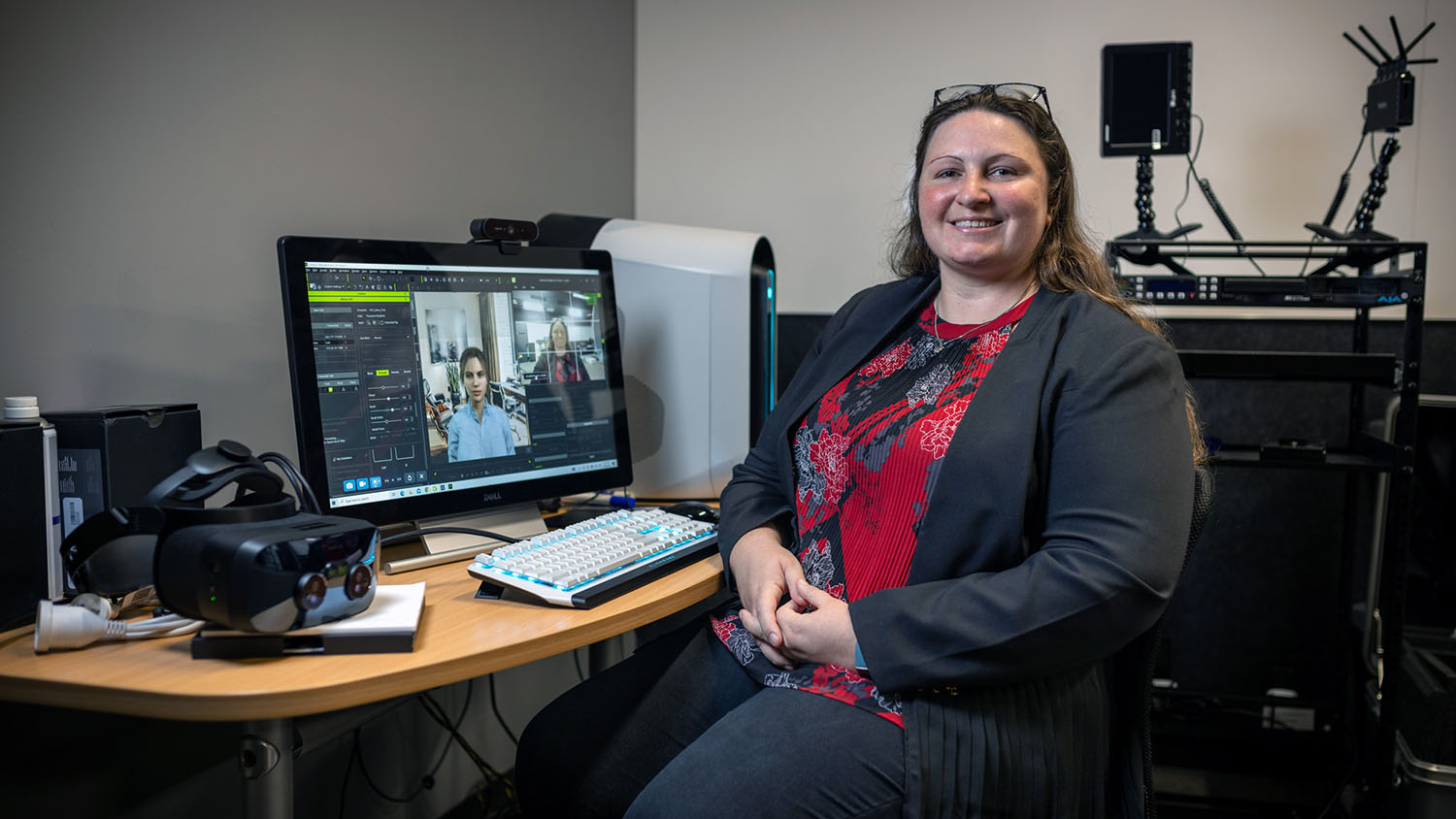
Dr. Jacqueline Bailey is a Lecturer in Computing and Information Technology at the University of Newcastle, Australia, specializing in Mobile App Development within the School of Information and Physical Sciences, part of the College of Engineering, Science and Environment. Her work focuses on human-centered computing with particular emphasis on avatars and immersive technologies for serious applications beyond entertainment. PhD in Information Technology, University of Newcastle Bachelor of Information Technology (Honours), University of Newcastle Dr. Bailey's research centers on human-avatar interactions, particularly examining the uncanny valley phenomenon, gender differences in avatar perception, and the use of virtual and augmented reality for serious gaming applications in healthcare, military, and education sectors. Her work employs quantitative analysis of human perceptions, often using the human startle reflex as a measure of affective processing. She also investigates mobile interface design for older users through the Older Persons Mode (OPM) project. Analysis of Dr. Bailey's publication record reveals a consistent focus on avatar perception, with particular attention to gender differences and the uncanny valley effect. Her research has evolved from foundational studies on avatar facial fidelity to more complex investigations incorporating biofeedback and AI in XR training scenarios. The work demonstrates strong interdisciplinary connections between computer science, cognitive psychology, and human factors engineering. 2024 Industry Engagement (Highly Commended), CESE, University of Newcastle 2016 Best Paper Award, Australasian Simulation Congress 2012 Faculty Commendation List, Faculty of Science and Information Technology 2024 INFT6009 Course Redevelopment Award Dr. Bailey currently co-supervises four research students across PhD and Masters programs, with projects spanning user interface design, AI in visual storytelling, healthy food choice interfaces, and educational data visualization. Her grant portfolio includes six projects totaling $118,809, with significant funding from Meta ($97,036) for research on avatar emotions and a WTUN Exchange Programme grant. She has established the Interactive Intelligent Virtual Agents (I2VA) international collaboration and is developing the NUGamesTech student team for VR competitions. Dr. Bailey leads the Older Persons Mode (OPM) research initiative, collaborating with researchers across all three University of Newcastle colleges to develop smartphone interfaces for older users. She also participates in Professor Karen Blackmore's i3Lab and has formed international collaborations through the Interactive Intelligent Virtual Agents (I2VA) network spanning Australia, Belgium, Japan, and Portugal.
Anke Tallig is a Researcher at Chemnitz University of Technology's Faculty of Computer Science, where she has maintained continuous affiliation since 2012. Her work bridges robotics, human-computer interaction, and virtual environments with a focus on developing systems for social interaction between humans and robots through non-verbal communication and sensor technologies. Her academic foundation includes a Bachelor of Engineering in Media, Communication and Automation Systems (2007-2010) and a Master of Engineering in Computer Science and Communication Systems (2010-2012), both from Hochschule Merseburg. She received the Best Master Thesis Award in 2012 for her work on CAVE projection environments and Cyberglove interfaces. She completed her doctorate within the DFG-funded Research Training Group 'CrossWorlds' (2012-2018), supervised by Prof. Wolfram Hardt and Prof. Maximilian Eibl, with research on robotic mediators for human-robot contact. Tallig's research centers on creating seamless connections between virtual and real social worlds through socially interactive robots. Her expertise spans perception systems, augmented/mixed reality interfaces, and sensor-driven human-machine control mechanisms. She investigates how robots can interpret non-verbal cues to facilitate natural interaction, with applications in edutainment, empathic systems, and gender-specific user experiences. Her interdisciplinary approach combines computer engineering with social science perspectives to overcome constraints in media-mediated communication. Her publication record from 2012-2014 reveals a cohesive research trajectory advancing from foundational mediator systems to sophisticated mixed reality applications. The work demonstrates consistent innovation in social robotics, with increasing complexity in emotional recognition and public interaction scenarios, while maintaining focus on practical implementations through the CrossWorlds framework. Her recognition includes: Award for Best Master Thesis 2012 from Freundeskreis der Fachhochschule Merseburg e.V. Tallig was integral to the DFG Research Training Group 'CrossWorlds' (2012-2018), contributing to interdisciplinary networks examining communication, emotions, sensomotorics, and learning across virtual-real boundaries. While not listed as a primary advisor for students in available records, her collaborative work involved multiple projects including SOLVE (gender-specific problem solving), HERMES, and CAVE environment development. Her research was supported through the CrossWorlds doctoral program with funding from the German Research Foundation. Her primary research environment operates within the CrossWorlds ecosystem at TU Chemnitz, where she collaborates with computer scientists and social scientists to develop next-generation interaction paradigms. Current work appears focused on extending mediator systems for broader social applications while refining perception algorithms for more nuanced human-robot communication.
Dominik Hlinka is an Assistant Professor at the Department of Painting, Academy of Fine Arts and Design in Bratislava. Working between Bratislava and Hontianske Tesáre, Slovakia, he explores intersections of painting, digital media, and conceptual frameworks through solo exhibitions across Central Europe. Education: Doctorate (2015-2021), MFA/BFA (2008-2014) from AFAD Bratislava, and exchange studies (2011-2012) at HEAD Genéve. His research focuses on contemporary painting's evolution through digital contexts, memory representation, and rural/industrial narratives. Works like Science-rural fiction (2024) and The TimeLord (2024) blend scientific metaphors with traditional media, while projects like FISSION (2023) examine structural breakdowns. Recent exhibitions reveal trends in technological memory systems and existential spatial exploration. Notable projects include AUTOCALYPSE (2021) addressing personal digital collapse and REFLECTION - REFRACTION - DIFFRACTION (2021) visualizing physics concepts. Scientific Awards : Scholarship of the Novum Foundation (2017, 2015) Rector's Award - Diploma Project (2014) Jury's Selection at XI. Triennal of Aquarelle (2013) As a member of INSTITUT INSTITUT, Hlinka's work spans oil/paraffin canvases, robotic installations, and algorithmic collaborations. His teaching involves foundational painting techniques and experimental studio practices.
Dr. Salam Daher is an Assistant Professor in the Department of Informatics at the New Jersey Institute of Technology (NJIT), with courtesy faculty status at the University of Central Florida (UCF). She holds a PhD in Modeling and Simulation from UCF (2018) and completed a postdoctoral fellowship there in 2019, focusing on augmented reality applications in healthcare simulation. Her educational background includes an MS in Digital Arts and Sciences from the University of Florida (2006) and a BS in Computer Science with a minor in Mathematics from the Lebanese American University (2004). Dr. Daher's research is centered on healthcare simulation and technology, particularly through the development of augmented reality systems. She pioneered the concept of Physical-Virtual Patients (PVP), which integrate real-time tactile, auditory, and visual cues to create immersive medical training environments. Her work bridges computer graphics, virtual and augmented reality, synthetic environments, and 3D character modeling with realistic facial expressions and body language. This research has applications in healthcare, education, and military training. Her publications from 2015 to 2020 reflect a consistent focus on interactive simulation technologies, especially AR-based patient simulators, touch sensing interfaces, and social presence in virtual environments. The work demonstrates interdisciplinary collaboration, particularly with medical and human-computer interaction experts. National Center for Women and Technology (NCWIT) National Award Winner (2018) RADM Fred Lewis (I/ITSEC) Scholarship (2017) Link Fellowship for Modeling, Simulation and Training (2016) UCF Modeling and Simulation Scholarship (2013, 2014, 2015) IEEE VR 2017 Doctoral Consortium Nominated for UCF’s Order of Pegasus Award (2018) Nominated for UCF’s Outstanding Dissertation Award (2019) Dr. Daher has advised and collaborated with students and researchers on projects involving augmented reality patient simulators, virtual humans, and interactive environments. Her work has been supported through competitive fellowships and scholarships. Prior to her academic career, she worked as a multimedia software developer at Vcom3D, leading simulation projects for education, healthcare, and military applications, including a multilingual cultural translator for the U.S. Army. She has been involved in the development of 3D synthetic environments and virtual human models, particularly through her work at UCF's Synthetic Reality Lab and the Digital Worlds Institute. Her projects often involve interdisciplinary teams focused on creating realistic, interactive simulations for training and education.
Ross Brown is an Associate Professor at Queensland University of Technology (QUT) in the School of Computer Science, specializing in virtual and augmented reality technologies. His academic journey includes a PhD from QUT and extensive contributions to immersive technology research and education. Position: Associate Professor Institution: Queensland University of Technology School: School of Computer Science Education: PhD (Queensland University of Technology) Professor Brown's research focuses on Virtual Reality, Augmented Reality, Data Visualisation, Process Visualisation, Information Visualisation, Computer Graphics, and Games Technology within the broader field of Artificial Intelligence and Information and Computing Sciences. His work spans applications in healthcare, education, environmental monitoring, urban planning, and industrial training, demonstrating the versatility of immersive technologies across multiple domains. His recent publications reveal a strong emphasis on practical applications of immersive technologies, with research spanning healthcare rehabilitation, geological education, urban engagement, surgical applications, and environmental monitoring. The interdisciplinary nature of his work is evident in collaborations with researchers from diverse fields including medicine, environmental science, urban planning, and education. Augmented Reality applications in surgery and rehabilitation Virtual Reality systems for geological education and training Immersive environments for industrial process training VR/AR applications for environmental monitoring Location-based VR for esports and social interaction Professor Brown has received significant recognition for his expertise, including multiple keynote invitations to international conferences such as BPM2017 in Lisbon, Assurance webinars on trusted autonomous systems, and Engage2 conferences. He has served as an International Researcher of Note for ARC funding assessments and has been a regular speaker at Microsoft Tech Ed since 2006. His academic service includes reviewing for major conferences including MSRA Gaming & Graphics, Graphite, AVI, and BPM, as well as serving as a reviewer for journals such as Future Generation Computer Systems and Knowledge and Information Systems. Professor Brown has supervised numerous doctoral and master's students, with completed projects focusing on visual immersion, collaborative business process modeling, and 3D virtual environment validation.
Antonio Frisoli is a Full Professor of Engineering Mechanics and Robotics at Sant'Anna School of Advanced Studies, where he leads the Human-Robot Interaction area at the Institute of Mechanical Intelligence. He serves as President of Artes4.0, the Italian National Competence Center on Robotics and Industry 4.0, and holds editorial roles including Associate Editor for IEEE Robotics Automation Magazine. His educational background includes: PhD with honors in Industrial and Information Engineering from Scuola Superiore Sant'Anna (2002) MSc in Mechanical Engineering, minor Robotics, from University of Pisa (1998) MSc in Industrial Engineering from Scuola Superiore Sant'Anna (1998) as an honor student Professor Frisoli's research spans collaborative robotics, rehabilitation robotics, wearable robotics and exoskeletons, multimodal interaction and haptics, wearable devices, and virtual reality. His work leverages expertise in human perception biomechanics to develop advanced haptic devices and robotic systems for rehabilitation, teleoperation, and virtual environments, with significant focus on clinical applications for stroke rehabilitation and orthopedic recovery. Analysis of his recent publications reveals strong emphasis on haptic interface innovation, exoskeleton optimization, and human-robot collaboration. Key trends include wearable haptic gloves for remote interaction, musculoskeletal modeling for rehabilitation exosuits, running efficiency enhancement through hip exoskeletons, and tele-echography systems resilient to time delays, demonstrating consistent translation of theoretical research into practical applications. Professor Frisoli actively drives technology transfer through co-founding two spin-off ventures: Wearable Robotics srl: A market leader in exoskeleton technology Next Generation Robotics srl: Specializing in robotic solutions for railway systems He directs the Human-Robot Interaction research group within PERCRO (Perceptual Robotics Laboratory), which maintains deep expertise in psychophysics of human perception and biomechanics. The group develops force feedback exoskeletons, large workspace haptic devices, and virtual reality systems for applications ranging from telepresence to clinical rehabilitation, with ongoing projects enhancing stroke therapy through robotic supplementation of traditional one-to-one treatment.
Rob Wallon is a Teaching Assistant Professor in Biomedical and Translational Sciences at the Carle Illinois College of Medicine, University of Illinois. His work focuses on advancing medical education through innovative technologies and pedagogical strategies. Primary Role: Director of Academic Support Courses Taught: BSE 666 - Academic Progress I Dr. Wallon’s research spans educational technology, embodied learning, and curriculum design. He has pioneered the integration of virtual reality (VR) in medical training, particularly for anatomical visualization and case-based learning. His studies on spaced repetition and holistic academic support systems aim to enhance medical student performance and wellbeing during high-stakes exam preparation. Recent publications highlight his exploration of gesture-based learning in science education, gamification for scientific argumentation, and accessibility reforms post-pandemic. These works intersect biomedical training with cognitive science principles to improve explanatory reasoning and conceptual understanding. Email: rwallon2@illinois.edu
Pejman Saeghe is a Lecturer in the Department of Computer and Information Sciences at the University of Strathclyde, United Kingdom. His research focuses on the intersection of human-computer interaction, augmented reality (AR), and digital ethics, with particular emphasis on privacy, security, and behavioral implications in immersive technologies. His work contributes to the United Nations Sustainable Development Goals (SDGs), specifically addressing digital trust and responsible technology design. Key research areas include: Dark patterns in extended reality (XR) Privacy-enhancing technologies for AR Child safety in social VR platforms Bystander awareness mechanisms in mixed reality Recent publications analyze manipulative design practices in retail AR, forced attention tactics, and frameworks for secure AR adoption. He actively participates in professional activities through: Peer-review roles at ACM Advisory participation in SPRITE+ (Security, Privacy, Identity and Trust Engagement NetworkPlus) Leadership in the UNMASKED project on digital inauthenticity