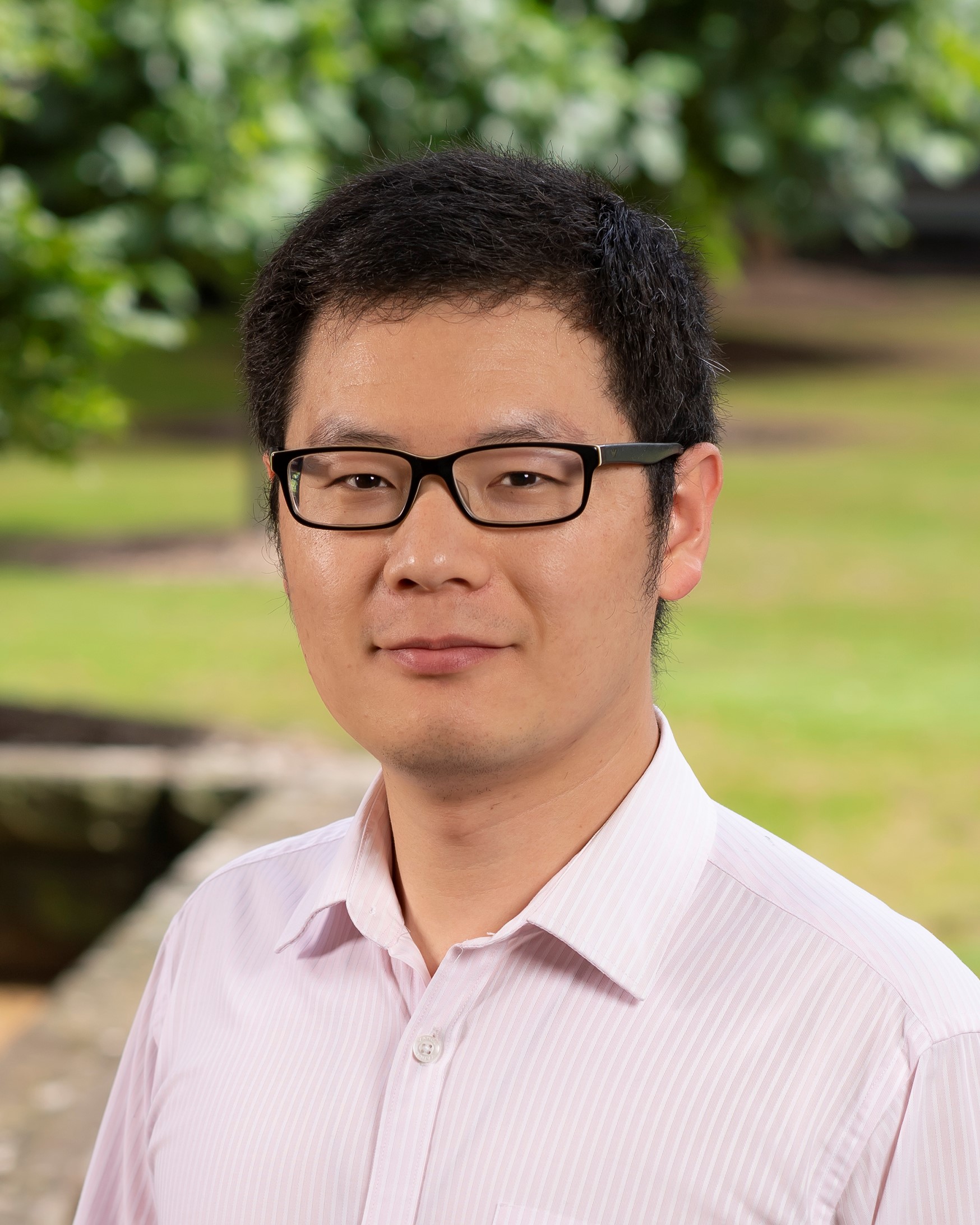
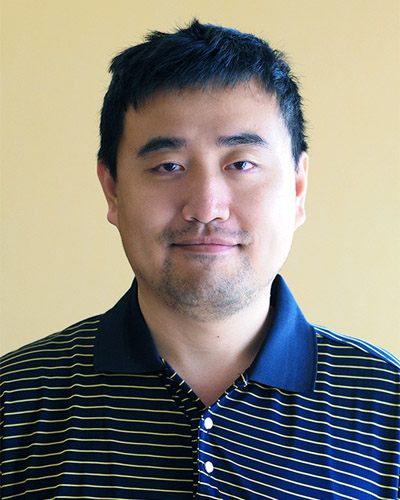
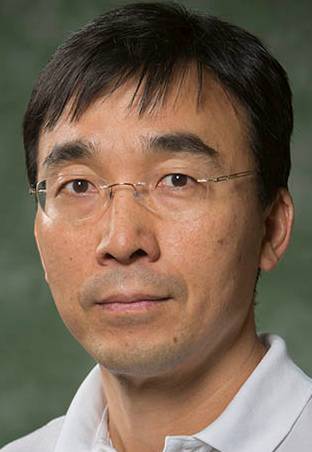
Kalle Elfvengren is a researcher at the Lappeenranta-Lahti University of Technology (LUT) within the School of Engineering Sciences , focusing on Decision Sciences and Technology and Innovation Management . His work bridges computational methods with practical problem-solving across industries. Research Trends : Elfvengren's publications highlight expertise in digital twins, RFID technologies, and AI applications for service needs assessment. He explores how these innovations transform manufacturing, healthcare, and logistics while addressing sustainability and pandemic-related challenges.
Krzysztof Walczak is a Professor at the Department of Information Technology, University of Economics in Poznan. His work bridges Information and Communication Technology (75%) with Management and Quality Studies (25%). 2020–Present: Professor 2010–2020: Assistant Professor 2001: Doctorate Research focuses on Virtual & Augmented Reality applications in education, industry, and cultural heritage. Key themes include semantic modeling for adaptive XR interfaces, 3D content creation for marketing, and AI integration in immersive environments. Recent work explores: Generative AI ethics in education Industry 4.0 VR training systems Financial data visualization in AR Green digital transition policies As a scientific leader, he has published 70+ works and supervised 110+ research activities. His Hirsch index (approx. 25) reflects significant impact in semantic XR systems and 3D web technologies.
Anne Marie Flatekval serves as an Associate Professor of Nursing within the Nursing Program at Ramapo College of New Jersey's School of Theoretical and Applied Science. She joined the institution in 2017 and maintains her office in AC-210B, where she contributes significantly to nursing education and student development. Education: DNP from Regis University MSN from Regis University BSN from College of Mount Saint Vincent Dr. Flatekval's research focuses on innovative approaches to nursing education, particularly in the areas of student success strategies and anxiety reduction. Her work explores the application of mindfulness techniques and gaming technologies to enhance student engagement and learning outcomes. She has developed several interventions aimed at improving NCLEX preparation and overall nursing student performance. Her scholarly work demonstrates a clear trajectory toward integrating technology with psychological approaches in nursing education. The publications reveal a strong emphasis on practical applications that address common challenges in nursing education, particularly student anxiety and engagement issues. Recent work shows increasing focus on mindfulness applications and technology integration in classroom settings. Dr. Flatekval has been an active presenter at numerous professional conferences, including the National Consortium of Nursing Academic Coaches, New Jersey League for Nursing Convention, and various Nurse Think for Nurse Educators conferences where she has shared her research on mindfulness bundles, student success programs, and innovative teaching strategies. Her professional activities indicate strong commitment to improving nursing education through evidence-based practices, with particular emphasis on supporting students through challenging academic transitions in nursing programs. She has collaborated with colleagues like S.A. Corbo on community engagement initiatives and academic-practice partnerships.
Dr Majid Zamani is a Lecturer in the School of Electronics & Computer Science at the University of Southampton. His research focuses on implantable and wearable biomedical devices, applied AI in biomedical engineering, and hardware-efficient processing frameworks. Member of: Digital Health and Biomedical Engineering Institute for Life Sciences Member of: Centre for Internet of Things and Pervasive Systems Member of: Centre for Health Technologies Member of: UKRI AI Centre for Doctoral Training in AI for Sustainability (SustAI) Current research addresses key challenges in scalability, signal processing, sensing, energy efficiency, and miniaturization for next-generation implantable brain-machine interfaces (iBMI). He explores hardware-efficient computational platforms for biomedical applications, including AI-driven algorithms for neural signal/image processing, augmented navigation in constrained anatomical spaces, and low-power real-time processors in 180/90/45 nm CMOS technologies. Recent publications focus on deep learning for spike sorting, binarized neural networks, noise-aware speech enhancement, and AI integration in surgical navigation. His work bridges biomedical engineering with AI and hardware optimization. Teaching: Digital system design (ELEC6236) 42+ publications in journals like IEEE Transactions on Medical Imaging, Journal of Neural Engineering, and IEEE Access
Manoj S. Patankar is a Professor at Purdue University’s Purdue Polytechnic Institute and serves as the Director of the Center for Research and Education in Advanced Transportation Ecosystems (CREATE). Previously, he held leadership roles as department chair, dean, and provost at Saint Louis University. His work focuses on aviation technology, safety, and workforce development, integrating insights from psychology, education, and management. Bachelor’s degree in Aeronautics from Saint Louis University M.S. in Aviation Safety from the University of Central Missouri MBA from Georgetown University Ph.D. in Education from Nova Southeastern University Ph.D. in Management from the University of Sheffield (U.K.) Institute for Educational Management from Harvard University Patankar’s research explores aviation safety through interdisciplinary approaches, emphasizing AI, AR/VR technologies in aviation maintenance and FAA-funded workforce development programs. He also investigates fuel economy optimization, greenhouse gas emissions reduction, and engine longevity improvements. Fellow of the Royal Aeronautical Society (FRAeS) Multiple research awards As principal investigator, Patankar has managed over $6 million in federal grants from agencies like the FAA and NSF, alongside industry funding from FlexJet. His projects include high-tech learn-by-doing programs for aviation educators and living-learning labs for technician apprenticeships. Patankar leads CREATE, a multidisciplinary research center fostering collaboration between academia, industry (e.g., FlexJet), and federal agencies. He holds certifications as a private pilot, aircraft mechanic, and FCC General Radiotelephone Operator, with academic experience across seven countries.
Michail (Michalis) Giannakos is a Professor at the Department of Computer Science, Norwegian University of Science and Technology (NTNU) and an Adjunct Professor at the Department of Information Systems, University of Agder (UiA) . He serves as Head of the Learner-Computer Interaction Lab at NTNU. His career spans multiple institutions, including roles as EAISI Visiting Professor (TU/e, Netherlands), Honorary Professor (UCL, UK), Associate Professor, Senior Lecturer, and Assistant Professor. Giannakos' research focuses on emerging technologies in online/hybrid education , with emphasis on student/instructor experiences, gamification , STEM learning , augmented reality , and multimodal learning analytics . His recent publications explore generative AI for educational feedback , embodied mathematics , and AR applications for autistic children . 2024–present: Adjunct Professor, UiA 2020–present: Professor/Head, NTNU 2023–2024: EAISI Visiting Professor, TU/e 2022–2023: Honorary Professor, UCL He has received prestigious awards, including the RCN Young Research Talents grant , ERCIM Fellowship , and Outstanding Academic Award (NTNU) . His funded projects include AutoTRUST (Horizon Europe), COMnPLAY-Science (Horizon 2020), and Surrounded by Science (Horizon 2020). Giannakos serves as Editor-in-Chief for the International Journal of Child-Computer Interaction and sits on editorial boards of IEEE Transactions on Learning Technologies , Behaviour & Information Technology , and others. He has reviewed for the European Commission and US-NSF .
Mirjana Spasojevic is a researcher and collaborator in Human-Computer Interaction , Distributed Systems , and Interactive Media . She has contributed to innovations in Augmented Reality for family engagement Context-aware mobile interfaces Collaborative digital storytelling Ubiquitous computing systems Preschooler communication tools Her work bridges technical research with social implications, emphasizing user experience and accessibility. Research Trends from her 15 most recent publications (1994-2023) show sustained focus on Human-robot interaction and failure detection (2023) Smart jewelry and wearable interfaces (2015) Family videochat and connected reading (2010-2011) Early mobile photoware systems (2010) Networked toys for distance play (2011) Asynchronous messaging for children (2011) Academic Contributions span from foundational distributed systems research in the 1990s to modern interactive media explorations. Her collaborations with institutions like Carnegie Mellon University (via Mahadev Satyanarayanan) and tech companies suggest cross-disciplinary impact.
Dr. Leo Wu is a Senior Lecturer at the School of Mechanical and Manufacturing Engineering, University of New South Wales (UNSW), Sydney, Australia. He earned his BS and PhD in Mechanical Engineering from Tsinghua University, followed by postdoctoral roles at National University of Singapore (2014-2015) and Queensland University of Technology (QUT) as a Vice-Chancellor’s Research Fellow (2016-2018). From 2016-2020, he was affiliated with the Australian Centre for Robotic Vision, an ARC Centre of Excellence. PhD in Mechanical Engineering, Tsinghua University (2013) BS in Mechanical Engineering, Tsinghua University (2008) His research focuses on medical robotics , particularly flexible robots and intelligent perception systems for minimally invasive surgery . He has also made significant contributions to Lie groups theory in robotics , kinematic modeling and calibration for surgical and industrial robots, and wearable assistive technologies . His work integrates soft robotics with variable stiffness mechanisms and multimodal sensing , often leveraging machine learning and control engineering to enhance robotic autonomy and precision. Scientific awards include prestigious fellowships such as the QUT Vice-Chancellor’s Research Fellowship , QUT ECARD/VCRF Travel Fellowship , and Associate Fellowship of Higher Education Academy . He has received multiple academic honors from Tsinghua University and national scholarship programs. Dr. Wu actively supervises HDR students, focusing on surgical robotics and teleoperated orthopaedic systems . His research portfolio includes grants from the ARC Discovery Projects , UNSW MME RIS , and QUT internal schemes , covering topics like bioinspired flexible haptics , vision-guided robotic assembly , and precision motion capture systems . Collaborations extend to institutions like QUT, NUS, and clinical partners in robotic vision.
Kasper Hornbæk is a Professor at the Department of Computer Science, University of Copenhagen, specializing in Human-Centred Computing. He conducts research in human-computer interaction (HCI), usability, eye tracking, visualization, and software engineering. Primary Fields: Human-Computer Interaction, Usability Research, Eye Tracking, Visualization, Software Engineering Recent Collaborations: International (country/territory-level) partnerships in HCI and AI Research Outputs: 228 publications focusing on multimodal interaction, VR, and causal modeling His work explores audio-tactile integration, theoretical frameworks in HCI, and principles for user interface design through empirical studies and meta-analyses. Recent projects include heartbeat resonance interfaces and critiques of experimental methodology. Contact: kash@di.ku.dk | Research Website
Robert Sainburg is the Dorothy Foehr Huck and J. Lloyd Huck Distinguished Chair in Kinesiology and Neurology at Penn State University and Penn State College of Medicine. He directs the Center for Movement Science and Technology (C-MOST) and operates two laboratories: the Movement Neuroscience Laboratory at University Park and the Neurorehabilitation Research Laboratory at Hershey Medical Center. Currently holding professorships in both Kinesiology and Neurology, Sainburg's work bridges basic neuroscience with clinical rehabilitation applications. Education Ph.D. in Neuroscience from Rutgers University (1993) MS in Neurobiology and Physiology from Rutgers University (1989) BS in Occupational Therapy from New York University (1984) Postdoctoral Fellowship in Neurobiology under Dr. Claude Ghez at Columbia University (1993-1996) Research Focus Sainburg's work centers on neural lateralization for motor control , developing the Dynamic Dominance Model that explains hemisphere-specific contributions to predictive and impedance control. His research spans: Multi-joint arm coordination mechanisms Stroke-induced motor deficits analysis Proprioceptive feedback systems Virtual reality rehabilitation frameworks Bi-hemispheric brain function Neurological patient population studies Scientific Recognition Elected Fellow, National Academy of Kinesiology (2024) Huck Distinguished Chair (2021) AOTF Academy of Research (2019) Pattishall Research Achievement Award (2008) Research Infrastructure As C-MOST director, Sainburg integrates two major facilities: the Movement Neuroscience Lab (University Park campus) focuses on basic motor control mechanisms, while the Neurorehabilitation Lab (Hershey Medical Center) directly applies findings to clinical populations. The Kinereach VR system , developed in-house, enables precise movement tracking and distortion experiments.
Andrew Selby is a Senior Lecturer in Illustration and Animation at Loughborough University's School of Design and Creative Arts. He previously served as Head of the School of the Arts (2011-2014), leading it to achieve a Top 40 QS World Ranking for Art and Design. Later, he acted as Associate Dean for Enterprise in the School of the Arts, English and Drama, overseeing a 2021 Research Excellence Framework submission that resulted in 100% of Loughborough’s Art and Design research impact being rated 'world-leading' or 'internationally excellent.' His artistic practice spans three decades of international acclaim, with illustrations featured in major global publications like The New York Times , Guardian , and Los Angeles Times , alongside corporate campaigns for Nike, Barclays, and Volvo. His work is held in public collections across the US, Australia, Japan, New Zealand, and Saudi Arabia. Notably, he has created influential covers for The Lancet journals, including Journal of Infectious Diseases and Journal of Gastroenterology & Hepatology . Research interests include editorial illustration's evolving role, animation history, service design methodologies, and co-design processes in education. His projects often merge traditional illustration with emerging technologies like augmented reality, as seen in collaborative educational tools for primary schools. Andrew’s work has garnered awards from prestigious bodies including the American Illustrators, Society of Illustrators (NYC/LA), and 3x3 Contemporary Illustration. He continues to engage with commercial clients such as Eurostar, Wishbone Design, and the London Transport Museum, bridging artistic excellence with professional applications. His contributions to academic leadership include advancing research impact strategies and fostering cross-disciplinary innovation. Current initiatives focus on the intersection of visual arts with healthcare communication and urban cultural heritage.
Xiaoyin Wang is an Associate Professor in the Department of Computer Science at the University of Texas at San Antonio, with affiliations to the College of AI, Cyber and Computing. She previously held a PostDoc position at UC Berkeley's Department of Electrical Engineering and Computer Science. Ph.D. in Computer Science, Peking University (2012) B.Eng. in Computer Science, Harbin Institute of Technology Her research focuses on Natural Language Processing , Program Analysis , Software Engineering , and Software Security . Key sub-areas include: Software migration and compatibility Build system automation Testing and debugging methodologies Privacy policy enforcement in mobile apps Deep learning for software analysis Augmented/Virtual Reality testing Recent publications (2022-2024) emphasize automated oracle prediction for AR/VR testing, data-sensitive analysis, and DevOps toolchain optimization. Trends include: Adaptation of program analysis to immersive environments Privacy-preserving software engineering Empirical studies on testing frameworks Academic accolades include: NSF CAREER Award (2019) President's Research Achievement Award (UTSA, 2019) Multiple best paper awards at ICSE, TOSEM She has advised 7 graduate students, including: Current: Rodney Rodriguez, Xueling Zhang, Sunzhou Huang Graduated: Xue Qin (Villanova), Foyzul Hassan (UM-Dearborn), Shaikh Mostafa (Amazon/Microsoft) Laboratory work involves tools like: TranStrL: Software internationalization Hima: API mapping for framework evolution NetworkProfiler: Android app fingerprinting DOVAR: AR/VR visualization for education Uniloc: CI failure diagnosis
Dr. Philip G. Crandall is a Professor in the Department of Food Science at the University of Arkansas. He holds a Ph.D. and M.S. in Food Science from Purdue University and a B.S. in Horticulture from Kansas State University. His research focuses on retail food safety and green technologies to minimize risks from foodborne pathogens across the food supply chain. Research interests include: System-wide intervention strategies for food safety risk reduction Impact of sanitizing agents and practices on Listeria monocytogenes contamination Role of equipment and employees in foodborne illness transmission Development of educational programs for food safety training His publications focus on food safety training methodologies, handwashing compliance, and technological interventions in food service environments. Research employs behavioral science approaches and emerging technologies to improve safety outcomes. Honors include: IFT Fellow (2012) President of Phi Tau Sigma (1996) Multiple honorary society memberships including Phi Kappa Phi and Sigma Xi Holds patents for food safety innovations including: Use of lactic acid bacteria as bio-sanitizers Soybean pectin production methods High-brix citrus concentration processes
Kyoung-Don (KD) Kang is a Professor in the School of Computing at Binghamton University, State University of New York. He specializes in real-time embedded systems, cyber-physical systems, and IoT security. His research focuses on enhancing real-time data services' timeliness and power efficiency, supported by NSF grants and industry collaborations. Education: BS, MS (Kyungpook National University); MS, PhD (University of Virginia). Research Interests: Real-time embedded systems, cyber-physical systems, IoT, security, edge computing, and wireless sensor networks. His work emphasizes control-theoretic approaches, feedback mechanisms, and adaptive algorithms for real-time systems. Grants & Projects: NSF-funded projects include 'Enhancing Timeliness of Real-Time Data Services' and 'QoS-Aware Data Management.' He leads the Real-Time Embedded Systems Laboratory, developing frameworks like Chronos and RTMR. Awards: Best Paper nominations (DCOSS'19), NSF grants, and patents in surveillance systems. Over 16 MS students and 9 PhD students have graduated under his mentorship, many joining top tech firms. Labs & Teams: Director of the Real-Time Embedded Systems Lab, focusing on edge computing, real-time stream processing, and secure IoT applications. Collaborates with industry partners like Samsung and Intel.
Dr. Ronak R. Mohanty is a Research Scientist in the Department of Industrial and Systems Engineering at the University of Wisconsin-Madison , specializing in Human-Computer Interaction and Applied Perception . His work focuses on human-centric design principles to develop innovative Extended Reality (XR) and haptic technologies for applications in health technology, orthopedic surgery training, and XR learning. He has contributed to cutting-edge research at Meta Reality Labs , particularly in haptics-based wearable devices and human augmentation technologies. Primary Affiliation: University of Wisconsin-Madison Department: Industrial and Systems Engineering Ronak R. Mohanty’s research spans multisensory experience design, with a focus on haptic rehabilitation , augmented reality (AR) for triage training, and spatial audio accessibility solutions. His work bridges academic and industrial domains, emphasizing inclusivity and precision in XR systems. Scientific publications highlight trends in XR technology , haptics , medical simulations , and assistive interfaces . His studies explore motor strategies in virtual spaces, bone-drilling analytics, and speech-driven 3D modeling, reflecting interdisciplinary expertise in human augmentation and user-centered design . Contact: ronak.mohanty@wisc.edu