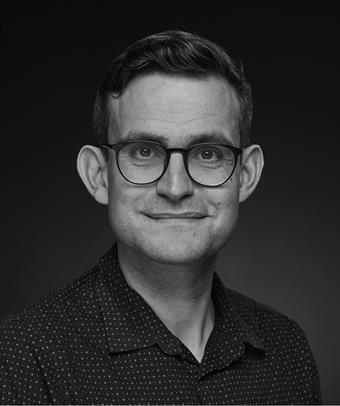
Dr. Burkhard Maess is a Research Professor and Group Leader at the Max Planck Institute for Human Cognitive and Brain Sciences, leading the Methods and Development Group Brain Networks. His research focuses on auditory and language processing, signal analysis, and dynamic modeling of neuronal networks. He holds a Diploma in Physics (University of Leipzig, 1987) and a PhD in Physics (University of Leipzig, 1990). His career includes postdoctoral positions at the Academy of Sciences of the GDR and the Free University of Berlin before joining the MPI in 1995. Since 2000, he has led research groups on MEG/EEG signal analysis and cortical network dynamics. His work integrates advanced neuroimaging techniques like MEG and EEG to study sensory processing, neural network dynamics, and the effects of aging on auditory attention. Key contributions include developing high-resolution BEM-FMM methods for source localization and analyzing cross-frequency coupling in neuroscience data. His group also explores spinal cord electrophysiology and the neural underpinnings of perceptual decision-making. Dr. Maess’ research spans cognitive neuroscience, biomedical engineering, and computational modeling, with a focus on bridging empirical findings with theoretical frameworks in neuroscience.
Dr. Conny Kopp-Scheinpflug is an Associate Professor (PD) at the Faculty of Biology, Ludwig Maximilian University of Munich, where she leads a research group focused on auditory neuroscience. Her laboratory investigates the function and mechanisms of activity-dependent neuromodulation in the mammalian auditory system, with particular interest in how ambient sensory stimulation activates neuromodulators and how these influence neural processing of relevant information. Dr. Kopp-Scheinpflug's research spans auditory neuroscience, neuromodulation, neuronal excitability, and synaptic transmission. She employs electrophysiological (single cell in vivo and patch clamp in brain slices), anatomical, and optogenetic techniques to study how hyper- or hypo stimulation lead to acquisition or loss of function in the auditory system. Her work has significant implications for understanding and potentially treating functional disorders of neuronal excitability. Current research examines potassium channels, nitric oxide signaling, and neuromodulators like urocortin 3 in auditory processing. Analysis of Dr. Kopp-Scheinpflug's recent publications (2016-2022) reveals consistent focus on auditory processing mechanisms, particularly potassium channels (Kv3.1, Kv3.3, Kv1.1), nitric oxide signaling, and activity-dependent changes in myelination. Her research spans molecular mechanisms to systems-level auditory processing, with emphasis on sound localization, temporal processing, and recovery from hearing impairment. Key findings include how sound-evoked activity influences myelination, how nitric oxide regulates postsynaptic excitability, and how urocortin 3 aids hearing recovery. Dr. Kopp-Scheinpflug has secured funding from multiple research agencies. She maintains active collaborations with researchers at Lehigh University (Michael Burger Lab), University of Edinburgh (Matthias Hennig Lab), Ben-Gurion University of the Negev (Michal Hershfinkel Lab), and UCL (Dr. Jennifer Linden). Her laboratory currently includes Ezhilarasan Rajaram, Dr. Mihai Stancu, Oskar Kalle Juhani Markkula, Sara Pagella, and Katharine Krueger. Past lab members who have completed their training include Dr. James Sinclair, Dr. Matthew Fischl, Max Bayer, Alkmini Damkou, Alyahyay Mansour, Leander Mrowka, Joseph Kroeger, and Myriam Schmidt-Pauly.
Felicitas Kleber is Professor of Speech Science in the Department of Language Science and Technology at Saarland University (Universität des Saarlandes). Her research profile demonstrates extensive expertise in experimental phonetics and laboratory phonology with a particular focus on German dialects and sound change phenomena. She maintains active research collaborations, most notably with J. Harrington and Ulrich Reubold, resulting in numerous high-impact publications in leading linguistics and phonetics journals. Her research interests span experimental phonetics and laboratory phonology with specific expertise in speech production and perception , sound change processes, German dialectology , phonological acquisition , and prosody and intonation analysis. Her work frequently examines the acoustic, perceptual, and articulatory dimensions of speech, particularly focusing on vowel and consonant quantity phenomena in German varieties. Analysis of her publication record reveals consistent methodological rigor with emphasis on acoustic analysis, perception experiments, and longitudinal studies. Her research often investigates sound changes in progress, particularly examining vowel fronting phenomena in both German and English varieties, and the relationship between speech production and perception mechanisms. Much of her work employs apparent-time analyses to track diachronic changes through synchronic variation across age groups. Professor Kleber serves as an Associate editor for the Journal of the Acoustical Society of America, reflecting her standing in the field. She has secured significant research funding including the DFG-funded project "Typology of vowel and consonant quantity in South German varieties: acoustic, auditory, and articulatory analyses of adult and child speakers" (2016-2024) and the DAAD-supported "Form and function of prosodic structure in Hungarian and German" (2015-2016). Her research methodology typically combines acoustic analysis with perception experiments and sometimes articulatory measurements to provide comprehensive insights into phonetic phenomena.
Jenelle Feather is an Assistant Professor at Carnegie Mellon University, affiliated with the Neuroscience Institute and Psychology Department . She leads the Laboratory for Computational Perception , focusing on neural activity patterns in perception and cognition through computational modeling, behavioral studies, and brain measurements. Education : PhD in Brain and Cognitive Science (2022), MIT Prior Affiliations : Research Fellow, Flatiron Institute Center for Computational Neuroscience Her research spans auditory and visual perception , comparing artificial neural networks with biological systems. Recent studies include model metamers (2023) and neural population geometry (2021). Key software contributions include chcochleagram (PyTorch) and tfcochleagram (TensorFlow) for auditory signal processing. Key Awards : Friends of McGovern Institute Graduate Fellow DOE Computational Science Graduate Fellow She advises students through multiple programs and develops open-source tools for auditory neuroscience.
Prof. Dr. Kei Ito is a leading neuroscientist at the University of Cologne , specializing in Drosophila melanogaster brain architecture. His research focuses on mapping " terra incognita " regions of the brain, analyzing glial cell functions across development, and establishing standardized insect brain nomenclature through international collaboration. As AXA Chairholder and former HHMI Senior Fellow , he combines molecular genetics with 3D virtual reality visualization to unravel neuronal network organization . Academic Affiliation : University of Cologne (2016–present) Prior Positions : The University of Tokyo (2002–2017), National Institute for Basic Biology (1998–2002) Research Interests span multiple domains: "Terra Incognita" Analysis : Systematic mapping of previously uncharacterized brain regions (70% of brain volume) Glial Cell Biology : Classification and functional analysis from embryo to adult Connectome Research : Integration of electron microscopy data with genetic tools Neuronal Lineage Studies : 3D reconstruction of neuroblast progeny patterns Scientific Contributions include: Creation of 4,500 NP Gal4 driver lines (Japan consortium, 1998) Pioneering Split-Gal4 systems for precise neuron labeling Establishment of 6 distinct neuron naming schemes for EM data Leadership in Insect Brain Name Working Group (2007–2014) Advising Legacy features direct mentorship of 6 doctoral students and collaborative analysis of 3,777 neuron types in EM datasets. His lab maintains 1,000+ specific Split-Gal4 lines for terra incognita research.
Dr. Jacek Kudera is a post-doctoral researcher in the Department of Phonetics at the University of Trier, coordinator of the LODinG project at the Trier Center for Digital Humanities, and adjunct faculty at WSB Merito University in Wrocław. His work bridges phonetics, Slavic linguistics, digital humanities, and forensic speech science. Education 2022 – PhD, Department of Language Science and Technology, Saarland University, Germany 2019 – MA (Linguistics), Department of Linguistics, Cognitive Science and Semiotics, Aarhus University, Denmark 2015 – Magister (Slavic Philology), Institute of Slavic Studies, University of Wrocław, Poland Research Interests His research focuses on phonetic and prosodic aspects of Slavic languages , cross-linguistic speech perception , forensic automatic speaker recognition , and human-robot interaction . He employs experimental methods such as eye-tracking, articulatory measurements (EMA), and large-scale digital corpora to investigate how speakers of closely related languages understand one another and how machines can replicate or support this process. Publication Trends Across more than 25 peer-reviewed articles (2014-2025), Kudera has consistently explored Slavic intercomprehension , speech technology evaluation , and digital humanities infrastructure . Recent work (2024-2025) targets voice cloning security , linked open data for linguistics , and mismatch conditions in forensic speaker recognition . Scientific Awards & Fellowships Visegrad Fellowship, University of Presov (2025) Erasmus+ Fellowships (Ostrava 2025, Zagreb 2014, Rijeka 2012-2013) NAWA Fellowship, Polish Academy of Sciences (2022) Nordlys Fellowship, University of Eastern Finland (2018-2019) CEEPUS & additional Central-European mobility grants (2014-2018) Projects & Funding Coordinator : “Mismatch conditions in machine speaker identification” (University of Trier Research Fund, 2024-2025) Coordinator : LODinG – Linked Open Data in the Humanities (Trier Center for Digital Humanities, ongoing) Coordinator : “Patterns: Linguistic Creativity and Variation” (Trier Center for Language and Communication, 2022-2024) Member : SFB 1102 “Information Density and Linguistic Encoding” (Saarland University, DFG, 2019-2022) Member : Digital Atlas of Dialects of Bosnia and Herzegovina (2017-2018) Member : CLARIN-PL & European Roadmap for Research Infrastructures (2014-2017) Labs & Teams He conducts research within the Phonetics Team at the University of Trier , collaborates closely with the Trier Center for Digital Humanities , and maintains affiliations with the Phonetics Group at Saarland University and the WSB Merito University in Wrocław.
Prof. Dr. Fred Wolf is a leading scientist affiliated with the Campus Institute for Dynamics of Biological Networks (CIDBN) at Georg-August-Universität Göttingen. His research focuses on the intersection of neuroscience, computational biology, and epithelial morphogenesis, utilizing advanced imaging techniques and theoretical models to study neural circuits and tissue dynamics.
Richard Kempter is a Full Professor at the Humboldt-Universität zu Berlin, where he leads the Theoretical Neuroscience research group within the Institute for Theoretical Biology, Department of Biology. His research focuses on the neural basis of learning and memory through computational and mathematical modeling of synapses, neurons, and neural networks. He is affiliated with several major research centers including the Bernstein Center for Computational Neuroscience, the Einstein Center for Neurosciences Berlin, and the CRC 1315 Memory Consolidation. Professor Kempter's research interests span theoretical and computational neuroscience with a particular focus on the neural mechanisms underlying learning and memory. His work employs biophysical modeling and mathematical analysis to study synaptic short- and long-term plasticity, the dynamics of single neurons, and the interaction of neurons in recurrently coupled networks. A key aspect of his research investigates how neural systems maintain a balance between learning susceptibility and stability against pathological activity patterns, with model systems including the hippocampus and early auditory system. His research group has made significant contributions to understanding hippocampal sharp wave-ripple events, phase precession in spatial navigation, auditory processing in barn owls, and memory consolidation mechanisms. The group's work combines theoretical approaches with computer simulations to unravel the computational principles of neural circuits, showing particular interest in how neural tissue remains susceptible to learning while maintaining robust stability against pathological activity patterns. Scholarship of the State of Bavaria (03/1994-12/1995) Emmy Noether Fellowship Part I (09/1999-08/2001), funded by the Deutsche Forschungsgemeinschaft Emmy Noether Fellowship Part II (01/2003-09/2008) Guest Professor , HU Berlin, Department of Biology (10/2008-03/2010) Professor Kempter has advised numerous PhD and Master's students throughout his career, with many continuing in neuroscience research. His group maintains strong connections with experimental laboratories to bridge computational models with empirical findings, particularly in hippocampal function and auditory processing. The Theoretical Neuroscience Lab participates in collaborative projects investigating memory consolidation and neural coding principles, contributing significantly to our understanding of how neural circuits implement computational principles underlying learning and memory.
Dr. Behrooz Mahmoodi-Bakhtiari is an Associate Professor and Head of the Department of Performing Arts at the University of Tehran, Iran. Born in 1974 in Tehran, he earned his PhD in Linguistics from Allameh Tabatabaee University in 2003. His work bridges linguistics and performing arts, with a focus on Persian language pedagogy and cultural studies. His research encompasses Iranian linguistics, dialectology, teaching Persian as a foreign language, Iranian dramatic literature, and discourse analysis of drama. He employs linguistic and semiotic approaches to analyze drama and film, contributing to interdisciplinary academic dialogues. Mahmoodi-Bakhtiari has published extensively in these areas and contributed to major reference works, including the Encyclopedia Iranica , Encyclopedia of Language and Linguistics , Encyclopedia of Islam (Third Edition) , and The Great Islamic Encyclopedia . His publications span linguistics, medical education, neuroscience, and literature, reflecting a broad interdisciplinary scope. He welcomes international academic collaborations and can be contacted via email for scholarly exchanges.
Prof. Dr. Angelika Braun is a full Professor of Phonetics at the University of Trier since October 2009, with a career spanning forensic phonetics, sociophonetics, and cross-cultural speech analysis. She previously held roles at the Bundeskriminalamt (Wiesbaden/Düsseldorf) and Philipps-Universität Marburg, where she habilitated in Phonetics and Speech Processing (2000). Her work bridges academic research with forensic practice. Research Focus: Her Sociophonetics (language and emotions, gender-specific speech) Forensic Phonetics (speaker identification, voice analysis) Contrastive and Hawaiian Phonetics Speech prosody and toxin effects (smoking, alcohol) Intercultural dubbing studies Academic Contributions: Over 15 recent articles explore voice quality, emotional speech, forensic age estimation, and cross-cultural dubbing effects. Key conferences include Interspeech, International Congress of Phonetic Sciences, and ISCA. Her work appears in journals like Forensic Linguistics and The Phonetician . Scientific Honors: Fellow of the American Academy of Forensic Sciences (AAFS) Founder Member and former Chairperson of the International Association for Forensic Phonetics (IAFP) Life-Member of the International Phonetic Association (IPA) Leadership roles in ISPhS and GAL Practical Impact: Developed the Almeida-Braun Transcription System for dialect analysis and contributed to forensic audio enhancement protocols (e.g., Rodney King case). Serves as reviewer for Language and Speech , Forensic Linguistics , and JIPA . Collaborates on longitudinal studies of vocal aging and speaker identification.
Prof. Dr. Wolfram R. Keller is a Professor at the Department of English Philology, Faculty of Philosophy and Humanities, Freie Universität Berlin. His research focuses on medieval and early modern English/Scottish literature, classical reception, and theories of authorship, with special emphasis on temporal structures in literary works. His research explores the transformation of classical traditions in medieval and Renaissance texts, particularly through the lens of hybridity and temporality. Key areas include Chaucer's dream visions, Shakespearean chronologies, Trojan narratives, and intersections of literature with economics and music. Recent work examines how texts strategically reinvent antiquity to address contemporary concerns. Keller leads multiple collaborative research initiatives, including as Principal Investigator for DFG Research Group FOR 2305 Diskursive Representations (2016-2023) examining discursive innovations, and the Excellence Cluster Temporal Communities (2020-present) studying time as a literary construct. His publications demonstrate consistent engagement with how medieval/early modern authors reframe classical tropes to negotiate cultural identity. He directs projects on 'Troynovant Revisited' (DFG 2023–present) analyzing hybridization of classical antiquity in English literature, and 'Shakespearean Chronologies' (Einstein Circle 2016-2019) investigating asynchronous temporalities. His interdisciplinary approach connects literary studies with philosophy, musicology, and economic history.
Prof. Dr.-Ing. Jochen Steffens is a faculty member at the University of Applied Sciences Düsseldorf , affiliated with the Faculty of Media . His research spans interdisciplinary domains at the intersection of music, soundscapes, and cognitive-affective processes. Research Focus : Music listening behavior, soundscapes, noise perception, music recommendation systems, film music, and the psychological effects of sounds. Teaching : Supervises final theses and offers modules aligned with examination regulations of 2018, including topics in media informatics and mixed reality applications. Technical Contributions : Develops tools for soundscape exploration (e.g., Advanced Soundscape Search) and music information retrieval (MIR) systems for live performance visualization. Methodological Expertise : Utilizes computational music analysis, experience sampling, statistical learning, and multilevel modeling to investigate situational and demographic influences on auditory perception. Applied Research : Explores the impact of room acoustics on customer satisfaction in restaurants, motivational music in sports, and semantic expression in audio branding.
Prof. Dr. Christian Leibold is a former faculty member of the Faculty of Biology at Ludwig-Maximilians-Universität München (LMU). His research focuses on theoretical and experimental neuroscience, particularly the hippocampal formation's role in spatial navigation and temporal coding. He investigated topics such as auditory processing, phase precession in hippocampal neurons, and the interaction between brain regions like the medial entorhinal cortex and hippocampus. Research Interests: Modeling hippocampal sequences and spatial navigation Temporal processing in auditory brainstem circuits Neuronal mechanisms of grid cells and place fields Data analysis of hippocampal activity patterns Collaborations: University of California San Diego (UCSD) Charité – Universitätsmedizin Berlin Bernstein Center for Computational Neuroscience (BCCN) Munich His work combines computational modeling with experimental approaches, addressing how neural circuits process spatial and temporal information. He contributed to understanding axonal myelination dynamics and the role of medial superior olive neurons in auditory localization.
Dr. Gesa Schaadt is a postdoctoral research scientist at the Clinic of Cognitive Neurology , University of Leipzig, affiliated with the Medical Faculty . Holding a PhD in Psychology from Humboldt-Universität zu Berlin, her work focuses on the neurocognitive mechanisms underlying speech processing and language development in children, particularly those with writing difficulties and dyslexia. She has held research positions at both Humboldt-Universität and the Max Planck Institute for Human Cognitive and Brain Sciences. Education AS-Level (Psychology, Biology, Mathematics, Spanish), King Edward VI Sixth Form College (2003) University Entrance Certificate (Advanced Courses: English, Biology), Rübekamp School (2005) Diploma in Psychology (Cognitive Psychology), Humboldt-Universität zu Berlin (2011) Doctor of Psychology (Dr. rer. nat.), Humboldt-Universität zu Berlin (2016) Research Interests encompass visual-auditory speech integration, developmental language disorders, and the hormonal impacts on language acquisition during 'mini-puberty'. Her work bridges cognitive psychology and clinical neurology, utilizing neuroimaging and behavioral methods. Scientific Awards include fellowship support during her PhD studies at the Max Planck Institute for Human Cognitive and Brain Sciences (2011-2013). Current Work investigates neurocognitive pathways in language development and disorders, combining insights from cognitive psychology and neurology.
Professor Gesa Hartwigsen is a leading cognitive neuroscientist holding dual appointments as Professor for Cognitive and Biological Psychology at Leipzig University and Lise Meitner Research Group Leader at the Max Planck Institute for Human Cognitive and Brain Sciences (MPI CBS). She leads the Research Group Cognition and Plasticity, focusing on neural networks for higher cognitive functions, adaptive plasticity in cognition, and language network reorganization after stroke. Her educational background includes: Studies of Psychology (Dipl.-Psych., 2001-2006) at Kiel University PhD in Neurology (Dr. phil., 2007-2010) at Kiel University Habilitation in Psychology (2018) at University of Potsdam Hartwigsen's research spans cognitive neuroscience with particular emphasis on language processing, neural plasticity, and brain stimulation techniques. Her work investigates how brain networks support semantic cognition, how they adapt following neurological damage, and how they change across the lifespan. She employs advanced methodologies including transcranial magnetic stimulation (TMS), functional MRI, and concurrent TMS-fMRI to establish causal relationships in neural processing. Analysis of her recent publications reveals a strong focus on language networks, executive control mechanisms, and neural plasticity. Her work increasingly integrates advanced computational approaches with neurostimulation to understand semantic processing, speech comprehension in challenging environments, and recovery from language disorders. A significant trend is her development of methodological frameworks for concurrent TMS-fMRI, establishing new standards in the field. Her notable scientific recognition includes: ERC Consolidator Grant (2023-2027) for "The Flexible Brain: (Re-)shaping Adaptation in Semantic Cognition" NVIDIA GPU grant (Titan Xp Donation) Hartwigsen has secured substantial research funding, including multiple DFG projects as Principal Investigator. Her current DFG Research Unit (2023-2026) focuses on "Modulation of brain networks for memory and learning by transcranial electrical stimulation," where she serves as PI. She has successfully led multiple interdisciplinary projects examining language networks, neural plasticity, and brain stimulation effects. At the MPI CBS, she leads the Cognition and Plasticity research group, which investigates how brain networks support cognitive functions and adapt to challenges. Her team employs a multimodal approach combining neurostimulation, neuroimaging, and behavioral methods to understand the causal architecture of cognitive networks, particularly in language processing and semantic cognition.