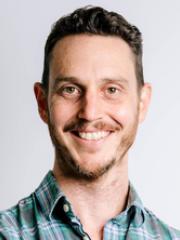
Dr. Will Harrison is an Honorary Research Fellow at the School of Psychology , The University of Queensland , Australia. His research focuses on understanding the neural and computational mechanisms underlying visual perception, attention, and working memory. Academic Rank: Research Fellow Email: w.harrison@psy.uq.edu.au Research Interests: Dr. Harrison investigates how the human visual system integrates information across eye movements, the role of natural image statistics in perception, and the neural coding of orientation and spatial uncertainty. His work bridges experimental psychology, computational neuroscience, and psychophysics. Publications (2019–2025): Recent studies examine transsaccadic attention allocation , prior expectations in visual neural tuning , confidence judgments in multisensory decisions , and visual crowding mechanisms . His computational models often incorporate gain fields, Bayesian inference, and feature binding dynamics.
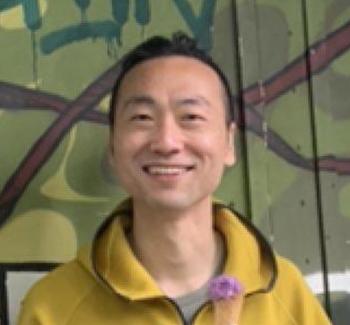
Maria Hakonen is a Visiting Faculty member in the Department of Neuroscience and Biomedical Engineering at Aalto University, Finland. Her work bridges engineering and cognitive neuroscience, with a focus on brain responses to sensory and narrative stimuli. Research Interests: Her research centers on neuroimaging , particularly magnetoencephalography (MEG) , to study proprioception , auditory processing , and narrative comprehension . She investigates how cultural background and individual differences shape neural responses, especially during naturalistic listening tasks. Her work emphasizes ecologically valid paradigms and multimodal imaging (MEG, EEG, fMRI). Publication Trends: Her recent publications (2021–2023) show a strong trend toward understanding social and cultural influences on brain function , cortical processing of proprioception , and neural synchrony . She frequently publishes in high-impact neuroscience journals such as NeuroImage and Social Cognitive and Affective Neuroscience . Scientific Activities: Presented multiple conference talks in 2019 on cultural neuroscience and narrative processing. Active in multimodal brain imaging research. Contributor to studies on neural and social synchrony. Education: Doctor of Science (Tech.), Technical Physics, Aalto University (2020) Master’s Degree, Engineering and Technology, Aalto University (2012) Bachelor’s Degree, Engineering and Technology, Aalto University (2012) Advising and Grants: No specific students or grants are listed in the provided text. However, her collaborative publications suggest involvement in funded research projects, particularly those involving MEG and cognitive neuroscience. She collaborates with prominent researchers such as I.P. Jääskeläinen, M. Sams, and H. Piitulainen. Labs and Teams: Affiliated with the neuroscience and neuroimaging research groups at Aalto University, likely part of the MEG core facility or the Cognitive and Brain Research Unit. Her work contributes to Aalto’s expertise in multimodal brain imaging and human cognitive neuroscience.
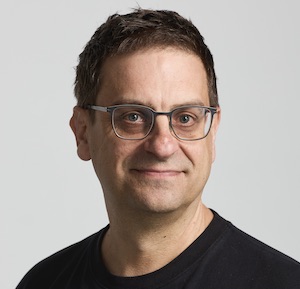
Prof. Xiangbin Teng is an Assistant Professor in the Department of Psychology at the Chinese University of Hong Kong. Previously, he was a postdoctoral researcher at the Neurocognitive and Experimental Psychology lab in Frankfurt/Berlin (2021–2022), following his PhD in Cognition and Perception from New York University and M.Sc./B.Sc. degrees from Peking University and Shanghai Jiao Tong University. His research focuses on neurocognitive mechanisms underlying auditory perception, particularly speech and music processing. Key areas include neural oscillations, temporal dynamics, and multiscale auditory encoding. He investigates how rhythmic patterns in language (e.g., ancient Chinese poetry) and music influence perceptual and neural processes. Publications highlight contributions to understanding theta/gamma band neural coding, EEG modulation spectra, and phase precession mechanisms. His work bridges computational models (e.g., recurrent neural networks) with empirical neuroscience findings. ERC Consolidator Grant (2025): Leading the "TRANSFORM" project exploring visual system development from infancy to adulthood. Grants & Collaborations: Extensive research on auditory cortex fMRI methods and cochlear implant simulations. Labs/Teams: Active in CUHK's cognitive neuroscience group and previously at the Max Planck Institutes. His current lab investigates sensory-motor interactions and predictive coding in perceptual systems.
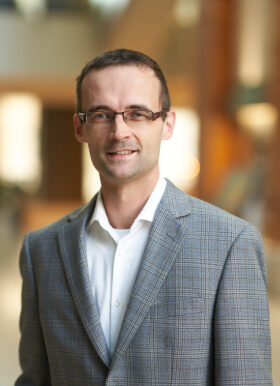
Veikko Jousmäki is a Senior Scientist at Aalto University's Department of Neuroscience and Biomedical Engineering. He holds honorary visiting roles at institutions like the Cognitive Neuroimaging Centre (Nanyang Technological University) and the Karolinska Institutet. His research focuses on magnetoencephalography (MEG), motor and sensory systems, and brain networks involved in movement and perception. He was awarded the Grant Runar Bäckström Foundation Prize in 2003. Education: Doctoral degree in Natural Sciences, University of Kuopio (2000) Master's degree in Natural Sciences, University of Kuopio (1993) Bachelor's degree in Natural Sciences, University of Kuopio (1986) Research Interests: Jousmäki's work explores MEG applications in studying brain dynamics during motor actions, sensory processing, and clinical conditions like essential tremor and alcohol use disorder. His studies often integrate multimodal neuroimaging techniques to map cortical and subcortical networks. Awards and Grants: Grant Runar Bäckström Foundation Prize (2003) Principal investigator for projects including MEG infrastructure upgrades (2022–2040) and sensorimotor mapping studies. Collaborations and Activities: Jousmäki has collaborated internationally, including with the Karolinska Institutet and Nanyang Technological University. He actively participates in conferences, workshops, and public lectures on neuroimaging and neuroscience. His work contributes to Sustainable Development Goal 3 (Good Health and Well-being). Labs and Facilities: Leads MEG research at Aalto University, focusing on developing advanced neuroimaging tools and protocols. Collaborates on projects involving TMS, fMRI, and haptic stimulation technologies.
Andrea De Cesarei is a Full Professor at the Department of Psychology 'Renzo Canestrari' at the University of Bologna. His research focuses on cognitive processes, emotional perception, and the intersection of artificial intelligence with human behavior. He holds office hours on Fridays 9-11 AM at the Department of Psychology in Bologna, with virtual availability via Teams. His work spans disciplines including cognitive neuroscience, environmental psychology, and AI ethics. Key research interests include: cognitive control mechanisms during scene categorization, emotional responses to natural stimuli, and behavioral drivers behind sustainable choices. He also explores how humans and AI systems process visual information differently, with recent projects involving AI trustworthiness and autonomous planning systems. Recent publications highlight his contributions to understanding neural correlates of emotion (via ERP and EEG studies), the role of spatial frequencies in perception, and motivational factors in pro-environmental behavior. His lab develops tools like the VISTO device for precise exposure time measurement in experiments. Teaching responsibilities include courses on perception and experimental psychology, with active involvement in student disability research methodologies. He maintains an ORCID profile and is accessible via email for scheduling consultations.
Caleb Kelly is an Associate Professor in the Faculty of Arts, Design and Architecture at the University of New South Wales (UNSW). His research focuses on sound in the fields of media arts, gallery arts, and music, leading to a rethinking of how art is listened to, historically and in contemporary practice. Kelly coordinates the research group Sound, Energies and Environments (SEE), which explores the intersection of sound, energy, and environmental concerns in contemporary art practices. His educational background includes: Bachelor of Arts in Art History & Philosophy from the University of Otago, New Zealand (1993) Master of Arts (Hons) in Art History from the University of Auckland, New Zealand (1996) Doctor of Philosophy in Creative Communications from the University of Canberra, Australia (2007) Kelly's research centers on sound studies , particularly examining the role of sound in contemporary art and gallery contexts. His work explores cracked media (the sound of malfunction), imperfection in experimental instruments , and feedback systems in artistic practice. He investigates how sound functions within visual art spaces, challenging traditional distinctions between visual and auditory experience. His research has led to significant contributions in understanding gallery sound , audio installations , and the materiality of sound in contemporary art. Kelly's approach combines art historical analysis with practical experimentation, often working directly with artists to understand the technical and conceptual dimensions of sound-based art. Kelly's publications reveal a consistent focus on the intersection of sound, media, and contemporary art practices. His work traces the historical development of sound art exhibitions while simultaneously exploring cutting-edge sonic art practices. A notable trend is his sustained interest in imperfection, malfunction, and error as creative forces within media art. His research spans from historical examinations of sound art exhibitions to contemporary investigations of ecological concerns in media practices. Kelly's writing frequently addresses the material dimensions of sound, examining how physical substances and technological systems shape auditory experiences in gallery settings. Among his notable recognitions: Edgard Varèse Guest Professor at the Technische Universität Berlin (2015) Kelly has supervised numerous doctoral and master's students working at the intersection of sound, art, and technology. His current and completed students have explored diverse topics including cello performance with long-throw speakers, improvisational feedback systems, underwater sound experiences, electro-acoustic feedback, neural networks in music, sound surveillance, ecological sound practices, video feedback art, electromagnetic constellations in radio, and organizational structures in experimental music. His supervision emphasizes practice-based research, encouraging students to develop both theoretical frameworks and creative outputs. While specific grant information isn't detailed in the provided text, his research activities suggest involvement in substantial funding projects supporting his publications, exhibitions, and research group activities. Kelly coordinates the research group Sound, Energies and Environments (SEE), which serves as a hub for interdisciplinary research on sound in contemporary art. The group brings together artists, curators, and scholars to explore how sound functions within gallery contexts and beyond. SEE has facilitated numerous exhibitions, publications, and collaborative projects examining the relationship between sound, energy systems, and environmental concerns. The group's work has contributed significantly to the field of sound studies, particularly in understanding how sound operates within institutional art spaces.
Tom Franken, MD, PhD serves as Assistant Professor of Neuroscience at Washington University School of Medicine in St. Louis. His research focuses on how the primate brain constructs visual representations of the external world through neural computations in visual cortex. Department of Neuroscience, School of Medicine Franken Laboratory leader Specializes in visual perception mechanisms Dr. Franken investigates perceptual organization processes where the brain resolves visual ambiguity to create structured object representations. His work centers on border ownership computation - how visual borders are assigned to foreground surfaces. Using high-channel electrophysiology (Neuropixels) , behavioral paradigms, causal perturbations, and computational modeling in non-human primates, his lab discovered columnar organization of border ownership signals with deep-layer neurons initiating these computations. Recent work shows brain-like border ownership signals emerge in predictive artificial neural networks trained on natural videos. His publication analysis reveals consistent focus on visual cortex organization (68% of recent work), with growing emphasis on computational approaches (2023-2025). Key trends include cross-species validation of neural mechanisms and clinical connections to perceptual disorders. BBRF Young Investigator Grant (2025-2027) K99/R00 Pathway To Independence Award (2020-2025) NARSAD Young Investigator Grant (2018-2020) Kavli Institute Innovative Research Grant (2017-2018) Dr. Franken's research program is supported by multiple NIH and foundation grants totaling over $2.3M, with particular focus on understanding perceptual failures in schizophrenia and agnosia. His lab actively collaborates with computational neuroscience groups including Ralf Wessel's team. The Franken Laboratory employs Neuropixels technology for high-resolution neural recording during visual tasks, maintaining primate models for translational research connecting basic mechanisms to clinical conditions.
Laurie Heller is a Teaching Professor of Psychology at Carnegie Mellon University's Department of Psychology, affiliated with the Dietrich College of Humanities and Social Sciences. She holds additional affiliations with the Carnegie Mellon Neuroscience Institute (CMNI), CMU Music & Technology, CMU Center for Transformational Play, CMU CyLab Security and Privacy Institute, and the Center for the Neural Basis of Cognition (CNBC). Her research focuses on auditory perception, cognitive neuroscience, and the interplay between sound and human cognition. Education includes an S.B. in Brain & Cognitive Sciences from MIT, a Ph.D. in Psychology from the University of Pennsylvania, and a postdoctoral fellowship in Neuroscience at the University of Connecticut Health Center. Her work explores acoustic cues in sound event recognition, sound localization, and the effects of unwanted sounds. Collaborative projects include improving hearing aids, navigation aids for the visually impaired, and machine learning systems for sound classification. Recent research trends emphasize misophonia, environmental sound perception in hearing-impaired populations, and AI-driven sound synthesis. Her courses include Auditory Perception, Research Methods in Cognitive Psychology, and Music Cognition. She leads the Auditory Perception Lab and serves as an Associate Editor for the Journal of the Acoustical Society of America.
Jing Shen serves as an Assistant Professor in the Department of Communication Sciences and Disorders at Temple University's College of Public Health. Her research program, supported by the National Institute of Deafness and Communication Disorders (NIDCD), addresses critical communication challenges faced by older adults in everyday listening environments. Her academic credentials include: PhD in Experimental Psychology from University of California, San Diego MS in Psychology (Social and Personality) from East China Normal University BA in Political Science (Minor: Psychology) from East China Normal University Dr. Shen's research investigates perceptual mechanisms underlying speech understanding in adverse conditions, with particular focus on how hearing loss and cognitive decline interact in aging populations. Her work develops innovative outcome measures for speech processing in realistic scenarios and examines individual variability in communication abilities. The SPAC Lab employs multimodal approaches including pupillometry to quantify listening effort and cognitive load during speech tasks. Analysis of her publication record reveals sustained investigation into dynamic pitch cues, breathy vocal quality, and noise effects on speech perception across aging cohorts. Recent work expands methodological approaches through remote testing validation and inclusion of vulnerable populations like older adults experiencing homelessness, demonstrating translational impact from laboratory to real-world settings. Dr. Shen directs the Speech Perception and Cognition (SPAC) Lab where her team conducts both laboratory and field studies. Her NIDCD-funded research bridges basic science with clinical applications, aiming to improve audiological services through better understanding of individual differences in speech communication challenges among older adults.
Thierry Artières is a University Professor at Aix-Marseille University, primarily affiliated with École Centrale Marseille (ECM), where he holds multiple leadership positions including Head of the Computer Science teaching unit, Head of the IAAA course of the Computer Science Master's degree, and Head of the IAM course of the 3rd year Computer Science option. He is a key member of the QARMA (Machine Learning) research team within the LIS (Laboratoire d'Informatique et Systèmes) and collaborates with several research institutes including the READ laboratory, Institut de Neurosciences de la Timone (INT), and the ILCB (Institute of Language, Communication and the Brain). His research interests span Machine Learning, Deep Learning, and Artificial Intelligence with applications to neuroscience, medical imaging, and computational biology. His work focuses on understanding brain representations of voice and sound, optimizing MRI acquisition through deep learning, and developing novel machine learning techniques for multi-label classification and generative modeling. He has supervised numerous PhD students including Loris Berthelot, Hamed Benazha, Malek Senoussi, Swetali Nimje, and Charly Lamothe. His recent publications reveal a strong focus on applying deep learning to neuroscience problems, particularly in understanding how the brain processes sound and voice. His work combines theoretical machine learning advances with practical applications in medical imaging and cognitive neuroscience, often through collaborations between computer science and neuroscience laboratories. His research demonstrates a consistent trend toward interdisciplinary work that bridges AI with biological and medical domains. Member of QARMA Machine Learning team at LIS Collaborator with Institut de Neurosciences de la Timone Involved with ILCB Institute (Institute of Language, Communication and the Brain) Supervisor of multiple PhD students and Master's interns Regularly posts about internship opportunities in Machine Learning and AI Professor Artières actively mentors students through PhD positions, Master's internships, and engineering student projects. He has secured funding for multiple research projects, including ANR-funded collaborations with neuroscience institutes. His lab regularly offers 5-6 month internships on cutting-edge topics in machine learning, and he has facilitated numerous research opportunities for students interested in AI and data science careers. He also contributes to understanding the French job market for AI and data science professionals.
Mariya Toneva is a Tenure-track Professor (W2) at the Max Planck Institute for Software Systems in Saarbrücken, Germany, where she leads the Bridging AI and Neuroscience (BrAIN) group. Her research integrates machine learning, natural language processing, and neuroscience to develop computational models of language processing in the brain and improve NLP systems through brain alignment. Her research vision focuses on bidirectional benefits: 1) Using brain data to develop better language models that align with human cognition, and 2) Using insights from language models to understand human language processing. Current projects investigate how episodic memory can enhance long-term LLM agents and how speech models can better reflect neural processing hierarchies. Toneva's recent publications demonstrate significant contributions in brain-LLM alignment, with work appearing at ICLR, CogSci, TMLR, EMNLP, and INTERSPEECH. Her research group systematically examines why language models align with brain recordings and develops methods to improve this alignment through brain-tuning techniques. She actively seeks PhD students and postdoctoral researchers for projects involving neuropixel data analysis of speech processing and multimodal transformer architectures. Toneva regularly presents keynotes at major conferences (e.g., ELLISxUniReps Speaker Series) and participates in workshops on NeuroAI and cognitive modeling. Her interdisciplinary approach combines techniques from machine learning, natural language processing, and cognitive neuroscience to address fundamental questions about language representation in both artificial and biological neural systems.
Dr. Lauren Calandruccio is a Professor in the Department of Psychological Sciences at Case Western Reserve University, affiliated with the College of Arts and Sciences. She serves as the Principal Investigator of the Speech and Auditory Research Lab (SpARLab) and directs the IMPACT program, a collaborative mentoring initiative with Hampton University. Her expertise spans auditory perception, speech recognition in adverse conditions, and clinical audiology with a focus on bilingual populations and hearing-impaired listeners. Dr. Calandruccio holds a B.A. in Speech and Hearing Sciences from Indiana University, an M.A. in Audiology from Indiana University, and a Ph.D. in Audiology from Syracuse University. Her postdoctoral training at Northwestern University furthered her research in auditory neuroscience and clinical applications. Her research focuses on improving speech understanding in noisy environments for listeners with normal hearing and hearing loss, including those who speak English as a second language. Key contributions include the development of the Children’s English/Spanish Speech Recognition Test (ChEgSS) and the Audiolab simulation tool licensed to Simucase. She has secured funding from the National Institute on Deafness and Other Communication Disorders (NIDCD), the American Academy of Audiology Foundation, and other organizations. Dr. Calandruccio’s work emphasizes cultural competence in audiology practice, particularly for linguistically diverse populations. Her lab’s research spans pediatric audiology, bilingual speech processing, and innovative clinical training methods. She has mentored numerous graduate and undergraduate students, many of whom continue in academic and clinical roles. Recognition includes the Louis D. Beaumont University Professorship. Ongoing projects explore masked speech recognition in bilingual children and the development of culturally responsive audiological assessments.
Karla K. Evans is a Senior Lecturer (Associate Professor) in the Department of Psychology at the University of York. Her academic career spans prestigious institutions including Princeton University, Harvard Medical School, and Brigham and Women's Hospital before joining York in 2013. She serves on the Psychology Department Athena Swan Committee and represents Psychology on the University's Athena Swan working group. Dr. Evans earned her BSc (Hons) in Experimental Psychology from the University of Trieste (1998), followed by an MA (2004) and PhD (2007) in Cognitive Psychology from Princeton University. She completed postdoctoral training at MIT (2007-2008) and Harvard Medical School/Brigham and Women's Hospital (2008-2013). Her research centers on how sensory systems integrate information to produce coherent perception, with expertise in attention, visual cognition, memory, multimodal perception, and medical image perception. She employs diverse methodologies including psychophysics, fMRI, EEG, and eye tracking. Her work bridges cognitive psychology with practical applications in medical imaging, particularly mammography analysis. Dr. Evans' publication record shows consistent output with 46 publications through 2025, demonstrating evolving focus from fundamental visual cognition to applied medical image perception. Her recent work explores scene complexity, visual memory schemas, and the 'gist' processing in mammograms that enables early cancer detection. She collaborates extensively with radiologists, computer scientists, and cognitive psychologists. She actively mentors students, accepting PhD candidates, and contributes to academic service as an ad hoc reviewer for vision, attention, and neuroscience journals, and as an NIH grant review panel member. Her research has been supported by grants including the Individual Ruth Kirschstein-NRSA Postdoctoral grant (2009-2012). Dr. Evans is affiliated with the Perception and Action (Vision group) and Cognition and Communication (Attention, Learning & Memory group) research teams at York, where she continues to advance understanding of visual perception mechanisms and their applications in medical diagnostics.
Simon Stringer is a Departmental Lecturer and Director of the Oxford Centre for Theoretical Neuroscience and Artificial Intelligence at the University of Oxford's Department of Experimental Psychology. His research focuses on developing computational models of brain function, including vision, spatial processing, motor control, language, and consciousness. He collaborates with experimental groups across the UK to bridge theoretical and empirical neuroscience. His work aims to advance understanding of neurological disorders and inspire AI/robotics innovations. Education: Holds a BSc and PhD (specific institutions unlisted). Professional roles include Course Director for the MSc in Psychological Research. His lab employs theoreticians to model neural dynamics, particularly exploring how primate visual systems interpret complex scenes and the mechanisms of feature binding in neural networks. Research highlights include computational studies on auditory category learning, head direction cell modeling, and spiking neural networks. While no awards are explicitly listed, his work has been featured in outlets like Nautilus Magazine discussing AI consciousness. Labs/Teams: Leads the Oxford Centre for Theoretical Neuroscience & AI, fostering interdisciplinary collaborations between neuroscience and computer science.
Prof. Dr. Bernhard U. Seeber is a faculty member at the Technical University of Munich (TUM) in the Department of Electrical Engineering and Information Technology. He specializes in audio information processing, focusing on auditory perception, computational modeling, and hearing device technologies. Academic Rank: Professor Primary Affiliation: TUM Department of Electrical Engineering and Information Technology Research Interests: Auditory scene analysis, cochlear implants, binaural hearing, room acoustics, and signal processing for hearing aids His recent publications demonstrate expertise in auditory nerve modeling, spatial hearing optimization, and audio-visual simulation environments. While no formal awards or student advisement information are available in the provided texts, his work has significant implications for improving hearing technologies and understanding auditory perception mechanisms.