University Medical Center Hamburg-EppendorfGermany
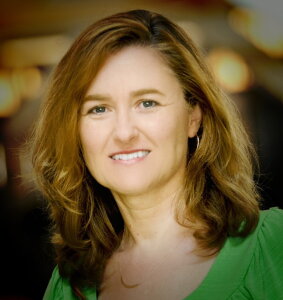
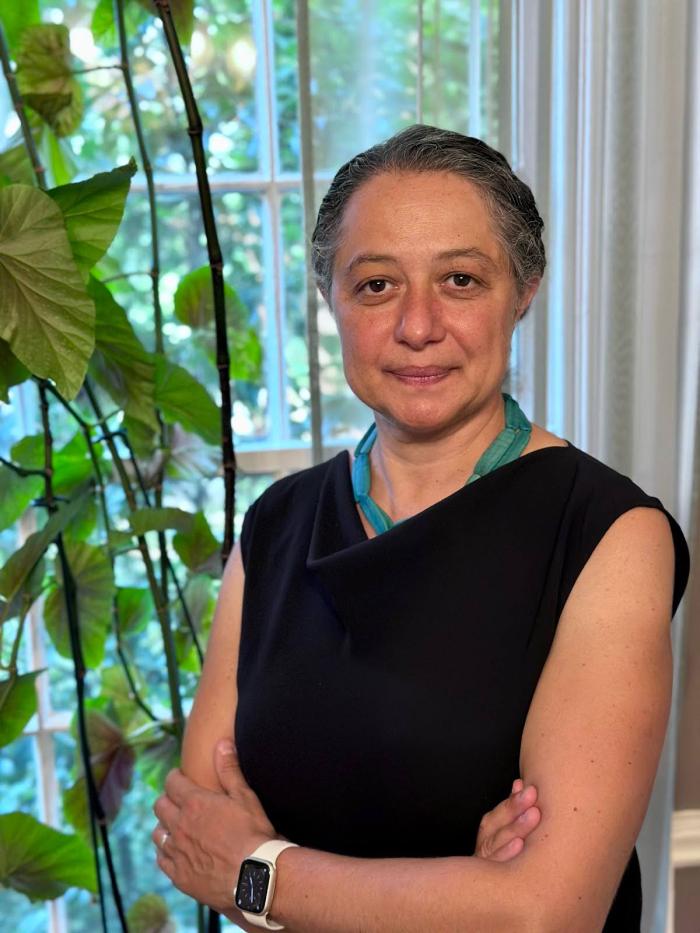
Prof. Helen Blank is a Professor leading the Multisensory Perception Group and the Prediction in Communication Lab at the Institute for Systems Neuroscience, University Medical Center Hamburg-Eppendorf. Her work focuses on understanding how sensory information is integrated and predicted in contexts like speech perception and face recognition. She holds a Marie Curie Fellowship for her research on prior information's role in human communication. Fluent in German, English, and French, she contributes to experimental medicine and systems neuroscience. Her research spans predictive coding, neuroimaging, and clinical applications in Parkinson’s and developmental disorders. Education: Not explicitly stated in text, inferred as advanced degrees in neuroscience or related fields. Her research interests emphasize multisensory integration, predictive processing in speech and vision, and the neural bases of perception. Recent articles explore topics such as pupil responses to auditory surprise, face expectation hierarchies, and audio-visual speech processing. Awards include the Marie Curie Fellowship supporting her predictive communication work. She leads interdisciplinary teams within the Center for Experimental Medicine, advancing knowledge on perceptual mechanisms and their clinical implications.
State University of New York at BuffaloUnited States
Eduardo Mercado III is a Professor in the Department of Psychology at the University at Buffalo, College of Arts and Sciences. His research focuses on bioacoustics, cognitive psychology, and marine ecology, particularly the vocal behavior of humpback whales and its implications for understanding human impact on marine ecosystems. He is also known for his work in perceptual learning, autism spectrum disorder, and comparative cognition. Scientific Awards Guggenheim Fellowship Harvard Radcliffe Institute Fellowship Research Trends His recent publications emphasize bioacoustic analysis of humpback whale songs, including their spectral entropy, cyclical variations, and adaptive adjustments to anthropogenic noise. Additional work explores perceptual learning mechanisms in autism, neural network modeling for acoustic classification, and cognitive processes in canines and rodents. Projects Mercado’s “Singers as Sentinels” project combines acoustic analysis of humpback whale songs with public awareness initiatives about ocean noise pollution. The project will produce a book, Why Whales Sing and Dolphins Don’t , and a web-based interface for public engagement.
Univ.-Prof. Dr. rer. nat. Michael Vorländer is a full Professor and Chair of Technical Acoustics at the Institute of Technical Acoustics (ITA), Faculty of Electrical Engineering and Information Technology, RWTH Aachen University, Germany. He has been the head of the institute since 1996 and is a leading figure in acoustics research and academic leadership. His extensive service includes being President of the European Acoustics Association (EAA), the International Commission for Acoustics (ICA), the German Acoustical Society (DEGA), and elected President of the Acoustical Society of America (ASA) for 2024–2027. Education: Diplom-Physiker, RWTH Aachen (1984); Dr. rer. nat., RWTH Aachen (1989); Dr.-Ing. habil., TU Dresden (1995) Professional Leadership: Pro-Dean (2007) and Dean (2009) of Faculty of Electrical Engineering and Information Technology, RWTH Aachen; Spokesperson of Professors, RWTH Aachen (2012) Editorial Roles: Editor-in-Chief, Acta Acustica (1998–2003); Editorial Board, Applied Acoustics (since 1996) Michael Vorländer's primary research interests lie in the fields of auralization, room acoustics, building acoustics, psychoacoustics, acoustic measurement technology, and virtual acoustics . His work integrates physical acoustics with human perception, focusing on the simulation and reproduction of sound fields in virtual environments. He leads research in binaural technology, electroacoustics, and auditory scene analysis, with applications in noise research and interactive virtual environments. His group is involved in the Priority Program SPP2236 - AUDICTIVE, focusing on auditory cognition in interactive virtual settings. While specific recent publications are not listed, his research output is extensive, as indicated by links to filtered publications. His body of work consistently bridges theoretical modeling, experimental validation, and practical application in architectural and virtual acoustics, contributing to both engineering standards and perceptual understanding. Michael Vorländer has received numerous scientific awards recognizing his contributions to acoustics, including the prestigious RWB Stephens Medal, W.C. Sabine Medal, and Rayleigh Medal . He is a Fellow of the Acoustical Society of America and holds honorary memberships and awards from acoustical societies in Europe and beyond. He advises doctoral students and leads a multidisciplinary research team at the ITA, fostering collaboration in areas like acoustic virtual reality and spatial audio. His leadership in international societies and editorial boards highlights his role in shaping the global acoustics community. He has been instrumental in advancing research infrastructure and academic collaboration in technical acoustics. The research at his institute is organized into key areas: Acoustic Virtual Reality and Auralization, Binaural Technology and Spatial Audio, Auditory Scene Analysis, Psychoacoustics and Noise Research, Electroacoustics, and Room Acoustics. These labs and teams work on projects ranging from fundamental auditory perception to applied engineering solutions for noise control and virtual sound environments.
Andréanne Sharp, PhD, is Assistant Professor at Université Laval’s Faculty of Medicine, Department of Rehabilitation, where she leads the Clinical and Cognitive Neuroscience research axis. Her program explores auditory and multisensory processing across the lifespan, with emphasis on music perception, hearing loss, cochlear implants and vibrotactile technologies. Research interests: Auditory-vibrotactile interactions and sensory substitution Music cognition and neural plasticity in musicians Aging, hearing impairment and rehabilitation Temporal processing and EEG correlates of perception Clinical translation toward improved prosthetic and therapeutic devices Recent work (2023-2025) combines psychophysics, electrophysiology and qualitative methods to understand how musical experience protects perceptual skills in older adults with hearing loss, how frequency cues modulate auditory illusions, and how COVID-19 public-health measures affected communication in the hearing-impaired community. Sharp’s output appears in high-impact journals including Brain Research , Cerebral Cortex , Ear & Hearing , JSLHR and Psychological Research , demonstrating a trajectory that bridges basic cognitive neuroscience and clinical audiology. She maintains an active interdisciplinary laboratory, mentoring numerous graduate students and collaborating with engineering and rehabilitation teams to develop vibrotactile gloves and other sensory-augmentation devices. Grant and funding details are not disclosed in the supplied text.
Liang-Yuan 'Leo' Wu is a Researcher at the University of Michigan's Computer Science and Engineering department, working with Prof. Dhruv 'DJ' Jain in the Soundability Lab at the AI Laboratory. He recently completed his Master's degree in Computer Science & Engineering at the University of Michigan. His educational background includes: Master of Science in Computer Science & Engineering, University of Michigan (2022-Present) University of Edinburgh (2021) Bachelor's degree, National Taiwan University (2017-2021) Wu's research centers on human-centered AI solutions for auditory accessibility, with deep collaboration with the Deaf and Hard of Hearing (DHH) community. He develops technologies that leverage multimodal AI and large language models to interpret soundscapes, generate personalized audio descriptions, and enhance captioning systems—particularly in challenging environments like clinical settings where communication accuracy is critical. His work bridges technical innovation with real-world user needs through mixed-methods UX research. His publication trajectory reveals a strategic focus on applying cutting-edge AI models to solve accessibility gaps in sound interpretation and captioning, with increasing emphasis on healthcare applications and community-driven design principles. This represents a significant shift toward context-aware, deployable accessibility tools rather than theoretical frameworks. Wu's research impact is recognized through: BEST POSTER AWARD at ASSETS 2024 for CARTGPT Google Academic Research Award for 'Audio Scene Understanding' proposal While not yet mentoring formal advisees, Wu secures competitive research funding through awards like Google's Academic Research Award and actively collaborates with interdisciplinary teams across HCI, AI, and accessibility domains. His work in the Soundability Lab emphasizes community co-creation with DHH individuals to ensure technologies address authentic user needs rather than theoretical scenarios. The Soundability Lab serves as Wu's primary research environment, focusing on making sound universally accessible through AI-driven innovation. The lab maintains direct partnerships with the DHH community throughout the research lifecycle—from problem identification to solution validation—ensuring technologies are both technically robust and socially impactful.
Afra Alishahi is a Full Professor at Tilburg University's Department of Cognitive Science and Artificial Intelligence within the Tilburg School of Humanities and Digital Sciences. Her research focuses on computational models of human language acquisition and grounded language learning, leveraging neural models to explore how language processing and acquisition occur. She has held roles including Assistant Professor at Tilburg University (since 2011) and Postdoctoral Fellow at Saarland University (2008-2011). Her work bridges computational linguistics, cognitive science, and artificial intelligence, with contributions to understanding language learning mechanisms through models that integrate visual, auditory, and linguistic data. Education: PhD (university unspecified), with prior academic roles in Iran and Germany. Awards: CoNLL 2017 Best Paper Award, 2023 Outstanding Paper Award, NWO Aspasia Grant (2015), and NWO Natural Artificial Intelligence Grant (2015). Her research has been supported by grants such as the Dutch National Research Agenda-funded project on interpreting deep learning models for text and sound. Research Interests: Grounded language learning, interaction effects in language acquisition, and neural model interpretability. Key areas include multi-modal learning (e.g., linking speech to visual scenes), computational modeling of child language learning, and probing neural networks for linguistic knowledge. She co-organized workshops like BlackboxNLP (2018-2020) and has authored over 60 publications, including influential works on phonology encoding in neural models and gender disambiguation in machine translation. Teaching: Courses include Cognitive Models of Language Learning , Computational Linguistics , and Language, Cognition & Computation . She advises master's theses and leads projects in data science and AI. Lab/Team: Leads research on computational modeling, collaboration with interdisciplinary teams (e.g., with Grzegorz Chrupała, Afsaneh Fazly), and involvement in initiatives like the Interpreting Deep Learning Models for Text and Sound project.
University of Illinois Urbana-ChampaignUnited States
Diane M Beck is Professor and Head of Psychology at the University of Illinois, with additional affiliations in the Neuroscience Program and Beckman Institute for Advanced Science and Technology. She earned her Ph.D. from the University of California, Berkeley. Her research investigates cognitive processes and neural mechanisms underlying visual perception and attention. Key interests include: Factors determining visual awareness and object representation Neural constraints on simultaneous item processing Attention modulation in visual cortex Efficient processing of natural scenes Roles of statistical regularities in perception Methodologies include fMRI, behavioral experiments, and transcranial magnetic stimulation (TMS). Research publications demonstrate strong emphasis on visual cognition (58%), attention mechanisms (25%), and neural encoding of statistical regularities (17%), with neuroimaging being the primary methodology (72% of recent works). Directs the Attention and Perception Lab, advising 4 current graduate students and 18+ alumni. Major collaborators include Fei-Fei Li (Stanford), Kara Federmeier (Illinois), and Gabriele Gratton (Illinois).
Kristina Backer is an Assistant Professor in the Department of Cognitive and Information Sciences at the University of California, Merced. Her research focuses on cognitive neuroscience, auditory processing, and the intersection of sensory systems with higher-order cognition. She employs methods such as EEG, fMRI, and behavioral experiments to investigate topics like bilingualism effects, neuroplasticity in aging, and multisensory integration mechanisms. Her work explores how auditory and visual systems interact, particularly in phenomena such as the McGurk illusion and the continuity illusion in musicians. She also examines how auditory cues influence motor timing and the neural mechanisms underlying attentional modulation in short-term memory. Backer’s studies often involve clinical populations, such as children with cochlear implants and older adults with hearing loss, to understand the cognitive and neurophysiological impacts of sensory deficits. Key research themes include the temporal dynamics of sensory processing, the neural basis of cross-modal perception, and individual differences in cognitive abilities linked to language experience and aging. Her experimental methods emphasize electrophysiological techniques combined with computational modeling to dissect neural correlates of perception and cognition. Backer’s publications highlight advancements in understanding auditory-motor integration, neuroplasticity in bilingualism, and the development of rapid diagnostic tools for sensory pathway assessment. Her research bridges fundamental neuroscience with clinical applications, aiming to improve rehabilitation strategies for auditory and cognitive impairments.
Professor Andrew Bayliss is a Professor in Psychology at the University of East Anglia's School of Psychology, where he serves as Social Cognition Research Group Lead and UEA UOA4 Psychology REF coordinator. He joined UEA in 2011 after completing his PhD at Bangor University and holding postdoctoral fellowships with the ESRC, Leverhulme Trust, and University of Queensland. Undergraduate Degree: Bangor University PhD: Bangor University Postdoctoral Fellowships: ESRC, Leverhulme Trust, University of Queensland His research spans social cognition, attention-action interactions, and individual differences, with specific focus on face perception, eye gaze processing, and objects in social contexts. Utilizing methodologies including eye tracking, motion capture, EEG, and fMRI, his work examines how social cues guide attention and influence behavior. Current projects investigate gaze understanding development, interpersonal agency, and autism interventions using natural scenes. Analysis of his recent publications reveals a strong emphasis on social attention mechanisms, particularly gaze leading phenomena, interpersonal distance effects, and neural correlates of shared attention. His work increasingly integrates autism research with social cognition paradigms while maintaining core investigations into attentional orienting and agency perception. Bayliss actively contributes to the academic community through editorial roles at Psychological Review and Psychonomic Bulletin and Review, peer review activities, and consultancy work including the Social Neuroscience of Cinema Attendance project. He maintains international collaborations, notably with Paris Nanterre University. As Social Cognition Research Group Lead, he oversees a dynamic team investigating the neural and cognitive mechanisms underlying social interactions. His lab employs multimodal approaches to study real-time social processing, with recent work expanding into human-robot interaction and pandemic-related social adaptations.
Benjamin Willmore serves as a Departmental Lecturer at the University of Oxford, affiliated with the King Group within the Department of Physiology, Anatomy and Genetics (DPAG) and St Peter's College. His research investigates neural representation and processing of sensory information under naturalistic conditions, utilizing electrophysiological recordings and computational modeling to decode auditory and visual system mechanisms. His academic background includes: PhD in Computational Neuroscience from the University of Cambridge supervised by David Tolhurst MSc and MA degrees from the University of Cambridge (Cantab) Willmore's research spans sensory neuroscience with primary focus on auditory processing, examining how neurons encode complex sounds through electrophysiological measurements and model-based analysis. His work explores neural adaptation to reverberation, subcortical contributions to cortical sound encoding, and cross-modal principles in visual motion processing. This integrative approach bridges experimental neurophysiology with theoretical frameworks to understand sensory computation in natural environments. Analysis of his 2020-2024 publications reveals consistent emphasis on auditory neuroscience, particularly nonlinear sound encoding mechanisms and adaptive processing in cortical/subcortical circuits. His work demonstrates methodological integration of in vivo electrophysiology, computational modeling, and behavioral paradigms across auditory and visual domains, highlighting interdisciplinary innovation in sensory systems neuroscience. Scientific Awards: No awards mentioned in source materials Willmore actively contributes to Oxford's academic mission through lecturing for the MSc in Neuroscience and BA in Biomedical Sciences programs, while providing specialized tutorials on sensory neuroscience and neural coding to second- and third-year medical students. His teaching integrates cutting-edge research concepts into core neuroscience curricula, though specific grant funding details remain unreported in available sources. He operates within the King Group, a leading neuroscience research team investigating neural circuit mechanisms of sensory perception using multidisciplinary approaches including in vivo electrophysiology, imaging, and computational analysis. The group focuses on how auditory, visual, and multisensory information is processed in behaving systems, with Willmore contributing expertise in computational modeling of naturalistic sensory encoding.
Morwaread Farbood is an Associate Professor and Associate Director of Music Technology at New York University's Steinhardt School of Culture, Education, and Human Development. She holds dual affiliations with the NYU Music and Audio Research Lab (MARL) and the Max Planck/NYU Center for Language, Music, and Emotion (CLaME). Her research bridges music cognition, computational modeling, and algorithmic composition, with a focus on real-time auditory perception phenomena like tonality and musical tension. She co-founded the Northeast Music Cognition Group and was a 2017-2018 Radcliffe Fellow in Computer Science at Harvard University. Her professional achievements include the Pro Musicis International Award and First Prize at the Prague International Harpsichord Competition. Farbood actively contributes to music accessibility through innovations in audio description systems for live theater, using reference recordings and real-time synchronization techniques. She also maintains an active performing career as a harpsichordist, with performances at venues like Carnegie Hall and major international festivals. Research interests span computational models of musical structure, cross-cultural melodic learning, and neurocognitive underpinnings of musical perception. Her work integrates methods from music theory, cognitive psychology, and computer science to advance understanding of auditory perception's temporal dynamics. Recent projects include developing automated audio description systems for theatrical performances and exploring asymmetrical scale properties' impact on musical learning. She has authored over 50 peer-reviewed articles, patents, and creative works, reflecting her dual expertise in academic research and artistic practice.
Dr. Michel Dumontier is a Distinguished Professor of Data Science at Maastricht University, where he serves as the founder and Director of the Institute of Data Science. He is internationally recognized as a co-founder of the FAIR (Findable, Accessible, Interoperable and Reusable) data principles, which have transformed scientific data management globally. His academic background includes: BSc in Biochemistry from the University of Manitoba (1999) PhD in Bioinformatics from the University of Toronto (2004) Assistant/Associate Professor at Carleton University (2005-2013) Associate Professor at Stanford University (2013-2016) Distinguished Professor at Maastricht University (2017-present) Dr. Dumontier's research focuses on unlocking data potential for scientific discovery, with expertise in knowledge graphs for drug discovery and personalized medicine. His work spans FAIR data principles, generative AI, machine learning, semantic technologies, ontology, and data integration. His recent publications reveal a strong trend toward applying generative AI to healthcare data, with increasing focus on synthetic health data generation, privacy-preserving techniques, and knowledge graph applications in drug repurposing. His work bridges computer science, biomedical informatics, and clinical applications across multiple medical domains. Dr. Dumontier has secured significant research funding as a principal investigator: NWO (Dutch Research Council) Horizon Europe MCSA NIH/NCATS ARPA-H He coordinates the AIDAVA and REALM projects, leads the NCATS Biomedical Data Translator, and directs the GENIUS AI lab. As editor-in-chief of the journal Data Science, he shapes discourse in the field. Dr. Dumontier maintains active industry connections through: Minderheidsaandeelhouder at Data2Discovery Inc Scientific advisor and minority shareholder at OntoForce NV Scientific advisor, board member, and minority shareholder at Comunicare Editor-in-chief of Data Science Journal at Sage Publishing
Sarah Shomstein is a Professor of Cognitive Neuroscience and Department Chair in the Department of Psychology at George Washington University. She is affiliated with the Neuroscience Institute and Mind-Brain Institute. Her research focuses on understanding the neural and psychological mechanisms of attentional selection, including spatial and object-based attention, and how semantic and sensory information influence perception and memory. Shomstein holds a Ph.D. in Psychology from Johns Hopkins University (2003). Her methodologies include behavioral experiments, eye tracking, functional neuroimaging, and studies with individuals with attentional deficits due to brain damage. She directs the Attention and Cognition Laboratory , exploring how attention modulates sensory processing and memory across the lifespan. Her work highlights interactions between working memory and perception, the role of semantics in visual attention, and the neural basis of attentional control. Recent studies investigate real-world object processing, crossmodal semantic effects, and the impact of reward on attentional allocation. No scientific awards or grants are explicitly mentioned, but her research has been widely published in top journals.
Miiamaaria Kujala is an Academy Research Fellow at the Department of Psychology, University of Jyväskylä. Her research focuses on social cognition and emotionality in humans and non-human animals, particularly domestic dogs, through interdisciplinary collaboration across psychology, cognitive science, biology, veterinary medicine, and biomedical engineering. Academy Research Fellow (2024) Docent in Comparative Cognitive Neuroscience Her work employs non-invasive physiological methods such as eye gaze tracking, EEG/ERPs, thermal imaging, and fMRI to study emotional expressions, cross-species interaction, and the neural basis of social perception. Key themes include the development of expertise in decoding nonverbal cues, human-animal bond dynamics, and One Health/One Welfare frameworks. Recent publications highlight interdisciplinary approaches to canine emotionality, pharmacological behavior management in pets, and advanced sensor technologies for behavior classification. Her 2024 articles explore olfaction, empathy, and activity tracking in dogs, while older works examine contagious behaviors, social brain circuits, and developmental psychology in human-animal interactions. Scientific awards include the Academy Research Fellow fellowship. She leads the "Interaction of Dogs and Humans" research group, integrating expertise from psychology, veterinary medicine, and engineering to advance understanding of emotional and cognitive processes across species.
Laurent Girin is a Professor at Grenoble Institute of Technology (Grenoble-INP), a member of Univ. Grenoble Alpes. He teaches within PHELMA (Physics, Electronics and Materials Department) and conducts research at GIPSA-Lab, a CNRS-associated laboratory focused on image, speech, signal, and automation sciences. He also maintains a collaborative relationship with the INRIA-Perception research team, contributing to advanced perception systems and audio-visual signal analysis. His research interests lie primarily in speech and audio signal processing , with applications in human-machine interaction, acoustic modeling, and machine learning for audio. His work bridges engineering and cognitive sciences, aiming to model and understand complex audio signals in real-world environments. Laurent Girin has contributed extensively to the field through publications in signal processing and audio analysis. While specific titles are not listed here, his research trends indicate a strong focus on computational auditory scene analysis, speaker tracking, and multimodal perception systems. Member of GIPSA-Lab, CNRS & Univ. Grenoble Alpes Regular collaborator, INRIA-Perception team He advises students in signal processing and audio technologies, though specific names are not provided. There is no public information on grants or funding sources in the provided text. His work is supported through institutional collaborations between Grenoble-INP, CNRS, and INRIA. Laurent Girin is actively involved in research teams focusing on perception and signal processing, particularly within the GIPSA-Lab and INRIA-Perception environments. These labs specialize in advanced signal analysis, machine learning for sensory data, and intelligent systems development.