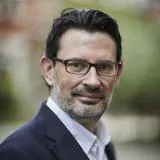
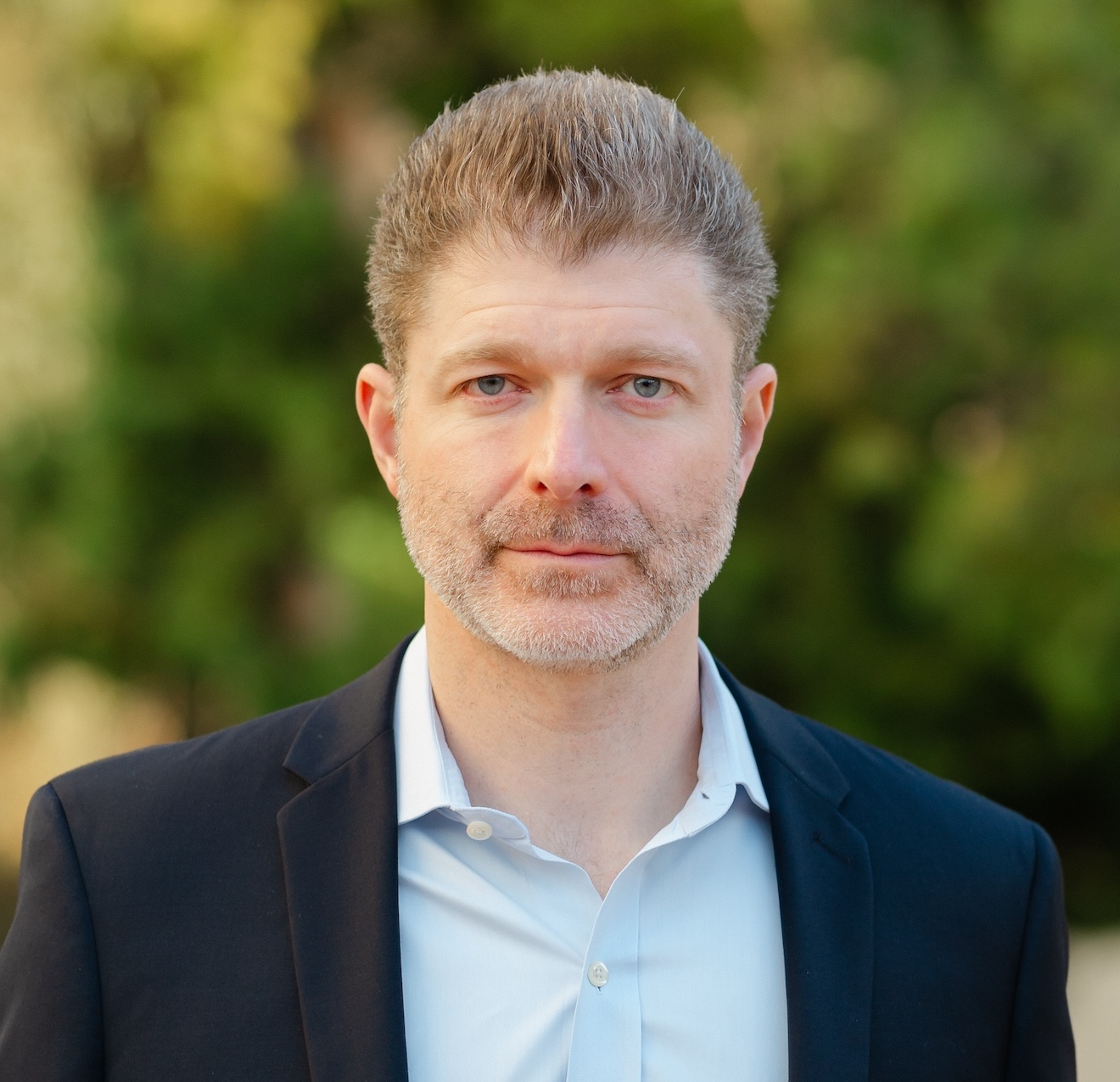
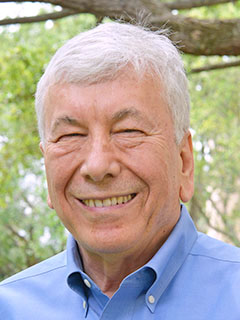
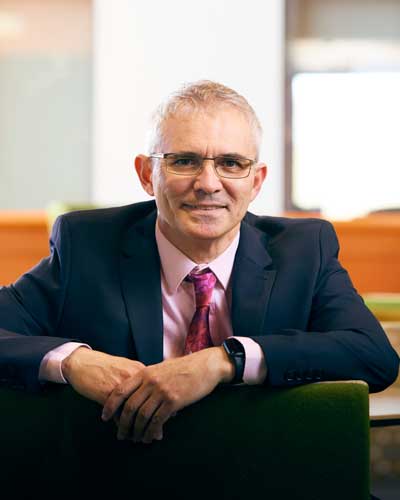
Professor Oscar Marín is a leading academic in Neuroscience at King's College London, serving as Director of the Centre for Developmental Neurobiology and the MRC Centre for Neurodevelopmental Disorders. His research focuses on cortical interneuron development and its implications for psychiatric disorders like autism and schizophrenia. He holds prominent roles, including leadership in the Institute of Psychiatry, Psychology & Neuroscience (IoPPN), and oversees major initiatives such as the MRC PhD Fellowship Programme and the Wolfson Foundation-funded Centre for Human Brain Development. His work bridges basic science and clinical applications, with significant contributions to understanding neurodevelopmental mechanisms. Key awards include the FENS-EJN Award 2024 and the ECNP Neuropsychopharmacology Award 2023. He collaborates with institutions like Yale University and leads high-impact projects funded by the Wellcome Trust and Simons Foundation. His research spans molecular mechanisms of neuronal migration, interneuron function, and translational studies on auditory hallucinations in psychosis.
Prof. Dr. Nikolaj Klöcker is a leading neuroscientist and Professor at Heinrich-Heine-University Düsseldorf . He serves as the Director of the Institute of Neuro- and Sensory Physiology , where his research focuses on the molecular and functional characterization of ion channels in the central nervous system. His research spans ion channel biology , synaptic plasticity , proteomics , and CNS disease mechanisms . He has made significant contributions to understanding how auxiliary subunits modulate AMPA and HCN channels, and how these interactions are disrupted in neurological disorders such as hepatic encephalopathy and epilepsy. His recent work has explored the therapeutic potential of targeting pancreatic NMDA receptors for diabetes treatment and has used high-resolution proteomics to dissect the architecture of native AMPA receptor complexes. Prof. Klöcker has published extensively in top-tier journals including Neuron , Science , Nature Medicine , and Molecular and Cellular Neuroscience , with a strong emphasis on translational neuroscience and therapeutic innovation.
Mikkel Christensen-Dalsgaard is a researcher affiliated with Newcastle University , focusing on microbiology, molecular biology, and auditory physiology. His work spans bacterial stress responses, toxin-antitoxin systems, and sensory neuroscience in amphibians.
PD Dr. Conny Kopp-Scheinpflug leads a research group in the Division of Neurobiology at Ludwig-Maximilians-Universität München's Faculty of Biology. Her laboratory investigates neuromodulation in the auditory system, examining how sensory stimulation influences neuronal processing through changes in membrane receptors, transporters, and ion channels. Research Focus: Her team employs electrophysiological techniques (in vivo single-cell recordings and patch-clamp in brain slices) combined with histological methods to study activity-dependent plasticity in the mammalian auditory pathway. Key interests include: Mechanisms of sound offset encoding Ion channel function in axonal conduction Recovery from noise-induced hearing loss Neuromodulator roles in auditory processing Funding and Collaborations: Supported by German Research Council (DFG) grants for projects on synaptic plasticity (KO2207/3-1) and ion channel function (SFB 870/A10), plus a Deafness Research UK studentship. Collaborates internationally with labs at Lehigh University, University of Edinburgh, Ben-Gurion University, and UCL. Training: Currently advises 5 researchers and has graduated 8 PhD students/alumni. Lab techniques include in vivo electrophysiology, optogenetics, and anatomical studies of auditory circuitry.
Pernilla Videhult Pierre is a Lecturer at the Department of Clinical Science, Intervention and Technology, Karolinska Institutet, working within the Division of Audiology. Her research focuses on understanding and mitigating drug-induced hearing loss while developing protective strategies against auditory damage. Education: PhD in Oncology-Pathology, Karolinska Institutet (2010) Research interests span three main areas: Medicinal Chemistry - Investigating platinum-based chemotherapeutic agents and protective sulfur-containing compounds Otoprotection - Developing hydrogen gas therapy and polymer-based delivery systems to prevent auditory damage Auditory Metabolomics - Using LC-MS techniques to analyze cochlear fluid changes under different treatments Publication trends show a consistent focus on auditory protection mechanisms, particularly against cisplatin-induced ototoxicity. Key methodologies include guinea pig models, hydrogen therapy applications, and advanced chromatographic techniques. Her work bridges pharmaceutical sciences with clinical audiology applications.
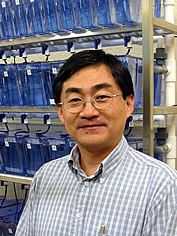
Zhongmin Lu is an Associate Professor in the Department of Biology at the University of Miami's College of Arts and Sciences. His research focuses on auditory neuroscience, genetic hearing disorders, and developmental biology using zebrafish models. His work explores auditory function development, CRISPR/Cas9 applications for gene editing in hearing research, and molecular mechanisms of hair cell-neuronal connections. Publications highlight studies on alcohol-sensitive developmental periods, otolith organ transcriptomics, and genetic mutations causing deafness. Recent research trends emphasize zebrafish as a model for human hearing disorders, directional hearing mechanisms in aquatic species, and high-throughput auditory assessments during early development.
Piotr Majdak serves as a Senior Lecturer (Privatdozent) at the University of Music and Performing Arts Graz (KUG), Austria, affiliated with the Institute for Electronic Music and Acoustics. His institutional presence spans both Graz (Inffeldgasse 10/III) and Vienna (Wohllebengasse 12-14), reflecting active engagement across locations. The institute operates under KUG's umbrella as a dedicated research unit in sound science and technology. Research Expertise: Dr. Majdak's mission statement explicitly defines his specialization in binaural psychoacoustics, cochlear implants, virtual acoustics, sound source localization, and spatial hearing. His work bridges auditory neuroscience and engineering, focusing on how humans perceive 3D sound environments and developing solutions for hearing impairment through advanced acoustic modeling. This research has direct applications in medical device innovation and immersive audio systems. Contact details include email piotr.majdak@kug.ac.at, private telephone 01/51 581-2511, mobile 0699/81 33 50 70, and fax 01/51 581-2530. Consultation hours are arranged by appointment, with professional work accessible via his homepage http://piotr.majdak.com. No students, awards, or publications are listed in the provided text.
Robert Zatorre is a Professor in the Department of Neurology and Neurosurgery at McGill University's Faculty of Medicine. He is a leading expert in auditory neuroscience and music cognition, with significant contributions to understanding brain plasticity and reward mechanisms related to music. Zatorre co-founded the International Laboratory for Brain, Music and Sound (BRAMS) in 2006 - a multi-university consortium focused on cognitive neuroscience of music. Key Research Areas Functional and structural properties of the auditory cortex Hemispheric specialization in auditory processing Neural mechanisms of musical emotion and reward Brain plasticity from sensory loss or training Advanced neuroimaging techniques (fMRI, MEG, EEG) Scientific Achievements 2011 IPSEN Foundation Prize in Neuronal Plasticity 2013 Knowles Hearing Science Award 2017 Fellow of the Royal Society of Canada Advising Directed PhD research on auditory prediction mechanisms (2023) Publication Trends show consistent focus on music's neurobiological basis, with recent work exploring cortical rhythmic activity in Parkinson's disease, speech-in-noise perception, and neural correlates of singing. His research combines experimental neuroscience with theoretical frameworks in cognitive science.
Daria Valente is a Tenure-track Assistant Professor at the Department of Life Sciences and Systems Biology, University of Turin. Her research focuses on the evolution of animal and human behavior, with a specialization in primate bioacoustics, ecoacoustics, and vocal communication. Research Interests: Valente's work explores the complexity of primate vocalizations, emphasizing the indri species. She investigates topics such as vocal flexibility, categorical rhythms, nonlinear acoustic phenomena, and the interplay between genetic distance and song dissimilarity. Her studies often integrate fieldwork in Madagascar with advanced sound analysis techniques. Teaching: She offers courses in bioacoustic analysis, scientific communication, and ethological methods, reflecting her expertise in modern behavioral research tools. Publication Trends: Valente's research output spans evolutionary biology, acoustic monitoring, and interdisciplinary approaches to primate behavior. Her recent work includes collaborations on global citizenship education through ecological research.
Mª Aurora Pérez Maíllo is a Professor at the Faculty of Communication of the Pontifical University of Salamanca since 1994. She specializes in Audiovisual Communication and Podcasting , with a focus on Transmedia literacy education Radio culture promotion Digital media adaptation Oral expression pedagogy Her research group Media cartography and ICS. Innovation in Social Sciences have produced key studies on podcast cover design, radio industry digital transformation, and sound culture education for youth. Notable projects include Esp@cio Podc@st , an educational podcast platform for improving primary students' oral skills through playful, interactive methods. Her work combines Quantitative surveys on audience behavior Qualitative analysis of crisis communication (e.g., 2004 Madrid bombings coverage) Educational tool development for transmedia radio literacy with practical applications in university classrooms and school settings.
Rae Gillibrand is a Lecturer in Inclusive Learning for the Schools of History and English at the University of Leeds, appointed in 2022. She is also the Director of Admissions for the School of History and a member of several research groups including Galleries, Libraries, Archives, and Museums and Health Histories. Previously, she taught History and Heritage Studies at Aberystwyth University and served as the Jaipreet Virdi Fellow for Disability Studies at the Medical Heritage Library (2021-2022). Dr. Gillibrand's educational background includes a PhD in Medieval Disability Studies (2020), an MA in Medieval Studies (2015), and a BA in History (2014), all from the University of Leeds. As a woman from a working-class background and the first in her family to attend university, she brings a unique perspective to her work on inclusivity in academia. Her research focuses on the history of disability, the body, and bodily technologies in premodern contexts. She investigates how people experienced, understood, and augmented their bodies throughout history, with particular attention to premodern disability technology, cosmetic devices, medical technology, and automata. Her work employs visual and material approaches to understand the connections between assistive aids and individual/group identities, as well as the overlap between health and attempts to 'beautify' the body. Dr. Gillibrand's publications and presentations reveal a consistent focus on the material culture of disability throughout history, particularly in medieval contexts. Her work examines how assistive technologies were designed, constructed, and sold, while also considering how contemporaries conceptualized bodily augmentation. She has presented on topics ranging from medieval prosthetics and guide dogs to historical eyeglasses and hearing aids, demonstrating how these technologies were integrated into social identities and daily life. Jaipreet Virdi Fellow for Disability Studies at the Medical Heritage Library (2021-2022) Fellow of the Higher Education Academy (HEA) Dr. Gillibrand is committed to extending education beyond academia through public engagement, having designed and led public events with local museums, libraries, and archives, as well as contributing to podcasts and radio shows. She is available to supervise PhD students interested in premodern health, medicine, the body, and history, heritage, and museum studies. Her work on inclusivity practices aims to improve the student experience for those from traditionally marginalized backgrounds within academia. She is involved with research projects including 'Dental Histories: Towards a Digital Museum' and 'Stigma and Shame? Challenging Menstrual Taboo Through Time,' working within the Health Histories research group to explore the intersections of medical history, material culture, and social experience.
Josh McDermott is a Professor in the Department of Brain and Cognitive Sciences at the Massachusetts Institute of Technology (MIT), where he also serves as Associate Department Head and previously as Interim Department Head. He leads the Laboratory for Computational Audition and conducts groundbreaking research at the intersection of psychology, neuroscience, and engineering, with a primary focus on understanding human auditory perception and its computational underpinnings. Dr. McDermott's educational background includes: PhD in Brain and Cognitive Sciences from MIT (2001-2006), advised by Edward Adelson MPhil in Computational Neuroscience from University College London (1998-2000), advised by Geoff Hinton B.A. in Brain and Cognitive Science, summa cum laude, from Harvard University (1994-1998), advised by Nancy Kanwisher McDermott's research program centers on understanding how humans derive information from sound in complex environments. His lab investigates why biological auditory systems outperform even the most sophisticated machine hearing systems in everyday situations like noisy city streets. He explores computational audition, natural sound statistics, music perception, and the relationship between sensory modalities, with long-term goals to improve treatments for hearing impairment and enable the design of machine systems that mirror human auditory abilities. His work bridges fundamental neuroscience with practical applications for hearing technologies. His recent publications reveal a strong trend toward integrating deep learning and neural network models with auditory neuroscience. His lab has been exploring how generative models, metamers, and task-optimized networks can illuminate human auditory processing. There's a clear progression from basic auditory phenomena to more complex computational models that bridge neuroscience and artificial intelligence, particularly in areas like sound segregation, music perception, and cross-modal integration. His work consistently demonstrates how computational approaches can reveal fundamental principles of auditory perception. Dr. McDermott has received numerous prestigious awards, including: Troland Research Award (2018) NSF CAREER Award (2015) APAN Young Investigator Award (2017) BCS Awards for Excellence in Undergraduate Advising (2014, 2018) BCS Award For Diversity, Equity, Inclusion and Justice (2023) As an advisor, McDermott has mentored numerous PhD students who have gone on to make significant contributions in auditory neuroscience and computational modeling. His Laboratory for Computational Audition serves as a hub for interdisciplinary research that bridges psychology, neuroscience, and engineering approaches to understanding hearing. The lab has developed innovative methodologies for studying auditory perception, including sound synthesis techniques, computational models, and cross-cultural approaches to music cognition. McDermott's work continues to push the boundaries of our understanding of auditory perception and its computational underpinnings.
He Kong is an Associate Professor at Southern University of Science and Technology (SUSTech), affiliated with the School of Automation and Intelligent Manufacturing, where he also serves as Deputy Director of the SUSTech Institute of Robotics. Previously, he was an Assistant Professor in the Department of Mechanical and Energy Engineering at SUSTech from January to May 2022. Prior to joining SUSTech, he was a Research Fellow at the Australian Centre for Field Robotics, University of Sydney (2016-2021), and at Cranfield University's Advanced Vehicle Engineering Centre (2015-2016). He received his Ph.D. in Electrical Engineering from the University of Newcastle, Australia (2014), M.E. in Control Science and Engineering from Harbin Institute of Technology (2010), and B.E. in Electrical Engineering and Automation from China University of Mining and Technology (2004). His research focuses on robotic intelligent perception and decision making, robot audition, optimal filtering and estimation, and advanced control methods. Specifically, he works on active multi-mode perception, parameter calibration of robot audition systems, optimal filtering under unknown inputs, and fully actuated system approaches. His work has significant applications in precision agriculture, environmental monitoring, and robotic inspection of hazardous industries such as chemical and mining operations. His recent publications reveal a strong emphasis on multi-modal perception systems, particularly combining visual and auditory sensing for robotic applications. His research shows a progression from theoretical control methods toward practical implementations in field robotics, with increasing focus on real-world applications in agriculture and hazardous environments. Finalist for Youth Author Prize, IFAC Workshop on Robot Control (2019) Fifth China Robotics Academic Annual Conference Best Poster Award (2024) 14th International Conference on Indoor Positioning and Indoor Navigation Best Paper Award (2024) The Equity Scholarship, Council of International Students Australia (2011) Outstanding Postgraduate Students Award, Harbin Institute of Technology (2010) Professor Kong actively supervises numerous PhD and Master's students and has established a productive research group focused on active intelligent systems. His laboratory is equipped with advanced facilities including over 30 motion capture systems, Unitree humanoid robots, robot dogs, wheeled mobile robots, and custom-developed platforms like Cubli and acoustic perception systems. He serves on editorial boards for several prestigious journals including IEEE Robotics and Automation Letters and IEEE Sensors Letters, and has been an Associate Editor for major robotics conferences such as IEEE ICRA and IEEE/RSJ IROS.
Ozcan Ozdamar is a Research Professor in the Department of Biomedical Engineering at the College of Engineering, University of Miami, with additional affiliations in Otolaryngology and Neuroscience departments, reflecting his interdisciplinary research approach. Dr. Ozdamar's research spans several key areas in neural signal processing: Visual Evoked Potentials (VEPs) and Pattern Electroretinography (PERG) Brain-Computer Interface (BCI) development Auditory processing and binaural hearing Signal processing techniques for neural response extraction Neurophysiological assessment methods His methodological innovations focus on improving signal-to-noise ratios and developing more efficient data acquisition protocols. Recent work demonstrates continued productivity with publications in high-impact journals such as Journal of Vision, Journal of the Acoustical Society of America, and Translational Vision Science & Technology. His research shows consistent methodological innovation across visual and auditory neuroscience domains. Dr. Ozdamar has developed novel approaches including: Deconvolution methods for simultaneous extraction of neural responses Quasi-steady-state stimulation paradigms Advanced techniques for measuring full-range auditory event-related potentials Next-generation PERG methods with expanded dynamic range His work bridges fundamental neuroscience with practical clinical applications, particularly for diagnosing conditions affecting visual and auditory pathways, and developing assistive technologies for individuals with disabilities.
Dr Francisco Rivero Crespo is Reader in Molecular Cell Biology at Hull York Medical School , University of Hull. He serves as Postgraduate Training Scheme Lead and is a Fellow of the Higher Education Academy (FHEA), contributing extensively to MB BS Medicine, MSc Pharmacology and Drug Development, and Department of Biomedical Sciences teaching programmes. Education MD, University of Valladolid (1989) PhD, Institute of Biochemistry, CSIC-Universidad Complutense, Madrid (1994) Postdoctoral fellowships: Max-Planck Institute for Biochemistry, Martinsried (1994-1997) and University of Cologne (1997-1998) Research Interests Dr Rivero’s laboratory investigates the cytoskeleton , focusing on actin dynamics and signalling pathways regulating cytoskeletal remodelling in blood platelets. His work explores how platelet activation—mediated by intricate signalling cascades—drives morphological changes required for adhesion, spreading, and aggregation at sites of vascular injury. A translational dimension of his research aims to improve diagnostics and therapeutics for thrombotic disorders underlying cardiovascular conditions such as heart attack and stroke. Publications Overview Across more than 50 peer-reviewed papers, Dr Rivero has advanced understanding of platelet physiology , actin-binding proteins , and signalling scaffolds . Recent outputs highlight roles for coronins, RhoBTB3, plastin-1 and cyclase dynamics in platelet and sensory cell biology, bridging in vitro biochemical assays to in vivo mouse models. Scientific Awards & Recognition Fellow of the Higher Education Academy (FHEA) Editorial board member: Scientific Reports , Cells , and BMC Molecular and Cell Biology Supervision & Funding Dr Rivero presently supervises Paulo Saldanha (PhD) and has mentored David Riley, Anisha Chacko, Jawad S. Khalil, Pooja Joshi and Julia Lutz to PhD completion. He welcomes new postgraduate researchers interested in cytoskeletal biology, platelet signalling, and translational cardiovascular research. Laboratory & Collaborations The lab is embedded within the Hull York Medical School research environment, fostering collaborations with clinicians and basic scientists across the UK and Europe. Facilities include advanced live-cell imaging, flow-based adhesion assays, and genetically modified mouse colonies, enabling multifaceted investigation of cytoskeletal dynamics in health and disease.