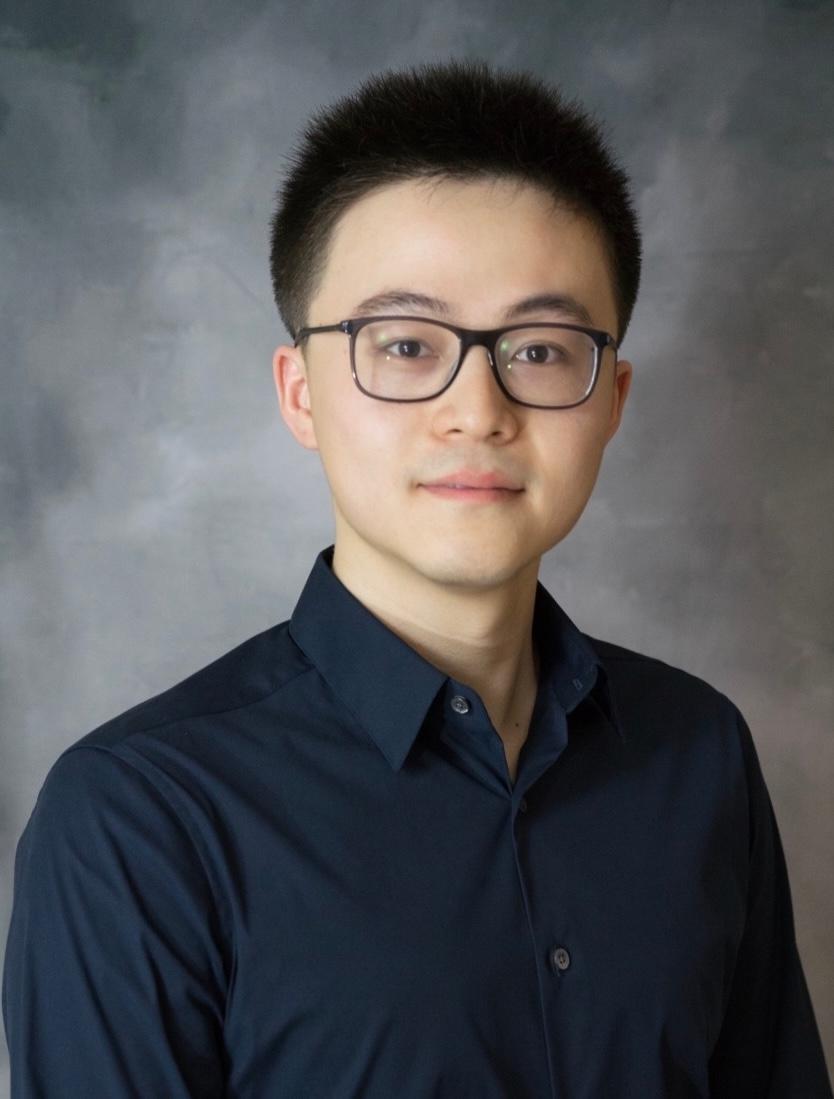
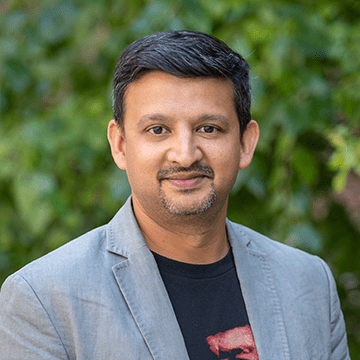
David Lindlbauer is an Assistant Professor at Carnegie Mellon University's Human-Computer Interaction Institute (HCII), where he leads the Augmented Perception Lab and co-directs the CMU Extended Reality Technology Center. His research focuses on advancing Mixed Reality (MR) and Extended Reality (XR) interfaces through computational interaction methods that optimize spatial, temporal, and multimodal feedback.
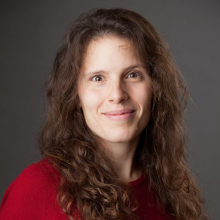
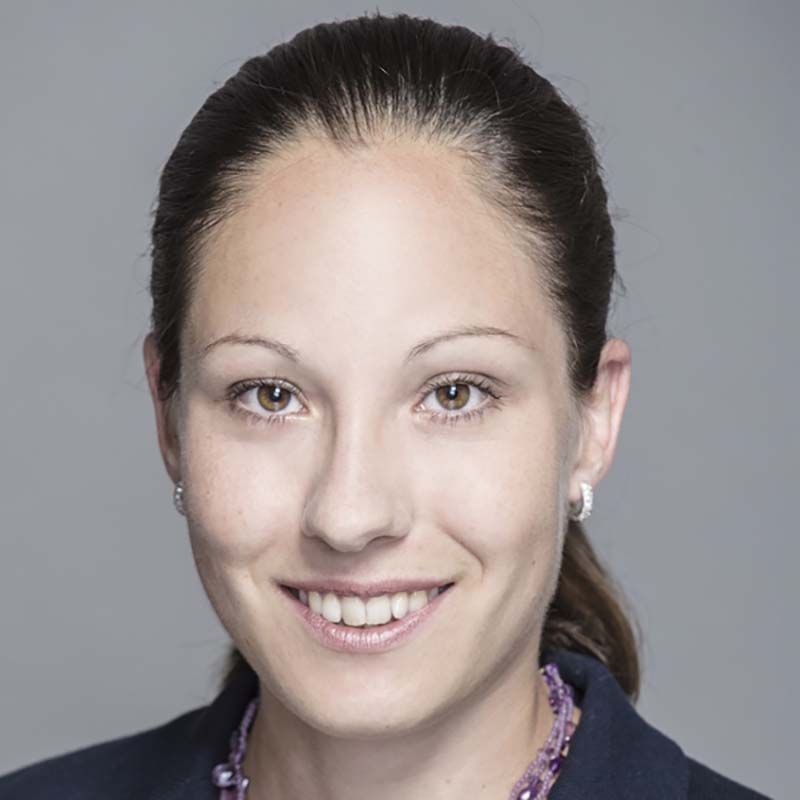
Catherine Guastavino is a Professor at McGill University's School of Information Studies (within the Faculty of Arts) and an Associate Member at the Schulich School of Music. She also contributes to the Centre for Interdisciplinary Research in Music Media and Technology (CIRMMT). Her roles include leading research projects and supervising graduate students in music technology and related fields. She holds a PhD in Psychoacoustics from Université Pierre et Marie Curie (Paris VI), an MSc from IRCAM (France), and a BSc in Mathematics from McGill University. Her research focuses on auditory perception, soundscape analysis, human-computer interaction, and urban acoustics. Notable projects include the 'Sounds in the City' partnership addressing urban noise policy and the development of immersive soundscape simulation tools. She leads or co-leads grants from SSHRC, NSERC, and MITACS, emphasizing interdisciplinary approaches to sound in urban environments. Guastavino's work bridges academic research with practical applications, such as designing sound installations for public spaces and improving acoustic environments in transportation and performance venues. She collaborates with city planners, musicians, and engineers, reflecting her commitment to making cities sound better through evidence-based strategies. Key Projects: SSHRC Partnership Grant for urban soundscape management (2018-2023) NSERC Discovery Grant on auditory localization (2019-2024) MITACS projects on Montreal festival soundscapes and noise policy Labs & Partnerships: Multimodal Interaction Laboratory (MIL) Collaborations with Ville de Montréal and Quartier des Spectacles Education: PhD: Psychoacoustics (Paris VI) MSc: Computer Science & Music Technology (IRCAM) BSc: Mathematics (McGill) Her teaching includes courses like Music Information Retrieval, integrating computational methods with artistic and scientific applications.
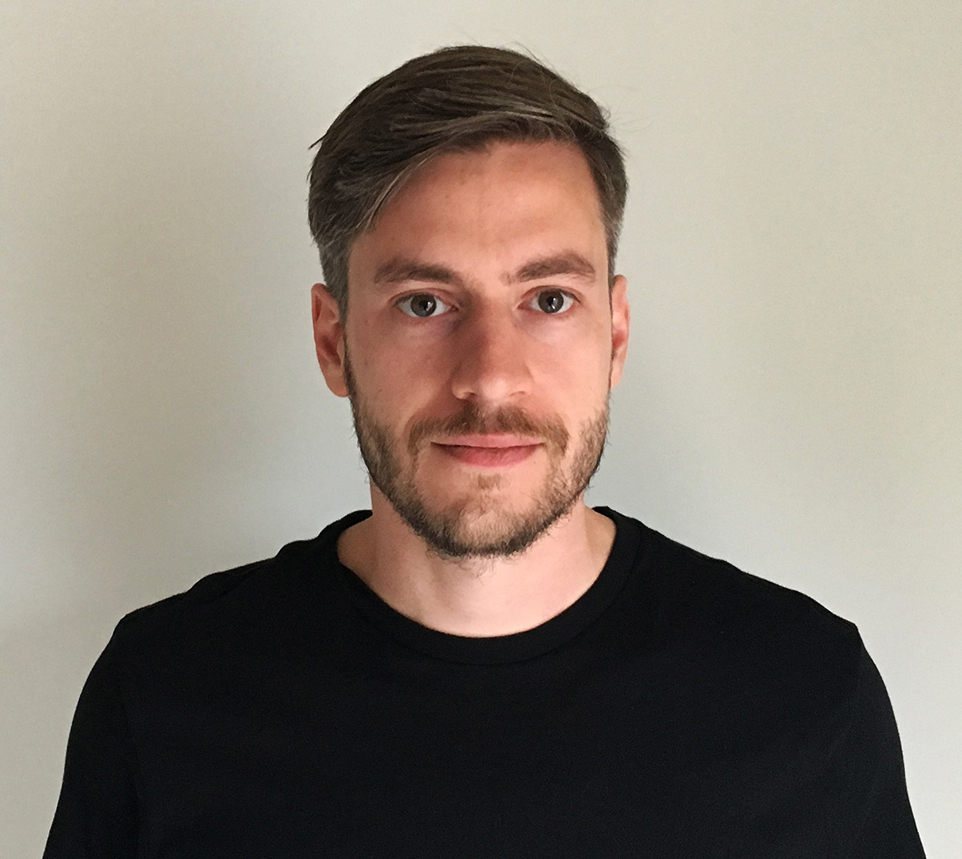
Ruohan Gao is an Assistant Professor in the Department of Computer Science at the University of Maryland, College Park , with affiliate appointments at the University of Maryland Institute for Advanced Computer Studies (UMIACS) , Maryland Robotics Center (MRC) , and Artificial Intelligence Interdisciplinary Institute at Maryland (AIM) . His research focuses on Computer Vision and Machine Learning , emphasizing Multisensory Machine Intelligence that integrates sight, sound, and touch . He aims to enable machines to perceive, understand, and interact with the world as humans do, with applications in robotic manipulation , audio-visual localization , and differentiable rendering . Article Trends : Span 2018–2025 , centering on audio-visual perception , multisensory datasets , and robotics . Recurring themes include object-centric learning , sound synthesis , and cross-modal consistency . Scientific Awards : Michael H. Granof Award (UT Austin’s Top 1 Doctoral Dissertation, 2021) Best Paper Award Runner-Up (BMVC 2021) Best Paper Award Finalist (CVPR 2019) Highlight Paper (CVPR 2023) He leads the UMD Multisensory Machine Intelligence Lab and collaborates with institutions like Stanford and The University of Texas at Austin . Contact: rhgao@umd.edu .
Jana Kainerstorfer is a Professor of Biomedical Engineering at Carnegie Mellon University (CMU), with courtesy appointments in the Neuroscience Institute and Electrical & Computer Engineering. She serves as Associate Department Head for Faculty and Graduate Affairs within the College of Engineering. Her research focuses on developing non-invasive optical imaging methods for disease detection and treatment monitoring, particularly in diffuse optical imaging. Key areas include cerebral hemodynamic monitoring in traumatic brain injury and handheld devices for breast cancer imaging. Dr. Kainerstorfer holds senior membership in the Optical Society of America and has received prestigious awards such as the NIH Trailblazer Award and AHA Scientist Development Grant. She leads the Biophotonics Lab, which bridges engineering and clinical applications, emphasizing translational research. Education: PhD from University of Vienna/NIH (2010), Postdoc at Tufts University Research Interests Her work revolves around biomedical optics , neurophotonics , and medical device innovation . Current projects include: Non-invasive cerebral hemodynamic monitoring Transabdominal fetal pulse oximetry Optical imaging in extreme environments (e.g., freediving physiology) Her lab develops tools like wearable NIRS for marine mammals and self-calibrating pulse oximetry algorithms. Research spans clinical translation and physiological mechanism discovery , with emphasis on microvascular imaging. Awards & Recognition NIH Trailblazer Award (2020) AHA Scientist Development Grant SPIE Fellow (2022) George Tallman Ladd Award (CMU) Lab & Collaborations The Biophotonics Lab collaborates with neurosurgery, oncology, and marine biology teams. Projects address clinical needs in neurocritical care and fetal monitoring, leveraging optical technologies for real-time diagnostics. Ongoing work includes: Optical assessment of cerebral metabolic rates Non-invasive intracranial pressure estimation Multi-modal EEG-NIRS fusion for neural source localization
David Lindlbauer is an Assistant Professor at the Human-Computer Interaction Institute (HCII) within Carnegie Mellon University's School of Computer Science. He leads the Augmented Perception Lab and co-directs the CMU Extended Reality Technology Center (XRTC) . His research bridges Human-Computer Interaction, Computer Graphics, and Computer Vision to create adaptive interfaces that enhance human-digital interaction. Education : PhD (summa cum laude) from Technische Universität Berlin , MSc and BSc from University of Applied Sciences Upper Austria Previous Affiliation : Postdoctoral Researcher at ETH Zurich (2018-2020) David's research focuses on understanding human perception of digital information and developing computational approaches to optimize AR/VR interface usability. Key areas include: Context-aware adaptive interfaces Visual saliency and attention modeling Spatial audio-haptic systems Optimal placement algorithms Object manipulation in Remixed Reality Diminished/ambient MR interfaces His 15 most recent publications (2024-2025) span topics in adaptive XR interfaces, multimodal notifications, haptic systems, and spatial cognition. These works appear at venues like ACM CHI, ACM UIST, IEEE VR, and Frontiers in VR. Common themes include: Machine learning for interface adaptation Human factors in XR design Real-time environment analysis Privacy-aware display systems Collaborative MR interfaces Accessibility enhancements Scientific Recognition : Best Paper Honorable Mention Award (ACM CHI 2024) Best Paper Award (ACM ISS 2023) ETH Zurich Postdoctoral Fellowship Multiple best paper recognitions at CHI, UIST, and IEEE VR Teaching & Leadership : Course developer for CMU's "Interactive Extended Reality" Mentor for NASA SUITS Challenge team Co-chair roles at CHI and UIST Overseeing PhD students and research interns
Brian Roberts is a Professor at Aston University's School of Psychology within the College of Health and Life Sciences. His primary research focuses on auditory perception, particularly auditory scene analysis and speech perception. He holds a PhD in Experimental Psychology (Auditory Perception) from the University of Cambridge (1989) and has held academic positions at the University of Birmingham (1993-2001) and Aston University since 2005. His work explores perceptual grouping mechanisms, cochlear implant listening, and the neural bases of auditory phenomena. Affiliations: Cognition & Neuroscience Research Group (CNRG), Centre for Vision and Hearing Research Employment History: Reader at University of Birmingham (2001), Senior Lecturer (1999), Lecturer (1993) Research interests include auditory stream segregation, formant analysis, and the effects of stimulus properties on perceptual organization. He has collaborated internationally, including visiting appointments at Macquarie University (2019) and the University of British Columbia (2011). Notable achievements include being elected a Fellow of the Acoustical Society of America (2009). Recent publications investigate factors influencing stream segregation (2024), asymmetric timbre effects (2023), and lexical bias in consonant identification (2022). Current projects explore sudden changes in auditory stimuli and their impact on perceptual grouping. Grants & Funding: Extensive research grants supporting auditory perception studies (details not explicitly listed) Supervised Work: 4 documented supervisees, though names not provided Labs/Teams: Active in the Auditory Perception Laboratory at Aston University, focusing on psychophysical and computational modeling approaches.
Josh McDermott is a Professor in the Department of Brain and Cognitive Sciences at MIT and an Associate Investigator at the McGovern Institute. He holds roles as Associate Department Head and Principal Investigator of the Laboratory for Computational Audition. His work bridges psychology, neuroscience, and engineering to study auditory perception, with a focus on sound interpretation, hearing impairment treatments, and machine hearing systems. Education includes a B.A. from Harvard (summa cum laude), an MPhil from University College London, and a PhD from MIT. Postdoctoral training included NYU and the University of Minnesota. Research interests encompass computational principles of sound perception, natural sound statistics, music cognition, and machine hearing. Key areas include sound localization, auditory scene analysis, and the role of generative models in perception. Recent publications highlight advancements in auditory neural networks, cross-cultural music perception, and noise schema processing. Awards include the Troland Research Award, BCS Excellence in Advising, and NSF CAREER Award. Advising includes over 20 graduate students and postdocs, with notable contributions to auditory neuroscience and machine learning. Major grants support projects on auditory models and sensory systems. The lab develops tools like cochleagram generation and headphone screening software. The Laboratory for Computational Audition operates at MIT, focusing on biological and computational approaches to hearing. Collaborations span engineering, psychology, and neuroscience to advance understanding of auditory processing.
Dorte Hammershøi is a Professor in the Department of Electronic Systems at The Technical Faculty of IT and Design, Aalborg University, Denmark. Her research focuses on acoustics, sound engineering, and hearing science with significant contributions to human hearing, ear canal acoustics, and audio technology applications. Her research interests include: Temporary Threshold Shift and frequency resolution in human hearing Ear canal acoustics and sound pressure level measurement Distortion Product Otoacoustic Emission (DPOAE) analysis Impulse response and acoustic impedance studies Hearing aid technology and rehabilitation methodologies Virtual reality audio interfaces and accessibility applications Professor Hammershøi's recent publications demonstrate a strong clinical-engineering interdisciplinary approach, bridging theoretical acoustics with practical hearing rehabilitation applications. Her work on hearing aid fitting methodologies, occupational noise exposure effects, and virtual reality audio interfaces shows consistent innovation in translating engineering principles to clinical practice. The research shows particular attention to individualized hearing solutions and accessibility technologies. Her scientific contributions have been recognized with: Dansk Lydpris 2020 (awarded November 17, 2021) Ambassadør for Aalborg (awarded September 15, 2004) Professor Hammershøi has supervised 5 PhD students and led numerous research projects including the ongoing "Audio Only VR for Blind Gamers" project (2024-2028) funded by the Independent Research Foundation of Denmark, and the completed "BEAR: Better Hearing Rehabilitation" project (2016-2022). Her research has attracted significant media attention with 110 press/media appearances discussing hearing damage prevention, tinnitus, and public health implications of noise exposure. She maintains active professional engagement through committee memberships (46 documented activities), international collaborations, and contributions to clinical practice guidelines. Her work continues to influence both academic research and practical applications in hearing science and audio engineering.
Prof. Bernhard U. Seeber is an Extraordinary Professor at the Technical University of Munich (TUM), leading the Chair of Audio Signal Processing within the TUM School of Computation, Information and Technology. His work bridges auditory neuroscience and engineering, focusing on improving hearing aids, cochlear implants, and virtual acoustic systems. He holds affiliations with the Bernstein Center for Computational Neuroscience, Munich Institute of Biomedical Engineering, and others. Education: Studied and earned his PhD (2003) in Electrical Engineering and Information Technology at TUM. Postdoctoral research included time at UC Berkeley and the MRC Institute of Hearing Research (UK), where he pioneered studies on binaural hearing and cochlear implant optimization. Research Interests: Combines experimental and theoretical approaches to explore auditory scene analysis, binaural unmasking, and spatial hearing. Key areas include signal coding for cochlear implants, virtual acoustics, and non-destructive acoustic monitoring. His work emphasizes interdisciplinary collaboration with industry and academia. Awards: Lothar Cremer Award (2010), Emmy Noether Fellowship (2007), and recognition from the German Acoustical Society. Teaching: Offers courses on audio communication, computational neuroscience, and technical acoustics. Projects: Leads initiatives like HAPPAA and Auralization, advancing sound field synthesis and hearing aid algorithms. Current Roles: Head of Chair of Audio Signal Processing, Board Member of DEGA, and spokesperson for the ITG Technical Committee on Hearing Acoustics.
Aswin Punathambekar is a Professor of Communication at the Annenberg School for Communication, University of Pennsylvania, and Director of the Center for Advanced Research in Global Communication (CARGC). His work focuses on media and cultural change in postcolonial and diasporic contexts, particularly in South Asia and its global diasporas. He has held previous academic positions at the University of Michigan, University of Virginia, and a British Academy Global Professorship at Loughborough University (U.K.). Education includes a B.Tech from University of Allahabad (1995), M.A. from University of Georgia (2001), M.S. from MIT (2003), and Ph.D. from University of Wisconsin-Madison (2007). His research integrates media industries, cultural politics, and technological histories, with emphasis on how digital platforms reshape identity, citizenship, and cultural expression. Major publications include From Bombay to Bollywood (2013), Global Digital Cultures (2019), and Media Industry Studies (2020). Current projects explore digital media in India, South Asian diasporic media histories, and global media industries. He serves on editorial boards for journals like Media, Culture & Society and is a Peabody Awards juror. Awards include the Katherine Singer Kovacs Award (2013) and ICA's Outstanding Young Scholar Award (2015). His teaching covers global digital cultures, media theory, and methods in cultural studies, with courses like 'India on Screen' and 'Global Media Industries.' His work bridges academic rigor with public engagement, addressing intersections between media, technology, and societal transformation in transnational contexts.
Eduardo Mercado III is a Professor in the Department of Psychology at the University at Buffalo, College of Arts and Sciences. His research focuses on bioacoustics, cognitive psychology, and marine ecology, particularly the vocal behavior of humpback whales and its implications for understanding human impact on marine ecosystems. He is also known for his work in perceptual learning, autism spectrum disorder, and comparative cognition. Scientific Awards Guggenheim Fellowship Harvard Radcliffe Institute Fellowship Research Trends His recent publications emphasize bioacoustic analysis of humpback whale songs, including their spectral entropy, cyclical variations, and adaptive adjustments to anthropogenic noise. Additional work explores perceptual learning mechanisms in autism, neural network modeling for acoustic classification, and cognitive processes in canines and rodents. Projects Mercado’s “Singers as Sentinels” project combines acoustic analysis of humpback whale songs with public awareness initiatives about ocean noise pollution. The project will produce a book, Why Whales Sing and Dolphins Don’t , and a web-based interface for public engagement.
Dr. Burkhard Maess is a Research Professor and Group Leader at the Max Planck Institute for Human Cognitive and Brain Sciences, leading the Methods and Development Group Brain Networks. His research focuses on auditory and language processing, signal analysis, and dynamic modeling of neuronal networks. He holds a Diploma in Physics (University of Leipzig, 1987) and a PhD in Physics (University of Leipzig, 1990). His career includes postdoctoral positions at the Academy of Sciences of the GDR and the Free University of Berlin before joining the MPI in 1995. Since 2000, he has led research groups on MEG/EEG signal analysis and cortical network dynamics. His work integrates advanced neuroimaging techniques like MEG and EEG to study sensory processing, neural network dynamics, and the effects of aging on auditory attention. Key contributions include developing high-resolution BEM-FMM methods for source localization and analyzing cross-frequency coupling in neuroscience data. His group also explores spinal cord electrophysiology and the neural underpinnings of perceptual decision-making. Dr. Maess’ research spans cognitive neuroscience, biomedical engineering, and computational modeling, with a focus on bridging empirical findings with theoretical frameworks in neuroscience.
Dr. Ian Bruce is a Professor in the Department of Electrical and Computer Engineering at McMaster University, Hamilton, ON, Canada. He has been with the department since 2002, conducting interdisciplinary research that bridges electrical engineering with auditory neuroscience. His work has significant implications for hearing technologies and auditory rehabilitation. Education: B.E. (electrical and electronic) from The University of Melbourne (1991) Ph.D. from the Department of Otolaryngology, The University of Melbourne Dr. Bruce's research program focuses on auditory modeling, hearing aids, cochlear implants, tinnitus, neural coding of speech, and digital speech processing. His work centers on understanding the physiological mechanisms of auditory processing and applying this knowledge to develop improved hearing technologies. He has pioneered computational models of the auditory periphery that accurately predict speech intelligibility for hearing-impaired listeners, directly informing hearing aid and cochlear implant design. Analysis of Dr. Bruce's recent publications (2019-2025) reveals a consistent focus on cochlear implants and auditory nerve modeling, with increasing integration of machine learning techniques. His work demonstrates a sophisticated balance between physiological accuracy and computational efficiency, with recent papers exploring WaveNet-based approximations of cochlear models and DNN-based auditory processing. A significant portion of his research examines the relationship between neural responses and perceptual outcomes in hearing-impaired individuals, particularly regarding temporal processing and speech understanding. Scientific Awards and Recognitions: Fellow of the Acoustical Society of America Member of the Association for Research in Otolaryngology Registered Professional Engineer in Ontario Associate Editor of the Journal of the Acoustical Society of America Dr. Bruce has mentored numerous graduate students through various capstone design projects across multiple engineering disciplines including biomedical, electrical, mechanical, and software engineering. His teaching portfolio includes specialized courses in biomedical signals and systems, cellular bioelectricity, models of the neuron, and advanced signal processing. He has consistently supervised M.Eng. projects and independent studies, demonstrating commitment to training the next generation of engineers in auditory technology development. Dr. Bruce's research is conducted within McMaster University's interdisciplinary biomedical engineering framework, collaborating with clinicians and researchers in otolaryngology and audiology. His laboratory work focuses on developing and validating computational models that simulate auditory nerve responses to both natural and prosthetic stimulation, with direct applications to improving cochlear implant performance and hearing aid algorithms for real-world listening environments.
Marié Abe is an Associate Professor in the Department of Music at the University of California, Berkeley, where she joined the faculty in 2023 after twelve years at Boston University. Her research explores how auditory culture produces social space through the political and affective dimensions of sound in contemporary Japan, Okinawa, Ethiopia, and the United States. Her educational background includes: B.A. in Ethnomusicology/Cultural Anthropology, Swarthmore College (2001) M.A. in Ethnomusicology, University of California, Berkeley (2004) Ph.D. in Ethnomusicology, University of California, Berkeley (2010) Abe's research investigates how culturally specific listening practices elucidate power dynamics, human difference, and spatial understandings. Her work spans sound studies, ethnography, human geography, and affect theory, with fieldwork focusing on Japanese street music, US military bases in Okinawa, and sonic connections between Japan and Ethiopia during the Korean War. She emphasizes long-term ethical engagements with interlocutors and draws from locally grounded epistemologies. Her scientific awards include: Peabody Award (2008) for co-producing NPR program 'Squeezebox Stories' Reischauer Center for Japanese Studies Fellowship, Harvard University (2010-2011) Newhouse Center for the Humanities Fellowship, Wellesley College (2013-2014) International Research Center for Japanese Studies Fellowship, Kyoto, Japan (2018-2019) Abe has advised over a dozen doctoral students at Boston University across diverse geographical contexts including Senegal, Ghana, Cambodia, and Japan. She pioneered public ethnomusicology through the BU Global Music Festival and co-founded the Peabody Award-winning radio documentary 'Squeezebox Stories'. As an active accordion performer, she engages with indie pop, Ethiopian jazz, and free improvisation ensembles, performing at major international festivals including Bonaroo and New Orleans Jazz Festival.
Dr. Conny Kopp-Scheinpflug is an Associate Professor (PD) at the Faculty of Biology, Ludwig Maximilian University of Munich, where she leads a research group focused on auditory neuroscience. Her laboratory investigates the function and mechanisms of activity-dependent neuromodulation in the mammalian auditory system, with particular interest in how ambient sensory stimulation activates neuromodulators and how these influence neural processing of relevant information. Dr. Kopp-Scheinpflug's research spans auditory neuroscience, neuromodulation, neuronal excitability, and synaptic transmission. She employs electrophysiological (single cell in vivo and patch clamp in brain slices), anatomical, and optogenetic techniques to study how hyper- or hypo stimulation lead to acquisition or loss of function in the auditory system. Her work has significant implications for understanding and potentially treating functional disorders of neuronal excitability. Current research examines potassium channels, nitric oxide signaling, and neuromodulators like urocortin 3 in auditory processing. Analysis of Dr. Kopp-Scheinpflug's recent publications (2016-2022) reveals consistent focus on auditory processing mechanisms, particularly potassium channels (Kv3.1, Kv3.3, Kv1.1), nitric oxide signaling, and activity-dependent changes in myelination. Her research spans molecular mechanisms to systems-level auditory processing, with emphasis on sound localization, temporal processing, and recovery from hearing impairment. Key findings include how sound-evoked activity influences myelination, how nitric oxide regulates postsynaptic excitability, and how urocortin 3 aids hearing recovery. Dr. Kopp-Scheinpflug has secured funding from multiple research agencies. She maintains active collaborations with researchers at Lehigh University (Michael Burger Lab), University of Edinburgh (Matthias Hennig Lab), Ben-Gurion University of the Negev (Michal Hershfinkel Lab), and UCL (Dr. Jennifer Linden). Her laboratory currently includes Ezhilarasan Rajaram, Dr. Mihai Stancu, Oskar Kalle Juhani Markkula, Sara Pagella, and Katharine Krueger. Past lab members who have completed their training include Dr. James Sinclair, Dr. Matthew Fischl, Max Bayer, Alkmini Damkou, Alyahyay Mansour, Leander Mrowka, Joseph Kroeger, and Myriam Schmidt-Pauly.