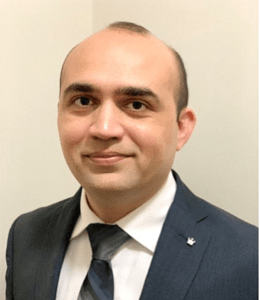
Keith H NuechterleinView profile
Professor
Keith H Nuechterlein is a Professor-in-Residence in the Department of Psychiatry and Biobehavioral Sciences at the David Geffen School of Medicine, University of California, Los Angeles (UCLA). He serves as Principal Investigator on multiple National Institutes of Health (NIH) funded research projects focused on schizophrenia and psychosis, including several R01 grants from the National Institute of Mental Health (NIMH). Dr. Nuechterlein's primary research interests center on cognitive impairments in schizophrenia, particularly in first-episode psychosis. His work investigates how cognitive training, aerobic exercise, and other interventions can improve cognitive function and real-world outcomes for individuals with schizophrenia. He has made significant contributions to understanding the relationship between cognitive deficits and functional outcomes, the development of cognitive assessment tools like the MATRICS Consensus Cognitive Battery, and the role of motivation in treatment engagement. His recent publications reveal a strong focus on innovative interventions for first-episode schizophrenia, with particular attention to the combination of cognitive training and aerobic exercise. His research employs diverse methodologies including clinical trials, neuroimaging, and analysis of genetic and physiological markers. A notable trend across his recent work is the examination of how intrinsic motivation influences treatment outcomes and the exploration of brain-body connections in schizophrenia pathophysiology. Dr. Nuechterlein has served as Principal Investigator on multiple major research grants totaling millions of dollars in funding, including the current R01 MH130848 ( Improving Cognition Through Telehealth Aerobic Exercise and Cognitive Training After a First Schizophrenia Episode ) and R01 MH129351 ( Determining the Role of Social Reward Learning in Social Anhedonia in First-Episode Psychosis ). His research program has consistently focused on translating basic science findings into clinical interventions that improve functional outcomes for individuals with schizophrenia.