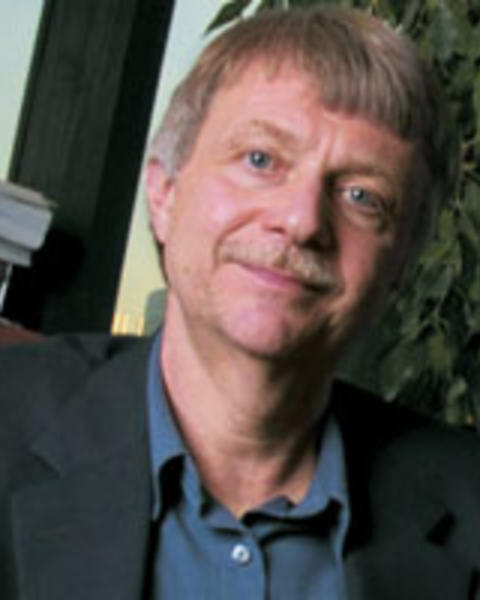
Professor Dennis M Freeman is a faculty member at the School of Engineering , Massachusetts Institute of Technology , where he holds a joint appointment in the Department of Electrical Engineering and Computer Science . His research focuses on understanding the cellular and molecular mechanisms of human hearing , particularly through studying the tectorial membrane and its role in auditory sensitivity and selectivity. Discovered tectorial membrane wave dynamics' contribution to hearing properties Developed motion microscopy for nanoscale motion analysis Investigated age-related CEACAM16 loss effects on auditory function His work addresses critical gaps in hearing remediation by targeting fundamental auditory mechanics rather than symptomatic treatments.
Dr. Jeremy Amiel Rosenkranz is a Professor and Director of the Brain Science Institute at Rosalind Franklin University of Medicine and Science. He is affiliated with the Chicago Medical School and the School of Graduate and Postdoctoral Studies, where he works within the Cellular and Molecular Pharmacology discipline. Dr. Rosenkranz also has significant affiliations with the Brain Science Institute and the Center for Neurobiology of Stress Resilience and Psychiatric Disorders, positioning him at the forefront of neuroscience research at the institution. Dr. Rosenkranz received his undergraduate degree from the University of Pittsburgh in 1997, followed by an MS in 1999 and PhD in Neuroscience in 2002, all from the same institution. After completing postdoctoral training at Baylor College of Medicine and University of Texas-Austin, he joined the faculty of Chicago Medical School in 2007, establishing a productive research career spanning over 15 years. His research program focuses on the neurophysiology of emotion and memory , specifically examining how the amygdala influences emotional processes and memory formation. His laboratory investigates how the amygdala changes during learning and how it is disrupted in animal models of psychiatric disorders. Another major research area is the modulation of synaptic integration , studying how integrative properties of neurons are modified and the role dendrites play in this modulation. His recent work has increasingly emphasized developmental differences between adolescents and adults, sex differences in stress responses, and the role of neuroinflammation in anxiety-related behaviors. Analysis of Dr. Rosenkranz's publication record from 2018-2022 reveals a sophisticated research program with multiple interconnected themes. His work demonstrates expertise in electrophysiology, behavioral neuroscience, and neuroanatomical techniques, with applications to understanding anxiety disorders, depression, and other stress-related psychiatric conditions. The publications show a clear evolution toward more complex questions about developmental trajectories, sex differences, and inflammatory mechanisms in emotional processing. National Institute of Mental Health (NIMH) grant MH084970 supporting research on stress and amygdala function Directorship of the Brain Science Institute, providing leadership for neuroscience research initiatives across the university Membership in the Center for Neurobiology of Stress Resilience and Psychiatric Disorders, facilitating translational research Dr. Rosenkranz's laboratory conducts research on how stress affects amygdala function and related neural circuits using in vivo electrophysiology, behavioral testing, neuroanatomical analysis, and molecular approaches. Current research examines developmental trajectories from adolescence to adulthood, sex differences in stress responses across the estrous cycle, and the role of neuroinflammation in anxiety behaviors. His work bridges basic neuroscience with clinical relevance, providing insights into why certain populations may be more vulnerable to stress-related psychiatric disorders.
Johannes Arend serves as an Assistant Professor in the Department of Information and Communications Engineering at Technische Universität Berlin, specializing in Technical Psychoacoustics within the Faculty of Electrical Engineering and Computer Science. His research bridges acoustic theory, audio technology development, and perceptual evaluation, with significant contributions to virtual reality audio applications and hearing science. His academic foundation includes a Doctoral degree in Engineering and Technology from Technische Universität Berlin, awarded on February 11, 2022. Arend's research portfolio centers on the intricate relationship between physical sound properties and human perception. Key investigation areas include: Virtual and spatial audio rendering techniques Psychoacoustic evaluation of complex sound fields Microphone array processing for sound source localization Voice radiation patterns and phoneme-dependent directivity Real-time room acoustic simulation systems Virtual reality applications for auditory testing Analysis of his 2024-2025 publications reveals a cohesive research trajectory focused on enhancing acoustic realism in virtual environments. His work consistently integrates experimental methodologies with computational modeling to address challenges in stage acoustics, speech intelligibility, and environmental sound reproduction. This research demonstrates strong interdisciplinary connections between audio engineering, cognitive science, and medical applications. No scientific awards were documented in the available profile information. Details regarding student supervision, grant funding, and collaborative projects were not explicitly provided in the current profile, though his publication record indicates active research collaboration. His experimental work is likely conducted within specialized audio laboratories at Technische Universität Berlin, featuring advanced virtual reality integration, anechoic chamber facilities, and high-fidelity recording systems for psychoacoustic experimentation.
Merve Çınar Satekin serves as Regular Faculty in the Department of Language and Speech Therapy within the Faculty of Health Sciences at Muğla Sıtkı Koçman University. Her academic trajectory includes a Bachelor's degree in Audiology from Istanbul University (2015), Master's in Audiology and Speech Pathology (2018), and Doctorate in Audiology and Speech Pathology from Ankara University (2023). Research focuses on critical audiology domains including tinnitus mechanisms, pediatric hearing rehabilitation, and cognitive impacts of auditory disorders. Her work bridges clinical practice with translational research, particularly examining pandemic effects on auditory perception and innovative interventions like transcutaneous nerve stimulation for tinnitus management. Recent publications demonstrate strong emphasis on Turkish population-specific adaptations of diagnostic tools. Analysis of her 15 most recent publications reveals dominant themes in pediatric audiology (47%), tinnitus pathophysiology (33%), and cross-cultural test validation (20%). Key trends include growing collaboration with Ankara University's İbni Sina Hospital and increasing focus on EU-funded rehabilitation scalability projects. Current teaching responsibilities include graduate-level courses: Audiology I/II, Clinical Study I, Therapy Plan Development, and Alternative Communication Systems. She contributes to the EU project "Scalable hearing rehabilitation for low and middle income countries" as a researcher, and serves on the editorial board of Samsun Sağlık Bilimleri Dergisi.
Dr. Vincent Nguyen serves as a Senior Lecturer in Orthoptics within the Graduate School of Health at the University of Technology Sydney. With a distinguished career spanning clinical practice, research, and academia, he brings extensive expertise in visual science and rehabilitation. His academic journey began with Honours in Orthoptics (1993) followed by a Master of Applied Science (1996), culminating in a PhD from the University of Sydney (2003) focused on binocular rivalry in visual psychophysics. Dr. Nguyen's research interests focus on low vision rehabilitation, depth perception, binocular vision, and the application of virtual reality and spatial audio technologies for assistive applications. His work bridges fundamental visual neuroscience with practical rehabilitation solutions, particularly for people with visual impairments. He has pioneered research in acoustic touch interfaces, virtual reality rehabilitation environments, and spatial audio navigation systems. His publication record demonstrates a clear trajectory from fundamental visual neuroscience to applied rehabilitation technologies. Recent work emphasizes immersive virtual reality applications for communication and physical rehabilitation, as well as innovative spatial audio systems that enhance navigation for people who are blind. His research integrates principles from neuroscience, engineering, and clinical practice to develop practical assistive solutions. Dr. Nguyen has secured significant research funding including NHMRC Ideas Grants (2023-2027) for 'Fluent Mobility for the Blind Individual Using Multimodal Auditory Sensory Augmentation' and CRC-P projects like 'ARIA - Bionic Visual-Spatial Medical Device for the Blind' (2022-2024). Current projects include 'EyeBot: AI-Powered Triage for Ophthalmology Referrals' (2025) and 'Next-Generation Extended Reality, Wearable Biosensors, and Metaverse Technologies for Medical Applications' (2024). As an educator, Dr. Nguyen teaches courses in Therapy and Rehabilitation (96037), Clinical Management of Refractive Error (96031), and Eye and Visual Systems (96027). His clinical background includes appointments as a Clinical Electrophysiologist with NSW Health (2007) and work with Vision Australia assisting people with low vision (2012). His postdoctoral work at York University's Centre for Vision Research with Professor Ian Howard focused on human depth perception, building on his foundational expertise in visual neuroscience.
Professor Marcin Szwed serves at the Department of Psychophysiology within the Faculty of Philosophy at Jagiellonian University in Kraków, Poland. His office is located at Ingardena 6, room 6.11, with contact email m.szwed@uj.edu.pl and phone number 12 663 24 40. His research focuses on brain plasticity mechanisms , particularly investigating cross-modal reorganization in sensory-deprived populations (blind and deaf individuals) and environmental impacts on neurodevelopment. His work spans multiple domains including tactile reading (Braille), interoception in blindness, auditory processing in deafness, and the effects of air pollution on children's cognitive development through the NeuroSmog project. His publication record shows consistent research output since 2000, with recent work increasingly focusing on environmental neuroscience (air pollution effects) while maintaining his core interest in sensory substitution and brain plasticity. His 2023-2025 publications demonstrate a strong emphasis on methodological rigor with advanced neuroimaging techniques and large-scale cohort studies. Prof. Szwed actively supervises research through the Szwed Lab, which is currently recruiting two PhD students for October 2025 to work on NeuroSmog project data using machine learning and advanced statistical methods for analyzing critical periods of smog exposure.
Jay C. Buckey Jr is a Professor of Medicine at the Geisel School of Medicine at Dartmouth College. He serves as Director of the Space Medicine Innovations Laboratory and holds an additional appointment as Adjunct Professor at the Thayer School of Engineering. Dr. Buckey received his BSEE from Cornell University in 1977 and his MD from Cornell University Medical College in 1981. His research spans multiple domains at the intersection of space medicine, neuroscience, and innovative healthcare technologies. Dr. Buckey's work focuses on central auditory processing as a marker of neurocognitive function, space physiology and medicine, hyperbaric medicine, audiology and hearing assessment, computer-based psychological training programs, visual changes after spaceflight, and virtual reality applications. His research has significant implications for both space exploration and terrestrial medical applications, particularly in isolated and confined environments. Dr. Buckey's recent publications demonstrate a strong focus on space medicine, auditory neuroscience, and applications of technology in healthcare. His work bridges the gap between space exploration research and practical medical applications on Earth, with particular emphasis on developing innovative diagnostic tools and treatment approaches for conditions affecting astronauts and patients in remote settings. As Director of the Space Medicine Innovations Laboratory, Dr. Buckey leads a multidisciplinary research team with global reach. The laboratory focuses on assessing brain function using the auditory system in various patient populations, developing new audiological tests for global use, creating autonomous behavioral health tools for isolated environments, and exploring hyperbaric oxygen applications. The lab also conducts technology and science projects for NASA and the Department of Defense. Dr. Buckey is the author of the book "Space Physiology" published by Oxford University Press and co-author of "The Neurolab Spacelab Mission: Neuroscience Research in Space," documenting results from the STS-90 mission.
Dr. Sarah Grinn serves as Associate Professor in the Department of Communication Sciences & Disorders at Central Michigan University, leading the Grinn Hearing Lab focused on clinically-translatable research to reduce recreational and occupational noise-induced hearing loss through advanced auditory safety modeling. Her educational foundation includes a PhD from The University of Texas at Dallas, AuD from The University of Florida, and BS from Michigan State University. This clinical-research hybrid training underpins her work on individual susceptibility factors in auditory injury. Research centers on three interconnected domains: noise-induced auditory injury mechanisms (particularly temporary threshold shifts and cochlear synaptopathy), speech-in-noise perception deficits in normal-hearing individuals, and external-ear acoustics' role in pre-cochlear amplification. Current projects analyze VR music concert exposures, stress-aural interactions, and firearm noise impacts using human and chinchilla models to develop personalized risk prediction tools. Analysis of her 2017-2024 publications reveals consistent focus on individual variability in noise susceptibility, with increasing emphasis on virtual-reality methodologies and external-ear mechanics. Her work bridges basic auditory science (chinchilla models) with clinical applications (hearing aid programming, conservation protocols), published in high-impact journals including the Journal of the Acoustical Society of America and Frontiers in Neuroscience. Scientific recognition includes: NIH R01 Grant for Automated Hearing Aid Safety (2023-) NIH Loan Repayment Award in Clinical Research (2021-2023) Susan and Jim Jerger Research Fellowship (2017-2018) Multiple American Academy of Audiology grants Dr. Grinn actively mentors through the Doctor of Audiology program while securing over $1M in active funding. Her collaborative network spans The University of Texas Southwestern Medical Center, UT Dallas, and Boystown National Research Hospital, focusing on translational hearing conservation solutions. The Grinn Hearing Lab operates from Central Michigan University's Health Professions Building, conducting studies on musician hearing protection, office headphone risks, and physiological mechanisms of noise injury using advanced acoustic measurement and virtual-reality exposure systems.
Dr. Ilona Kotlewska is an Assistant Professor at Jagiellonian University in Krakow and maintains a teaching position at SWPS University where she instructs courses on biological bases of behavior. As a neurobiologist and neuropsychologist with a PhD in biological sciences from the Nencki Institute of Experimental Biology of the Polish Academy of Sciences, she bridges experimental biology with psychological research. Her academic journey includes interdisciplinary studies at the University of Warsaw's College of Inter-Faculty Individual Studies in Mathematics and Natural Sciences, followed by research fellowships at the University of Barcelona, Leibniz Institute for Neurobiology in Germany, and Dartmouth College in the United States. Dr. Kotlewska's research focuses on brain processes, particularly the development of self-awareness and attention mechanisms. She specializes in advanced neuroimaging techniques including electroencephalography, magnetic resonance imaging, and functional near-infrared spectroscopy. Her current research at Jagiellonian University investigates attention processes and leads a grant on the neurobiological foundations of ownership. Her work spans cognitive neuroscience, neuropsychology, and social neuroscience, with particular interest in how the brain processes self-referential information, ownership perception, and social stimuli. Her recent publications demonstrate consistent output in brain imaging methodologies and cognitive processes, with a focus on self-awareness development, attention mechanisms, and ownership perception. The research employs multimodal neuroimaging approaches to address fundamental questions about how the brain constructs self-referential processing and responds to external stimuli. Fulbright Junior Research Award (2017-2018) ETIUDA-4 scholarship from the National Science Centre START scholarship from the Foundation for Polish Science Dr. Kotlewska actively supervises research projects and leads her own grant on neurobiological foundations of ownership. Her research program maintains international collaborations stemming from her fellowships at prestigious institutions worldwide. She balances her research with teaching responsibilities at SWPS University and significant science popularization efforts through lectures, radio appearances, and online publications. As a member of the Spokesmen of Science association, Dr. Kotlewska actively participates in science communication initiatives. Her research group likely provides opportunities for students to engage with advanced neuroimaging techniques while exploring fundamental questions about brain function and self-awareness development.
Dr. Sara J. Swanson is a Professor and Division Chief of Neuropsychology in the Department of Neurology at the Medical College of Wisconsin. She also holds adjunct appointments as an Associate Professor in the Psychology Department at the University of Wisconsin-Milwaukee and as a Clinical Associate Professor in the Psychology Department at Marquette University. Dr. Swanson is a Clinical Neuropsychologist at Froedtert Memorial Lutheran Hospital and St. Luke's Medical Center, and she is a member of both the Neuroscience Research Center and the Wisconsin Institute of NeuroScience (WINS). Dr. Swanson's research primarily focuses on the neuropsychology of epilepsy, with special emphasis on presurgical evaluation using functional MRI and Wada testing. Her work examines language lateralization, memory assessment, and cognitive outcomes following epilepsy surgery. She has been involved in numerous multicenter collaborations, particularly through the FMRI in Anterior Temporal Epilepsy Surgery (FATES) Study group. Her research has significant clinical implications for improving surgical outcomes and understanding brain-behavior relationships in epilepsy patients. Analysis of Dr. Swanson's recent publications (2020-2025) reveals a continued focus on predicting cognitive outcomes following epilepsy surgery using advanced neuroimaging techniques. Her work increasingly incorporates multicenter data collection and standardized assessment protocols. Key themes include the relationship between fMRI findings and postoperative naming/memory outcomes, application of standardized cognitive classification systems to epilepsy, and exploration of novel approaches to neuromodulation therapies. Outstanding Teachers for 2008-2009, Medical College of Wisconsin Senior Female Faculty Pin Ceremony Fellow, Division 40 of the American Psychological Association Alumni Merit Scholarship, Washington State University Paul Dupertuis Scholarship, Washington State University Women of Achievement Award, Washington State University Dr. Swanson has mentored over 20 postdoctoral researchers and graduate students throughout her career, including Julie Janecek, David Sabsevitz, and Bradley Anderson. She has served as Faculty Sponsor for multiple Epilepsy Foundation of America Behavioral Science Student Fellowships and has been involved in numerous NIH-funded and foundation-supported research projects. Her leadership extends to serving on the Board of Directors for the American Academy of Clinical Neuropsychology and the American Board of Clinical Neuropsychology, as well as participating in national guideline development for the use of fMRI in epilepsy surgery evaluation. As Division Chief of Neuropsychology, Dr. Swanson oversees the Adult Neuropsychological Services within the Adult Comprehensive Epilepsy Program. She has developed clinical protocols for neuropsychological evaluation of epilepsy surgery candidates, including testing protocols, lateralization ratings, and Wada examination procedures. Her work bridges clinical practice and research, ensuring that advances in neuropsychological assessment directly inform patient care.
Janet R. Schoepflin is a Professor in the Department of Communication Sciences and Disorders at Adelphi University's Ruth S. Ammon College of Education and Health Sciences. She earned her Ph.D. from City University of New York (1997), MA from Temple University (1980), and BA from Pennsylvania State University (1971). She holds New York State licenses in both Audiology and Hearing Aid Dispensing. Her research specializes in two primary domains: (1) pediatric audiology with emphasis on amplification technologies and sensory aids to improve speech/language outcomes in hearing-impaired children, and (2) psychoacoustic investigations of noise effects on speech recognition and hearing. Additional expertise spans assistive listening devices, clinical audiology, and rehabilitative practices. Publications demonstrate consistent focus on applied clinical research, with recent works examining smartphone-based sound measurement, age-related auditory processing, cochlear implant accessibility, and speech recognition mechanics. Research methodologies frequently incorporate case studies and collaborative clinical investigations. Notable recognitions include: Scholar Award, American Academy of Audiology (2002, 2011-12) Award for Continuing Education, ASHA (2005, 2009, 2011) Adelphi University Presidential Faculty Development Award (2004) Participation in national Audiology Education Summits She secured the Adelphi University Presidential Faculty Development Award (2004) for research advancement. While student advising details aren't specified, her teaching includes graduate-level courses in genetics of communication disorders and psychoacoustics.
Vitoria Piai is a Principal Investigator specializing in language function and dysfunction at the Donders Institute for Brain, Cognition, and Behaviour, Radboud University in Nijmegen, Netherlands. With over 135 publications and 2,595 citations, her research focuses on the neural mechanisms underlying language production using electrophysiological methods including EEG and MEG. Dr. Piai's research interests center on speech production, particularly examining the temporal dynamics of lexical and phonological processing. Her work investigates how brain oscillations relate to different stages of speech planning, how cognitive control mechanisms operate during language production, and how language networks adapt following brain damage. She employs various paradigms including picture-word interference, context-driven word production, and sentence comprehension tasks to explore these questions. Analysis of her recent publications (2024-2025) reveals consistent focus on neural oscillations during speech production, particularly examining alpha and beta band activity. Her work increasingly bridges cognitive neuroscience with clinical applications, investigating language production in aging populations, individuals with aphasia, and those with neurological conditions. She frequently employs multimodal approaches, combining behavioral measures with electrophysiological recordings to provide comprehensive insights into language processing. Dr. Piai has established significant research collaborations across institutions, particularly with colleagues at Radboud University, University of California Berkeley (where she completed postdoctoral work), and various clinical centers. Her work contributes to both theoretical understanding of language production mechanisms and practical applications for language assessment and rehabilitation.
Steven Blurton is an Associate Professor in the Department of Psychology at the University of Copenhagen's Faculty of Social Sciences, specializing in cognitive psychology with a focus on mathematical modeling of perceptual and decision processes. His research integrates computational approaches with experimental paradigms to investigate fundamental cognitive mechanisms. Research Interests: Visual perception and attention dynamics Multisensory integration across auditory and visual domains Mathematical modeling of response times and decision-making Theory of Visual Attention (TVA) frameworks Sequential sampling models for cognitive processes His recent publications demonstrate an evolving trajectory from foundational work on Wiener diffusion models (2012) toward increasingly sophisticated integrations of response time modeling with multisensory processing and executive function interventions, with significant contributions appearing in Psychological Review , Journal of Mathematical Psychology , and Vision Research . Current research within the KU 2016 "Dynamical Systems" program focuses on unifying accuracy and response time predictions through sequential sampling models. Key Activities: Principal Investigator in the DFF 8018-00014B project "Foundations of Response Time Measurement" (2019-2020) Active member of the Center for Visual Cognition research group His methodological expertise spans computational modeling, experimental design for perceptual tasks, and advanced statistical analysis of cognitive data, with applications spanning basic research and educational interventions.
Anthony "Tony" Barnhart is an Associate Professor of Psychological Science at Carthage College in Kenosha, Wisconsin. He previously served as a Lecturer at Northern Arizona University from August 2013 to May 2015. His academic journey began with a Ph.D. in Cognitive Science from Arizona State University in 2013, where he initially focused on language research before expanding into the cognitive science of magic. Dr. Barnhart's educational background includes: Ph.D. in Cognitive Science from Arizona State University (2013) Dr. Barnhart's research uniquely bridges cognitive psychology and the art of magic. As a cognitive scientist and professional magician with over 30 years of performing experience, he examines how magicians function as informal cognitive scientists with hypotheses about the mind that can be empirically tested. His primary academic work focuses on handwritten word perception, a domain largely ignored by traditional psychologists. He also introduces magical methodologies into laboratory settings to increase the ecological validity of experimental studies on attention and perception. His interdisciplinary approach combines cognitive psychology, neuroscience, and performance arts to explore human perception boundaries. His extensive publication record shows a clear progression from traditional cognitive psychology toward the cognitive science of magic, with seminal works including "The exploitation of Gestalt principles by magicians" (2010), "Blinded by magic: eye-movements reveal the misdirection of attention" (2014), and "Microsaccades reflect the dynamics of misdirected attention in magic" (2019). Recent publications increasingly focus on how experiencing and performing magic affects creativity, positive emotions, and wellbeing. Dr. Barnhart has made significant academic contributions through his editorial work at PeerJ, where he has served as both Editor (4,610 contributions) and Reviewer (155 contributions) across multiple subject areas including Psychiatry and Psychology, Neuroscience, and Human-Computer Interaction. His editorial service demonstrates a commitment to advancing knowledge across disciplines. As both scholar and performer, Dr. Barnhart has developed a distinctive research program examining the cognitive mechanisms underlying magical illusions. His work demonstrates how eye movement research can uncover the mechanisms of magical deception and how magicians' practical knowledge can inform laboratory research. He maintains an active research profile with consistent publication output across multiple journals, showing particular expertise in experimental design, eye-tracking methodology, and the cognitive mechanisms of attention and perception.
Claudia Wascher is Professor of Behavioural Biology and Deputy Head of School for Research, Innovation and Income Generation at Anglia Ruskin University's School of Life Sciences. She joined the institution in September 2015 and is an active member of the Behavioural Ecology Research Group. Her work spans both fundamental research in animal behavior and practical applications in conservation and welfare. Dr. Wascher completed her PhD in Zoology at the University of Vienna, focusing on social modulation of heart rate in greylag geese at the Konrad-Lorenz research station in Austria. She holds an MSc in Biology and Environmental Science from the University of Graz, Austria. Her international research experience includes postdoctoral positions at CNRS Strasbourg, NTNU Trondheim, Max Planck Institute for Ornithology Seewiesen, and the University of Valladolid. Her research centers on the evolution of social behavior in animals, particularly examining the physiological and cognitive mechanisms that underpin group living. She specializes in studying corvids (crows, ravens) and greylag geese, with particular interest in social cognition, vocal communication, and the physiological costs and benefits of social interactions. Her innovative work combines field observations with physiological measurements to understand how animals navigate complex social environments. She has made significant contributions to understanding how social factors affect physiological stress responses and parasite burden, with findings relevant to both evolutionary biology and conservation. Her publication record shows a consistent focus on social cognition in corvids, vocal communication patterns, and the physiological correlates of social behavior. Recent work has expanded into anthropogenic impacts on wildlife, equity and diversity research in academia, and methodological approaches in bioacoustics. Her interdisciplinary approach bridges behavioral ecology, physiology, and conservation science. L'Oréal Austria Women in Science Fellowship for Young Female Scientists Editorial board member for multiple journals including Animal Cognition (2023-present), Animal Behaviour (2018-2020), and others Dr. Wascher has successfully supervised multiple PhD students working on topics ranging from vocal communication in corvids to social bonds in horses and the 'leaky pipeline' in STEM fields. She has secured substantial research funding from diverse sources including Wild Animals Initiative, Anglia Ruskin University, ASAB, and international funding bodies. Her commitment to equity, diversity, and inclusion is evident through her leadership of the Athena SWAN self-assessment team (2019-2024), which successfully secured a Silver award for the Faculty of Science and Engineering in February 2024. She maintains active research collaborations internationally and contributes to scientific outreach through media appearances, The Conversation articles, and conference presentations. Her work on animal cognition has received significant media attention, including features in BBC, Scientific American, and The Guardian.