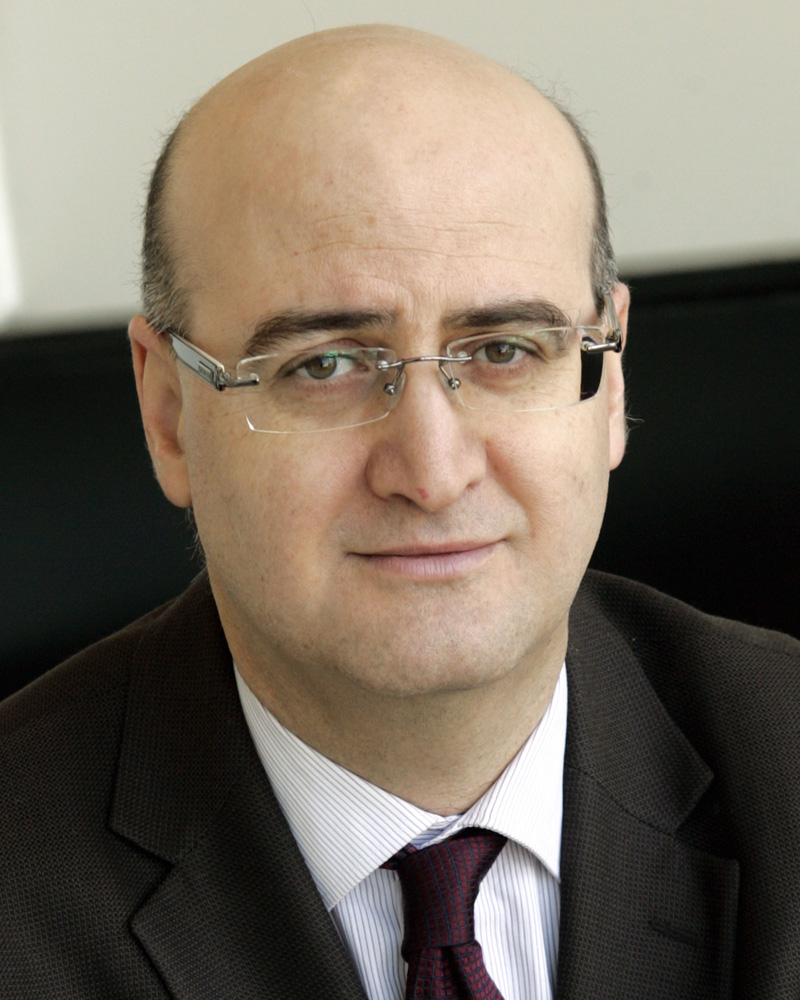
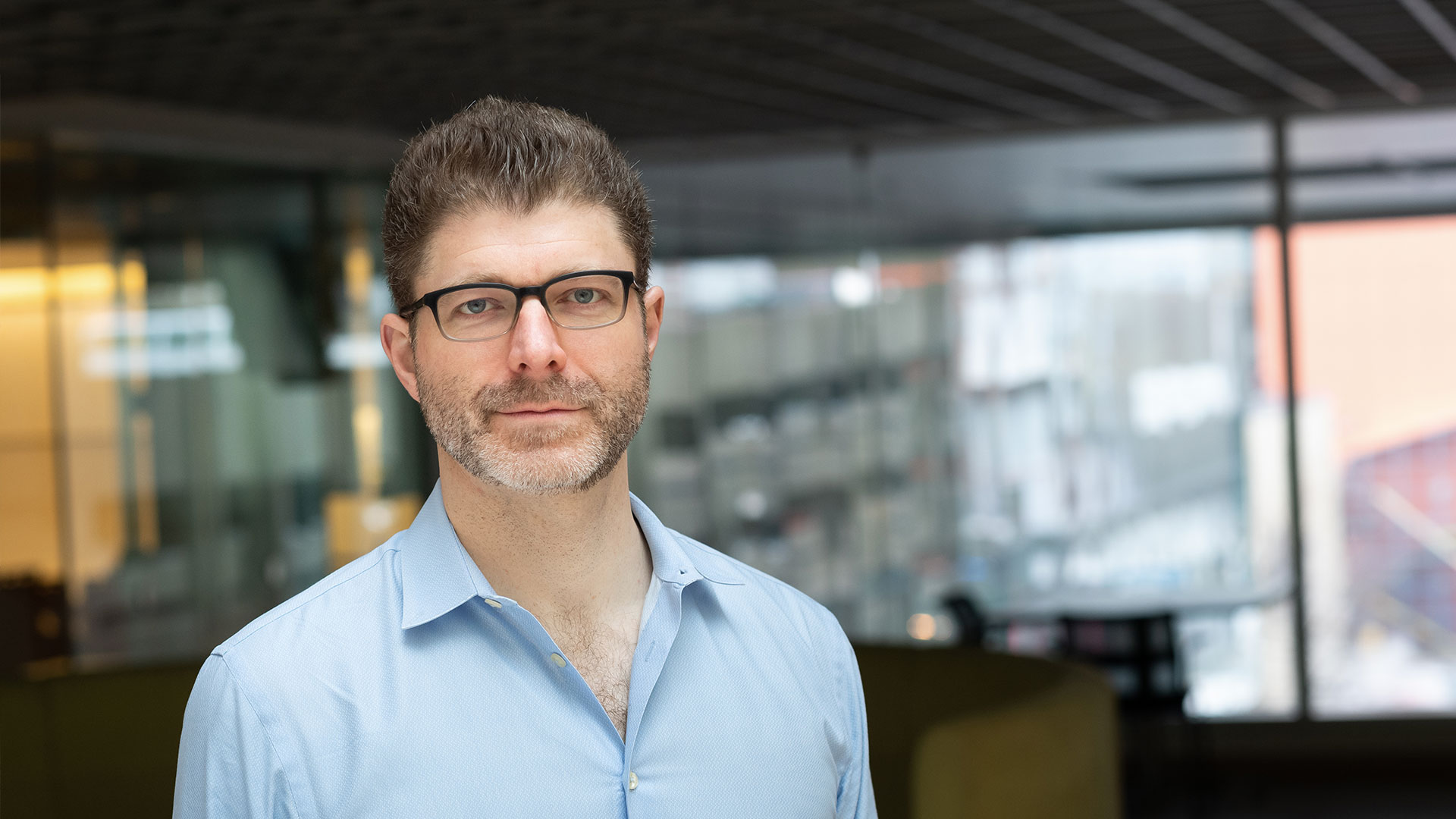
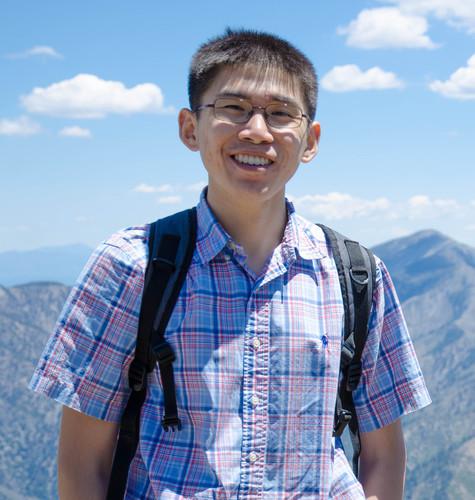
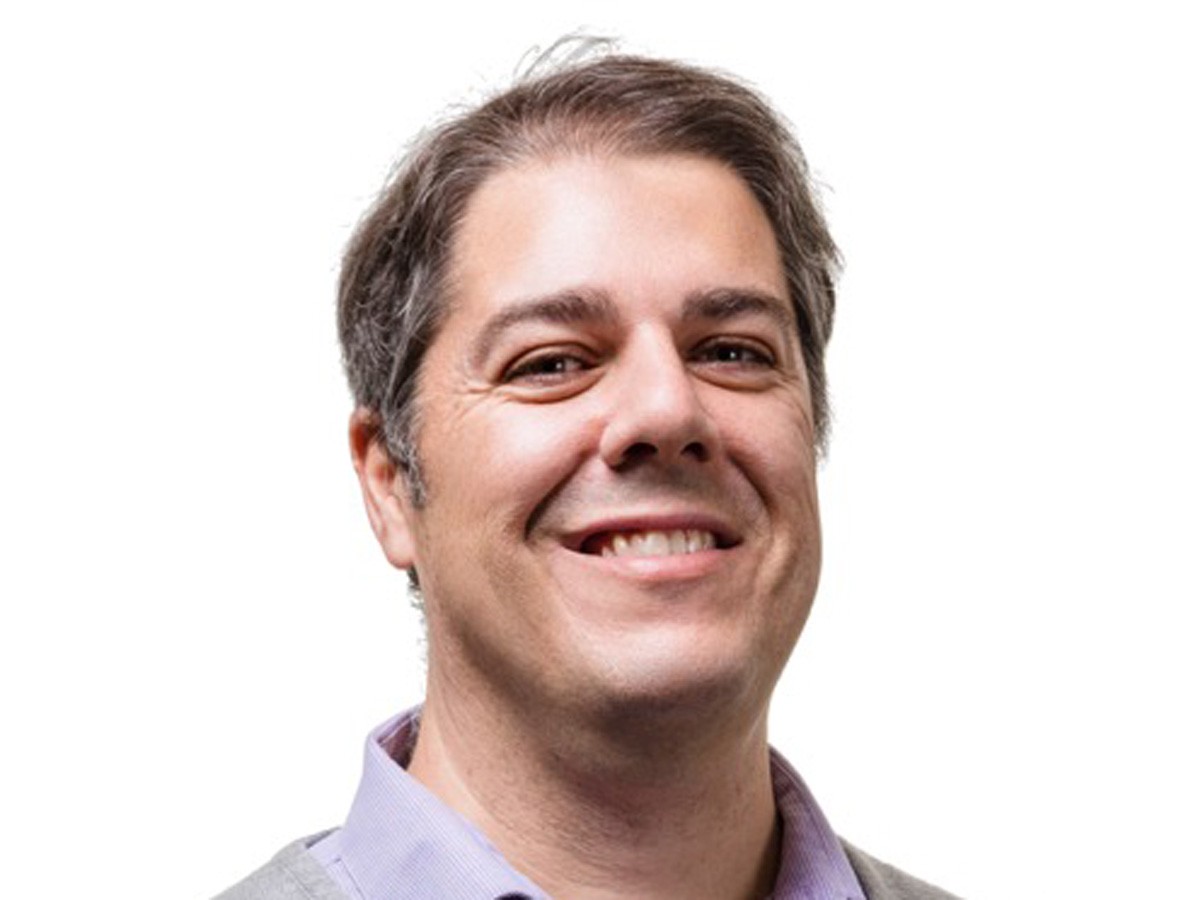
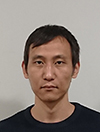
Dr. Siwei Lyu is a SUNY Distinguished Professor and SUNY Empire Innovation Professor in the Department of Computer Science and Engineering at the University at Buffalo. He serves as Co-Director of the Center for Information Integrity (CII) and Director of the UB Media Forensic Lab (UB MDFL). His research focuses on digital media forensics, computer vision, and machine learning, with significant contributions to counter-deepfake technologies. Education includes a PhD in Computer Science from Dartmouth College (2005), MS from Peking University (2000), and BS in Information Science from Peking University (1997). He has held academic positions at the University at Albany and New York University. His work spans media forensics, adversarial machine learning, and AI security. Notable achievements include developing the Celeb-DF dataset, leading NSF-funded projects, and testifying before U.S. and NYS legislative bodies on disinformation threats. Over $11.3M in grants have supported his research on AI-generated media detection, including a $5M NSF Convergence Accelerator grant. Key awards include IEEE and IAPR Fellowships, Google Faculty Award, and SUNY Chancellor's Research Award. He has authored 230+ papers, 4 patents, and serves on editorial boards of top journals and conferences (e.g., CVPR, ICCV).
Professor Moncef Gabbouj is a distinguished academic and researcher currently serving as Professor of Signal Processing at the Department of Computing Sciences, Faculty of Information Technology and Communication Sciences, Tampere University, Finland. Previously, he held the same position at Tampere University of Technology before the merger in 2019. He has also held visiting professorships at prestigious institutions including Hong Kong University of Technology and Science, University of Southern California, and Purdue University. Ph.D. and MSc. in Electrical Engineering from Purdue University, USA (1989 and 1986) B.Sc. in Electrical Engineering from Oklahoma State University, USA (1985) Prof. Gabbouj's research spans multiple domains within signal and image processing, with a strong focus on machine learning applications. His primary research interests include artificial intelligence, machine learning, Big Data analytics, multimedia content-based analysis, indexing and retrieval, nonlinear signal and image processing, voice conversion, and video processing and coding. His work bridges theoretical advancements with practical applications across various industries, particularly in multimedia communications and biomedical applications. His extensive publication record demonstrates a clear evolution from traditional signal processing techniques toward more sophisticated machine learning and deep learning approaches. Recent work shows increasing focus on convolutional neural networks for various applications including ECG classification, video processing, financial time-series analysis, and image recognition tasks, reflecting the broader trend in the field toward deep learning methodologies while maintaining strong foundations in signal processing theory. IEEE Fellow (2011) Member, Finnish Academy of Science and Letters (2014) Knight, First Class, of the Order of the White Rose of Finland (2006) Nokia Foundation Recognition Award (2005) Nokia Foundation Visiting Professor Award (2012) Finnish Cultural Foundation for Art and Science Award (2017) TUT Foundation Grand Award (2015) Prof. Gabbouj has supervised 64 doctoral and 72 Master's theses, demonstrating his significant contribution to academic mentoring. His research has been supported by substantial funding, including research grants totaling 8.5 million Euro (2001-2015). He has served as Academy of Finland Professor during 2011-2015 and has been involved in numerous EU research projects including Horizon, ESPRIT, HCM, IST, COST, Tempus and Erasmus programs. As Editor, Guest Editor or member of the Editorial Board of 6 international scientific journals, he has significantly influenced the academic discourse in his field. He leads the Signal Analysis and Machine Intelligence (SAMI) research group at Tampere University and serves as the Finland Site Director of the NSF IUCRC funded Center for Visual and Decision Informatics. His research unit focuses on applying advanced machine learning techniques to solve complex problems in signal processing, computer vision, and multimedia analytics, with applications ranging from healthcare to multimedia communications and financial analysis.
Roberto Togneri is a Professor and Senior Honorary Research Fellow at the University of Western Australia's School of Electrical, Electronic and Computer Engineering. He has been affiliated with the university since 1988, following his PhD in 1989. His research focuses on signal processing, speech recognition, machine learning, and biometrics, with notable contributions to audio-visual recognition systems and fraud detection. Education: PhD in Electrical Engineering (University of Western Australia, 1989). Research interests include feature extraction for audio signals, neural network models for speech and speaker recognition, and applications of machine learning to fraud prevention. His work has been recognized with awards such as the Education Innovation Award (ICASSP 2019) and grants from the Australian Research Council (e.g., DP110103336 for a 3D Audio-Visual Speech Recognition System). Key projects include developing robust speech recognition systems in adverse environments and advancing graph-based fraudster group detection using spatio-temporal data. He has also contributed to editorial roles in IEEE Signal Processing Magazine and authored over 214 research outputs. Funding highlights include $279,000 for a 3D audio-visual speech recognition system (2011–2013) and $230,000 for robust speech recognition in hostile environments (2010–2012). His research aligns with UN SDGs related to innovation and infrastructure.
Jesper Rindom Jensen is an Associate Professor in the Department of Electronic Systems at Aalborg University, Denmark, under the Technical Faculty of IT and Design. He is the Head of the Audio Analysis Lab, a leading research group in audio signal processing, since 2023. His work bridges theoretical signal processing and practical applications in artificial intelligence and audio systems. Full Name: Jesper Rindom Jensen Institution: Aalborg University School: The Technical Faculty of IT and Design Department: Department of Electronic Systems Research Lab: Audio Analysis Lab Email: jrj@es.aau.dk Office: Fredrik Bajers Vej 7B, B5-206, 9220 Aalborg Øst, Denmark Education: M.Sc. in Electronic Systems, Aalborg University (cum laude, 2009) Ph.D. in Signal Processing, Aalborg University (2012) Research Interests: Jesper Rindom Jensen's research centers on audio signal processing, with a strong emphasis on artificial intelligence, speech enhancement, noise reduction, beamforming, and multichannel systems. His work applies to diverse domains including robot and drone audition, spatial audio, and active noise control. He develops novel filtering techniques, including variable span linear filters and harmonic beamformers, to improve speech quality and intelligibility in noisy and reverberant environments. Publication Trends: His recent publications (2023–2025) show a strong trend toward integrating deep learning with classical signal processing, particularly in direction-of-arrival estimation, underwater acoustics, and robust multichannel systems. There is a clear focus on real-world applications, including sound zone control, active noise control, and limited-data scenarios using knowledge distillation. His work consistently emphasizes robustness, efficiency, and practical deployment. Scientific Awards and Recognition: AAU Talent for emerging research leaders Recipient of a competitive postdoc grant from the Danish Independent Research Council Advising and Grants: Jesper has supervised multiple PhD and master’s students, including Nørholm, Karimian-Azari, Zhang, and Wang. He has led significant research projects such as 'Sound Processing for Robots and Drones' (2018–2020) and participated in others related to joint audio-visual tracking and speech enhancement. His research has been supported by national funding bodies, reflecting its innovation and impact. Labs and Teams: He is a founding and core member of the Audio Analysis Lab at Aalborg University, which focuses on cutting-edge audio signal processing and AI-driven solutions. The lab fosters interdisciplinary collaboration and has produced numerous publications, datasets, and real-world applications. Jensen’s leadership since 2023 underscores his pivotal role in shaping the lab’s research direction.
Paul Boersma is a Professor of Phonetic Sciences at the University of Amsterdam within the Faculty of Humanities. His research explores how phonetic, phonological, and morphological phenomena emerge through computational modeling using artificial neural networks and Optimality Theory, with a focus on multi-level constraint interactions and distributional learning. University of Amsterdam Faculty of Humanities Phonetic Sciences Key research areas include: Computational Modeling : Simulations of phonological category emergence from phonetic data Optimality Theory : Gradual Learning Algorithm applications BiPhon Framework : Parallel bidirectional phonology/phonetics models Statistical Learning : Cross-situational and distributional learning mechanisms Recent publications emphasize: 2025: Inclusive speech recognition systems using Whisper model 2025: F0 ratio analysis for creaky voice diagnostics 2024: Prosodic clitics in child speech and checked tones in Shanghai Chinese 2023: Distributional learning in developmental language disorder contexts 2022: Substance-free phonological features and ghost segment phenomena He has also contributed extensively to the Praat software for phonetic analysis, with continuous updates since 1993.
Josh McDermott is a Professor in the Department of Brain and Cognitive Sciences at MIT and an Associate Investigator at the McGovern Institute. He holds roles as Associate Department Head and Principal Investigator of the Laboratory for Computational Audition. His work bridges psychology, neuroscience, and engineering to study auditory perception, with a focus on sound interpretation, hearing impairment treatments, and machine hearing systems. Education includes a B.A. from Harvard (summa cum laude), an MPhil from University College London, and a PhD from MIT. Postdoctoral training included NYU and the University of Minnesota. Research interests encompass computational principles of sound perception, natural sound statistics, music cognition, and machine hearing. Key areas include sound localization, auditory scene analysis, and the role of generative models in perception. Recent publications highlight advancements in auditory neural networks, cross-cultural music perception, and noise schema processing. Awards include the Troland Research Award, BCS Excellence in Advising, and NSF CAREER Award. Advising includes over 20 graduate students and postdocs, with notable contributions to auditory neuroscience and machine learning. Major grants support projects on auditory models and sensory systems. The lab develops tools like cochleagram generation and headphone screening software. The Laboratory for Computational Audition operates at MIT, focusing on biological and computational approaches to hearing. Collaborations span engineering, psychology, and neuroscience to advance understanding of auditory processing.
Dr. rer. nat. Thomas Hermann is a faculty member at Bielefeld University's Faculty of Engineering, leading the Ambient Intelligence Group and coordinating the Computer Science program. He specializes in sonification, auditory data science, and smart environments. Head of Ambient Intelligence Working Group Computer Science Program Coordinator Member of multiple academic advisory boards His research focuses on interactive sonification for biomedical applications, quantum systems, and smart environments. Key projects include ECG sonification for cardiac diagnosis, real-time auditory feedback in swimming, and sonic interfaces for AR cooperation. Recent publications span 2025 with Python-based sonification tools ( pya AGen ), quantum system sonification, and ST-elevation myocardial infarction monitoring. He contributes to open-access supplementary materials and interdisciplinary workshops. As a researcher , Hermann develops practical sonification frameworks like Panson for facial behavior analysis, CardioScope for portable ECG monitoring, and Base Cube One for smart environments. His work bridges academic research with industry applications.
Chen Sun is an Assistant Professor of Computer Science at Brown University and a part-time Staff Research Scientist at Google DeepMind . His research bridges computer vision, machine learning, and artificial intelligence , focusing on multimodal representation learning, visual commonsense, and controllable video generation . He directs the PALM🌴 research lab , which explores scalable models for robotic planning, video understanding, and human activity recognition . Chen Sun earned a Ph.D. in Computer Science from the University of Southern California (2016) , advised by Professor Ram Nevatia , and a Bachelor of Science in Computer Science from Tsinghua University (2011) . His lab's work has been supported by Adobe, Honda, Meta, NASA, and Samsung , and he is affiliated with the NSF AI Research Institute on Interaction for AI Assistants . His research spans multimodal transformers, embodied agents, and physics-informed video generation . Key trends include Learning from unlabeled videos for human activity recognition Developing controllable generation techniques using motion trajectories and physics-based signals Advancing scalable frameworks for video-language tasks Scientific awards include the Brown University Richard B. Salomon Faculty Research Award and Samsung Global Research Outreach Award . He has served as Workshop Chair (CVPR 2025) , Action Editor (TMLR) , and Area Chair for top conferences like ICLR, CVPR, and NeurIPS . Chen Sun mentors a dynamic team including Ph.D. students Apoorv Khandelwal (Presidential Fellow) Calvin Luo (Research Mobility Fellow) Nate Gillman (Math Department) Shijie Wang Tian Yun (co-advised with Ellie Pavlick) Yuan Zang Zilai Zeng Zitian Tang and alumni now pursuing Ph.D. programs at Princeton, Cornell, UBC, and UNC . His teaching portfolio includes graduate-level courses on Deep Learning (CSCI 2470) , Advanced Topics in Deep Learning (CSCI 2952N) , and a short course on Multimodal Transformers at ICASSP 2022 and AAAI 2023 .
Prof. Helen Blank is a Professor leading the Multisensory Perception Group and the Prediction in Communication Lab at the Institute for Systems Neuroscience, University Medical Center Hamburg-Eppendorf. Her work focuses on understanding how sensory information is integrated and predicted in contexts like speech perception and face recognition. She holds a Marie Curie Fellowship for her research on prior information's role in human communication. Fluent in German, English, and French, she contributes to experimental medicine and systems neuroscience. Her research spans predictive coding, neuroimaging, and clinical applications in Parkinson’s and developmental disorders. Education: Not explicitly stated in text, inferred as advanced degrees in neuroscience or related fields. Her research interests emphasize multisensory integration, predictive processing in speech and vision, and the neural bases of perception. Recent articles explore topics such as pupil responses to auditory surprise, face expectation hierarchies, and audio-visual speech processing. Awards include the Marie Curie Fellowship supporting her predictive communication work. She leads interdisciplinary teams within the Center for Experimental Medicine, advancing knowledge on perceptual mechanisms and their clinical implications.
Frank Russo is a Professor in the Department of Psychology at Toronto Metropolitan University, where he holds the NSERC-Sonova Senior Research Chair in Auditory Cognitive Neuroscience. He leads the Science of Music Auditory Research and Technology (SMART) Lab and holds affiliate and adjunct positions at the University Health Network and the University of Toronto, respectively. Research Interests: Dr. Russo's work lies at the intersection of auditory cognitive neuroscience, music psychology, and rehabilitation. His research explores how humans perceive music and speech, particularly under challenging conditions such as hearing loss or non-native accents. He investigates the cognitive and neural mechanisms of listening effort, emotional speech processing, and the social and therapeutic benefits of music, especially through community choirs and digital interventions. Publication Trends: His recent publications emphasize objective measurement of listening effort using functional near-infrared spectroscopy (fNIRS), music-based interventions for Parkinson’s disease and dementia, vocal and emotional responses to singing, and multisensory integration in beat perception. The work is highly translational, bridging basic cognitive neuroscience with clinical and community applications. Scientific Awards and Honors: NSERC-Sonova Senior Research Chair in Auditory Cognitive Neuroscience Fellow of the Canadian Psychological Association Fellow of Massey College Fellow of the Canadian Society for Brain, Behavior and Cognitive Science Past President of the Canadian Acoustical Association Advising and Grants: Dr. Russo actively mentors students and researchers, as evidenced by his co-authorship with numerous junior colleagues. He has secured major funding through NSERC and industry partnerships, enabling the development of impactful technologies such as hearing aid algorithms, sensory substitution systems, and digital therapeutics. His SingWell project fosters collaboration across academic, clinical, and community sectors. Labs and Teams: He directs the SMART Lab at Toronto Metropolitan University, a hub for interdisciplinary research on music, hearing, and cognition. The lab collaborates extensively with KITE Research Institute, Rehabilitation Sciences at the University of Toronto, and various community organizations focused on aging, hearing loss, and neurodegenerative conditions.
Ana Serrano is an Associate Professor at Universidad de Zaragoza, Spain, where she is affiliated with the Graphics & Imaging Lab in the EINA (Edificio Ada Byron) school. She earned her PhD at the same institution under the supervision of Prof. Diego Gutierrez and Prof. Belen Masia, and completed a postdoctoral fellowship at the Max-Planck-Institute for Informatics under Prof. Karol Myszkowski. Her research focuses on visual computing , particularly in computational imaging , material appearance perception and editing , and virtual reality . She is especially interested in developing perceptually-driven methods that leverage knowledge of the human perceptual system to enhance user experiences and assist content creation in immersive environments. Her recent publications (2023–2025) span top-tier venues such as SIGGRAPH, CVPR, IEEE TVCG, and Eurographics. These works explore topics like saliency prediction in 3D and 360° video, crossmodal perception in VR, gloss modeling, radiance fields, and perceptual evaluation of immersive content. The research demonstrates a strong integration of machine learning, human perception, and computer graphics to solve real-world problems in visual computing. She has received several prestigious awards, including: Eurographics 2023 Young Researcher Award VGTC VR 2024 Significant New Researcher Award Eurographics 2020 PhD Award Adobe Research Fellowship (honorable mention, 2017) NVIDIA Graduate Fellowship (2018) Ana Serrano actively supervises PhD and Master’s students and has taught courses such as Virtual Reality, Computational Imaging, and Deep Learning applications. She serves as an Associate Editor for Computer Graphics Forum , ACM Transactions on Applied Perception , and Computers and Graphics , and has held leadership roles in major conferences including Eurographics (Tutorials co-chair, 2023), ACM SAP (Program co-chair, 2022), and CEIG (Program co-chair, 2022). Her professional service includes extensive program committee and reviewer roles for SIGGRAPH, IEEE VR, ISMAR, and others. She leads a vibrant research group focused on human perception in virtual environments, with current projects on computational models of attention and perception, integrated with physiological signals. Her lab, the Graphics & Imaging Lab, fosters interdisciplinary collaboration and innovation in visual computing.
Dr. Lin Wang is a Lecturer in Applied Data Science and Signal Processing at Queen Mary University of London (QMUL), affiliated with the School of Electronic Engineering and Computer Science. He leads the Machine Listening Lab and is a member of the Centre for Multimodal AI, Centre for Intelligent Sensing (CIS), and Institute of Coding (IoC). His research focuses on audio-visual signal processing, robotic perception, and machine learning, with applications in healthcare, drone-based sensing, and human activity recognition. Dr. Wang holds a PhD from Dalian University of Technology and has held postdoctoral positions at QMUL, the University of Sussex, and the Alexander von Humboldt Foundation in Germany. Education and Roles: PhD in Signal Processing, Dalian University of Technology (2010) Postdoc at Queen Mary University of London (2014–2017) Postdoc at University of Sussex (2017–2018) Alexander von Humboldt Fellow at University of Oldenburg (2011–2013) Fellow of the Higher Education Academy (UK) Research Interests: Audio-visual signal processing for drones and wearable devices Machine listening and robotic perception Machine learning for healthcare and environmental monitoring Human activity recognition using multimodal sensors Awards and Grants: Early Career Champion on AI&Data, UK Acoustics Network Outstanding Article Award, Frontiers in Computer Science (2022) EPSRC grant: Bioacoustic Monitoring Using Drones (£46,821, 2022–2023) Innovate UK grant: Music Source Separation (£48,144, 2024–2025) Teaching and Students: Dr. Wang teaches Applied Statistics , Website Design and Authoring , and Machine Learning for Visual Data Analysis . He supervises PhD students including Ashish Alex (speech separation), Michael Clayton (drone audition), and Dmitrii Mukhutdinov (audio-visual processing). Labs and Teams: He co-leads the Machine Listening Lab and is part of the Centre for Multimodal AI, focusing on interdisciplinary projects in robotics, acoustics, and AI.
Professor Annie Mahtani is a Professor of Electroacoustic Composition and Practice at the University of Birmingham's Department of Music. She holds a BMus (Hons), MA, MPhil, and PhD from the University of Birmingham and Birmingham City University. Her work focuses on electroacoustic music, acousmatic composition, multichannel audio, spatialisation, and field recordings, with significant contributions to site-specific installations and cross-disciplinary collaborations. She co-directs the SOUNDkitchen collective and serves on key boards such as the British ElectroAcoustic Network (BEAN) and the British Section of ISCM. Her research explores the sonic identity of environmental sounds, large-scale multichannel composition, and ambisonic audio techniques. As a performer with BEAST (Birmingham Electroacoustic Sound Theatre), she develops live acousmatic performances and soundwalks. Recent projects include Becoming Tree (an immersive audio retelling of a literary work) and Minimum Monument , performed at Birmingham Hippodrome. She actively collaborates with dance and theatre companies like Rosie Kay Dance Company. Professor Mahtani teaches undergraduate and postgraduate modules in electroacoustic composition and is involved in admissions and curriculum leadership. Her works have been performed globally in festivals like Klang! Électroacoustique and Sound + Environment, showcasing her innovative contributions to contemporary music and sound art.
Berit Greinke is an Assistant Professor of Wearable Computing at the Berlin University of the Arts (UdK) and the Einstein Center Digital Future (ECDF) since 2018, previously serving as a researcher at UdK's Design Research Lab and DFKI (2016-2018). Her academic foundation includes a PhD from Queen Mary University of London (2017), an MA from Central St Martins (2009), and a Diploma from Weissensee Academy of Art Berlin (2007). Her educational trajectory: PhD in Media and Arts Technology, Queen Mary University of London (2017) MA in Design for Textile Futures, Central St Martins College of Art and Design (2009) Diploma in Textile and Surface Design, Berlin Weissensee School of Art (2007) Greinke's research pioneers the convergence of craft, textile design, and digital technology, with core expertise in electronic textiles and smart materials. She investigates metamaterial-based 'metatextiles' for electromagnetic applications and explores transdisciplinary collaboration between designers and scientists, particularly regarding 'negative data' in creative and scientific workflows. Her current UdK work focuses on four interconnected domains: performing materials for expressive textile/fashion design; multi-modal sensing converting visual processes into haptic/audible experiences; micro-to-macro material design spanning nanostructures to final products; and transdisciplinary processes for technology-art-science collaboration. Analysis of her 2020-2025 publications reveals dominant trends in sustainable textile electronics, with emphasis on knitted/folded sensor structures, origami-inspired capacitive shape estimation, and social sustainability in e-textile communities. Her work uniquely bridges fundamental material science (e.g., textile metamaterials) with artistic applications (e.g., interactive orchestra garments) and industrial production challenges. Berit Greinke supervises PhD students including Giorgia Petri. Her junior professorship is co-financed by SAP under a public-private partnership model, supporting projects like WEAR (Wearable technologists engage with artists for responsible innovation) and STELEC (Sustainable Textile Electronics), which emphasize ethical co-design and industry-academia collaboration. She leads research within UdK's Institute for Product and Process Design and collaborates with the Design Research Lab (formerly part of Connected Textiles group), focusing on sustainable industrial production of electronic clothing and transdisciplinary innovation frameworks.
Dr. Sam Ferguson is a Senior Lecturer at the School of Computer Science, University of Technology Sydney (UTS), with a multidisciplinary background in music performance, cognitive science, and psycho-acoustics. His research explores the intersection of sound, music, and human experience through creative coding, machine learning, and interactive systems. Key Research Areas: Sound and Music Computing, Human-Computer Interaction, Creative Coding, Cognitive Science, Installation Art, and Acoustics. Current Projects: ARC Linkage project on creative coding and multiplicitous media; industry collaborations on IoT-based audiovisual systems. Recent Publications: Focus on spatial audio complexity, gestural interaction with networked sound, music emotion recognition frameworks, and robotic performance through genre-based cultural platforms. Leadership Roles: Director of Teaching & Learning Engagement; former Deputy Head of School (Teaching and Learning); active in ACM Creativity and Cognition Steering Committee. Teaching: Courses like Digital Media Studio , Prototyping Physical Interaction , and Data Processing using R within UTS's interdisciplinary Software Development Studio.