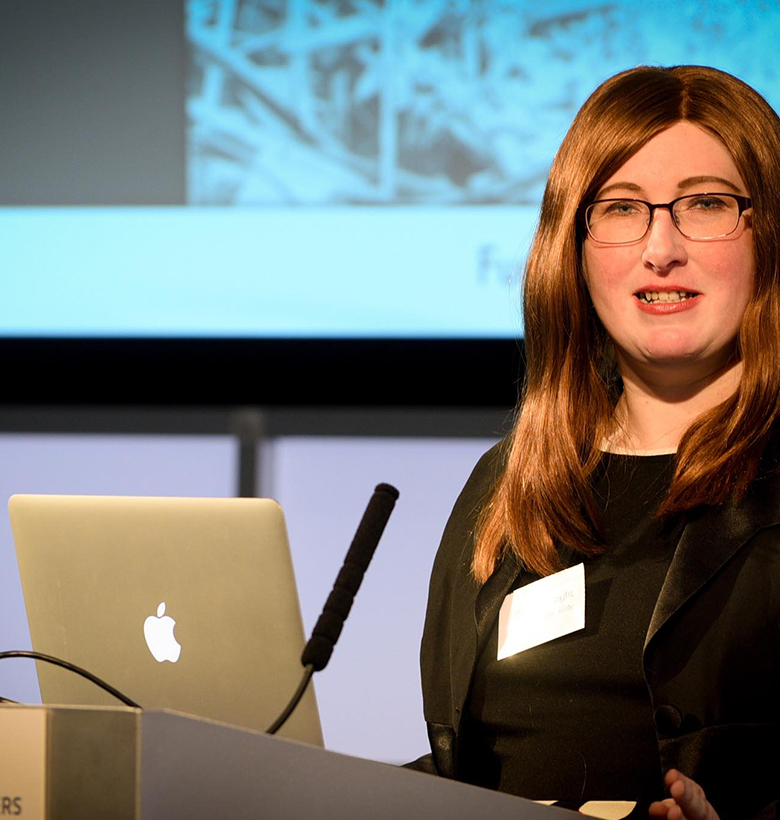
Dr. Bianca Wright is an Associate Professor at Coventry University 's School of Arts & Creative Industries . Specializing in immersive technologies , digital media , and gamification , her work bridges academic research with industry applications. A Senior Fellow of the Higher Education Academy , she has published extensively in journals like Online Information Review and Network Modeling Analysis in Health Informatics . Education: DPhil in Media Studies (Nelson Mandela University, South Africa) MPhil in Science and Technology Journalism (Stellenbosch University) BA (Hons) in English Literature and BA in English and French (University of Port Elizabeth) Research interests span digital storytelling , serious games , and collaborative knowledge building in online environments. Her projects include VR journalism ( Playing the News VR: Coventry Blitz ) and social media analytics for health monitoring ( A real-time biosurveillance mechanism ). Her scientific contributions reveal trends in digital media theory , social network analysis , and media literacy across African contexts. Awards include Higher Education Academy Senior Fellowship . She actively supervises PhD students in immersive technologies and digital media projects.
Stephen Gibson is an Associate Professor in Innovative Digital Media at Northumbria University, Newcastle. His research focuses on transdisciplinary collaborations between art, design, and computing, with specializations in tactile interfaces, motion-tracking systems, and live visual performance. He has led projects such as the ERDF-funded Northern Dance audio-visual collaboration ( Ephemera ) and co-authored Live Visuals: History, Theory, Practice (Routledge, 2022). Education: PhD in Other Technologies (1992), MA in Music (1987), BA in Music (1984). Professional roles include Curator/Director of Interactive Futures (2002–2007) and Creative Director of Limbic Media Corporation (2007–2014). He has exhibited globally at venues like Ars Electronica and the Whitney Museum. Key research areas include real-time visuals, motion-tracking technologies, and physical computing interfaces designed to foster healthier human-technology interaction. His work explores gesture-based control systems, immersive environments, and the theoretical implications of live audio-visual performance. Grants include AHRC funding for a real-time visuals research network (2013–14) and multiple ERDF grants with Northern Dance. Supervised PhD student Emily Kirwan’s project on virtual reality dance performances. Active in academic service: editorial roles, conference organization (e.g., Extended Senses Symposium 2022), and advisory boards for journals like Sonic Scope .
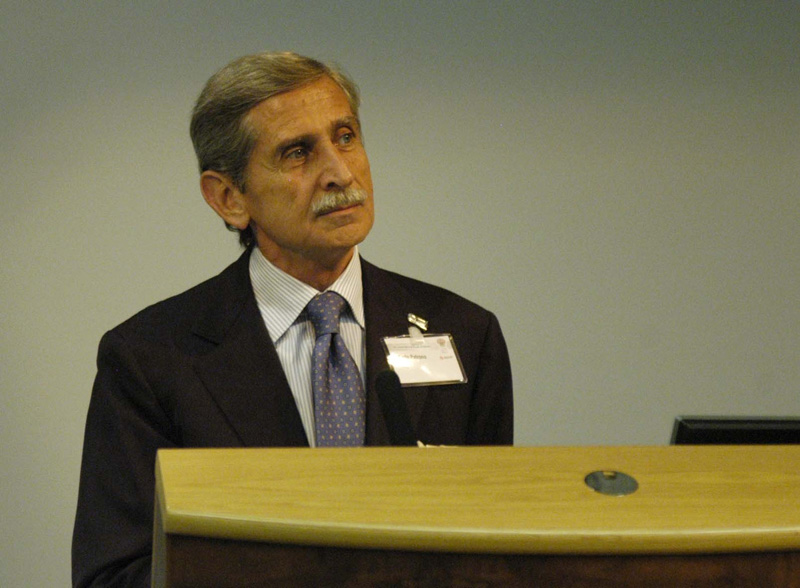
Carlo Patrono is a distinguished Professor and Chair of Pharmacology at the Catholic University School of Medicine in Rome, a position he has held since 2007. Previously, he served as Professor of Pharmacology at University of Rome 'La Sapienza' 2nd School of Medicine (2001-2006) and University of Chieti 'G. d'Annunzio' School of Medicine (1991-2001). His academic journey began as Assistant Professor at Catholic University School of Medicine (1972-1982), progressing to Associate Professor (1983-1985). Dr. Patrono earned his M.D. Cum Laude from Catholic University School of Medicine, Rome in 1968, following a B.S. in Arts from Liceo Classico Nazareno in 1962. He completed postdoctoral training at Bronx Veterans Administration Hospital and Mount Sinai School of Medicine, New York (1969-1971). His research focuses on nonsteroidal antiinflammatory drugs , antiplatelet drugs , clinical pharmacology , and arachidonic acid metabolism , with significant contributions to understanding cardiovascular pharmacology and platelet function. His work has particular relevance to aspirin therapy and antithrombotic agents. Dr. Patrono has received numerous prestigious awards including the Grand Prize from Fondation Lefoulon-Delalande (2013), the John Vane Award from University of London (2007), and the International Aspirin® Senior Award from Bayer AG (1998). His scholarly impact is reflected in his editorial roles with major journals including Circulation and Arteriosclerosis, Thrombosis and Vascular Biology. As an active researcher, he serves as Principal Investigator for multiple funded projects including studies on antiplatelet effects of aspirin in diabetes patients, funded by Bayer HealthCare AG. He also contributes to European Commission initiatives like the EICOSANOX program investigating eicosanoids and nitric oxide in cardiovascular diseases. Within his institution, Dr. Patrono chairs the Drug Therapy Committee and serves on the Ethics Committee at Catholic University School of Medicine, Rome. He is also a member of the Board of Directors for the Center for Aging Sciences at G. d'Annunzio University Foundation.
Professor Jian Chang is a leading academic at Bournemouth University with over 15 years of research experience in computer animation. He works at the National Centre for Computer Animation (NCCA), recognized as the UK's No.1 educational and research base for computer animation. His affiliation spans multiple research projects and collaborations with international institutions, NHS surgeons, and organizations like RNLI. His research interests focus on physics based modelling (deformation & fluid), motion synthesis, virtual reality (surgery simulation), and novel HCI (eye tracking, gesture control and haptic). He actively exploits computer animation techniques for cross-disciplinary applications, resulting in significant international research collaborations. His work bridges computer science, engineering, and medical fields through innovative virtual reality applications. Professor Chang's recent publications (2021-2024) demonstrate a strong focus on physics-based fluid simulation, facial animation techniques, surgical instruction generation, and advanced rendering methods. His work shows a consistent trajectory toward more sophisticated physics modeling, particularly in fluid dynamics using SPH methods, and expanding applications in medical training and virtual reality environments. International Travel Grant (TG091783) from The Royal Society (2009) FP7 MC-IIF project 'AniM' - 623883 (Principal Investigator) FP7 MC-IRSES project 'AniNex' - 612627 (Chief Scientist) FP7 funded 'Dr Inventor' project - 611383 (€2.65M) InterReg VA France (Channel) England investment of €5.3M Professor Chang has secured substantial funding from diverse sources including the Royal Society, EU FP7, InterReg VA France (Channel) England, and HEIF. He has taken project management and supervision roles in prestigious EU-funded research projects. His research has directly contributed to innovative developments like the 'virtual surgery theatre' with NHS surgeons and 'virtual lifeboat launching' with RNLI, demonstrating significant cross-sectoral impact potential. His work bridges academic research with practical applications in healthcare, heritage preservation, and maritime safety.
Darrell Gibson is a Senior Lecturer in the Creative Technology Department at Bournemouth University, specializing in the intersection of computing and the arts. He holds a PhD in Sound Design (2022) from the University of Southampton, an MSc in Music & Sound Technology (2010) from the University of Hertfordshire, and a BEng in Electronic Engineering (1994) from the University of Westminster. His research focuses on Human-Computer Interaction in sound design, particularly graphical interpolators for synthesizer parameter mappings. He explores how visual interfaces influence sound design workflows and aims to improve usability through better interface design. Key areas include real-time audio visualization, parametric control systems, and user-centric interface development. Recent work includes studies on game sound design practices and emerging audio technologies for immersive storytelling. His publications span conferences like ACM and IEEE, with a focus on synthesizer visualization paradigms and usability metrics. Grants: Digital Humanities Small Grant (2013) Teaching Roles: Programme Leader for BSc Music & Audio Technology and BSc Media Technology. Consultancy: VHDL/Verilog workshop training and methodology design. He is a member of the Audio Engineering Society and the Institute of Engineering & Technology (MIET).
Margarita Vinnikov is an Assistant Professor in the Department of Informatics at the New Jersey Institute of Technology (NJIT), part of the College of Computing Sciences. Her research focuses on immersive technologies such as Virtual Reality (VR) and Augmented Reality (AR), with applications in medical assistance, education, and human-computer interaction. She explores topics including gaze-contingent displays, visual fatigue mitigation, and the integration of VR into surgical training and K-12 education. Her work emphasizes user-centered design principles and interdisciplinary collaboration. Notable collaborations include studies on AR surgery assistance using HoloLens and VR-based ontology systems for biomedical education. Her research has been featured in media coverage related to VR crime scene technology, forensic conferences, and AI in education. Key research interests include improving spatial attention through multimodal displays, optimizing visual comfort in head-mounted devices, and leveraging VR for cognitive learning efficiency. Recent projects highlight the application of VR in teaching binary counting to middle school students and analyzing urban devotion through gaze-tracking studies. Vinnikov has advised undergraduate projects on interdisciplinary VR development and contributed to courses like IT 485: Cross Reality (XR) Design. Her work frequently intersects with medical technology, such as AR anatomical visualization for surgical support, and human factors engineering, including studies on quadcopter piloting latency effects.
Michael Rivera is an Assistant Professor of Computer Science at the ATLAS Institute, University of Colorado Boulder. He directs the Utility Research Lab—a highly interdisciplinary group that invents and investigates digital manufacturing technology by combining materials science, computational fabrication, and sustainable design practices. His research has been published in premier human-computer interaction venues including ACM CHI, UIST, DIS, and IMWUT, and featured in national media outlets such as NPR's All Things Considered, Ars Technica, and CBS News. Dr. Rivera earned his Ph.D. and M.S. in Human-Computer Interaction from Carnegie Mellon University's Human-Computer Interaction Institute, where he was advised by Scott Hudson. Prior to CMU, he completed a M.S.E in Computer Graphics and Game Technology and a B.S.E in Digital Media Design at the University of Pennsylvania, and worked as a software engineer at Facebook. Michael Rivera's research focuses on sustainable digital fabrication techniques that democratize access to manufacturing tools while addressing environmental concerns. His work explores bio-based materials, computational recycling approaches, and low-cost fabrication methods. The Utility Research Lab has developed innovative projects including the Desktop Biofiber Spinning Machine for Smart Textiles Design and techniques for 3D Printing with Spent Coffee Grounds. His research bridges materials science, computational design, and human-centered approaches to create more accessible and environmentally responsible fabrication technologies. Rivera's publication record shows a clear trajectory toward increasingly sophisticated computational approaches to sustainable manufacturing. His recent work emphasizes material recycling processes, biofiber development, and computational design pipelines that enable disassembly and reuse of fabricated objects. This research direction reflects a commitment to addressing the environmental impact of digital fabrication while expanding its accessibility to diverse users and contexts. CRA/CCC Computing Innovation Fellowship Google CMD-IT Dissertation Fellowship Carnegie Mellon University Sansom Endowed Presidential Fellowship Adobe Research Fellowship Honorable Mention Xerox Technical Minority Scholarship Dr. Rivera is actively recruiting PhD students to join the Utility Research Lab, demonstrating his commitment to mentoring the next generation of researchers in human-computer interaction and digital fabrication. His research has been supported by prestigious fellowships including the NSF/CRA Computing Innovation Fellowship. He collaborates extensively with researchers across institutions, as evidenced by his co-authorship with scholars from various universities. The Utility Research Lab, directed by Dr. Rivera, serves as a hub for interdisciplinary innovation in digital fabrication. The lab has developed several notable projects that reflect its mission to advance science and engineering while positively impacting people, society, and the environment through sustainable design practices. Current work focuses on computational approaches to material recycling, biofiber design, and novel animation techniques that make fabrication more accessible and environmentally responsible.
Dr. Jon Prince is an Associate Professor of Psychology at Murdoch University's School of Psychology within the College of Health and Education. His research focuses on music cognition, perception, and cognitive psychology interventions. He holds a PhD from the University of Toronto and is affiliated with the Centre for Healthy Ageing and Health Futures Institute. His research explores how auditory information processing influences emotional states, cognitive functions, and therapeutic outcomes. Key areas include music-based interventions for mental health, temporal processing in auditory perception, and cognitive mechanisms underlying melodic interpretation. His work integrates neuroscientific methods with behavioral studies to examine how musical structures affect human cognition and well-being. Recent publications demonstrate a focus on ageing cognition, emotional processing biases, and sensory-music interactions. His methodological approaches include psychophysical testing, neuroimaging, and experimental paradigms examining perceptual and cognitive responses to musical stimuli. Dr. Prince maintains active collaborations through Murdoch University's research institutes and supervises postgraduate research projects in cognitive psychology and music cognition.
Axel Ahrens is an Assistant Professor in the Department of Health Technology at the Technical University of Denmark (DTU), specializing in Hearing Systems. His research focuses on audiovisual perception, virtual reality environments, and speech perception in complex acoustic scenes. He holds a PhD in audiology from DTU, completed between 2014 and 2019, under the supervision of Professor Torsten Dau. Key research areas include: Audio-visual scene analysis in virtual reality Spatial audio and sound localization Effects of noise on decision-making in group interactions Speech perception in multitalker environments Human behavior in reverberant acoustic settings Applications of beamformer technology in hearing aids Recent work emphasizes the interplay between auditory and visual cues in complex environments, with notable studies on how noise impacts triadic conversations and decision-making outcomes. He currently supervises PhD students in projects like 'Speech Intelligibility in Realistic Listening Environments' (2024-2027) and 'Interpersonal Temporal Dynamics of Group Interaction' (2023-2026). Ahrens actively contributes to academic activities, including peer reviewing for journals like Hearing Research and Journal of the Acoustical Society of America , and organizing workshops on communication dynamics. His work aligns with UN Sustainable Development Goals related to health and innovation. Labs/Teams: Hearing Systems Section at DTU Health Tech.
Dr. Ivica Kostanic is an Associate Professor in the Department of Electrical Engineering and Computer Science at Florida Institute of Technology (FIT), serving as Director of the Wireless Center of Excellence (WiCE). He holds affiliations with both the College of Engineering and Science and the WiCE, leading research in wireless communication systems, sensor networks, and mobile analytics. His work emphasizes practical applications in cellular, microwave, and satellite communication. Research Focus: WiCE research spans wireless sensor networks (WSN), quality of service (QoS) optimization, LTE/5G network analysis, and hurricane monitoring via WSN. Key projects include the Mobile Video Quality Prediction (MVQP) initiative, which evaluates video streaming over cellular networks, and sensor network deployments in diverse terrains. Collaborations with industry partners enhance practical relevance. Publications & Awards: Over 50 peer-reviewed publications highlight contributions to WSN performance modeling, video quality metrics, and LTE optimization. Notable recognition includes a Best Paper Award at WCECS 2014 for subjective video quality assessment in LTE networks. Recent work extends to 5G beamforming, UAV communication systems, and spatial mobility analysis. Education & Mentorship: Teaches graduate courses in RF propagation, communication theory, and wireless systems. Advises numerous PhD and MS students, many contributing to WiCE projects. His curriculum development includes the Wireless Systems and Technology specialization, emphasizing theoretical and applied skills. Labs & Facilities: Oversees two labs: the WiCE Research Lab (equipped with CAD tools like Agilent ADS) and the Microwave Lab (featuring anechoic chambers and network analyzers). Software tools like SimWiser and HSN Client aid WSN simulation and deployment analytics.
Yuansong (John) Qiao is a Research Fellow at the Software Research Institute (SRI), Technological University of the Shannon: Midlands Midwest. His work spans cybersecurity, blockchain, and reinforcement learning, contributing to technologies like decentralized edge environments, intrusion detection systems, and immersive 360° video analytics. He supervises PhD students and actively explores applications in robotics, digital twins, and IoT. Recent publications highlight his focus on multi-view deep learning for anomaly detection , blockchain integration with AI , and ROS-based reinforcement learning . These works address challenges in cyber threat identification, decentralized finance, and smart manufacturing. His methodological innovations include knowledge graphs for security analytics and spatial audio analysis for VR environments. Qiao’s research aligns with UN Sustainable Development Goals, particularly in Quality Education (through supervised student projects) and Industry Innovation (via tools like Containerchain and UniROS). His collaborations span cybersecurity frameworks, decentralized robotics, and privacy-preserving systems for smart cities.
Chenglin Miao is an Assistant Professor in the Department of Computer Science at Iowa State University. Previously, he held the same position at the University of Georgia (2020–2022). He earned his Ph.D. in Computer Science and Engineering from the State University of New York at Buffalo, advised by Prof. Lu Su. His research focuses on IoT security, cyber-physical systems, and machine learning, with an emphasis on securing emerging technologies like autonomous driving systems and adversarial machine learning defenses. Education: Ph.D., SUNY Buffalo (2020). Research interests include developing novel techniques for security, privacy, and safety in IoT and machine learning systems. Notable work includes defenses against LiDAR attacks in autonomous vehicles, backdoor attacks via machine unlearning, and adversarial attacks on text and speech systems. Recent articles highlight advancements in LiDAR security, mmWave-based human pose estimation, and adversarial machine learning. His work has been recognized with awards such as the Distinguished Paper Award at ACSAC 2023 and a Best Paper Nomination at MobiHoc 2018. He actively participates in program committees for top conferences like MobiCom, INFOCOM, and AAAI, reflecting his leadership in the field. Teaching includes courses like Advanced Topics in Artificial Intelligence and Computer Networks. He advises students in Ph.D. and visiting scholar programs, emphasizing cutting-edge research in security and AI.
Hao Xiong is a Research Fellow at the Centre for Health Informatics, Australian Institute of Health Innovation, Macquarie University. He specializes in applying machine learning and artificial intelligence to healthcare challenges, including medical imaging, signal processing, and clinical diagnostics. His work bridges computer science and health informatics, focusing on applications like cough classification, medical prognosis modeling, and automated analysis of clinical interactions. Key research areas include neural networks, acoustic signal analysis, and deep learning for healthcare applications. His systematic reviews and models address issues such as wet/dry cough differentiation, esophageal fistula prognosis, and delirium-dementia correlations. He has contributed to advancements in brain extraction algorithms, logo detection frameworks, and multimodal clinical data analysis. Dr. Xiong has been recognized with prestigious awards, including the IBM Rational Prize in Software Engineering (2010) and Best Student Paper Award (2016). His work emphasizes interdisciplinary collaboration, evidenced by projects involving robotics, epidemiology, and wearable technology for health monitoring. Awards: IBM Rational Prize (2010), Best Student Paper (2016), First Place in Algorithms (2012), Mentoring in Visual Computing (2017/2018) Grants/Projects: Visual Computing and Big Data Analytics (2017-2018), multiple collaborations in healthcare AI His research portfolio includes over 40 peer-reviewed publications, showcasing his impact in health informatics, medical imaging, and machine learning applications.
Kai Guo is an academic affiliated with the School of Computer Science and Information Engineering at Hefei University of Technology, China. His research spans interdisciplinary areas including artificial intelligence, robotics, and educational technology. He has collaborated with institutions globally on projects involving AI applications in education, industrial process optimization, and computer vision. Key research interests include AI-driven educational tools, robotics systems, and data-driven industrial analysis. Notable contributions include developing prediction models for blast furnace operations, AI-enhanced language learning platforms, and visual perception techniques in virtual reality. His work often bridges theoretical computer science with practical applications in manufacturing, education, and healthcare. Publications from 2025 focus on advanced machine learning techniques such as graph-based retrieval systems, diffusion models for anomaly detection, and VR visualization methods. Collaborations with Samuel Kai-Wah Chu and David James Woo highlight his engagement in educational technology innovation. Guo has no listed scientific awards but maintains an active research agenda with over 185 publications. His work emphasizes cross-disciplinary approaches to solving complex technical and pedagogical challenges.
Prof. Daniela Dimitrova-Radojicic is a Full Professor at the Institute for Special Education and Rehabilitation, Faculty of Philosophy, Ss. Cyril and Methodius University of Skopje (MK). She holds a Ph.D. in Special Education (2007) and has held academic ranks of Assistant Professor (2007), Associate Professor (2011), and Full Professor (2016). Her expertise spans early intervention, inclusive education, and visual impairment rehabilitation. She teaches courses across three academic cycles, including Braille methodology, family strategies, and assistive technologies. Education: Bachelor’s in Special Education (1994) – University of Belgrade Master’s in Special Education (2001) – University of Belgrade Ph.D. in Special Education (2007) – Ss. Cyril and Methodius University Research Interests: Focuses on visually impaired children’s education, inclusive practices, and family-centered interventions. Her work addresses accessibility in museums, teacher attitudes toward inclusion, and policy frameworks for disability rights. Professional Roles: Head of National Commission for Education of Persons with Disabilities Member of ICEVI (International Council for Education of People with Visual Impairment) Editorial Board Member of Defectology Theory and Practice Grants & Labs: Conducted international studies on Macedonian visual impairment epidemiology and Bologna Process implementation in special education. Collaborated on EU projects like BaGMIVI (Erasmus+) for cultural accessibility.