Dr. Iain McCurdy is an Assistant Professor in the Department of Music at Maynooth University. A composer originally from Belfast, his career includes international residencies at EMS (Stockholm), NK (Berlin), and ZKM (Karlsruhe). His work has been commissioned by the Arts Council of Northern Ireland, Sonic Arts Network, and Walter Fink Preis, and performed globally. His research explores: Electroacoustic composition and computer music Sensor technology integration in musical interfaces Hardware hacking for creative applications Visual reinforcement in instrumental composition He actively promotes open-source software in his teaching and creative practice. Dr. McCurdy's publication record includes co-editing 'The Csound Journal', focusing on computer music synthesis and programming. His scholarly output reflects consistent engagement with contemporary music technology and interdisciplinary approaches to composition. While not currently leading a formal lab, his work involves developing innovative human-computer interfaces for musical expression. He teaches across undergraduate and graduate programs in music technology at Maynooth University.
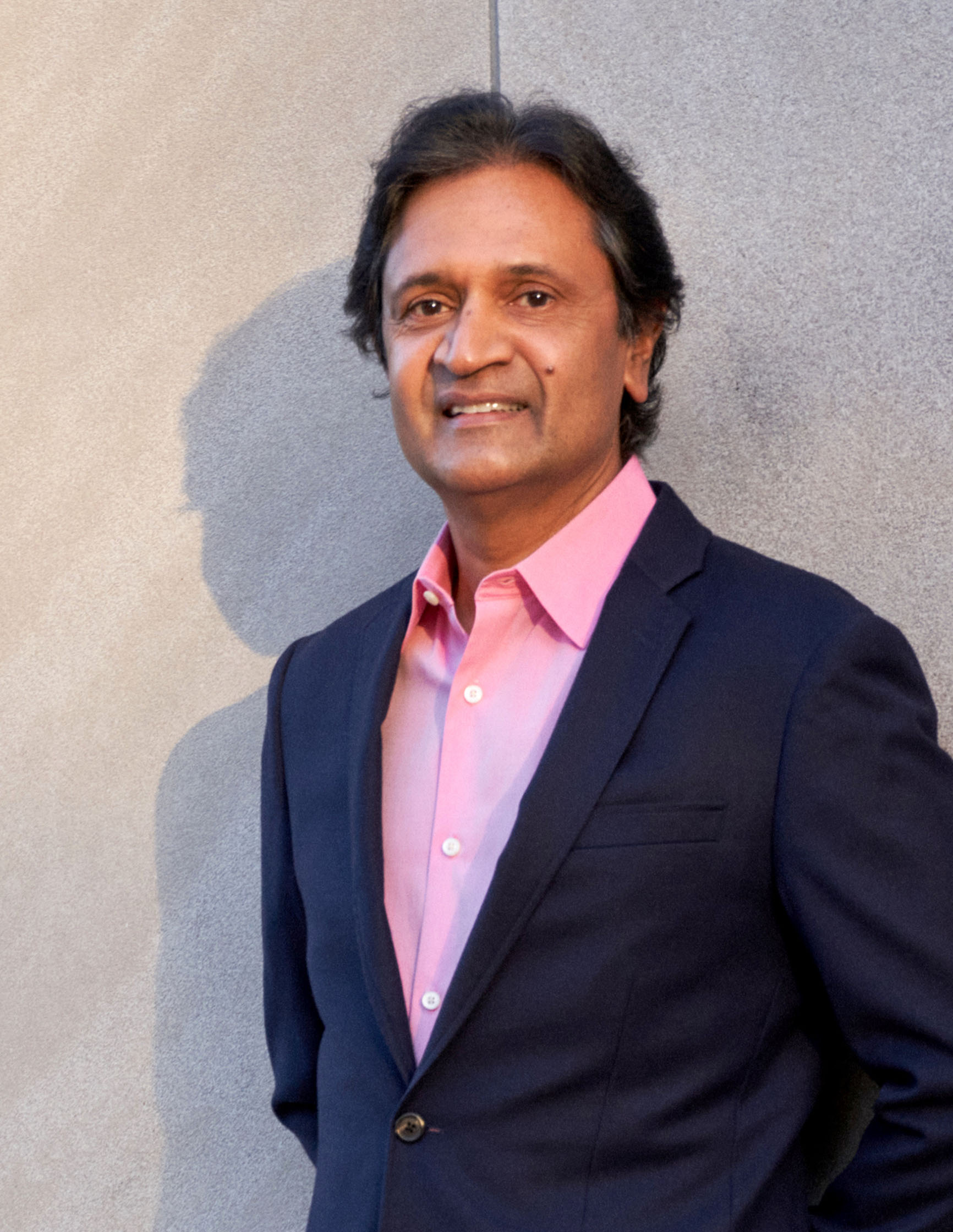
Shree K. Nayar is the T. C. Chang Professor of Computer Science in the School of Engineering at Columbia University, where he heads the Columbia Vision Laboratory (CAVE). He served as Department Chair from 2009-2012 and was Director of Research at Snap Inc. from 2018-2024. Nayar received his PhD from Carnegie Mellon University and has been at Columbia since 1991, progressing from Assistant to Full Professor. His educational background includes a PhD in Electrical and Computer Engineering from Carnegie Mellon University (1990), an MS from North Carolina State University (1986), and a BS from Birla Institute of Technology in India (1984). He began his career as a Research Engineer at Taylor Instruments in New Delhi before pursuing graduate studies. Nayar's research spans three interconnected areas: novel computational cameras that capture new forms of visual information, physics-based models for vision and graphics, and algorithms for scene understanding. His work in computational imaging has transformed digital photography, with applications in smartphones, robotics, virtual reality, and human-computer interfaces. His research has produced over 300 publications with nearly 60,000 citations and 80 patents. Analysis of his recent publications reveals a strong focus on computational imaging challenges including low-light vision, depth sensing, mobile interaction, and accessibility technologies. His work consistently bridges theoretical foundations with practical applications, as evidenced by commercial implementations of his assorted pixels technology in smartphone cameras. Elected to National Academy of Engineering (2008), American Academy of Arts and Sciences (2011), National Academy of Inventors (2014), and Indian National Academy of Engineering (2022) Okawa Prize (2023), IEEE PAMI Distinguished Researcher Award (2019) Two-time David Marr Prize winner (1990, 1995) - the highest honor in computer vision Multiple best paper awards at major conferences including SIGGRAPH Asia (2024) and ECCV (2024) National Young Investigator Award (1991), Packard Fellowship (1992) Nayar has supervised numerous PhD and Master's students throughout his career at Columbia. His lab has received continuous funding from NSF, industry partners, and foundations. The Columbia Vision Laboratory (CAVE) is known for its interdisciplinary approach, combining optics, hardware design, and algorithms to solve fundamental vision problems. Nayar's Bigshot Camera project demonstrates his commitment to education, providing hands-on learning experiences for students worldwide. The Columbia Vision Laboratory (CAVE) develops cutting-edge computational imaging and computer vision systems. Under Nayar's leadership, the lab has pioneered technologies including self-powered cameras, high dynamic range imaging systems, and novel computational cameras. The lab maintains strong industry connections, particularly through Nayar's role at Snap Research, and emphasizes translating research into real-world applications that benefit society.
Hamed Alavi is a tenured Assistant Professor at the University of Amsterdam and founding member of the Digital Interaction Lab. His work bridges computer science, architecture, and urban design to develop inclusive intelligent spaces that reflect human values across architectural and urban dimensions. His educational background includes a PhD in Computer Science from the Swiss Federal Institute of Technology (EPFL) and post-doctoral research at University College London (UCL). Prior to academia, he led an educational technology start-up for eight years with global impact. Alavi's research focuses on Human-Building Interaction (HBI), exploring how intelligent environments can co-create inclusive spaces through biophilic design, physiological sensing, and human-centered methodologies. His work emphasizes socio-technical integration in smart buildings and cities, addressing neurodiversity, environmental comfort, and ethical data practices. His recent publications reveal strong trends in multisensory interaction design, urban computing, and inclusive technology development. Key themes include physiological-environmental sensing integration, AI ethics in urban contexts, and human experience frameworks for smart buildings, with growing emphasis on neurodiverse populations and biophilic elements. Scientific recognition includes: Inclusive City-Making Grant (PI, €3.8M, NWO) Best Paper Award at CHI 2025 As Principal Investigator for the NWO-funded Inclusive City-Making project, Alavi leads large-scale interdisciplinary research translating academic insights into urban solutions. His entrepreneurial background informs practical technology deployment strategies and industry-academia collaboration models. The Digital Interaction Lab, which he co-founded, serves as a research hub for intelligent environment design, bringing together computer scientists, architects, and urban planners to prototype responsive built environments through living lab methodologies and wild deployment studies.
Dr. Adrian Clark is an Associate Professor in the School of Product Design at the University of Canterbury's Faculty of Engineering, where he teaches and conducts research in the Applied Immersive Game Design major (Bachelor of Product Design) and Game Development (Bachelor of Digital Screen Honours). His research focuses on Augmented Reality, Computer Vision, Game Design, Computer Graphics, and Artificial Intelligence . Clark completed his PhD in Computer Science at the HIT Lab NZ, developing the OPIRA (Optical-flow Perspective Invariant Registration Augmentation) framework. He later invented 'Colourable Augmented Reality,' leading to the co-founding of QuiverVision, whose Quiver app has been downloaded over 22 million times. After seven years as Head of Research and Development at QuiverVision, he returned to academia. Clark has designed multiple degree programs including the Bachelor of Digital Screen (Honours) with specializations in Animation, Game Arts, and Game Development, as well as the Digital Product Design major. His publication record shows consistent contributions to human-computer interaction venues with emphasis on practical AR applications, particularly in educational contexts and game design. As a supervisor, Clark has mentored numerous graduate students across diverse AR/VR projects spanning dance education, rugby safety, sexuality education, neurological studies, and cultural applications. His professional activities include extensive journal reviewing for publications like IEEE Transactions on Visualization and Computer Graphics, Virtual Reality, and Frontiers in Public Health. ORCID: 0000-0001-6009-879X Contact: +6433692458 | adrian.clark@canterbury.ac.nz | West 329
Associate Professor Tham Piumsomboon is a prominent researcher at the University of Canterbury's School of Product Design within the Faculty of Engineering. With a PhD in Computer Science from the same institution, their work bridges gaming, human-computer interaction, and immersive VR/MR/AR technologies to enhance user experiences and redefine lifestyle interactions. As founder of the QUADRIC Research Group, they lead initiatives addressing Aotearoa's agricultural, mental health, and sustainability challenges through intuitive intelligent user interfaces. Research focuses on the intersection of human qualia and technological design, emphasizing experiential learning, cognitive modeling, and ethical AI alignment. Key research thrusts include 'Agents' (AI autonomy levels), 'Humans' (IUIs for XR collaboration), 'Augment' (enhancing human perception), and 'Aotearoa' (local solution development). Their publications reveal strong trends in spatial interaction techniques, remote collaboration frameworks, and mental health applications of XR technologies. ACM CHI 2018 Best Paper Award for 'Pinpointing' research New and Emerging Researcher Award 2022 Extensive editorial service for IEEE TVCG, ACM SIGGRAPH, and UIST conferences As principal investigator for three major grants including 'Tōku Hoa: A Personalized Agent for Mental Health' (MBIE, 2022-2025) and 'Navigating Well-being' (Child Well-being Research Institute, 2024), they direct significant research funding toward mental health and agricultural technology. They supervise over 15 graduate students across diverse XR projects from locomotion techniques to therapeutic applications. The QUADRIC Research Group serves as their primary laboratory environment, fostering interdisciplinary collaboration between computer science, design, and clinical domains.
Jachin Edward Pousson is a composer, musician, and guest lecturer in the Department of Musicology at the Jāzeps Vītols Latvian Academy of Music (JVLMA), where he also serves as a researcher in Systematic Musicology while pursuing doctoral studies. His work bridges acoustic composition with cutting-edge technology across performance, instrument design, and interactive systems. His educational background includes a Master's degree in Composition earned in 2015 from both the Royal Danish Academy of Music in Copenhagen and JVLMA. Since relocating to Riga in 2012, he has produced 21 academic compositions spanning solo to orchestral formats and delivered over 50 performances across diverse contexts from rock festivals to academic venues. Research focuses on Brain-Computer Music Interfacing and audio-reactive visual systems , particularly through his electroacoustic free improvisation trio Endless Roar which projects multi-layered synchronized visuals during performances at experimental festivals, cathedrals, and museums. His technological explorations extend to live electronics and novel musical instrument design. As manager of the Endless Roar trio, he develops performance frameworks integrating real-time audio analysis with immersive projection systems, appearing regularly in experimental music circuits and institutional academic settings across Europe.