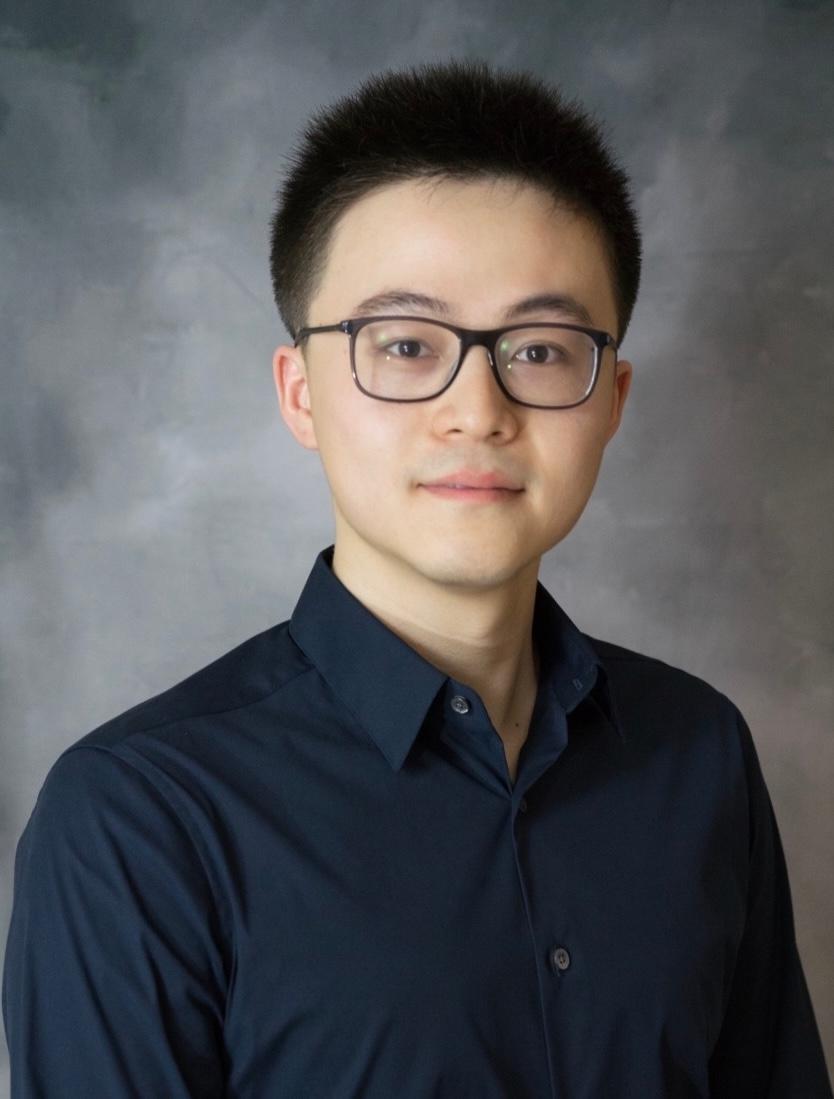
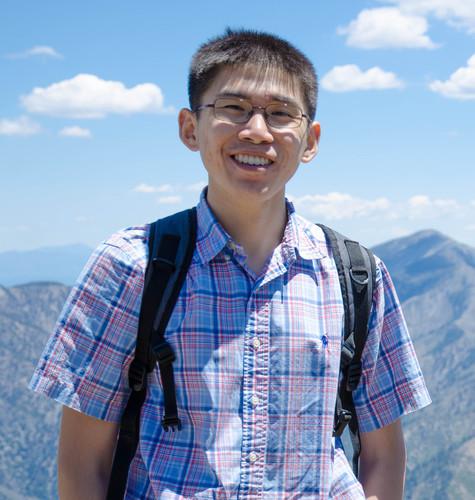
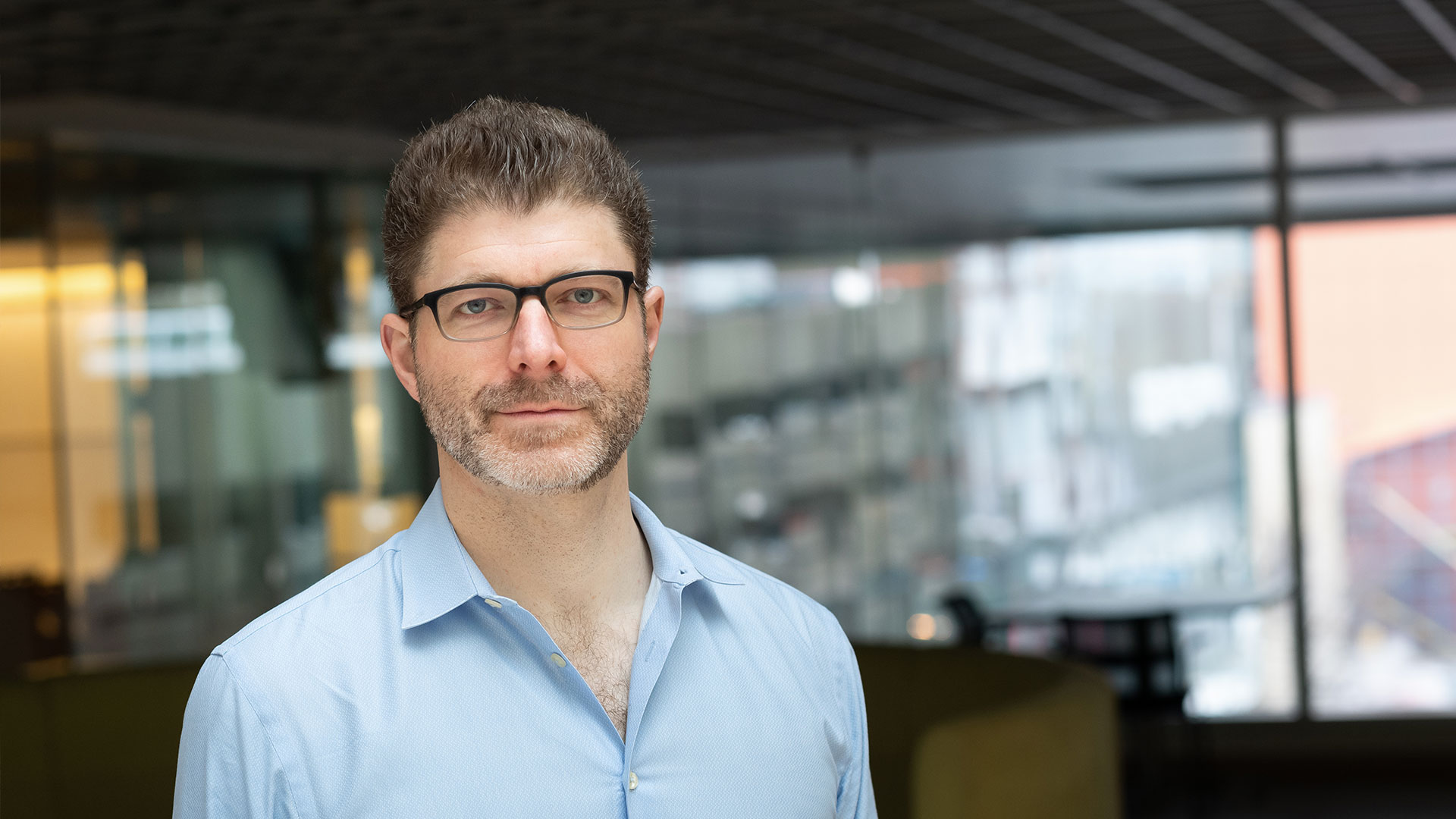
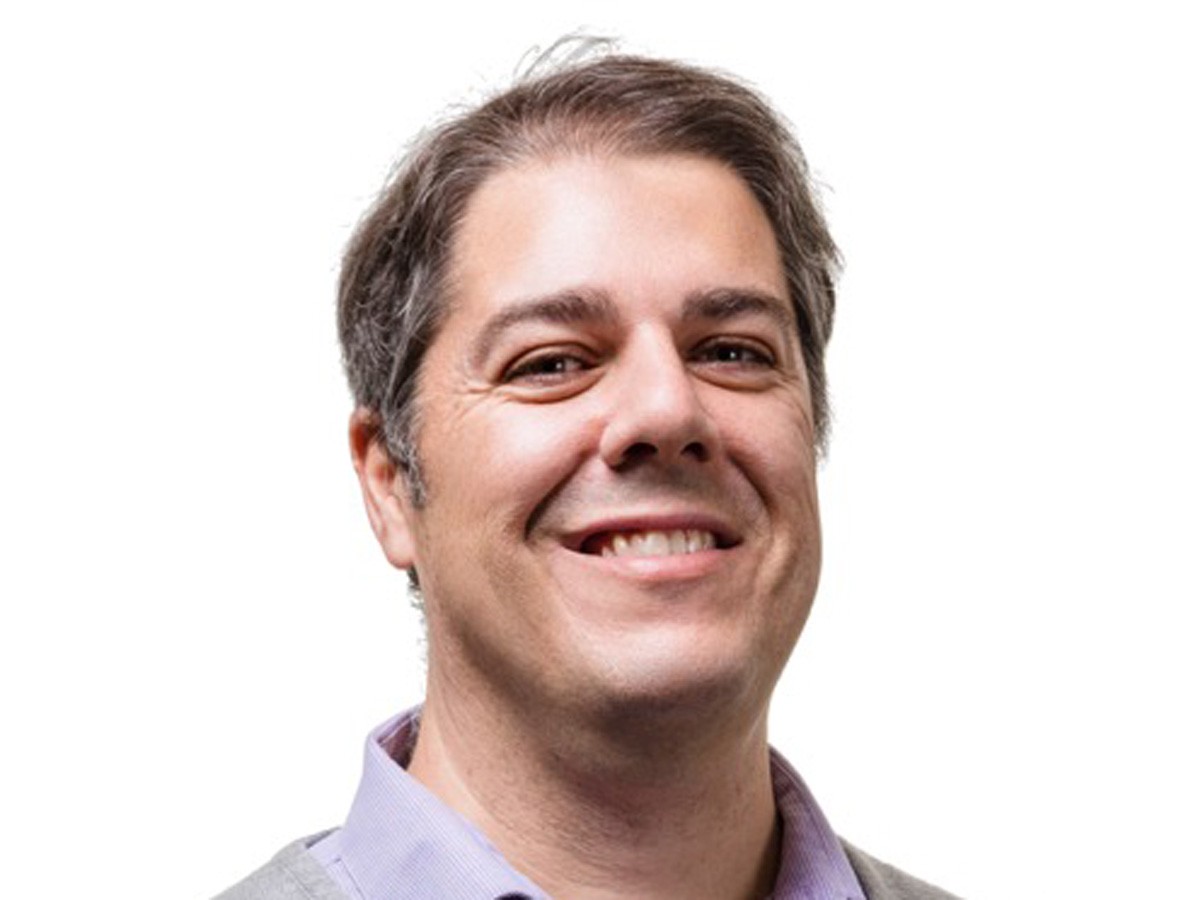
David Lindlbauer is an Assistant Professor at Carnegie Mellon University's Human-Computer Interaction Institute (HCII), where he leads the Augmented Perception Lab and co-directs the CMU Extended Reality Technology Center. His research focuses on advancing Mixed Reality (MR) and Extended Reality (XR) interfaces through computational interaction methods that optimize spatial, temporal, and multimodal feedback.
Ruohan Gao is an Assistant Professor in the Department of Computer Science at the University of Maryland, College Park , with affiliate appointments at the University of Maryland Institute for Advanced Computer Studies (UMIACS) , Maryland Robotics Center (MRC) , and Artificial Intelligence Interdisciplinary Institute at Maryland (AIM) . His research focuses on Computer Vision and Machine Learning , emphasizing Multisensory Machine Intelligence that integrates sight, sound, and touch . He aims to enable machines to perceive, understand, and interact with the world as humans do, with applications in robotic manipulation , audio-visual localization , and differentiable rendering . Article Trends : Span 2018–2025 , centering on audio-visual perception , multisensory datasets , and robotics . Recurring themes include object-centric learning , sound synthesis , and cross-modal consistency . Scientific Awards : Michael H. Granof Award (UT Austin’s Top 1 Doctoral Dissertation, 2021) Best Paper Award Runner-Up (BMVC 2021) Best Paper Award Finalist (CVPR 2019) Highlight Paper (CVPR 2023) He leads the UMD Multisensory Machine Intelligence Lab and collaborates with institutions like Stanford and The University of Texas at Austin . Contact: rhgao@umd.edu .
Dr. Changyou Chen is an Associate Professor in the Department of Computer Science and Engineering at the University at Buffalo, State University of New York. His research focuses on Multi-Modal Learning Foundation Models Deep Generative Models Large-scale Bayesian Sampling with applications in document understanding, music-AI integration, and molecular representation learning. Research Trends revealed through his recent publications include Optimizing Multimodal Large Language Models Developing Novel Retrieval-Augmented Generation Frameworks Creating Benchmark Datasets for Visual Text Understanding Advancing Diffusion Models with Domain-Specific Constraints across domains from music sheets to biomedical documents. Scientific Contributions : UB Young Investigator Award (2020) Architect of LoCAL Framework for Long Document Understanding Co-developer of MusiXQA Benchmark Pioneering Work in Probability Contrastive Learning Academic Leadership includes mentoring 10+ graduate students and serving as Area Chair for major AI conferences (ICML, NeurIPS, AAAI, IJCAI). His Labs develop scalable solutions for multimodal reasoning, with recent work demonstrating practical GPU memory optimization through LoRA adapter sharing.
Dr. Siwei Lyu is a SUNY Distinguished Professor and SUNY Empire Innovation Professor in the Department of Computer Science and Engineering at the University at Buffalo. He serves as Co-Director of the Center for Information Integrity (CII) and Director of the UB Media Forensic Lab (UB MDFL). His research focuses on digital media forensics, computer vision, and machine learning, with significant contributions to counter-deepfake technologies. Education includes a PhD in Computer Science from Dartmouth College (2005), MS from Peking University (2000), and BS in Information Science from Peking University (1997). He has held academic positions at the University at Albany and New York University. His work spans media forensics, adversarial machine learning, and AI security. Notable achievements include developing the Celeb-DF dataset, leading NSF-funded projects, and testifying before U.S. and NYS legislative bodies on disinformation threats. Over $11.3M in grants have supported his research on AI-generated media detection, including a $5M NSF Convergence Accelerator grant. Key awards include IEEE and IAPR Fellowships, Google Faculty Award, and SUNY Chancellor's Research Award. He has authored 230+ papers, 4 patents, and serves on editorial boards of top journals and conferences (e.g., CVPR, ICCV).
Lizi Liao is an Assistant Professor at the School of Computing and Information Systems , Singapore Management University (SMU) , specializing in Artificial Intelligence and Conversational AI . Her research bridges Machine Learning , Natural Language Processing , and Multimodal Systems , focusing on proactive dialogue systems, multimodal conversational search, and task-oriented interactions. Education : PhD in Computer Science (2019) from the National University of Singapore (NUS) , advised by Professor Tat-Seng Chua . Research Interests center on principles of human conversational understanding and machine implementation, particularly in proactive conversational agents , multimodal dialogue systems , and target-driven conversation planning . Key applications include emotional support systems , intelligent shopping assistants , and learning companions . Recent Publications (2024-2025) highlight her work on LLM-based proactive dialogue , multimodal emotion recognition , and dynamic graph modeling , often integrating NLP , Multimedia , and Knowledge Graphs . Collaborative projects with her CoAgent Lab team emphasize human-AI interaction and ethical response generation . Scientific Awards : Google South Asia & Southeast Asia Research Award 2023 Lee Kong Chian Fellow Teaching includes Visual Analytics for Business Intelligence (undergraduate) and Text Analytics and Application (graduate). She also serves as Associate Editor for TOIS and TOMM , and organizes tutorials at ACL , SIGIR , and WSDM .
Chen Sun is an Assistant Professor of Computer Science at Brown University and a part-time Staff Research Scientist at Google DeepMind . His research bridges computer vision, machine learning, and artificial intelligence , focusing on multimodal representation learning, visual commonsense, and controllable video generation . He directs the PALM🌴 research lab , which explores scalable models for robotic planning, video understanding, and human activity recognition . Chen Sun earned a Ph.D. in Computer Science from the University of Southern California (2016) , advised by Professor Ram Nevatia , and a Bachelor of Science in Computer Science from Tsinghua University (2011) . His lab's work has been supported by Adobe, Honda, Meta, NASA, and Samsung , and he is affiliated with the NSF AI Research Institute on Interaction for AI Assistants . His research spans multimodal transformers, embodied agents, and physics-informed video generation . Key trends include Learning from unlabeled videos for human activity recognition Developing controllable generation techniques using motion trajectories and physics-based signals Advancing scalable frameworks for video-language tasks Scientific awards include the Brown University Richard B. Salomon Faculty Research Award and Samsung Global Research Outreach Award . He has served as Workshop Chair (CVPR 2025) , Action Editor (TMLR) , and Area Chair for top conferences like ICLR, CVPR, and NeurIPS . Chen Sun mentors a dynamic team including Ph.D. students Apoorv Khandelwal (Presidential Fellow) Calvin Luo (Research Mobility Fellow) Nate Gillman (Math Department) Shijie Wang Tian Yun (co-advised with Ellie Pavlick) Yuan Zang Zilai Zeng Zitian Tang and alumni now pursuing Ph.D. programs at Princeton, Cornell, UBC, and UNC . His teaching portfolio includes graduate-level courses on Deep Learning (CSCI 2470) , Advanced Topics in Deep Learning (CSCI 2952N) , and a short course on Multimodal Transformers at ICASSP 2022 and AAAI 2023 .
Dongwook Yoon is an Associate Professor at the Department of Computer Science , University of British Columbia , and serves as Director of the SOCIUS Lab . He actively contributes to research in Human-Computer Interaction, Human-AI Interaction, and Virtual/Augmented Reality as a member of the Designing for People (DFP) and CAIDA research clusters. Education : PhD in Computer Science from Cornell University (2017), MS (2009) and BS (2007) in Computer Science from Seoul National University Research Focus : Designing socio-technical systems that bridge the gap between technology and human social processes, with innovations in AR/VR, multimodal interaction, and inclusive design Article Trends show his work spans: Temporal and bichronous learning environments AI self-clones and ethical implications Income inequality in virtual platforms Enhanced multimodal collaboration in VR Eyes-reduced interfaces for situational impairments Speculative participatory design for gig economy challenges Scientific Awards include: Google Academic Research Award (2024) Best Paper Award at CHI 2024 High Impact Award in Educational Technology (2024) CHCCS/SCDHM Graphics Interface Early Career Award (2023) Multiple Honorable Mentions at CHI, DIS, and CSCW Students & Collaborators range from active PhD candidates (Anika Sayara, Yuri Kim) to notable alumni (Thitaree Tanprasert, Ashish Chopra) across his SOCIUS Lab projects. His research receives funding from NSERC , KIST , Adobe , Microsoft , and Google grants.
Jesper Rindom Jensen is an Associate Professor in the Department of Electronic Systems at Aalborg University, Denmark, under the Technical Faculty of IT and Design. He is the Head of the Audio Analysis Lab, a leading research group in audio signal processing, since 2023. His work bridges theoretical signal processing and practical applications in artificial intelligence and audio systems. Full Name: Jesper Rindom Jensen Institution: Aalborg University School: The Technical Faculty of IT and Design Department: Department of Electronic Systems Research Lab: Audio Analysis Lab Email: jrj@es.aau.dk Office: Fredrik Bajers Vej 7B, B5-206, 9220 Aalborg Øst, Denmark Education: M.Sc. in Electronic Systems, Aalborg University (cum laude, 2009) Ph.D. in Signal Processing, Aalborg University (2012) Research Interests: Jesper Rindom Jensen's research centers on audio signal processing, with a strong emphasis on artificial intelligence, speech enhancement, noise reduction, beamforming, and multichannel systems. His work applies to diverse domains including robot and drone audition, spatial audio, and active noise control. He develops novel filtering techniques, including variable span linear filters and harmonic beamformers, to improve speech quality and intelligibility in noisy and reverberant environments. Publication Trends: His recent publications (2023–2025) show a strong trend toward integrating deep learning with classical signal processing, particularly in direction-of-arrival estimation, underwater acoustics, and robust multichannel systems. There is a clear focus on real-world applications, including sound zone control, active noise control, and limited-data scenarios using knowledge distillation. His work consistently emphasizes robustness, efficiency, and practical deployment. Scientific Awards and Recognition: AAU Talent for emerging research leaders Recipient of a competitive postdoc grant from the Danish Independent Research Council Advising and Grants: Jesper has supervised multiple PhD and master’s students, including Nørholm, Karimian-Azari, Zhang, and Wang. He has led significant research projects such as 'Sound Processing for Robots and Drones' (2018–2020) and participated in others related to joint audio-visual tracking and speech enhancement. His research has been supported by national funding bodies, reflecting its innovation and impact. Labs and Teams: He is a founding and core member of the Audio Analysis Lab at Aalborg University, which focuses on cutting-edge audio signal processing and AI-driven solutions. The lab fosters interdisciplinary collaboration and has produced numerous publications, datasets, and real-world applications. Jensen’s leadership since 2023 underscores his pivotal role in shaping the lab’s research direction.
Vasily Klucharev is a Tenured Professor at the Higher School of Economics University (HSE University) since 2013, where he serves as Laboratory Head of the Institute for Cognitive Neuroscience and the International Laboratory of Social Neurobiology. He is also a Professor at the Graduate School of Business in the Department of Strategic and International Management, and Programme Scientific Supervisor of the Cognitive Sciences and Technologies: From Neuron to Cognition program. His educational background includes: 2003: Candidate of Sciences (PhD) in Neurobiology from St Petersburg State University with thesis titled 'Neurobiological mechanisms of emotions' 1994: Degree in Physiology from St Petersburg State University, Faculty of Biology Klucharev's research focuses on neuroeconomics, social and emotional neuroscience, and cognitive neuroscience, with particular emphasis on understanding decision-making processes, social influence, and conformity. His work integrates psychological theories with advanced neuroimaging techniques including fMRI, EEG, depth and scalp ERP, TMS, and MEG. His research has significant implications for understanding consumer behavior, persuasion, and the neural mechanisms underlying social conformity. His recent publications demonstrate a clear trend toward investigating the neural correlates of price perception, social influence on decision-making, and the processing of disinformation and deepfakes. His work bridges multiple disciplines, combining methods from neuroscience, psychology, and economics to address fundamental questions about human behavior in social contexts. Scientific awards: Best Teacher 2023-2024 Best Teacher 2018-2020 Best Teacher 2015 Klucharev has supervised numerous doctoral students including I. Ntoumanis, M. Martinez-Saito, O. Zinchenko, and Z. Yaple. His research has been supported by significant grants from Saint Petersburg State University, the Swiss National Science Foundation, and the European Commission. He has also served as an invited reviewer for prestigious journals including Psychological Science, Neuron, and Social Cognitive & Affective Neuroscience. As Director of the Institute of Cognitive Neuroscience at HSE University, Klucharev leads a multidisciplinary team exploring the neural mechanisms of social behavior, decision-making, and cognitive processes. His laboratory has gained international recognition, with research featured in major media outlets including BBC TV, Financial Times, The Telegraph, and CNN.
Josh McDermott is a Professor in the Department of Brain and Cognitive Sciences at MIT and an Associate Investigator at the McGovern Institute. He holds roles as Associate Department Head and Principal Investigator of the Laboratory for Computational Audition. His work bridges psychology, neuroscience, and engineering to study auditory perception, with a focus on sound interpretation, hearing impairment treatments, and machine hearing systems. Education includes a B.A. from Harvard (summa cum laude), an MPhil from University College London, and a PhD from MIT. Postdoctoral training included NYU and the University of Minnesota. Research interests encompass computational principles of sound perception, natural sound statistics, music cognition, and machine hearing. Key areas include sound localization, auditory scene analysis, and the role of generative models in perception. Recent publications highlight advancements in auditory neural networks, cross-cultural music perception, and noise schema processing. Awards include the Troland Research Award, BCS Excellence in Advising, and NSF CAREER Award. Advising includes over 20 graduate students and postdocs, with notable contributions to auditory neuroscience and machine learning. Major grants support projects on auditory models and sensory systems. The lab develops tools like cochleagram generation and headphone screening software. The Laboratory for Computational Audition operates at MIT, focusing on biological and computational approaches to hearing. Collaborations span engineering, psychology, and neuroscience to advance understanding of auditory processing.
Nathalie Pignard-Cheynel is a Full Professor of Journalism and Digital Communication at the University of Neuchâtel since 2020, where she leads cutting-edge research on digital transformations in journalism. Previously, she held academic positions at the University of Neuchâtel (Assistant Professor, 2016-2020), University of Lorraine (2013-2016), and Grenoble 3 University (2005-2013), where she earned her doctorate in Information and Communication Sciences (2004). Doctorate in Information and Communication Sciences, University of Grenoble 3 (2004) Full Professor of Journalism and Digital Communication, University of Neuchâtel (2020-present) Assistant Professor in Digital Journalism, University of Neuchâtel (2016-2020) Lecturer in Information and Communication Sciences, Grenoble 3 University (2005-2013) Her research focuses on: Mutations in journalistic practices during digital transformations Social media usage by journalists, media, and audiences Participatory journalism and media-audience relationships Journalism and data practices Disinformation content dissemination and reception Platformization of information and algorithmic roles Digital formats analysis in journalism She has led multiple funded research projects including: PANDA (2023-2026, CHF 499,986) on pandemic data communication #sad2 (2021-2022, CHF 138,460) on disinformation architectures LINC (2018-2021, CHF 184,586) on local journalism innovation International collaborations on pandemic communication and digital media Her teaching includes: Digital technology courses for economics students NewsLab projects for journalism master's students Advanced seminars on digital media and communication Innovative journalistic format production She serves in leadership roles for: President of the Scientific Council, Initiative for Media Innovation (2018-2022) Board Member, Hirondelle Foundation (2021-present) Editorial Board Member, Cahiers du journalisme (2020-present) Qualis Commission, University of Neuchâtel (2019-present)
Dr. Bo Liu is an Associate Professor in the School of Computer Science at the University of Technology Sydney (UTS), where he serves as a core member and director of the AI Security and Privacy (AISP) Research Lab at the Australian Artificial Intelligence Institute (AAII). With expertise spanning cybersecurity, privacy protection, AI and machine learning, and wireless communications, Dr. Liu has established himself as a leading researcher in the field of AI security and privacy. Dr. Liu earned his PhD from the Department of Electronic Engineering at Shanghai Jiao Tong University in 2010. His academic journey at UTS has progressed from Senior Lecturer (November 2019-December 2022) to his current position as Associate Professor (January 2023-present). Dr. Liu's research focuses on the critical intersection of artificial intelligence and security, particularly addressing emerging threats in the age of advanced AI systems. His work spans multiple dimensions of security and privacy, including deepfake detection, privacy-preserving data synthesis, AI model security, and fair machine learning. He has pioneered approaches to detect AI-generated content, protect visual privacy through de-identification techniques, and address the complex relationship between algorithmic fairness and privacy preservation. His publication record demonstrates significant contributions across multiple cutting-edge research areas, with particular emphasis on detecting and mitigating threats from generative AI systems. His recent work reveals a strong focus on deepfake detection across multiple modalities (images, video, and audio), privacy-preserving techniques for sensitive data, and the security implications of emerging AI architectures like Retrieval-Augmented Generation systems. Dr. Liu has secured substantial research funding, including as Lead Chief Investigator on multiple ARC Discovery and Linkage Projects, totaling over $3.5 million AUD. His industry collaborations include partnerships with the NSW Department of Planning and the Reserve Bank of Australia, demonstrating the practical applicability of his research. As an academic leader, Dr. Liu serves as Associate Editor for IEEE Transactions on Broadcasting and actively contributes to the academic community through conference organization, peer review for top-tier venues, and assessment for ARC grant schemes. He also teaches courses including Penetration Testing, Ethical Hacking and Offensive Security, and supervises Masters and PhD students in cybersecurity and privacy research.
Gül Varol is a permanent researcher at École des Ponts ParisTech's IMAGINE group, an ELLIS Scholar, and Guest Scientist at Max Planck Institute. She holds a PhD from Inria Paris/ENS with awards from ELLIS and AFRIF. Her academic service includes Program Chair at ECCV'24 and Area Chair roles at major conferences. Current affiliations: IMAGINE group (École des Ponts ParisTech), Max Planck Institute Previous roles: Postdoctoral researcher at University of Oxford Her research focuses on vision-language applications, particularly in 3D human motion synthesis, sign language technology, and audio description generation. Key techniques include text-conditioned diffusion models, temporal context modeling, and synthetic data utilization. Scientific contributions recognized through: Google Research Scholar award (2023) ELLIS PhD Award (2020) AFRIF PhD thesis award (2020) Best application paper at ACCV'20 Recent publications demonstrate expertise in: Text-driven 3D motion editing (MotionFix, 2024) Cross-dataset generalization studies (TMR++, 2024) Temporal action composition frameworks (TEACH, 2022) Sign language dense annotation methods (BOBSL, 2022) Zero-shot audio description generation (AutoAD-Zero, 2024) She actively contributes to dataset development including BOBSL (British Sign Language corpus) and SURREACT synthetic action dataset, while pioneering new evaluation metrics for audio description quality and motion retrieval benchmarks.
Prof. Helen Blank is a Professor leading the Multisensory Perception Group and the Prediction in Communication Lab at the Institute for Systems Neuroscience, University Medical Center Hamburg-Eppendorf. Her work focuses on understanding how sensory information is integrated and predicted in contexts like speech perception and face recognition. She holds a Marie Curie Fellowship for her research on prior information's role in human communication. Fluent in German, English, and French, she contributes to experimental medicine and systems neuroscience. Her research spans predictive coding, neuroimaging, and clinical applications in Parkinson’s and developmental disorders. Education: Not explicitly stated in text, inferred as advanced degrees in neuroscience or related fields. Her research interests emphasize multisensory integration, predictive processing in speech and vision, and the neural bases of perception. Recent articles explore topics such as pupil responses to auditory surprise, face expectation hierarchies, and audio-visual speech processing. Awards include the Marie Curie Fellowship supporting her predictive communication work. She leads interdisciplinary teams within the Center for Experimental Medicine, advancing knowledge on perceptual mechanisms and their clinical implications.
Frank Russo is a Professor in the Department of Psychology at Toronto Metropolitan University, where he holds the NSERC-Sonova Senior Research Chair in Auditory Cognitive Neuroscience. He leads the Science of Music Auditory Research and Technology (SMART) Lab and holds affiliate and adjunct positions at the University Health Network and the University of Toronto, respectively. Research Interests: Dr. Russo's work lies at the intersection of auditory cognitive neuroscience, music psychology, and rehabilitation. His research explores how humans perceive music and speech, particularly under challenging conditions such as hearing loss or non-native accents. He investigates the cognitive and neural mechanisms of listening effort, emotional speech processing, and the social and therapeutic benefits of music, especially through community choirs and digital interventions. Publication Trends: His recent publications emphasize objective measurement of listening effort using functional near-infrared spectroscopy (fNIRS), music-based interventions for Parkinson’s disease and dementia, vocal and emotional responses to singing, and multisensory integration in beat perception. The work is highly translational, bridging basic cognitive neuroscience with clinical and community applications. Scientific Awards and Honors: NSERC-Sonova Senior Research Chair in Auditory Cognitive Neuroscience Fellow of the Canadian Psychological Association Fellow of Massey College Fellow of the Canadian Society for Brain, Behavior and Cognitive Science Past President of the Canadian Acoustical Association Advising and Grants: Dr. Russo actively mentors students and researchers, as evidenced by his co-authorship with numerous junior colleagues. He has secured major funding through NSERC and industry partnerships, enabling the development of impactful technologies such as hearing aid algorithms, sensory substitution systems, and digital therapeutics. His SingWell project fosters collaboration across academic, clinical, and community sectors. Labs and Teams: He directs the SMART Lab at Toronto Metropolitan University, a hub for interdisciplinary research on music, hearing, and cognition. The lab collaborates extensively with KITE Research Institute, Rehabilitation Sciences at the University of Toronto, and various community organizations focused on aging, hearing loss, and neurodegenerative conditions.