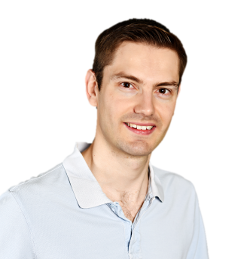
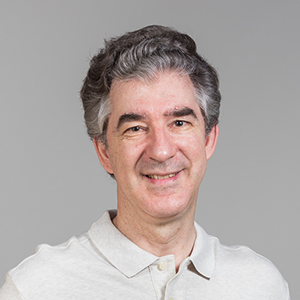
Georgios Marentakis is an Associate Professor at the Faculty of Computer Sciences, Østfold University College. His research focuses on human computer interaction (HCI), sound and music computing, and auditory perception. He holds an MSc in Electrical and Computer Engineering, an MSc in Acoustics and Signal Processing, and a PhD in Human Computer Interaction. His work spans sonic interaction design, auditory augmented reality, and accessibility technologies. Education: MSc in Electrical and Computer Engineering MSc in Acoustics and Signal Processing PhD in Human Computer Interaction Research Communities: Human Computer Interaction Acoustics and Psychoacoustics Audio Signal Processing Teaching: Sound Design and Production Interaction Design Software Development His research trends emphasize sound’s role in HCI, including assistive technologies for autism, multimodal interfaces, and spatial audio applications. Recent work explores accessibility through sound, such as eye fatigue reduction in mobile UIs and conversational interface impairments during locomotion. Marentakis contributes to initiatives like the Digital Society and collaborates with research groups like DeveLeP (Development Learning and Psychological Processes).
Ming C. Lin is the Barry Mersky & Capital One E-Nnovate Endowed Professor and Distinguished University Professor in the Department of Computer Science at the University of Maryland, College Park . Previously, he held the Elizabeth Stevinson Iribe Chair at UNC Chapel Hill. His research spans Machine Learning , Physically-based Modeling and Simulation , Autonomous Systems , and Human-Computer Interaction . He leads the UMD GAMMA Research Group , focusing on differentiable physics, robotics, and traffic simulation. Key achievements include pioneering work in collision detection (RAPID algorithm), physically-based sound synthesis, and autonomous driving systems. Lin has authored over 500 papers and holds numerous awards, including ACM and IEEE Fellowships. His teaching includes courses on Differentiable Programming and Autonomous Systems . Research Highlights : Developed Genesis , a universal physics engine for robotics Advanced differentiable mesh representations (DMesh++/DMesh) Contributed to traffic-aware autonomous driving via differentiable traffic simulation Leadership in collision detection (RAPID algorithm) Awards : ACM Fellow, IEEE Fellow, National Academy of Inventors, Virtual Reality Academy, and over 20 best paper awards. Labs/Teams : Co-director of UMD and UNC GAMMA Groups, active in robotics and graphics research communities.
Tinne Tuytelaars is a Full Professor at the Faculty of Engineering Sciences at KU Leuven, affiliated with the Department of Electrical Engineering (ESAT). She leads the Image and Speech Processing (PSI) group and is a member of Leuven.AI, the university's Artificial Intelligence institute. Her research focuses on machine learning, computer vision, and continual learning, with emphasis on multimodal systems and efficient learning strategies. She actively contributes to ethics committees and academic governance bodies such as the Faculty Council of Engineering Sciences and the POC Electrical Engineering committee. Her recent projects include advancing self-supervised learning, developing efficient vision-language models, and exploring lifelong learning systems for embedded devices. She has supervised numerous PhD and master students and collaborates on grants like the Vlaams Artificiële Intelligentie Onderzoeksprogramma (VAIOP) and LifeLinES, which aim to create adaptive electronic systems. Her work bridges theoretical advancements with practical applications in autonomous systems, medical imaging, and energy-efficient AI. Tuytelaars' publications span topics like neural network dynamics, cross-modal alignment, and real-world validation of autonomous driving controllers. She emphasizes the need for AI systems that adapt continuously without forgetting, advocating for research beyond incremental classification paradigms. Her contributions include innovations in vision transformers, personalized keyword spotting, and diagnostic frameworks for multimodal systems.
Leonid Sigal is an Associate Professor in the Department of Computer Science at the University of British Columbia (UBC), holding the NSERC Canada Research Chair (CRC II) in Computer Vision and Machine Learning and a CIFAR AI Chair at the Vector Institute. He also serves as an Academic Advisor to Borealis AI. His research focuses on visual understanding, including object recognition, scene analysis, motion capture, and the intersection of computer vision with machine learning and graphics. Prior roles include Senior Research Scientist at Disney Research and Adjunct Faculty at Carnegie Mellon University. Education: Ph.D. (Computer Science, Brown University, 2008), M.Sc. (Computer Science, Brown University, 2003), B.Sc. (Computer Science & Mathematics, Boston University, 1999). Research interests span computer vision challenges such as human motion analysis, activity recognition, and generative models, alongside cross-disciplinary work in robotics and psychology. Notable achievements include Best Paper Awards at WACV 2015 and AMD 2012/2006, and leadership in organizing workshops like VisStory and tutorials on 'Looking at People.' Awards include the Killam Accelerator Fellowship, NSERC DAS award, and recognition as Area Chair for CVPR 2022, ICML 2022, and IJCAI 2022. His lab advises numerous graduate students and postdocs, with active collaborations spanning industry (e.g., Disney, Borealis) and academia (e.g., CMU, Vector Institute).
Farid Boussaid is a Professor in the School of Electrical, Electronic and Computer Engineering at The University of Western Australia (UWA), affiliated with the UWA Oceans Institute. He holds an MM PhD from INSA Toulouse, France, and has held roles including Head of School (2014–2017). His research focuses on smart sensors, neuromorphic engineering, and machine learning applications in computer vision and signal processing. Education: M.S. and Ph.D. from National Institute of Applied Science (INSA), Toulouse, France (1996, 1999) Postdoctoral Fellow at Edith Cowan University (2000–2001) Australian Research Council APD Fellowship recipient (2001) Research Interests: Design of low-cost smart sensing systems, neuromorphic approaches for olfactory/visual processing, and interdisciplinary work in microelectronics, gas sensors, and camera-on-chip technologies. His research addresses bio-inspired signal processing and efficient integrated circuit design. Recent Research Trends: His publications emphasize deep learning applications in 3D vision, generative models, and medical imaging, with a focus on weakly supervised learning and multimodal data integration. Awards: 2016 Citation for Outstanding Contribution to Student Learning UWA Award for Excellence in Teaching (2014) Award for Growth in Innovation and Entrepreneurship (2021) Grants & Projects: Leads initiatives like the National Australian Cardiac CT Platform and robotics with 3D vision. Involves collaborations with Tokyo University of Science and NSF-funded projects. Labs/Teams: Active in UWA’s Oceans Institute and interdisciplinary teams advancing AI-driven sensing technologies.
Souyoung Jin is an Assistant Professor in the Department of Computer Science at Dartmouth College. Her research focuses on Computer Vision, Machine Learning, and Cognitive Science with expertise in video understanding. She earned her B.S. from Dongguk University, M.S. from KAIST, Ph.D. from UMass Amherst, and completed a postdoc at MIT's CSAIL under Aude Oliva. She teaches courses like Machine Learning and Deep Learning, and leads research on AI systems mimicking human perception. Her lab explores multimodal tasks and synthetic data applications. She is an Area Chair for WACV 2025 and actively recruits motivated students for her lab. Education: B.S., Dongguk University M.S., Korea Advanced Institute of Science and Technology Ph.D., University of Massachusetts Amherst Postdoc, MIT Research Interests: Dr. Jin develops AI systems to understand human experiences through video analysis. Her work spans video understanding, synthetic data applications, and cognitive-inspired models. She emphasizes temporal context in low-resource regimes and cross-modal learning. Recent projects include BOLD Moments (fMRI-video datasets) and LangNav (language-based navigation). Grants & Labs: Her research is supported by grants focusing on synthetic video representations and multimodal fusion. She leads Dartmouth's Video Understanding Lab, fostering interdisciplinary collaborations between computer vision and cognitive science.
Dr. Anjan Dutta is a Senior Lecturer in Artificial Intelligence at the University of Surrey, UK. He holds a PhD in Computer Science from the Autonomous University of Barcelona (UAB), awarded with Excellent Cum Laude and the Extraordinary PhD Thesis Award (2013-14). His research focuses on computer vision and machine learning, particularly deep multi-modal embedding, zero-shot learning, and graph neural networks. Education: PhD in Computer Science, UAB (2014) MSc in Computer Vision & AI, UAB (2010) MCA, Maulana Abul Kalam Azad University of Technology (2009) BSc Mathematics (Honours), University of Calcutta (2006) Research Interests: Deep Learning for Vision Tasks Zero-Shot and Few-Shot Learning Graph Neural Networks Multi-modal Embedding Techniques Structured Representation Learning Recent Research Trends: His work emphasizes scalable and interpretable AI systems, with notable contributions in object counting, bias reduction in neural networks, and sketch-based retrieval. Publications span top-tier venues, reflecting interdisciplinary innovation in vision and learning. Awards & Honors: Extraordinary PhD Thesis Award (UAB, 2013-14) Excellent Cum Laude PhD Award (UAB, 2014) Labs & Affiliations: Active in the Surrey Institute for People-Centred AI (PAI) and the Centre for Vision, Speech and Signal Processing (CVSSP), contributing to cross-disciplinary AI research.
Dr Simon Hadfield is an Associate Professor (Reader) in Robot Vision and Autonomous Systems at the University of Surrey, affiliated with the Centre for Vision, Speech and Signal Processing (CVSSP) within the School of Computer Science and Electronic Engineering. His research focuses on advancing computer vision and machine learning techniques for real-world applications, particularly in robotics. He holds a PhD and certifications such as FHEA (Fellow of the Higher Education Academy) and AUS (Advanced University Skills). Research Interests: - Effective exploitation of novel visual sensors - Practical application of computer vision to robotics - Efficient dynamic reconstruction techniques - Real-time robotics applications - Sensor fusion and calibration systems Recent projects include the NIMROD initiative exploring analogue visual sensors and contributions to multimillion-pound research efforts in sustainable packaging and agricultural robotics. His work emphasizes bridging the gap between lab-based techniques and real-world deployment, with publications in top-tier conferences and journals. Notable achievements include developing paradigms for low-complexity 3D reconstruction and proposing methods for depth estimation and localization. His research has been funded by grants such as a £1m award for robotic applications in farming. Collaborations and lab affiliations include CVSSP, where he leads projects at the intersection of vision, robotics, and autonomous systems. Future work continues to focus on scalable vision techniques and ethical AI practices in representation learning.
Jianbo Jiao is an Associate Professor at the School of Computer Science, University of Birmingham . He leads the MIx (Machine Intelligence + x) research group and holds a Fellowship of the Higher Education Academy . His academic journey includes a PhD in Computer Science from City University of Hong Kong (supported by the Hong Kong PhD Fellowship), postdoctoral work at University of Oxford (BioMedIA and VGG groups), and visiting roles at University of Illinois Urbana-Champaign (IFP group) and Tencent AI Lab . Research Interests: Computer Vision Machine Learning Healthcare Applications AI for Science His work focuses on open-world representation learning with reduced supervision, leveraging multi-modal auxiliary information. This includes significant contributions to medical imaging , 3D scene reconstruction , and AI4Science applications. He also explores transformer models , few-shot learning , and cross-modal knowledge transfer . Publication Trends: Recent articles highlight advancements in medical imaging (fetal ultrasound analysis), 3D scene modeling (Gaussian splatting, novel view synthesis), and multi-modal learning (audio-visual fusion). Key venues include ICLR , CVPR , NeurIPS , and ECCV . Scientific Recognition: Best Paper & Best Presentation (Runner-Up) at MICCAI 2024 ASMUS Workshop Amazon Research Award (2024) Royal Society Short Industry Fellowship (2023) International Exchanges Grant (2023) Outstanding Reviewer Awards at NeurIPS, ICML, and ACCV Academic Service: He serves as Area Chair for NeurIPS , ICML , and ACM MM , and as Associate Editor for T-CSVT , TMLR , and The Visual Computer .
Mingmin Zhao is an Assistant Professor in the Computer and Information Science Department at the University of Pennsylvania, with a secondary appointment in the Electrical and Systems Engineering Department. His research bridges wireless technologies, machine learning, digital health, and robust robotic perception. Research Interests: Wireless sensing systems with novel propagation modeling Multi-modal machine learning for signal and visual data Contactless health monitoring and biomarker discovery Robotic perception in adverse conditions Scientific Awards: Best Demo Award at MobiCom 2024 First Place in Student Research Competition at MobiCom 2024 ACM SIGMOBILE Doctoral Dissertation Award Runner-up CACM Research Highlights ACM SIGMOBILE Research Highlights Advising: Mentoring PhD students Haowen Lai, Richeek Das, and Yiduo Hao. Professional service includes organizing tutorials at CVPR 2020 and ICCV 2021. Labs & Collaborations: Conducts research in the WAVES Lab at UPenn and collaborated with Emerald Innovations to deploy his PhD work at scale.
Ruohan Gao is an Assistant Professor in the Department of Computer Science at University of Maryland, College Park, leading the UMD Multisensory Machine Intelligence Lab. He holds affiliations with UMIACS, MRC, and AIM institutes. His research focuses on Computer vision and machine learning Multisensory machine intelligence (sight, sound, touch) Robotic manipulation through sensory fusion Audio-visual spatialization Sim2Real transfer methods His recent publications (2025-2022) span ICCV (5 papers) CVPR (6 papers) CoRL (4 papers) ECCV (2 papers) BVMC (1 paper) covering topics like differentiable acoustic rendering, audio-visual navigation, and embodied AI systems. Scientific recognition includes Michael H. Granof Award (UT Austin Top Dissertation) BMVC Best Paper Runner-Up CVPR Highlight Paper CVPR Best Paper Finalist He actively mentors students and collaborates with institutions including Stanford University, UT Austin, and Northwestern University (future affiliation).
Jiankang Deng is a Lecturer in the Department of Computing at Imperial College London, within the Faculty of Engineering. His research focuses on multi-modality foundation models, generative modeling of physical entities, and computer vision applications. He leads projects such as InsightFace.ai for facial analysis and synthesis. Previously, he earned his PhD (2020) from Imperial College under Prof. Stefanos Zafeiriou, focusing on deep face analysis and modeling. Education: PhD in Computing (2016-2020) from Imperial College London. Research interests include photorealistic facial reconstruction, generative adversarial networks, and multimodal learning. His work bridges computer vision with practical technologies for societal impact. Publications reflect expertise in 3D reconstruction, diffusion models, and cross-modal systems. Notable areas include hand motion analysis, face reflectance estimation, and tactile robotics. His work emphasizes scalability and real-world applicability. No awards listed explicitly, but his research contributions are evident through active publications and industry collaborations. Advising and lab work involve the IBUG research group, focusing on facial recognition and generative AI systems. Labs/Teams: Part of the Imaging and Biomedical Engineering Group (IBUG), collaborating on projects like FaceMAE for privacy-preserving recognition and MogFace for advanced face detection systems.
Alexander Schwing is an Associate Professor in the Department of Electrical and Computer Engineering at the University of Illinois at Urbana-Champaign (UIUC), with affiliations to the Coordinated Science Laboratory and the Computer Science Department. His research focuses on machine learning, computer vision, and structured prediction, emphasizing algorithms for deep networks, multivariate distributions, and 3D scene understanding. He has held postdoctoral positions at the University of Toronto and completed his PhD at ETH Zurich. Educations: PhD in Computer Science (ETH Zurich, 2014) Diploma in Electrical Engineering & IT (Technical University of Munich, 2010) Research interests include generative modeling, embodied agents, video segmentation, and reinforcement learning. He has developed influential frameworks like XMem for video object segmentation and MaskRNN for instance-level tracking. His work emphasizes reproducibility and open-source releases. Key awards include the NSF CAREER Award, Amazon Research Award, and NVIDIA GPU donations. He has advised over 25 students, many of whom have pursued roles at top tech firms and academia. Current research explores structured prediction, multi-agent systems, and 3D reconstruction. His labs collaborate with industries like Samsung and Adobe, and he teaches courses on machine learning and pattern recognition.
Yunhui Guo is an Assistant Professor in the Department of Computer Science at the Erik Jonsson School of Engineering and Computer Science, University of Texas at Dallas. His research focuses on advanced machine learning techniques including multimodal learning, continual learning, audio-visual recognition, and domain adaptation. He explores challenges in model robustness, cross-modal interactions, and efficient training strategies for deep neural networks. Key research areas include: Developing robust multimodal models for video entailment and dynamic 3D human reconstruction Improving audio-visual segmentation and sound separation through novel adaptation frameworks Advancing continual learning methods to handle domain shifts and out-of-distribution data Creating submodular optimization strategies for active learning in 3D object detection His recent work emphasizes real-world applications like medical image analysis (skin cancer sub-typing), robotics (LiDAR segmentation), and secure AI systems (model watermarking). The research also addresses foundational AI topics such as model uncertainty quantification and adaptive predictive systems. Publications focus on cutting-edge areas like multimodal LLM adaptation, hierarchical out-of-distribution detection, and bimodal online adaptation techniques. Current projects explore the intersection of multimodal perception and lifelong learning systems.
Roger Zimmermann is a Full Professor at the School of Computing, National University of Singapore (NUS), where he is also a Co-PI at the Grab-NUS AI Lab and leads the Location AI project. He previously served as Deputy Director of the NUS Smart Systems Institute (SSI) and Co-Director of the Centre of Social Media Innovations for Communities (COSMIC), both funded by Singapore’s National Research Foundation (NRF). Before joining NUS, he was a Research Area Director and Research Assistant Professor at the University of Southern California (USC). Ph.D. in Computer Science, University of Southern California (1998) M.S. in Computer Science, University of Southern California (1994) His research focuses on multimedia systems , spatio-temporal data management , streaming media architectures (especially DASH), machine learning applications , AR/VR , and location-based services . He leads the Media Management Research Lab (MMRL) at NUS, which conducts cutting-edge work in distributed multimedia and intelligent systems. His work combines theoretical depth with real-world applications in urban computing, smart mobility, and immersive media. The recent publications reflect a strong trend toward multimodal learning , spatio-temporal AI , adaptive streaming , and urban intelligence . His team explores zero-shot learning, 3D scene understanding, traffic forecasting, and open-vocabulary audio-visual segmentation, often leveraging foundational models and deep neural architectures. There is a clear emphasis on real-time, scalable systems for smart cities and immersive experiences. Dr. Zimmermann has received numerous accolades, including: DASH-IF Excellence in DASH Award (multiple years) Best Paper Awards at ACM SIGSPATIAL, IEEE ICME, and ACM MMSys Silver Award at ACM MMSys 2020 Grand Challenge IEEE Communications Society Best Editor Award (2017) ACM Distinguished Member (2017) Top 1% Publons Reviewer in Computer Science (2018) He has advised numerous students and led major research initiatives funded by MOE, NRF, A*STAR, NSF, and industry partners like Seagate, Intel, and HP. He has served as General Chair for IEEE MIPR 2023, ACM Multimedia 2020, and IEEE ISM 2015, and as TPC Co-Chair for several top-tier conferences. His editorial roles include Associate Editor for IEEE Transactions on Multimedia (TMM), ACM TOMM, and IEEE OJ-COMS. He leads the Media Management Research Lab (MMRL) , which focuses on intelligent multimedia systems, spatiotemporal data mining, and immersive media technologies. The lab develops scalable solutions for real-world challenges in urban computing, smart transportation, and interactive media.