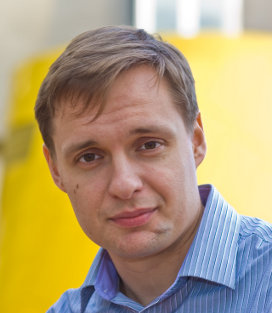
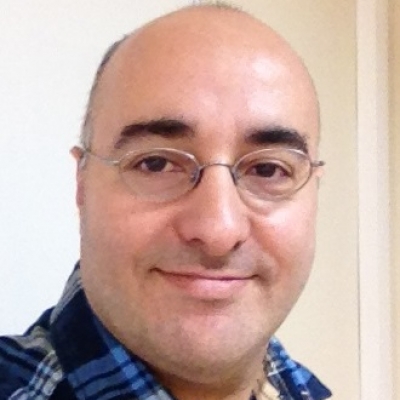
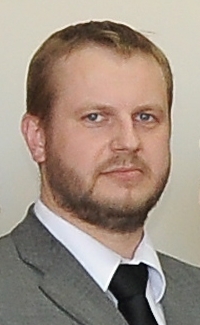
Maximo Cobos Serrano is a Professor at the Universitat Politècnica de València , affiliated with the Department of Computer Science under the School of Engineering . He specializes in Signal Theory and Communications , with a research focus on high-performance computing and intelligent systems. His doctoral work (2009) explored sound source separation methods for spatial audio systems . He is associated with the HiPIS (High performance and intelligent systems) research group. No awards, student supervision, or detailed publication records (beyond journal affiliations) are publicly documented in the provided sources.
Yury Polyanskiy is a Professor of Electrical Engineering and Computer Science at the Massachusetts Institute of Technology (MIT), affiliated with the Laboratory for Information and Decision Systems (LIDS), the Institute for Data, Systems, and Society (IDSS), and the MIT Statistics and Data Science Center. He holds a Ph.D. from Princeton University (2010) and an M.S. from the Moscow Institute of Physics and Technology (2005). His research focuses on information theory, machine learning, statistical inference, error-correcting codes, and wireless communication. He has contributed to fundamental limits of communication systems, finite-blocklength analysis, and applications of information theory to learning and signal processing. Notable awards include the 2020 IEEE Information Theory Society James Massey Award, the 2013 NSF CAREER Award, and the 2011 IEEE Information Theory Society Paper Award. His work spans theoretical advancements and practical applications, including the development of the SPECTRE toolbox for short-packet communication. He is also co-authoring a textbook on information theory. Recent research highlights include studies on quantization techniques for machine learning (e.g., NestQuant), transformer-based empirical Bayes methods, and novel approaches to massive random access in wireless networks (e.g., unsourced multiple access). His contributions bridge information theory and modern data science, addressing challenges in high-dimensional data representation, neural network dynamics, and efficient communication architectures.
Ali Taylan Cemgil is an Associate Professor at Bogazici University's Department of Computer Engineering, College of Engineering. His research focuses on Bayesian statistics, machine learning, and audio/music processing within the Perceptual Intelligence Laboratory (PILAB). PhD in Computer Science from Radboud University Nijmegen (2004) Postdoctoral research at University of Amsterdam (Intelligent Autonomous Systems Lab) and University of Cambridge (Signal Processing and Communications Lab) Research Interests: Bayesian modeling and time series analysis Audio signal processing and source separation Human-AI collaboration frameworks Probabilistic methods in AI reliability and fairness Scientific Contributions: Recent work explores conformal prediction for model calibration, adversarial robustness in deep learning, and fairness-aware medical AI systems. His research spans theoretical foundations in Bayesian statistics and practical applications in indoor localization and capsule robotics. Academic Service: Current faculty member with extensive publications in AI/ML, signal processing, and probabilistic modeling.
George P. Kafentzis is a Lecturer in the Computer Science Department at the University of Crete, where he teaches Physics for Engineers (CS-112), Digital Signal Processing (CS-370), and Signals and Systems (CS-215). He is a core member of the Speech Signal Processing Lab within the Multimedia Informatics Labs, focusing on advanced signal processing methodologies. His educational background includes a Ph.D. in Signal Processing and Telecommunications from MATISSE Doctoral School (University of Rennes 1) and a Ph.D. in Computer Science and Engineering from the University of Crete (2014), a Master of Science in Computer Science (2010), and a Bachelor's degree in Computer Science (2008), all from the University of Crete. Research interests span speech, audio, and biosignal processing with emphasis on sinusoidal modeling, emotion recognition from speech, deep learning applications, pathological speech analysis, and music signal processing. His work bridges theoretical signal processing with clinical and engineering applications, particularly in non-invasive vocal fold pathology detection through glottal analysis. Recent publications demonstrate a strategic pivot toward cough sound analysis for respiratory diagnostics using AI, while maintaining core expertise in adaptive sinusoidal models for speech transformations. Publication trends reveal an evolution from fundamental speech modeling (2010-2016) toward applied health informatics (2021-present), with increasing focus on real-world diagnostic systems leveraging cough acoustics. Over 50% of recent work integrates deep learning with traditional signal processing for medical applications, particularly in low-resource settings. Graduate student Scholarship - Institute of Computer Science, FO.R.T.H. (2008-2010) Undergraduate Scholarship - Institute of Computer Science, FO.R.T.H. (2007-2008) As an active industry collaborator, Kafentzis has served as Signal Processing Engineer at Hyfe AI (2022-2025) and contractor for VoiceSignals and Toshiba Research Europe. His teaching portfolio includes a widely adopted textbook Continuous and Discrete Time Signal Processing (2019), which integrates MATLAB implementations with theoretical foundations. Current research leverages his signal processing expertise in cough monitoring systems validated through multicenter clinical trials. He leads projects in the Speech Signal Processing Lab including Novel Deep Learning Architectures for Automatic Speech Recognition and Speech Emotion Recognition and Visualization Techniques, with recent work extending to Greek-language pathological speech analysis and respiratory health monitoring systems.
Dr. Bracha Laufer is a senior lecturer at the School of Electrical Engineering , part of the Iby and Aladar Fleischman Faculty of Engineering at Tel Aviv University. Her research focuses on acoustic source localization, speech signal processing, and machine learning techniques for audio engineering. Her recent work explores conformal prediction and manifold-based approaches for robust source localization, deep learning architectures for sound source separation, and simplex geometry in multichannel signal analysis. These publications highlight interdisciplinary applications of machine learning and statistical methods in acoustics. Dr. Laufer's research integrates Bayesian inference , probabilistic graphical models , and uncertainty quantification to address challenges in adverse acoustic environments. She has contributed to advancements in multi-microphone speaker localization and speech inpainting .
He Kong is an Associate Professor at Southern University of Science and Technology (SUSTech), affiliated with the School of Automation and Intelligent Manufacturing, where he also serves as Deputy Director of the SUSTech Institute of Robotics. Previously, he was an Assistant Professor in the Department of Mechanical and Energy Engineering at SUSTech from January to May 2022. Prior to joining SUSTech, he was a Research Fellow at the Australian Centre for Field Robotics, University of Sydney (2016-2021), and at Cranfield University's Advanced Vehicle Engineering Centre (2015-2016). He received his Ph.D. in Electrical Engineering from the University of Newcastle, Australia (2014), M.E. in Control Science and Engineering from Harbin Institute of Technology (2010), and B.E. in Electrical Engineering and Automation from China University of Mining and Technology (2004). His research focuses on robotic intelligent perception and decision making, robot audition, optimal filtering and estimation, and advanced control methods. Specifically, he works on active multi-mode perception, parameter calibration of robot audition systems, optimal filtering under unknown inputs, and fully actuated system approaches. His work has significant applications in precision agriculture, environmental monitoring, and robotic inspection of hazardous industries such as chemical and mining operations. His recent publications reveal a strong emphasis on multi-modal perception systems, particularly combining visual and auditory sensing for robotic applications. His research shows a progression from theoretical control methods toward practical implementations in field robotics, with increasing focus on real-world applications in agriculture and hazardous environments. Finalist for Youth Author Prize, IFAC Workshop on Robot Control (2019) Fifth China Robotics Academic Annual Conference Best Poster Award (2024) 14th International Conference on Indoor Positioning and Indoor Navigation Best Paper Award (2024) The Equity Scholarship, Council of International Students Australia (2011) Outstanding Postgraduate Students Award, Harbin Institute of Technology (2010) Professor Kong actively supervises numerous PhD and Master's students and has established a productive research group focused on active intelligent systems. His laboratory is equipped with advanced facilities including over 30 motion capture systems, Unitree humanoid robots, robot dogs, wheeled mobile robots, and custom-developed platforms like Cubli and acoustic perception systems. He serves on editorial boards for several prestigious journals including IEEE Robotics and Automation Letters and IEEE Sensors Letters, and has been an Associate Editor for major robotics conferences such as IEEE ICRA and IEEE/RSJ IROS.
Assoc. Prof. Dr. Gintautas Tamulevičius serves as Director of the Institute of Data Science and Digital Technologies at Vilnius University. His primary affiliation is with the Image and Signal Analysis Group, where he contributes as a Senior Researcher and Chief Researcher in projects. Doctor of Science in Technology (2008) Pedagogical Title: Associate Professor (2014, Vilnius Gediminas Technical University) Active in IEEE Computer Society and Signal Processing Society Dr. Tamulevičius specializes in speech signal processing, with research spanning three core domains: Speech Modeling : Autoregressive/linear prediction, nonlinear fractal modeling, non-parametric approaches Recognition Systems : Deep learning-based methods, Hidden Markov models, Wave-U-Net architectures Quality Assessment : Voice phonation evaluation, vocal fold condition analysis using acoustic methods His publication trends show strong focus on: Deep learning applications for speech processing 2D feature space analysis for recognition tasks Fractal dimension-based emotion classification Language preservation through technological development Human-centered AI applications Biomedical signal processing As an educator, he has taught: Digital Signal Processing (VGTU 2012–present) Speech Signal Processing (VGTU 2008–present) Data Visualization (VGTU 2015) User Interface Design (VU 2018–present) Audio Signal Processing (VU 2020–present) His editorial contributions include reviewing for: Informatica IEEE Access Neurocomputing Baltic Journal of Modern Computing Nonlinear Analysis: Modeling and Control IEEE Journal of Biomedical and Health Informatics International Journal of Applied Mathematics and Computer Sciences He has supervised doctoral research including: Daniel Zakševski (2023–2027): Deep learning models for speech enhancement Monika Danilovaitė (2020–2026): Voice quality assessment methods Tatjana Liogienė (2012–2016): Multistage speech emotion classification
Gražina Korvel is a Professor and Senior Researcher at the Image and Signal Analysis Group of Vilnius University's Faculty of Mathematics and Informatics. Her work bridges speech signal processing , machine learning , and natural language processing , with a focus on applications like noise profiling , Lombard effect modeling , and propaganda detection . She leads projects such as the HUMAN-INSPIRED SPEECH ENHANCEMENT (2024–2027) and CLINICAL NLP FOR RECORDS (2024). Education : Doctor of Science in Computer Engineering (2013, Vilnius University), Master’s in Computer Science (2009, Vilnius Pedagogical University), Bachelor’s in Mathematics (2007, Vilnius Pedagogical University). Her research interests include speech enhancement , deep learning for audio analysis , and cross-linguistic emotion recognition . Recent work explores fake news detection , synthetic speech , and Lithuanian language modeling . From 2020–2024, she taught Natural Language Processing at Vilnius University. She has held visiting research roles at Gdańsk University of Technology and International Hellenic University, and serves on editorial boards for Journal of Intelligent Information Systems and Informatica .
Petros Maragos is a Professor at the National Technical University of Athens (NTUA) in the School of Electrical and Computer Engineering, where he directs the Division of Signals, Control and Robotics. He founded the Computer Vision, Speech Communication & Signal Processing Lab (1999) and the Hellenic Robotics Center of Excellence (2025). His research spans signal processing, computer vision, robotics, and machine learning, with 450+ publications and leadership in 50+ EU/Greek/US projects. Education includes a Dipl.Ing. from NTUA (1980), M.Sc./Ph.D. from Georgia Tech (1982/1985), and faculty positions at Harvard University (1985-1993) and Georgia Tech (1993-1998). Research Focus: Multimodal perception, nonlinear systems, assistive robotics, and deep learning. Recent work integrates tropical geometry with neural networks, robotic healthcare applications, and sign language technologies. Articles emphasize neural architectures, real-world robotics, and AI for social good. Awards: IEEE Fellow (1995), EURASIP Fellow (2010) IEEE W.R.G. Baker Prize (1995) NSF Presidential Young Investigator Award (1987-1992) CVPR/PETRA Best Paper Awards (2022-2025) Advising & Grants: Supervised 30+ PhDs and 130+ Master's students. Secured funding from EU Horizon 2020, NSF, and Greek national programs for projects like i-Walk (robotic mobility) and e-Prevention (mental health monitoring). Labs: Leads NTUA's Intelligent Robotics Lab and co-founded the Robotics Institute at Athena Research Center, focusing on human-robot interaction and perception systems.
Lili Qiu is a Professor in the Department of Computer Science at the University of Texas at Austin and Vice Managing Director of Microsoft Research Asia (Shanghai). She previously worked at Microsoft Research Redmond (2001-2004). Her research spans wireless networks, mobile systems, and network protocols, with recent work in acoustic sensing and AI-driven networking solutions. Research Focus Qiu's research addresses fundamental challenges in: Wireless network performance and interference management Mobile system optimization for real-world environments Acoustic-based localization and tracking technologies Deep learning applications for network reliability Next-generation cellular architectures (5G and beyond) Publication Trends Her recent publications (2020-2023) demonstrate a shift toward multimodal sensing systems combining acoustics and computer vision, edge intelligence optimization, and robust mobility management for next-generation networks. This reflects industry-academia convergence through her dual appointments. Awards and Honors IEEE Fellow (2017) ACM Fellow (2018) National Academy of Inventors Fellow (2022) N2Women: Stars in Networking (2017) ACM Distinguished Scientist (2013) NSF CAREER Award (2006) Best Paper Awards: ACM MobiSys 2018, IEEE ICNP 2017 Leadership and Affiliations She bridges academic research and industrial innovation through her joint appointment at UT Austin and Microsoft Research Asia, where she oversees strategic research directions in computing systems.
Dr. Matt Felicetti is a dedicated Lecturer in Engineering at La Trobe University's Bendigo campus, specializing in robotics, electronics, and artificial intelligence. He holds a PhD in randomized artificial intelligence for industrial applications and a bachelor's degree in computer systems engineering with top honors. Matt plays a pivotal role in enhancing the engineering capstone program and teaches subjects including Robotic System Design, Advanced Research, and Advanced Engineering Innovation. His educational background includes: PhD in Randomized Artificial Intelligence for Industrial Applications, La Trobe University (2019-2022) Bachelor of Engineering (Computer Systems) with First Class Honors, La Trobe University (2013-2016) Advanced Diploma of Electronics, Swinburne University of Technology (2011-2012) Matt's research primarily focuses on collaborative industry partnerships through the RAMPS R&D group, implementing innovative engineering solutions using electronics, sensors, embedded systems, robotics, AI, and algorithm design. He has a particular interest in field robotics and machine vision in agriculture. Beyond industry applications, Matt specializes in randomized artificial intelligence algorithms, particularly Stochastic Configuration Networks, with a focus on optimizing these algorithms for industrial environments. His research extends to low-level computing aspects including binary operations, data encoding, and hardware implementation on FPGAs or small embedded devices. His recent publications demonstrate a strong progression from theoretical algorithm development to practical implementations in specific industry contexts, with increasing attention to hardware implementation and agricultural robotics applications. The research shows a clear trajectory toward real-world industrial problem solving. Matt has received numerous scientific awards and recognitions: David Myers Medal Nancy Millis Medal SEMS Teaching Award for Industry Relevance and Student Engagement David Myers Research Scholarship D.M. Myers University Medal Fellow of the Higher Education Academy (FHEA) In terms of academic service, Matt serves as an Associate Editor for the journal Industrial Artificial Intelligence and has conducted peer reviews for Neural Computing and Applications, IEEE Transactions on Industrial Informatics, and Information Sciences. He currently leads the funded research project "Robotic Based Sewer Pipe Condition Assessment" through SmartCrete CRC (2024-2027). His teaching portfolio includes coordinating Robotic System Design, Advanced Research, and Ideas for Innovation courses. Matt is an active member of the RAMPS R&D group, which focuses on crafting innovative solutions for industry-specific problems. His work bridges academic research with practical industry applications, particularly in agricultural robotics and industrial AI implementation, demonstrating strong collaboration with researchers like Ross R, Wang D, and Putland S.
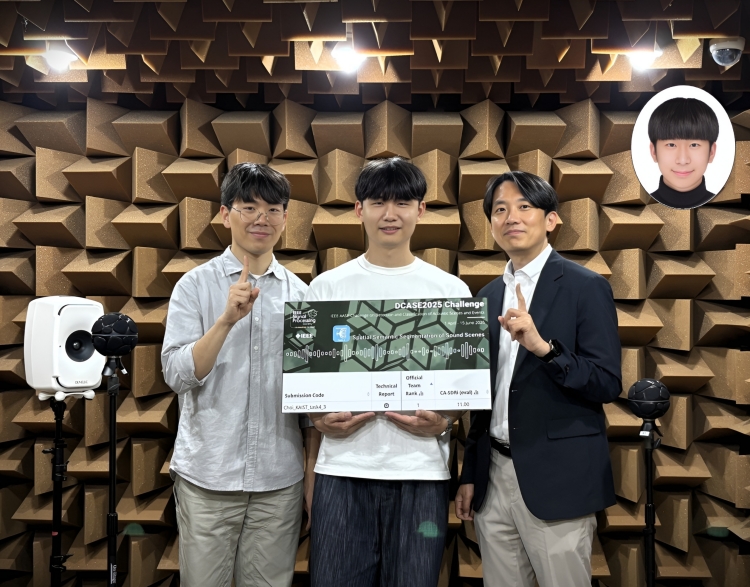
Professor Jeong-Woo Choi is a faculty member in the Department of Electrical Engineering at Korea Advanced Institute of Science and Technology (KAIST), specializing in cutting-edge audio artificial intelligence research. His work bridges electrical engineering and machine learning with applications in industrial monitoring and immersive media technologies. His primary research focuses on Audio Signal Processing and Sound Source Separation , developing next-generation AI systems capable of isolating and classifying complex soundscapes. Key areas include spatial semantic segmentation of acoustic scenes, multichannel signal analysis, and transformer-based neural architectures for abnormal sound detection in drones, factory pipes, and border surveillance systems. His team pioneers techniques mimicking human auditory processing through waveform analysis and directional cues. Professor Choi's team secured first place in the 2025 IEEE DCASE Challenge against 86 global competitors, achieving unprecedented 11 dB performance in sound separation metrics. This breakthrough enables advanced applications in AR/VR spatial audio editing and industrial anomaly detection. His scientific recognition includes: First place in 'Spatial Semantic Segmentation of Sound Scenes' at IEEE DCASE Challenge 2025 He actively mentors graduate researchers including PhD candidate Kwon Young-hoo and Master's student Kim Do-hwan. His lab operates under significant funding from South Korea's National Research Foundation (Mid-career Researcher Support Project), Ministry of Education (STEAM Research Project), and Defense Acquisition Program Administration (Future Defense Research Center). The research team maintains KAIST's leadership in audio AI through their specialized laboratory within the Electrical Engineering department, recently developing the world's highest-performance sound separation model combining Transformer and Mamba architectures.