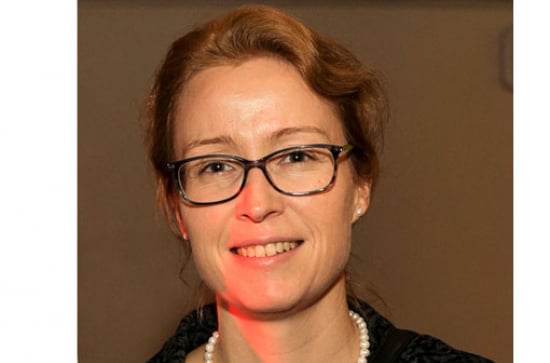
Rozenn Dahyot is a Professor of Computer Science at Maynooth University within the Faculty of Science & Engineering. She previously held roles as Assistant and Associate Professor in Statistics at Trinity College Dublin (2008-2021) and Lecturer in Computer Science (2005-2008). Her research interests bridge Digital Signal Processing, Computer Vision, Machine Learning, and Statistical Analysis. She organized the European Signal Processing Conference (EUSIPCO2021) in Dublin and served as President of the Irish Pattern Recognition and Classification Society (IPRCS) from 2014-2020. Her work spans topics like semantic scene understanding, CNN compression, and medical image segmentation. Key contributions include advancements in graph-based image analysis, reinforcement learning optimization, and AI-driven systems for disaster management. Dahyot is a member of IEEE, ACM, and EURASIP, contributing to both academic and industrial collaborations.
Dr. Andrew Hines is a Researcher at the School of Computer Science, University College Dublin, specializing in machine learning applications for signal processing in speech, audio, and video domains. His work focuses on Quality of Experience (QoE) modeling, speech quality assessment, and immersive media analysis. He has held leadership roles in European COST Actions like Qualinet and CryptoAction, and previously worked in industry as a Director of Engineering. University: University College Dublin Role: Director of Research, Innovation and Impact Key Collaborations: IEEE (Senior Member), Audio Engineering Society (Ireland) Research interests center on machine learning for QoE optimization, audio-visual integration, and healthcare applications like heart sound classification and stroke rehabilitation. His recent publications explore self-supervised learning, neural speech codecs, and contextual factors in speech/audio quality assessment. Scientific contributions include awards like IEEE Senior Membership, and his work spans both academic research and industrial engineering in finance and aviation sectors. He leads the QxLab research team at UCD and develops open-source platforms such as WARP-Q and AQP for quality metrics.
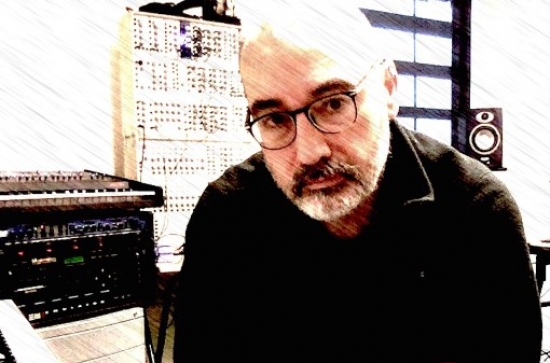
Victor Lazzarini is a Professor of Music at Maynooth University, Ireland, specializing in computer music and audio signal processing. He holds a BMus from Universidade Estadual de Campinas (UNICAMP), Brazil, and an AMusD from the University of Nottingham, UK. His research spans electroacoustic music, digital signal processing, and music technology. He leads the Csound project, a widely used sound and music computing system, and authored libraries like Aulib and Aurora. Education: Bachelor of Music (BMus), UNICAMP, Brazil Advanced Music Degree (AMusD), University of Nottingham, UK His research interests include sound synthesis, computer music languages, and the intersection of music with technology. He has authored over 150 peer-reviewed publications and books such as Spectral Music Design: A Computational Approach (Oxford UP, 2021) and co-edited volumes like Ubiquitous Music Ecologies (Routledge, 2020). His work bridges academic and industrial sectors through projects like the Enterprise-Ireland-funded commercialization initiative. Prof. Lazzarini’s contributions to music technology include pioneering tools like Csound, which enable real-time audio synthesis and processing. His articles span topics from digital filter design to historical computer music archaeology, reflecting his expertise in both theoretical and applied domains. Awards: AIC/IMRO International Composition Prize (2006) He advises on interdisciplinary projects such as the BeatHealth initiative, integrating ubiquitous computing and music. His creative output includes electroacoustic compositions performed globally and released on labels like FarPoint Recordings. Lazzarini actively collaborates with international teams, contributing to conferences like DAFx and ICMC, and leads initiatives like the Ubimus (Ubiquitous Music) research network.
Dr Andrew Hines serves as an Assistant Professor in the School of Computer Science at University College Dublin (UCD) and is a Funded Investigator at the CONNECT Centre. His research focuses on computational modeling for quality assessment across speech, audio, and video systems. Research interests span: Quality of Experience (QoE) metrics development Machine learning applications for health and cryptosystems Speech intelligibility prediction for hearing-impaired individuals Spatial audio streaming quality evaluation His work bridges signal processing theory with practical industry implementations. Hines maintains active industry partnerships, notably with Google on VoIP speech quality metrics and audio codec evaluation for streaming media. He previously represented Ireland on the Qualinet FP7 COST Action management committee, leading machine learning initiatives for QoE modeling, and currently participates in the CryptoAction COST research network. Before academia, he accumulated a decade of industry experience as Director of Engineering in airline and finance software development sectors. His laboratory infrastructure includes the QxLab research group and Dependable Networks project.
Alessandro Ragano is a Postdoctoral Researcher at the Insight Centre for Data Analytics , where he has been investigating Quality of Experience (QoE) aspects of audio archives and developing data-driven approaches for QoE estimation and audio restoration using deep learning since 2018. Education: MSc in Computer Science and Engineering from Politecnico di Milano (Italy) BSc in Computer Engineering from Università Degli Studi di Salerno (Italy) His research integrates machine learning , audio signal processing , and multimedia quality assessment to improve speech enhancement, audio restoration, and perceptual modeling. Recent trends in his publications focus on self-supervised learning , objective quality metrics , and audio dataset generation with applications in speech separation, music representation, and audio inpainting. He actively contributes to open-source tools like Binamix and AQP for audio research and quality evaluation.
Madeleine Lowery is a Professor in the School of Electrical and Electronic Engineering at University College Dublin. She leads the Personal Sensing research group, focusing on engineering approaches to study the human nervous system in health and disease, with applications in therapies for impaired motor function. Her interdisciplinary research integrates neural engineering, electromyography, and biomedical signal processing. Specializes in neuromuscular systems and neural control of movement Develops myoelectric control systems for artificial limbs Designs high-density electrode systems for neural activity recording Investigates deep brain stimulation mechanisms in Parkinson’s disease models Her research spans neurodegenerative disorders (ALS, Huntington’s disease) and rehabilitation technologies , including wearable sensors for gait and sleep analysis. Key methodologies involve computational modeling , adaptive control systems , and biomedical signal analysis .
Joseph Timoney is a professor at the Department of Computer Science , Maynooth International Engineering College , Maynooth University. He teaches undergraduate programs in Computer Science and Music Technology, with expertise in audio signal processing, musical sound synthesis, and digital modeling of analog subtractive synthesis. His research spans sound synthesis algorithms, audio watermarking, and ubiquitous music ecosystems.
Viet Quoc Pham is an Assistant Professor in Networks and Distributed Systems at Trinity College Dublin's School of Computer Science and Statistics and a CONNECT Associate Investigator. His research integrates convex optimization, game theory, and machine learning to advance edge computing, wireless AI, and next-generation networking for 6G, IoT, and blockchain applications. Education: PhD in Telecommunications Engineering, Inje University, Korea (2017) His work centers on three interconnected thrusts: (1) Computing innovations in edge AI, aerial computing, and edge of things; (2) Intelligence through wireless AI and federated learning; and (3) Networking advancements in 6G, IoT, intelligent surfaces, metaverse, and blockchain. This cross-disciplinary approach optimizes cloud-edge systems and wireless infrastructure using mathematical frameworks. Recent publications (2021-2024) demonstrate applied impact across security (smart speaker intrusion detection), environmental science (satellite carbon monitoring), healthcare (mental disorder detection), and e-commerce (basket recommendation systems), reflecting his methodology of adapting AI/optimization to domain-specific challenges. Scientific Awards: Korea NRF funding for outstanding young researchers (2019-2024) Best Ph.D. Dissertation Award, Inje University (2017) Top Reviewer Award, IEEE Transactions on Vehicular Technology (2020) Golden Globe Award, Vietnam Ministry of Science (2021) IEEE ATC Best Paper Award (2022) Enterprise Ireland Coordination Support Award (2023) Dr. Pham secured competitive funding including Korea NRF and Enterprise Ireland grants. As Editor for Journal of Network and Computer Applications and Scientific Reports, and Lead/Guest Editor for IEEE Internet of Things Journal, IEEE Transactions on Consumer Electronics, and Computer Communications, he shapes discourse in networking and computer systems through rigorous peer review and special issues. Through the CONNECT Centre, he collaborates with industry partners on Ireland's national research initiative for future networks, focusing on practical implementations of 6G architectures, IoT security protocols, and edge AI frameworks for real-world deployment.
Dr. Enda Bates is an Assistant Professor and Deputy Course Director in the Music and Media Technologies Programme at Trinity College Dublin. He leads research in spatial music, spatial audio for VR, and electroacoustic aesthetics while maintaining active roles as a composer, producer, and performer. His work bridges academic and artistic domains, with notable contributions to immersive media, accessibility in health data design, and interdisciplinary digital humanities projects. Educated at Trinity College Dublin, he completed a PhD titled *The Composition & Performance of Spatial Music* in 2010. His research has been supported by grants from Trinity College Dublin and Rode Microphones, focusing on projects like the Trinity 360 initiative producing immersive 360-degree music videos. He collaborates widely, including with the Spatial Music Collective and on virtual reality adaptations of Samuel Beckett’s works. Research interests span spatial audio technologies, VR audio design, and the aesthetics of contemporary electroacoustic music. He explores the intersection of sound and technology in performance contexts, such as augmented instruments and site-specific compositions. His work on accessibility includes evaluating health data representations for older adults, emphasizing user-centric design principles. Recent publications highlight advancements in ambisonic decoder methodologies, VR audio systems, and interdisciplinary arts. Awards include the Gaudeamus Music Prize shortlist (2009) and Música Viva Competition Prize (2010). His music has been performed globally by ensembles like the RTÉ National Symphony Orchestra and Crash Ensemble. Bates advises on audio engineering projects and leads collaborative initiatives like *Virtual Play, after Samuel Beckett*, merging theater, VR, and sound design. His lab’s work often explores the technical and creative potentials of 360 media and free-viewpoint video.
Dr. Jimmy Eadie is an Assistant Professor (Part-Time) in Electronic & Electrical Engineering at Trinity College Dublin. He specializes in sound design, audio engineering, and music production, with a focus on interdisciplinary projects. His work spans hybrid installations, theatre soundscapes, and audio software development, earning international recognition. Eadie holds a PhD in Sonic Design and multiple postgraduate qualifications in music technology, education, and sound engineering. Education highlights include a PhD in Sonic Design, an MPhil (Hons) in Music & Media Technology, and certifications from Berklee College, TCD, and professional bodies like Rational Acoustics and Meyer Sound. His teaching experience includes roles at Pulse College, Griffith College, and the University of Lancashire. Research interests center on audio software development, music production techniques, and sound design for theatre and media. His theatre work with Pan Pan Theatre and Crash Ensemble has received Irish Times Awards and international acclaim. Key projects include the New Irish Recording Company (NIRC) and the Eno’ 100 Worthwhile Dilemmas Plugin , showcasing technical and creative innovation. Grants & Awards: Multiple Arts Council Bursaries, Agility Award, and Trinity’s Teaching Excellence Nomination. Professional Roles: Former audio engineer for Crash Ensemble and touring sound engineer for Irish artists. Labs/Teams: Founder of Crash Ensemble and collaborator with Pan Pan Theatre.
Dr. Helard Becerra is an Assistant Professor in the School of Computer Science at University College Dublin (UCD). He holds a PhD from the University of Brasília and has held postdoctoral roles at UCD's Insight Centre for Data Analytics and Samsung R&D Institute Brazil. His research focuses on multimedia quality assessment (audio/video/speech) and AI-driven healthcare solutions for stroke rehabilitation. Key contributions include developing NAViDAd (a deep learning-based quality metric) and predictive models for stroke recovery outcomes. Education: B.Sc. (UNSAAC, Peru, 2010); M.Sc. & Ph.D. (UnB, Brazil, 2013/2019). Professional experience includes roles at Samsung (2019), DIT (2017-2018), and leadership in EU projects like Precise4Q (Horizon 2020). Research interests span: 1) Perceived quality in multimedia systems, 2) Explainable AI for healthcare, 3) Predictive modeling in stroke rehabilitation. Notable work includes gradient boosting models for social risk prediction and Elo rating systems for personalized therapy. Teaching responsibilities include coordinating modules on Software Engineering, Parallel Computing, and Programming. He actively supervises graduate students and serves on UCD's Equality, Diversity & Inclusion Committee. Awards include the 2019 Best Student Paper Award at International Symposium on Electronic Imaging. He reviews for top conferences (ACM MMSys, IEEE ICIP) and journals (IEEE Access, IEEE Signal Processing Letters).
Professor Barak Pearlmutter is affiliated with Maynooth University in the Faculty of Science & Engineering . His research spans multiple domains including automatic differentiation , neural networks , machine learning , and neuroscience . He has contributed significantly to adaptive systems , brain imaging , and programming language design . Research Interests include: Adaptive systems, automatic differentiation, theoretical neurobiology, neural networks, machine learning, acoustic source separation/localization, neuroscience, brain imaging, programming language design, and computational neuroscience. Publications focus on applying algorithmic differentiation to machine learning, developing neural ODE models for biomedical signals, advancing sparse NMF techniques, and integrating functional programming with numerical methods. Collaborations span institutions like MIT, Oxford, and IEEE societies, with work in brain-computer interfaces , MEG source localization , and neuromodulation for tinnitus treatment. Technical Contributions include the DiffSharp AD library for .NET languages and foundational work on reverse-mode automatic differentiation in functional frameworks. His 2018 Journal of Machine Learning Research survey on AD remains a seminal reference in the field. Application Areas cover biomedical signal processing , optical brain-computer interfaces , cognitive modeling , and neural code optimization . His work intersects computer science, neuroscience, and mathematical computing through sparse decomposition and probabilistic modeling .
Hugh O'Dwyer is a Teaching Professor at Trinity College Dublin (TCD) within the Department of Electronic Engineering, where he lectures on the M.Phil in Music and Media Technology (MMT) program. He holds a Ph.D. from TCD (2021) under Prof. Frank Boland, focusing on Machine Learning applications for audio, particularly Sound Source Localization and Virtual Testing of Binaural Audio. His doctoral work included objective/subjective headphone and ambisonic microphone evaluation, alongside machine learning-based localization methods. Education: He graduated from TCD's School of Engineering with a Biomedical Engineering degree (2015), researching EEG-based musical instrument perception in the brain through his thesis. During studies, he actively participated in Trinity Orchestra and Jazz Society roles, earning a lifetime honorary membership for his contributions. Research interests span spatial audio engineering, machine learning in acoustics, and music technology education. He has published extensively with the Audio Engineering Society (AES), presenting at conferences in Helsinki, Milan, and Dublin. His work includes VR audio recording techniques, sound projector calibration, and ambisonic microphone comparisons. Outside academia, he mentors young musicians through the Suburban Sounds program and developed a CPD course in music technology for over 100 teachers during the pandemic. As a musician/producer, he has collaborated with prominent Irish artists like Hozier and Saint Sister, and his band Spies' album 'Constancy' (2018) received critical acclaim.
Harry Nguyen (Hoang D. Nguyen) is a Lecturer and Programme Director for the MSc in Computing Science at University College Cork. Affiliated with the SFI Research Centre for Data Analytics, he leads research in reliable AI systems for healthcare and sustainability. Research Focus: Develops robust ML models integrating graph networks and multimodal learning, with applications in medical diagnosis (e.g., COVID-19 detection via cough analysis) and environmental monitoring. Directs the Reliable Machine Intelligence research group. Advising: Mentors 15+ graduate students on projects spanning federated learning, sound-based diagnostics, and conversational AI for diabetes care. Secured funding from Science Foundation Ireland for CRT-AI initiatives.
Alexander Khalil is a Senior Lecturer in Music at University College Cork (UCC) and Visiting Senior Lecturer of Research at King’s College London’s Social Genetic Developmental Psychiatry Centre. His work bridges ethnomusicology, cognitive science, and neuroscience, focusing on the intersubjective experience of time in music. He holds a PhD in Music from UC San Diego (2009) and has held roles including Executive Director of the Center for World Music (1999-2003) and Postdoctoral Scholar at UCSD’s Temporal Dynamics of Learning Center (2010-2014). His research explores Byzantine chant, Middle Eastern music, and Balinese gamelan, with a focus on cultural cognition and group-level neural dynamics. Major projects include the SoundMind initiative (funded by the Tianqiao Chen Institute) investigating Audio Augmented Reality for dementia, and the Lullaby Exchange, a global crowdsourced lullaby archive. He has secured over €2.5M in grants including Irish Research Council and NSF funding. Teaching includes undergraduate courses in Middle Eastern music and cognitive ethnomusicology, alongside postgraduate modules in music perception and ethnomusicological theory. He supervises 15+ graduate students and chairs UCC’s Film, Music & Theatre Doctoral School. Awards include the IEEE Brain Initiative First Place Award (2016) and San Diego State University’s Alumnus of the Year (2013).