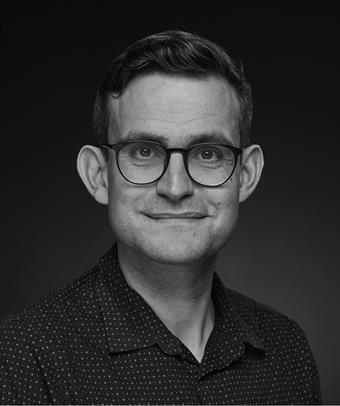
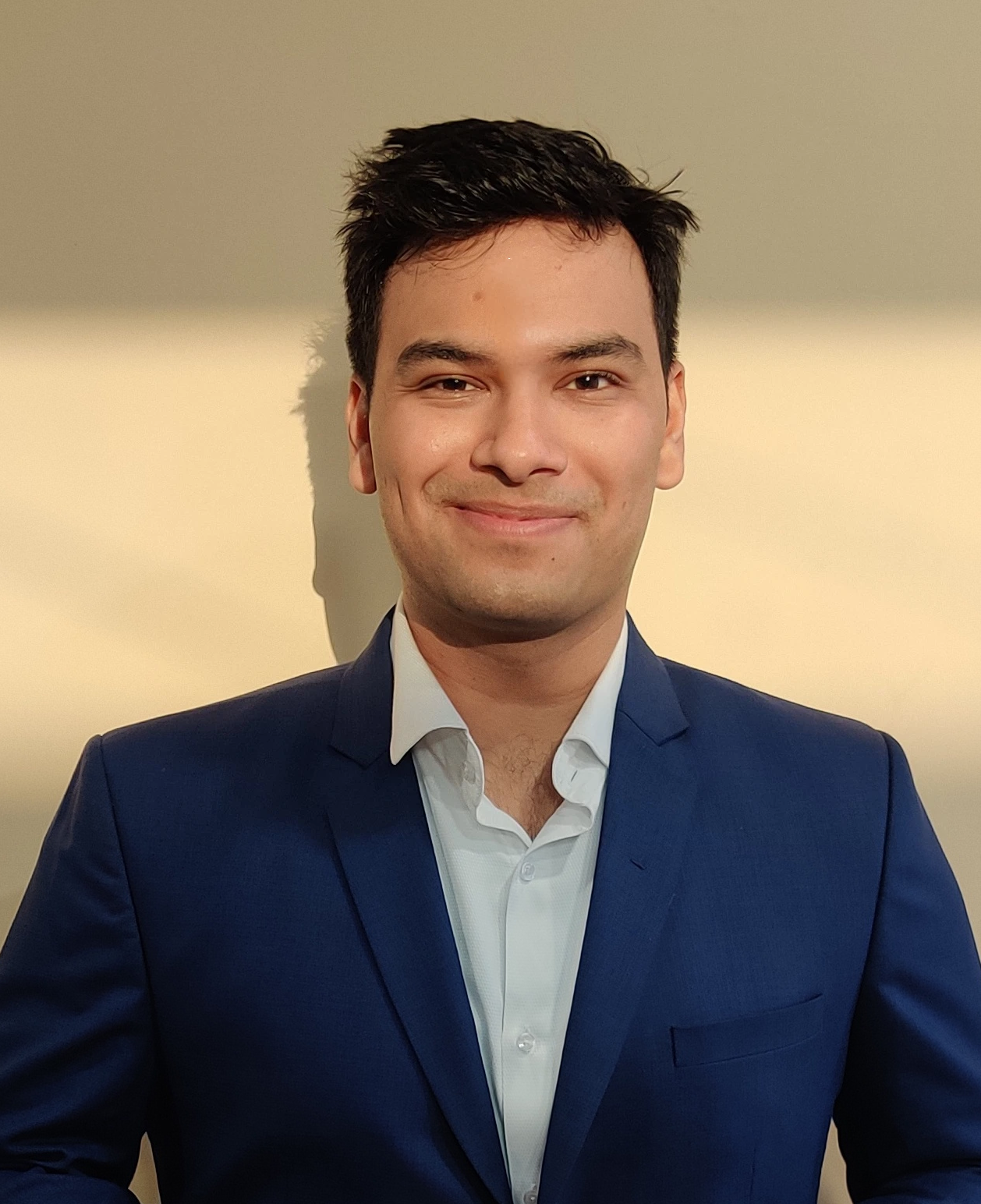
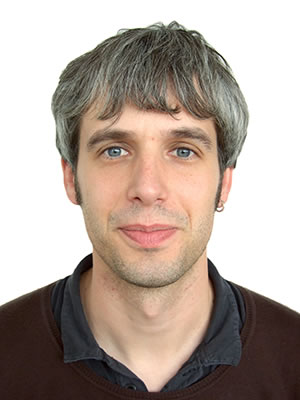
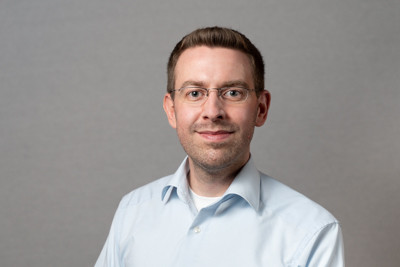
Prof. Dr.-Ing. Jochen Steffens is a faculty member at the University of Applied Sciences Düsseldorf , affiliated with the Faculty of Media . His research spans interdisciplinary domains at the intersection of music, soundscapes, and cognitive-affective processes. Research Focus : Music listening behavior, soundscapes, noise perception, music recommendation systems, film music, and the psychological effects of sounds. Teaching : Supervises final theses and offers modules aligned with examination regulations of 2018, including topics in media informatics and mixed reality applications. Technical Contributions : Develops tools for soundscape exploration (e.g., Advanced Soundscape Search) and music information retrieval (MIR) systems for live performance visualization. Methodological Expertise : Utilizes computational music analysis, experience sampling, statistical learning, and multilevel modeling to investigate situational and demographic influences on auditory perception. Applied Research : Explores the impact of room acoustics on customer satisfaction in restaurants, motivational music in sports, and semantic expression in audio branding.
Beuth University of Applied Sciences BerlinGermany
Prof. Dr.-Ing. André Jakob is a faculty member at Berlin University of Technology , affiliated with the Department VII - Electrical Engineering - Mechatronics - Optometry. His academic role spans teaching and research in digital signal processing, audio technology, and acoustics. Digital Signal Processing Audio Technology Acoustics Active Noise Control His research focuses on active noise control , simulation of moving sound sources , and audio signal processing , with applications in robotics, building acoustics, and medical devices. Publications include advancements in anti-noise window systems , sound source localization , and acoustic measurement techniques . His recent work explores real-time auralization for educational robotics and nonlinear acoustic modeling with neural networks. The 15 most recent articles demonstrate a consistent focus on acoustic simulation , active control systems , and sound propagation modeling , with conference contributions at DAGA, NAG-DAGA, and international acoustics events. Topics range from dental drill noise reduction to active sound design in musical instruments , reflecting interdisciplinary applications. He supervises numerous Master's and Bachelor's theses in areas like real-time signal processing, deep learning for sound recognition, and virtual acoustics. His lab at TU Berlin explores multi-loudspeaker systems , acoustic beamforming , and active noise cancellation for both industrial and consumer applications.
Peter Jax is a Full Professor at RWTH Aachen University , leading the Chair of Communication Systems . His research focuses on speech and audio processing , with expertise in active noise control , spatial audio , and machine learning applications for acoustic systems. Diploma in Electrical Engineering (1997), RWTH Aachen University PhD (2002), RWTH Aachen University Research areas include binaural direction-of-arrival estimation , MIMO acoustic system identification , and adaptive filtering for consumer and medical audio applications. Recent articles highlight innovations in ambisonics upscaling , noise control for UAVs , and data-driven uncertainty modeling in headphones. Scientific honors : Distinguished Member of Technicolor Fellowship Network (2010) Johann-Philipp-Reis Preis Borchers Medal E-Plus Award for Best Dissertation With over 25 patents in speech/audio processing and leadership roles in industry (Deutsche Thomson OHG, 2005–2015), he bridges academic research and industrial innovation.
Prof. Dr.-Ing. Holger Blume serves as Vice President for Research and Transfer at Leibniz University Hannover while maintaining his academic position as Professor in the Architectures and Systems Section within the Faculty of Electrical Engineering and Computer Science. He holds multiple leadership positions including Chairperson of the Research Commission and Central Ethics Committee, Executive Board member of eNIFE (Leibniz Research Initiative for Neurosciences), and membership in both the Laboratory of Nano and Quantum Engineering and L3S Research Centre. His research interests span computer architecture, hardware design, signal processing, AI accelerators, hearing aid technology, and biomedical engineering. His work bridges theoretical computer science with practical applications in automotive systems, medical devices, and quantum engineering. Professor Blume's research demonstrates strong interdisciplinary connections between electrical engineering, computer science, and biomedical applications, with particular emphasis on hardware-oriented solutions for real-world problems. Analysis of his recent publications (2023-2025) reveals a strong focus on hardware acceleration for AI and signal processing applications, particularly in automotive radar/LiDAR systems and hearing aid technology. His work shows consistent innovation in RISC-V processor design, specialized hardware for mathematical functions, and biomedical applications of engineering principles. The research demonstrates a clear trajectory toward energy-efficient, specialized computing architectures for specific application domains. As Vice President for Research and Transfer, Professor Blume oversees significant research initiatives at Leibniz University Hannover, which hosts multiple Clusters of Excellence including PhoenixD (Photonics, Optics, and Engineering), QuantumFrontiers, and Hearing4all. The university participates in numerous collaborative research centers and junior research groups funded by DFG, BMBF, and EU programs. Professor Blume is actively involved in multiple research facilities including the Laboratory of Nano and Quantum Engineering and the L3S Research Centre. His work connects with Leibniz University's research focuses on optical technologies, quantum optics and gravitational physics, and biomedical research and technology. His leadership positions indicate strong involvement in shaping the research strategy and ethical framework of the university's scientific endeavors.
Beuth University of Applied Sciences BerlinGermany
Prof. Felix Bießmann holds a professorship in Computer Science and Media at Berlin University of Applied Sciences' Department VI. His research focuses on machine learning applications in diverse fields including healthcare, urban planning, environmental science, and robotics through his Cognitive Algorithms Lab. He teaches courses such as Machine Learning, Deep Learning, and Data Science Workflows, alongside roles at TU Berlin and Korea University. Education: PhD (Dr. rer. nat.) in Natural Sciences Research interests span machine learning theory and practical implementations across domains like computer vision, generative AI, and sensor data analysis. His work addresses challenges in automated systems, healthcare monitoring, and sustainable technologies. Recent student theses explore topics like license plate recognition, adaptive game soundtracks, and bird song detection using TinyML. Collaborations include projects with the Charité Berlin and Robert-Koch Institute. Lab: Cognitive Algorithms Lab (developing machine learning methods/applications) Contact: felix.biessmann@bht-berlin.de | Office D138, Berlin University of Applied Sciences.
Rishabh Dabral is a Research Group Leader at the Max Planck Institute for Informatics since August 2024, leading the "3D Visual Intelligence" group. He is also affiliated with the Research Training Group on Neuro-Explicit Models of Language, Vision, and Action at Saarland University. Expertise: 3D computer vision, computer graphics, human-object interaction modeling, and motion synthesis. Leadership: Conducts cutting-edge research on 3D human performance capture and physical plausibility in motion. His research focuses on: 3D human pose estimation under gravity constraints Multi-modal gesture synthesis using neural architectures Quantum auto-encoding for 3D representations Wearable robotics informed by human behavior Temporal dynamics in human-object interaction Recent publications at top venues like SIGGRAPH , CVPR , and ICCV demonstrate his work on: Music-driven motion synthesis Egocentric motion capture systems Reactive two-person interaction models Diffusion-based gesture generation Object-aware motion prediction Wearable robotic limb design
Federico Visi (he/they) serves as Guest Faculty in the Sound Studies and Sonic Arts Master's program at Berlin University of the Arts. Based in Berlin, Germany, Visi is a researcher, composer, and performer whose work bridges technology and artistic expression through innovative musical interfaces and performance systems. Visi completed doctoral research on instrumental music and body movement at the Interdisciplinary Centre for Computer Music Research (ICCMR), University of Plymouth, UK. They have held postdoctoral positions at Luleå University of Technology (Sweden) and Goldsmiths, University of London (UK), establishing a foundation for their interdisciplinary approach to music technology. Visi's research focuses on gesture in music, motion-sensing technologies, interactive machine learning, and embodied interaction. Their work explores how body movement and physiological signals can be harnessed in electronic music creation through both theoretical frameworks and practical implementations. They have developed novel instruments like the Sophtar and biosignal-based performance systems that translate physiological data into sound. Recent scholarly output reveals a trajectory toward increasingly sophisticated integration of machine learning in musical contexts, with significant contributions spanning computer music, psychology, and human-computer interaction domains. Visi's publications demonstrate how algorithmic processes can be embedded in musical instruments to create new forms of musical expression and co-creativity between humans and machines. As an active member of the research community, Visi co-edited a thematic issue of Organised Sound on 'Embedding Algorithms in Music and Sound Art' and organized the Embedding Algorithms Workshop at Berlin University of the Arts. They contribute to the Wilding AI collective that explores creative applications of AI in spatial audio environments. Visi releases music under the moniker AQAXA, combining conventional electronic music production with machine learning exploration of personal sonic memories. Their work has been supported by the European Research Council, Swedish Research Council, Boström Fund, and Helge Ax:son Johnsons foundation.
Sascha Spors is a Professor at the Chair of Signal Theory and Digital Signal Processing within the Institute of Communications Engineering at the University of Rostock. His work spans spatial audio processing, medical signal processing, and data-driven methodologies. Chair of the AES Technical Committee on Spatial Audio Ombudsperson at the University of Rostock Research focuses on spatial sound capture/synthesis, perception of synthetic sound fields, and biomedical applications like implant monitoring via electrical impedance tomography. He contributes to open science initiatives and research data management frameworks. Key collaborations include memberships in the IEEE Signal Processing Society, Deutsche Gesellschaft für Akustik (DEGA), and Audio Engineering Society (AES).
Stephan Preihs is a postdoctoral researcher and group leader at the Institute of Communications Technology of the Leibniz University Hannover , with a focus on acoustics, digital signal processing, and immersive audio systems. He received his Dipl.-Ing. in electrical engineering (communications engineering) from the same university in 2010 and his Dr.-Ing. in 2016. Education: Dipl.-Ing., Electrical Engineering (Communications Engineering), Leibniz University Hannover (2010) Dr.-Ing., Leibniz University Hannover (2016) Research Interests: Acoustics for immersive audio reproduction Digital signal processing and audio coding Signal detection/classification Psychoacoustic models Audio transmission for PMSE Recent Article Trends: Deep learning in sound source localization Wind turbine noise analysis via immersive audio Advancements in headphone technology Immersion prediction in spatial audio Low-latency communication protocols Scientific Awards: Best Paper Award at IEEE International Workshop on Networked Immersive Audio (2024) AES Show 2024 Best Technical Paper Award AES Spring 2021 Student Paper Award AES Poster Award 2019 AES Convention Student Paper Award 2019 Teaching: Lecturer for '3D Audio - Fundamentals of Spatial Reproduction Systems' Lecturer for 'Applications of Digital Audio Signal Processing' Coordinator of student laboratories in 'Audio Communication and Acoustics' and 'Transmission Technology'
Dr. Olya Hakobyan is a Researcher at the University of Bielefeld, working in the Faculty of Engineering within the Human-Centered Artificial Intelligence Group at the Center for Cognitive Interaction Technology (CITEC). She has been with the university since June 2021 as a research associate in the Multimodal Behavior Processing lab. Dr. Hakobyan's educational background includes: PhD in Computational Neuroscience (2016-2020) from the Institute for Neural Computation at Ruhr University Bochum Master's degree in Cognitive Science (2014-2016) from Ruhr University Bochum Bachelor's degree in Linguistics (2010-2014) from Yerevan Brusov State University of Languages and Social Sciences Her research focuses on the intersection of artificial intelligence, cognitive science, and human-computer interaction. Dr. Hakobyan specializes in affective computing, explainable AI systems, and the development of privacy-preserving data donation platforms. Her work on the Dona platform represents a significant contribution to ethical data collection methods for social interaction analysis. She investigates how AI systems can interpret human emotions through audio and visual channels while maintaining transparency in decision-making processes. Her research also extends to cognitive modeling, particularly in understanding memory processes and recognition mechanisms. Dr. Hakobyan's publication record demonstrates a strong trajectory in developing methods for analyzing social interactions through digital footprints while addressing critical privacy concerns. Her work bridges technical innovation with ethical considerations in data collection. Her scientific contributions have focused on: Privacy-preserving data donation frameworks Explainable AI for emotion recognition systems Analysis of social interactions through digital communication Cognitive modeling of memory processes Ethical considerations in AI and data science
Peter Vary is a Professor at the Faculty of Electrical Engineering and Information Technology of RWTH Aachen University, serving as Director of the Institute for Communication Systems. His work focuses on speech and audio signal processing for communication systems. Digital Signal Processing Speech Enhancement Acoustic Echo Control Microphone Array Beamforming Communication Systems Audio Compression His recent publications (2023–2024) emphasize speech coding, noise reduction, and bandwidth extension for hearing aids and mobile devices, with technical innovations in Kalman filters, hybrid digital-analog transmission, and wind noise detection. He holds a leadership role in the Institute for Communication Systems and serves as Ombudsperson for teaching in his faculty. Contact: vary@iks.rwth-aachen.de
Ashwin Ram is a postdoctoral researcher at Saarland University's Human-Computer Interaction & Interactive Technologies Lab, under Prof. Jürgen Steimle. He holds a PhD in Computer Science from the National University of Singapore (NUS), advised by Prof. Shengdong Zhao, and a Bachelor's in Electronics Engineering from NIT Trichy. His research focuses on wearable augmented reality, smart glasses, and accessibility, leveraging cognitive and behavioral theories to design intelligent interfaces. Notable contributions include Mindful Moments (DIS '23, Honorable Mention), a mindfulness tool for smart glasses, and a quadruped robot guidance system for visually impaired individuals (CHI '24, Honorable Mention). He has served as an Associate Chair (AC) for UIST 2025 and CHI 2025. His work bridges HCI with wearable computing, exploring topics like video learning optimization (LSVP, IMWUT '21), sound source localization via neural networks (NCC '18), and accelerating Hawkes processes for event modeling (ICML '17 workshop). He collaborates internationally, including a research visit at UCL's Multi-Sensory Devices Group. Key achievements include 17 peer-reviewed publications (Google Scholar, ORCID: 0000-0003-1430-8770) and interdisciplinary projects like semantic floor map-based robot navigation. Beyond academia, he practices Carnatic music, plays guitar, and is fluent in Malayalam, Tamil, and English, with proficiency in French, German, and Hindi.
Sio Kei Im is an active researcher with a focus on computer science, machine learning, and human-computer interaction. His recent work spans multiple domains including image processing, quantum computing, and virtual reality. Publications address advanced data augmentation (LogicMix), multi-modal quantum watermarking (MMQW), and efficient neural decoding algorithms (TRHyper). Research interests include time series optimization, dialogue summarization, and haptics in VR environments. Collaborations with experts in linguistics, electrical engineering, and software development indicate interdisciplinary expertise. Key contributions involve adaptive algorithms for AI model protection, speaker recognition systems, and real-time 3D rendering techniques.
Ilhan Aslan is a researcher affiliated with the University of Augsburg and DFKI GmbH , focusing on Human-Computer Interaction , Machine Learning , and Affective Computing . His work explores emotional speech interfaces , tangible interaction , and playful multimodal systems . Research Themes : Speech emotion recognition, proxemic-aware interaction, AI ethics, and user experience design. Recent Contributions : 2025 studies on proactive AI agents , voice emotion conversion , and solo role-playing AI ; 2024 work on audio enhancement and emotional trajectory modeling . His publications with Elisabeth André , Timothy Merritt , and Niels van Berkel demonstrate cross-institutional collaboration. Current projects emphasize sustainable creativity support , haptic feedback systems , and bias detection in speech AI .
André Siegel is a Lecturer for special tasks at the Electronic Media Technology Group, Department of Electrical Engineering and Information Technology, Technical University of Ilmenau. He is actively involved in research and teaching related to audio engineering and acoustics, with a focus on spatial sound reproduction and simulation. His research interests span Audio Engineering , Room Acoustics , Binaural Sound Reproduction , Spatial Audio , Acoustic Simulation , and Audio Signal Processing . His work emphasizes practical implementations in real environments, including crosstalk cancellation, head-related transfer function measurement, and sound field analysis. The publications reflect a consistent research trajectory from 2005 to 2013, with a concentration on spatial audio technologies, room simulation methods, and perceptual aspects of sound reproduction. Key themes include the optimization of stereo and binaural systems, low-frequency acoustic behavior, and advanced measurement techniques using vector sensors and spherical arrays. André Siegel has not been awarded any scientific prizes or fellowships mentioned in the available data. He collaborates with researchers such as Hans-Peter Schade, Stephan Werner, and Julius T. Fricke. His work contributes to both academic knowledge and practical applications in room acoustical consultancy and immersive audio systems. He is based in Helmholtz Building, Room H 3529, and can be contacted at andre.siegel@tu-ilmenau.de.